Geoff began his talk by explaining how he had always been interested in fungi, but his working life originally was as a software engineer in Sussex. In order to move away from this, he took a degree in philosophy although he eventually taught himself in the mid 1980s how to forage. Wanting to turn his passion into a profession, he began his popular mushroom walks, teaching people about edible and toxic fungi as they come across them in the wild, and subsequently presenting guest slots on television and writing articles.
By 2016 Geoff’s book “EdibleMushrooms – a forager’s guide to the wild fungi of Britain, Ireland and Europe” was published, which he had put together because he felt there was no fully comprehensive book on the market containing the important factual details, along with pictures of the types of fungi. So he turned a long standing interest into his full time occupation.
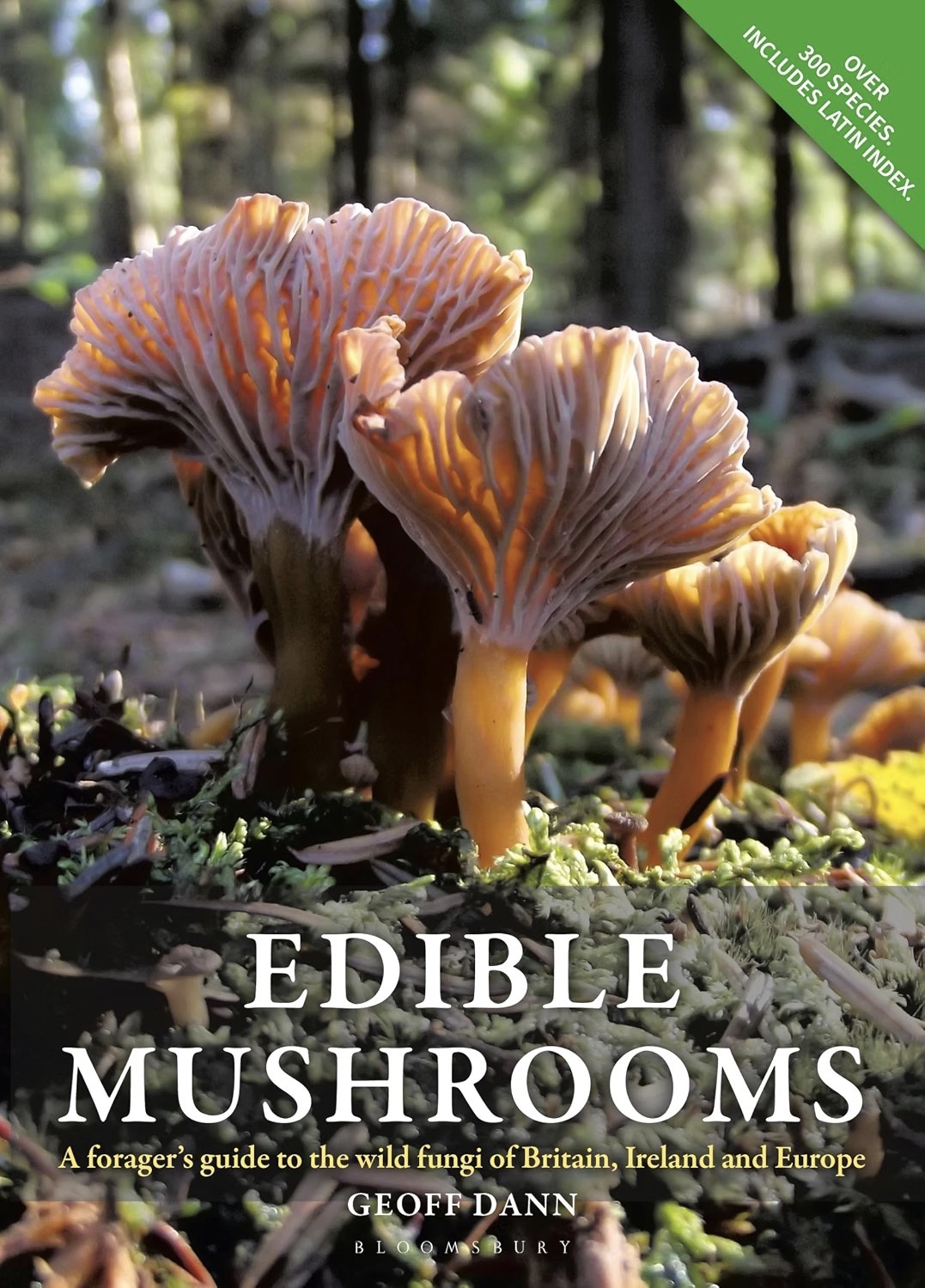
Geoff eventuallly moved to Wales and 4 years ago tried taking a group of people foraging, but they found nothing! He realised that there are just not that many ancient woodlands or beech forests in West Wales. Using his philosophy acumen, he decided to write about why we can’t sort out the “Meaning crisis” which deals with the fragmentation of knowledge and why we can’t work with science and nature instead of trying to bend it to our will. So he wrote another book “The Real path to Ecocivilisation”, which dealt with the subject.
Geoff had brought with him a very full table of different types of fungi and he explained that fungi are really just a temporary gonad/testicle/ovary which produces spores (and some will only do this every 10 years as conditions have to be just right) which will release primary mycelium, containing only half of the required genes. This has to find another primary mycelium and they need to land in exactly the right place together in order to produce the fungi. They are highly specialised and many will only grow on specific types of wood; the diversity is huge – there are 6 or 7 times as many fungi as there are corals. Going back to the beginning of life on earth, fungi are more closely related to animals than plants.
This year has not been a good year so far for fungi; obviously they need a damp atmosphere and the usual autumn drop in temperature hasn’t occurred yet. On the way to the hall Geoff had found a Larch bolete (Suillus grevillei) which is generally very common and grows near larch trees but there are not nearly as many yet as there would normally be. Bolete fungi have a spongy underside with pores and range from the microscopic to the huge. Large boletes are generally regarded as safe to eat although the Bitter bolete (whitish/yellowing pores) whilst not toxic, gets more bitter when cooked. The second most common bolete is the Bay bolete which is good to eat and the Scarlatina bolete is one of the blue ones. Most fungi have a gill structure with a stalk and a cap and are related to each other, although the Russian milk caps (of which there are different varieties) are not related to other fungi. In Russia these are prized for eating and processes have been developed there to make them edible, whereas in other countries they are ignored because of an acrid taste. Some milk caps are generally described as inedible, while in Turkey for instance they are dried and ground to make a hot spice.
There are two basic types of fungi and about half of them will eventually break down in the ground with dead vegetation plus a very few parasitic fungi which will feed on their host tree or plant and kill them.
In addition to the many different fungi that Geoff had brought with him, some members had also brought specimens. He described some of the mushrooms on display:
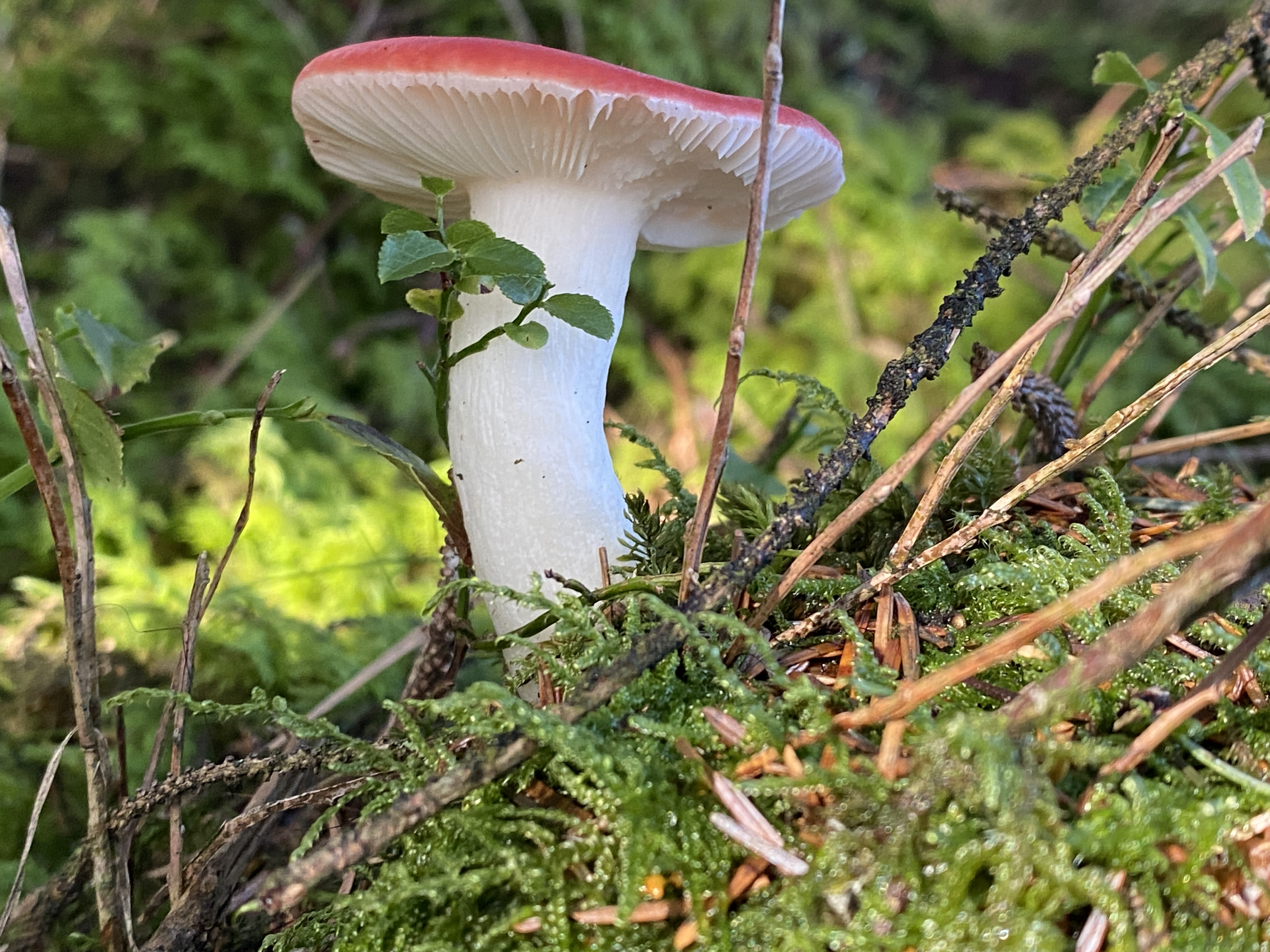
The Sickener (Russula emetica) mushroom (clue in the name!), of which there are 2 different varieties, although not actually poisonous, will make you quite unwell if eaten.
Brown roll rim (Paxillus involutus) used to be eaten (not raw). However, it was discovered after an Austrian man died just before WWII that if eaten in any quantity will make your body attack the red blood cells and cause irrevocable damage to your kidneys.
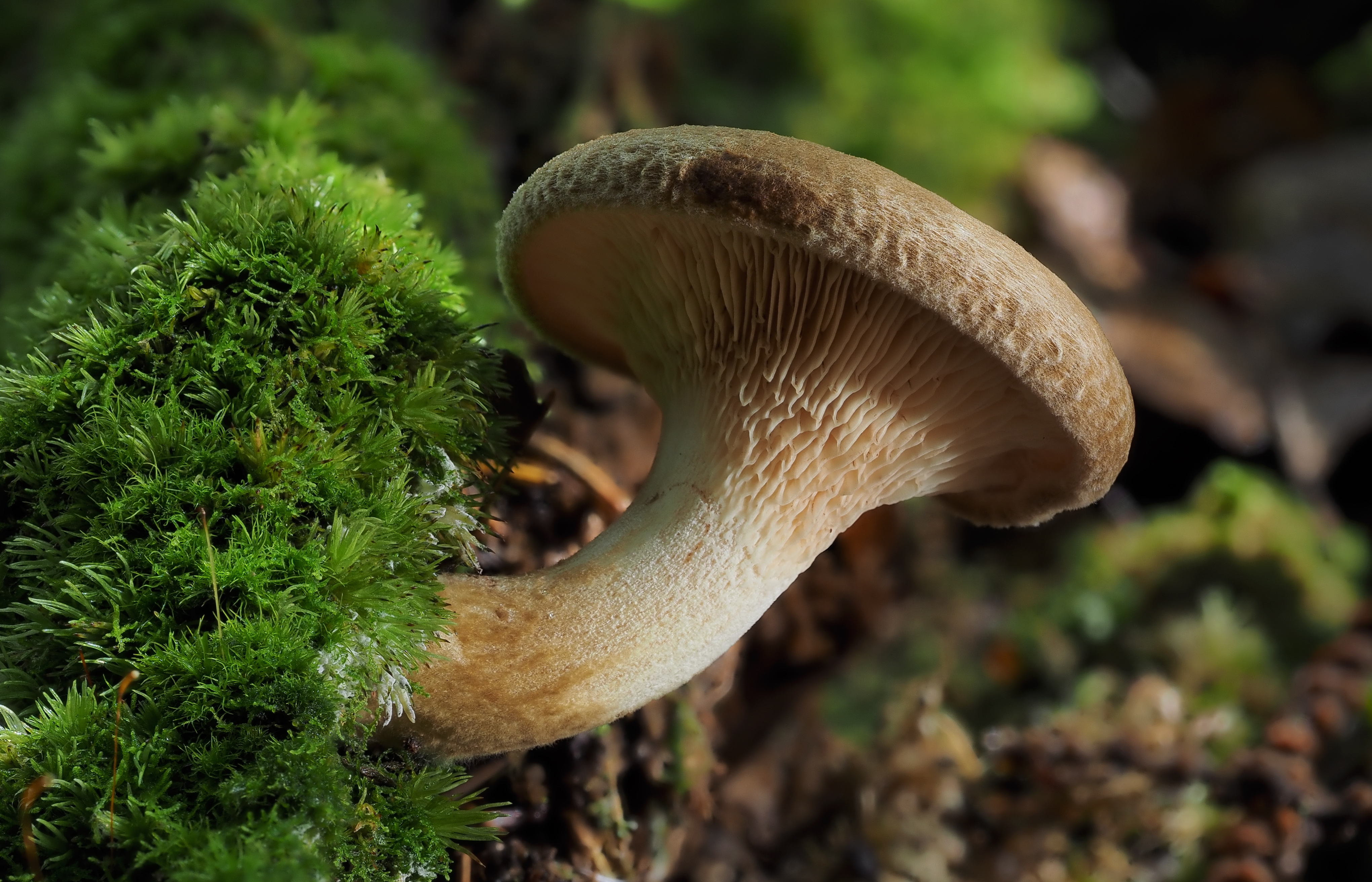
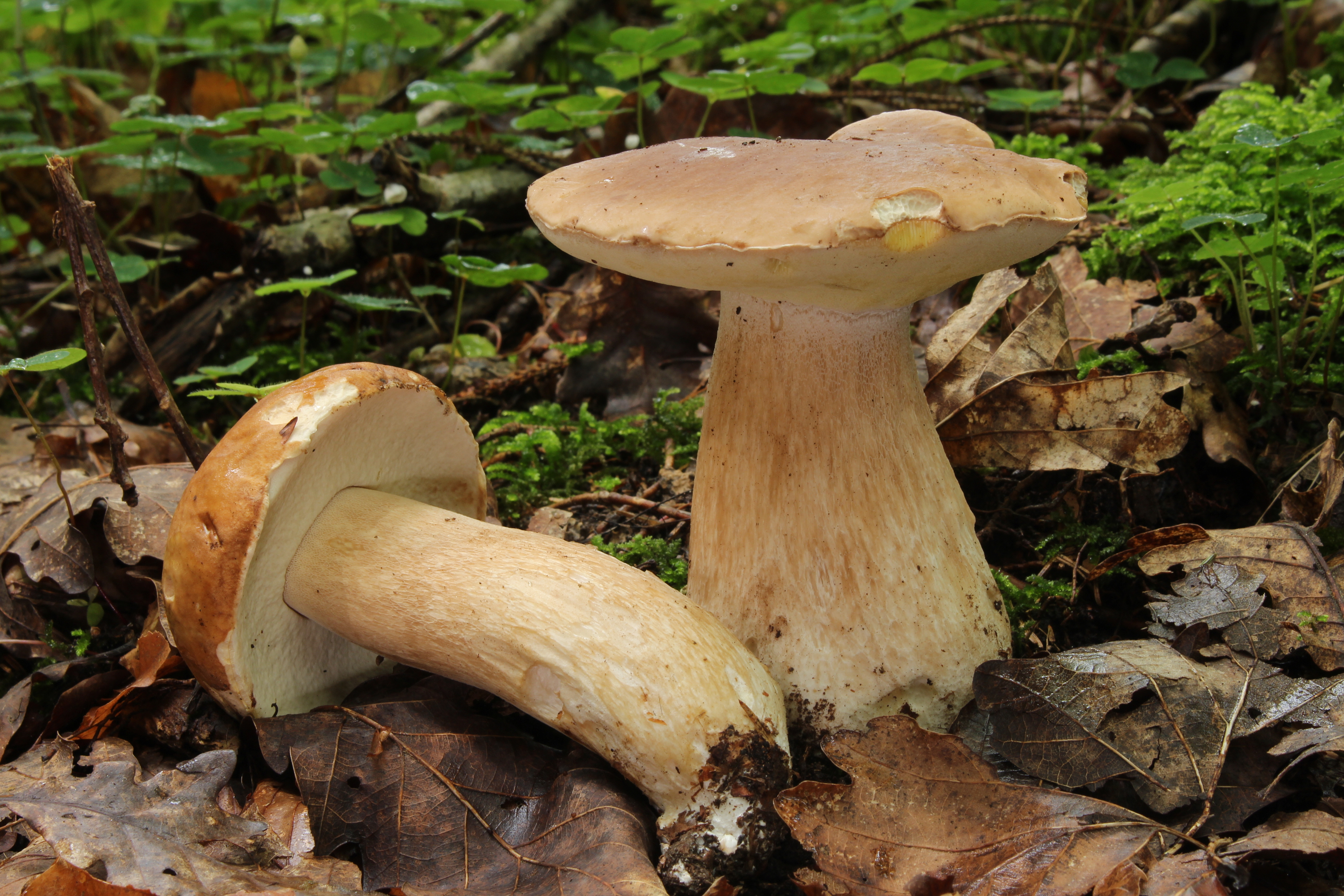
Penny bun (Boletus edulis) also known as cep or porcini, is one of Britain’s most celebrated edible fungi and is prized for its taste.
Wrinkled fieldcap (Agrocybe rivulosa) was discovered in 1990 and is now quite common in parts of Britain particularly where there are quantities of wood chippings. However, field guides up to now advise against eating it, partly due to it looking very like some other mushrooms which are toxic.
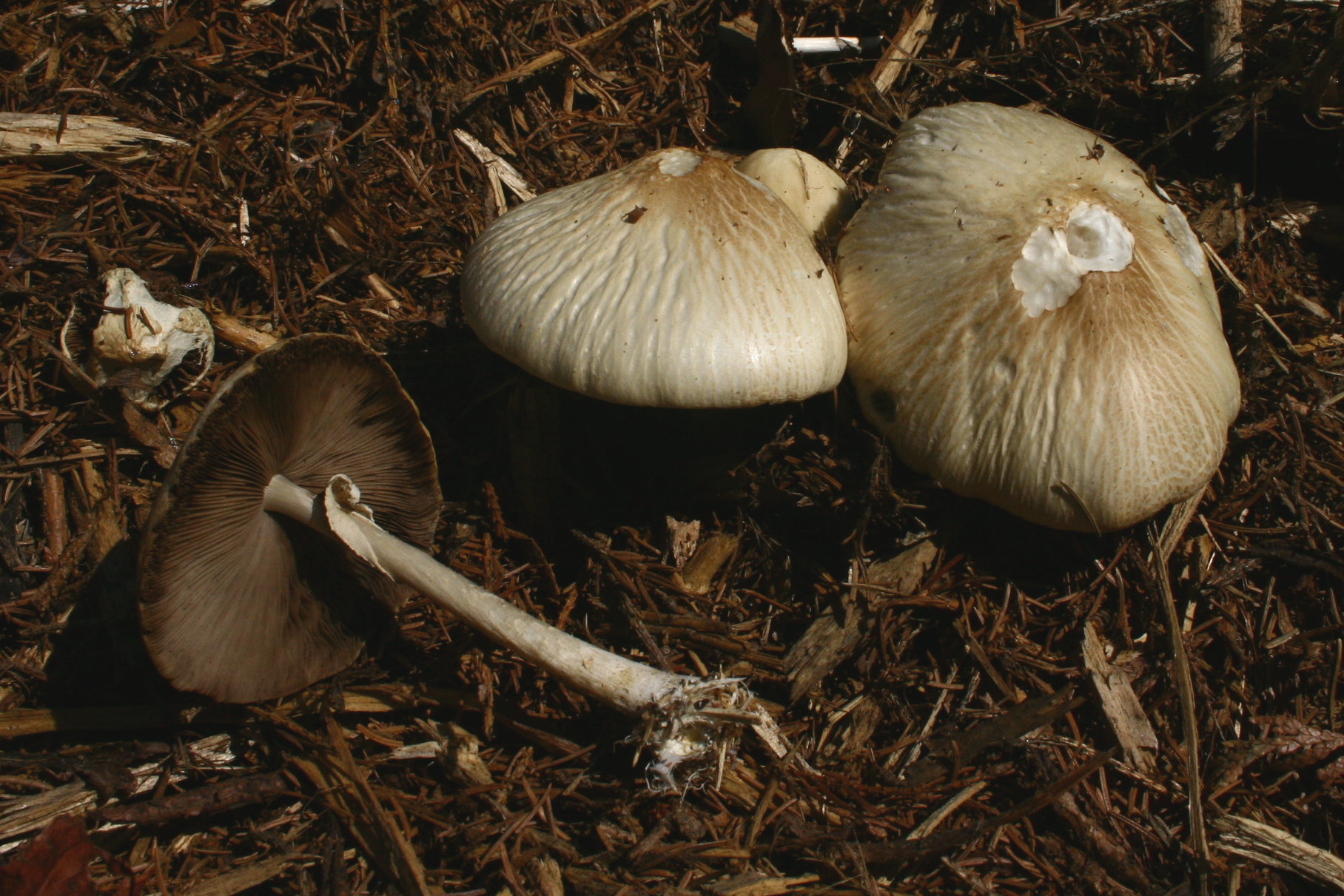
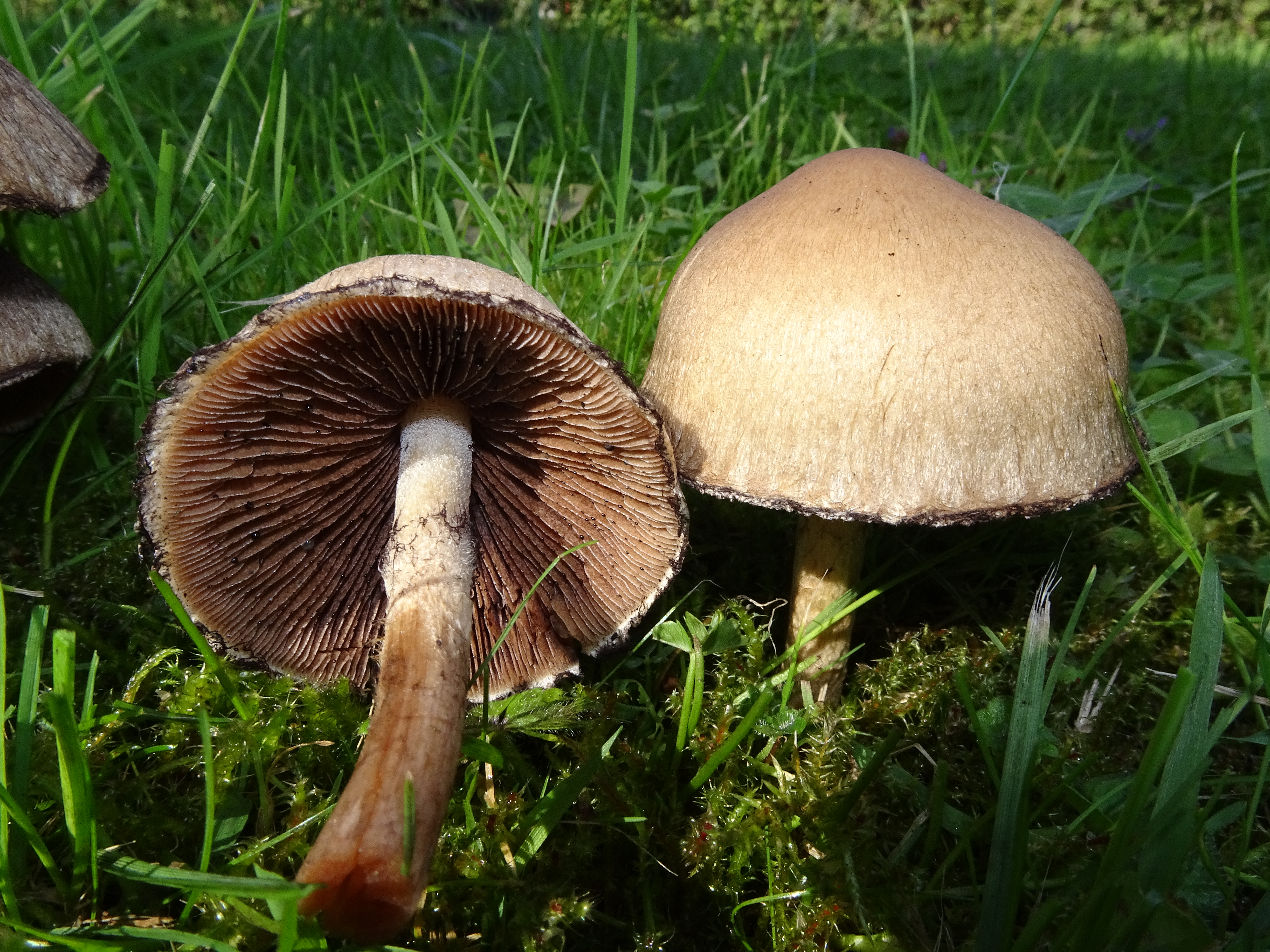
Weeping widow (Lacrymaria lacrymabunda), which has droplets of water on the gills, is a bitter mushroom, though not poisonous.
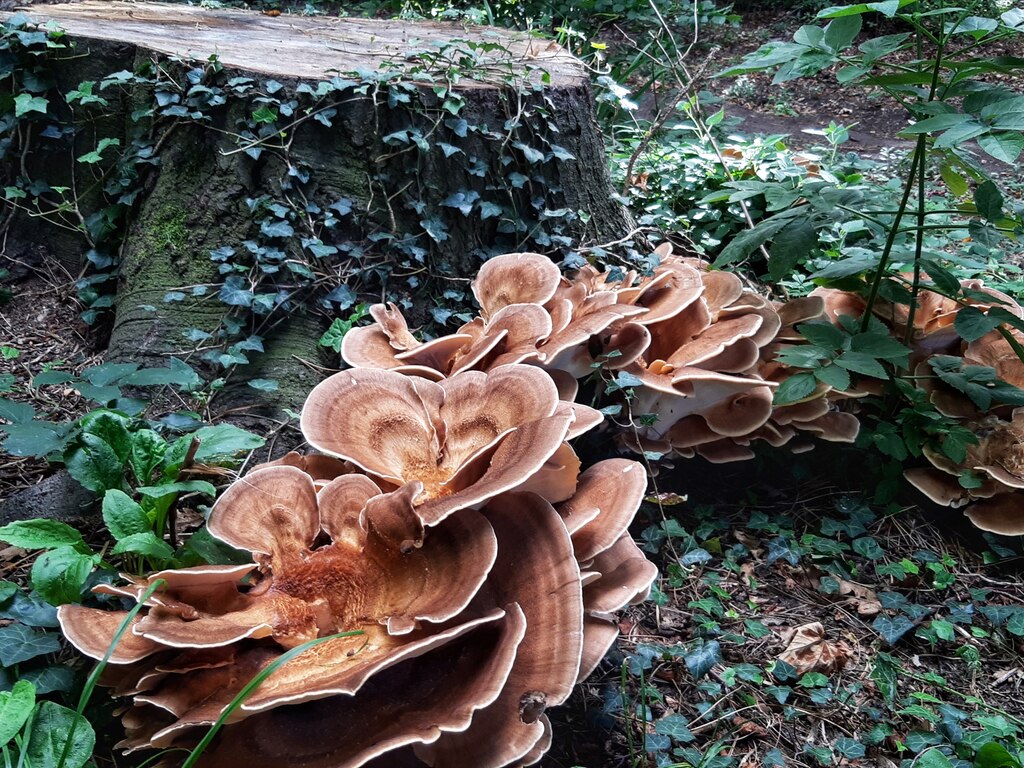
Giant polypore (Meripilus giganteus) is a bracket fungus, which looks like the Chicken of the woods. It will be found on trees and is safe to eat although not so good when it gets too large. Bracket fungi do not have a stalk but grow directly from the tree and will go black when you touch them.
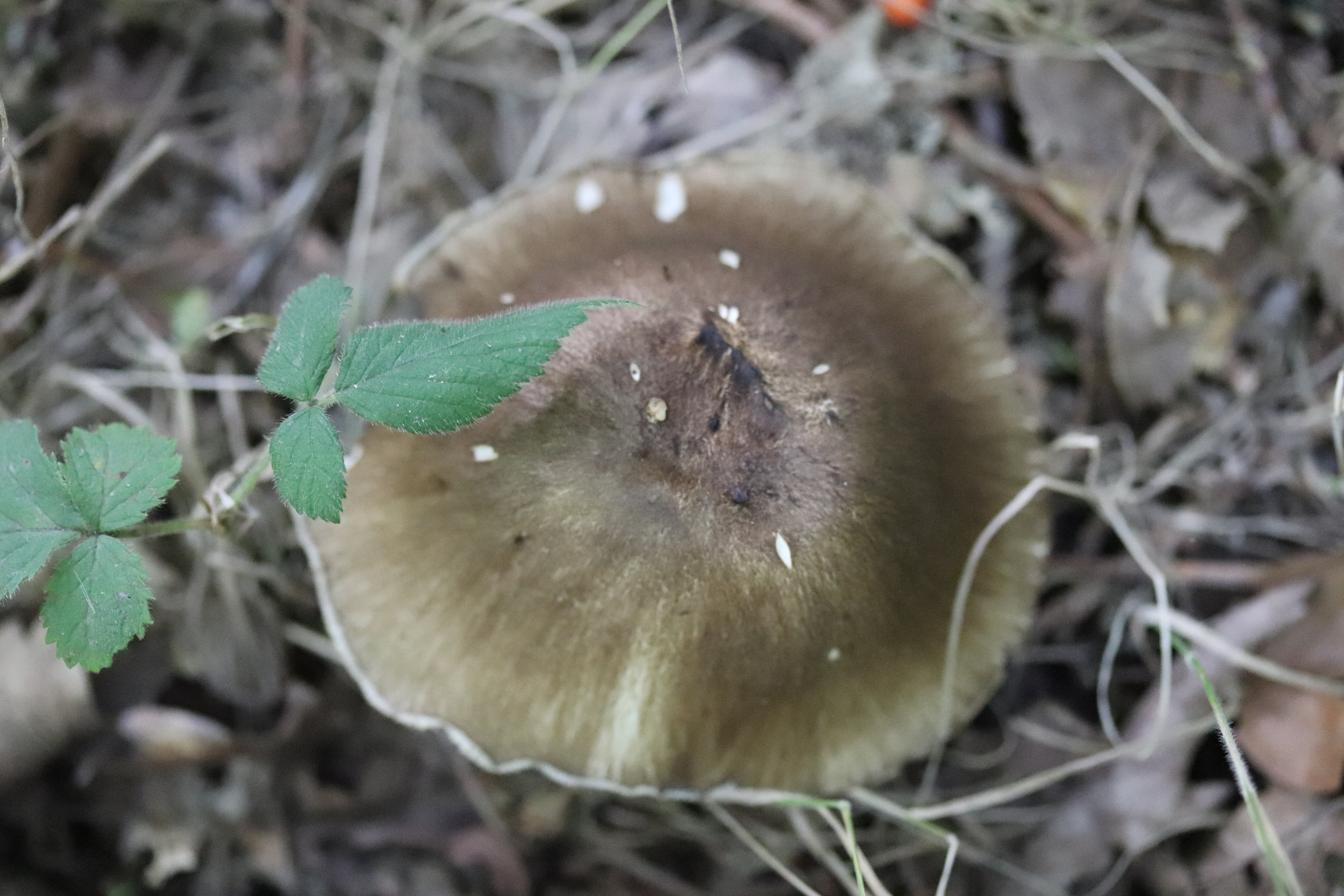
White laced shank (Megacollybia platyphylla) is not good to eat and has thick mycelial strands looking a bit like roots hanging from it.
Bay bolete (Imleria badia) is common and good to eat.
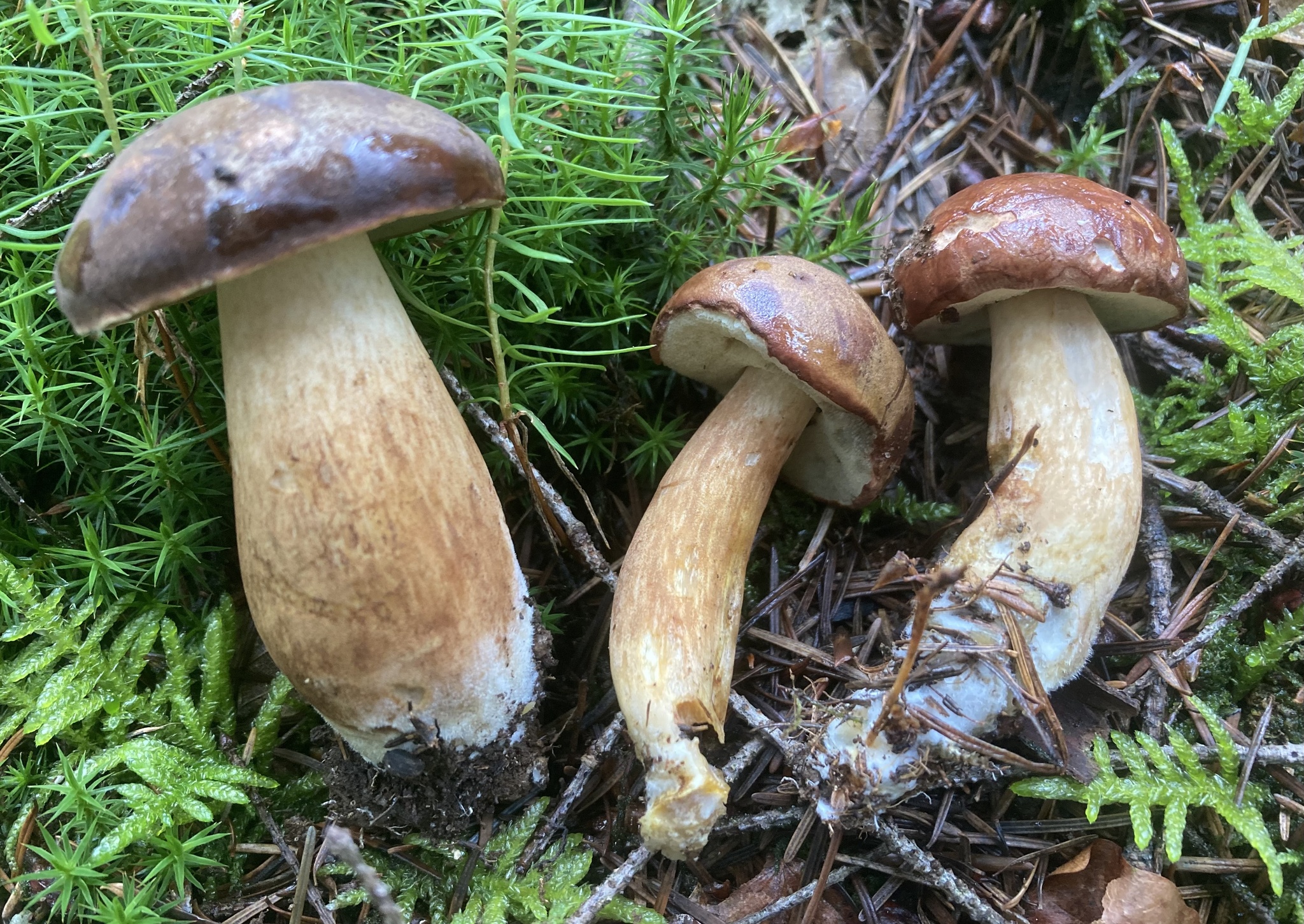
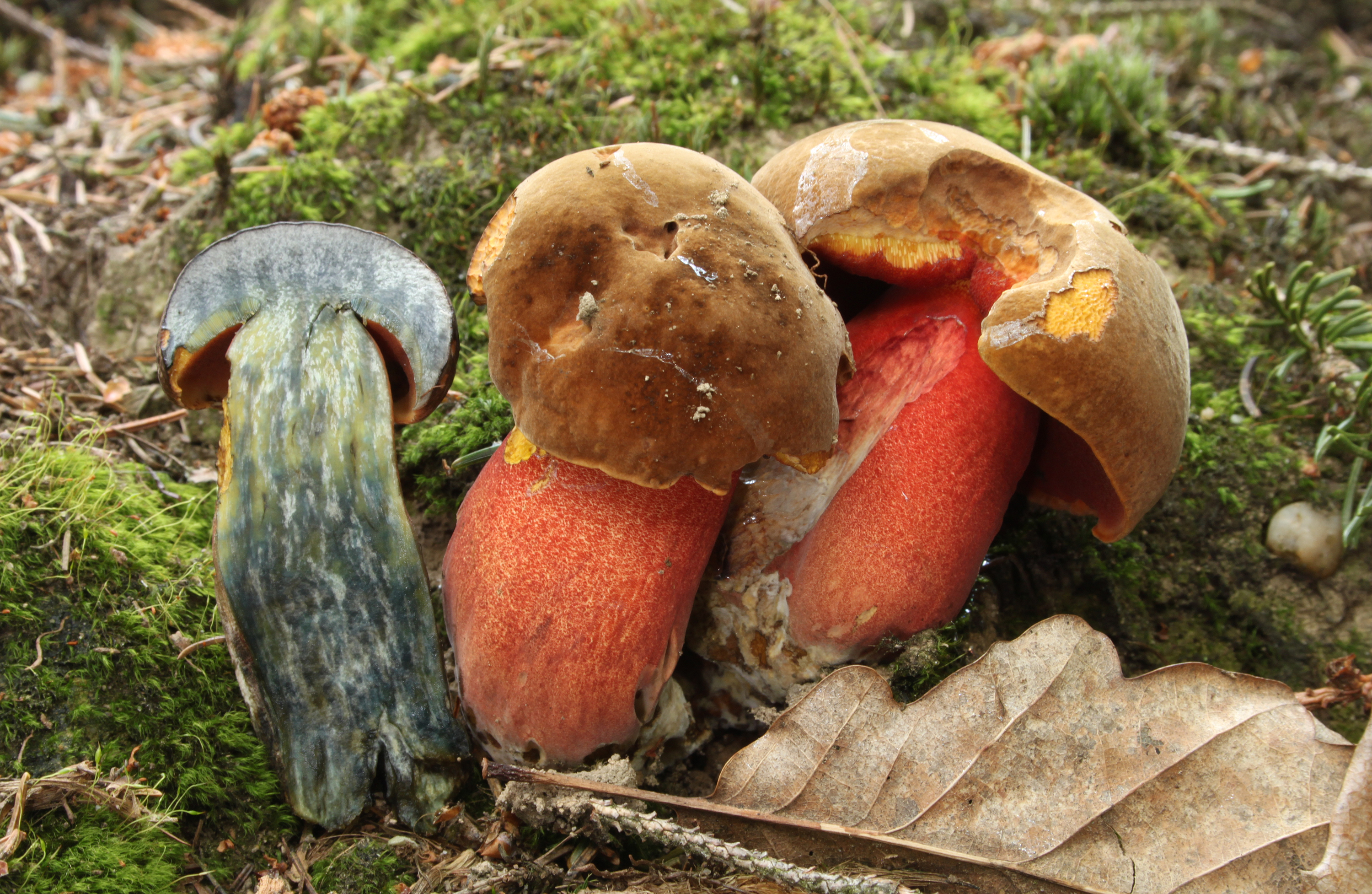
Scarlatina bolete (Neoboletus praestigiator) is good if cooked well but not recommended for the novice forager as it can be confused with similar but toxic mushrooms.
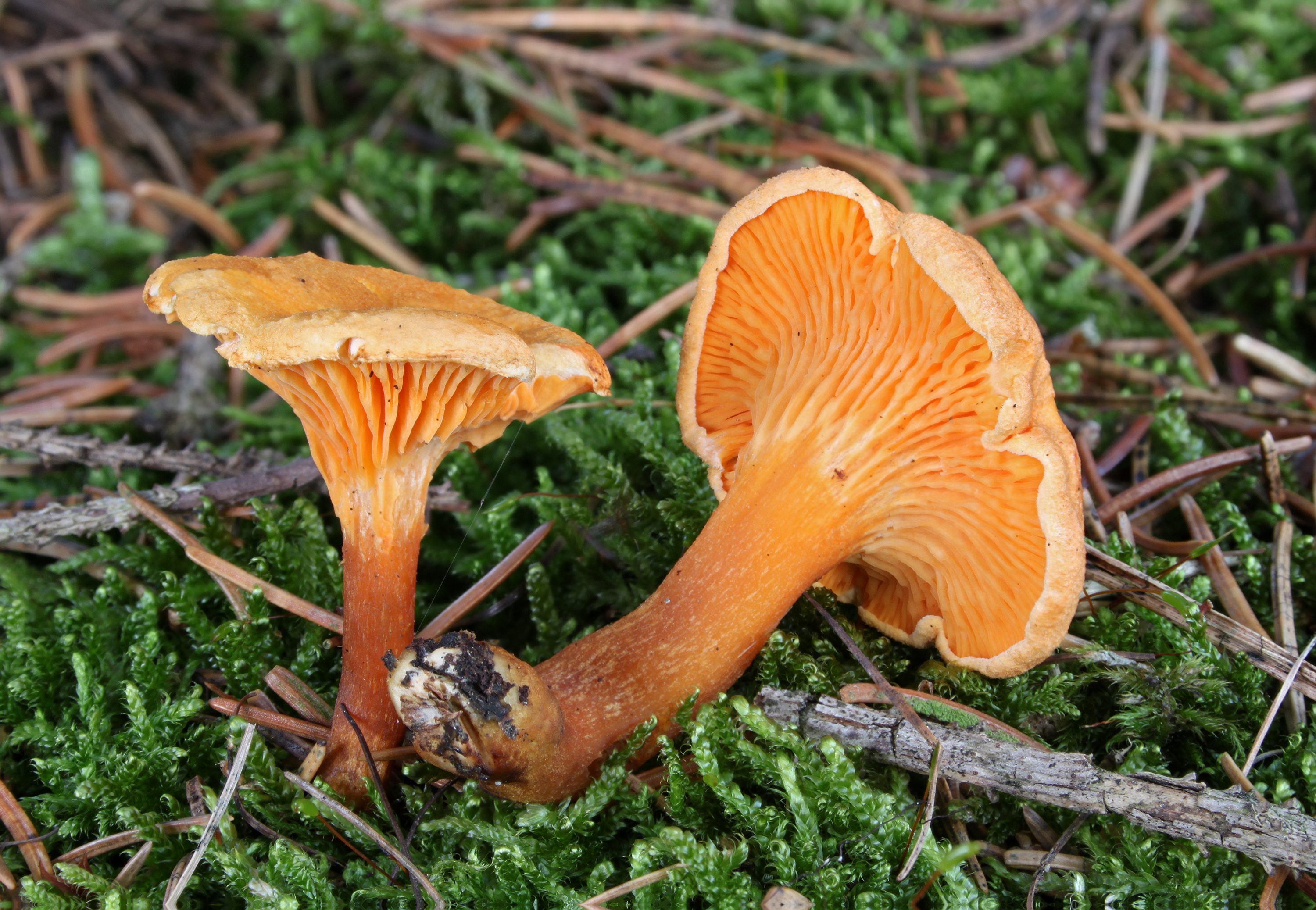
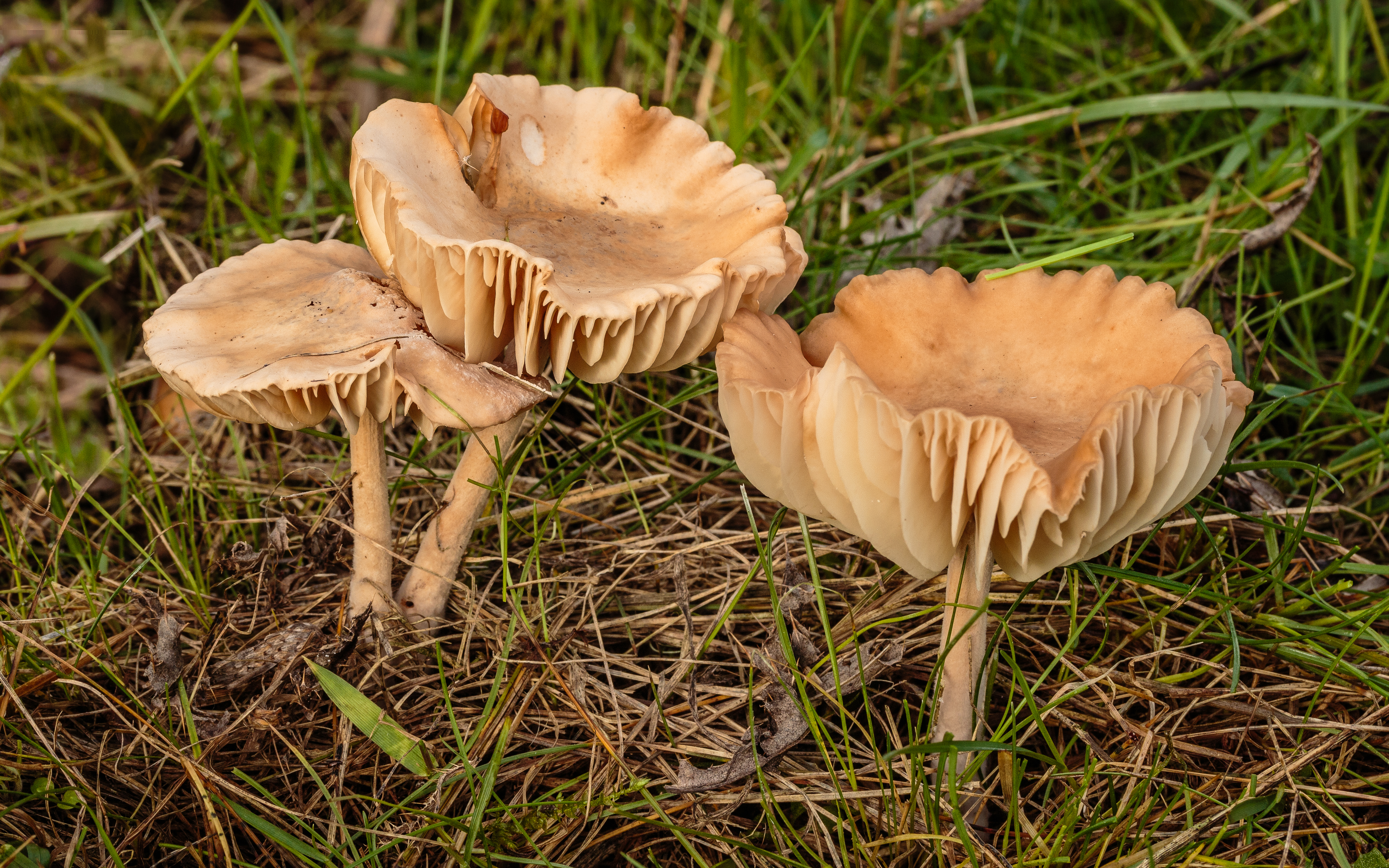
False Chanterelle (Hygrophoropsis aurantiaca) is a funnel shaped mushroom, not good to eat, and it is orange rather than the yellow of the good edible chanterelle.
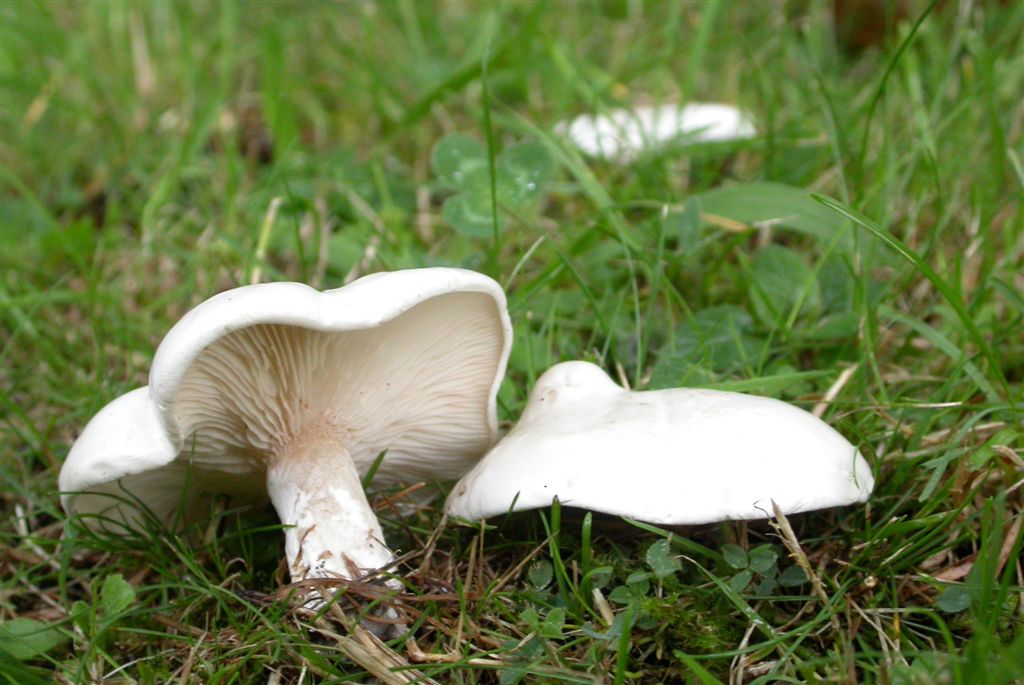
The Miller (Clitopilus prunulus) is parasitic on other fungi and smells like raw dough or, according to Geoff, it smells more like semen. It is also not for novice foragers as it can be confused with a similar very poisonous mushroom.
Fairy ring fungi (Marasmius oreades) do always grow in a ring and are common in south east England but not so common in this part of Wales. The ring will expand each year as the mycelium spreads.
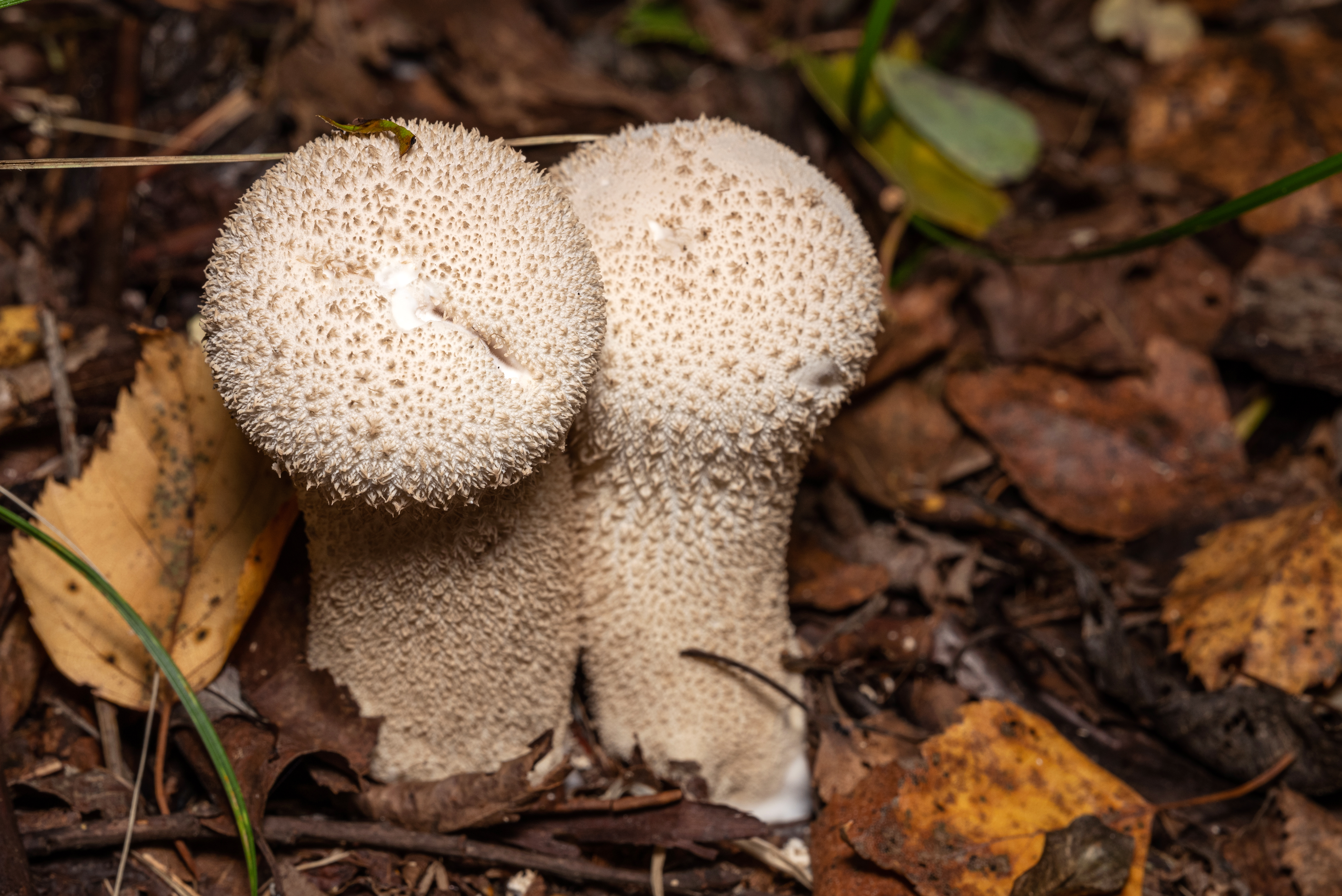
Common puffball (Lycoperdon perlatum) are edible and not poisonous, but will speed up your digestion!
Geoff then took questions from the audience – and here are some of his answers:
- There are types of mushroom which thrive in hot countries, even though in this country they need the drop in temperature to thrive.
- Micorrhizal fungi will grow around shrubs & plants as well as trees
- Mushrooms will be found around large deciduous trees, as the fallen leaves provide nutrients in the form of sugar.
- There are no mushrooms in Britain which are poisonous to touch.
- Dry rot is a fungus and can, though rarely, grow on trees.
Geoff was thanked by our Chair Tracey for a really interesting and entertaining talk, much enjoyed by all.


Thank you for the very interesting feedback of Geoff fungi talkI
LikeLike
Good morning, Many thanks for keeping us informed about Cothi Gardeners, we look forward to reading your newsletter. Sorry to be a bother, but could you let me have an email address for Carwyn Graves and Geoff Dann please? Since I’m hoping we can ask them to give our gardening club in Llanteg a talk sometime.
Many thanks,
Roy
LikeLike