What a splendid day! The sun shone (but was not too hot), the colours of the garden sang after much-needed (but not enough) rain, we were treated to an informative and entertaining talk on the history of Llanllyr and the recent design of the garden, we picnicked with plenty of delicious cake… Read on to find out more.
Our group of gardeners were greeted by the owner, Loveday Lewes Gee, who began by giving us a brief account of the long and intriguing known history of Llanllyr, starting from about 1180 when a Cistercian nunnery was founded by the Lord Rhys of Dinefwr and placed under the supervision of the Abbott of Strata Florida.
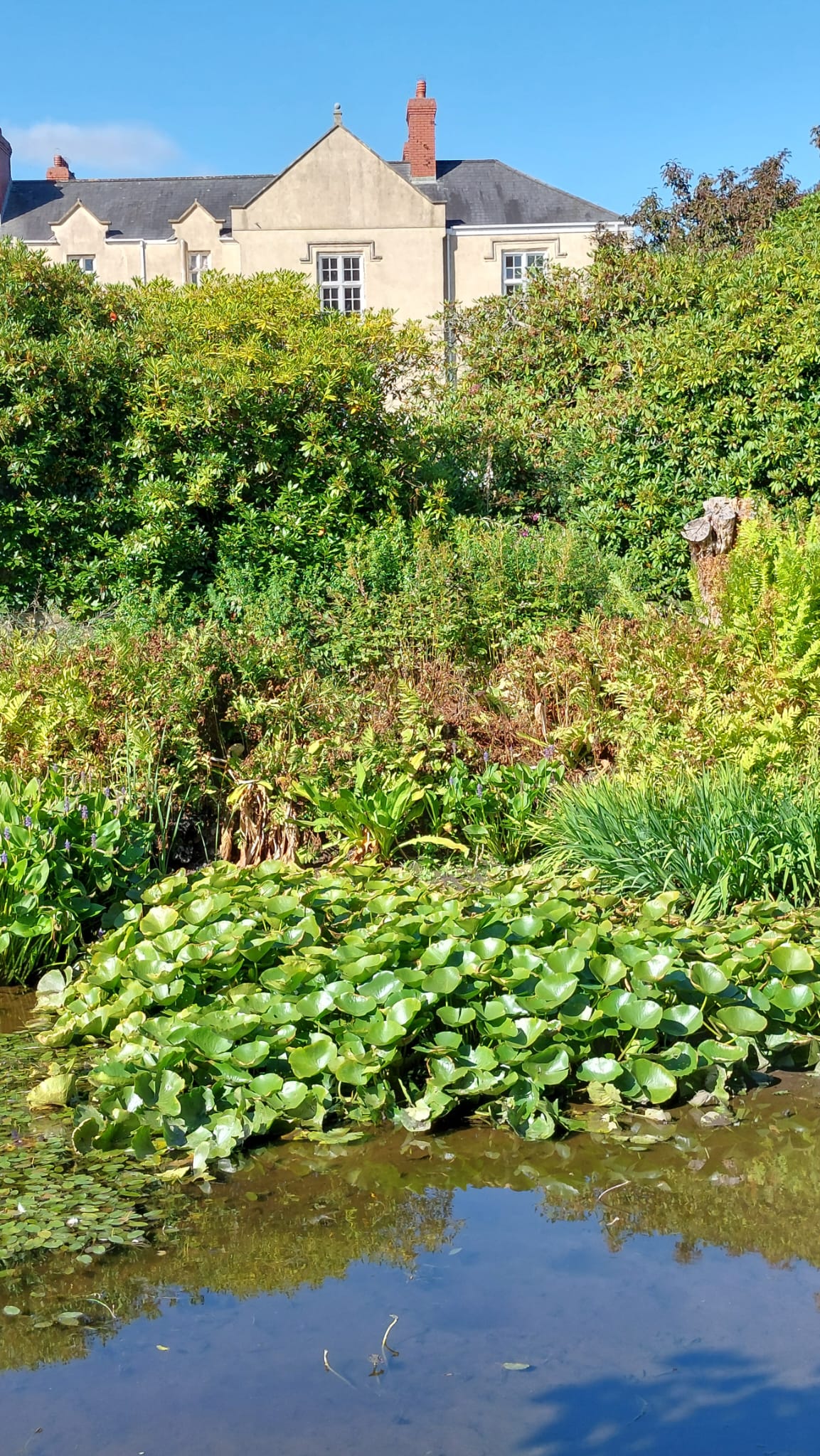
The nunnery was dissolved during the Reformation under Henry VIII, and nothing now remains of the nunnery buildings, although the Cistercian drains, ditches and watercourses are still in use. The spring that fed the original millpond now feeds the lake and water garden. The next, Tudor, house at Llanllyr was built on the site of the nunnery’s infirmary by the Lloyd family; again, this doesn’t survive. However, a double daffodil in the woods may have been planted then, and also the snowdrops between the site of the Tudor house and the nunnery fishponds.
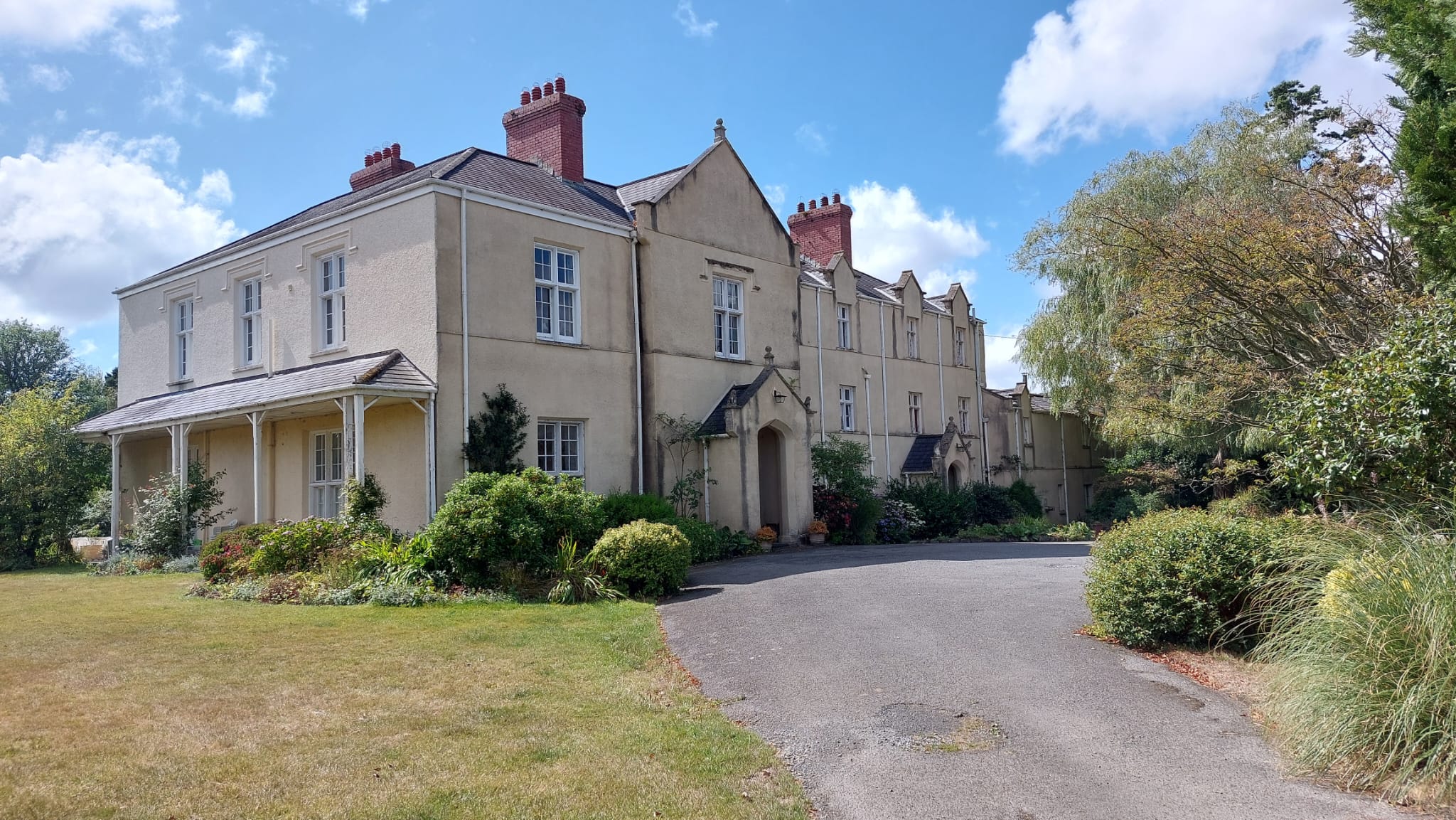
The building of the present house began in the nineteenth century, and while not designed by John Nash himself, it is built very much in the style of other houses that he designed in the area. Considerable renovations were carried out in the 1980s by the present owners.
Whilst there was a garden here at the time of the nunnery and later adjoining the Tudor house, and some of the existing trees and shrubs as well as the walled garden date from Victorian times, the garden as it is now designed is very much the work of Loveday Lewes Gee into which she has incorporated many references to the historical origins of the site. In the second half of the 1980s work began on creating new shrub borders, then moving on to the creation of the current terrace, the rose garden (which had originally been herbaceous broders), the lake, and the Italian water garden. Llanllyr gardens first opened for the NGS in the 1990s.
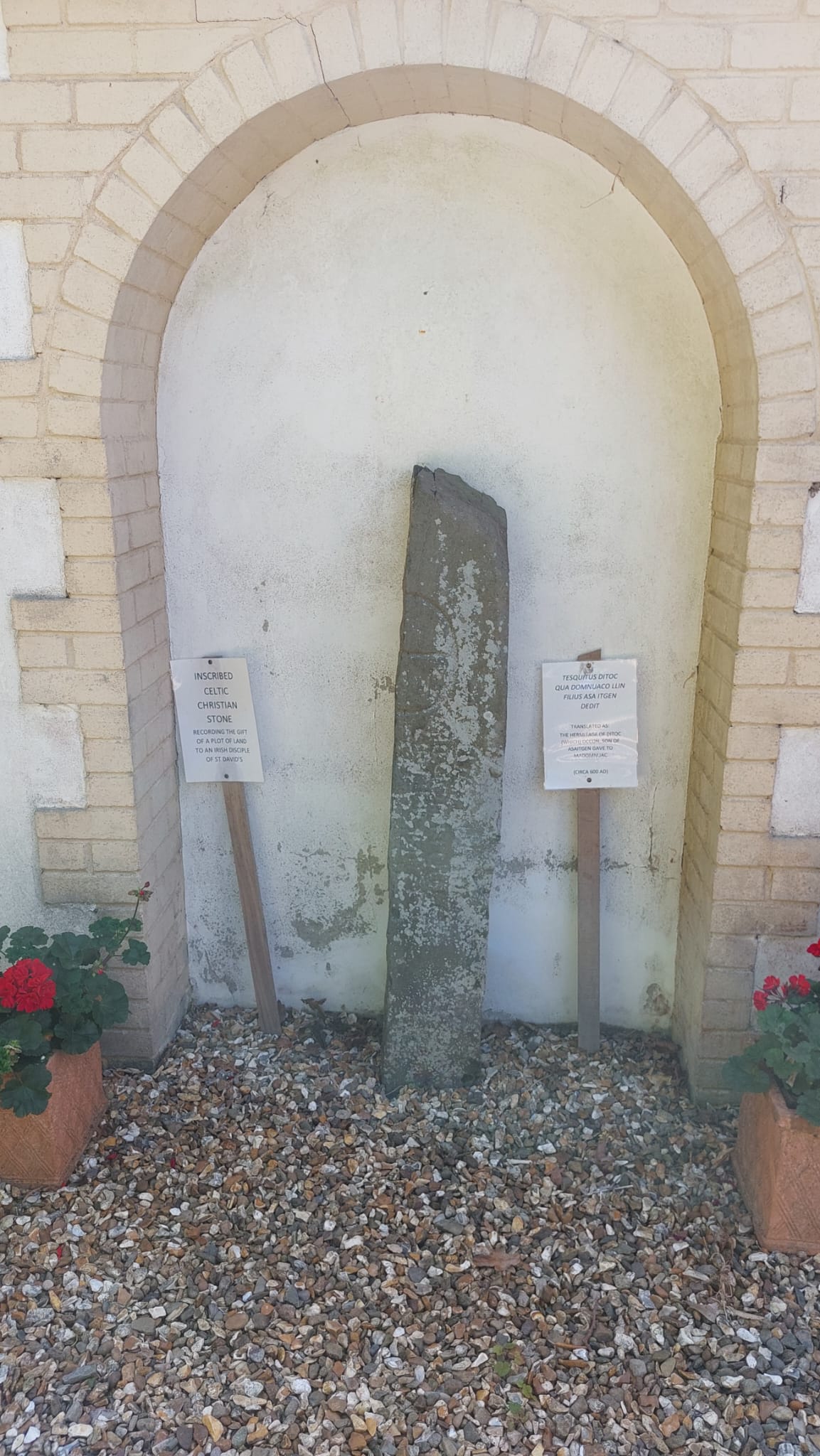
Our first stop on the tour of the garden was at a sixth-century inscribed Celtic stone originally discovered on the site of the farmyard in1859. It records the gift of a piece of land to the Irish St Madomnuac, who was a disciple of St David at his monastery in Pembrokeshire where he tended the bees. When St Madomnuac returned to Ireland, the bees followed him with St David’s blessing. The church that St Madomnuac founded in Ireland is to this day knows as the Beekeeper’s Church.
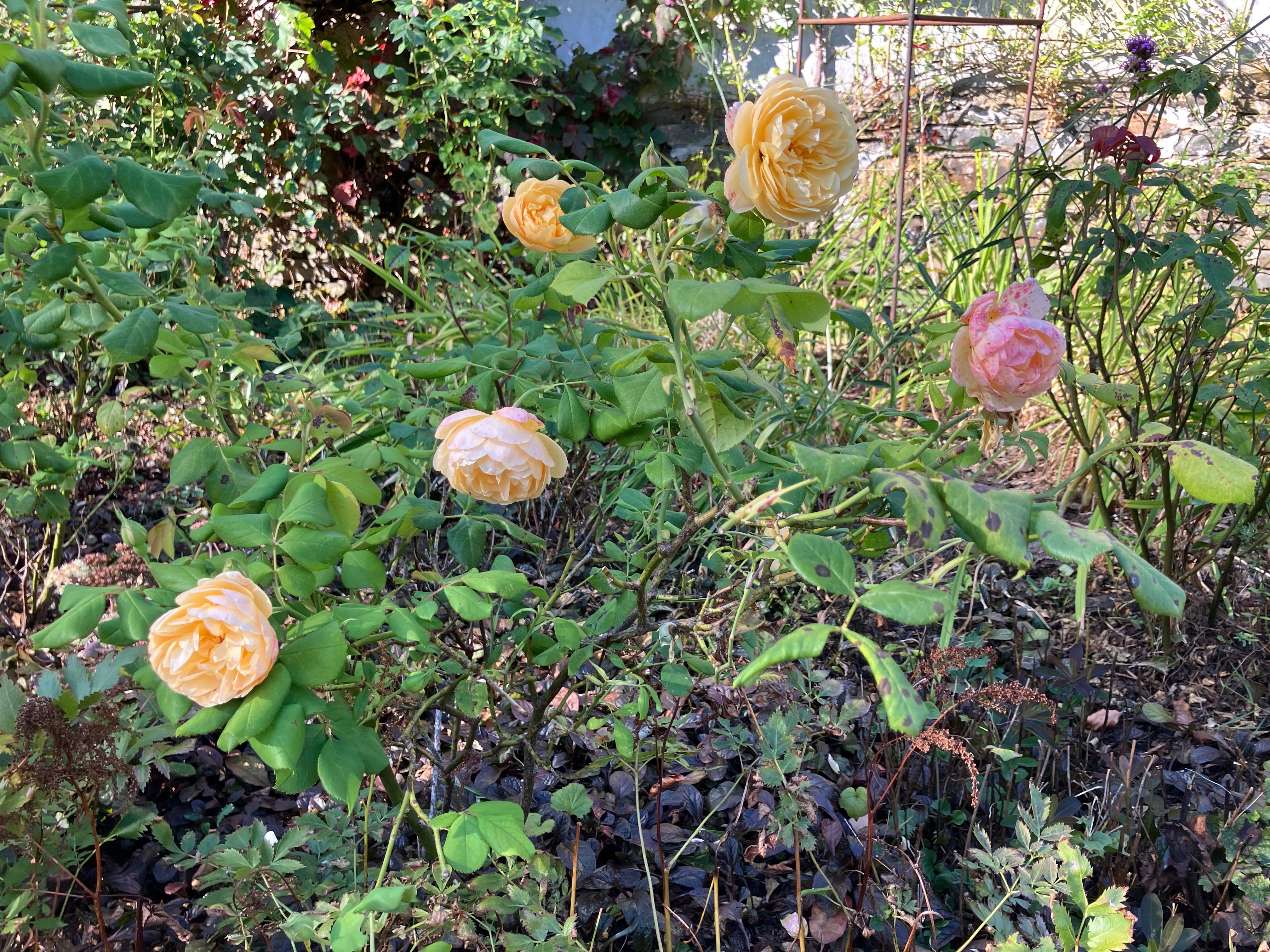
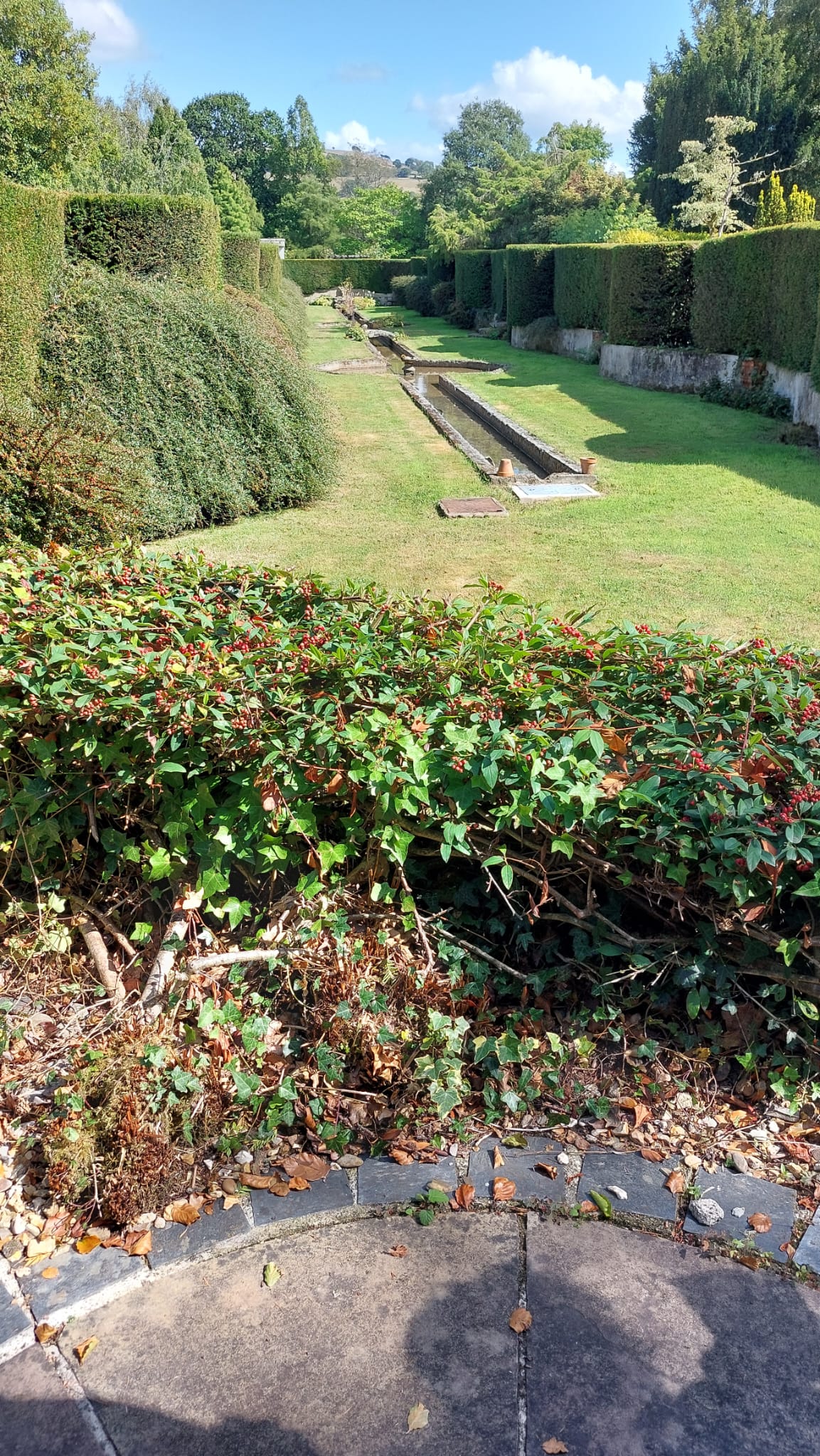
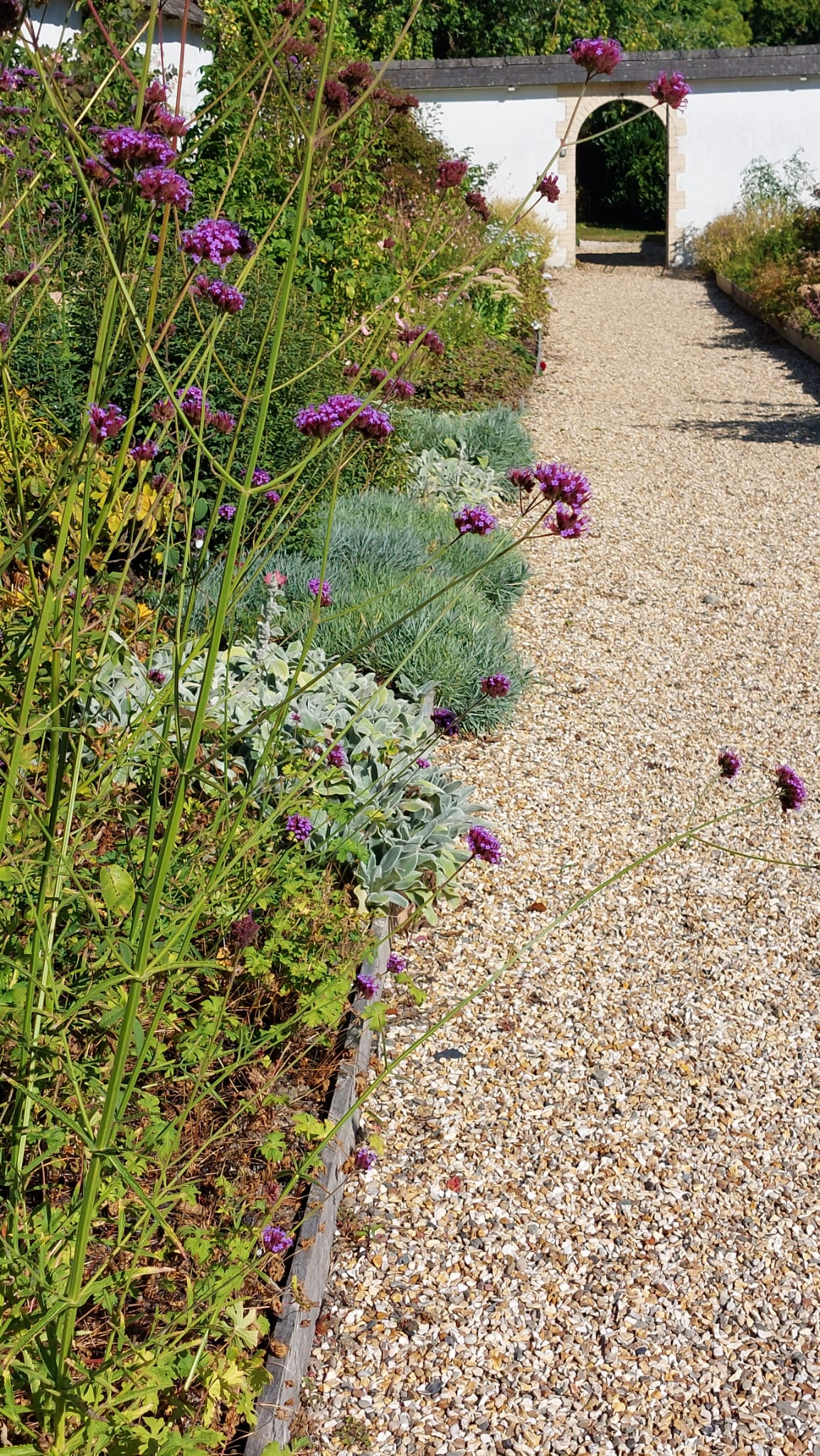
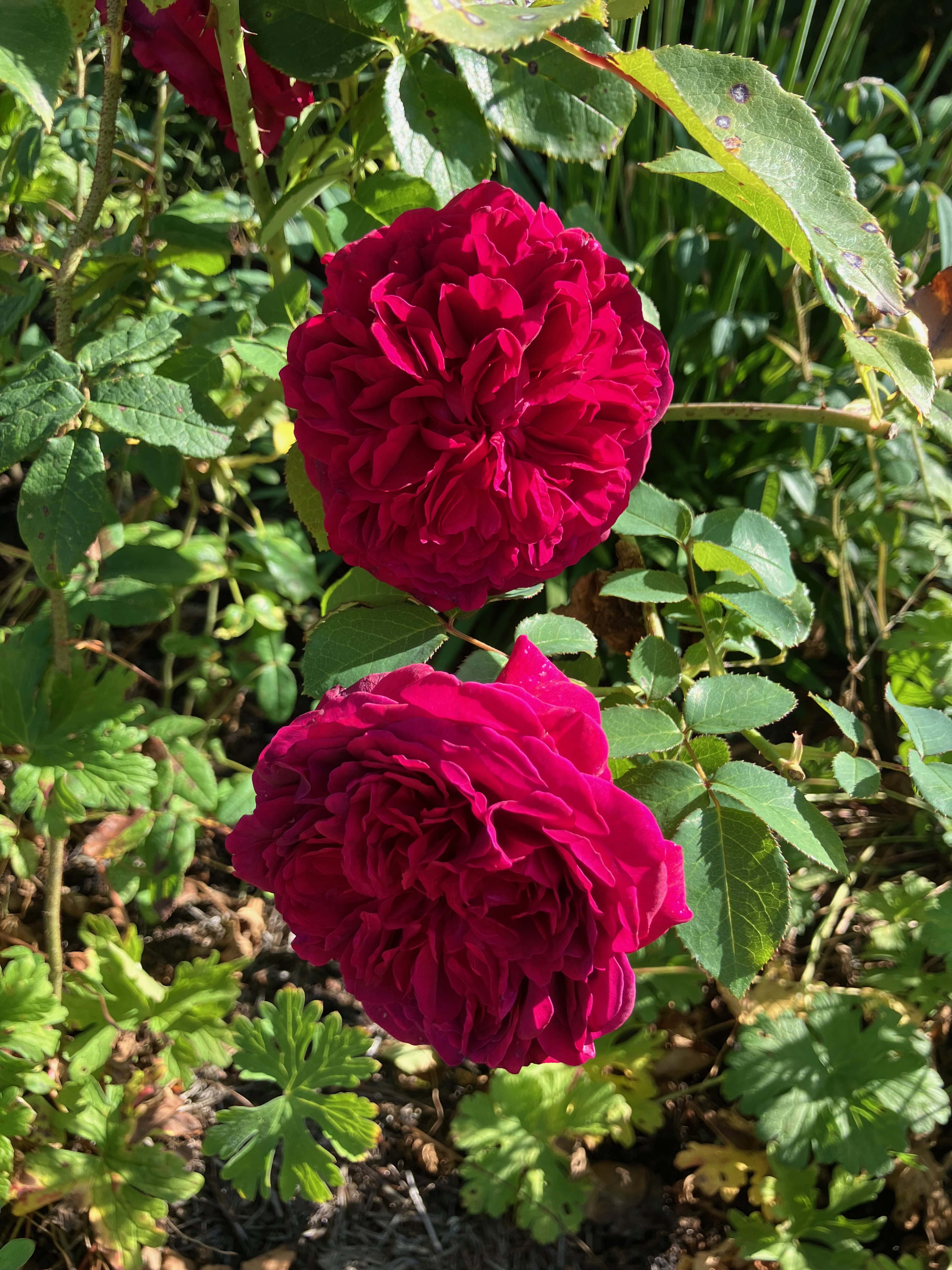
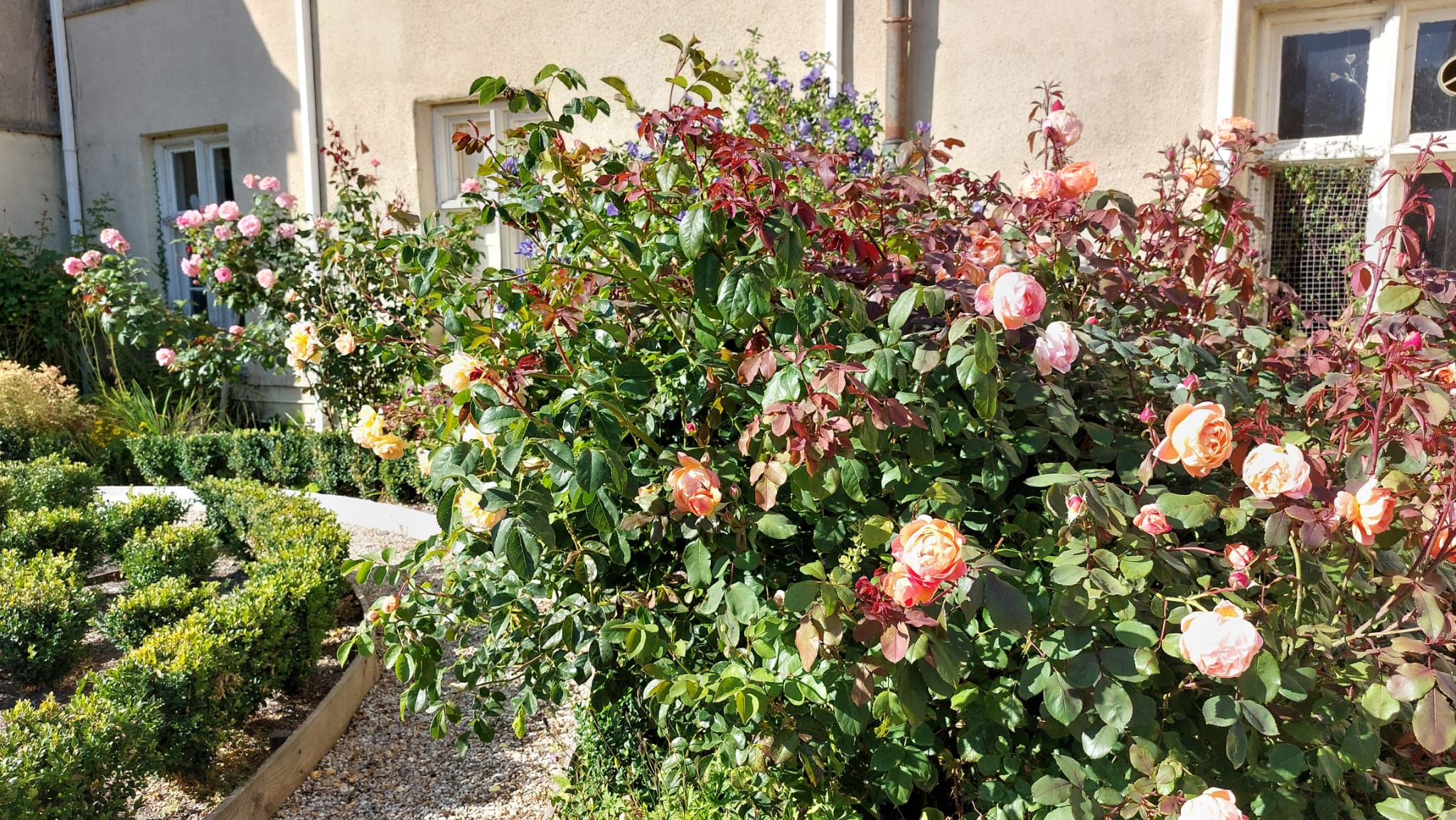
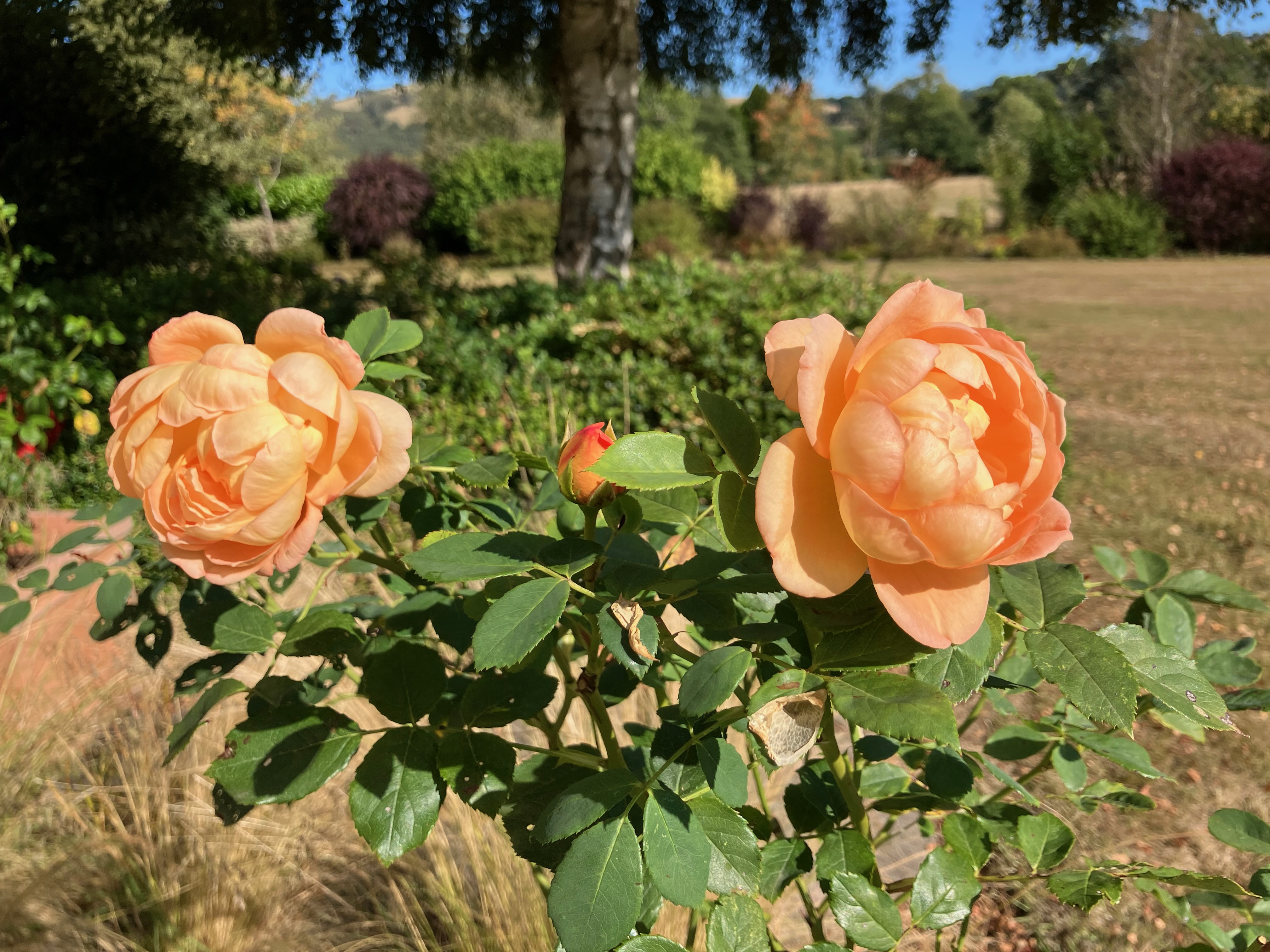
A walk through the rose garden took us to the summer house and the top of the Italian water garden. Some of the roses first planted have now been replaced by English Roses bred by David Austin. The herbaceous planting around them contains Nepeta ‘Six Hills Giant’, Verbena bonariensis and Hylotelephium.
Above the Italian water garden (right) is ‘The Stage’ with a mosaic design that was widespread everywhere in mediaeval times, but probably originated in Byzantine. This design is inspired by a similar one in the presbytery of Westminster Abbey and is a reference to the nunnery at Llanllyr. The renaissance water garden provides a cool green space after the colour of the rose garden and refences the time of the Lloyds at Llanllyr.
Next an area of tree-lined avenues radiate out from a central rose arch. The central avenue is created with the great white cherry Prunus ‘Taihaku’, and the side avenues with Malus x robusta ‘Red Sentinel’, underplanted with groundcover plants including Geranium macrorrhizum. Close-by is the Labyrinth, created in a secluded part of the old orchard. Not a maze in a traditional sense, the path connects a number of small garden rooms and is loosely based on the spiritual journey of the Dreamer in ‘Piers Plowman’, referencing both mediaeval and Renaissance times.
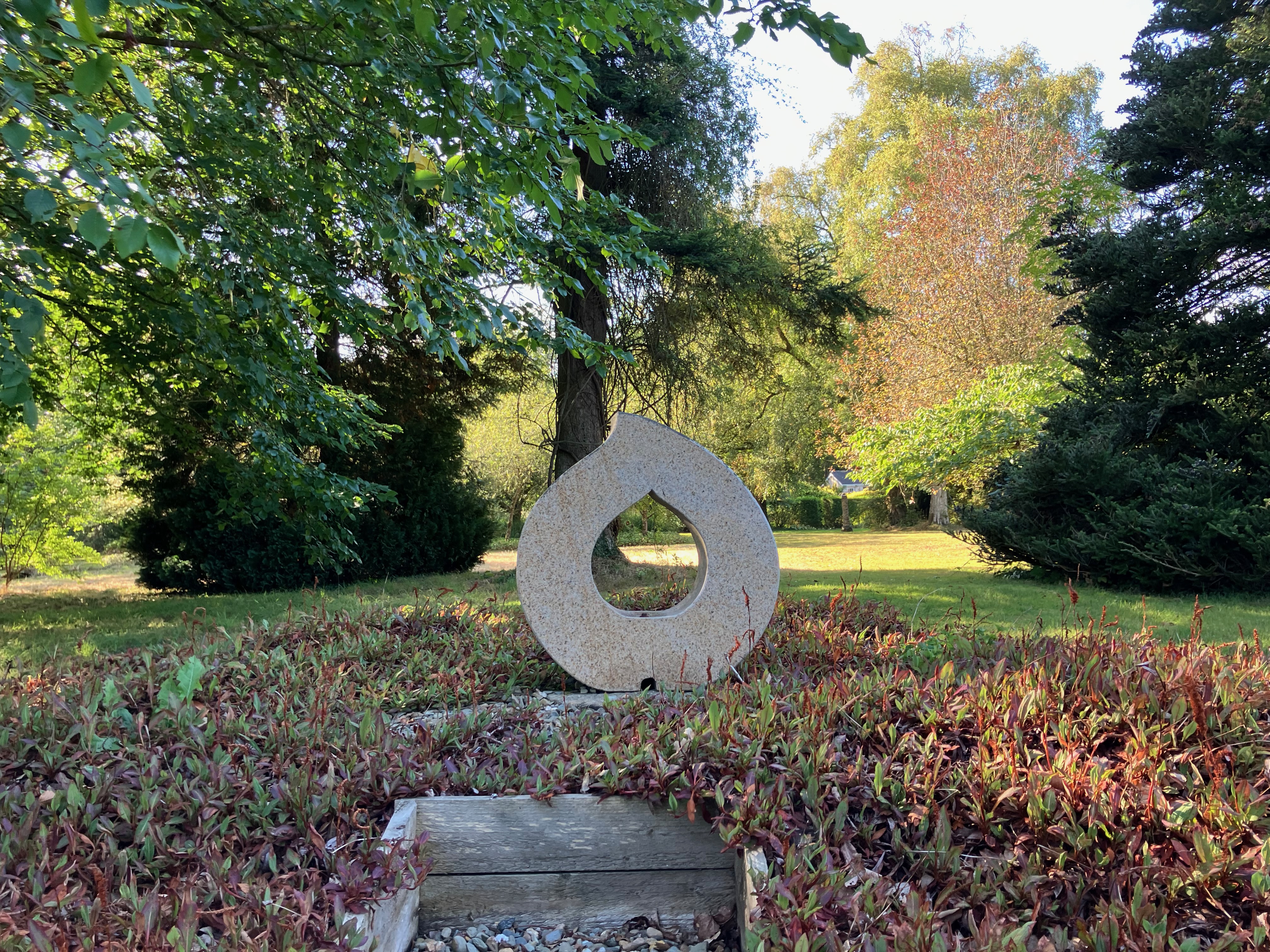
This circular stone, symbolising continuity, time and history is sited on the site of an old elm tree which blew down during a winter gale. The mound is planted with Persicaria affinis, with pale pink flowers.
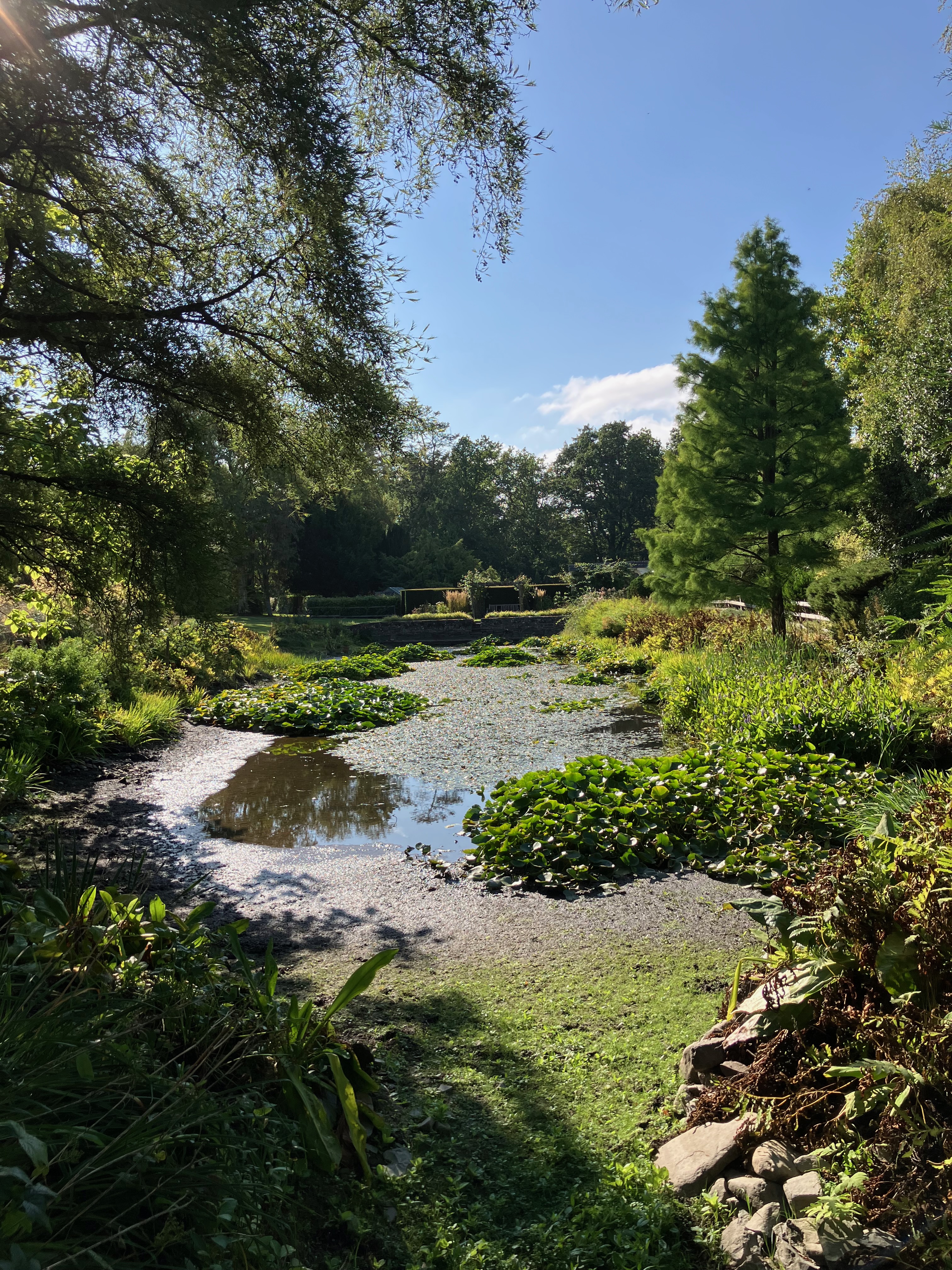
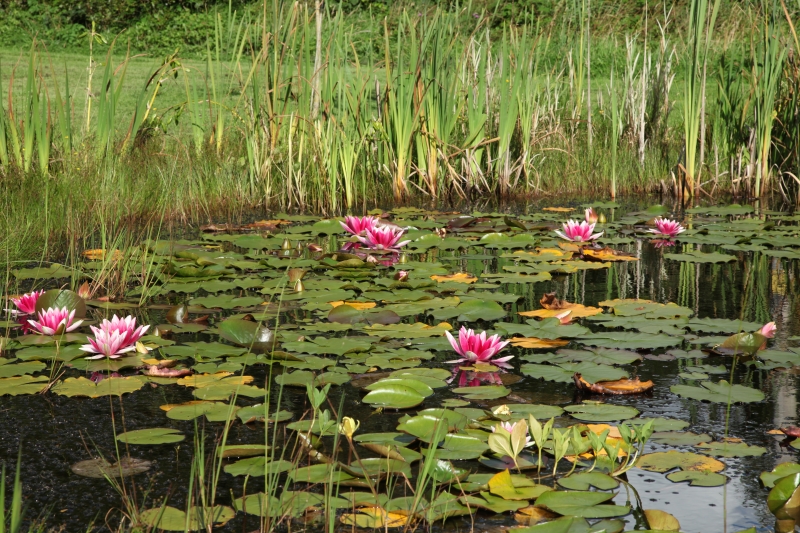
We could see the effect of his summer’s drought on the lake, where the level of water was considerably lower than normal. In the early summer it is a sight to behold with many colourful primulas.
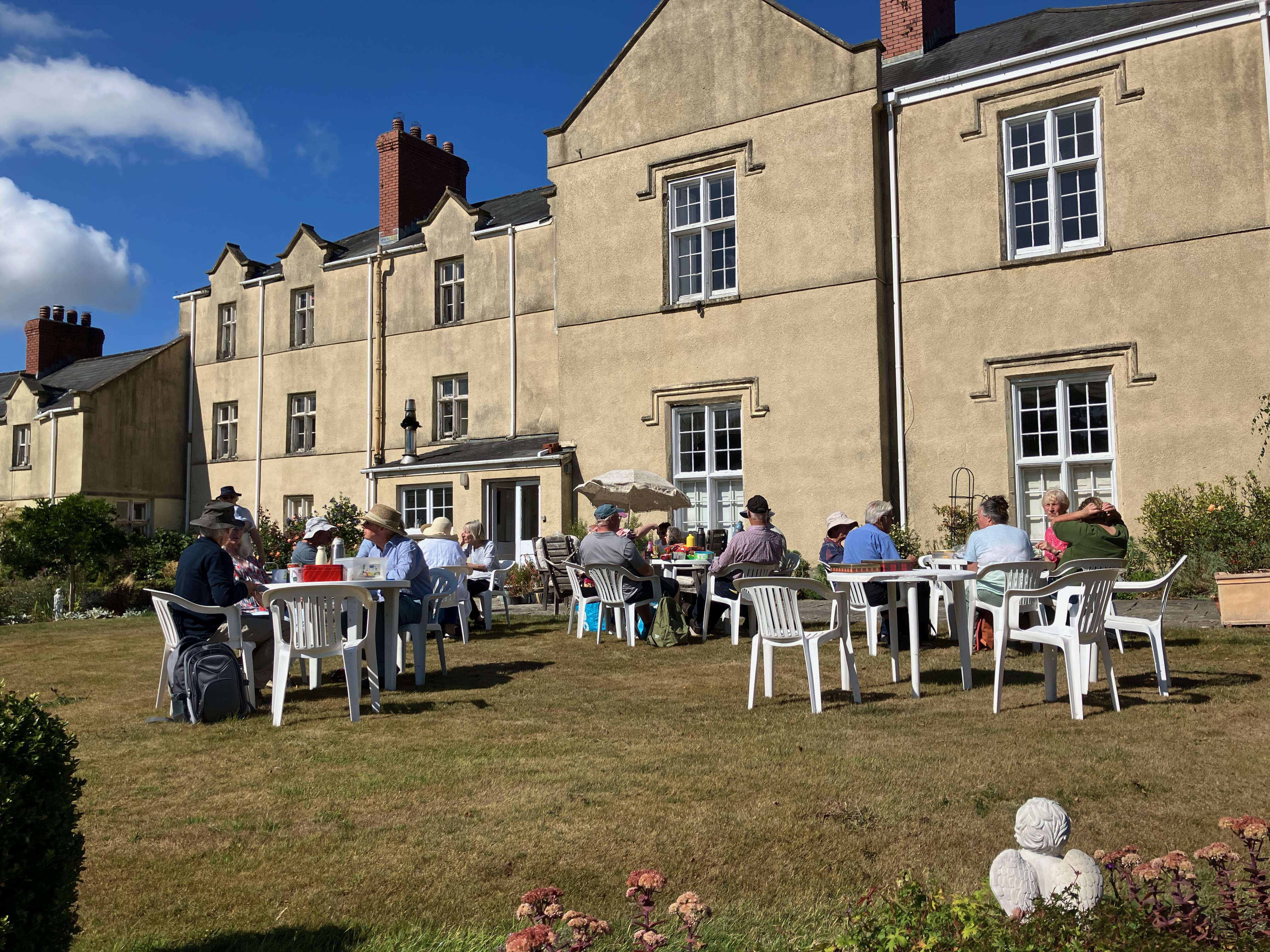
Our journey around the garden finished back by the terrace, where we all enjoyed the picnics we had brought, lots of delicious shared cake, and each other’s company in the warm sunshine.
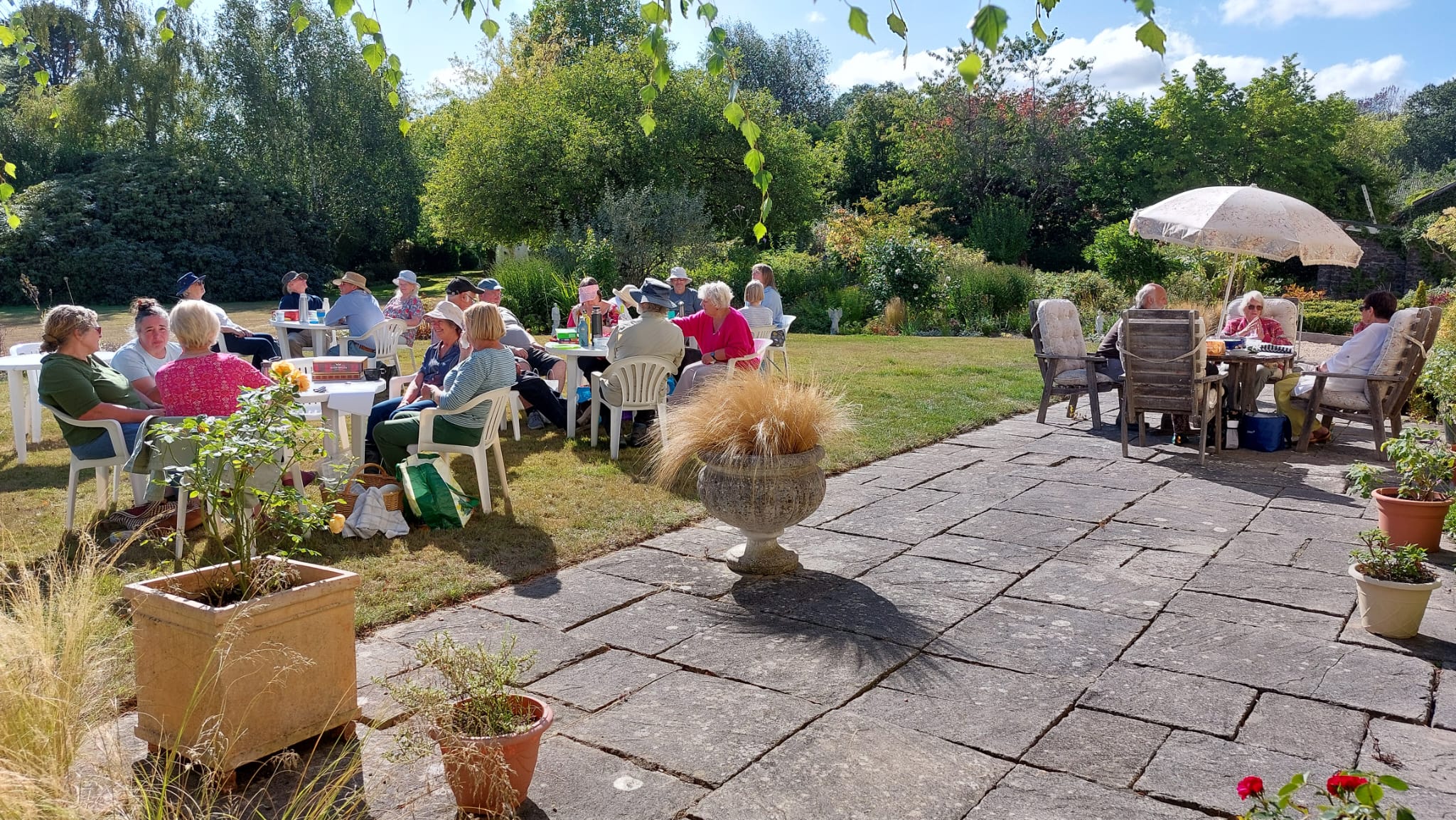
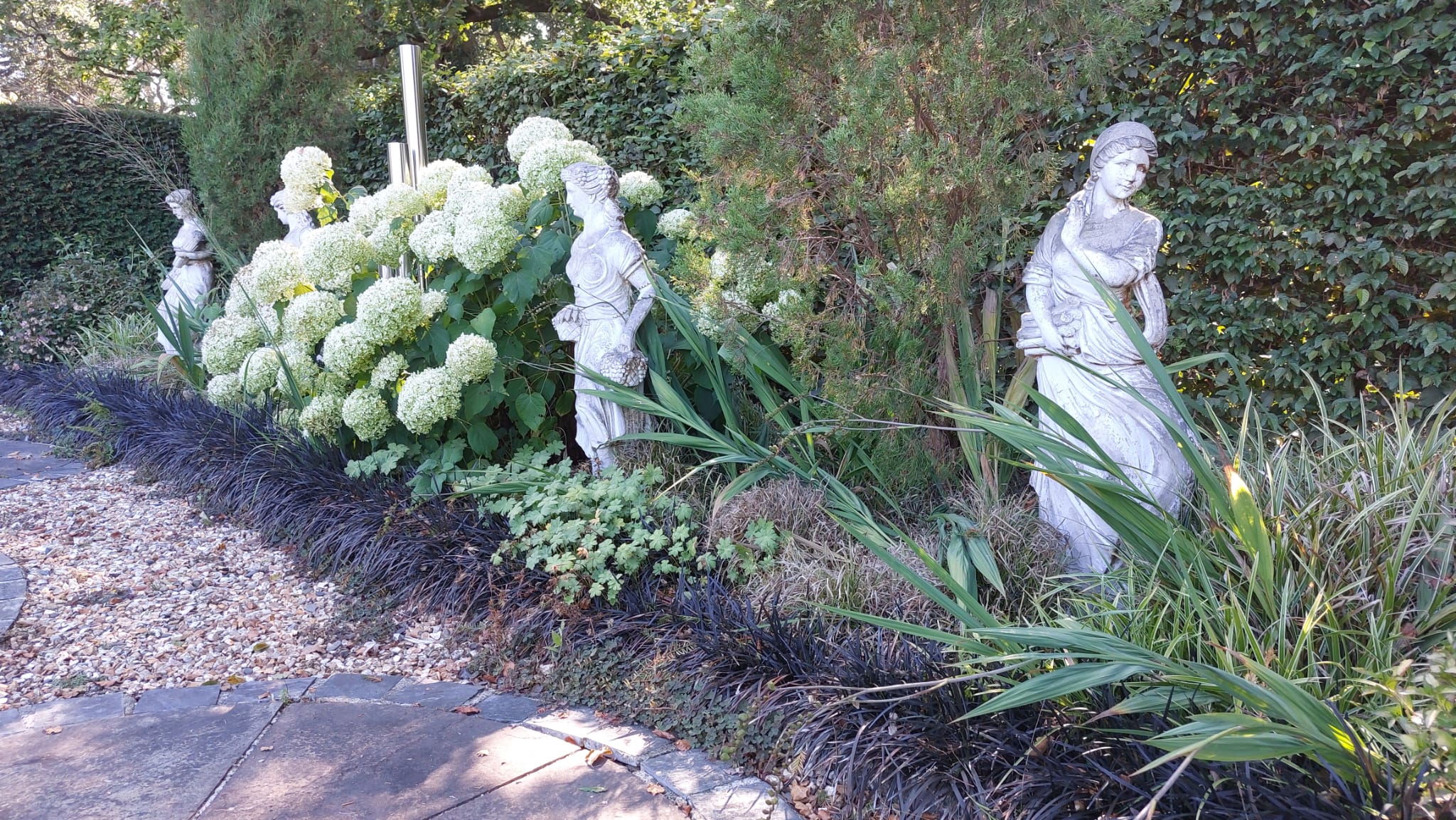
All in all everyone agreed that it had been a great day out. We couldn’t have asked for better weather and the garden was looking fantastic despite the summer drought that we have experienced. The Club’s thanks are extended to Loveday Lewes Gee for welcoming us to Llanllyr and sharing its fascinating history with us. Here are a few more photos from the day (thank you, Gordon, for many of them).
Ty’r Maes Autumn Charity Plant Sale
The annual Ty’r Maes autumn charity plant sale will be held on Sunday, 20 September starting from 1pm. There will be hundreds of plants for sale, more than ever before, and people are also encouraged to bring plants to swap. Proceeds from the sale support the NGS charities.
Entry is free, and tea, coffee and biscuits will be available. There will be plenty of parking space, and also parking close to the house for those with mobility issues and to load/unload plants.
Ty’r Maes is located on the A482, 7 miles SE of Lampeter and 1.5 miles N of Pumsaint. What3words – eminent.notch.dunk. Look out for yellow NGS Garden signs.
This is a great way to spend a Sunday afternoon, browsing well-grown and unusual plants to add to your garden, and meeting other gardeners over a cup of tea. The walk from the parking area to the plant sales area will take you through the beautiful garden. This is an opportunity not to be missed!


Many thanks for the plug and what a brilliant write up of the Llanllyr visit!
All the best
John
LikeLike