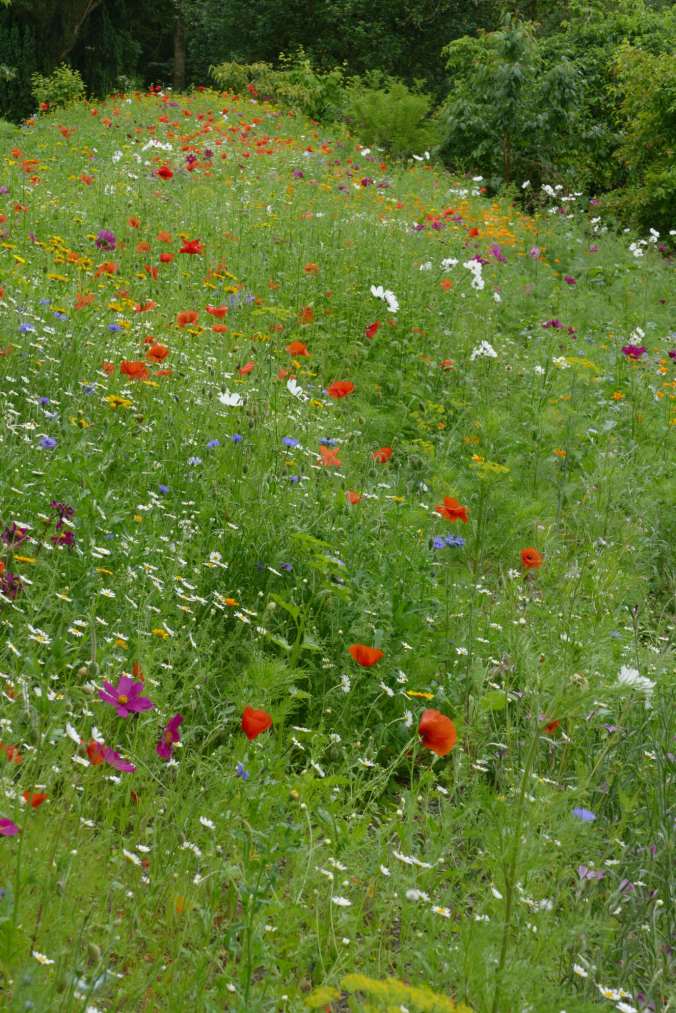
Many thanks to Yvonne for her notes on Richard Bramley’s timely talk “Autumn into Winter” to Cothigardeners in September which we were sadly unable to make, but which was well attended and enjoyed by all.
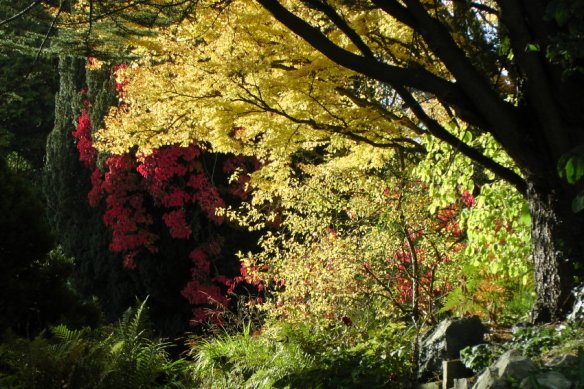
Richard covered great plants for good autumn colour including Acers, Berberis, Euonymus and Cornus racemosa which has black autumn foliage.
Colourful winter stems from Cornus species and Salix (willow) can add to interest.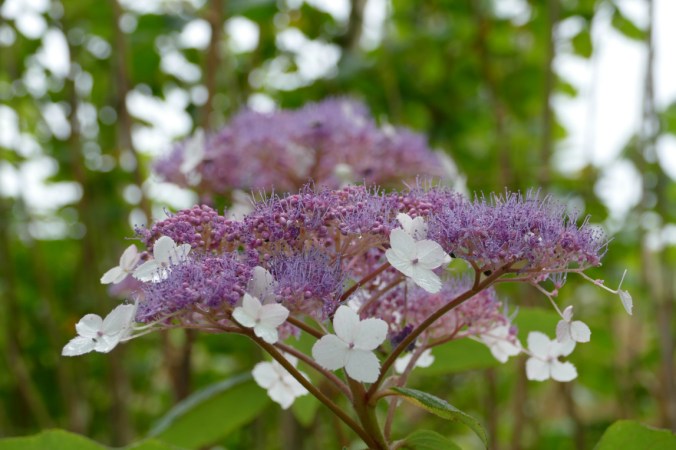
Hydrangea flower heads last well into autumn, even as colours fade. Some forms even flower late like the above form of H. aspera, in bloom in early October. Look out for the Forever series, as they keep on flowering. Cut down Hydrangea Annabelle to the ground in spring as it’s a herbaceous variety so flowers on the current year’s wood, as do H. paniculata varieties.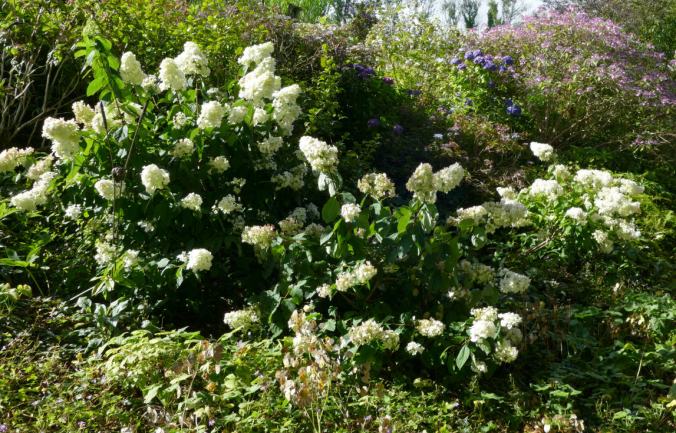
H. macrophylla flowers on last year’s wood, which may get frosted in spring, so killing the flower buds.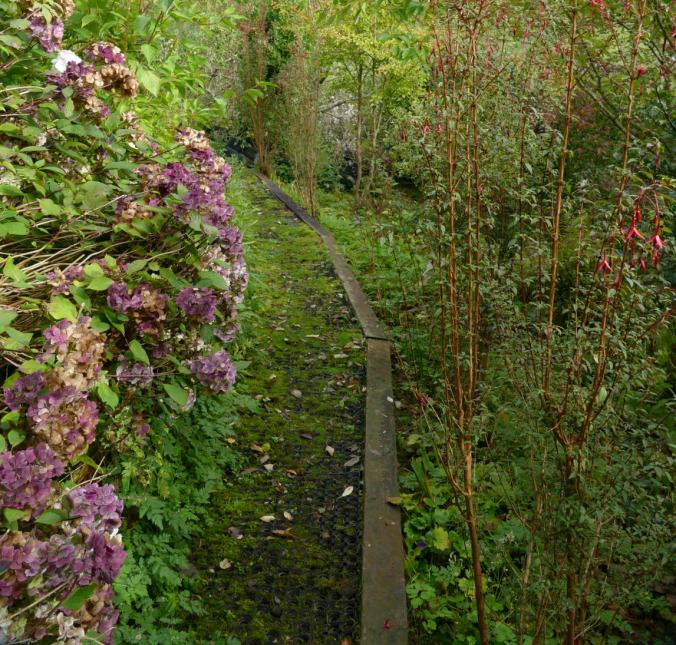
Other good plants for autumn are Lespedezia, Aconitum. Fuchsia magellanica, Astrantia, Campanula – if they are given the Chelsea chop (prune the height by a third in Chelsea Flower Show week), these plants will flower later on shorter stems.
Hardy Chrysanthemums sold in the autumn as domes of flowers, should be treated as bedding. Herbaceous Chrysanthemums should be hardy and are a good addition to the garden.
Some Asters (Michaelmas Daisies) can get mildew due to dry or stress (nova belgii types). Closely allied to Asters are Kalimeris, which are good plants, along with other Asters.
Annual Rudbeckia and perennial Rudbeckia are excellent plants for the autumn, but they can get very tall. Cut them down on the longest day and they will flower a little later on shorter stems. Heliopsis, Leucanthemella will grow in shade. Persicaria amplexicaulis is a pretty thug, and needs to planted somewhere where spread is required.
Viola cornuta, the smaller the flower, the hardier the plant. Salvia species, long flowering but not hardy, can extend flowering up to frosts but take cuttings a.s.a.p. to overwinter ready for the following year. Solidago x aster is another good plant and not at all boring.
Grasses can extend a season of interest right through winter, and can be successfully mixed in with herbaceous plants rather than a bed of grasses. Panicum species have a lovely arching habit. Stipa gigantea, above, is another good grass, and doesn’t self seed. Pennisetum varieties, treat as annuals, though they can be overwintered in a cold greenhouse or polytunnel. Cardoons also have wonderful seed heads in winter. Don’t be too quick to tidy in the autumn, as the frost on grasses, cardoons, etc give a new dimension to the garden. They also protect the roots from frost, and give cover to insects, hedgehogs, etc.
 The trip which Fiona had organised with Stephen and Mel Lloyd for Cothi Gardeners to visit the Hergest Croft garden for a combined guided tour and seed/cutting collection was a huge success. We were really fortunate with a benign weather slot in what has been the wettest spell for months, and were thrilled that Steve was so generous with his time and advice, whilst Mel provided us all with bags, and names to record the many seeds, fruit and cuttings we were able to collect in a two and a half hour walk.
Hergest Croft is such a special place with one of the finest collections of trees and shrubs in the British Isles including national collections of hundreds of different Sorbus, Betula and Zelkova, as well as being wonderfully peaceful and beautiful whatever time of year one visits.
Steve demonstrated it’s always worth cutting into a few seeds just to check if they’ve got viable white/green centres. Sometimes a tree will be laden with seeds which look fine, but are in fact empty and will never germinate. Also he pointed out some of the trees where it’s best to save seed from the tree (e.g. Acers and Sorbus) and others (e.g. Magnolias and Davidia) where it’s better to collect from seed or fruit that’s fallen to the floor.


Click here for more about Hergest Croft, and there’s still time to plan a visit for their special autumn plant fair on Sunday October 13 th – Hergest Croft Autumn Fair, Ridgebourne Road, Kington, Herefordshire HR5 3EG with over 40 plant and craft stalls. Open 10-4.30pm. Admission £6.50.
What I didn’t know before Stephen told us, as we walked through the garden’s glades and reached the top of the Sorbus collection, is that the garden rises to over 1,000 feet above sea level, so many of the well labelled trees which are indigenous to China and the Himalayas will be quite comfortable with the conditions here.
Stephen, the Head gardener in a team of 5 who manage the 70 acres, has worked as a gardener at Hergest for 40 years, and has grown many of the now mature and rare trees from seeds sent to Hergest from collectors around the world.

 So to have him passing on his tips as to how best to choose and propagate material was a rare treat, and all this in a year when many trees were laden with berries and seeds after a bumper year for pollination and fruit production.
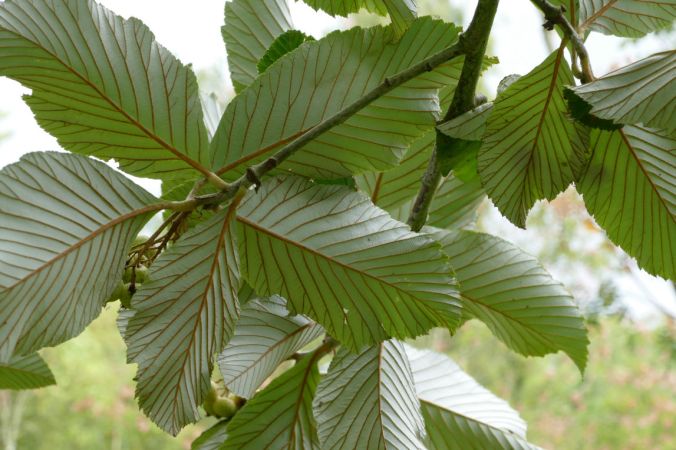

Thanks very much to Stephen and Mel for their very warm welcome and generosity and for making it such a very special day. We look forward to letting them know in due course how well we get on with the propagation, once we get all the material prepared for sowing …

A reminder that this month’s meeting on Wednesday October 16th at 7.30 pm is by Neil Barry on “The Plant Hunters and Explorers”. Do arrive in good time for refreshments and a catch up before we start.
Neil is originally from County Cork in Ireland and is now living near Swansea.
He trained at the Royal Botanic Gardens, Kew for three years whilst also studying for his horticulture qualifications at Capel Manor College near London and Berkshire College of Agriculture. After completing training at Kew, he moved in to teaching horticulture and completed a Post Graduate Diploma in Education. He has been a lecturer in Horticulture for 8 years, most of which was at Neath Port Talbot College but has also taught at The National Botanic Garden of Wales and elsewhere.
Finally a date for your diaries – our annual Christmas meal will be on Wednesday December 11th lunchtime at the Forest Arms Brechfa, our very successful venue last year. We should have a final menu available soon, and will need names and deposits shortly and hope that many of you will be able to make it for what’s always an enjoyable event.

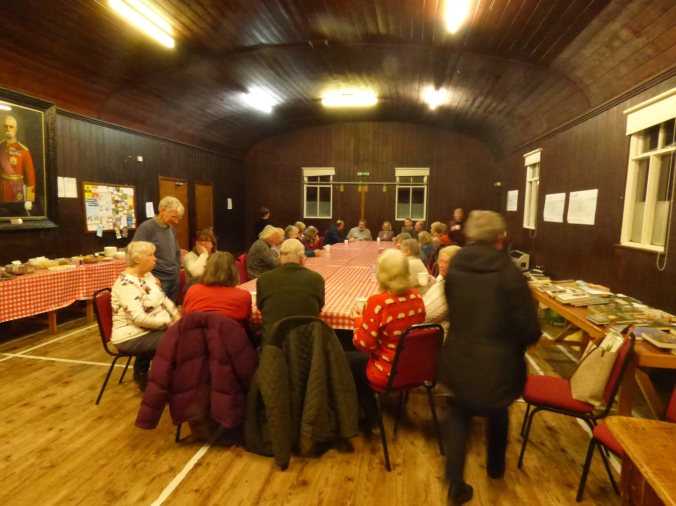
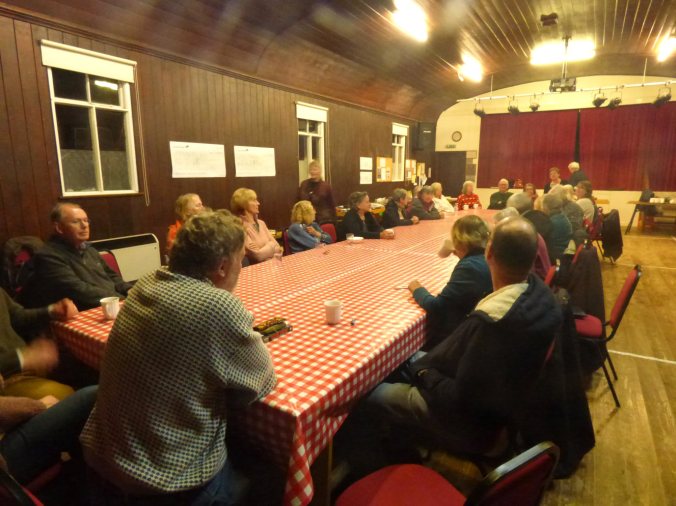






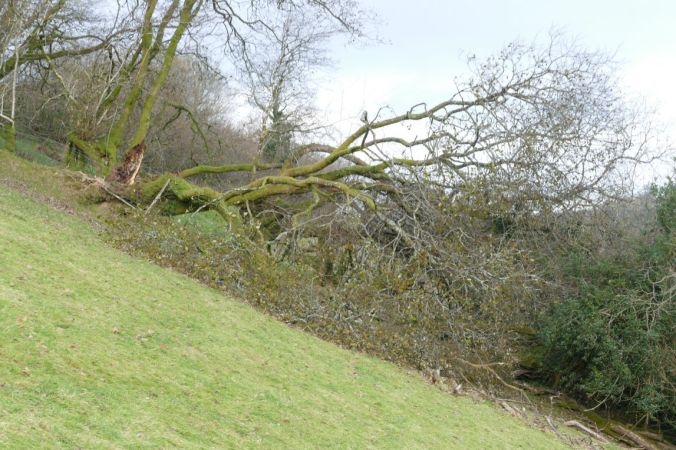
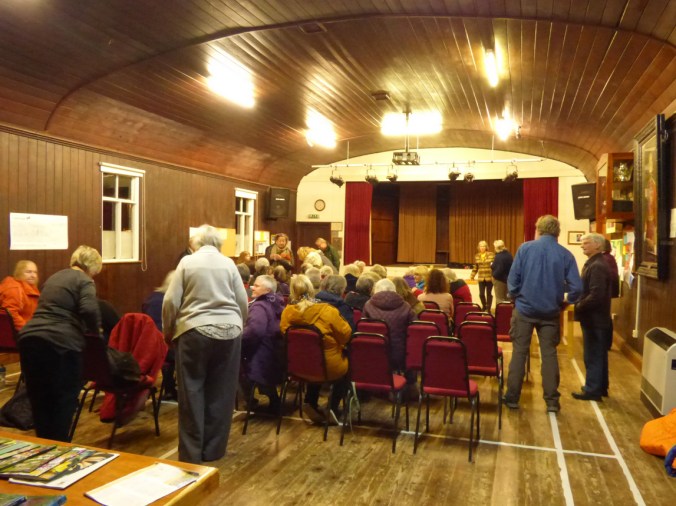 Fortunately the snow had all gone by the time Di O’Keefe came to talk to us last month about her wonderful work helping hedgehogs in West Wales. Di began by explaining how she came to set up the West Wales Hedgehog Rescue, and has gradually built up an extensive network of volunteers and helpers, including our very own Jenny, which means that at any one time she can have up to 40 hedgehogs in her temporary care.
 For more specific information on ways to help hedgehogs in our gardens there’s an excellent summary, “Gardening with Hedgehogs” which you can
  Finally a reminder for everyone who’s booked for the Cothi gardener’s Christmas lunch, that it’s on this coming Wednesday, December 11th at the Forest Arms, Brechfa, arriving from 12.00 to 12.30pm. Having decided against having crackers on the table to save waste, anyone who wants to wear festive attire will be most welcome. See you all there, and a very happy Christmas and New Year to all readers.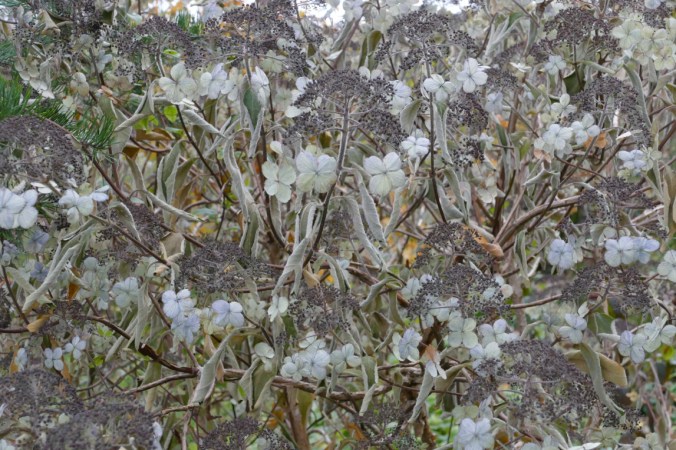




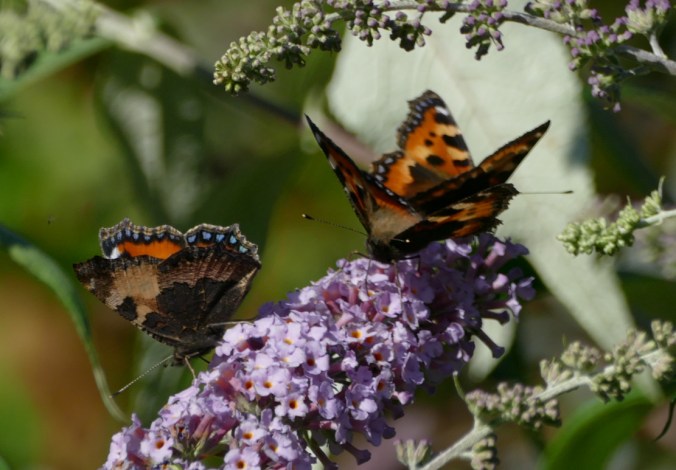 Along with a few like Japanese Knotweed and Rhododendron ponticum which were introduced and have since turned out to be more of a nuisance!
 In addition he was involved in bringing nearly 24,000 young tea plants from China to establish a fledgling tea industry for the British Empire in the Himalayan foothills in India.
 They have collected many novel plant species and cultivars from trips to South East Asia.
 For any disappointed not to be able to grab a packet of Dahlia merckii seed after Neil Barry’s talk, Julian apologises – they all got snapped up very quickly. But he does have more available which he’ll bring along to next month’s meeting (£1 per packet for club funds). Julian suggests anyone who has the seeds already, keeps them in the fridge until late February and then sows the longish black seeds, not the remaining chaff, into seed compost kept in a warm place until germination has taken place. Then grow them on and prick out in a frost free place to be planted out in late spring. Just like tomatoes really, and they should germinate as easily. You do have to watch out for slugs whilst the plants and shoots are young, but then they grow away quickly and you should be rewarded with similar flowers to these next summer, which as Julian mentioned, are a brilliant late season pollen source for honey and bumble bees. Plus the tubers should be hardy enough to survive in the ground over winter, maybe with a little extra mulch.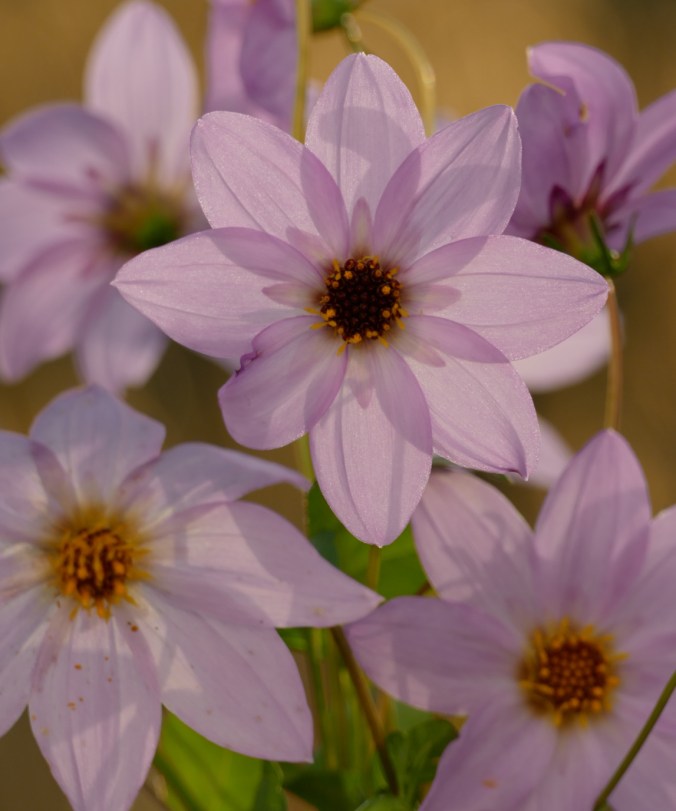


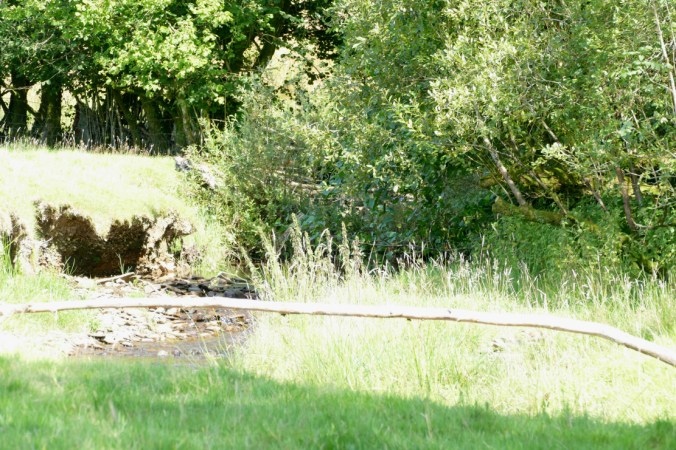
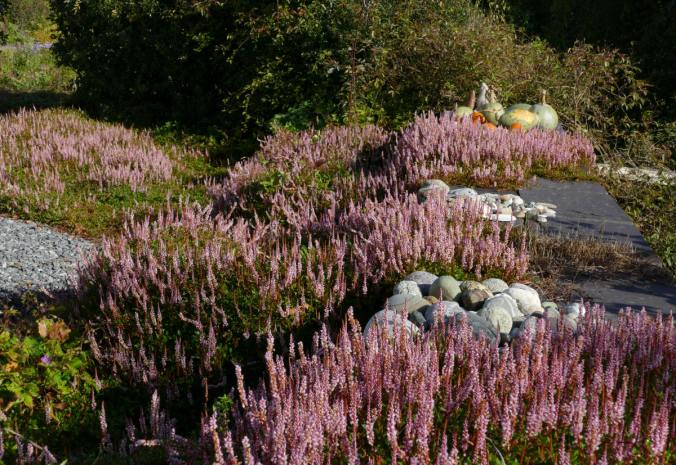 However we’re delighted that Richard Bramley, who’s visited us several times before from local Farmyard Nurseries, has agreed to come at such short notice and talk to us about plants to take us through autumn and into winter.
  Members will know Richard always gives us a great talk, and he’ll also be bringing along plants for sale. To quote Richard’s words about this talk…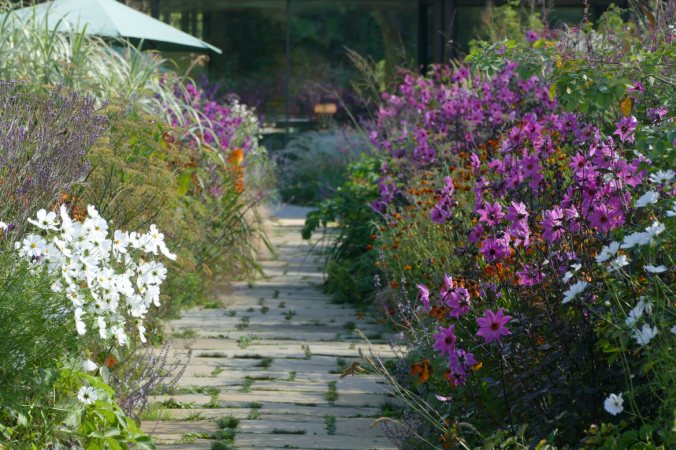

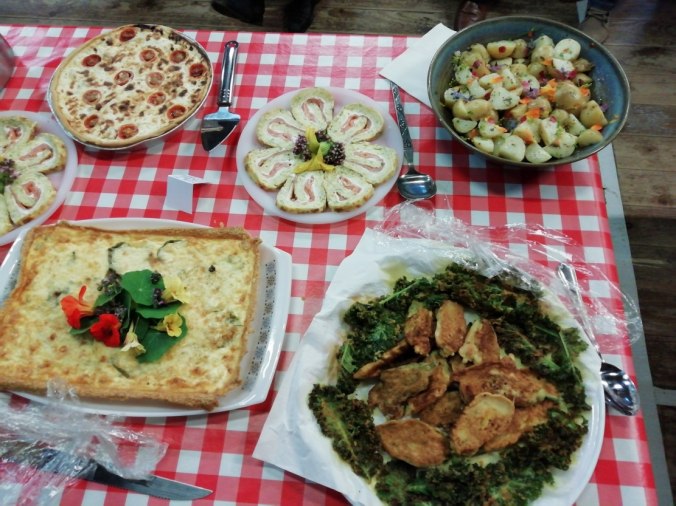 However everyone who came had a great evening and enjoyed a real feast as members rose to the challenge of producing a plate of food to share incorporating leaves and flowers grown in the garden.
  The pictures give an idea of the imagination and standard of the dishes available, and I’m guessing there will be a fair bit of recipe sharing following on from this.

 A reminder that on Sunday August 11th, John and Helen’s garden at Ty’r Maes, Ffarmers, Carmarthenshire, SA19 8JP, opens for charity for the National Garden Scheme , from 13.30 to 17.30, admission £4.00.