Lockdown Update From Cothigardeners

So we head towards May, still firmly in national lock down, and having enjoyed one of the most glorious, quiet, sunny and peaceful springs I can remember. Ever.

Many thanks to those members who’ve sent me some pictures from their gardens recently :

From Derek and Tina a couple of weeks ago:

Cherries pollinated by bumblebees…

Distant hills across the garden hedge

Peaches hand pollinated by JoJo

Why we love spring.


Thanks too for these images and descriptions from Elena :

 Warm weather, Ceanothus and pink walls, almost Caribbean!

Bluebells are having a great year. Anyone else noticed that they have seeded everywhere since last year?

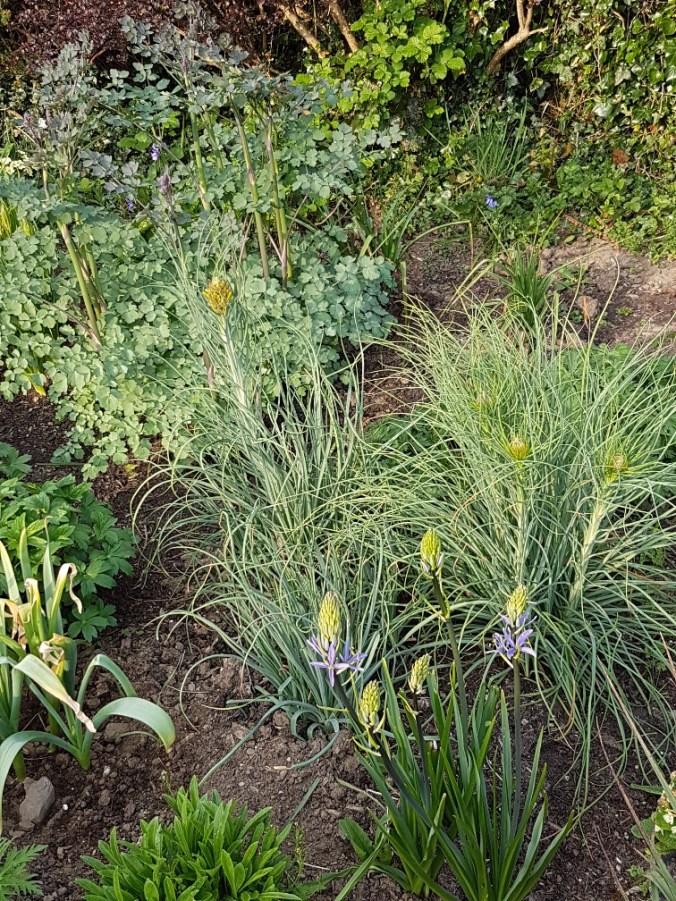
 The white broom in full bloom! Not sure if the yellow one in front has made it through the winter though 😦

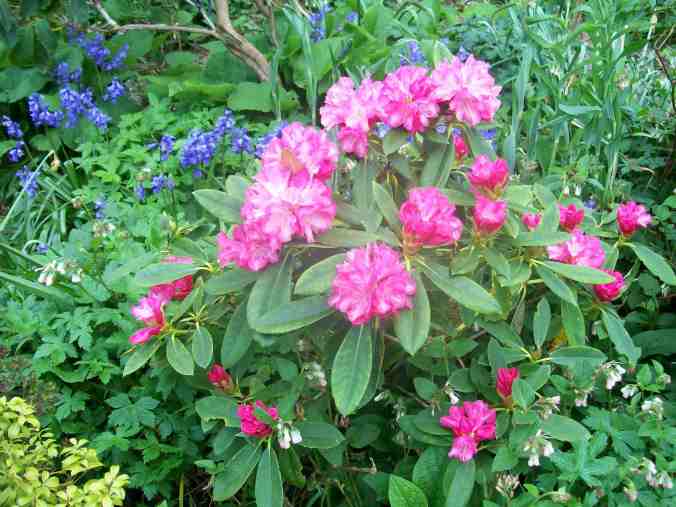
Wonderful pop of colour from these. Getting more today in my order from Ty Cwm.
BTW Helen tells me Ty Cwm are having a fantastic year for sales, she is well pleased! Gwenda reports that Roberts are also having a great year and judging by Farmyard’s posts they are too!

The first of our strawberries in the polytunnel. Looks like we will have a huge crop this year!


And also for these from Alison :


And for these from Yvonne:

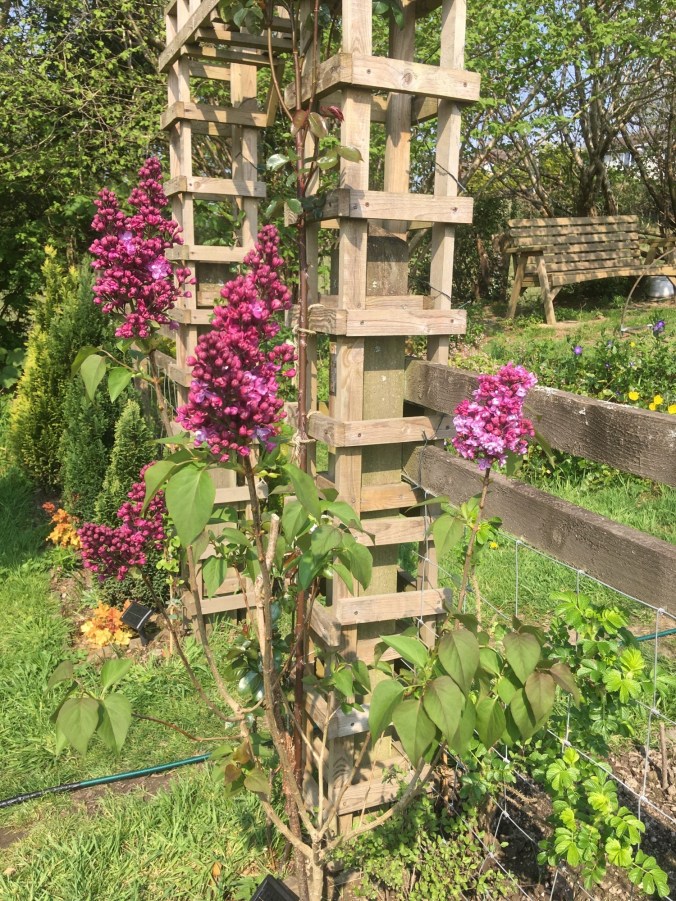
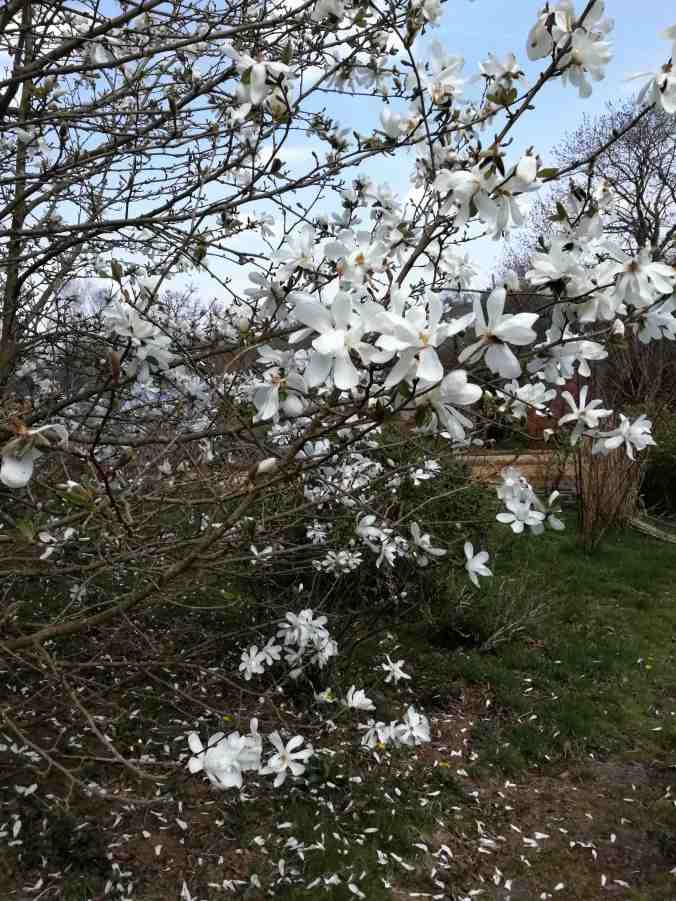
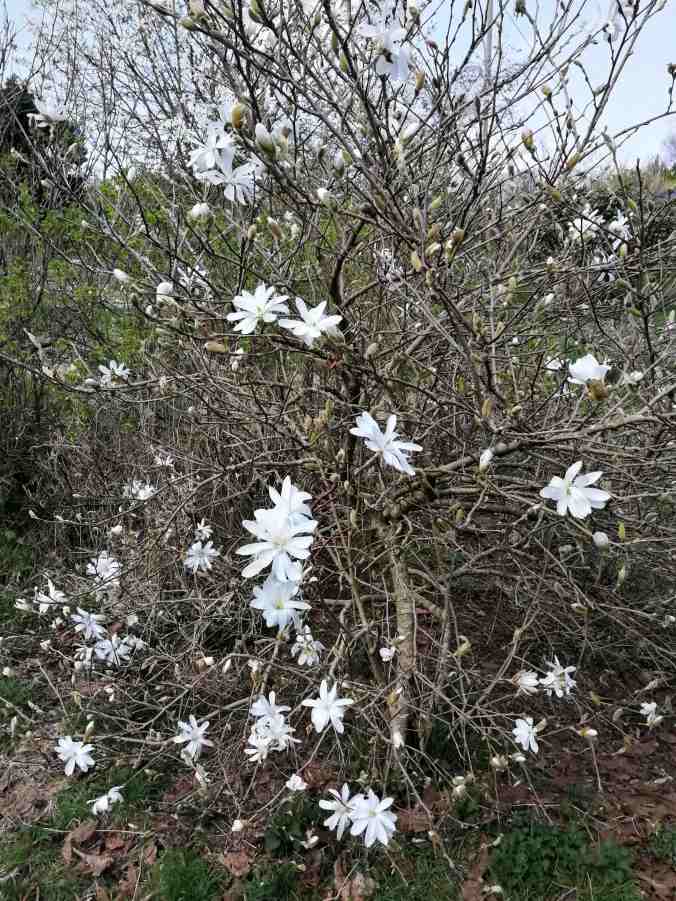
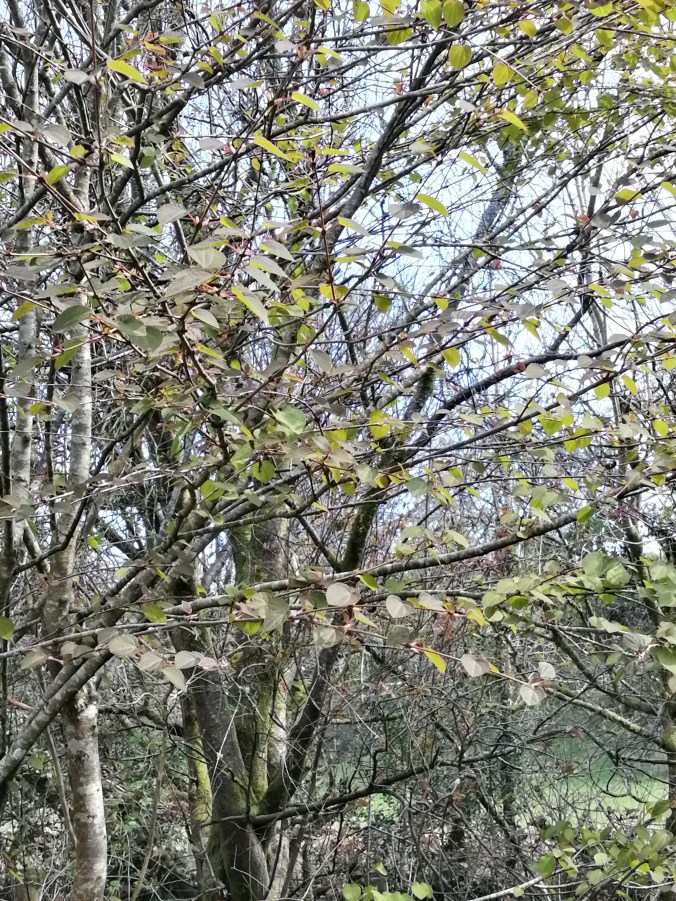
Here are some pictures from my garden taken last week.

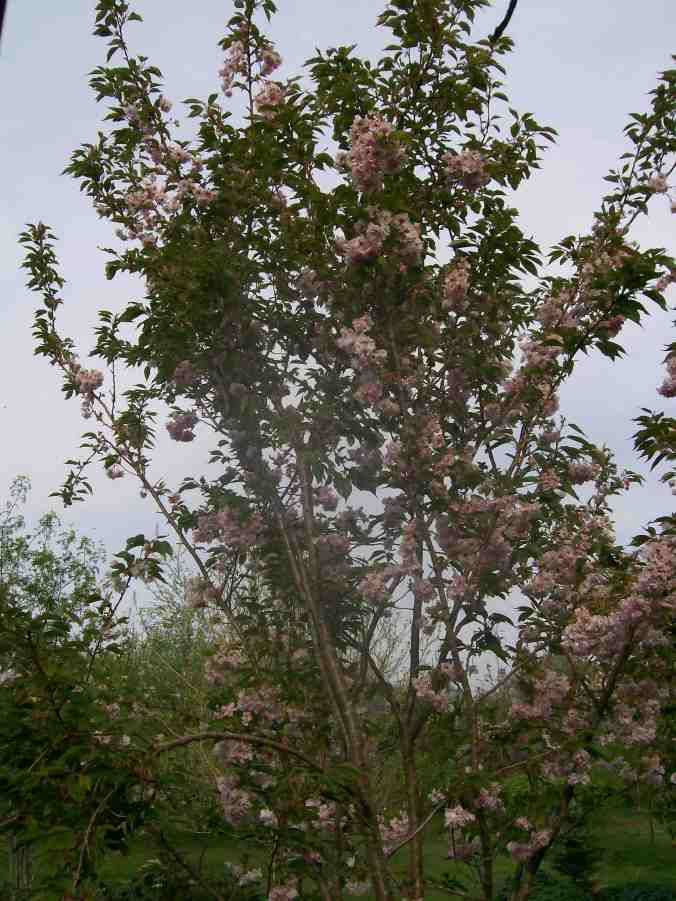
The pink, over the top, flowers of Prunus kanzan are wonderful at this time of year. They follow on from Prunus Tai Haku with its single white flowers.

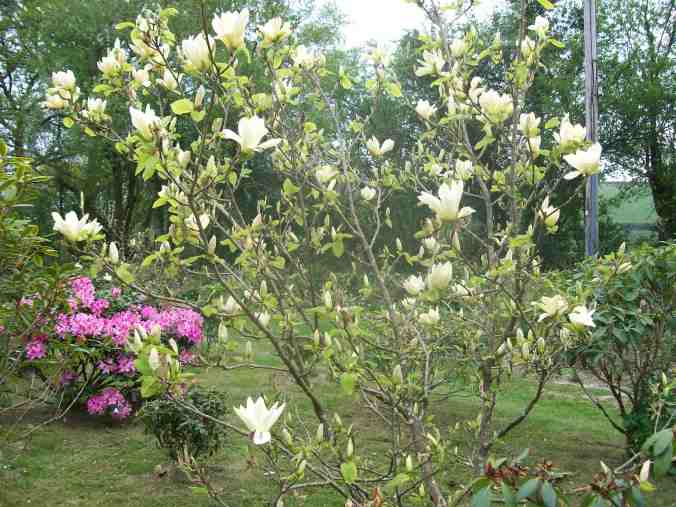
The unnamed Magnolia which was sold to me as wilsonii, but clearly isn’t. However, the flowers are wonderfully scented and loads of flowers from a young age.

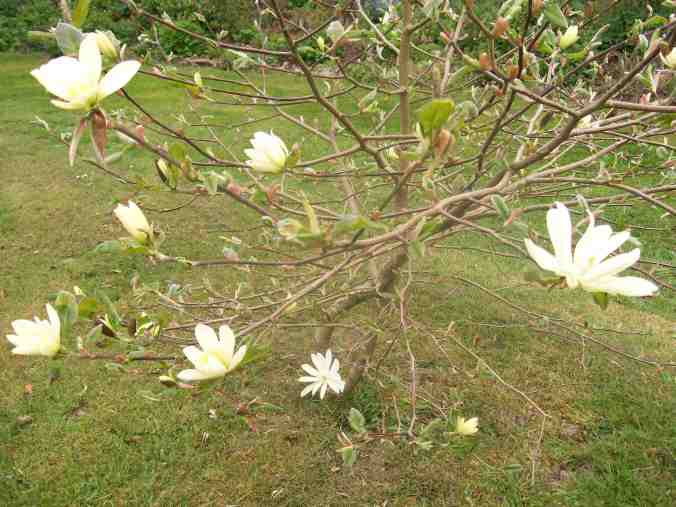
Also, Magnolia stellata flowering well this year.


Evergreen Osmanthus delavayi, coming to the end of its flowering period, but still has lots of small white scented flowers.

Amelanchier lamarckii, raised from seed, has started flowering.

I love the leaves of Cercidiphyllum japonica as they come out, slightly bronze. This small tree has wonderful autumn foliage, smelling like burnt sugar.

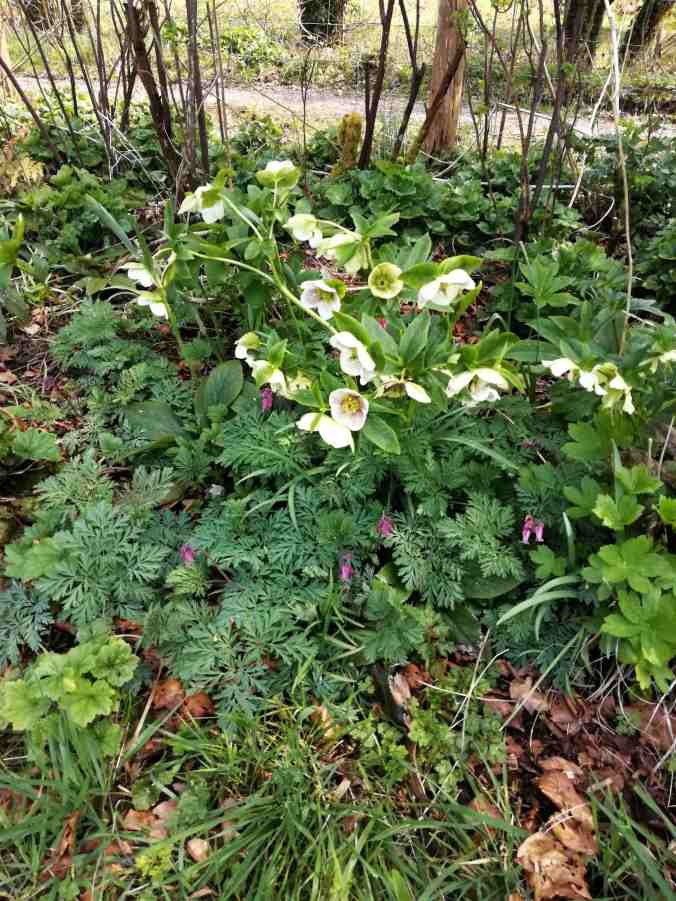
Hellebores and Leucojum ‘Gravetye Giant’ still looking good.

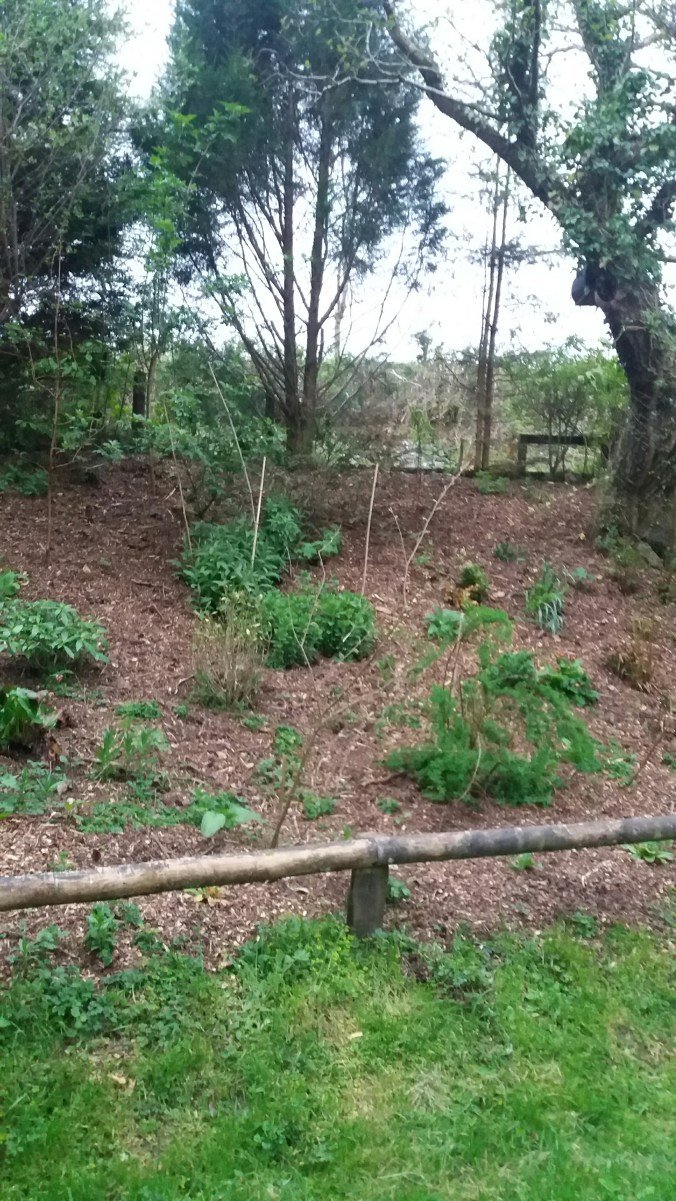
The raised beds have been rejuvenated with new boards, and the arch has been installed. Watch this space for more developments.


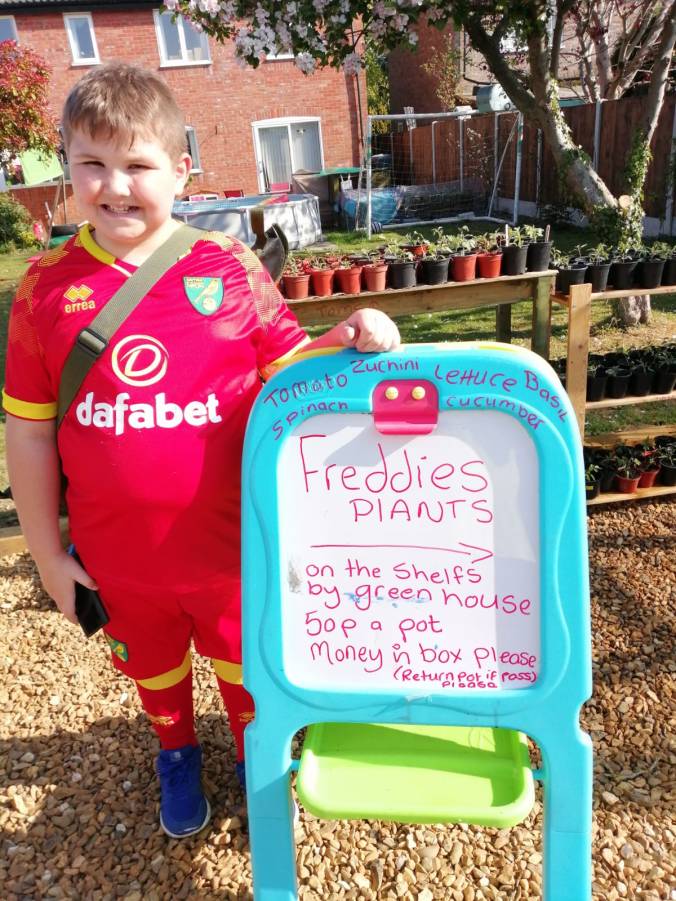
And Avril’s passed on how her and Dave’s grandson Freddie, has caught the gardening bug young, and has been sowing and growing seeds and selling the plants from their garden in Norfolk to raise funds for cancer research… over £45 raised on the first day!


For those itching to get out and about to look at other gardens at this always exciting time of the year, here are two links to initiatives to bring garden experiences into your homes.

The first, locally, is a new garden blog set up by Joseph Atkin of Aberglasney Gardens, which as yet hasn’t made it out onto their website, but you can access by clicking here.  It’ll keep you up to date with how the gardens are looking, with fabulous photos by award winning local photographer Nigel McCall.

Secondly, the National Garden Scheme has been setting up a whole range of video’d garden tours of gardens which would normally have been opening for charity, but  currently remain closed under pandemic restrictions Click here for more, and also how one can still support the charity’s wonderful work, especially vital in these challenging times.


To close, a few snippets from our own garden.

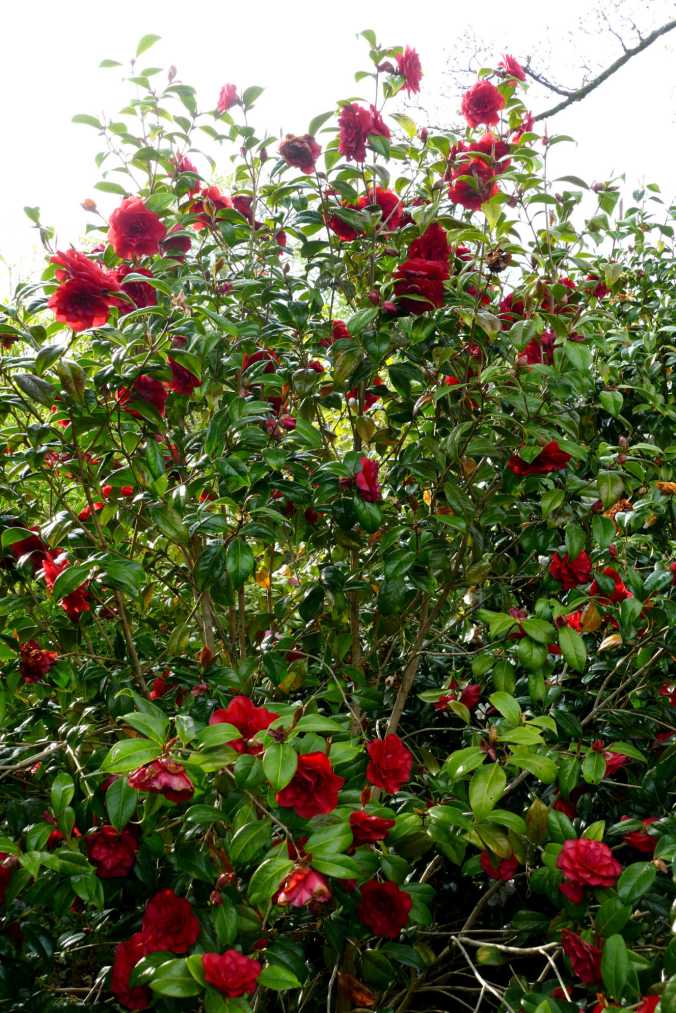
Firstly a Camellia recommendation – Camellia “Les Jury”.

Nearly a decade ago we planted perhaps a dozen named forms of Camellias which we thought we’d carefully researched. They’ve taken years to really get going, but this year has been their best ever. However many, maybe most, have flowers which don’t die gracefully, leaving browning petals. But this one, has always been a star performer for us and largely escapes this failing.

It also seems to flower over a really long period – nearly two months, and even better the new shoots and leaves are tinged with red/brown for several weeks.  Plus it’s doing this in spite of me planting it within a few feet of a mature larch tree. So if you fancied a blast of strong colour, which looks great in any light, but especially backlit in the evening, then why not think about getting one?

OK it’s red, and doesn’t attract any insects, but heck, you occasionally need to make the odd sacrifice 🙂

And now one of the benefits of doing a blog. I thought after all these years, because I was writing this piece, just who was Les Jury? Which after a fair bit of ferreting on the internet brought me to the amazing New Zealand Jury garden at Tikorangi and their multi generational family of gardeners and plant breeding history, which I’d never heard about before. If you haven’t either, then you can read loads about the place and the people if you click here.

It turns out that “Les Jury” was the final Camellia of Les’ breeding programme and a very fitting tribute though we (it turns out) have several other named and AGM Camellias out of this same stable.

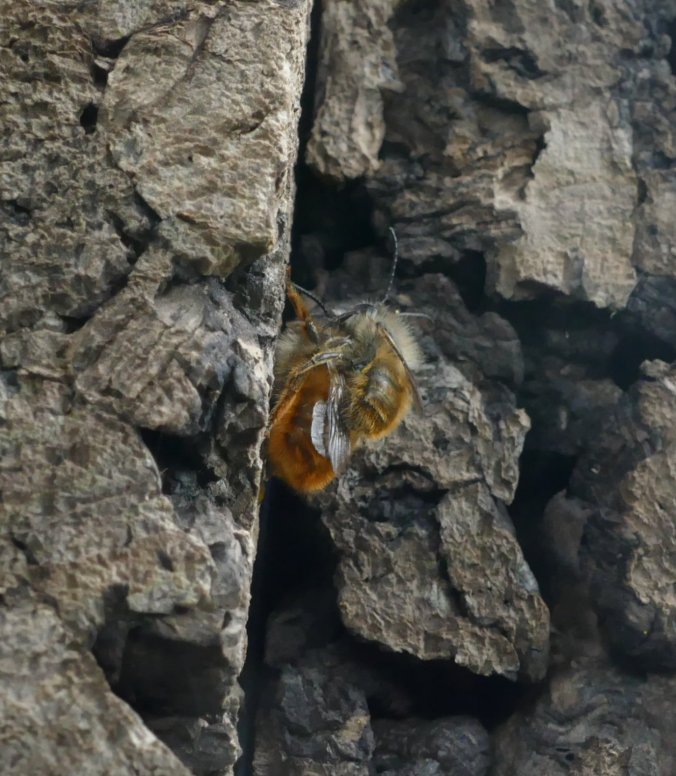
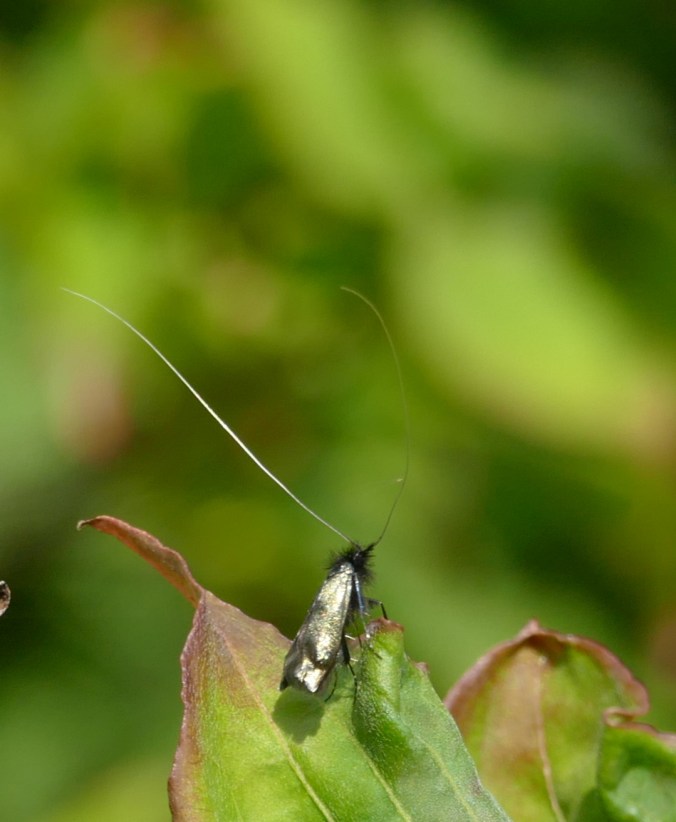
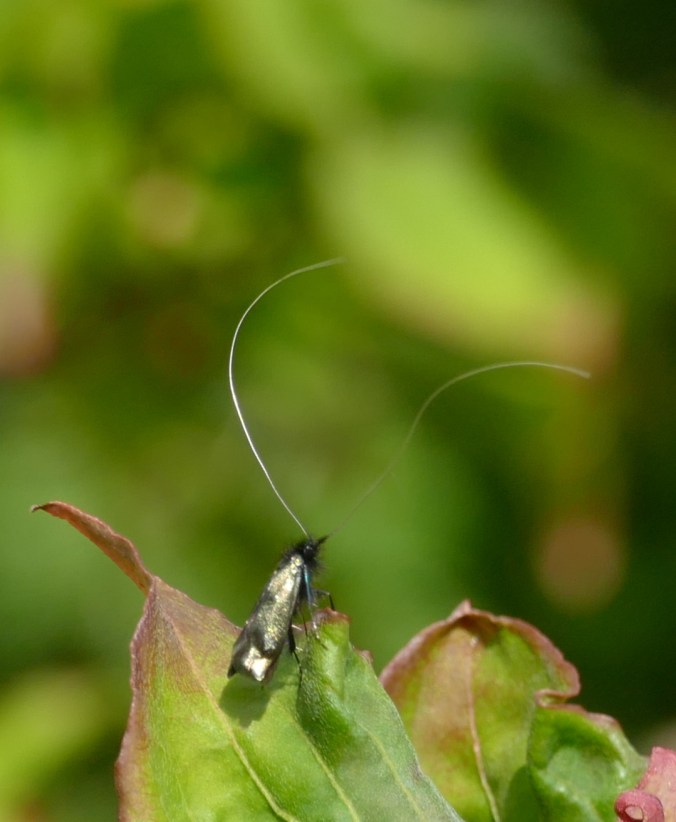
Secondly, Fiona spotted this splendid small metallic sheened moth, probably a Green Longhorn, Adela reaumurella, in the garden this week. One of the family of Fairy Longhorn micro-moths, we’ve never seen it before,But it was a real treat to watch as a small group of males sat on the leaves of  Cornus kousa ‘Miss Satomi’, waiting, and almost casting their enormous antennae to try to catch a passing female…

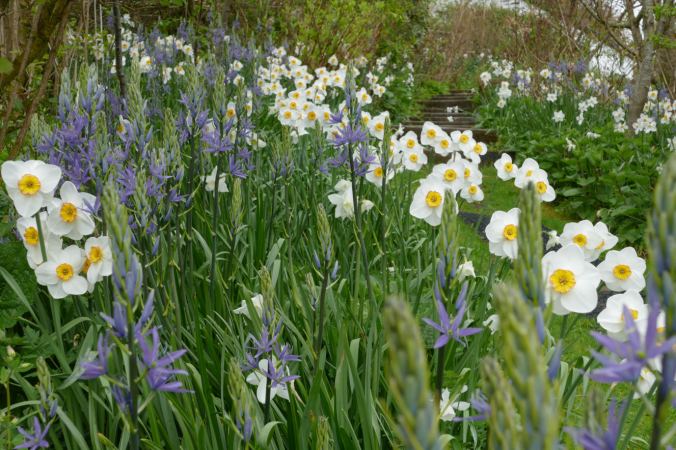
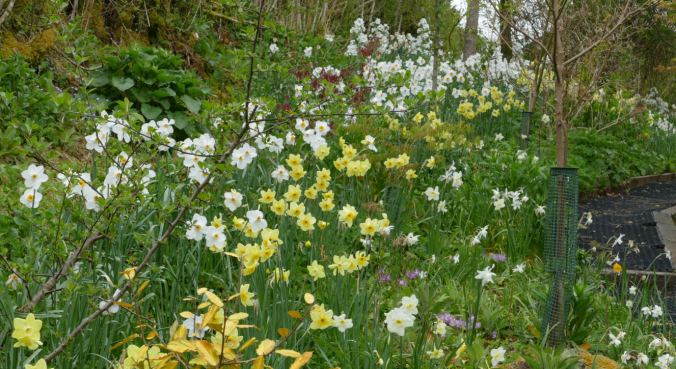
For anyone thinking that daffodils finished weeks ago, some of the later forms like “Merlin”, “St Piran”, “Oryx” and “Trellisick” can provide colour, height and even fabulous scent right to the end of a very sunny April…


Finally, as always, it would be lovely to keep hearing from members about their favourite plants, or things in their gardens as we go through the next few months. Why not write a few words and send an image or two, preferably resized down to less than 1 MB? I can’t promise to put everything up online immediately, but usually within a fortnight, and it’s a great way of keeping in touch and passing on information.

Or use the Cothigardeners Facebook Page.

You can send things to me at:

Cothigardeners@gmail.com

Thanks again to all who have contributed to this post.

April Sunshine and Lockdown in Cothi Gardens; Sally the Slug and Harry the Hare

As the Covid -19 lock down is maintained and we move into April with no clear exit strategy, I’m guessing we’re all feeling incredibly fortunate to be living in this wonderful part of the world, with our gardens to appreciate in what must be one of the best runs of dry weather we’ve had in ages. (Whisper – we could really do with some rain soon…).

In the absence of any meetings in the near future I’m very grateful for those members who’ve sent photos and information on their gardens to me or Elena recently.  Having just acquired a replacement granny phone (thanks of course to Fiona for sorting this) which I need for receiving SMS messages to log in to this website (the first got trashed last Saturday when I came off my bike at speed in the forestry), I can now upload these insights below:

Alison Williams sent these lovely photos of spring flowers from her garden : 


Anne Thomas sent me this background on what she’s been up to recently :

Well we have been creating a new raised bed in what was an untidy corner (one of many) and laying some slabs and creating a new bed in a corner that housed the oil tank until last month. Have a lot of Hellebores so have put some in the new area and a couple of Acers bought at one of the garden talks. And the good news is that online ordering still seems to be happening with plants!

New raised bed. I think I will plant some tumbling plants above stone wall (built by me when we put in the greenhouse).


Interesting daffodils ( ? Oxford gold)


I think we should feel very lucky living where we do in these difficult times. Must be awful stuck in a flat with children. We don’t need to see or speak to anyone other than the sheep!

Keep safe. I look forward to seeing other gardens.
Anne Thomas


Derek Marshall sent me this:

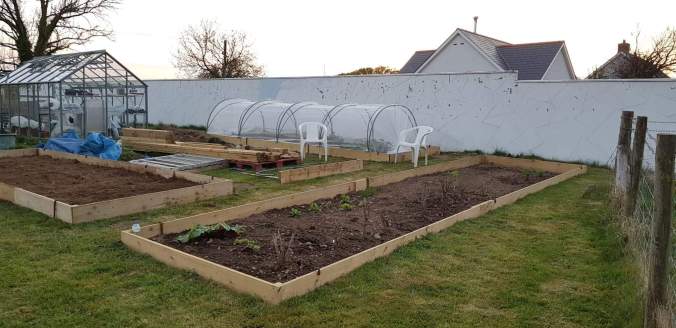
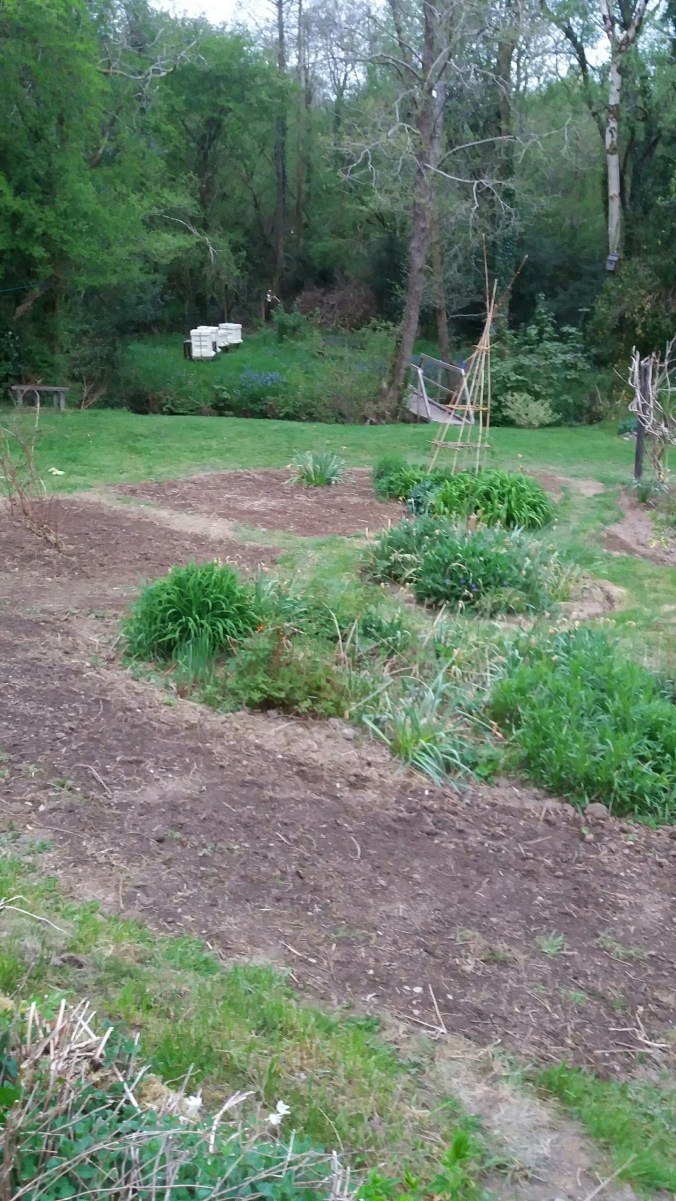
Raised bed evolution season by season!
The ground is so wet here that we needed to give some depth to the beds, hence raised beds. Originally with mole earth and compost, now supplemented with sand, grit, farmyard manure, more compost and ash from the Rayburn in combination or composition depending upon the intended planting for each bed.


The near bed has been prepared but needs to have holes burned when Tina wants to plant brassicas; the bed on the right still has Leeks; the bed on the far left is now planted with onions, and the central bed is still a bit of a hodge podge mess needing to be tidied up prior to reuse this season.
The fabric is heavy duty, keeps the soil warm and moist, and in combination with the holes reduces weeds, and weeding, tremendously, and the incidence of slugs is also much reduced. I use a small kitchen blowlamp to create the holes. It has many advantages: it is more accurate, easy to use, seals the holes as they are burned so no fraying, and therefore minimises errors on an otherwise potentially expensive resource, the fabric. By this method, and secure fixing by stapling, the fabric normally lasts 3 years, so also defraying the initial cost.
It is clear that Tina is the gardener in our family, but I can complement her efforts by creating structure, and I am weeder in chief, so it all helps.
Aren’t we fortunate at this time to have outside space to relax in, to work in, and to grow in? Additionally I anticipate that in the near future all our efforts to grow our own food will not only be beneficial, but necessary.


I think one of the (few?) benefits of the current crisis might be getting everyone to have to slow down and think about what’s really important.

So here’s a new fable in pictures for these troubled times from our garden – the Tale of Sally the Slug and Harry the Hare….

Harry the hare spent all day racing at speed, from dawn till dusk, getting hotter and hotter, and more and more anxious. But didn’t get anywhere. And ended up exhausted and turned to rusting iron.
(Many thanks to Martin and Angela for this wonderful prop! Click here for their website for any distant readers!)

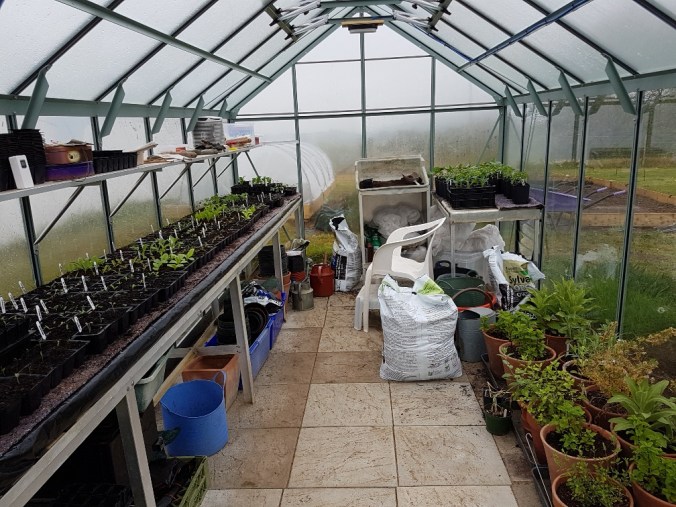
Meanwhile in the greenhouse, Sally, the slimy slug, who spent all night very slowly slithering to the very apex to graze on algae and leaves, decided as light began to tinge the Eastern sky, to take the scenic route down. So abseiled down her own strong and sticky, slimey thread. And enjoyed a wonderful view as the sun rose and warmed her slowly spiralling body as she inched towards the floor. With plenty of time to think about what she was going to do for the rest of the day, and hardly a care in the world.

( Apologies for gender inaccuracies – slugs are hermaphrodites, but it doesn’t work as well with “it”).


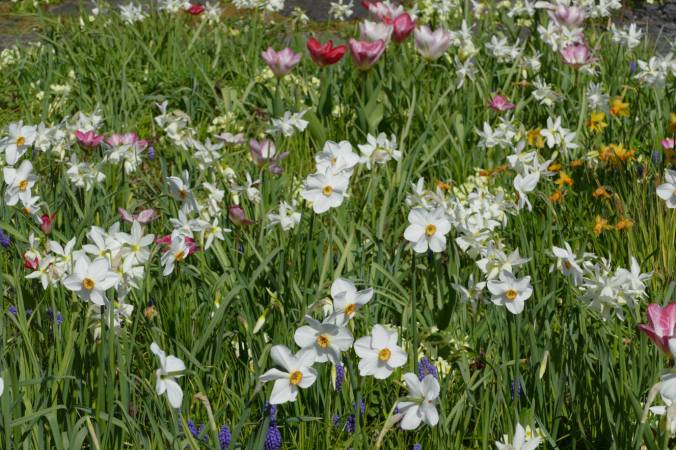
Some of our favourite spring bulbs right now which always make me forget about the hard work last autumn crow-barring them into the ground.  In particular the largely white Nacissus “Thalia” and “Actaea”, and Tulip “Flaming Purissima” :


It would be lovely to hear from more members about their favourite plants, or things in their gardens as we go through the next few months. Why not write a few words and send an image or two, preferably resized down to less than 1 MB? I can’t promise to put everything up online immediately, but usually within a fortnight, and it’ll be a great way of keeping in touch, and passing on information.

Or use the Cothigardeners Facebook Page.

You can send things to me at:

Cothigardeners@gmail.com

Wildlife in our Gardens; Favourite Plants; April Garden Scenes

Greetings to all Cothi Gardeners, and other readers. Here’s a news post with various snippets which might be of interest. Many thanks to all who’ve sent words or photos to either myself or Elena. Do keep them coming…

Carys Williams contacted me with the following information, from WWBIC :

We are your Local Environmental Record Centre (LERC) for West Wales. We would like to encourage people to engage with nature by recording plants and wildlife on your doorstep.

During the CORVID-19 outbreak, the public are urged to work from home and practice social distancing. We think this is a good time to learn more about wildlife in your garden, if it is safe to do so.

The Common or Garden Project is a simple way of recording 6 priority species for beginners. (Hare, Common Toad, Hedgehog, Bullfinch, Blood Vein Moth, and Slow Worm).  We have chosen these six species which are included in the Section 7 list the Environment (Wales) Act 2016.   This is a list of the living organisms that are of key significance to sustain and improve biodiversity in Wales. We need to know more about these species, can you help? For more information click on the link below.

Common or Garden Poster_english

Thank you, and happy wildlife recording!

Carys Williams

Biodiversity Information Assistant

West Wales Biodiversity Information Centre (WWBIC)

Tel. 01994 241468 www.wwbic.org.uk


Many thanks to Brenda for the photo of this gorgeous clump of Ipheion uniflorum ‘Charlotte Bishop’ – An easily grown spring flower related to the onion family the foliage of which dies back during the summer. Growing amidst what looks like a wonderful clump of Snakeshead fritillaries.

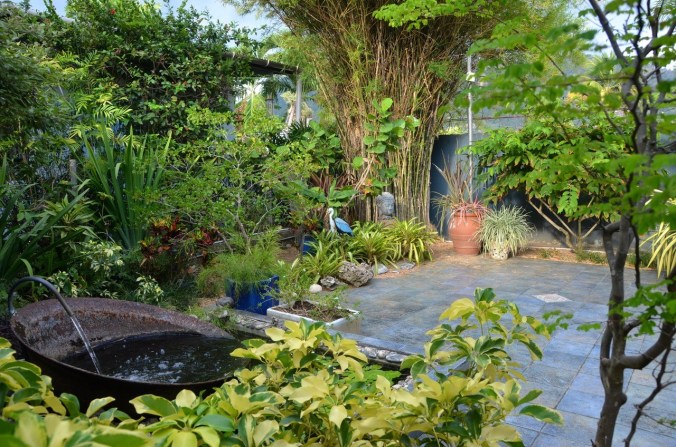
And to Elena for these photos and words about her friend Susan’s amazing garden in distant Trinidad & Tobago, which has a wonderfully exotic and lush feel:

All over the world gardeners in lockdown are turning to their gardens for stress relief during these difficult times. My friend Susan in Trinidad, who I have known since primary school, sent these photos of her small urban garden. What a great use of foliage pot plants! I am sure many of you will recognise the Australian red palms, colourful crotons and bromeliads, bamboo, ferns and the orchids hanging from a tree branch. Lovely … thanks for sharing Susan!!

And back home thanks to Ruth for sending a photo of her productive polytunnel which is providing lots of fresh vegetables for the table during these tricky times, Ruth says :

This is my polytunnel with the brassicas I have been growing over the winter, plus leeks, purple sprouting broccoli, curly kale, cavolo Nero kale and chard. We are enjoying eating them now. If I try and grow them in the summer the caterpillars demolish them!

I’m guessing we’ll all be focusing more on productive plantings this year.

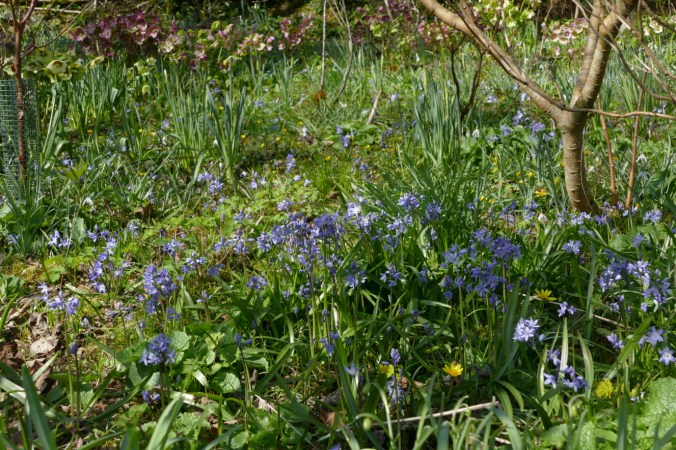
A couple of favourite flowers right now from the garden here at Gelli Uchaf: Scilla Bithynica, the Turkish Squill, shown below, and in more detail in the video clip later. It’s a stunning small blue bulb which flowers for a very long time. We bought a couple from Shipton bulbs several years back, and it spread so well from seed that it’s gradually making a nice carpet of blue, a good 6 weeks ahead of native bluebells.

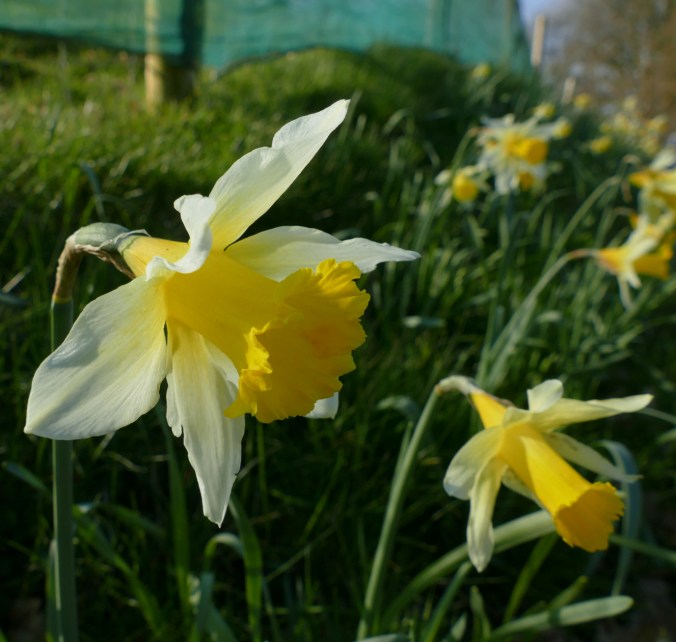
and Narcissus pseudonarcissus, the Lenten Lily :  One of our native daffodil species, which is short and early, and always pale and dark yellow, but quite variable in form. It takes a few years for the snowdrop sized bulbs to settle in, but it’s then really reliable here, and produces quite a bit of seed unlike most daffodils, so can be spread around for those patient gardeners amongst us …

___________________________

The last 10 days of sunny weather have been a fantastic time for early insect activity in our garden, and a great opportunity for seeing just which flowers are favoured by some of our commoner insects.

Day after day of unbroken sunshine, even if the wind’s been nippy, or downright bone chilling – particularly first thing, when I’m out in my nightshirt and long johns. But I hope you enjoy the merged video clips from our garden 800 feet above sea level, in often really chilly and windy conditions

It’s such a thrill to find that after so many years of deliberately selecting and planting more and more insect friendly flowers here, it’s now (relatively!) easy to film such pieces – so many insects find our garden an oasis of provision this early in the year.

Images that reinforce the message that although we all love our flowers, millions of years of evolution have really developed them for their nutritional value to our insect fauna.  And anyone with bumblebee queens a plenty in their gardens in March will probably be familiar with the distinct impression that when walking round your garden, surveying the scene, one or two of these incredibly tough, and large insects will meet you, and if not exactly greet you, then certainly check you out.

Carefully. Circling you three or four times, before heading off on more urgent duties. Just to let you ponder whether it’s them invading your personal space, certainly far too close for safe social distancing.

Or vice versa.

Does everyone else find they get”buzzed” by bumbles?

And has anyone any idea why they do this?

You’ll see in the video clip below, in this order, these wonderful symbiotic insect flower pairings, and see how much busy work is still going on outside, Covid-19 restrictions notwithstanding, in the natural world.

And for any unfamiliar with the wonderfully adapted vegetarian adult Bee fly, it has a sinister life cycle – its larvae are carnivorous, preying on bumblebee larvae. No bumbles, no beeflies.

There’s still lots of opportunities to spot these up to the middle of May, when the adults disappear for another year. Primroses, Aubrieta and Pulmonaria all seem favoured plants for them in our garden.

Chionodoxa “Pink Giant” : Honeybee – Apis mellifera

Scilla bithynica : Honeybee – A. m.

Skimmia “Emerald King” : Honeybee – A. m.

Chionodoxa forbesii blue : Honeybee – A. m.

Primula vulgaris – primrose : Peacock butterfly – Inachis io

Muscari armeniacum: Honeybee – A.m.

Aubrieta : Dark-edged Beefly – Bombylius major

Muscari neglectum : Small Tortoiseshell butterfly – Aglais urticae

Primula vulgaris – primrose : Bumblebee queen – Bombus terrestris

Primula vulgaris – primrose: Dark-edged beefly – Bombylius major

Pieris “Forest Flame” : Bumblebee queen – Bombus leucorum

Narcissus “Brunswick” : Peacock butterfly -Inachis io


It would be lovely to hear from any members about their favourite plants, or things in their gardens as we go through the next few months. Why not write a few words and send an image or two, preferably resized down to less than 1 MB? I can’t promise to put everything up online immediately, but usually within a fortnight, and it’ll be a great way of keeping in touch, and passing on information.

Or use the Cothigardeners Facebook Page.

You can send things to me at:

Cothigardeners@gmail.com

Helping Our Local Plant Nurseries

Many thanks to Elena for this collated information about some of our familiar local plant nurseries. They’re still open, and at this normally busy time of the year are inevitably suffering very badly from lack of visitors.

So do think about whether there’s anything that you need, which you can source from them and help them through these challenging times. You’ll see many have come up with ways to make it easier and safer for us to still use them :

Ty Cwm Nursery : Sad news that Hollys Café at Ty Cwm Nursery is closed. Here at the nursery we understand that some of you may not want to visit us. However you may still want to make your gardens look beautiful. We can take payment over the phone and deliver locally. Give us a call and we’ll do our best to accommodate you. 01570 480655.

Farmyard Nurseries:  we are operating a delivery service for those of us who feel they can’t go out. Ring us on 01559 363389 for a chat, I’m sure we can get things to you. Payment can be made over the phone and plants/compost left where you want them. Alternatively we have set up an outdoor till at the nursery so that you don’t have to go indoors at all if you don’t want to. The shop and market stall are open and free tea and coffee is still available here. The garden is looking lovely too. Mail order is another alternative, see our website for details. I would like to thank everyone who shops with us for such loyal custom and hope everyone stays safe. All the best, Rich.  Please share if at all possible.

Rhoslwyn Plants at Silian 01570 422672 https://www.rhoslwynplants.co.uk/

Robert’s Garden Centre 01570 422756 https://www.facebook.com/robertsgardencentre/
Just another thought- if you’re worried about coming in to contact with people park outside the garden centre and call us on your mobile and we’ll put stuff into your boot…
You can pay by card over the phone.

Penlan Perennials: Hello all! Just a quick update from Graham and Julie here at the nursery. We are still open and sending our deliveries as normal – living in the middle of nowhere has it’s perks! We’re always isolated!! Please keep yourselves safe and your gardens beautiful! (Office) +44 (0)1570 480097 (Mobile) +44 (0)7984 880241

The Works Garden Center Llandeilo 01558 824238 http://growninwales.co.uk/giw_grower/the-works-garden-centre/

______________

Spring is always a great time of the year for planting out new plants, and this year we’ve 2 new plants we’re planning to get hold of if we can, having become very keen to add more great early season nectar flowers for our honeybees, to help them out in the mild, wet winters/early springs which we now seem to be having.

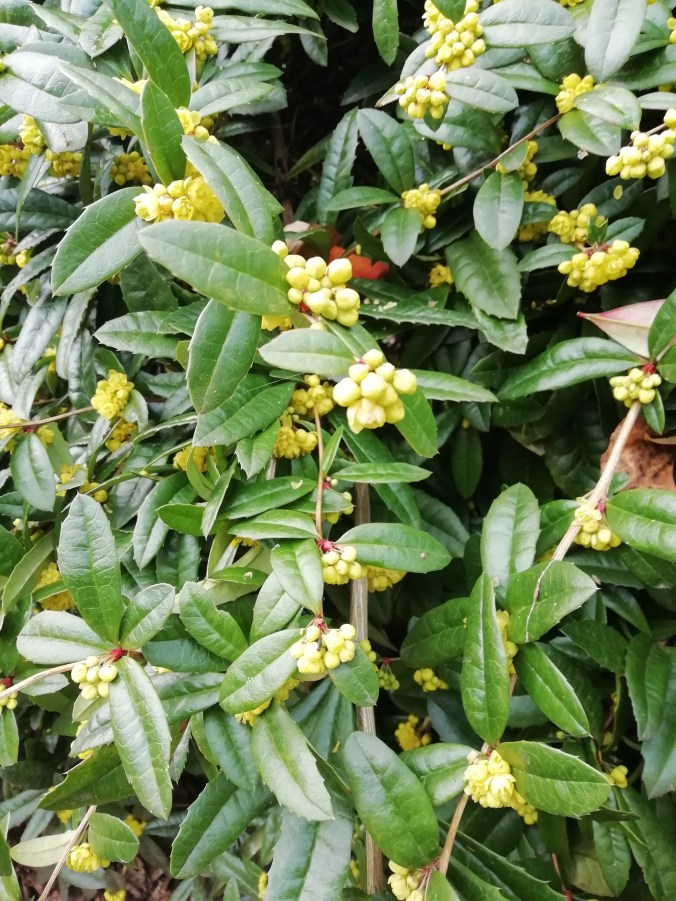
Firstly a medium sized evergreen bush covered in small yellow flowers which Fiona spotted last week on a visit with her Mum to Attingham Park in Shropshire, which caught her eye because of the noise of humming honeybees visiting it.

No label but  Fiona had the presence of mind to take a photo of it, and then being the clever person she is, used an online plant search to track it down. (Picture this – click  for link).

It turns out to be the Wintergreen or Chinese Barberry, Berberis julianae (which makes it another good plant for us 🙂 ). I wonder if any Cothigardeners currently grow it, and have other photos of it ?

Secondly after an email exchange with a friend about which garden plants her honeybees were visiting at the beginning of March, (with us it was mainly our Daphne bholua bushes) she commented that honeybees were flocking to her plant of Ribes odoratum. Originating in North America, the Buffalo currant bears fragrant yellow flowers in spring. Again does any Cothi gardener grow this?

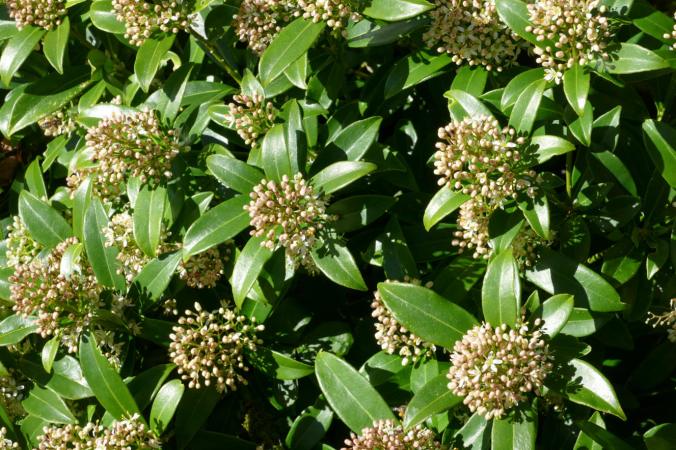
Of course bees quickly move onto the next best thing, as one plant finishes flowering. Right now with us Skimmias (like the one below) are favourites – if the sun is shining!                                                                           _____________

It would be lovely to hear from any members about their favourite plants as we go through the next few months. Why not write a few words and send an image or two, preferably resized down to less than 1 MB? I can’t promise to put everything up online immediately, but usually within a few days and it’ll be a great way of keeping in touch, and passing on information.  Or use the Cothigardeners Facebook Page. Click here.

You can send things to me at:

Cothigardeners@gmail.com


Covid-19 Update from Our Chair

Members will already have received this email from Elena, our chair, updating the club’s status in these challenging times…

Cothi Gardeners is following the government’s strategy of social distancing and avoiding unnecessary travel, as I am sure you are too!

With that in mind we are cancelling both our April and May meetings and will let you know about future meetings as things become clearer.

Nature can support us during these difficult times and we are fortunate to have easy access to the beautiful wildness of underpopulated Welsh hills, woods and seaside near our homes in which to de stress and breathe.

In our splendid physical isolation remember that you are not alone. Reach out, call friends and family for a chat … talking is good for mental health which underpins our physical wellbeing!

Happy gardening and keep well till we meet again

Elena

Next Meeting on March 18th Cancelled

Most members will already have received news from Jenny that very sadly our planned meeting next Wednesday has had to be cancelled. We hope that we can rearrange the talk from Marion Stainton for some time next year, and are very grateful to Marion for her understanding on this matter.

In a very fast moving situation with the Covid 19 outbreak, and with many members either away, ill or preferring not to attend,  regrettably cancelling the meeting seemed to be the most sensible step to take.

Apologies to all, and do pass on this news to anyone you think might have been planning to attend.

With the weather apparently improving a little next week, at least we can all look forward to more time outside in the fresh air, observing our gardens and the natural world, which are blissfully oblivious to all that’s occurring in the human sphere of influence, explode with typical spring exuberance.

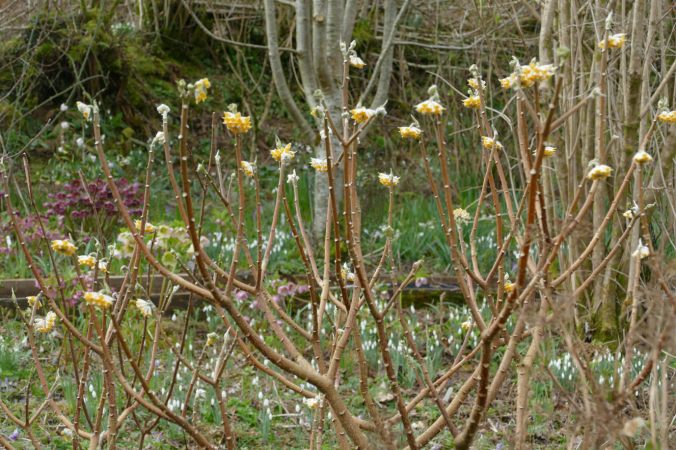
And there’s always something that’s benefited from our mixed weather of late.  Edgworthia chrysantha, a deciduous relative of Daphnes, is flowering better than ever right now (below), with wonderfully scented flower clusters on bare branches which apparently always produce new growth in three directions.

A native of South West China (and Nepal and Japan), it fortunately has a more uplifting presence than their recent inadvertent coronavirus export.

Pollinator Research at the NBGW; Murder, Magic and Plant Potions; Upcoming Events;

We enjoyed a really successful first meeting of the year, even though Lucy, one of our two speakers from the National Botanic Garden of Wales, was unable to make it. Abigail nobly stepped in to cover both their areas of research on pollinators, and in addition had to cope with a laptop failure part way through. Thank goodness for Colin and Mark – Cothi’s own PC techies – for sorting it out swiftly so the talk could continue.

Abigial described Lucy’s work trialling several commercial mixes of annual plants to create pictorial meadows, and assessing just how good the various plants are at attracting the numerous different classes of pollinating insects. Actually it seems only a small percentage of the flowers included in most mixes seem to attract pollinators. ( 2 out of 15 species of plants in June; 6 out of 25 species in July; 6 out of 35 species in August). Lucy is hoping to build on her early work and develop her own mix of seeds to have wider appeal to the hoverflies, bumbles, honeybees and solitary bees which we’ll all have visiting the flowers in our gardens. 

Abigail, who is studying for a PhD at Bangor in association with the NBGW has built on the earlier work of PhD student Laura Jones. She discussed her own work on the analysis of pollen samples both in the honey of bees kept at the NBGW, by using DNA metabarcoding of these samples, and in addition looking at pollen obtained from other solitary bees and hoverflies. She’s trying to establish the plants most commonly visited out of the huge potential range of flowering plants grown at the NBGW site.

In addition the NBGW team have also analysed the DNA in pollen found in honey samples sent in by bee keepers from across the UK.

This has highlighted some fascinating information including:

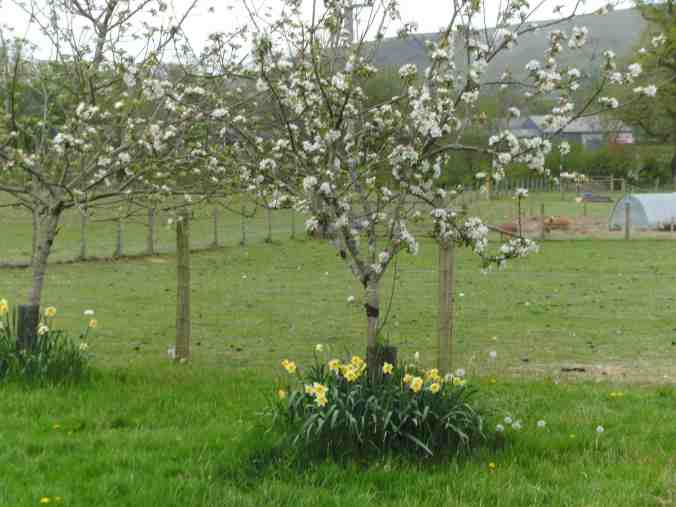
Only 44 plant taxa were found in more than 5% of the honey samples, and only 4 plants were identified in over 50% of samples. These were Rubus species – mainly brambles; White clover; Brassica – above (e.g. Oil seed rape); and the Maleae tribe – e.g. Hawthorn, Malus (apple – below) and Cotoneaster.

There are peaks of different flowering plants through the seasons, as one might expect  – from Acers, Malus and Prunus in April; Dandelion and Gorse in May and June; Bramble and clover in July; and Heather and Himalayan Balsam in August/September. 

As far as honeybees are concerned the vast majority of their food comes from native woodland and hedgerow plants in spring : Willow, Hawthorn, Cotoneaster, Apple and Cherry, Gorse, Sycamore, Holly, Oak, and Dandelion. Hellebores are the most widely used non native.

Other ornamental garden plants of particular value include : Paeonies, Camassia, Muscari, Viburnum, Wallflowers, Ornamental Alliums, Skimmias, Anemone (below), Roses, Flowering Currants.

For more detailed information on the work in this area at the NBGW, please click here.


Our next meeting is a talk by Marion Stainton, on Wednesday March 18th. As always, the hall is open from 7 pm onwards and help with setting up and refreshments is always welcome, before a 7.30 pm start time.

‘Murder, Magic and Plant Potions’

Marion is active in a broad range of horticultural projects for domestic, commercial and community gardens and spaces.  Her interests are in sustainable, environmentally friendly gardening, including pest management, vegetable growing, plant & garden history and the science behind plants and their uses. She opens her own garden in Herefordshire for the NGS. Marion gives this introduction to the intriguing talk title:

‘An arrow tip poison: a witches flying ointment: a murderous potion & deadly poison; addictive; with psychoactive properties; a wine that may help prevent flu; a cause of severe stomach upset & a cure for cancer; one to induce heart failure; another to reduce the risk of heart disease.  These are all properties of plants that can be found in or near your garden, plus quite a few more.  Add to this some myths and folklore and you have a fascinating alternative view of those lovely plants we walk innocently by every day.  You will never view your garden in the same way’.


Some more local events which might be of interest to members:

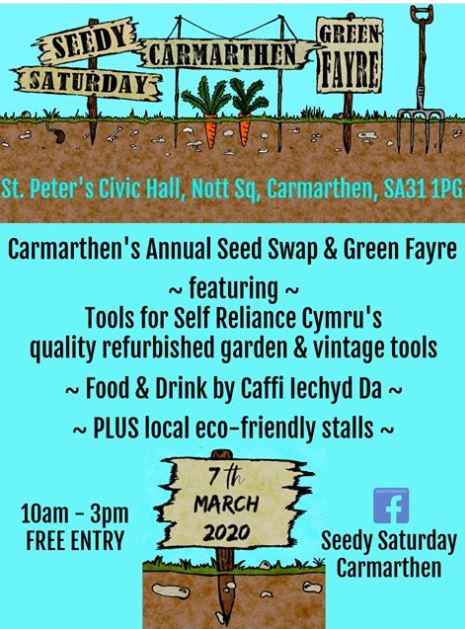
This Saturday, March 7 th in Carmarthen :

More details on their Facebook page.


Span Arts BIG Plant Sale are delighted to be hosting BBC 4’s Gardeners’ Question Time on Wednesday 25 March 2020, at The Queen’s Hall in Narberth.

The celebrated panel of gardening experts, including Chris Beardshaw, Pippa Greenwood and Anne Swithinbank with Kathy Clugston in the chair, will be tackling the questions put to them by local gardening enthusiasts.

The panel members have been guests of a diverse range of gardening clubs and other organisations; including recording at the top of Mount Snowdon, broadcasting from Buckingham Palace and answering questions from inside Number 10 Downing Street.

Tickets are £4.50 and include a hot beverage and the bar will be open. If you would like to take part in what is a lovely experience, please book in advance by phoning Span Arts 01834 869323 or book online at Span Art’s website  https://span-arts.ticketsolve.com/shows/873619115

Doors open at 5:00pm and recording at 6.00pm until 8.00pm.

Also : The BIG Plant Sale is back again on May 2nd at Town’s Moore Car park, Narberth!


Finally I’m including the programme for our neighbouring gardening club at Drefach Velindre FYI, below :

CLWB GARDDIO DREFACH FELINDRE
GARDENING CLUB – Programme for 2020:
Wednesday, 1st April 2020

Garden Machinery & Tools – Teifi Valley Garden Machinery

Dave and Bob from our local company, Teifi Valley Garden Machinery who have been longstanding supporters of the Club, will be joining us to talk about how to get the best from your garden tools and machinery, their uses and how to maintain them and prolong their life.


Wednesday, 6th May 2020

Herbs – Andrew Cook, Rhoshill Garden Plants

Andrew will give a talk on herbs and how to grow and use them for culinary and medicinal purposes.  A selection of herbs will be made available to smell and taste during the talk. There will also be a selection of peat-free grown and naturally maintained herbs on sale.


Wednesday, 3rd June 2020

Flowers – tips on presenting your Flowers and Plants for the Show – Lisa Cockroft

Lisa has been the Flower Judge at our Annual Show for the past few years and we are delighted that she has agreed to join us to share her tips on how to grow and present your flowers and plants to their very best.


Wednesday, 1st July 2020

Evening with Cheese and Wine and – Vines and Wines – Wayne Campbell

Wayne and Sally planted their vineyard at Pant y Ffynnon, Cwmpengraig in 2015. Wayne will take us through all the processes from growing to harvesting and making the wine. He will include some advice to members who make and show wines.


Wednesday, 5th August 2020

Seeds: Saving, Storing and Using –  Andrea Sanders, Lampeter Seed Library

Andrea will talk to us about how to save, store and use vegetable, fruit, herb, grains and edible flower seeds.   One of the main principles of the seed library is to encourage more people to save seeds and grow their own food.


Wednesday, 2nd September 2020

Getting the Best from House Plants – Mair Howe

Mair (Mia) is a long-standing member of the Club and she will be sharing her extensive knowledge of how to look after your house plants: what to do … and what not to do!


Wednesday, 7th October 2020

Open evening – The Gardens at Winchester Cathedral – Emma Sharpe

Emma, a Gardening Club member and former Head Gardener at Winchester Cathedral, will be joining us to share an illustrated talk on what goes into maintaining the gardens and grounds surrounding the historic Cathedral.


Wednesday, 4th November 2020

Pruning –  Joseph Atkin, Head Gardener Aberglasney

Joseph is a regular speaker at the Club and we are delighted that he will join us again this year to share his wisdom in the art of pruning.   There will be plenty of opportunity to test his knowledge with your most challenging questions.


Wednesday, 25th November 2020

Christmas Buffet and Willow Weaving Demonstration – Justine Burgess, West Wales Willows

Justine will talk to us about growing, cutting and preparing willow ready for weaving and will give a practical demonstration.
2020 Programme of Talks & Events
Wednesday, 8th January 2020

The History and Medicinal Properties of Monarda – Carole Whittaker, Glyn Bach Gardens

Glyn Bach Gardens holds the National Collection of Monarda, a beautiful late summer perennial with a fascinating history and great medicinal properties.  Carole will be telling us more about this remarkable plant


Wednesday, 5th February 2020

Annual General Meeting and Cake Tasting Competition

A chance to showcase your favourite cake recipe.  The winning cake will feature as the Set Recipe in the Show Schedule for the Annual Horticultural and Craft Show..

Saving Pollinators

Any other members measure their rainfall totals?

To quote Melvin Udall addressing a group of depressed psychiatric patients in the film of the same title : “What if this is as good as it gets?” By which I mean the seemingly unending rain – it looks like we’ll have clocked up 6 consecutive months with 200 mm plus by the end of February, which we’ve never managed before, whilst I’ve been measuring rainfall here.

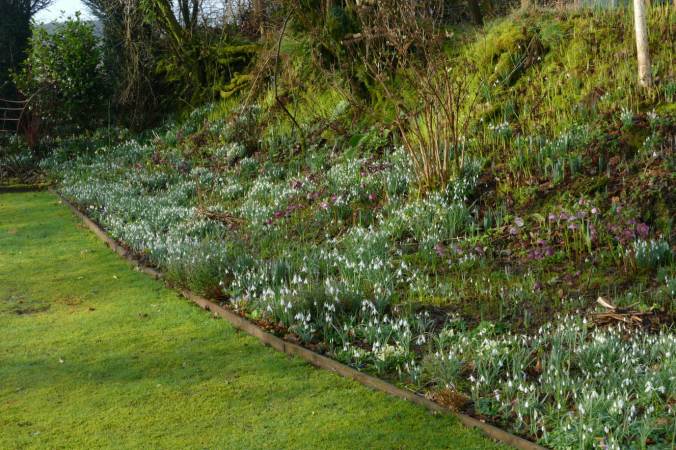
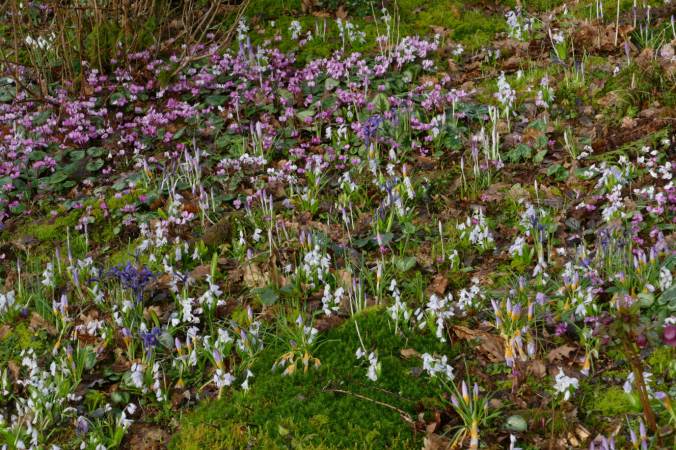
So thank goodness we’re all gardeners and can see the positive side of things – brilliant weather for lifting and splitting snowdrops, or even early daffodils. And thank goodness that many spring bulbs seem to shrug off all this inclement weather and look almost as good after storms Ciara and Dennis have whizzed through.
Plus our frogs  clearly aren’t bothered…

But early pollinators really do struggle with this sort of weather, so a reminder that tomorrow’s talk, Wednesday February 19th,  will be an up to date insight into how our own National Botanic Garden of Wales is at the cutting edge of research into what we can do to help pollinators of all kinds. Both Lucy Witter and Abigail Lowe will be talking about their own studies, so do come along and enjoy the first talk of the year.

7 pm for a 7.30 pm start at the hall in Pumsaint.


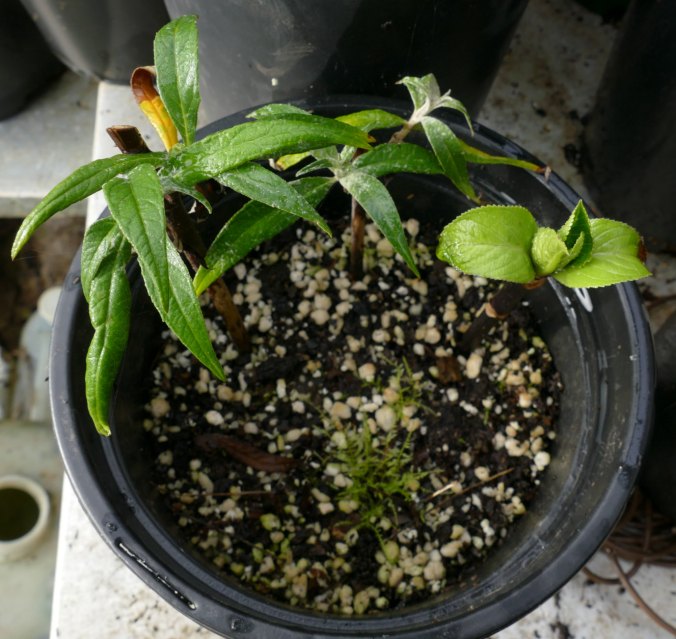
Has anyone checked their seeds and cuttings from the trip to Hergest Croft gardens last year?

I’m hoping to do a montage of what we’ve managed to propagate, and also forward it onto Steve and Mel for their interest, so if everyone who went on the trip could have a look at any pots they have over the next few weeks, and ideally send me a photo or two, that would be great.

A couple of pictures of some of my cuttings  – Buddleja, Salvia, Hydrangea, Acer all looking good so far…

And one of them even has a label on it!

Sad News

WordPress who host our website have just informed me that it’s apparently five years ago today that Fiona started the Cothigardeners website, but today this brief post is to let fellow members know the very sad news that Dave Bevan passed away peacefully this morning at home just as this wonderful sunrise broke across the valley that Dave and Avril, (and us) look down every morning, towards the distant Black Mountain.

Dave has been a wonderful friend over many years and both Dave and Avril have been loyal and involved members of Cothigardeners since we suggested they might like to come along shortly after we’d joined the club. I’m sure everyone would like to remember Avril and the rest of the family in their thoughts and prayers at this sad time.

Some, but not all, will know that amongst many other talents, Dave was an amazing photographer of wildlife and the natural world, with an encyclopaedic knowledge of all related subjects and many of you will probably have seen some of his photos gracing numerous publications over the years.  But such is the lot of skillful photographers, that you usually have to look very hard to find the credit to the man behind the camera. More of a veg gardener than interested in cultivating flowers, I particularly remember a glorious photo of his, of insect covered fennel flowers which graced the front cover of the RHS The Garden magazine, a few years back. I praised Dave for its quality after I’d spotted his name credited in the small print inside,  yet often he only heard about the use of his images in such prestigious locations months down the line.

More recently Dave threw himself with typical enthusiasm and commitment into capturing video footage, shooting everything in the highest quality and with painstaking care to capture many stunning wildlife scenes worthy of inclusion in a top notch TV wildlife show. Even after his diagnosis just before Christmas, he was meticulously staking out an old stone barn on our neighbour’s farm, hoping to catch some images of a Barn Owl which had taken up residence there. I’ve never looked before, but click here for an idea of the quality and diversity of just a little of Dave’s work over the years.

Fiona had already booked him for November 2020 for Cothigardeners, to show a recently edited film he’d created of some of his locally filmed wildlife footage, before his cruel illness struck.  Having discussed this recently with both Dave and Avril, and with their blessing, we hope to still be able to show this film at the November meeting as a tribute to  Dave, and in his memory.

Very warmest wishes, much love and sympathy to Avril and the family at this very sad time.

AGM, Programme for 2020, Events, and February Meeting


Cothigardeners’ year began in customary style recently with the AGM which was very well attended. Yvonne gave a resume of the busy year the group had enjoyed in 2019, Steven reported on the healthy state of the group financially and in terms of member and visitor numbers over the past year.  Membership for 2020 is £15 per person, which is a slight increase, but still represents excellent value for money given the speakers planned for the years ahead. The club is very fortunate to have had such a hard working chair and treasurer who have both stepped down this year, and everyone will want to thank Yvonne and Steven for their work, and we’re equally pleased that Elena and Andy have come forward to take on these vital roles.

With the AGM finished, a short auction of donated snowdrops, art and craft items was held which raised valuable additional funds to go towards the running of the club, as well as a table of book sales. Many thanks to everyone who donated or indeed bought any of these items.

We then enjoyed a shared plate supper of savoury and dessert food, before the evening finished with another one of Derek’s challenging quizzes. Many thanks to Derek for all his effort in putting this together and indeed to Tina for Marshalling us into entirely non competetive teams (?) It always amazes me the combined knowledge of Cothigardeners reflected in the final team scores, although I’m not sure anyone knew what plant capers come from?

The answer is The Flinders Rose. I’m not sure we’d have escaped with caper bush, its other name…


For all members hanging on excitedly, waiting to find out what the programme for 2020 is, it can now be revealed – both below and on the separate web page for speakers. Many thanks to Fiona and Jenny, the programme organisers,  for working to arrange this for us all. Click below to open the file.

Cothi Gardeners Programme 2020 for website

There’s also a separate page with some local garden related events for the year 2020, which will be added to throughout the year, so do check back in due course. Click here for this page.


Anyone interested in visiting Fiona and Julian’s garden for snowdrops and other spring bulbs can check when they’re opening for the NGS this year, by looking at their website, click here. They’re only opening by short notice “Pop Ups” if/when the weather looks benign (ish)


Later in the year, John and Helen’s wonderful 4 acre garden at Ty’r Maes is opening from April to October by arrangement on pre arranged dates. Click here for more details.


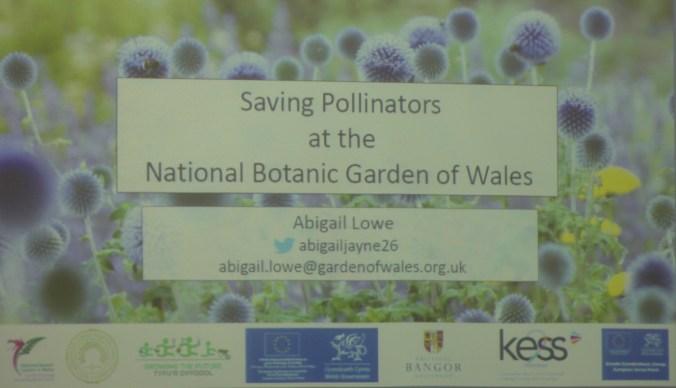
This year’s monthly speaker meetings begin with a joint presentation by Lucy Witter and Abigail Lowe from The National Botanic Garden of Wales who are going to be talking about their ongoing research to help save our pollinators.

This will be really interesting and show how Wales is at the forefront of understanding to risks to our pollinating insects and what we can do to help mitigate this. Something of vital interest to us all. I’m sure everyone will want to come along on Wednesday February 19th at 7 for a 7.30 pm start to find out more.