On a rainy morning in mid-May, stalwart members of the Club gathered in Lampeter to embark on a visit to Upton Castle Gardens. Upton Castle is located in Pembrokeshire, with grounds running down to the Cleddau Estuary, and part of a Norman chain of castles, including the larger and more famous Pembroke Castle and Carew Castle. Now a family home with later additions, the original part of the castle dates back to the 13th century.
Our group were warmly welcomed by Prue Barlow, who told us that a trawler owner from Cardiff called Stanley Neale bought Upton Castle in 1927 and determined to make a special garden taking advantage of the sheltered location, ericaceous soil and the benign coastal climate.
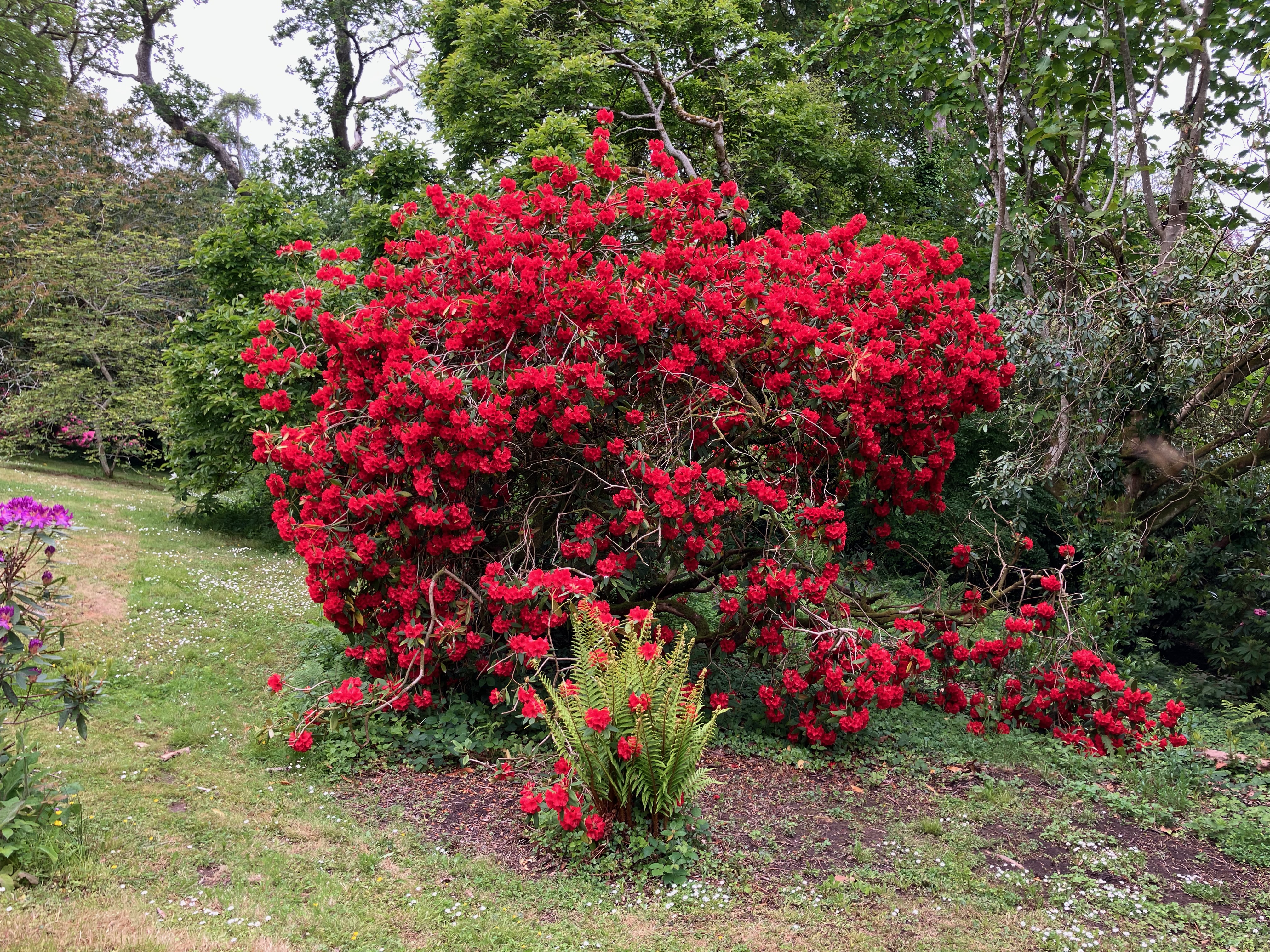
Originally many species rhododendrons were used in the planting, supplemented later by hybrids, and as we began our tour we saw large specimens of the scarlet ‘Tally Ho’ and the strong pink ‘Cynthia’, the latter repeated through the arboretum.
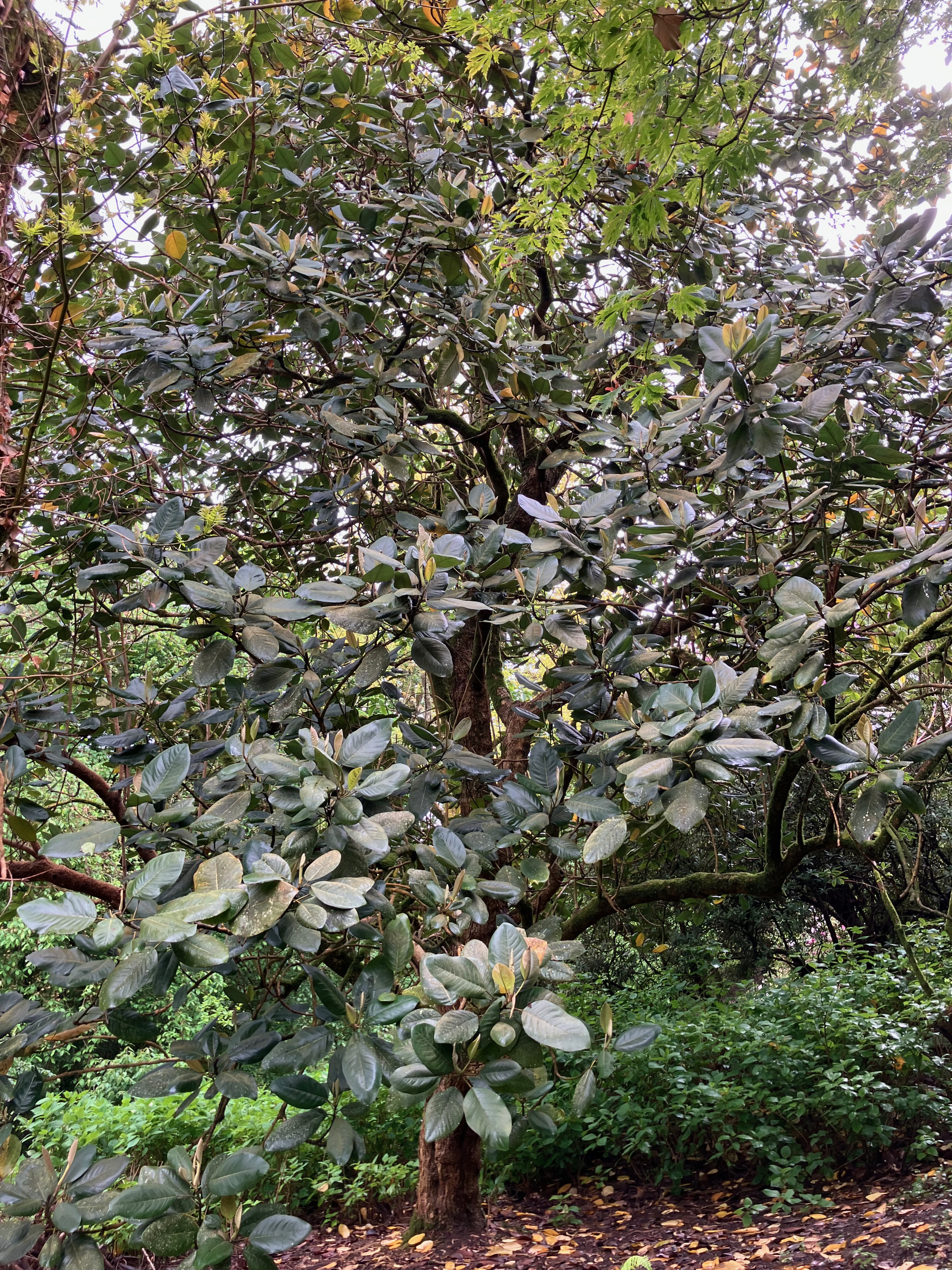
Upton Castle Gardens are renowned for the number of champion trees in the Arboretum (15 country or county champions listed with the National Tree Register), and the tour next took us past a very tall Magnolia obovata whose large flower buds were visible, as well as Magnolia delavayi (seen left) and Magnolia sargentiana var. robusta.
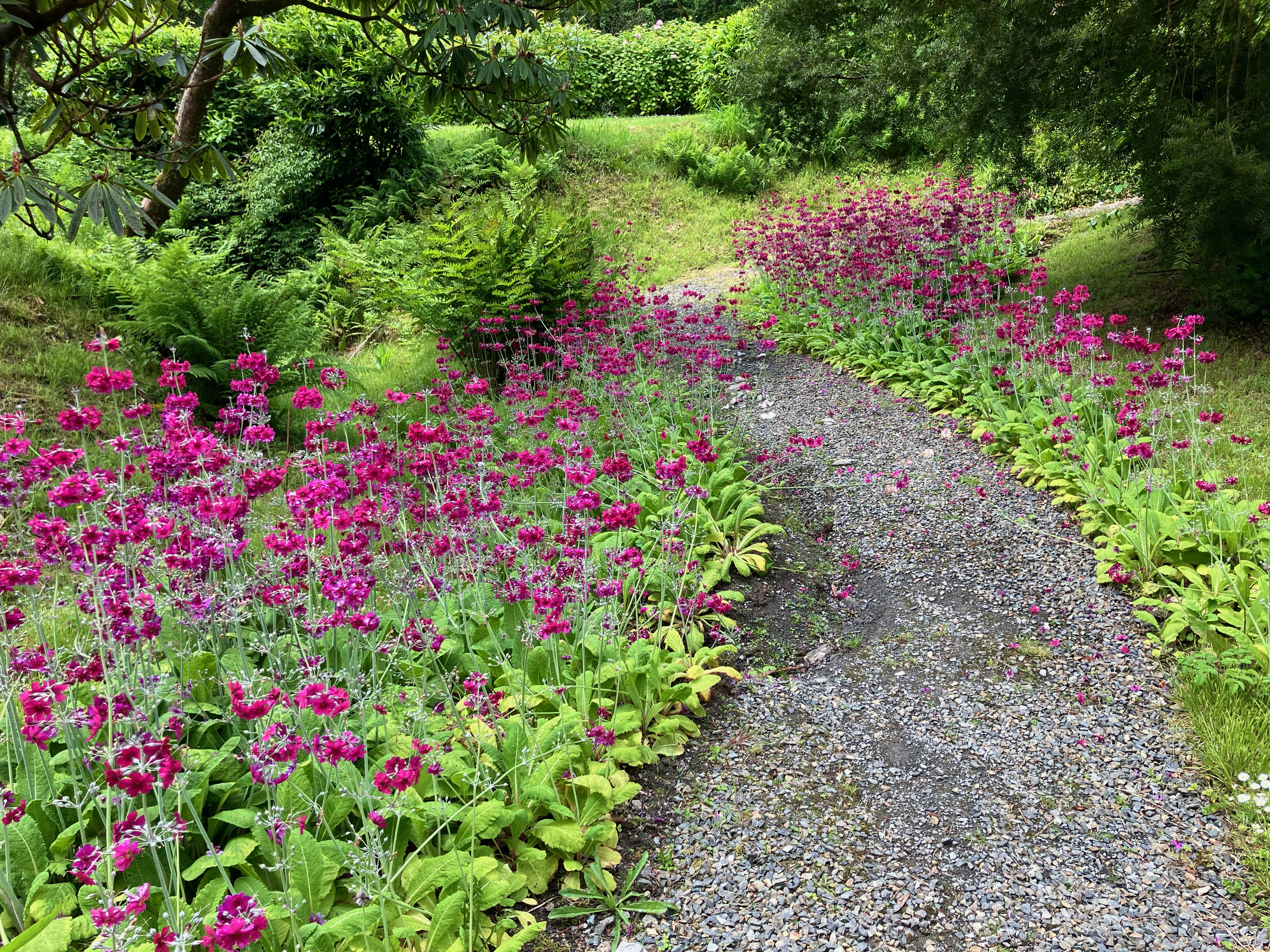
As we entered the Dell, the paths were lined with Primula pulverulenta in full flower – a true spectacle, the location providing good shelter to Rhododendron thomsonii and R. sinensis, and a Podocarpus totara.
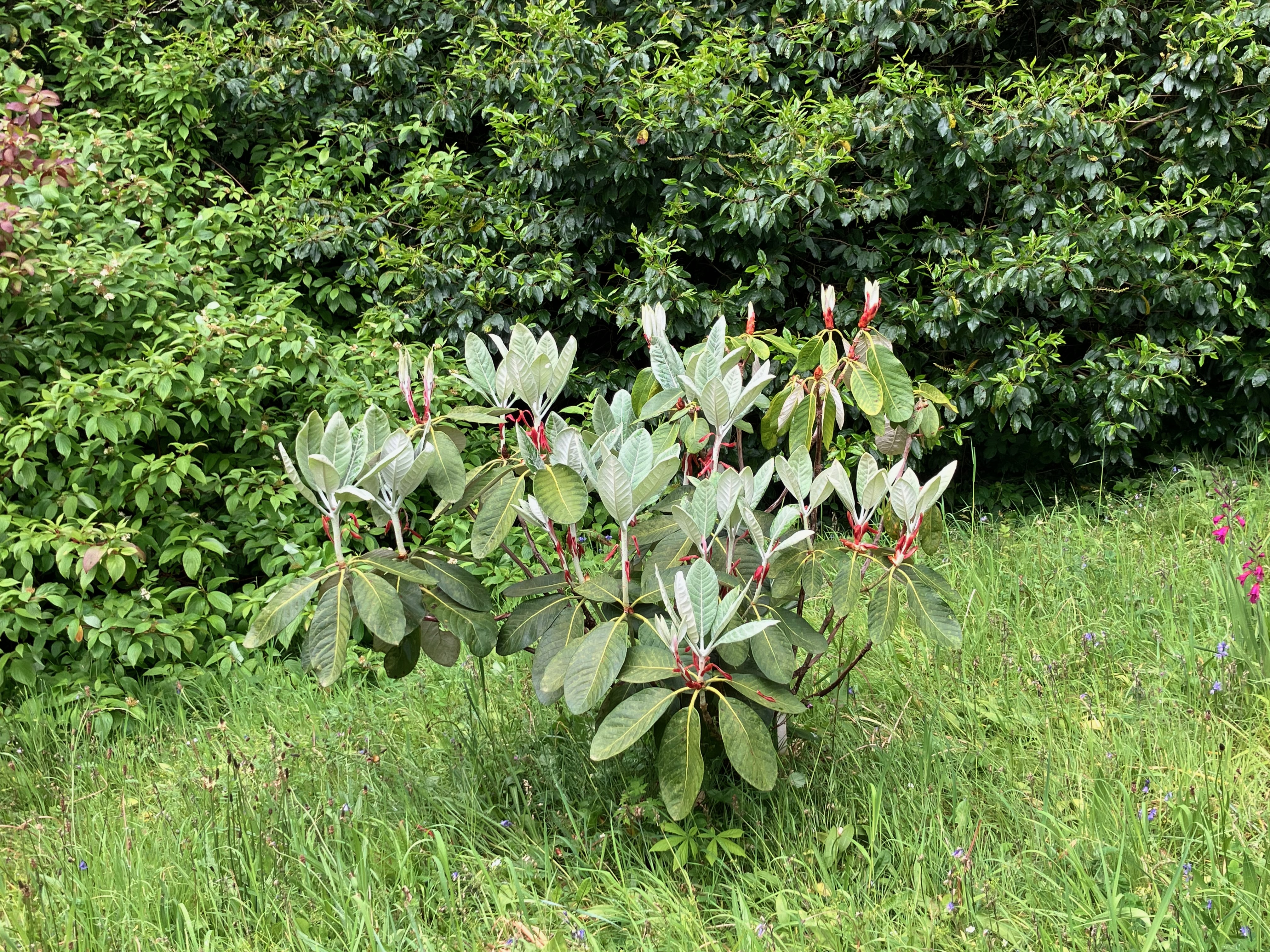
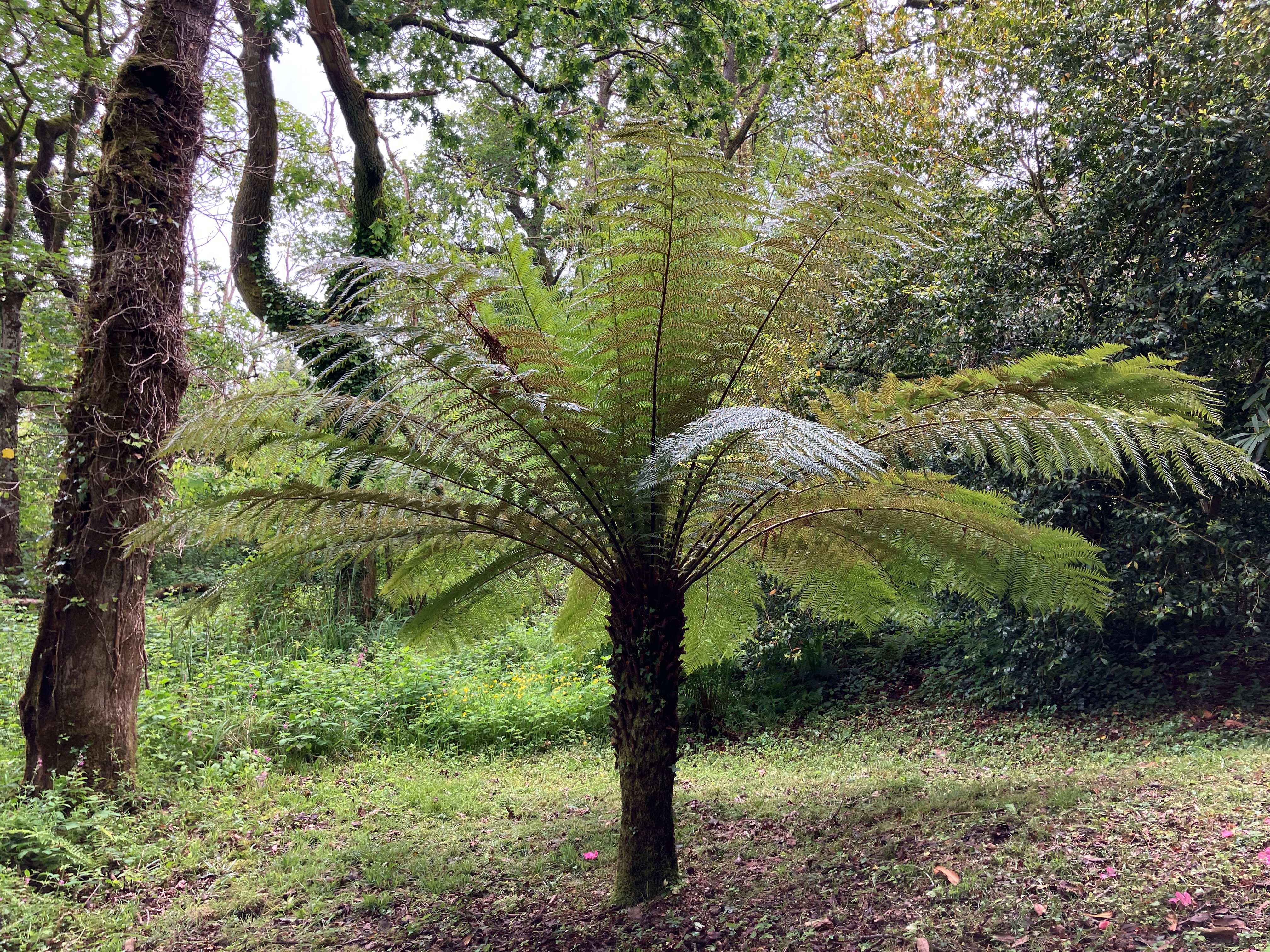
We passed an enormous Araucaria araucana planted in 1973, as well as a champion Magnolia campbellii. We marvelled at the size that a Rhododendron macabeanum (left) had achieved in just 10 years, and admired the elegance of the leaves of Fagus sylvatica aspleniifolia.
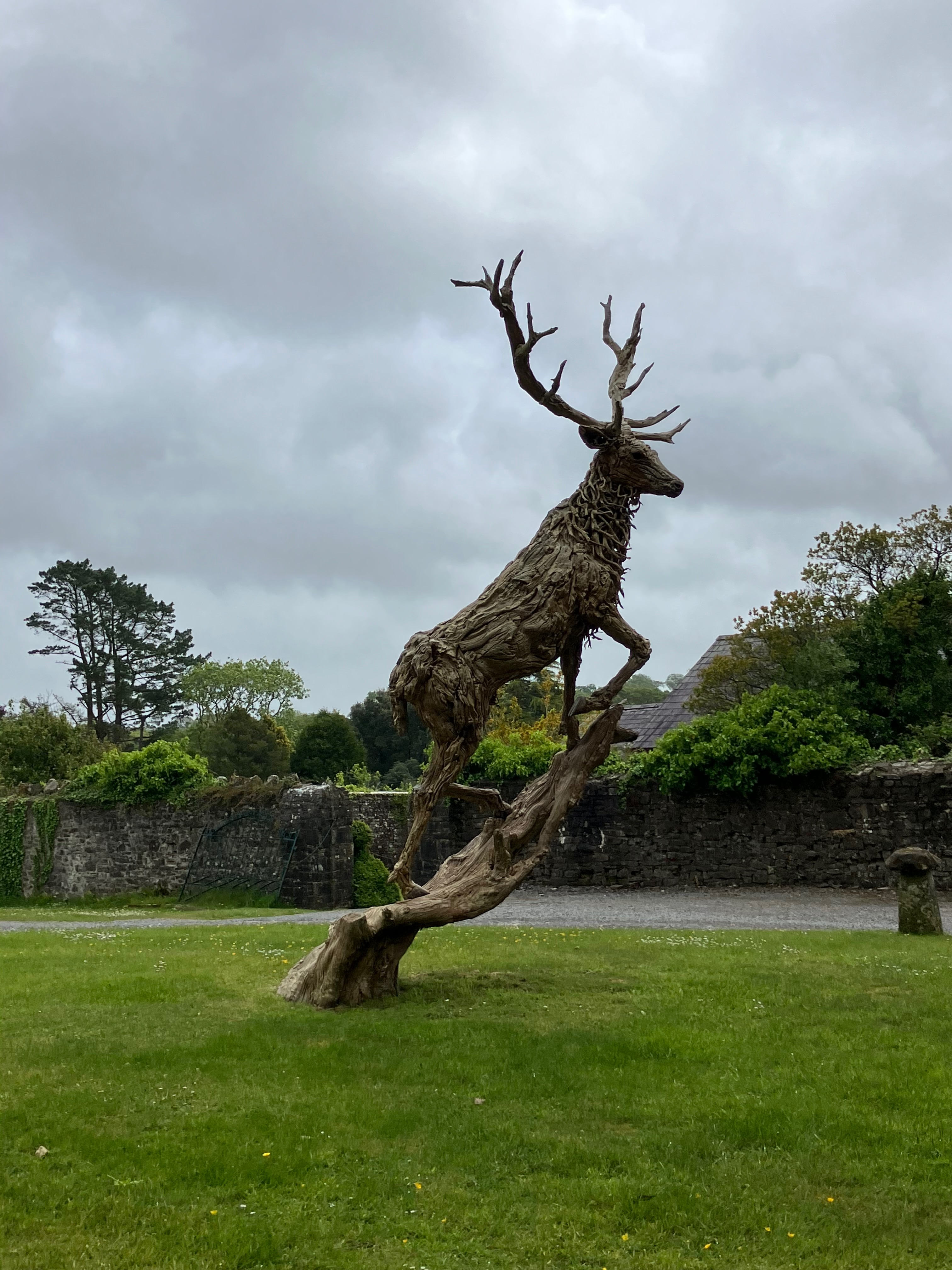
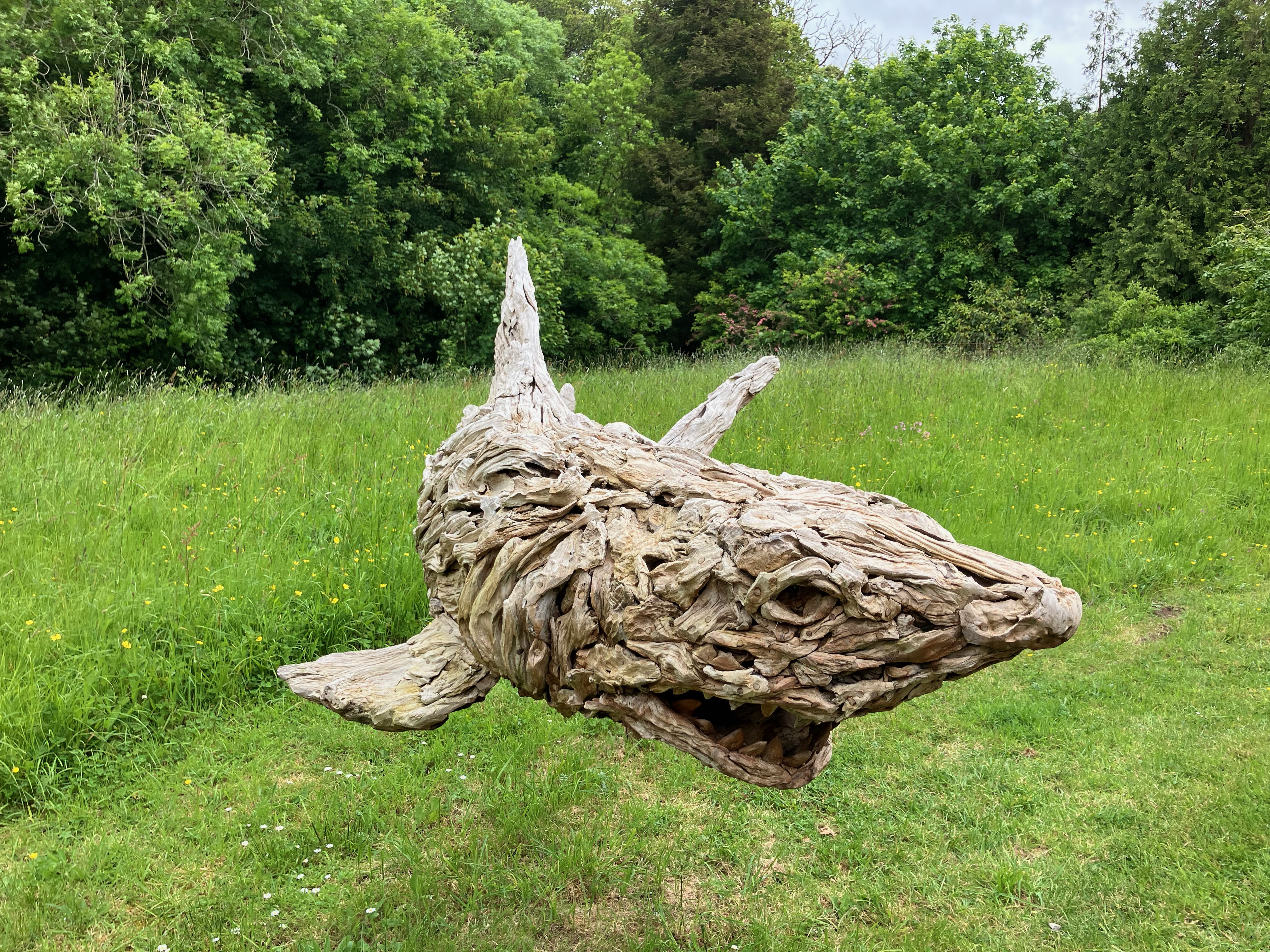
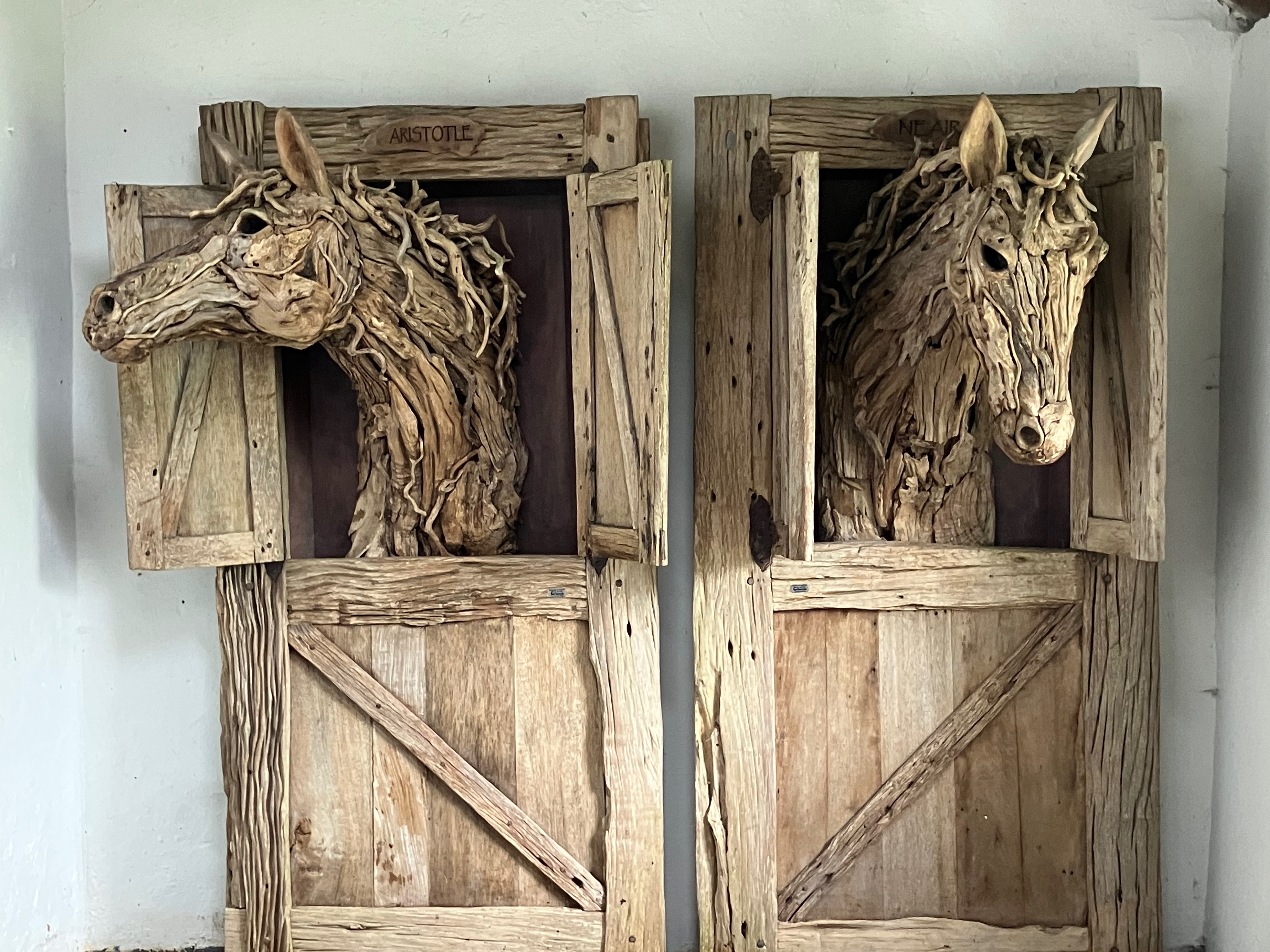
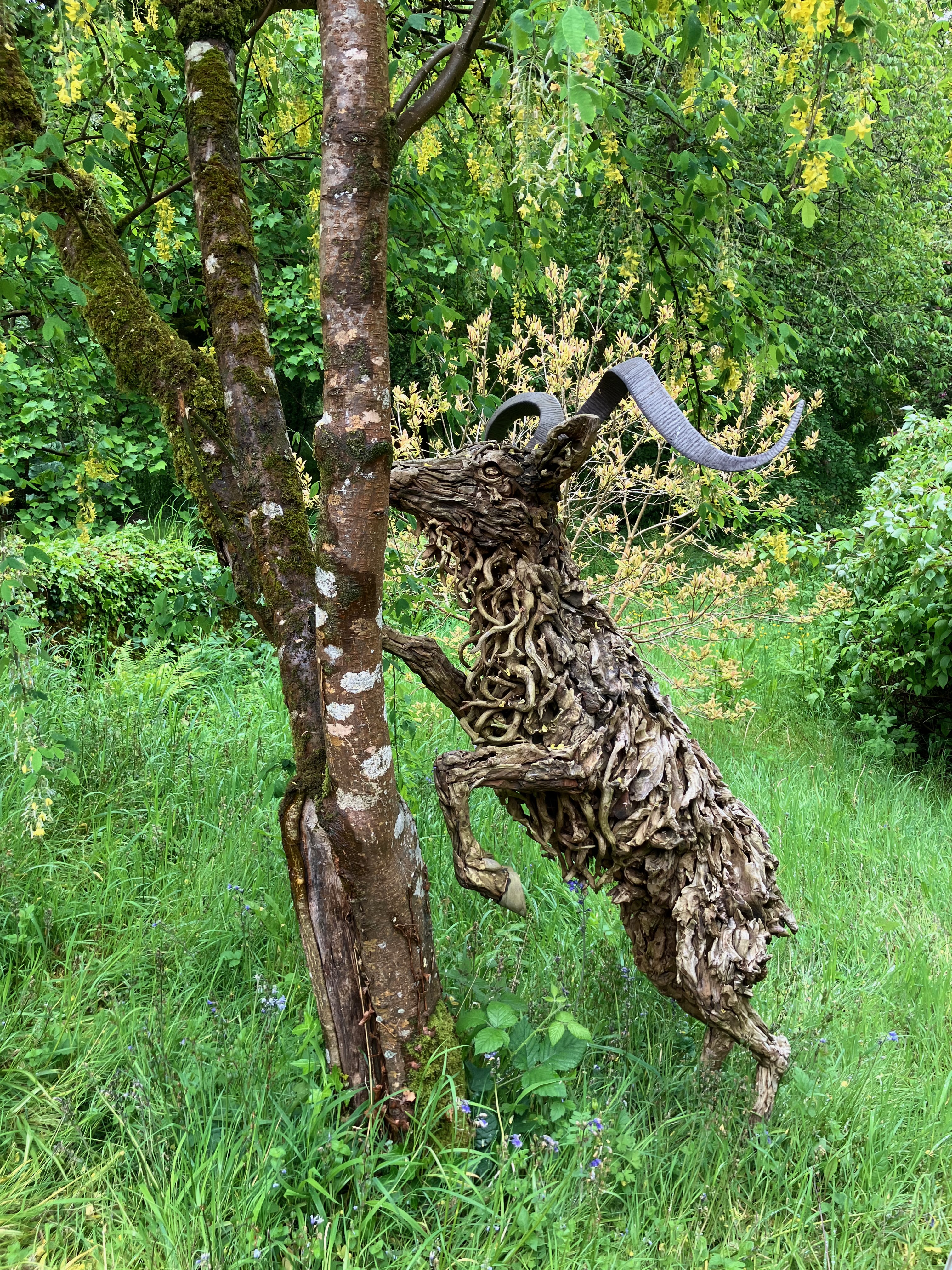
As we moved through the garden, we became aware of astonishing sculptures that at first seemed blended into, and then really stood out from, their surroundings. They were made by James Doran-Webb from driftwood sustainably collected in the Philippines. They seemed a moment of animal movement captured in time, balancing effortlessly despite what must have been a considerable weight of material.
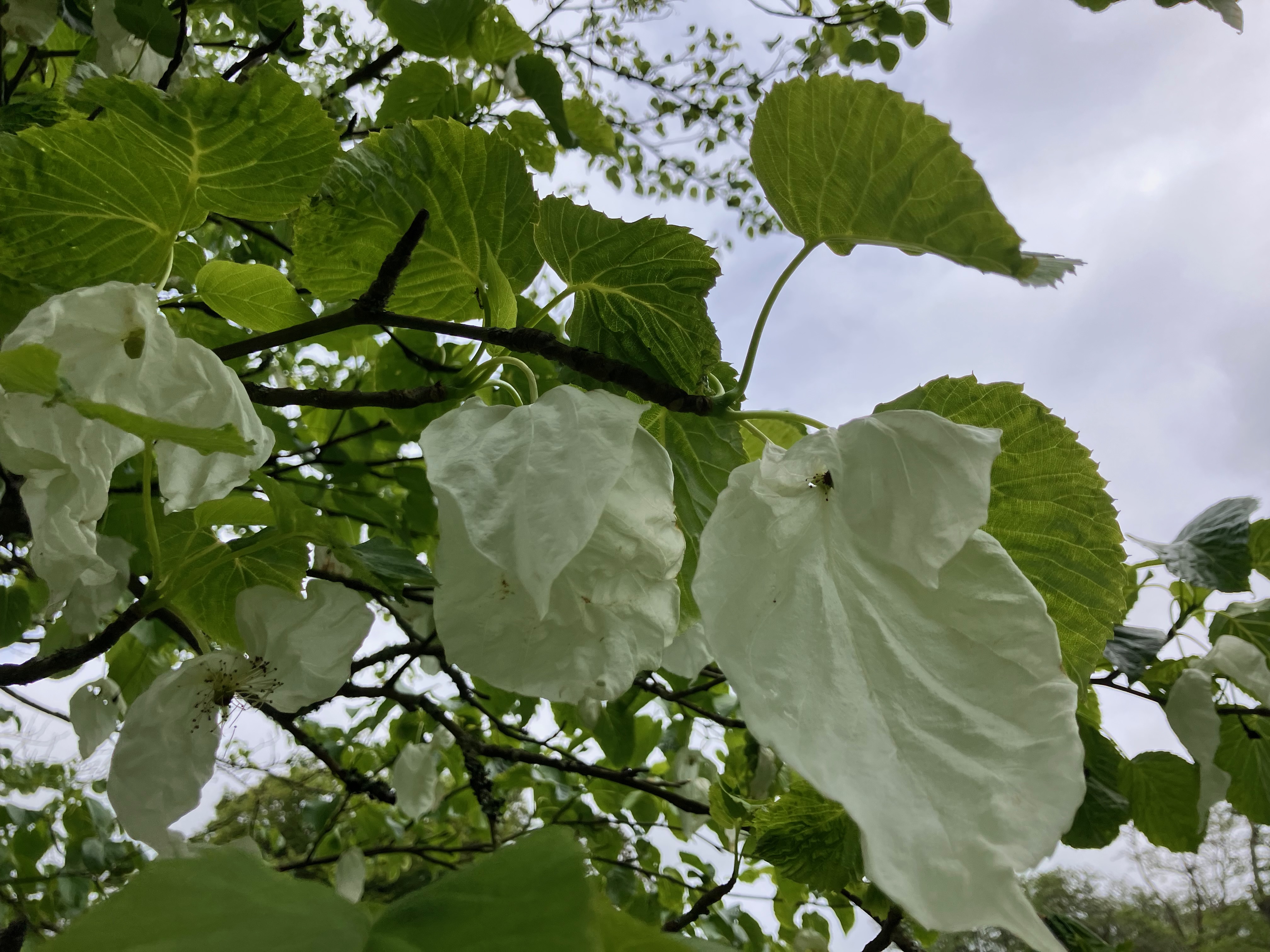
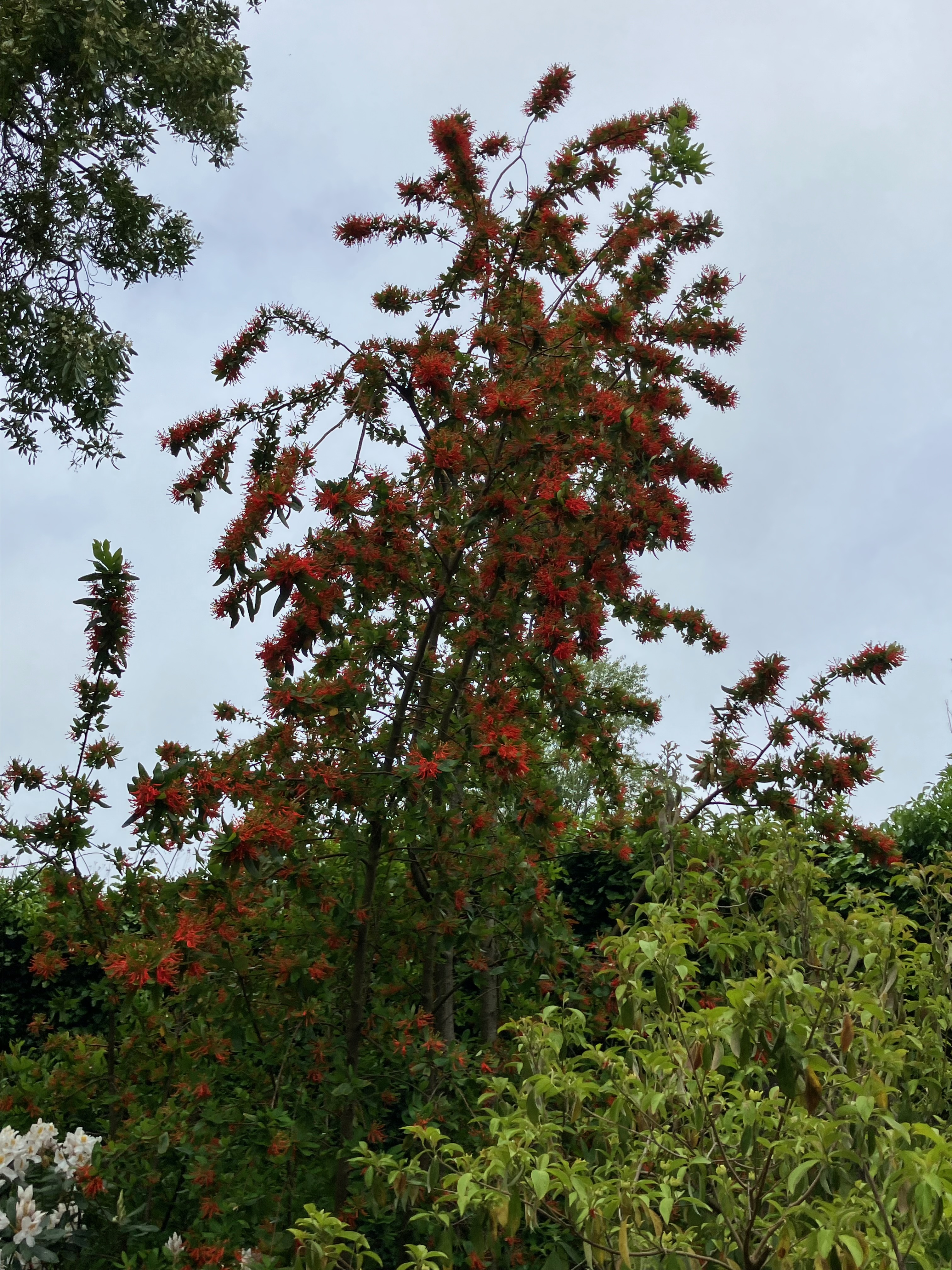
The many champion trees, including a very large Drimys winteri and a Davidia involucrata (left), and other unusual trees including Poncirus trifoliata, Embothirum coccineum, and Crinodendron hookeriana, drew great admiration.
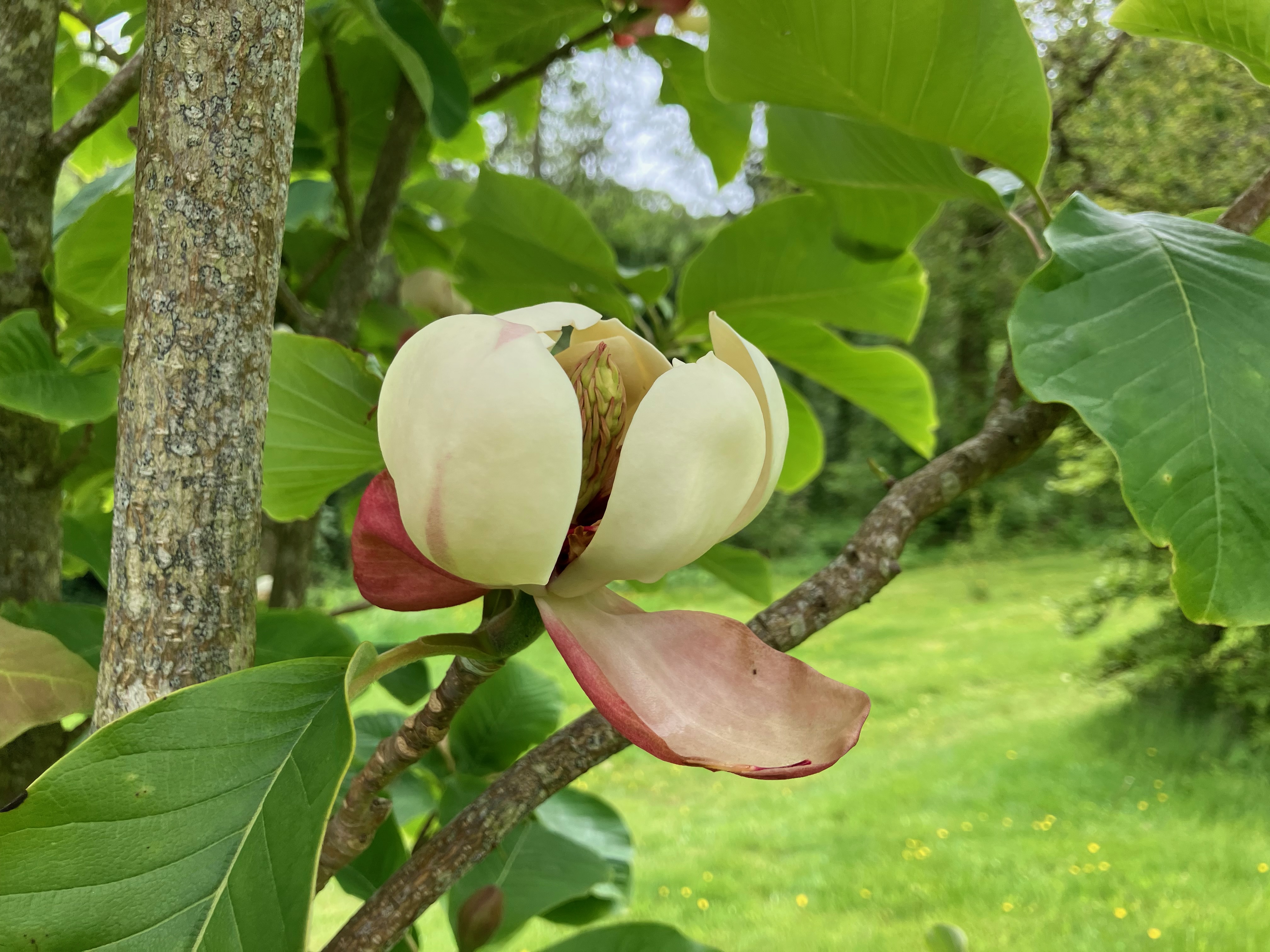
In addition, there are newer plantings, including Magnolia wilsonii and M. watsonii with its amazing scent (right), and recently planted hydrangea beds.
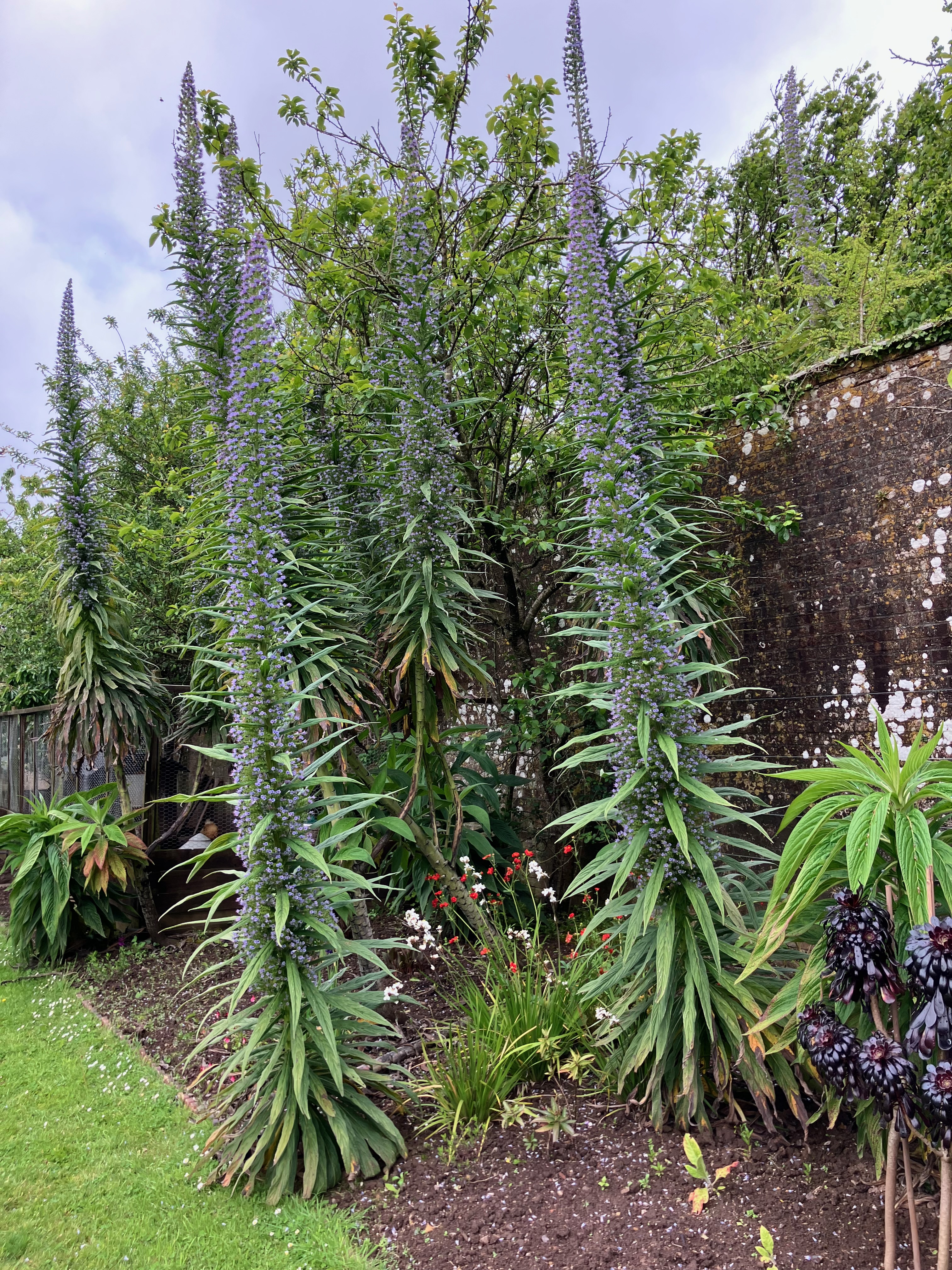
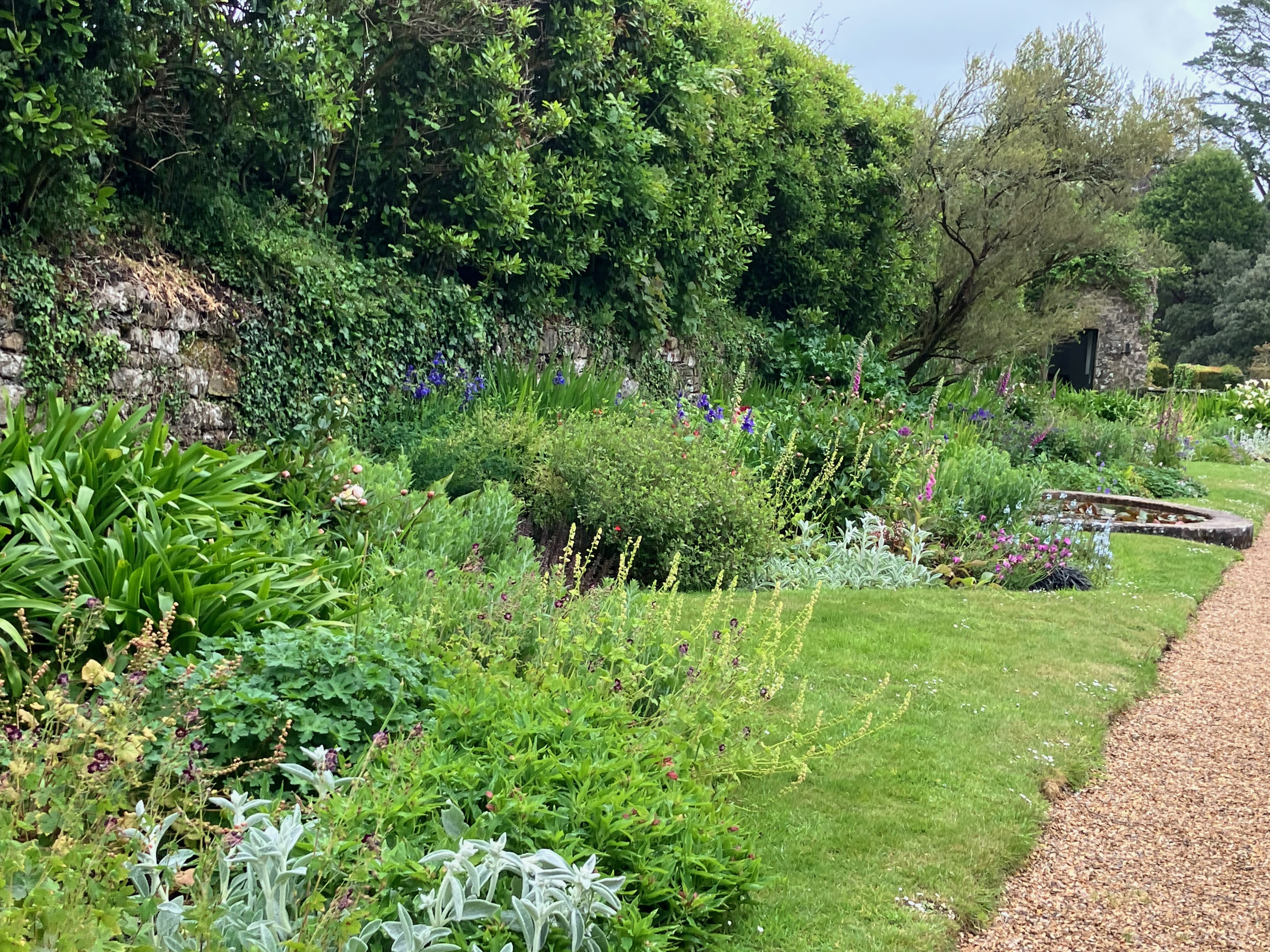
The kitchen garden, built in the 1790s, has a double-walled construction, brick on the inside and stone on the outside. It slopes to the south-east – with a doorway on the southern wall to let the frost out. There is a new mixed border on the west-facing wall – in particular we admired the towering Echiums – not a plant we can contemplate growing in our more inland area of Wales – and the Gladiolus byzantinus growing seemingly almost as a wild flower amongst the grass beneath the fruit trees.
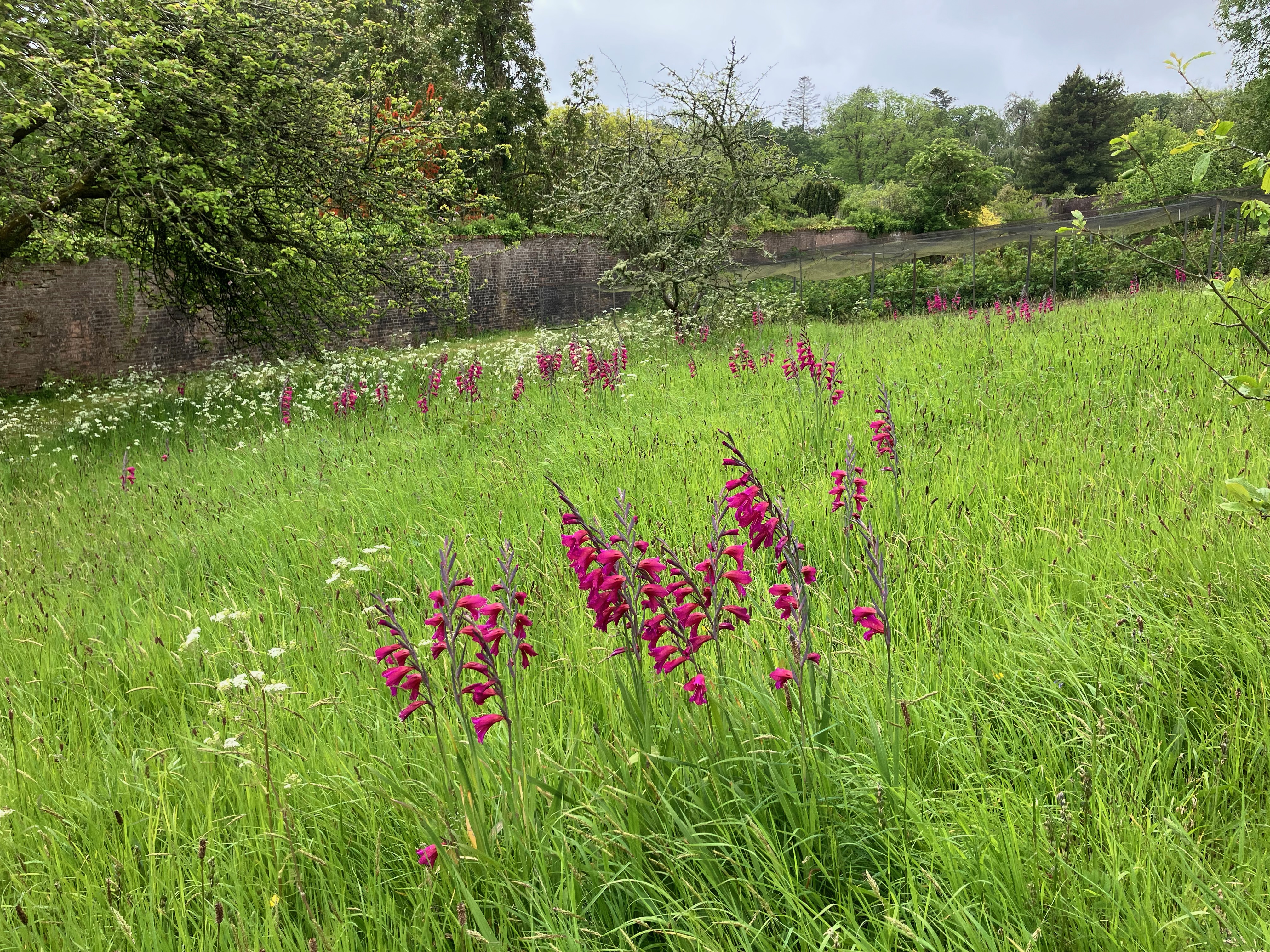
There are some older fruit trees in the kitchen garden – but they have been added to more recently with new planting including apples, damson and cherries.
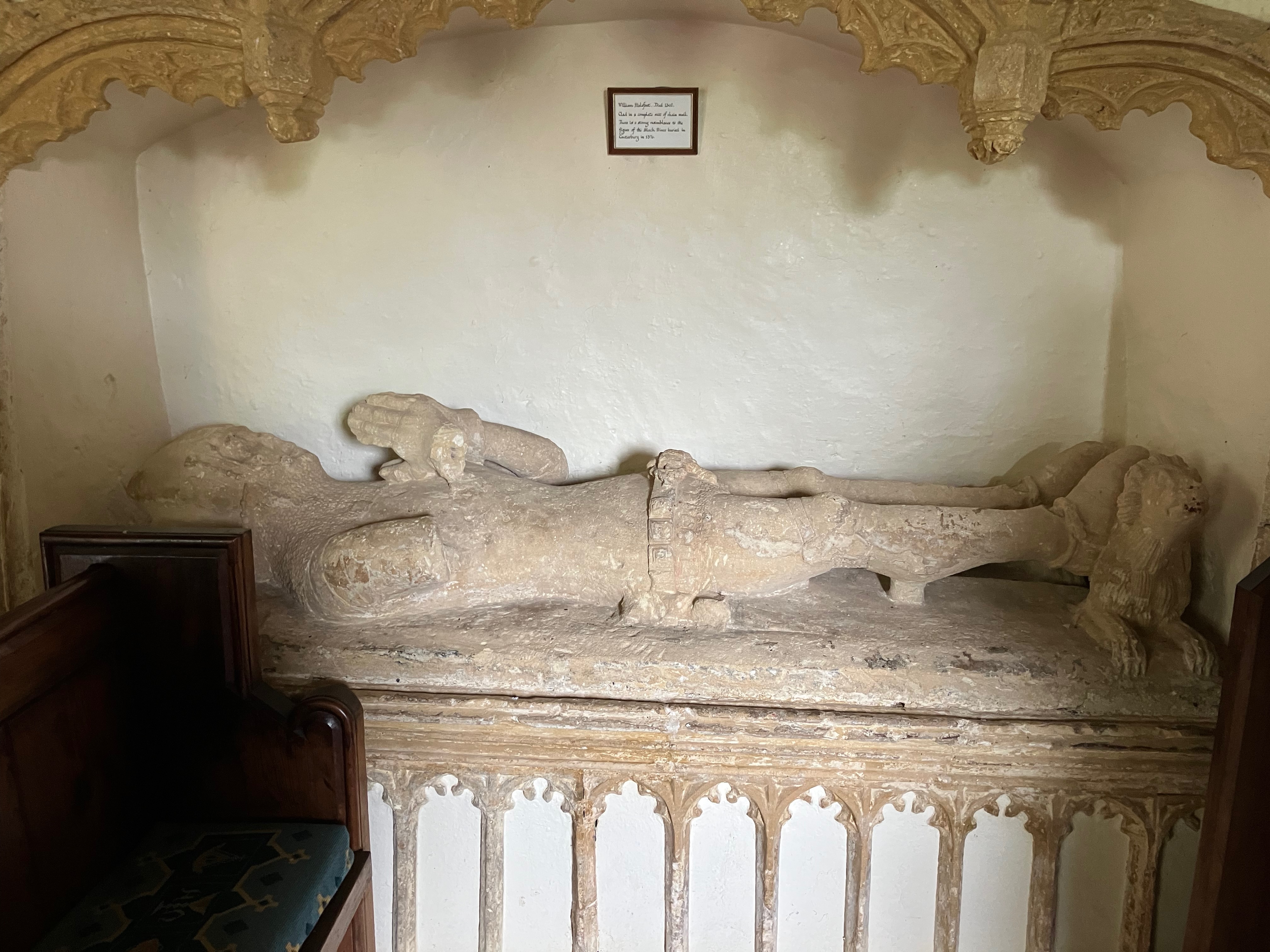
Emerging from the opposite side of the kitchen garden, we encountered the stone Chapel of St Giles dating from the 12th century – predating the Castle itself. It was a privilege to see the stone effigies and appreciate the atmosphere of this unique chapel.
With the Chapel our fascinating tour of the garden came to an end. Time for a delicious lunch at the Tipi Cafe, with enough time for a further wander around the garden in our own time to revisit things that had captured our imagination or explore the arboretum further towards the estuary. Our group were very grateful to Prue and Stephen Barlow for our guided garden visit with its very special plants and sculptures, and grateful to the heavens that the forecast rain held off. What a fabulous day!
Club Programme Co-ordinator
We are only able to have the fantastic visit to Upton Castle as described above and our entire programme this year thanks to our outgoing Programme Co-ordinator – the Club really needs someone else to step up to ensure that we can continue to provide exciting trips, talks and workshops for our members. If you are the tiniest bit interested in helping out, please email cothigardeners@gmail.com. The current Committee will be there to provide lots of support.
June Talk – Liz Zorab
Our speaker at our next meeting on 17th June is Liz Zorab talking about ‘Creating a Hidden Vegetable Garden’. Liz teaches gardening and self-sufficiency skills and encourages hundreds of thousands of people across the globe to garden, through her YouTube channel Liz Zorab – Byther Farm (over 127,000 subscribers). Based in Carmarthenshire, she runs a smallholding using organic and nature-led gardening practices. Take a look at here Facebook page to find out more.
Plant Sale in Aid of Justice for Wales
Please come along to the plant sale (including plants provided by Cothi Gardening Club members) in aid of Justice for Wales. It is being held on Saturday, 6th June 11am-2pm at Hen Ysgol in Llanybydder. Live music and the lovely cafe will be open.

