‘A Hidden Vegetable Garden’ with Liz Zorab

Liz Zorab is a well known gardening guru, an award winning video maker and food grower.  She is an expert contributor to BBC Wales gardening programmes, a prolific You Tube creator and the author of several books. Her home is Byther Farm at the edge of the Brecon Beacons on a thriving 4.5 acre plot, 275 m above sea level some of which is North-facing, where she is passionate about sustaining biodiversity and is self sufficient in up to 60-70% of the food she eats. The vegetable patch is 250m2 including paths. She is very keen to demystify permaculture and to share her experiences far and wide. Her talk was accompanied by pictures, mostly of her garden, describing how a mixture of plant types can work.

The ‘hidden’ vegetable garden idea shows how anyone can, with whatever size plot, grow food alongside flowers and ornamentals successfully. For instance, Kale is an excellent choice, there are various different types available including the dark leaved Cavolo Nero (Liz starts hers early in the year), all of which will grow up to 10 ft, will look glorious and are evergreen up to December or further depending on the weather. Florence Fennel which is a species of the carrot family, is a beautiful plant, also standing tall if left and produces yellow flowers which are enjoyed by pollinators, particularly lacewings. Growing squash up a trellis will look good and doesn’t take up much lateral space and globe artichokes (green or purple) are wonderful for providing structure and produce beautiful purple flowers which pollinators will love. 

Oca (New Zealand Yam) is a root vegetable of Peruvian origin which enjoys the cool damp British climate and will overwinter with some protection from frost. It is smaller than a potato and as yet has no real pests, has a slightly lemony flavour and the growing cycle is very similar to a potato.

If possible a pergola is a good addition where climbers and beans can intermingle, and chard which can put up with some shade could be grown underneath. If left it will grow up to head height and will look spectacular in the many rainbow colours available now. Herbs like Rosemary are generally hardy and can be used in so many ways – there are different types available, horizontal, upright and cascading. With the pretty blue flowers, they smell and look wonderful and if left will produce a shrub. Salsify, a biennial, is easy to grow and produces seed heads not unlike a dandelion. The greenery is good to eat in the spring and the roots can be eaten in the winter months because they don’t suffer from cold weather. Comfrey is a good standby for use as a fertiliser for all manner of crops. Parsley if left will flower in the 2nd or 3rd year, producing umbels of fresh tasting flowers. Red Orach, which is a member of the spinach family, will grow 6 – 7 feet heigh and produce yellow/orange flowers which can be frozen for culinary use. Calendula always look cheerful and are good to use in salads or pilau rice.

Fruit production comes high on the agenda, Liz grows peaches which are ripened indoors, some of which are espaliered and last year produced over 200 peaches! Obviously cherry trees (ornamental and fruiting) always look wonderful. Raspberry canes can be planted as a productive hedge, keeping the wind out and helping with any drainage problems on a wet site. Autumn fruiting raspberries produce new canes in the spring and fruit on them in the autumn of the same year. The old stems should be pruned down to the ground in February. There is a Mulberry tree on her smallholding as well, which produces fruit.

Rosa rugosa can also be used for controlled hedging and the hips are excellent for making jelly, juice or wine. The hips should be strained though to avoid ingesting the seeds or the hairs on the fruit as they can cause irritation to the mouth and digestive system.

Liz is keen that a garden should produce sound as well as food and colour and loves the sound of Bamboo, Cannas, Banana trees and grasses. She really enjoyed making a sensory garden for the Royal Welsh show.

At the end of her talk, Liz answered any questions from the audience. Tracey then thanked Liz very much, and reminded everyone about the July meeting, when Jo Hobbs will demonstrate how best to arrange a bunch of flowers. Those wishing to take part should bring with them some flowers, some twine, a pair of scissors and a container (large if the stems are thick, smaller if the stems are finer).


The Dreaded Gardener; Members Social; Garden Safari; Drought Busters; Gardener’s World; Other Events

Malcolm Berry – The Dreaded Gardener:  ‘Weaving the Web:Towards a Natural Garden’

Malcolm’s talk about how he tries to garden in a way to create ‘dynamic stability’ where flora and fauna exist in harmony struck a chord with many of us. The State of Nature reports indicate that in Wales 1 in 14 species are heading for extinction, in a large part due to loss of habitat. To try and offset this even those with small gardens can help. Biodiversity was at the root of his message: diversity creates diversity, the greater the diversity in flora the greater the diversity in fauna.


Ideas he has implemented in his own garden:

  • Varied habitats such as a pond, mini meadow, deciduous and evergreen hedges, mature trees and shrubs, dry stone walls, log piles, stone piles.

Mini Meadow © Malcolm Berry

  • Flower counts throughout the year to assess where/when there is a lack. Self seeding annuals to increase flower numbers
  • Polyculture rather than monoculture: mixing veg in with shrubs and perennials. More naturalistic and gives better protection against pests and disease.
  • Clear areas for veg planting in Spring, weed through growing season, stopping in August. By winter the mix of weeds and crops cover and protect the soil which is better for both soil and habitats. Weeds are also a good winter flower source.
  • No power machinery, he uses only hand tools

© Malcolm Berry

  • Compost: use comfrey in layers when turning compost as it is a good activator
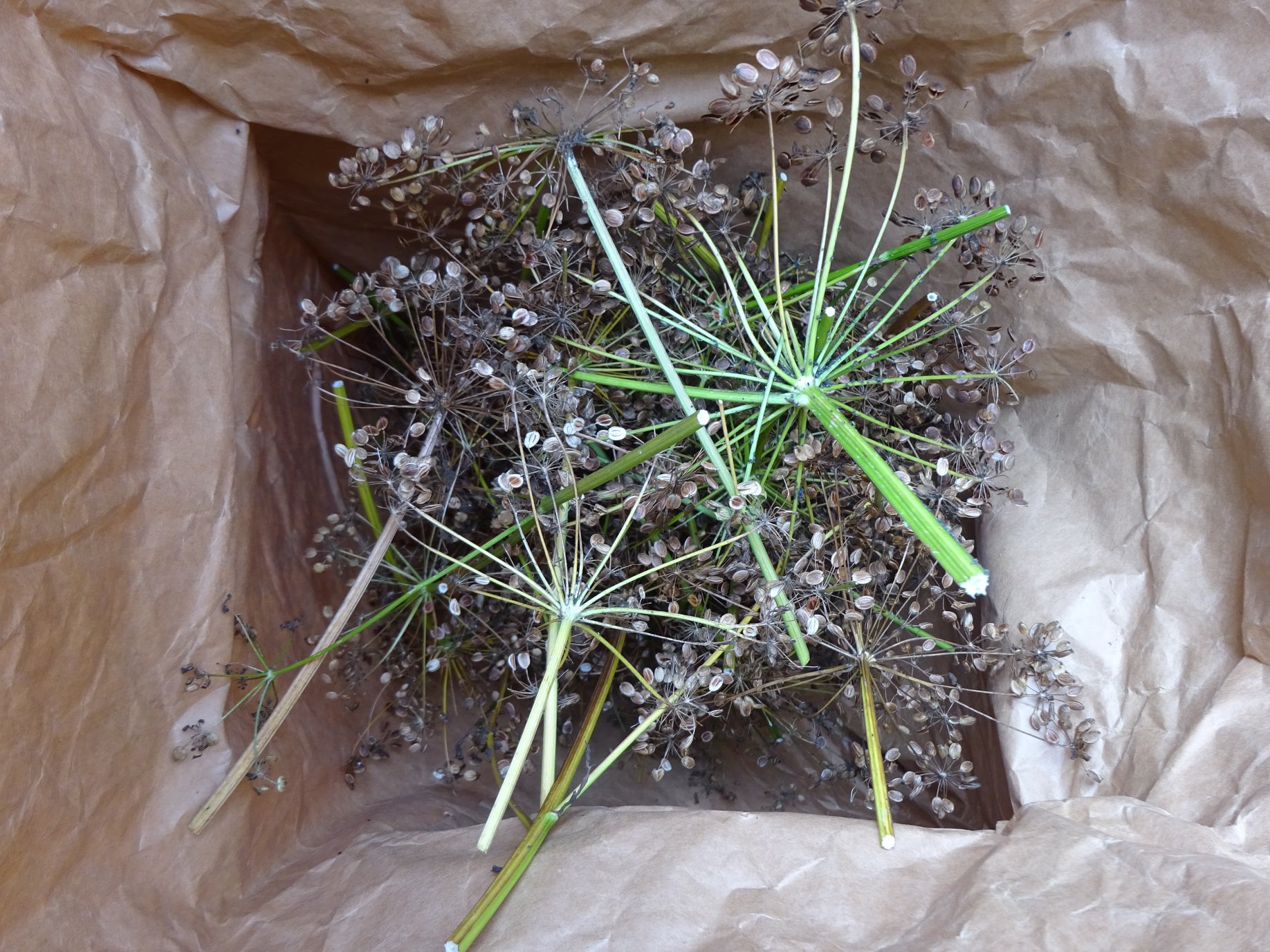
  • Seed saving: from most veg. Some such as parsnips, runner beans and leeks require a minimum of 16 plants to save seed from in order to retain diversity. Only save seed from the best plants/fruit. Store seeds in an air-tight tub in fridge with silicon gel packets as this significantly reduces conditions required for germination.

Parsnip seed saving © Malcolm Berry

  • The Moon: He uses the Maria Thun Biodynamic Calendar which shows the optimum days for sowing, pruning and harvesting various plants and crops.
  • Non-interventionist approach, no pesticides or herbicides, nature will balance things out. He grows sacrificial plants to avoid significant predation on veg.
  • Minimum tillage, he does not turn the soil, practices good crop rotation and uses green manures to maintain condition and fertility.

It was a very interesting talk and generated many questions from the audience.


Members Social and Growing Challenge 7.30pm Coronation Hall, Pumsaint

Our August meeting is our members’ social evening when we meet for a relaxed get together bringing a plate of food to share. This year due to our increasing numbers, it is being held in the hall rather than a member’s home.

Pots planted for pollinators – with varying degrees of success!

The evening is also when we share the results of this year’s growing challenge. We were asked to plant up a pot with plants for pollinators. Do bring along your pots even if they haven’t turned out quite as expected – it has been a very challenging year weather-wise, but we can all learn from our successes and failures! If you can’t manage to bring the pot itself do try and get some photos of it and bring them along instead.


The evening will also be when we will be handing over our donation from the proceeds from the plant fair, a cheque for £500,  to Wales Air Ambulance.


Garden Safari

The garden safari is a club event in which we get to visit the gardens of those club members who wish to participate. The number of gardens taking part varies year to year, this year there will be just 2, Yvonne’s and Tina’s. The date on which it will take place is Friday September 7th. More details will be given at the summer social.


Drought Busters

A tip from Elena for watering…

  1. Place a large tub in a wheelbarrow.
  2. Fill with old washing up water – You can also add feed to the tub
  3. Dunk hanging baskets in the tub holding underwater till all the bubbles stop
  4. Lift out and rest on the rim of the tub to drain, some will also drop into barrow and can be re-used!
  5. Rehang you well-watered basket. Works well with small pots too

And from Julian: we’re now having to use my huge number of water filled polycarbonate drinks bottles as a valuable water resource with our spring running low, but I also found that if you drill a tiny hole in the top of the bottle cap, upend it, and ram it into the soil beside squash, courgettes or tomatoes, it’ll deliver variable, but fairly slow water release over a few days – good if you have to go away for a weekend in hot weather.

From the white board: water Camellias and other Spring flowering shrubs now to encourage flowers next Spring.

Some plants which seem to be coping well with the lack of rain, and don’t need watering:

Jenny says….

  • Rudbeckia, Antirrhinum, Sweet William and Californian poppy.
  • Yellow Loosestrife, hostas and several unknown varieties of alliums have all flowered really well with minimal watering.

Sandy says…..

  • her 3 foot high unknown Phlox are doing well, and her Gunnera! She does live by a river which might help explain it.

Plants John and Helen have found are drought resistant are:

  • Erodium manescavii, Platycodon grandiflora and Scutellaria albida

Erodium manescavii with Geranium sanguinium

Julian and Fiona have found

  • Sea campion, Knapweed and Bird’sfoot Trefoil are all tough native plants to try, plus roses and clematis all seem to be thriving.

Ty’r Maes NGS Open Day

John and Helen had their NGS open day on Sunday. All John’s hard work watering to try and keep the garden looking good along with a little bit of help from the storms of the previous week certainly paid off. The garden was looking beautiful. The sun shone and the visitors flocked in – John said it was their best day for several years.  As always, thanks from them to all their helpers and cake bakers and to John and Helen for their donation to Cothi Gardeners funds.


Upcoming Events

Gardener’s World: Keith Brown whom many of us know for his lovely garden and talks he has given to Cothi Gardeners in the past, has been filmed for Gardener’s World. The piece is due to be aired THIS FRIDAY 10th August at 9pm

Llandeilo Permaculture Group: Llandeilo Permaculture Group have scored a coup, booking Permaculture designer Geoff Lawton for a talk in the Civic Hall on August 24th, 7pm. He’s done TED talks and lots more. This is his only date in Wales. Tickets are £10, includes a light buffet.

September Meeting

Paul Green from Green’s Leaves Nursery will be paying us another visit after his very enjoyable talk last year….. and he will be bringing plants again! Put the date in your diaries: Wednesday September 19th at 7.30pm