Conservation and Propagation of Native Welsh Plants at the National Botanic Garden of Wales

The talk at the July meeting was given by El James, Horticulturalist at the National Botanic Garden of Wales. For background El told us that the National Botanic Garden had opened in 2000, meaning that at 23 years old it is very young for a botanic garden. The advantage of this youth is that there is a freedom to experiment, which is sometimes absent when traditions have to be adhered to. The Garden houses the largest single-span greenhouse in the world (this still remains true 23 years on), housing the Garden’s Mediterranean plant collection. The total acreage is 560, with the ornamental gardens making up 180-200 of those acres; the rest of the space includes recently restored parkland with lakes, cascades and waterfalls and the Waun Las Nature Reserve. The Garden also houses the national seedbank and herbarium.

El explained that she started work as an apprentice at the National Botanic Garden four years ago (the scheme has been running for 10 years). For the last year she has been looking after the nurseries and Welsh plants section. There is a Welsh Native Compound in the Garden, although it is rather out-of-the -way, and there are hopes to redevelop that and bring Welsh native plants into more prominence within the Garden.

Within the Welsh Native Compound they aim to mimic the habitat found in four specific wildlife areas within Wales: the Breidden Hills in Powys, Cwm Idwal in the North, Kenfig near Bridgend, and the Great Orme near Llandudno. By having an area where these native plants can be seen, it is hoped to encourage more people to grow native wild flowers in their gardens. With native plants, it is not just about those with attractive flowers ( the ‘lookers’) – so many of them are associated with great stories from history and mythology.

The Botanical Society of Britain and Ireland recently released the Plant Atlas 2020, providing an overview of the distribution of plants in Britain and Ireland, and showing just how threatened many plants are. There are now more non-native than native plants in the UK! At the Millennium Seed Bank at Wakehurst Place they have banked 98% of UK flora from at least one population of each plant. However, as of 2019, 75% of Welsh plant populations had not been banked, and this is the rationale behind the Welsh seed bank at the National Botanic Garden. It is important to have seed from different populations, as plants growing in different parts of the country may have difference characteristics and require different conditions. El has recently been propagating Rumex rupestris, the shore dock, which is one of the most threatened vascular plants in Europe. She needs to grow on 150 plants from seed collected in south Wales, and currently has 20! It is important to have seed saved from this Welsh population, in addition to seed previously saved from the population in south-west England.

Dr Kevin McGinn is in charge of developing the National Seedbank of Wales and the Herbarium at the National Botanic Garden. The aim is to collect seed from all red-listed plants (50% of the seed to be stored at the Millennium Seed Bank and 50% at the National Seedbank of Wales), focussing on species that do not yet have Welsh-origin collections at the Millennium Seed Bank. At the Science Labs at the National Botanic Garden, the seeds are stored in freezers. In some cases this works well as the freezing process acts as stratification, but it can also cause some seed to go into deep dormancy, so different strategies for germination are required.

The team only collect seed from areas where they have the permission of the landlord, and when they visit a site it is to collect seed specifically from one or more species. There are strict rules and regulations which govern seed-collecting; only up to 20% of seed is ever collected, and depending on populations or circumstances it can be 10% or less. One of El’s favourite sites is at Baglan near Port Talbot, an old industrial site where wildlife has regenerated. On her first visit there she was fortunate to locate Clinopodium acinos, wild basil-thyme, almost immediately, growing in rubble and out of old brickwork. In terms of scenery, a visit to heathland in Anglesey to look for seed of Viola lactea, the pale dog violet, was a great contrast. Anglesey has also been visited to source seed of Hottonia palustris, the water violet. Close to Anglesey is the Treborth Botanic Garden, part of Bangor University, which is well-worth a visit. Another seed-collecting visit in partnership with the Millennium Seed Bank was to Pembrokeshire to collect seed of Populus tremula, the poplar tree.

Once seed has been collected, along with a herbarium specimen, details are entered on the IRIS database. In time, it is hoped to digitise the herbarium collection. The Garden Explorer database can be accessed online to see details of any plant in the National Botanic Garden, including photographs and location(s).

Another major activity in the summer is the harvesting of green hay from the Waun Las National Nature Reserve. The hay meadows are managed specifically for wild flowers, and include many different varieties. of orchid. In partnership with the National Trust, green hay is being laid around Paxton’s Tower to encourage a greater diversity of wild flowers in that area. It is quite a labour-intensive process to dry the seed laid out on tarpaulin and then sieve it. The seed is usually sold in bulk, but some years it is available in small quantities from the shop at the Garden.

El gave us a fascinating and very informative talk, brimming over with her enthusiasm for her subject and chosen career. The audience had plenty of questions and comments, and thanked her for such an interesting evening.


Mad Hatter’s Tea Party

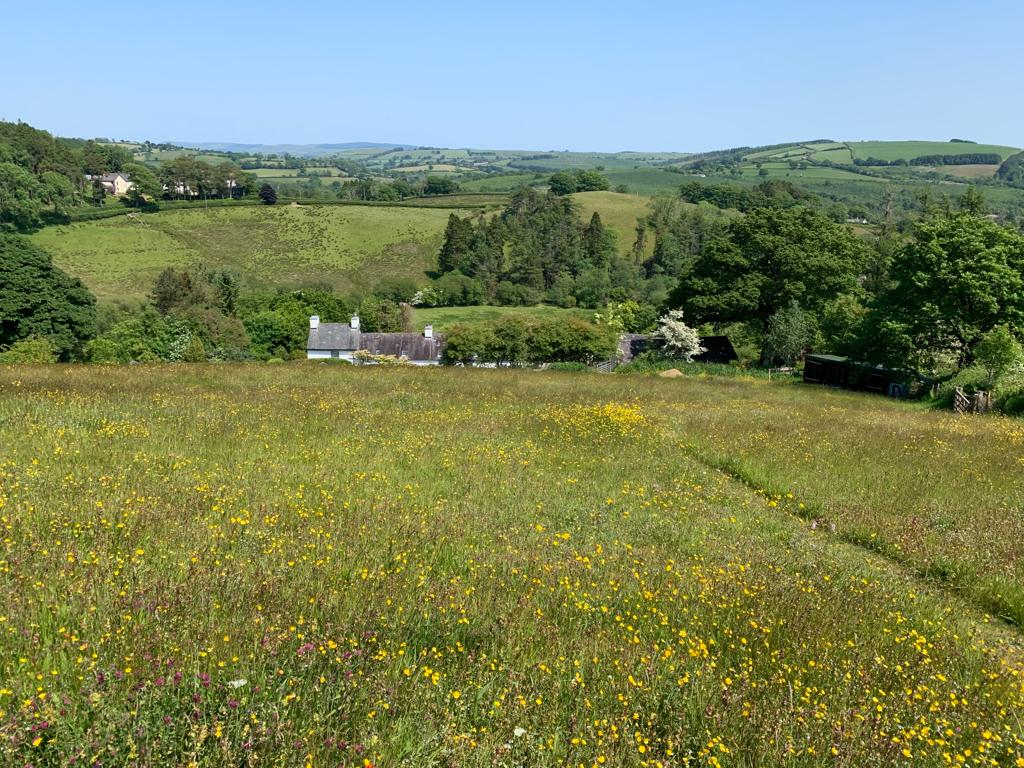
In early June, to take advantage of the amazing weather at that time, a Mad Hatter’s Tea Party was held for members at the wonderful Gelli Uchaf garden for the purpose of viewing the garden, particularly the wild flower meadows, sporting a mad hat and consuming a delicious tea.

The wild flower meadow was at its peak, everybody had brought quantities of amazing sandwiches, scones, cake and seasonal berries, and the hats were inventive, inspiring and humorous. The sun duly shone, and laughter and good conversation abounded.


Visit to Llwyngarreg Garden

Following a fascinating talk from Paul O’Neill at the June meeting of the Club, our Chair arranged a visit for members to Paul and Liz’s garden, Llwyngarreg, on the border of Carmarthenshire and Pembrokeshire, for mid-July. It had been very wet, but the rain managed to hold off for the entire afternoon! And what a privilege to be shown around the garden by Liz and Paul, in the sun, to hear its history and how it’s changed, and to be the beneficiaries of all their insights into the plants that they grow.

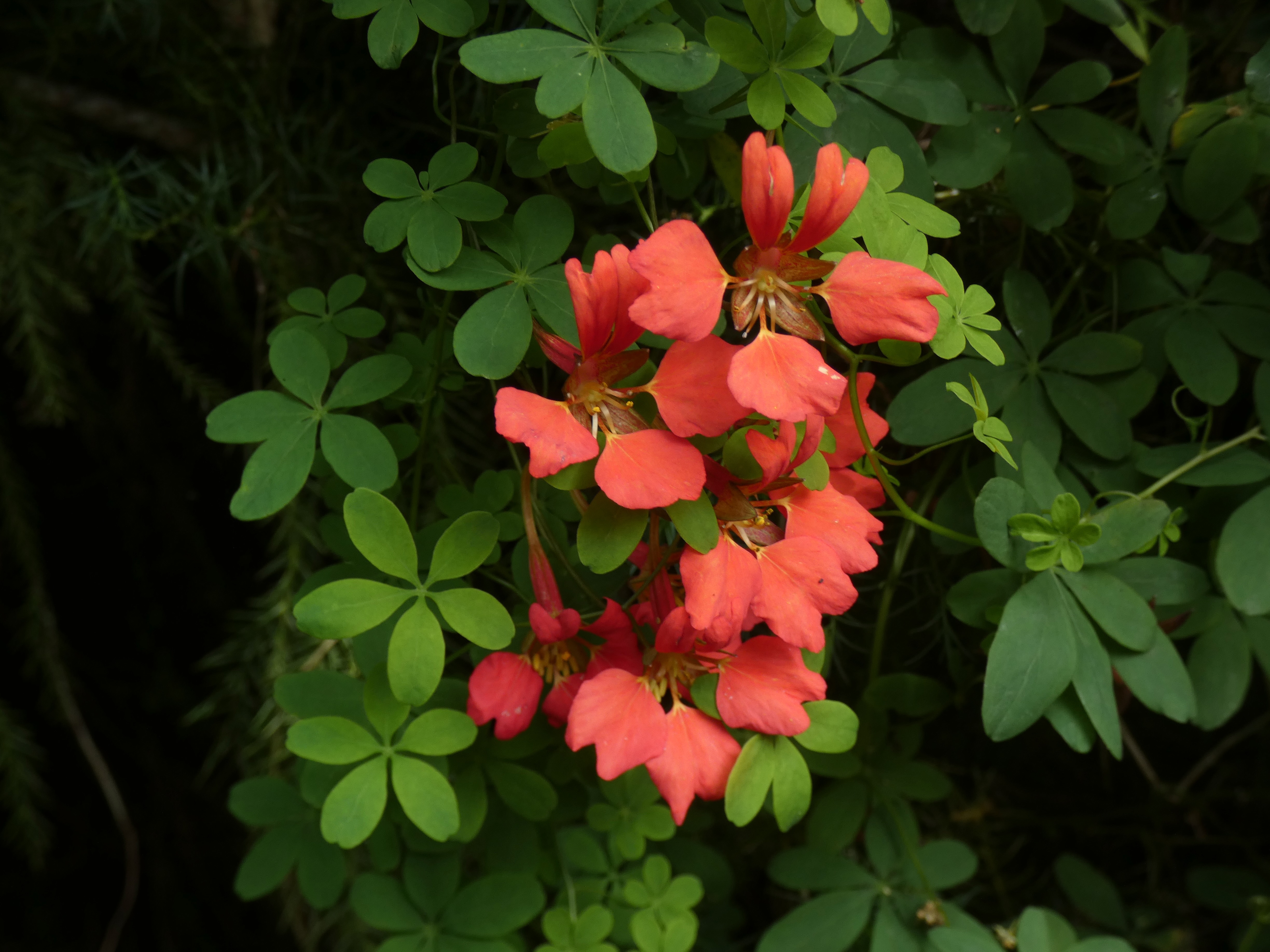
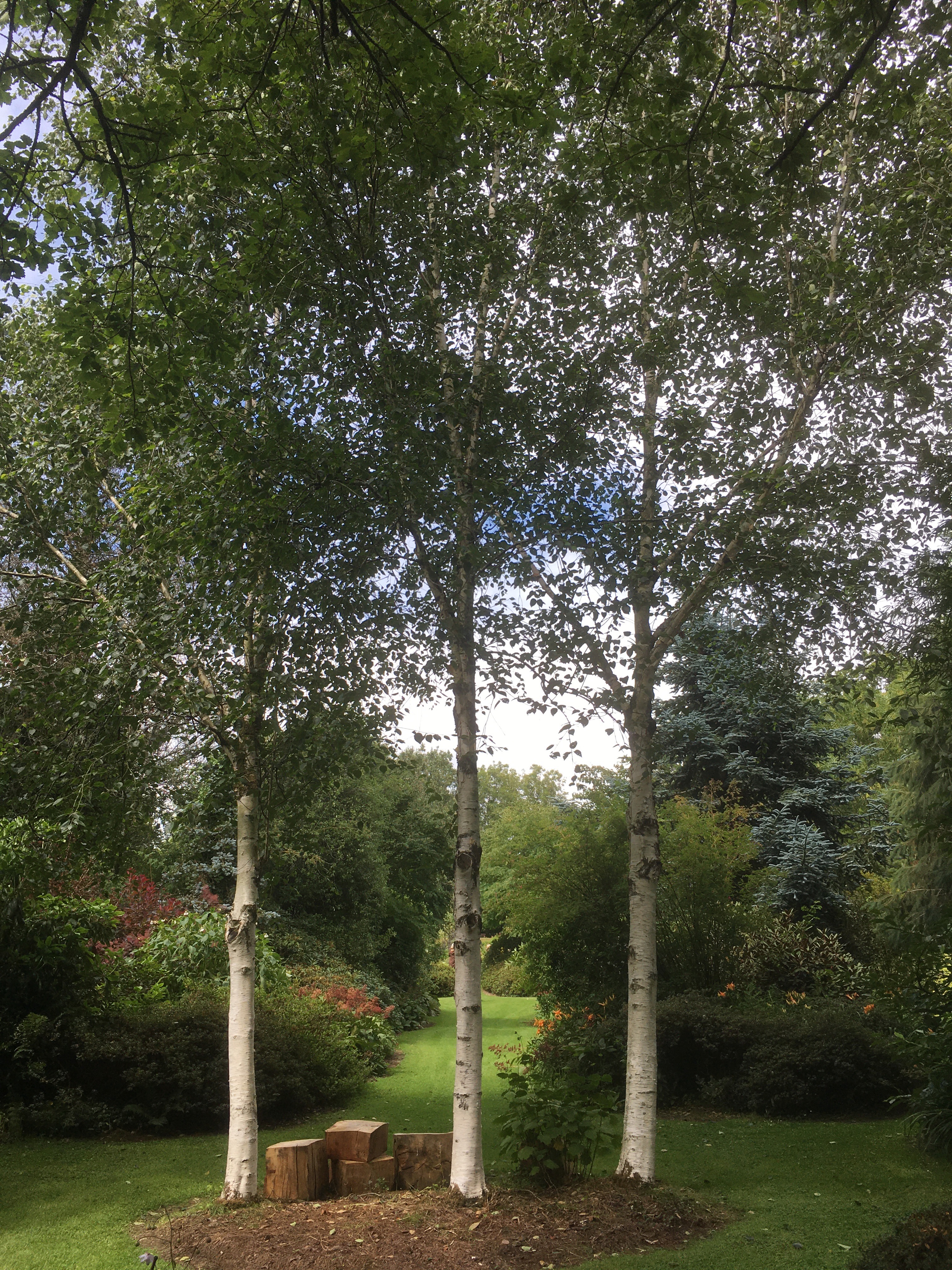
Appropriately, given Paul’s love of bamboos, the garden visit starts with a walk through a bamboo tunnel. This illustrates Liz and Paul’s readiness to adapt with changing climate conditions – it was previously a willow arch, but with time proved too dry for the willows, so they were replaced with bamboo. Willows still play a big role in the garden with various inventive seats and structures made from them. Bamboos are a major feature, with many unusual varieties including Borinda macclureana (a Keith Rushforth collected seedling, now many metres high). There is a real focus on trees (the acers are all grown from seed) and shrubs, particularly rhododendrons, including a number of the large-leaved varieties – many of which also are grown from seed. In mid-July we saw the beautiful and scented Rhododendron auriculatum, the latest flowering species rhododendron. in flower at just 7 years from seed! It was the first time that I have seen the gorgeous scarlet climber Tropaeolum speciosum growing through shrubbery outside Northern Ireland or Scotland.

We all exclaimed at the profusion of Agapanthus (campanulatus hybrids) growing in the soil in the garden. Paul explained that everyone is surprised – they grow here both in 2.5 metres of wet peat, and also 2.5 inches of gravelly soil over rock – two completely different environments. They looked spectacular with orange crocosmia in peat, and with dierama in the gravel beds.

There is so much variety in the garden: after exploring the trees, shrubs and bamboos, we emerged onto lawns with lovely perennial borders and a Japanese-style bridge.

After tea and cake (of course!), and arguing amicably over plants in the sales area (of course!), we made our way home. But not before Paul showed the bamboo aficionados two very unusual specimens – the walking stick bamboo with its swollen nodes (invasive), and Himalayacalamus falconeri ‘Damarapa’ with its colourful striped canes (too tender, I fear, for mid-Wales).

Fungal Fascination; Committee Commitment; Membership Renewals; TERRY WALTON; Christmas Lunch

Fascinating and Phenomenal Fungi

Bruce Langridge enthralled us with his enthusiastic and informative talk on ‘Fascinating and Phenomenal Fungi’ at our October meeting. Knowing very little about fungi when he arrived at the National Botanic Garden of Wales 15 years ago where his role as Head of Interpretation was “to create interpretation that informs, entertains and fascinates all Garden visitors, whatever their age, gender or background”. Finding that the NBGW included a meadow of international importance for fungi fired his enthusiasm to find out more and raise awareness of this amazing and important form of life. His annual Wales Fungus Day, started in 2013, has been taken up by the Mycological Society in 2015 and expanded into a National Fungus Day.

Embroidered Fungi

Bruce gave us a potted history from fungi’s evolution over a billion years ago to the present day when it is thought that there could be over 100 million different types. The importance of fungi to the planet’s ecosystem is huge. 85 – 90% of plants have a symbiotic relationship with one sort of fungus or another (fungi don’t photosynthesise and plants are not always very efficient in taking up necessary nutrients from the soil). Certain fungi are indicators of old meadows which have not had modern farming practices applied to them. The pink Waxcap is on such example (coincidentally Julian had counted nearly 70 of these in one of his meadows that afternoon). Some fungi are edible but Bruce advised caution as there are often ‘lookalikes’ which are poisonous; or in one case an edible one can be infected by a poisonous one! In addition, picking wild fungi causes damage to the fungus through trampling and soil impaction. Other fungi such as Dutch Elm Disease, Ash Dieback and Honey Fungus kill plants, while others have hallucinogenic properties eg. Magic Mushrooms and Fly Agaric and many have been used in Chinese and Japanese medicine for 1000’s of years. One of the top 5 most poisonous fungi in the world, the Destroying Angel, was found by Bruce locally.

Examples of fungi brought in to the meeting

Bruce’s slides and examples demonstrated the diversity of shape and colour from the bright red Elf Cups to yellow Witches’ Butter and the Bird’s Nest Fungus, often accompanied by interesting and amusing anecdotes.

Finally, Bruce told us a little about lichens (a combination of fungi and algae and sometimes bacteria as well) and rusts and smuts. Lichens are a sign of pure air, however they do not like acid rain so many are dying out. The NBGW is the first Botanic Garden in Europe to try a conservation technique, transplanting rare lichens onto a willow tree in the gardens to try and save them. So far the results have been very encouraging. (https://botanicgarden.wales/about-the-garden/wildlife/lichens-in-the-garden/)

For anyone who is interested, Bruce runs fungi walks at the Botanic Gardens and also suggests joining the Carmarthenshire Fungi Group (http://www.carmarthenshirefungi.co.uk/)


Committee Members Needed

As those who have attended the last few meetings will already know, we have three committee members retiring from their current committee roles in January. A huge thank you to Brenda and Yvonne, our programme secretaries and Julian our Chairman. All members should consider serving on the committee at some point to help the club to continue forward into the future. It isn’t onerous and is often great fun. Obviously it’s very important to find someone prepared to take on the role of chairman. It would be for 1 year with the option of continuing for a maximum of 3. Please give it some serious thought and if you are prepared to join us then please give your name to Julian by 9th January 2019


Membership

Due to the healthy state of the club’s finances this year, the committee has decided that there will be a one off discount for membership renewals as follows:

For existing members who renew their membership before or at the AGM in January the fee will be £10 (normally £14).

In addition, the committee decided that we should introduce a new fee for couples. This would normally be £25 but will be £18 if renewed before or at the AGM in January 2019.


Terry Walton

It’s hard enough getting those fiddly seeds into compost or trimming just the right side-shoots without holding your mobile phone to your ear and providing a running commentary to thousands of Radio 2 listeners at the same time.

© Terry Walton

If you haven’t already guessed, our speaker in November will be Terry Walton. “The Life of a Media Allotmenteer” promises to give us a look behind the scenes as Terry tells us about life on his allotment in the Rhondda and how he has given growing advice on the radio each month for over twelve years.

© Terry Walton

A gardener of over 40 years’ experience, Terry has worked plots on the same site since he was a boy, learning from his father and other allotment gardeners. Many of you will be familiar with his enthusiastic style, so do come along on November 21st to meet Terry. Mobile phones not necessary!

Guests and visitors welcome, £3, to include refreshments. The talk begins at 7.30pm.


Christmas Lunch

November’s meeting is your last chance to book in for our Christmas lunch. It is to be held at the Forest Arms, Brechfa on Wednesday December 12th from 12.30pm. The form together with the menu (which is also listed in a previous post) will be out on the ‘Meet & Greet’ table. You will need to give your food choices, noting any allergies/dietary requirements, plus a £10 deposit per person. The full cost of the lunch is £20 per person.


Topical Tips

Lilium regale – A fabulous scented species lily with large funnel shaped white flowers in the summer. The seed pods have just ripened and lilies are fairly easy to grow with fresh seed. Keep it in the fridge until maybe mid March and then sow it in a pot outside. You do need to keep slugs and mice away from them, but you can get good germination rates and it’ll take about 4 years for the lilies to flower.

Autumn planting

It’s a great time of the year for new planting now, before the frosts arrive, while the soil is still warm and with all that recent ‘wonderful’ rain having soaked the ground….

Winter Squash

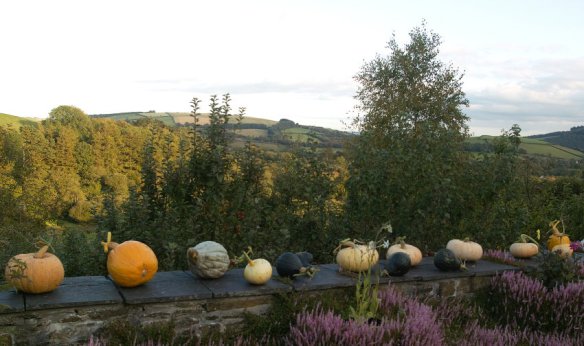
For everyone with winter squash, it’s probably a good time to ripen them off for about 10 days in a warm, dry place to toughen and dry up the skins, before moving to a cool, frost free place to allow them to store well for longer.


Green’s Leaves; Fantastic Fungi; Terry Walton; Christmas Lunch

Paul Green of Green’s Leaves Nursery

September’s meeting saw a very welcome return by Paul Green from Green’s Leaves Nursery. Paul once again built his talk around a fantastic and diverse selection of plants that he’d brought along, persuading us of the merits of plants which look great at this early autumn period and on into winter.

Ranging through grasses, trees and small perennials, there was something for everyone to enjoy, and the talk was laced with practical tips (remember to lift any outside pots off the ground over winter to prevent water logging and root death), to snippets of fascinating information (Alder Buckthorn is not only one of the main larval food plants for the caterpillars of the Brimstone Butterfly, but also originally the favoured wood for making high quality charcoal to incorporate into gun powder!)

An enjoyable evening all round, and great to see several new members join us.


Bruce Langridge – ‘Fantastic and Phenomenal Fungi’

Next week’s talk on ‘Fantastic and Phenomenal Fungi’ by Bruce Langridge promises to be really interesting – Bruce is responsible for establishing the Wales Fungi Day at the National Botanic Garden of Wales, taking place this Sunday 14th October and it’s been so successful that a similar event is now held at over 80 venues nationally. Click here for more information.


Terry Walton – “The Life of a Media Allotmenteer”

Advance notice for November’s meeting when our speaker  will be Terry Walton on the subject “The Life of a Media Allotmenteer”. Terry promises to give us a look behind the scenes as he tells us about life on his allotment in the Rhondda and how he has given growing advice on the radio each month for over twelve years.

A gardener of over 40 years’ experience, Terry has worked plots on the same site since he was a boy, learning from his father and other allotment gardeners. Many of you will be familiar with his enthusiastic style, so do come along on November 21st  to meet Terry. Click here for his facebook page.

Guests and visitors welcome, £3, to include refreshments. The talk begins at 7.30pm.


Christmas Lunch

Initial bookings for the lunchtime Christmas meal at The Forest Arms, Brechfa are coming in, so don’t forget to sign up soon – there may be a limit on numbers which we could broach this year, with the increased membership. The cost is £20 per head. Please give your menu choices (including any dietary requirements/allergies) plus a 50% deposit when you book your place. The menu is shown below. The date is Wednesday December 12th, 12.30 for 1 pm.


Monthly Tips

3 Tips from Julian……………..

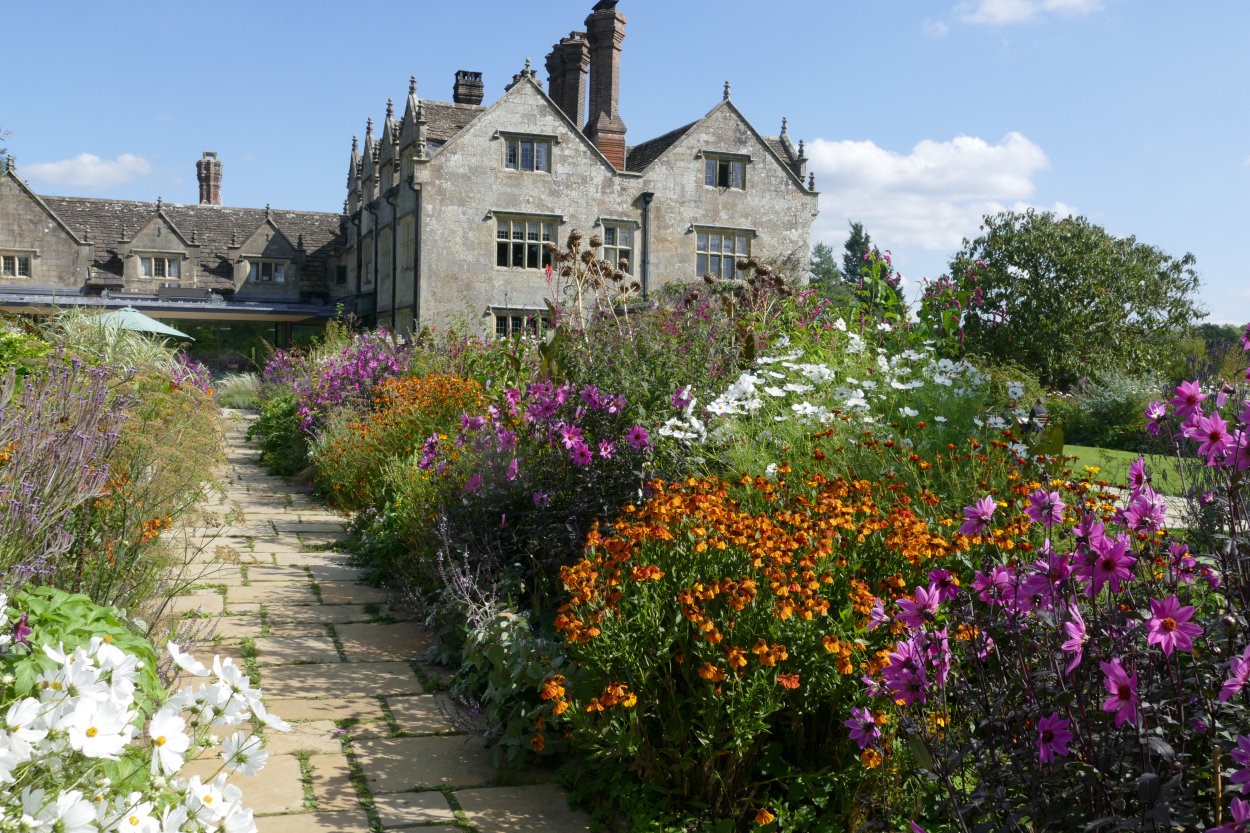
I find myself collecting seeds from quite a few plants at this time of the year. Obviously It’s a good idea to collect them on a dry day if you can manage that, but also it’s worth labelling them and quickly storing them in the fridge so that they don’t become too dry which can easily happen if they’re left on the side in a warm house. We had a few days in Sussex recently and were fortunate to visit Gravetye Manor which was the home of William Robinson at the beginning of the last century. He was perhaps the driving force in moving gardens towards a more naturalistic, less formal type of garden design. However I didn’t know until this visit that he injured himself very badly after slipping on a stile whilst walking to church, and spent the last 25 years of his life confined to a wheel chair. But apparently right up to the end of his days, he loved scattering seeds of his favourite plants around his garden and meadows and enjoying the excitement of seeing what germinated.

Gravetye Manor flower garden

I’ve also found that the 2 pronged weeding fork I mentioned earlier in the year as a great tool will work as a bulb planting implement for small bulbs like Crocus and fritillaries, which limits the extent to which you have to bend over. But I’ve also found it’s not a good idea to twist it too much, or you end up with a single pronged fork! Which is still ok for bulb planting, and for using as a strut or support but not so good for weeding!

Finally I’m guessing a lot of people will have a surfeit of apples this year. We have, so I’ve been juicing and freezing a lot. This generates quite a lot of pulp and trimmings. I did read that mice and voles love apples (certainly our rats do!) So I’ve been scattering all the apple debris around near where I’ve planted my Crocus in the hope that the rodents are distracted by the smell and taste of this. And therefore leave the corms alone. In previous years I’ve sometimes lost 80% of newly planted Crocus within a few days (in spite of dousing them in Chilli powder and vinegar) with them being systematically dug up and eaten. Fingers crossed, but so far I haven’t seen any signs of dug out, chomped Crocus this year. Also although it sounds a bit messy, actually all the bits turns brown very quickly and they have the added bonus of attracting in the few slugs we currently have left in the garden, which can then very easily be dealt with at night if you go round with a torch. In whatever way you like to do that! Of late since bending not’s so good for me, I’ve been using John’s suggested method of stamping on them, though I suppose if I sharpened the spike on my weeding fork I could try skewering…


Plant Fairs, Festivals and Crawls! Snowdon Night Hike

National Botanic Garden of Wales

Make a date for some blooming bargains at the National Botanic Garden annual plant sale.

Hundreds of plants, donated by Garden staff, volunteers, members and the public will be on offer over the two-day fundraising effort on Friday and Saturday, May 12 and 13.

There’s still time to donate plants – for details of how to do so, call Jane Down on 01558 667118 – but, mostly, you should be thinking about clearing a space in your backyard for the upcoming deluge of botanical bargains.

Last year’s volunteer-run sale raised more than £4,000 for Garden coffers and this year’s fair is again promising an interesting mix of stalls offering vegetables, bedding plants, perennials and plants for wildlife.

The National Botanic Garden of Wales is open from 10am to 6pm, with last admission at 5pm, and the Annual Plant Sale will run on both days.

Admission to the Garden is £10.50 for Adults (including Gift Aid), £8.75 for Concessions and £25 for a Family Ticket (2 adults and up to 4 children). For more information about this or other events, call 01558 667149 or email info@gardenofwales.org.uk

__________________________________________________________________________

__________________________________________________________________________

__________________________________________________________________________

__________________________________________________________________________

Team Large’s Snowdon Night Hike

At our meeting in April Anne explained to us the challenge she and members of her family have undertaken as a positive response to the cancer diagnosis she had last year. In aid of Breast Cancer they are aiming to climb Snowdon at night! The Night Hike takes place on May 20th. Do follow the link to Team Large’s Justgiving page to learn more about it. All support gratefully received. (Click here)


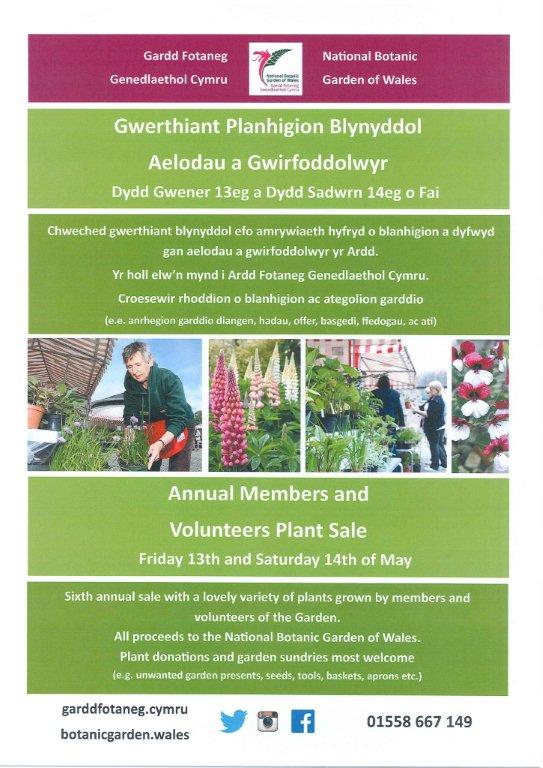
National Botanic Garden of Wales Annual Members and Volunteers Plant Sale

NBGW