‘The House on Stilts’ by Paula Davies; Next Meeting; Summer Social; ‘A Gardener’s Dream Itinerary’

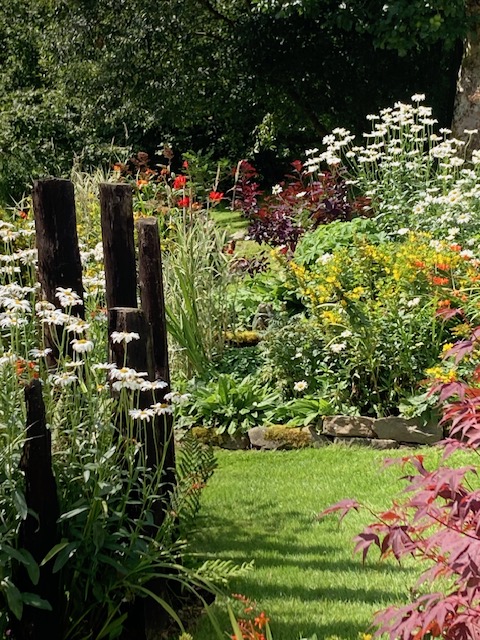
Paula Davies (aka Head Gardener) came to Pumsaint, along with her husband Iain (aka Assistant Gardener), to talk to us about the garden she has created in Ferryside, Carmarthensire, on the edge of the river Towy estuary.

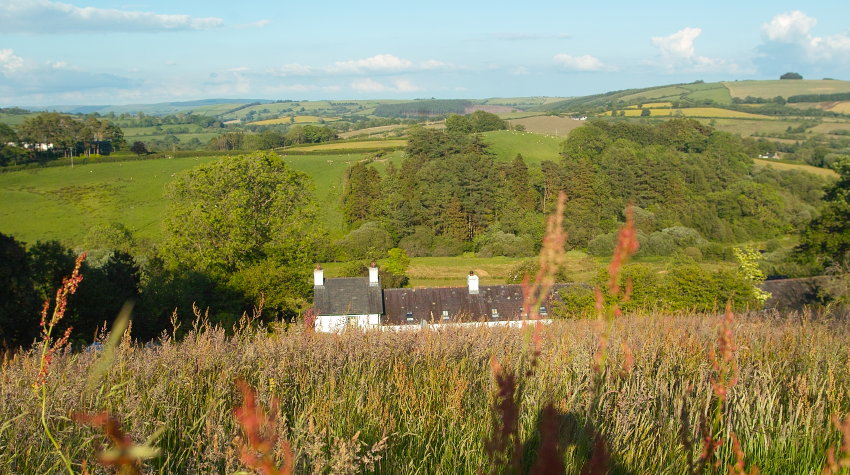
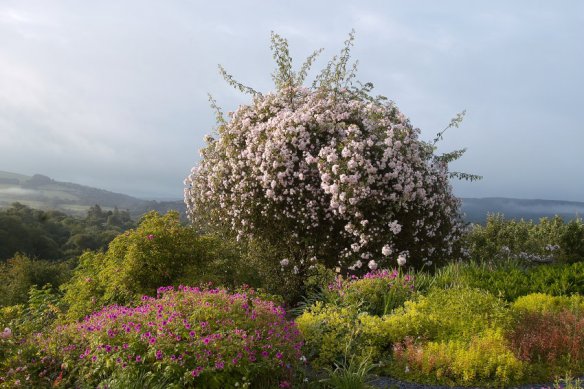
In purely factual terms, the garden is a third of an acre in size, eight metres above sea level (when the tide is out!). It faces west, being exposed to south-westerly winds and considerable precipitation. The soil is sandy clay over Old Red Sandstone, neutral to slightly acid (pH 6.5). To Paula, however, the garden is much more about people, places and time; it’s about the past, the present and the future.

Turning first to the past, Paula told us that her maternal grandfather had been a professional gardener, and as a child, along with her three sisters, her weekends were spent helping in her parents’ new garden or being dragged around other gardens or nurseries. Paula’s passion was drawing and painting and, influenced by books such as ‘The Country Diary of an Edwardian Lady’, she wanted to become an illustrator, perhaps of botanical or children’s books.

Once at art college, Paula discovered textiles and surface pattern, and went on to become a very successful international designer first for interior products and then fashion, always focussing on floral design. Thinking about colour, texture, shape and scale, and using these to create rhythm, repetition, focal points and balance, is a similar process to creating a garden – which came later!

The part-time lecturing which Paul did alongside her design work brought her to Carmarthen School of Art. Here, without any career plan but with a lot of hard work, she rose to become Faculty Manager and met Iain her husband, a handsome photography lecturer. Together in 1998 they bought a run-down modernist house in Ferryside, which at that time came with only a tiny plot. Paula had pots of architectural plants she had moved around various rented accommodation until then. The plants were finally put in the ground, which was then covered in 20 tons of gravel. As far as the garden was concerned, job done – or so they thought.

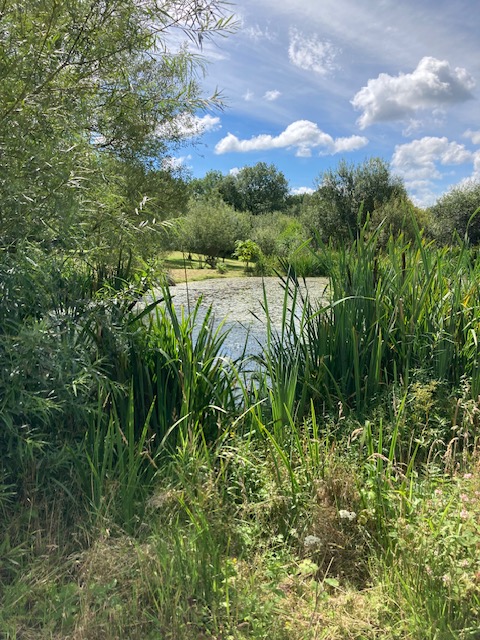
Then along came their son, and as he started to grow, gravel no longer seemed like the best idea. In 2013 it became possible to extend the plot as the neighbouring farm was up for sale, so that it is now one-third of an acre. And this is the land as it was when they bought it – an overgrown pond, goat willow, reeds, flag iris, brambles, nettles, hogweed, dock.

Paula’s inspiration was a book called ‘The Lost Words’ by Robert Macfarlane and illustrated by Jackie Morris, itself a response to words associated with nature being dropped from the Oxford Children’s Dictionary to make room for words from the world of technology. Paula and Iain wanted their son to grow up knowing and experiencing acorns, conkers, dandelions, frogspawn, herons and kingfishers.

The first stage, after Paula’s father had helped clear the land with his chainsaw, was to bring in a digger to excavate the pond which was clogged with couch grass, and then use the spoil to create different topographies and habitats – the pond, damp meadow, wooded shade, dry slopes. There were all the practicalities to consider, such as light, circulation, viewpoints, usage; then where the sun and shade naturally fall, where to put places to sit, paths, steps and so on. Their son got involved as well, creating drawings for what he wanted from the garden – his drawing of a tree-house perhaps the start of his interest in architecture.

This was to be a garden providing food, water and shelter for wildlife. They planted a mixed native hedge (560 plants!) including species such as beech, blackthorn and guelder rose. They left some goat willow and added more trees for height – six oaks, a golden weeping willow and birch – ‘Snow Queen’ and ‘Trinity College’. The rest of the land was sowed to meadow – with different mixes for different areas. Again, job done – or so they thought. The first year, 2014, the annual wildflowers were pretty as a postcard; the next year it was largely perennials – oxeye daisies with some red campion, knapweed, self-heal etc., but a couple of years later it was mostly grass, despite all the yellow rattle seeds sown annually.

By 2017, it was time for a rethink, aiming for dense planting with variety and succession, and value for wildlife. This time the land was cleared slowly by hand (it took weeks!). In the first section under the oaks a liner was used, and the planting (woodland edge/dry shade) was done through that. Now liner is only used for the paths, and other areas , such as the bog garden, have been cleared section by section, using cardboard to cover the ground over winter before planting. Job done – or so they thought.

The pond is a natural clay-lined pond fed by a spring at the rear and rain water from the roof. It was planted up with marginal plants, floaters and oxygenators, but it was not without its problems – nutrient levels, algae and duckweed. Norfolk Reeds were planted to help filter the nutrients – but they are the bamboo of the water world! After they began invading the land, in 2019 work had to begin to dig them out. This work is still on-going – so job not done!

Then along came the pandemic and lockdown. The garden provided wonderful views while working from home, and technology offered online opportunities for connections with other gardeners – for example @myrealgarden with Ann-Marie Powell – and for learning such as garden design courses with Adam Frost. Meanwhile the battle with the Norfolk Reeds continued, now from within the pond, and the bog garden was planned and replanted, and pond marginals chosen for succession. Lockdown was also a time for reflection, and after 32 years working in education, the tables turned and the lecturer became the student.

In autumn 2021 Paula enrolled on an RHS course at Aberglasney Gardens – the RHS Level 2 Certificate in Practical Horticulture. This was harder than any other course she had done at a much higher level, but very rewarding. At the same time more areas in the garden were cleared with the help of a friend, also a student on the course. After the areas had been left over winter, they were planted up for dry shade and woodland edge habitats. The work continued in 2022 with clearing the steepest area, the upper bank, in the autumn and planting up for a sunny well-drained position in the spring with shrubs, perennials (including fruit bushes and other edibles) and bulbs.

Every section of the garden includes wild flowers, which are either a legacy from the meadow seedbank or sown by the birds. These include red campion, ribwort plantain, and ox-eye daisies, with the addition of native ferns (which were always there) and Epimedium x versicolor ‘Sulphureum’. You have to be selective and choose plants which will work well together.

After finishing the RHS exams, Paula enrolled in autumn 2022 on an online Garden Design Course with KLC School of Design, covering how to build a garden design portfolio – storyboards, moodboards, customer profiles, masterplans, elevations and perspective drawings. All this learning was also being applied at a practical level by creating planting plans for a specific situation or purpose – in this case a wetter slope out of sight of the house to be planted colourfully for the birds and the bees. The course also gives access to CPD with the Society of Garden & Landscape Designers covering the latest thinking in design and sustainable gardening. Through this, inspired by visits to Derek Jarman’s Prospect Cottage at Dungeness, and the Walled Garden at Knepp designed by Tom Stuart-Smith and Professor John Hitchmough, as well as Beth Chatto’s Dry Garden, Paula began to rethink the front garden.

This was designed to be drought tolerant, with sand and grit layered above the topsoil, and mulched with local cockle shells. Then, after the summer of 2022, the driest since 1976, came the wettest winter since 1766! Despite this, the drought-tolerant planting survived the floods. Paula realised that we need to learn to garden in a time of climate change with more resilient plants, more species and more natives; we need to think about the soil and the substrates.

So in the following autumn (2023), she began to rethink the areas under the oaks, and the woodland edge plant communities that she wanted to create. The process involves drawing up plant longlists for these areas, taking into consideration growth type, longevity and competitiveness, in order to create successful plant communities that include natives and well-behaved or controllable weeds. The lists are then refined to reach more considered plant combinations which take into account colour, texture, form etc, and which ensure interest throughout the year as well as good ground coverage to retain moisture and avoid weeds or unwanted self-seeders.

Paula and Iain got involved with garden opening through the Ferryside Garden Crawl starting from 2018. From there connections were made with the National Garden Scheme, for whom the garden has opened since 2024 with 186 visitors raising £1100 for NGS charities, and 272 visitors in 2025. Through the NGS Yellow Book, the BBC Gardener’s World programme got in touch, and came to film the garden in May 2024, which was a wonderful experience, and provided great exposure for the garden when aired.

For a number of years Iain had been encouraging Paula to enter the B&Q Gardener of the Year competition, and in 2024 she finally did so in the ‘Most Sustainable Garden’ category – which she won!

In June 2024 photographer Sarah Cuttle had visited the garden to take photographs which were then used by Gardens Illustrated Magazine in an article written by Alys Fowler. That was when Paula realised how much she and Iain had achieved by attracting so much wildlife and creating a magical place for their son to grow up, knowing all the ‘Lost Words’ and having seen them in the garden.

For the future, Paula plans to continue to work with wildlife at the heart of the garden, completing the Garden Design course and implementing the learning. As she now knows, a garden is never finished – and the job is never ‘done’!

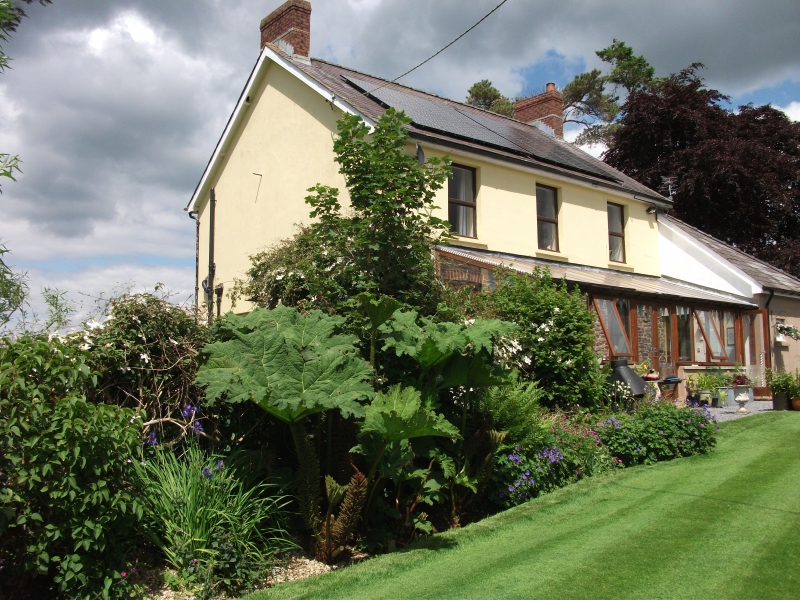
Members would be invited to visit ‘The House on Stilts’ on 31 May at 2pm, details to follow by email.


Next Meeting

Cothi Gardeners’ next meeting will be held on Wednesday, 18 June at 7.30 pm. Our very own Mair Evans will be giving a talk on ‘Pelargoniums and Geraniums’, which is bound to be fascinating, and as a bonus she will be bringing along plants for sale!


Summer Social

Members, save the date! On Wednesday, 20 August Cothi Gardeners’ summer social will take place at The Plough Inn, Felingwm. We will be able to order delicious pizzas of our choosing, and hear a talk on dahlias by Joseph Atkin, owner of The Plough Inn and former Head Gardener at Aberglasney Gardens. A real treat in store!


‘A Gardener’s Dream Itinerary’

A recent article in The Guardian newspaper has highlighted how lucky we are to live where we do. It is entitled ‘A Gardener’s Dream Itinerary: a Tour of Carmarthenshire, the Garden of Wales‘ and is a very nice write-up of gardens and a nursery we know and love, and you may just spot a reference to our Summer Social venue!

August Social

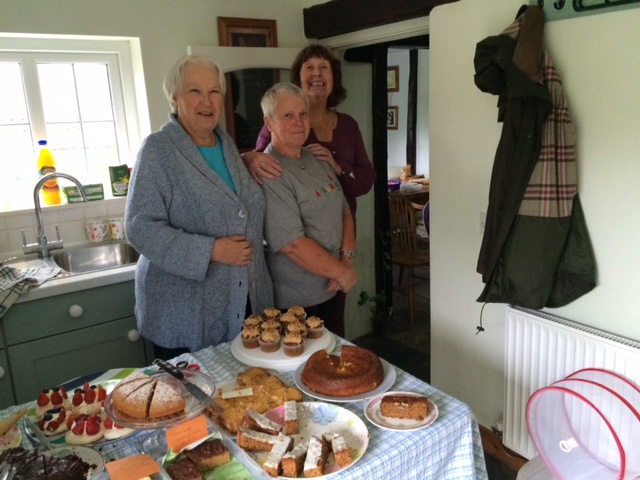
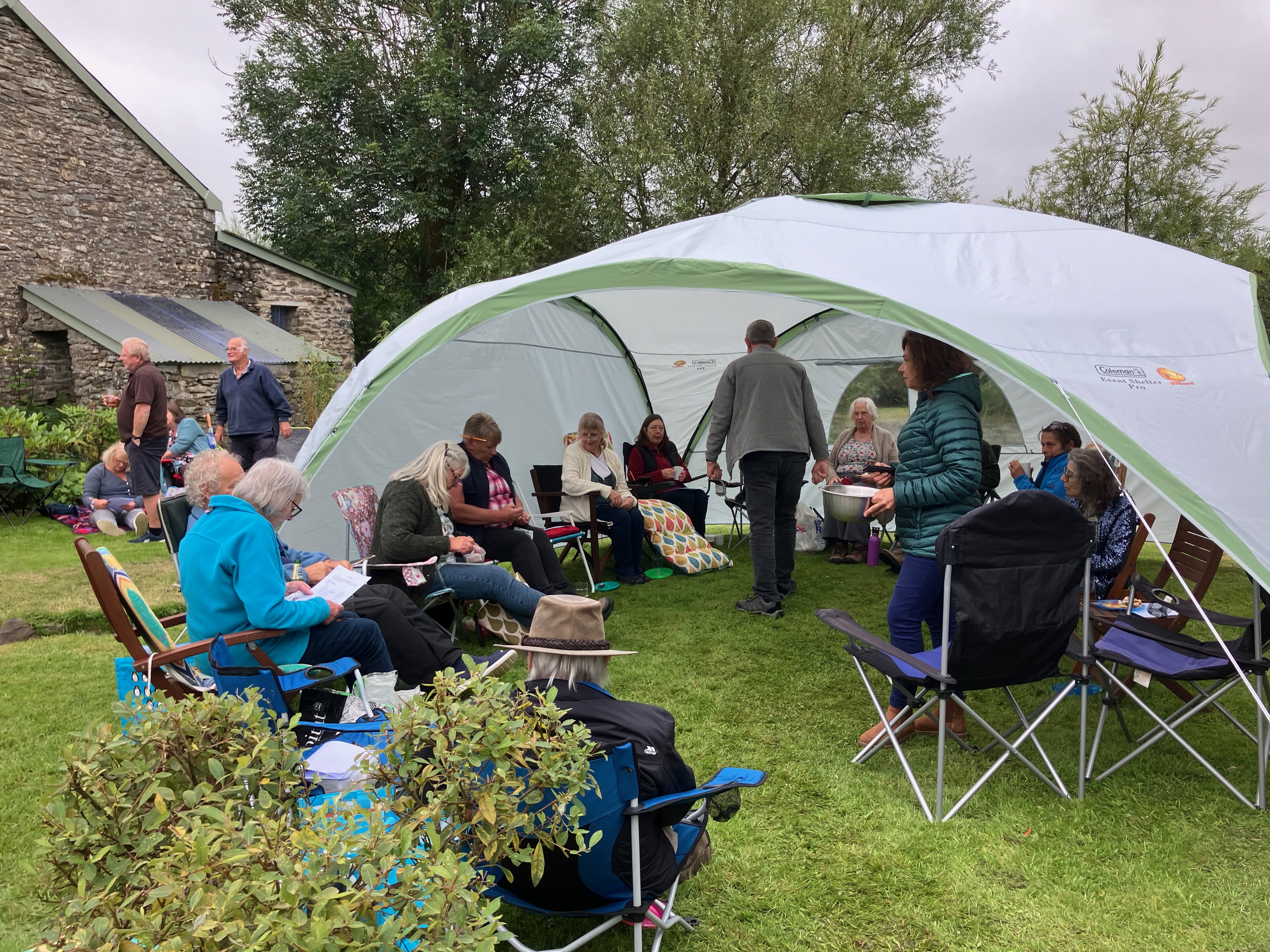
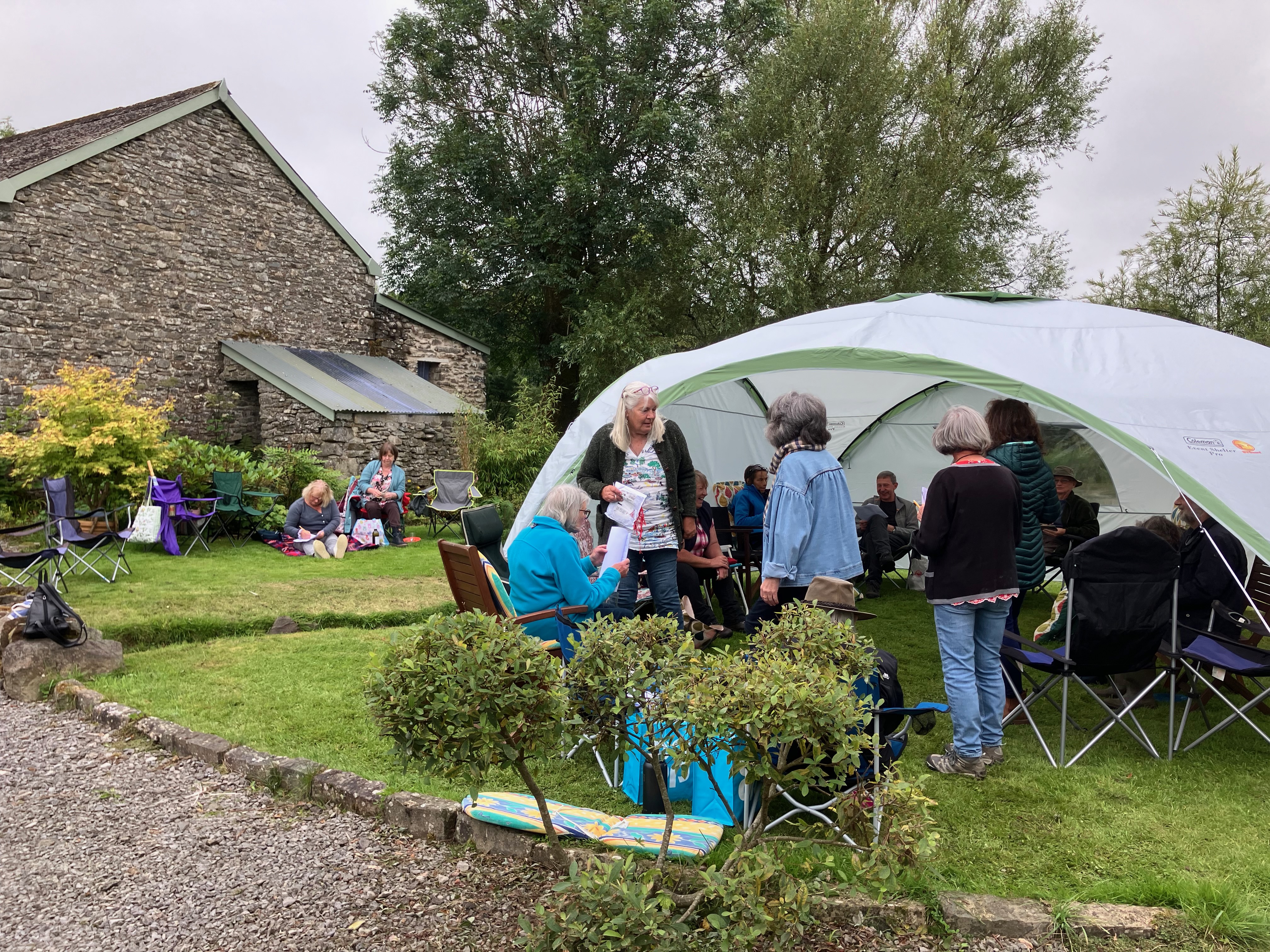
The Cothi Gardeners annual social, hosted by our Chair Dawn, was held on an overcast, but fortunately not rainy (at least not until the end, when the remains of Storm Ernesto arrived!) day, allowing us all to make the most of the wonderful garden in Ffarmers, and the activities arranged. Plenty of members brought along produce or flowers for the various competitions, and the table was laden with savoury delights and delicious cakes for us all to tuck into.


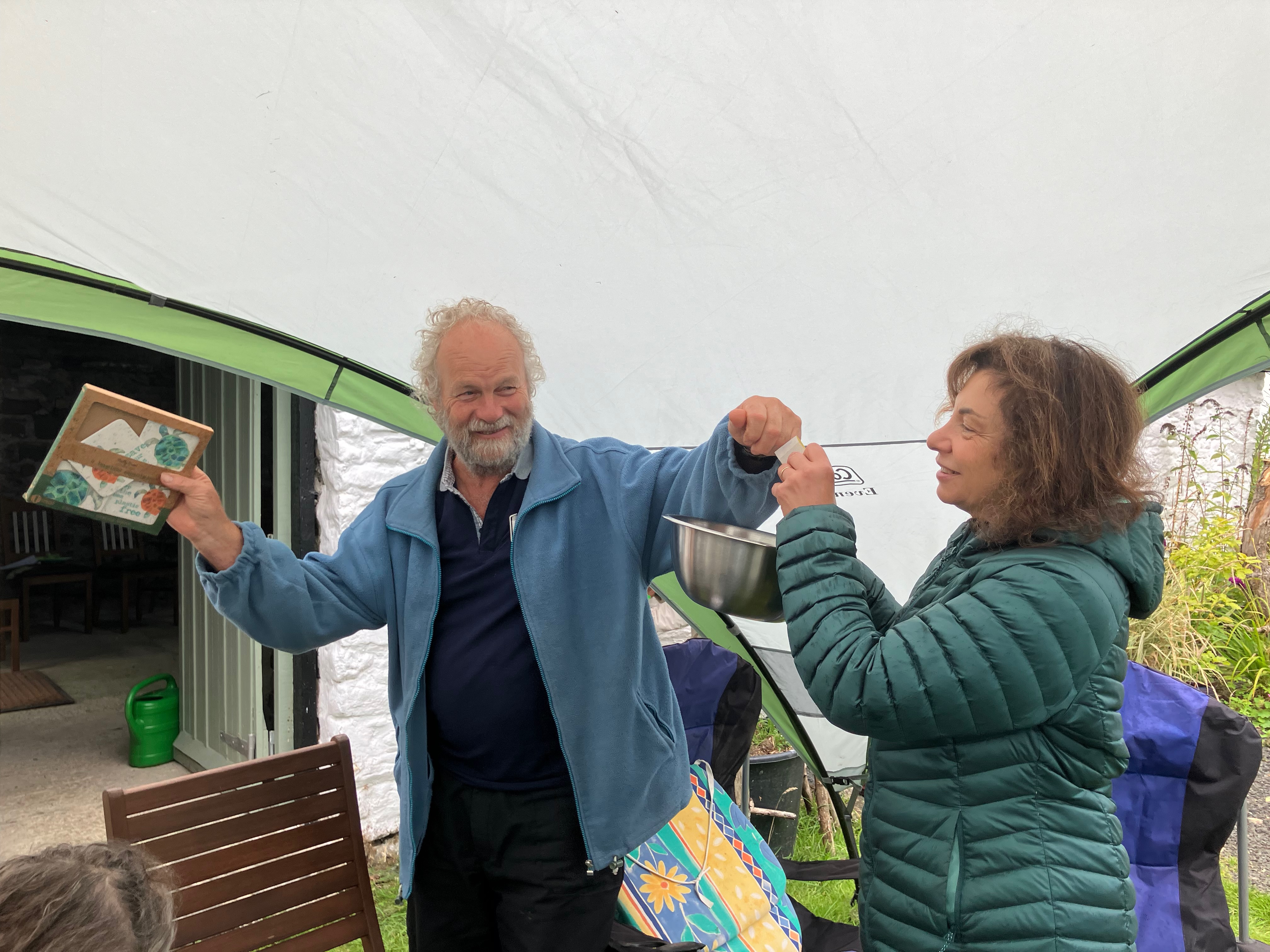
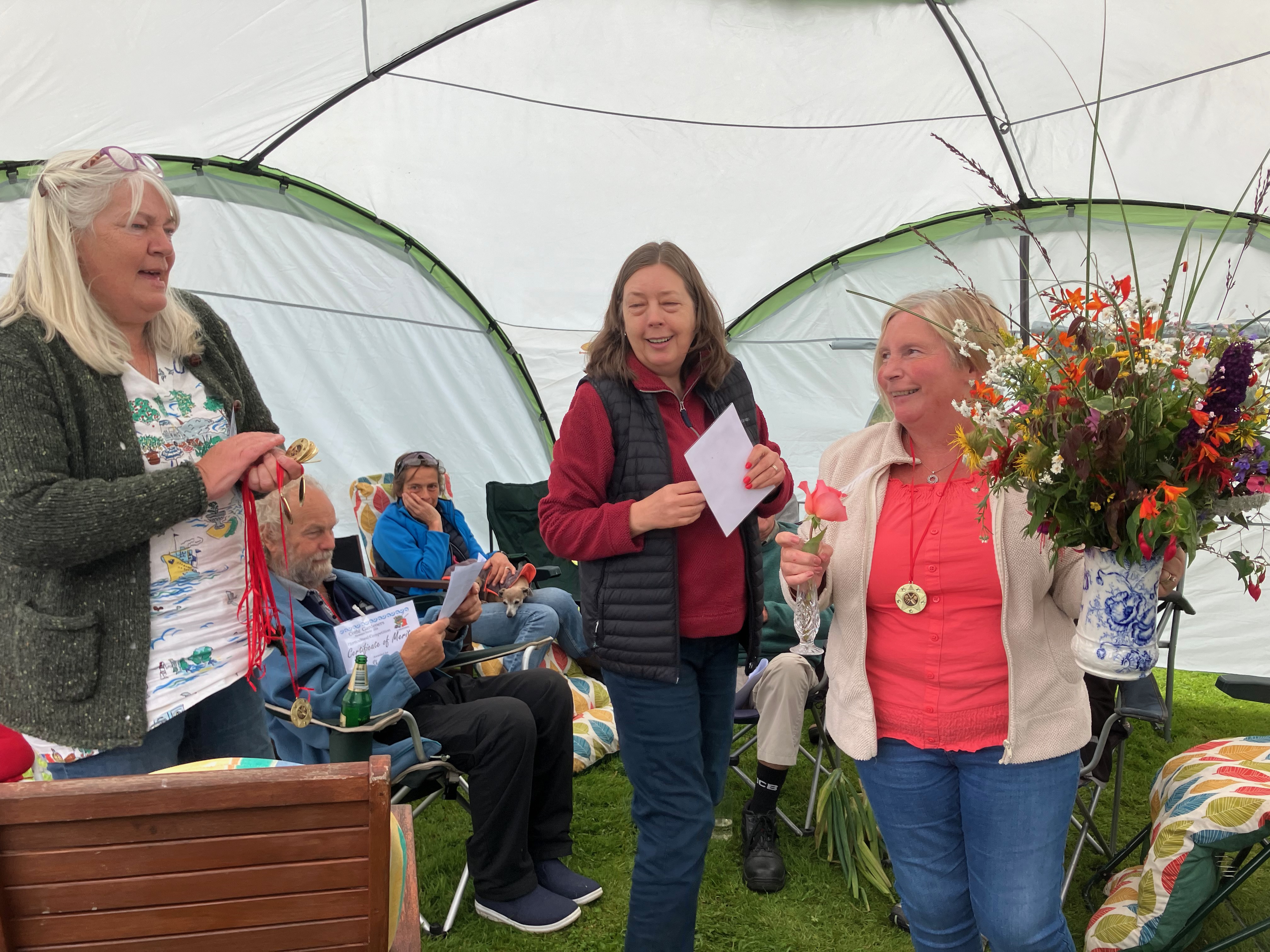
After much conversation over the food, the results of the raffle and the competition prizewinners were announced. There were a total of six prizes for the raffle, which also benefitted the Club’s funds.


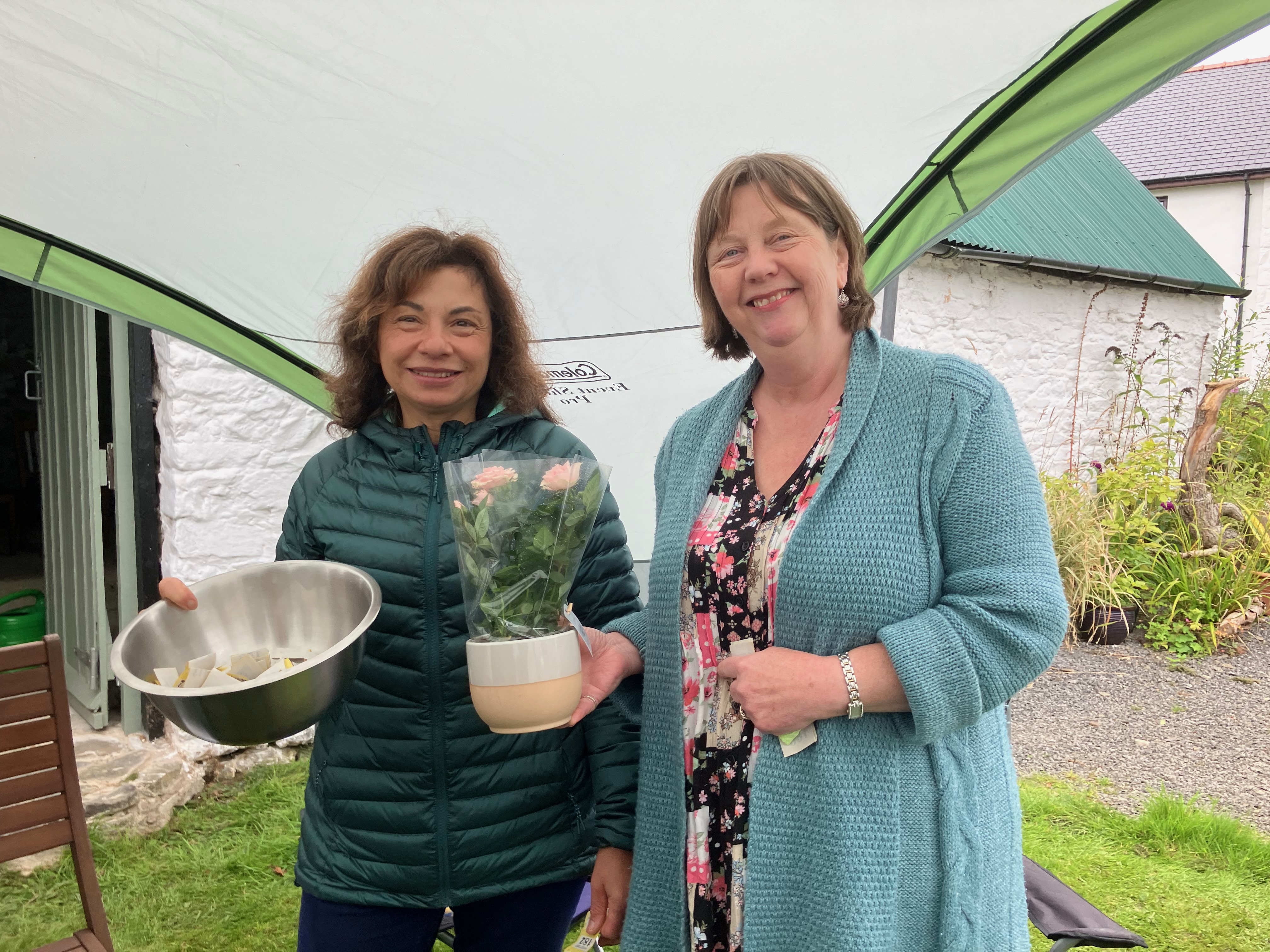
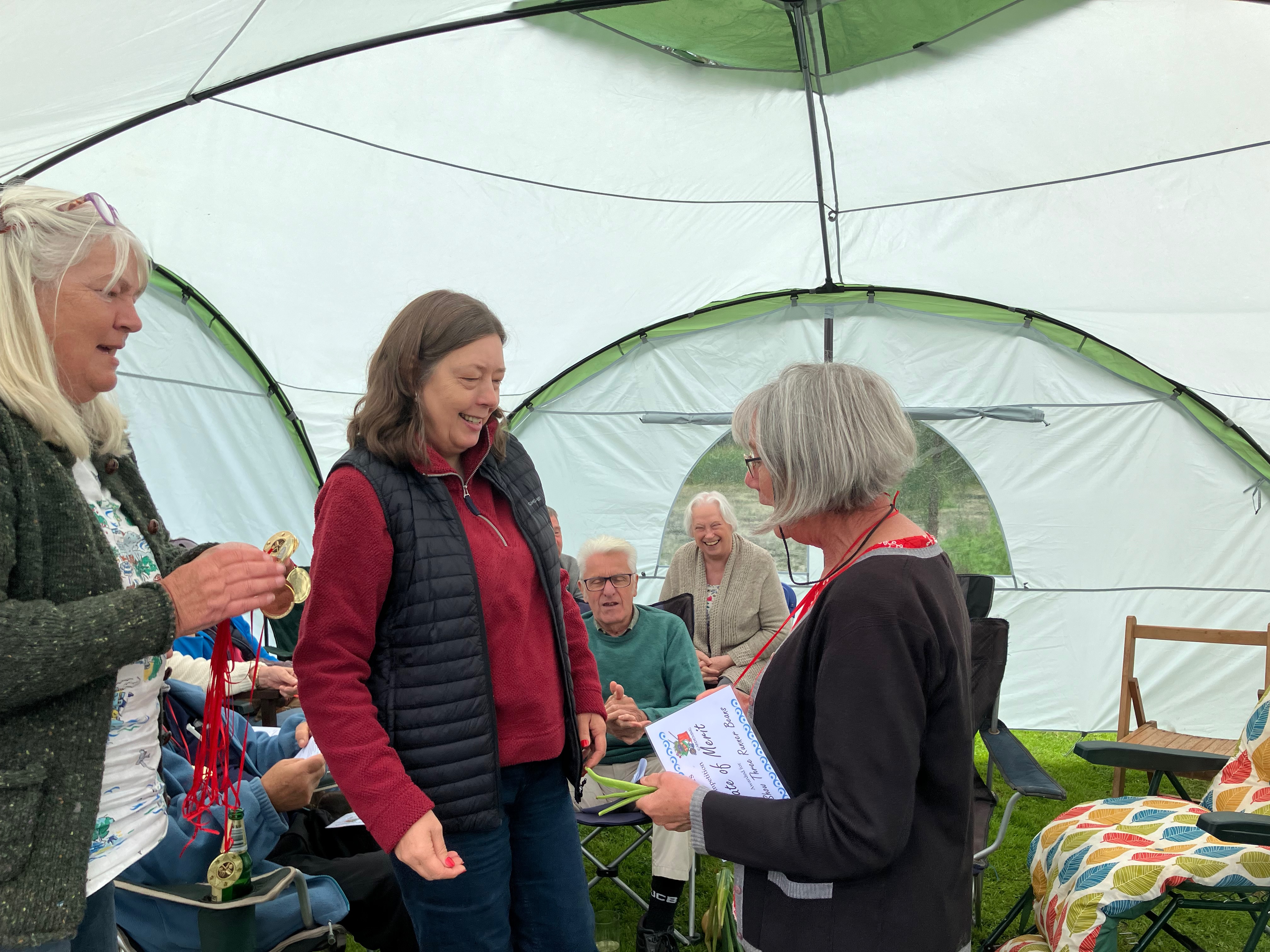
Certificates and medals were awarded for the best exhibit in each category, ably judged by guests Angela and Martin. Rob won the prize for the largest weed (by definition of being a plant in the wrong place, not an undesirable plant). Jenny claimed the prize for the best three runner beans, and Honour for the best flower arrangement and also single rose. Amanda won for best single dahlia, and the best potatoes. 


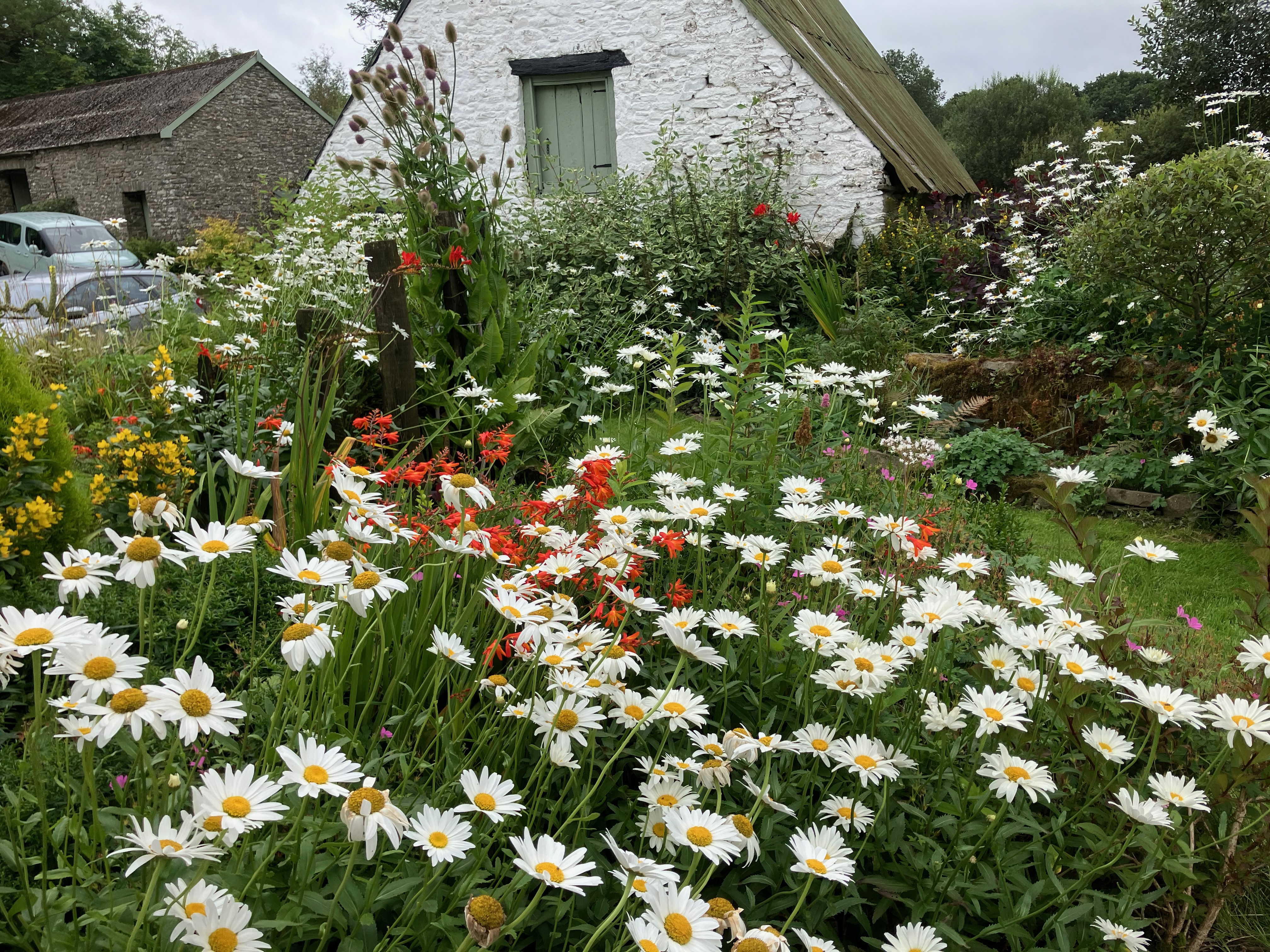
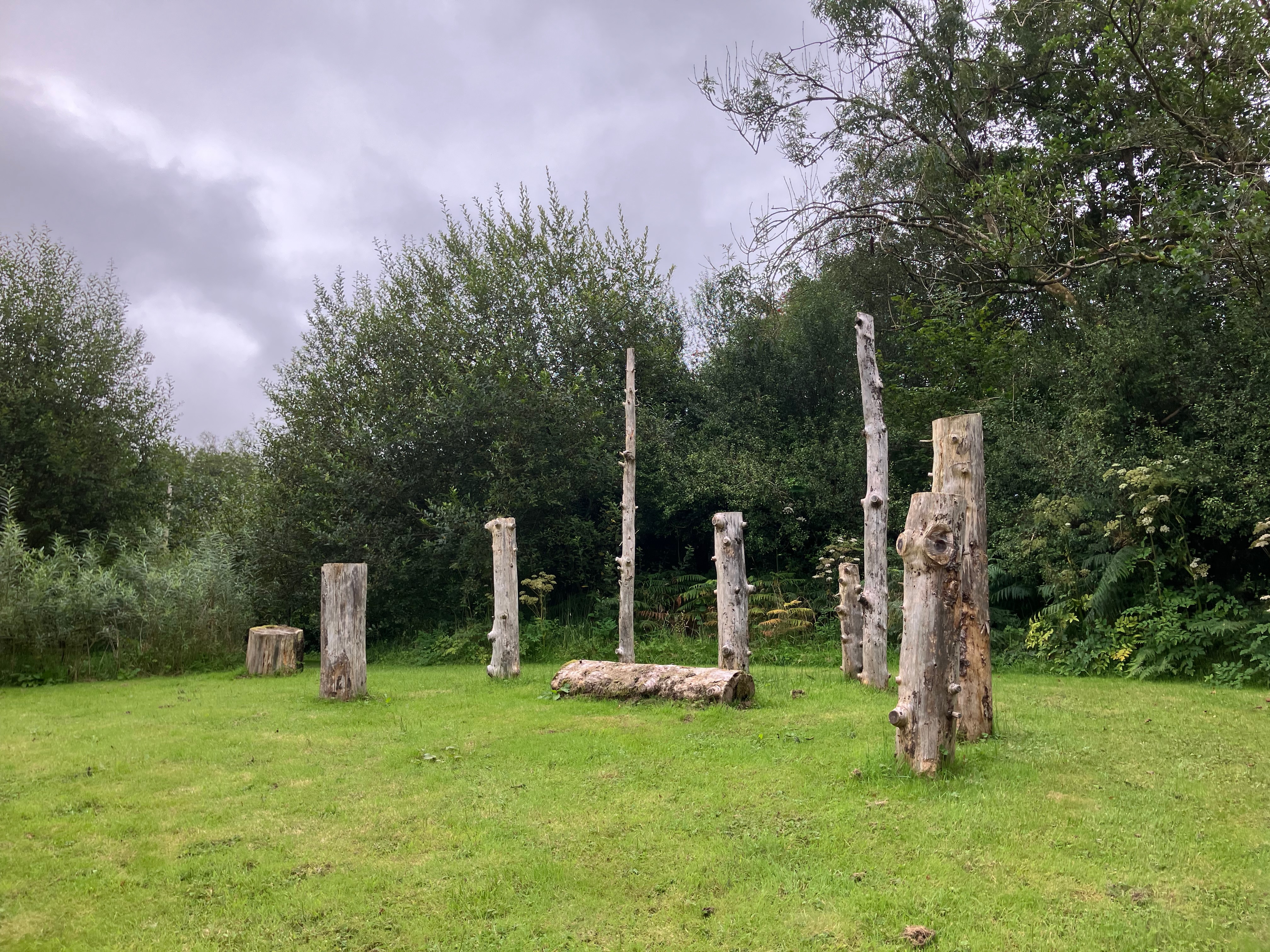
After that Dawn gave us a tour of their garden and land bordering the River Twrch and encompassing SSSI areas including swathes of Devil’s Bit Scabious, the food plant of the Marsh Fritillary butterfly, in perfect flower when we visited. I think that everyone was impressed with the natural beauty of the site and what Dawn and Nick had achieved in removing the overgrown brambles from much of the land, as well as creating a lovely more formal garden around the house and barns.

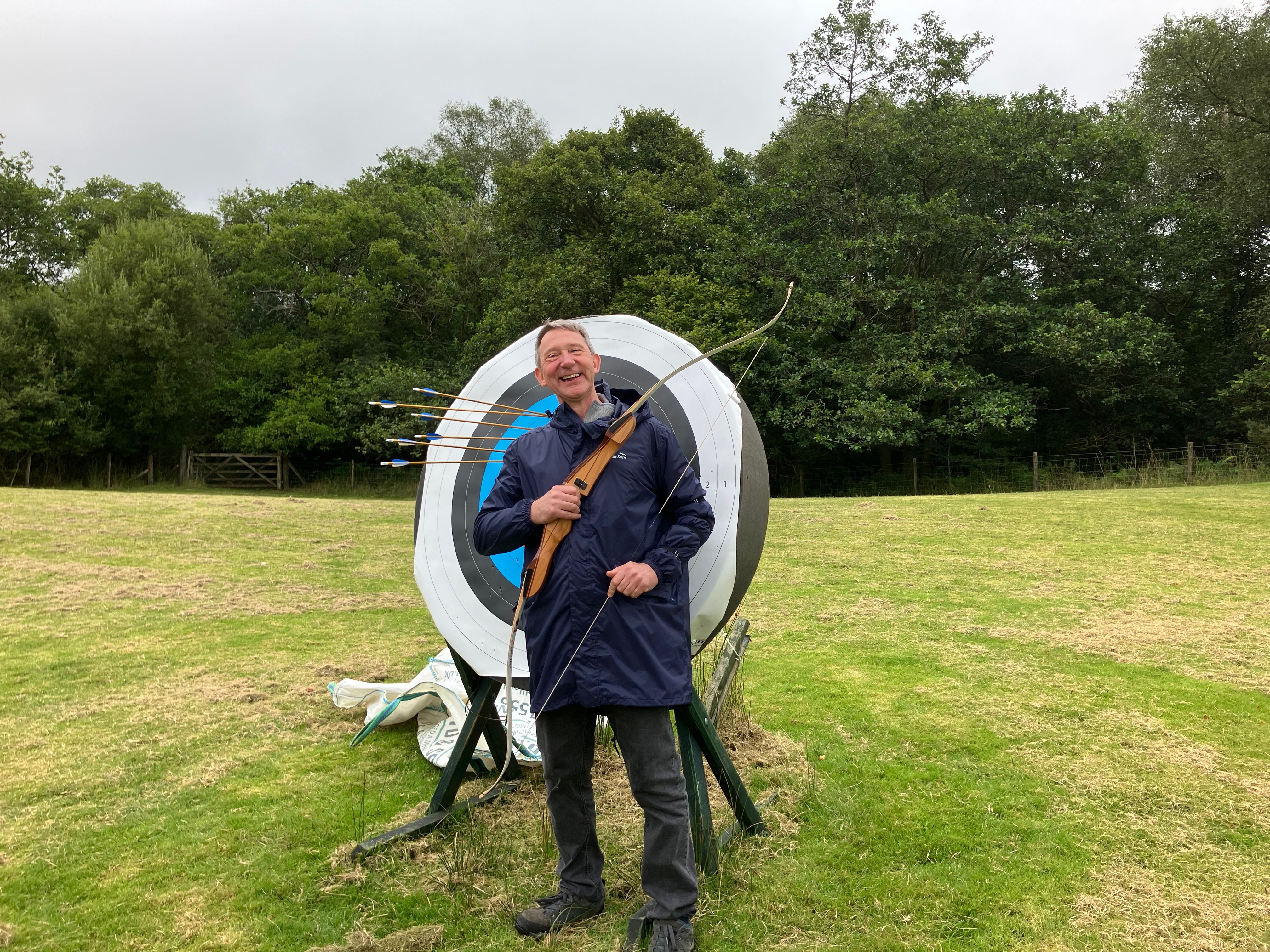
There was also an opportunity to try our hand at archery, with Nick a very friendly and able instructor. Let’s say that some of us were better than others, but everyone thoroughly enjoyed the experience. 

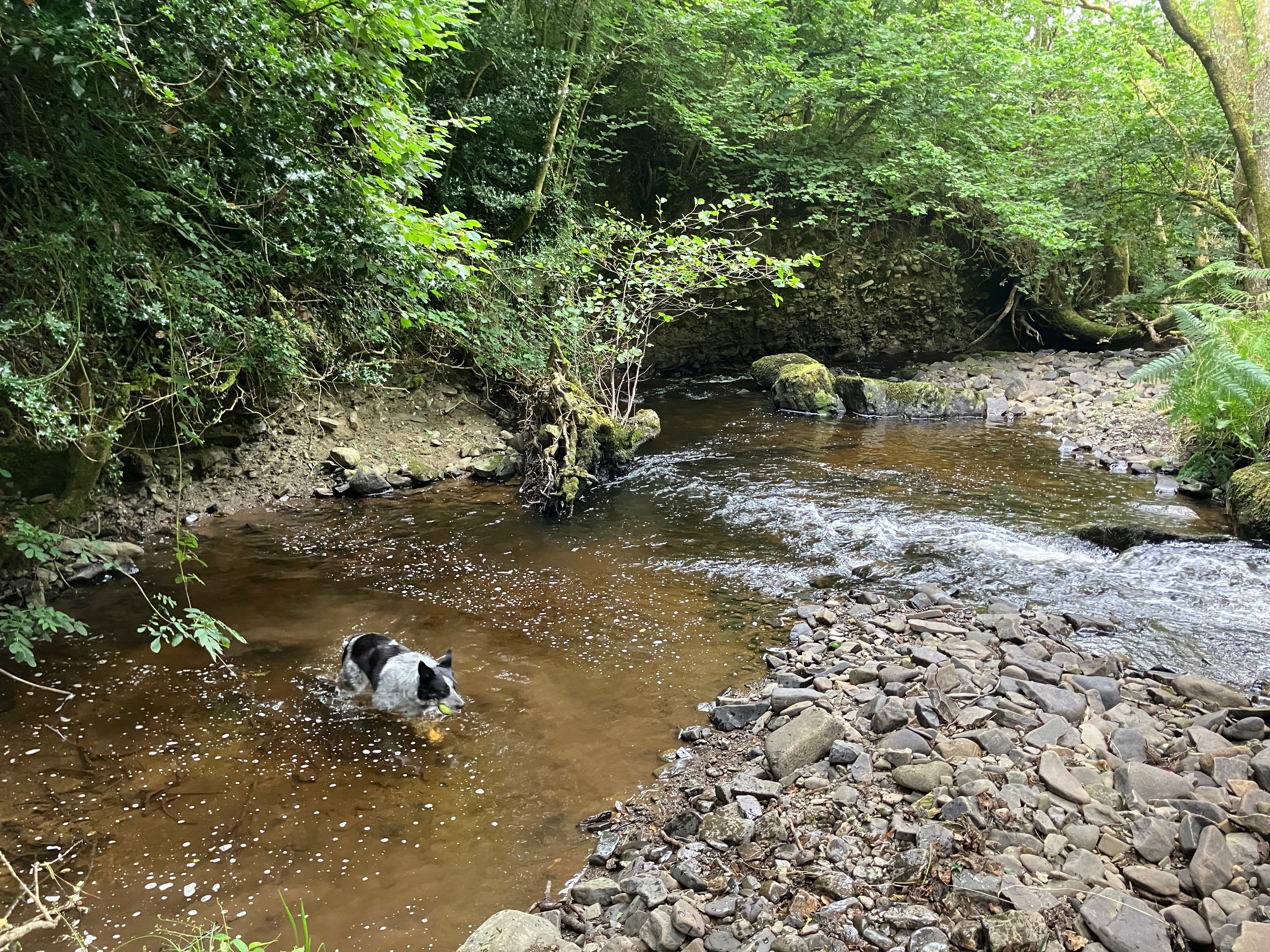
We all enjoyed meeting Dawn and Nick’s lovely dogs, who played a full part in the proceedings and many balls were thrown during our walk. All in all it was a fabulous day out, and the raffle and plant sale (thank you Rhoslwyn Plants) raised welcome funds for the club. 


An Acid Trip to Llwyngarreg; John and Helen’s Plant Sale for NGS Charities in May


Paul and Liz O’Neill have been gardening at Llwyngarreg for 24 years, when they originally turned a field into a garden open to the public for the NGS with a variety of different environments: peat beds, azaleas and rhododendrons, a tropical bed with Tetrapanax and ginger lilies, a fritillary meadow, gravel beds creating a dry garden (see right), to mention just a few.

A soil map of Wales shows that generally the pH is about 6-6.5, so on the acidic side. Some plants are calciphile (lime-lovers), and others are calcifuge (lime-haters), and there are plenty in-between. But even then things are not so simple. Buddleja, honeysuckle, and ash are defined as being calciphile, but generally do well in Wales. This talk focuses on plants that must have or don’t mind a low pH soil, starting with trees and shrubs, and moving on to plants that grow beside or under them.

To start with – Rhododendrons, the plant that first triggered Paul’s interest in gardening. First come the species, considered to have ‘snob value’, compared to the ‘commoner’ hybrids. A lot of species rhododendrons originate from the Himalayas, but also from North America, and Europe, including Portugal (R. ponticum) and the Caucasus.

They generally come true from seed, which is how Paul has grown many of the species that he has, including R. calophytum (left), which over the years has made a huge plant. Species can take up to 20 years to flower if grown from seed – meriting a glass of champagne when one flowers for the first time! R. cinnabarinum is another favourite, this time grown from cuttings.

Hybrid rhododendrons come from crossing different species. They are generally tougher, easier to grow, and flower earlier in life. They are propagated by cuttings or layers. Paul’s favourite is R. ‘Pink Walloper’, while Liz’s is R. ‘Sappho’ (right) , a lovely old hybrid from Waterer’s Nursery in Surrey – the plant’s only fault is that it is a bit straggly.

Both species and hybrid rhododendrons hate having wet feet – so if you garden on clay soil, plant them on a bit of a mound.

Finally there are what we call the Azaleas (although they are of course Rhododendrons). They can be evergreen, such as R. ‘Hinomayo’ which forms a dense bush (so much so it can be pruned to shape with a hedge trimmer). They are also deciduous – R. luteum (left), from the Caucasus, with its scented yellow flowers and gorgeous autumn colour. The latter can tolerate really sticky grey clay, and Paul and Liz plant them on what they call the ‘killing grounds’ where many other plants won’t survive. R. occidentale, again scented, is from America.

Next come the Camellias. Over time, even in our environment, they can get large (in Cornwall they have been known to take the chainsaw to them!). Some examples Paul gave are C. ‘Donation’, C. ‘Debbie’, and C. ‘Jury’s Yellow’ (right).

Most magnolias want acid conditions – and they vary from huge trees to shrubs such as M. stellata. At Llwyngarreg one of the stars of the show is M. ‘Caerhays Surprise’, a magnificent hybrid bred at Caerhays Garden in Cornwall.

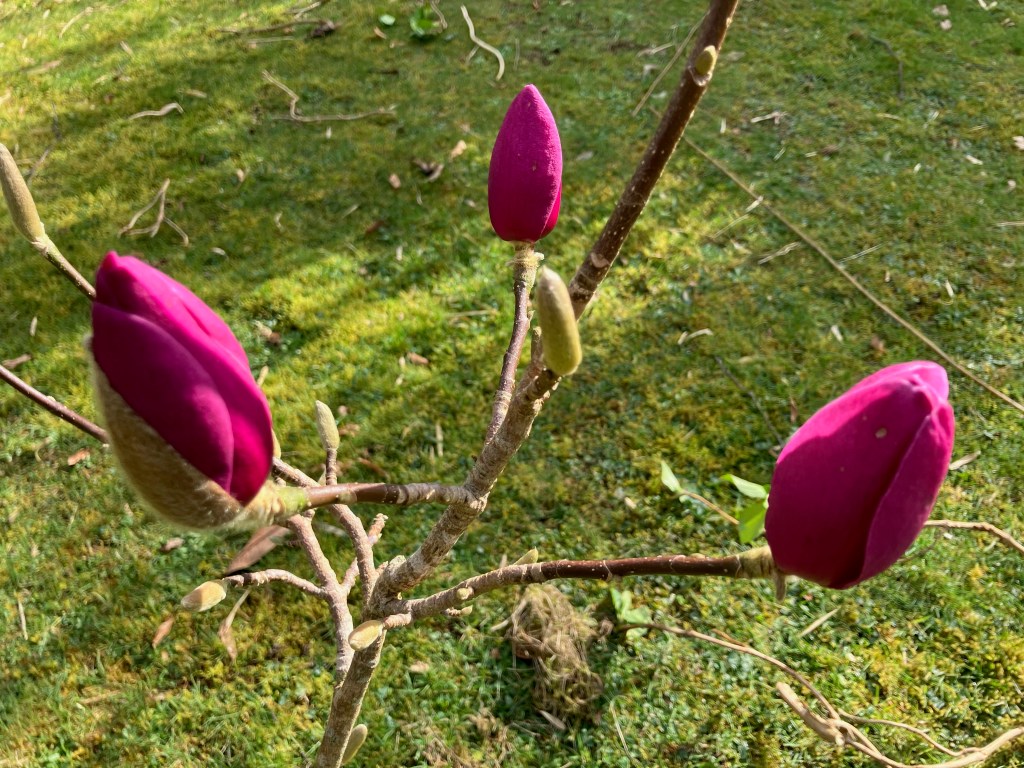
Another is M. ‘Black Tulip’ (left, in bud), a Mark Jury hybrid from New Zealand (which in addition to flowering in the spring can also flower again in September). M. loebneri ‘Merrill’ is pure white with a delicious coconut fragrance in the sun.

Another of the magnolias that Paul and Liz grow is M. ‘Yellow River’ (right), a lovely yellow flower, but as it is late the flowers can sometimes get lost among the emerging foliage. M. ‘Daphne’ is probably the yellowest of the Magnolias, but late, with the flowers coming out with the leaves. Paul recommends the Arboretum Wespelaar in Belgium as a place to see the many species and varieties of Magnolia.

Moving on to other shrubs, a hydrangea that not so many people are aware of is H. aspera subsp sargentiana, with large velvety leaves and lacy flowers which tolerates deep shade underneath beech trees. On the other side of the path from the Hydrangea is a mass of the ginger lily Cauttleya spicata ‘Robusta’, rather surprisingly also enjoying the shade.

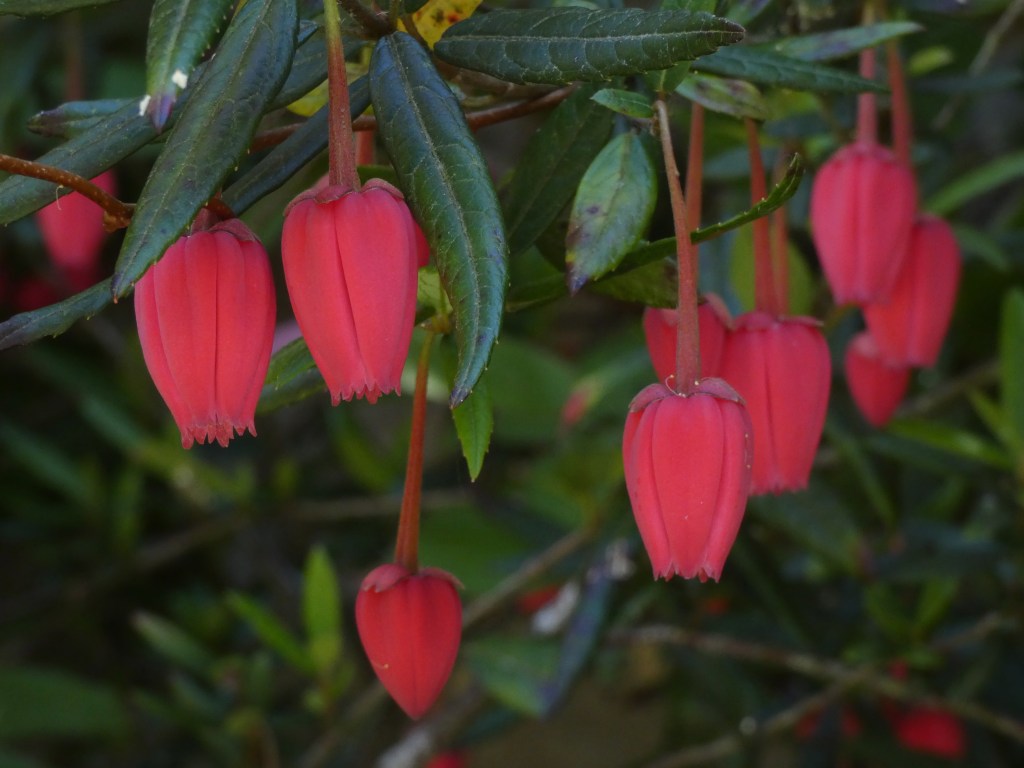
Crinodendron hookerianum has magnificent red bells in spring, and like many other acid-loving plants hails from Chile. There are also now other white and pink-flowered varieties, although they have not yet been tried at Llwyngarreg.

Paul and Liz started by planting trees at Llwyngarreg, including Parrotia persica (with tiny red flowers in late winter) and Nyssa sylvatica (the tupelo), both with fiery autumnal foliage.

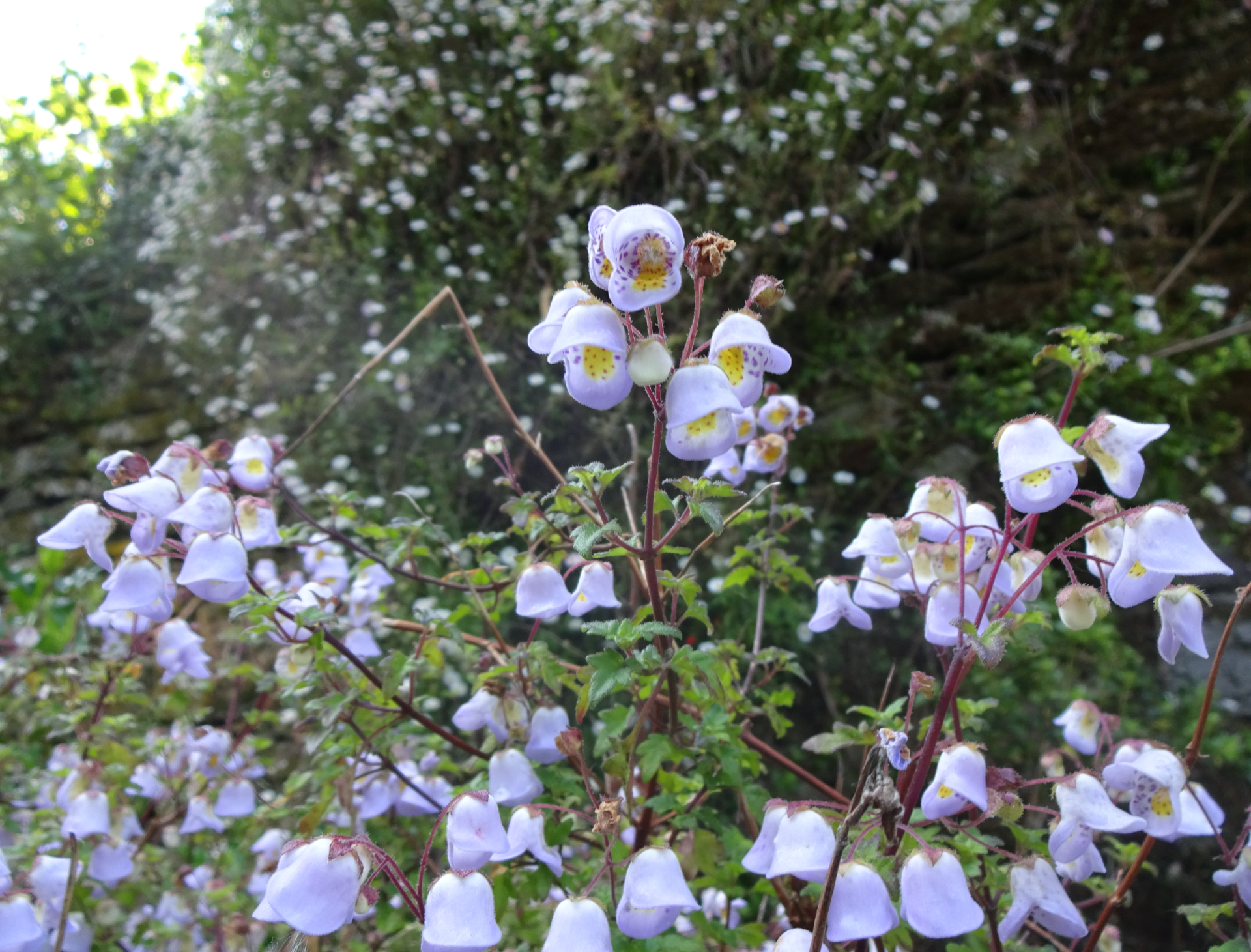
Eucryphia lucida ‘Ballerina’ is a small evergreen tree with lovely pink flowers in late summer, although here in west Wales we cannot grow the huge eucryphias (trunks like trees!) you see in Northern Ireland. Enkianthus campanulatus has small pink-tinged bells in the spring, with fantastic autumn colour. Jovellana violacea, a sub-shrub, has pale purple bell-shaped flowers with a yellow throat; also from Chile, Desfontainea spinosa has holly-like leaves and tubular red and yellow flowers, a lovely shrub, which in west Scotland can be a tree up to twenty feet tall. The latter is a true acid-lover and will die if it comes anywhere near an alkaline soil.

Moving on to climbers – the star of the show is Tropaeolum speciosum, a perennial nasturtium with red flowers and blue berries, renowned for growing very well in Scotland. It is often lost in gardens when first planted, because slugs graze it off. 

Amongst perennials, Meconopsis, the Himalayan poppy, are perhaps the ultimate acid-lovers. They are definitely challenging to grow, and need a shady, damp bed with no sun. M. ‘Lingholm’ – the one to grow if you are only going to grow one type – used to seed around in the peat beds, but not so much any more as summers have become hotter and drier.

M. horridula, being monocarpic, takes three years to reach flowering size and then dies after flowering. So too does M. x complexa (it used to be called napaulensis), flowering red or yellow after two to three years.

Primula capitata (right), with its striking blue flowers, is a short-lived peat-lover of moist woodlands. It comes easily from seed if you sow the seed green and don’t cover it.

Another primula for a peat bed is P. flaccida – a lovely lavender blue but it is loved by vine weevil. P. ‘Arduaine’ has ice-blue flowers in January and February. P. poissonii is a candelabra primula which likes wet feet. P. viallii will grow in any soil, but thrives in a peat bed.

Roscoea ‘Harvington Evening Star’ is a dark purple. It comes up late in the year, and slugs don’t like it, always a bonus. It has a tendency to flop over, but it has a long flowering season from mid-Summer to October. Trilliums are invariably expensive to buy, but it is hard to understand why. Trillium luteum, for example, is easy to propagate by chopping it into small pieces, each with an eye, and replanting. Cypripedium, hardy slipper orchids, are gorgeous but difficult to grow, and always expensive.

Cardiocrinum giganteum, known as the giant Himalayan lily, is a truly impressive plant at up to 4m high with gloriously scented flowers (see left, with Liz). Slugs adore them so they can be difficult to grow for that reason. They produce masses of seed after flowering, but it takes seven years from seed to a flowering plant!
Gentians need moist, peaty soil, and also full sun. A good place to buy gentians is Aberconwy Nursery near Bodnant Gardens. G. asclepiadea is a great late summer plant and will tolerate light shade. Corydalis alata (blue flowers), C. flexuosa (blue flowers) and  C. solida (purple flowers) are plants that need shade and moisture.

Two favourite plants in the lily family are Nomocharis alata, which requires moist peat, and Lilium mackliniae

Podophyllum delavayi, P. ‘Spotty Dotty’ and P. ‘Kaleidoscope’ are plants for a moist and shady spot.

Myosotidium hortensia, the Chatham Island forget-me-not, is a challenging plant for acid soil, and unfortunately completely slug-delicious. It must have no sun at all.

At the very low ground level Paul and Liz plant Saxifraga stolonoifera, which makes huge mats of leaves covered in white flowers, and two Chilean plants – Asteranthera ovata, and Philesia magellanica which requires a pure acid soil. 

Ginger lilies do surprising well – they prefer an acid soil but don’t have to have it. Hedychium edgeworthii (yellow) and H. ‘Tara’ (orange), produce some of the most exotic-looking flowers you can grow in the UK. 

Other plants not requiring acid soilthat grow well at Llwyngarreg include Epimedium, lovely for its new foliage, and Aquilegia. Primula pulverulenta prefers a woodland environment rather than wet feet. Primula bulleyana (orange-yellow) and beesiana also do well. So too do Rodgersia podophyllum, which is easy to propagate, and Matteucia struthiopteris (the Ostrich fern).

At the time of this talk, the second half of March, some of the highlight plants in the garden at Llywngarreg are listed below: 

Snakeshead fritillaries, which love wet grassland. Paul and Liz started with ten pots, over the years religiously collected the seed and sowed it – and now they have a whole fritillary meadow; sadly, Mr Badger has developed a taste for the fritillaries.

Ground cover in the form of Eomecon chionantha with poppy like white flowers from China, which can be quite a thug; also Maianthemum racemosum.

Rhododendron arboreum ‘Album’ is now starting to flower properly. So too is R. calophytum, which this year is much pinker in flower than it has been previously.

Magnolia ‘Caerhays Surprise’ (left), M. ‘Merrill’ and a large M. stellata, along with M. ‘Black Tulip’, which is a very reliable flowerer.

The talk concluded with a video of a dramatic burning of the Monocot bed, largely populated with Miscanthus but also Dierama. Paul and Liz have discovered that the simplest way to tidy up the grass beds is to cut down all the old foliage, and then set fire to the bed!!

In response to a question about tropical-looking plants that he would recommend, Paul suggested Tetrapanax papyrifera. It can be a little bit tender, and even though it was cut back by the hard frosts of December 2022, it has come back strongly. You need to be careful when handling it, as it has little brown hairs which make you cough badly. Paul also recommends cannas and hedychiums.

The talk was fast-paced, very informative, and delivered with lots of humour. The web editor, for one, came away with a long list of plants new to her to try in the garden. All those present were very appreciative and made a beeline for the plant sales table afterwards.

Llwyngarreg Garden is open for the NGS (which supports seven main and other guest charities) every day by appointment, but please check the website and ring beforehand.


Plant Sale for NGS Charities 12 May

John and Helen Brooks will be holding a plant sale for NGS Charities on Saturday, 12 May from 1pm at their garden Ty’r Maes, Ffarmers, Carmarthenshire, SA19 8JP. As usual there will be lots of plants for sale, to swap and to order online, all proceeds going to NGS Charities.

Remember to browse the website for other upcoming events, the Surplus to Requirements section and updates to Members’ Gardens. If you have any ideas for new content or would like to contribute a piece about your own garden, please contact cothigardeners@gmail.com.


August Garden Safari and Picnic

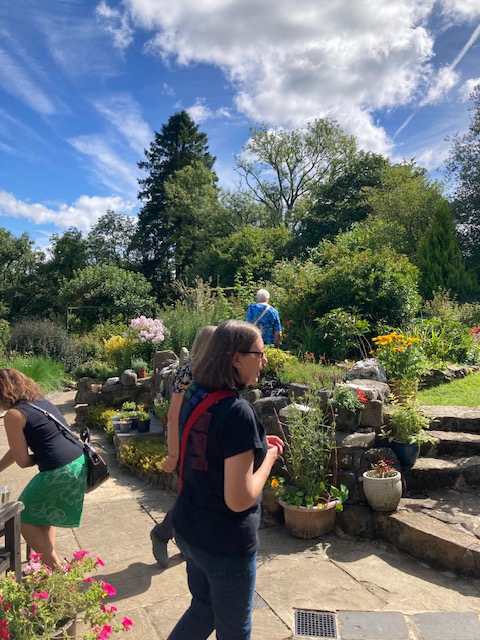
Previous garden safaris had been very successful and popular occasions, so for this year’s August event it was decided to repeat the experience, with members offering three gardens for the safari in Crugybar, Ffaldybrenin and Ffarmers. It was our great good fortune that, despite the grey and soggy conditions that have prevailed for much of August, we had a lovely sunny day for it. An enjoyable time was had by all, there was much of interest to be seen in all the gardens, and great thanks are due to those who opened their gardens for us. Here are a selection of photos from the day.

Jane’s Garden

Jenny and Gordon’s Garden

Dawn and Nick’s Garden


Green’s Leaves; Fantastic Fungi; Terry Walton; Christmas Lunch

Paul Green of Green’s Leaves Nursery

September’s meeting saw a very welcome return by Paul Green from Green’s Leaves Nursery. Paul once again built his talk around a fantastic and diverse selection of plants that he’d brought along, persuading us of the merits of plants which look great at this early autumn period and on into winter.

Ranging through grasses, trees and small perennials, there was something for everyone to enjoy, and the talk was laced with practical tips (remember to lift any outside pots off the ground over winter to prevent water logging and root death), to snippets of fascinating information (Alder Buckthorn is not only one of the main larval food plants for the caterpillars of the Brimstone Butterfly, but also originally the favoured wood for making high quality charcoal to incorporate into gun powder!)

An enjoyable evening all round, and great to see several new members join us.


Bruce Langridge – ‘Fantastic and Phenomenal Fungi’

Next week’s talk on ‘Fantastic and Phenomenal Fungi’ by Bruce Langridge promises to be really interesting – Bruce is responsible for establishing the Wales Fungi Day at the National Botanic Garden of Wales, taking place this Sunday 14th October and it’s been so successful that a similar event is now held at over 80 venues nationally. Click here for more information.


Terry Walton – “The Life of a Media Allotmenteer”

Advance notice for November’s meeting when our speaker  will be Terry Walton on the subject “The Life of a Media Allotmenteer”. Terry promises to give us a look behind the scenes as he tells us about life on his allotment in the Rhondda and how he has given growing advice on the radio each month for over twelve years.

A gardener of over 40 years’ experience, Terry has worked plots on the same site since he was a boy, learning from his father and other allotment gardeners. Many of you will be familiar with his enthusiastic style, so do come along on November 21st  to meet Terry. Click here for his facebook page.

Guests and visitors welcome, £3, to include refreshments. The talk begins at 7.30pm.


Christmas Lunch

Initial bookings for the lunchtime Christmas meal at The Forest Arms, Brechfa are coming in, so don’t forget to sign up soon – there may be a limit on numbers which we could broach this year, with the increased membership. The cost is £20 per head. Please give your menu choices (including any dietary requirements/allergies) plus a 50% deposit when you book your place. The menu is shown below. The date is Wednesday December 12th, 12.30 for 1 pm.


Monthly Tips

3 Tips from Julian……………..

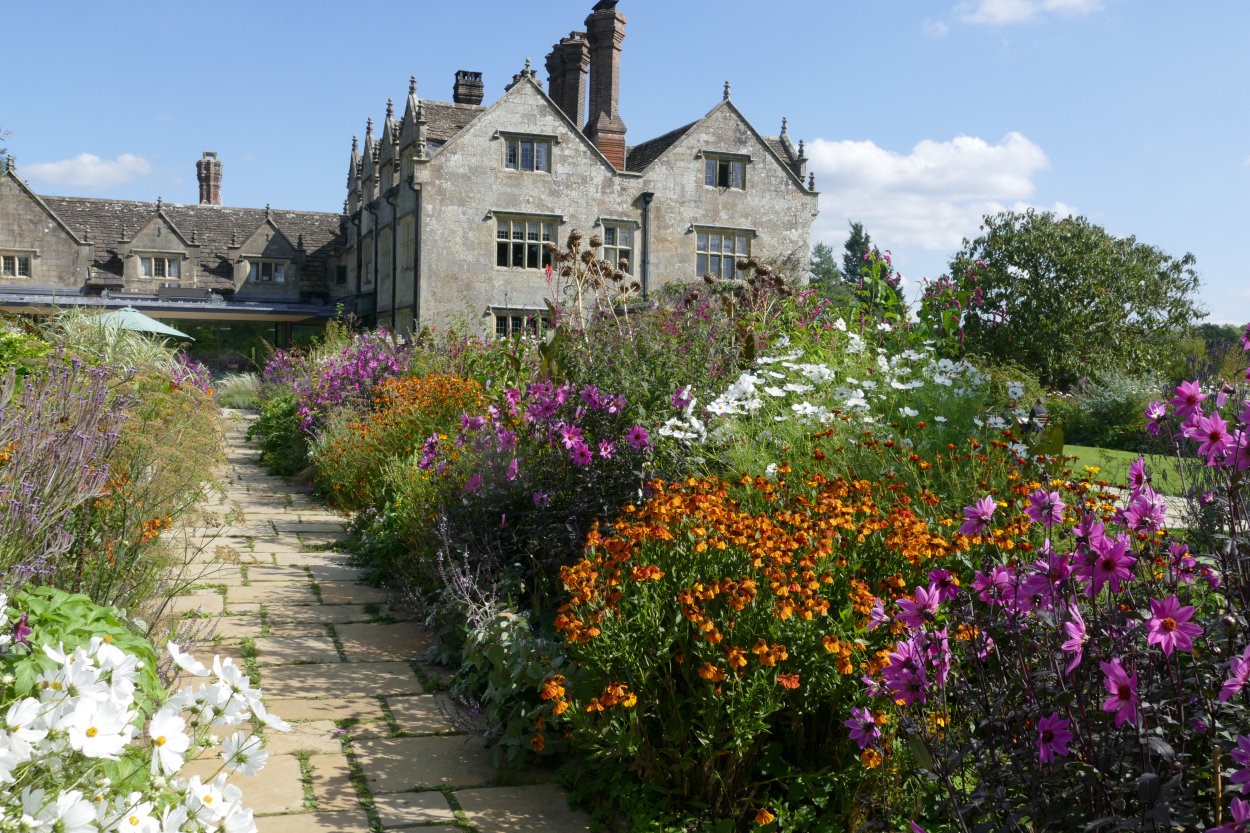
I find myself collecting seeds from quite a few plants at this time of the year. Obviously It’s a good idea to collect them on a dry day if you can manage that, but also it’s worth labelling them and quickly storing them in the fridge so that they don’t become too dry which can easily happen if they’re left on the side in a warm house. We had a few days in Sussex recently and were fortunate to visit Gravetye Manor which was the home of William Robinson at the beginning of the last century. He was perhaps the driving force in moving gardens towards a more naturalistic, less formal type of garden design. However I didn’t know until this visit that he injured himself very badly after slipping on a stile whilst walking to church, and spent the last 25 years of his life confined to a wheel chair. But apparently right up to the end of his days, he loved scattering seeds of his favourite plants around his garden and meadows and enjoying the excitement of seeing what germinated.

Gravetye Manor flower garden

I’ve also found that the 2 pronged weeding fork I mentioned earlier in the year as a great tool will work as a bulb planting implement for small bulbs like Crocus and fritillaries, which limits the extent to which you have to bend over. But I’ve also found it’s not a good idea to twist it too much, or you end up with a single pronged fork! Which is still ok for bulb planting, and for using as a strut or support but not so good for weeding!

Finally I’m guessing a lot of people will have a surfeit of apples this year. We have, so I’ve been juicing and freezing a lot. This generates quite a lot of pulp and trimmings. I did read that mice and voles love apples (certainly our rats do!) So I’ve been scattering all the apple debris around near where I’ve planted my Crocus in the hope that the rodents are distracted by the smell and taste of this. And therefore leave the corms alone. In previous years I’ve sometimes lost 80% of newly planted Crocus within a few days (in spite of dousing them in Chilli powder and vinegar) with them being systematically dug up and eaten. Fingers crossed, but so far I haven’t seen any signs of dug out, chomped Crocus this year. Also although it sounds a bit messy, actually all the bits turns brown very quickly and they have the added bonus of attracting in the few slugs we currently have left in the garden, which can then very easily be dealt with at night if you go round with a torch. In whatever way you like to do that! Of late since bending not’s so good for me, I’ve been using John’s suggested method of stamping on them, though I suppose if I sharpened the spike on my weeding fork I could try skewering…


Plant Fairs, Festivals and Crawls! Snowdon Night Hike

National Botanic Garden of Wales

Make a date for some blooming bargains at the National Botanic Garden annual plant sale.

Hundreds of plants, donated by Garden staff, volunteers, members and the public will be on offer over the two-day fundraising effort on Friday and Saturday, May 12 and 13.

There’s still time to donate plants – for details of how to do so, call Jane Down on 01558 667118 – but, mostly, you should be thinking about clearing a space in your backyard for the upcoming deluge of botanical bargains.

Last year’s volunteer-run sale raised more than £4,000 for Garden coffers and this year’s fair is again promising an interesting mix of stalls offering vegetables, bedding plants, perennials and plants for wildlife.

The National Botanic Garden of Wales is open from 10am to 6pm, with last admission at 5pm, and the Annual Plant Sale will run on both days.

Admission to the Garden is £10.50 for Adults (including Gift Aid), £8.75 for Concessions and £25 for a Family Ticket (2 adults and up to 4 children). For more information about this or other events, call 01558 667149 or email info@gardenofwales.org.uk

__________________________________________________________________________

__________________________________________________________________________

__________________________________________________________________________

__________________________________________________________________________

Team Large’s Snowdon Night Hike

At our meeting in April Anne explained to us the challenge she and members of her family have undertaken as a positive response to the cancer diagnosis she had last year. In aid of Breast Cancer they are aiming to climb Snowdon at night! The Night Hike takes place on May 20th. Do follow the link to Team Large’s Justgiving page to learn more about it. All support gratefully received. (Click here)


Pies and Veg; Spring Bulbs and Cinnamon; Green’s Leaves

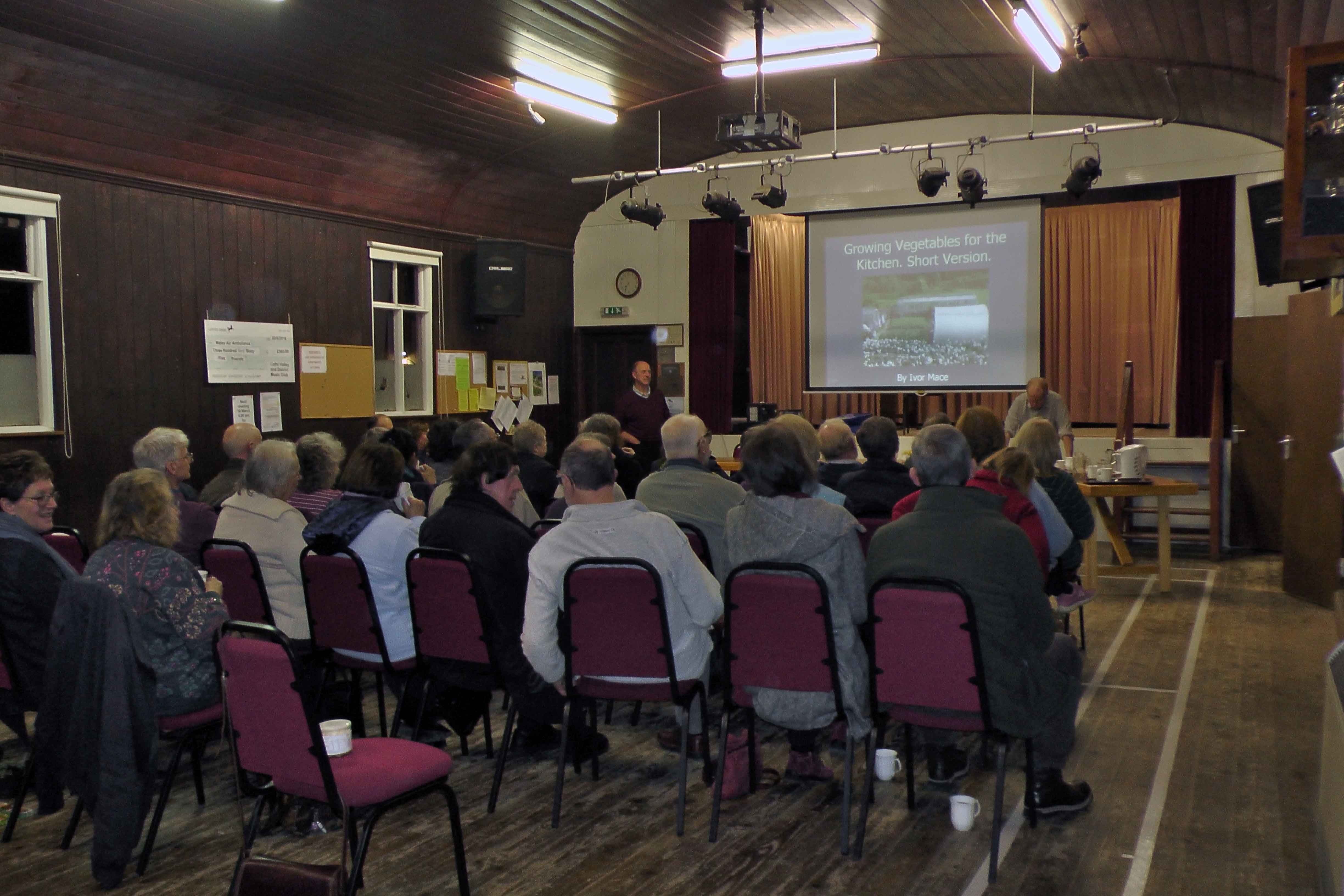
Following another highly successful Pie Night at the Dolaucothi Arms (thank you Dave and Esther) our speaker, Ivor Mace gave, us an excellent, amusing and informative talk at our meeting in March. Drawing on his 40 years experience he guided us through the trials and tribulations, joys and successes of growing vegetables. We picked up many tips and useful information on:

  • crop rotation to help reduce diseases such as Club root
  • when to dig different soil types
  • use of green manures
  • raised beds
  • most useful tools (draw hoe, fork, spade & dutch hoe)
  • sowing times and sowing tips
  • sequential planting
  • varieties of vegetables
  • pests and diseases

Sadly we needed much longer than the allotted 45 mins – 1 hour for Ivor to include detailed information on more than a couple of vegetable types. We will have to have him back for another session.

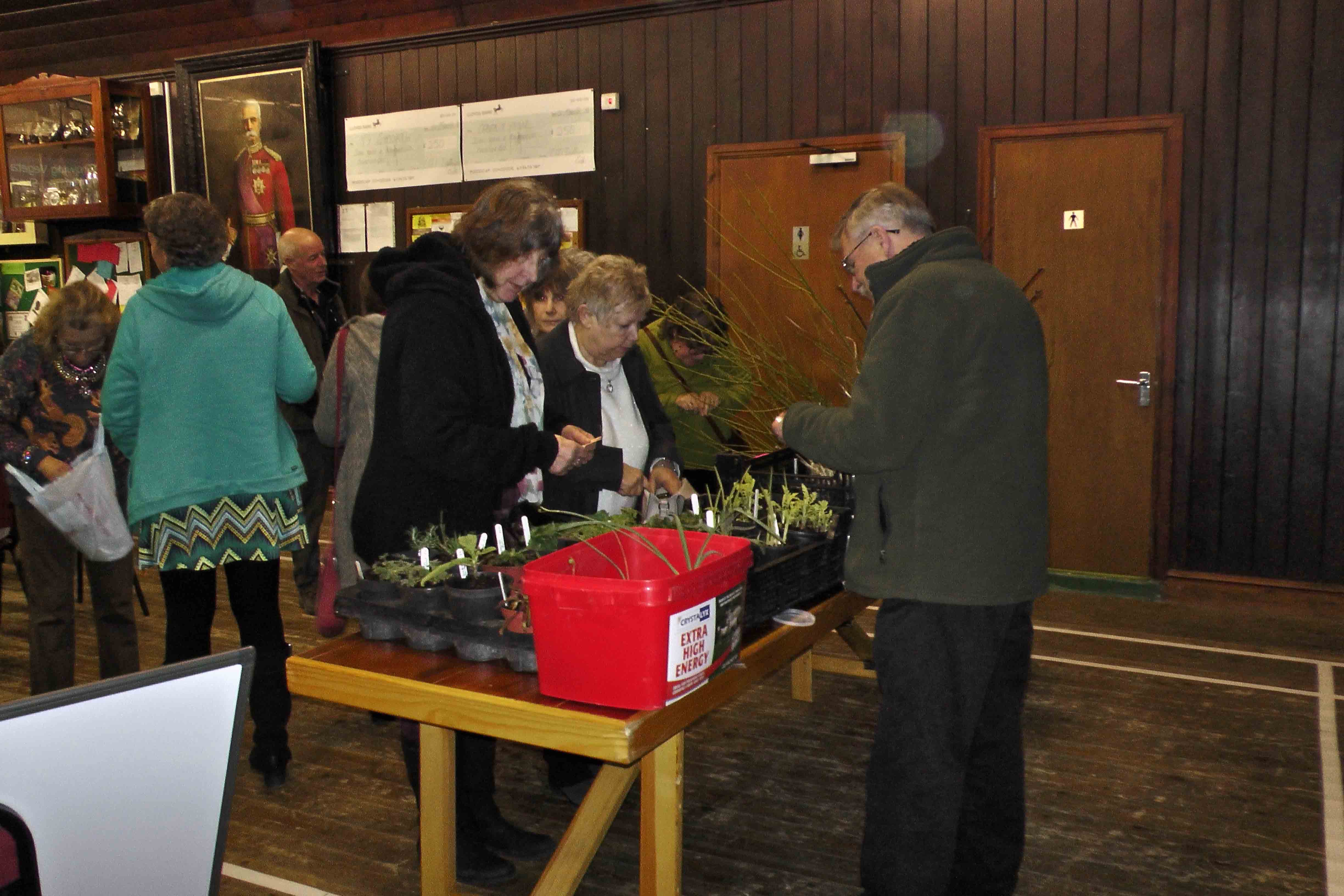
The club plant stall continues to do well – keep up the good work all of you who supply plants and those who buy them. There are many bargains and some unusual  plants to be had; and remember the proceeds go to club funds enabling us to have a wider range of speakers.

_____________________________________________________________________

After Ivor’s talk we had our new slot for member’s monthly tips. If you have a tip or item of information you think would be useful or you would just like to share please get in touch with Julian before the next meeting so that it can be included.

This month’s tips were:

1: Tenby Daffodils (From Julian)

Do we all know what they look like? And do we all grow them? They’re actually a species daffodil native to this part of the world, so not surprisingly grow very well here. They’re probably one of the most vigorous forms we grow, and reliably some of the earliest to flower – usually in time for St David’s day. This year we have masses of flowers from them. But my first tip taken from moving snowdrops in the green, is if you’ve got a vigorous form like Tenby, try moving them in the green – maybe 5 or 6 weeks after flowering. So long as you do it in damp/wet conditions, and then water them well in any dry conditions, they’ll survive and it’s much easier to get them where you want, between other bulbs and plants than buying in more dry bulbs in the autumn. They’ll probably sulk for a couple of years. But then be fine. Anyone who hasn’t got any, but would like some – more money for club funds, folks, come and have a word afterwards, and Julian can probably lose 30 or 40.  (So maybe 4 lots of 10?)

2: Cinnamon for gardeners. Elena found the following information and shared it with us:

Whenever I think of cinnamon, I immediately think of sweet treats around Christmas time. But cinnamon really is an incredibly healthy spice that has more uses than just adding flavour to your favourite desserts and drinks. Yep, some of the best chilis and grilled meat spice rubs that I’ve ever had contain cinnamon. And did you know that cinnamon is good for your heart health, your brain functions, and blood sugar regulation? Amazing stuff!

Maybe you already knew all that but here’s one that very few people know about: you can use cinnamon for gardening. “Huh? How can you possibly use cinnamon for gardening!?” Yes, I know it sounds completely crazy, but you really can use cinnamon to very legitimately help you with growing certain plants.

Have you ever heard of damping off disease? Perhaps you’ve never heard of it, but you may have seen it before… it’s a soil-borne fungus that looks like cotton and it grows on the stems of your seedlings. Infected plants might still germinate, however it’s only a matter of days before they become mushy, limp at the base, and die. Nasty stuff. But this is where cinnamon comes in…

As it turns out, cinnamon has anti-fungal properties so it’s a great solution to keeping your plants free of damping off disease. Just sprinkle the cinnamon on the soil (don’t worry if you get some on the leaves) and the wonderful spice will get to work protecting your babies.

3: Scilla bithynica.  The Turkish Squill (From Julian)

A bit like a smaller bluebell, but with flowers all round the stem, and a great nectar flower. Like bluebells it does well in moist shade, say under trees or shrubs and with us seems to produce lots of seed, though this will take a few years to grow to flowering size. Slugs and rabbits don’t seem to like it, and the great thing is the colour of the blue, and that it flowers for quite a bit longer than bluebells, and about 6 weeks earlier, so gives an extended season.  Well worth a try, and we got them from locally based John Shipton, who seems to be one of the few suppliers of this bulb (currently 5 bulbs for £9.50 + shipping. Click here for his website)

_____________________________________________________________________

There will be lots to discuss at our April meeting, the topic is “Choice Plants for Early Season Interest” by Paul Green.

There is so much to do in the garden at this time of year but Paul will help to get you going in the right direction with tips and advice so that you can focus your attention on what will do well during the spring. Paul’s nursery, Green’s Leaves, specialises in rather unusual plants which have been grown in the UK, making sure they are suitable for our cooler climate. Look at their website for more information www.greensleavesnursery.co.uk  and come along on 19th April as Paul will bring a selection of plants for sale. These are sure to be different from those found in most garden centres.

_____________________________________________________________________

Pie Night; A Ranger’s Perspective; National Meadows Day; Garden Openings; Next Meeting

The first Pie Night which preceded our last meeting was a resounding success and proved a great time for us to get together for an informal bit of socialising! Dave and Esther at the Dolaucothi Arms excelled themselves producing their delicious pies for the 18 of us in good time for us to make it across the road for the meeting.

Sarah Jones then gave us an interesting, amusing and informative talk on her work as a ranger for the National Trust at Dinefwr. Her enthusiasm and love for her work and the area were evident as she gave a fascinating insight into the role of a ranger caring for the park’s landscape, flora and fauna with particular reference to the fallow deer and the White Park Cattle.

The park is well worth a visit, particularly at the moment when the hay and wildflower meadows will be in full bloom. For members who are interested, National Meadows Day is this Saturday with various locations being open for visitors – more info can be found on the Carmarthenshire Meadows Group website (click here).

As part of National Meadows Day………

 Gelli Uchaf Meadows and Garden will be open on Saturday July 2nd 2016

Meadow Walks and a chance to look round the gardens at Gelli Uchaf small holding, which have been designed to incorporate many insect friendly flowers.
This event is in aid of the charities of the National Gardens Scheme.
Places are limited so must be booked.
There are two sessions, 10.30 am and 2.30 pm. Some places are still available for both.
£4 per person. Cakes/teas available as well if pre-booked (£3 pp).

Gelli Meadows                        sdim3594-2

The gardens were featured as 1 of 10 secret gardens in Wales to visit by Wales Online in 2014 and were also filmed in 2016 for BBC2’s Gardener’s World programme. The 11 acres of meadows are being gradually restored to increase floral and fungal diversity and include both hill, and valley bottom wet pastures. A photographic display of the progress so far, will be available, and weather permitting, some of our manual hay making techniques may also be on view.

s1040045-2

Anyone who is interested please book  by contacting Julian and Fiona Wormald
 01558 685119
 thegardenimpressionists@gmail.com
 Gelli Uchaf
Rhydcymerau
Llandeilo
Carmsarthenshire
SA19 7PY
__________________________________________________________________________
The opening of member’s gardens at Bwlchau Duon and The Sculptor’s Garden in Ffarmers on Sunday went really well. Congratulations to Brenda and Martin and Angela, the gardens looked wonderful and well deserved the turnout of over 140 visitors who were clearly not put off by the uncooperative weather!

anne-john

     Anne and John bravely enduring the rain while manning the plant sales at Bwlchau Duon

the tea ladies

The Tea Ladies at Bwlchau Duon

__________________________________________________________________________
Our next meeting is on Wednesday, July 20th when Helen Warrington from Ty Cwm Nursery will return to give us a talk on ‘The Origins of Plants’ .
Ty Cwm Nursery has a broad range of herbaceous perennials, bedding and veg in season, specialising in blueberries and carnivorous plants. Helen will be bringing a selection of plants from the nursery for sale after the talk.
__________________________________________________________________________
The Club Plant Shop
This is getting better and better and is making an excellent contribution to club funds. Very many thanks to all those who have supported it both in the supply and purchase of plants. We need to keep the momentum going so please do keep supporting it at each meeting.
To recap: good quality, potted up, labelled, and priced plants to be donated. A table will be set up for the ‘Plant Shop’ at the back of the hall, with a tin for the money to be left in. Please price your donation/s according to size of pot, type of plant and so that it reflects the true value while being less than a garden centre would charge. This way those purchasing will have a good quality product at an advantageous price.


Picton Visit; Diary reminders and additions

Picton Castle Gardens Visit

Our visit to Picton Castle Gardens was a great success. We met for a civilised picnic in the courtyard, making use of the outdoor seating before being joined by Roddy Milne, the head gardener, for a tour of the garden.

Picton 1
The rhododendrons, although nearing the end of their season, were still magnificent.IMG_20160525_191425175

Many were grown from seed from cultivars already in the garden and it was fascinating to see the variety of plants one seed capsule can produce in both flower, leaf and form. New areas of woodland have been planted to give continuity for the future especially as more and more of the original plantings are succumbing to old age.

IMG_20160525_191239222
The hard work of Roddy and his small band of helpers was evident in the tidy borders, new plantings and well mown lawns! The walled garden was immaculate and had plenty to see despite its peak season being later in the summer.

Picton 7     IMG_20160525_181701995

IMG_20160525_192202799
Overall a thoroughly enjoyable and informative evening out.

_____________________________________________________________________

Open Gardens

A reminder that this month sees the joint opening of 2 of our club members’ gardens in Ffarmers. Anyone able to help serve teas, supply cakes, etc please contact Angela and Martin or Brenda.

Brenda Angela & Martins garden open (2)

There are a number of other gardens opening this month including the Talley Open Gardens Day this Saturday, 11th June, click here to go to our events page to see more.

MEETING UPDATES; DATES FOR YOUR DIARIES and HELP NEEDED

There was an excellent turnout at our meeting on Wednesday 19th May to hear Carrie Thomas give an illustrated and highly informative talk on the intricacies of latin plant nomenclature, explaining why latin names are needed, how they are arrived at and how they explain individual plant characteristics, habitat, etc.

She started the evening with a warning about Aquilegia downy mildew disease which has decimated her national collections of Aquilegias and is gradually spreading through the UK. See her website for more information at http://www.touchwoodplants.co.uk/aquilegia-downy-mildew.htm

__________________________________________________________________________

Requests for help at various events in the coming months were made. If anyone is able to offer their assistance at any of the following please contact the relevant parties.

1) Keith Brown will be having a plant stall at the NGS garden open at
Gelli Mydog, Myddfai, SA20 0JQ on Sunday, June 5th and Sunday, July 24th between 12 and 5pm. Due to his illness he has asked for help to man the stall, so if anyone can spare an hour or more to help out on either or both these days please contact Anne at glan-yr-afon@hotmail.co.uk .

Gelli Myddog

2) John and Helen have a large group visiting their garden on Saturday, June 18th and have asked for help with both the serving and supply of cakes for the teas. Contact them at johnhelen@greystones140.freeserve.co.uk

3) Angela and Martin (Sculptors Garden, The Old Post Office) have their joint garden open day  with Benda (Bwlchau Duon) and would also like help  with the serving and supply of cakes for the teas. Contact through www.farquharsonduffysculpture.com

Brenda Angela & Martins garden open (2)

__________________________________________________________________________

PICTON GARDENS VISIT

Remember our visit to Picton Gardens is this Wednesday. Those who would like to  can meet up at 5pm in the visitors carpark for a picnic tea within the grounds before we all meet Roddy at 6pm by the Restaurant (closed at that time). He will then take us on a guided tour of the garden. Plants will be on sale but please remember to take cash as there will be no credit card facility. Cost is £4.50 per person (no concessions or free entry  as this is a special tour out of normal opening hours). Anyone who would like/can offer to car share please contact Margaret on 01558 650887

OUR NEXT MEETING………..

Speaking to the Cothi Gardeners’ Club on Wednesday, 15th June will be Sarah Jones from Dinefwr in Llandeilo.
Sarah is a National Trust ranger and will tell us about her work, which includes taking care of the famous herd of White Park cattle, fallow deer and of course the extensive grounds.
Some of us may have already walked around Dinefwr but Sarah will let us know all about the history of the park, including a visit in the 17th century by Lancelot ‘Capability’ Brown who advised the then owners of Newton House on the possibilities of landscaping the grounds. Today a popular walk on the estate has been named the Capability Brown Trail.
A large part of Sarah’s work involves conservation, so we will learn about the unusual and endangered species which we may be lucky enough to encounter and how the grounds are maintained for visitors to enjoy at all times of the year.

Dinefwr           dinefwr_park_deer_original