Autumn into Winter with Richard Bramley of Farmyard Nurseries

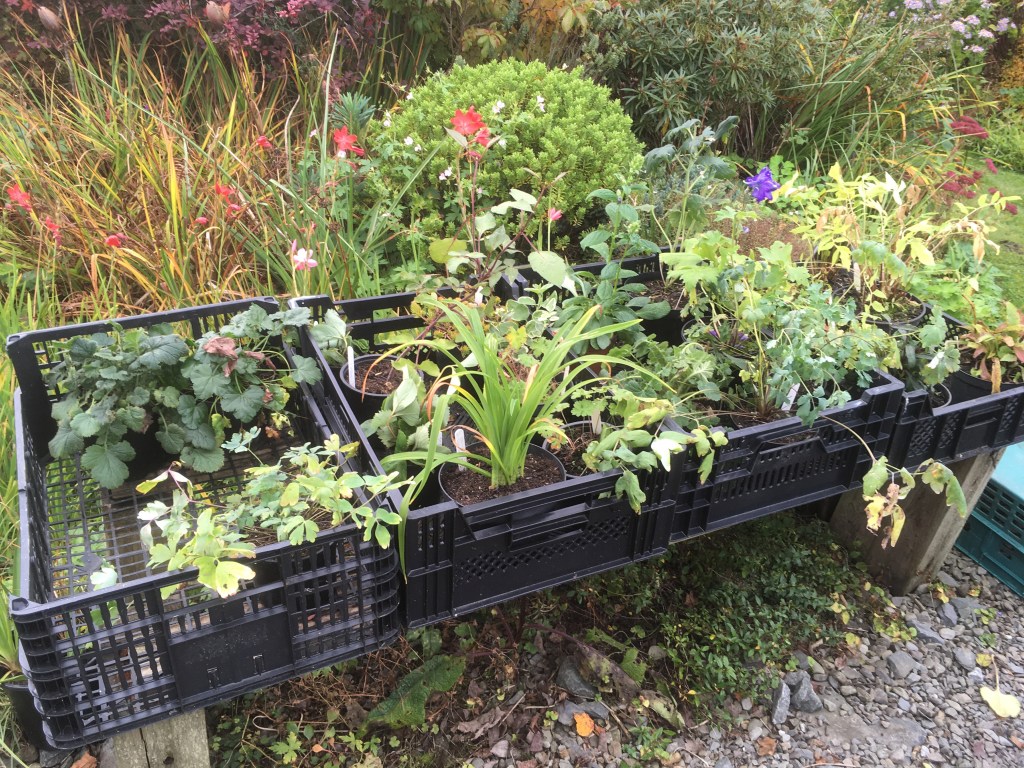
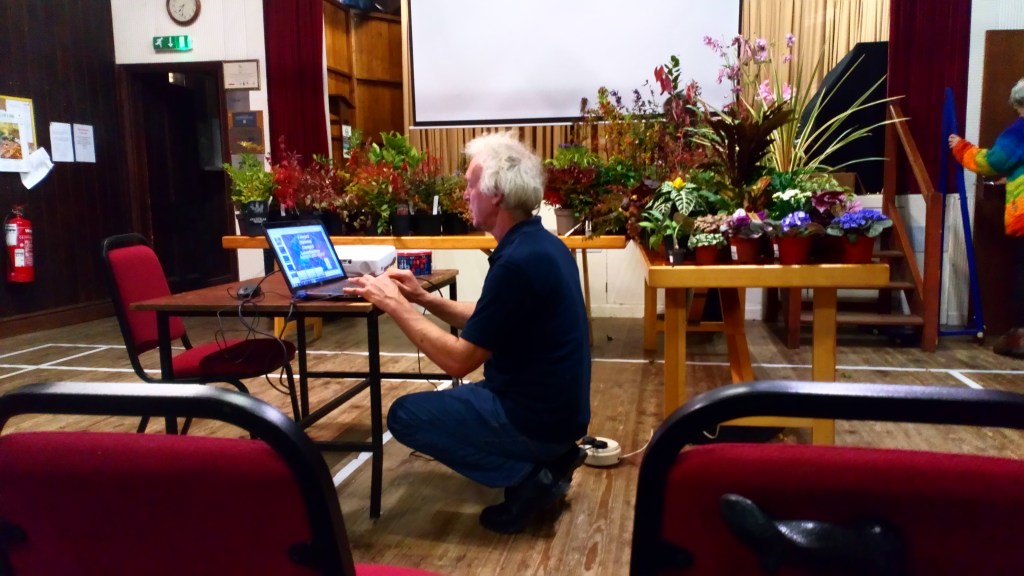
Richard Bramley, here preparing to give his talk, is from Farmyard Nurseries with 3 acres of land and 50 polytunnels near Llandysul, where 90% of the stock for sale is grown outside which helps to produce hardy plants of many varieties.

He is very keen to encourage people to think more about the colour and interest of plants – trees and shrubs can be grown in autumn and into winter.   Starting with Acers, which are not as difficult to grow as is often thought (though they don’t like wind), he showed many of the different colours, shapes and textures that can be provided by planting them. Liquidambar styraciflua, or Sweetgum, is more tolerant of wind though it doesn’t come into leaf until later in the season. Berberis thunbergii, although it is a bit prickly, is particularly worth having because it is so colourful and produces berries and flowers in addition. Also they can be kept at a smaller size if required by hard pruning, without any detriment to the look of the plant.

Winter stems, such as the many different varieties of Cornus, provide different upright shapes with a wide variety of colours and are very hardy. C. alba ‘Baton Rouge’ is one of the very bright red varieties during the winter and again Cornus produce flowers and berries.

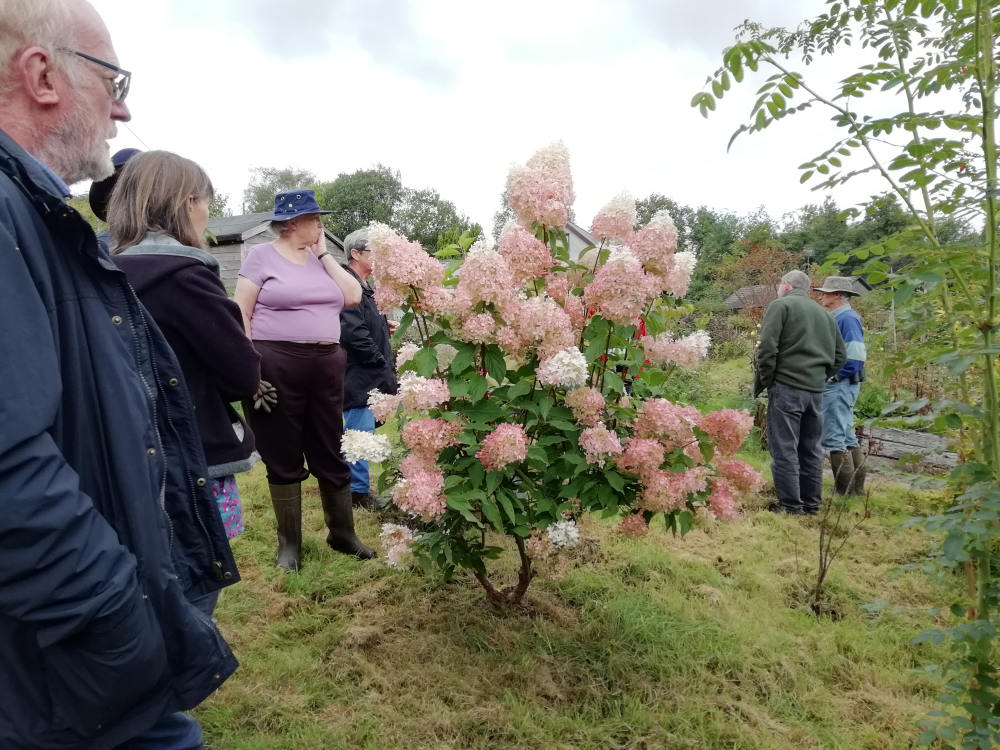
There was a lot of discussion about Hydrangeas! The mopheads were described as ‘blocky’, whereas the Lacecap varieties of Hydrangea macrophylla are to be encouraged. Hydrangeas are (generally) enthusiastic growers and do provide colour in the flowering gap, while the H. paniculata varieties can reach up to 18 – 20 ft. Climbing Hydrangeas need to be treated differently at pruning time as they flower from the previous year’s growth but they will tolerate some shade during the flowering season which makes them very useful.

Fuchsia will grow happily into autumn and, although they will tolerate wet,  they do need plenty of light. Chrysanthemum (if cut down in spring) will last into autumn. Lavender, Nepeta, Astrantia and Campanula plus many of the daisy family, if cut down after previous flowering, can do surprisingly well. There are nearly 200 varieties of Aster now which can continue through autumn and the hybrids don’t get mildew, plus they will tolerate some shade.

Rudbeckia ‘Goldsturmwill also last, as will Leucanthemum, Helenium, Persicaria, Autumn Salvia, Kaffir Lillies, Solidago (Golden Rod), Heliopsis and many more varieties of flowers and shrubs, given some care, will reward the grower in spades (see what I did there).

Grasses will give lots of interest in the winter and there are some quite remarkable ones to try. Imperata cylindrica (Japanese Bloodgrass) when planted in a drift looks as if it’s on fire. Panicum virgatum varieties are very varied and do well when established. Grasses are deciduous and demand very little in the way of care, can be easily split, can be grown from seed and some of them flower.  There are endless varieties of grass to choose from now that will provide an addition to the garden in the cooler months.

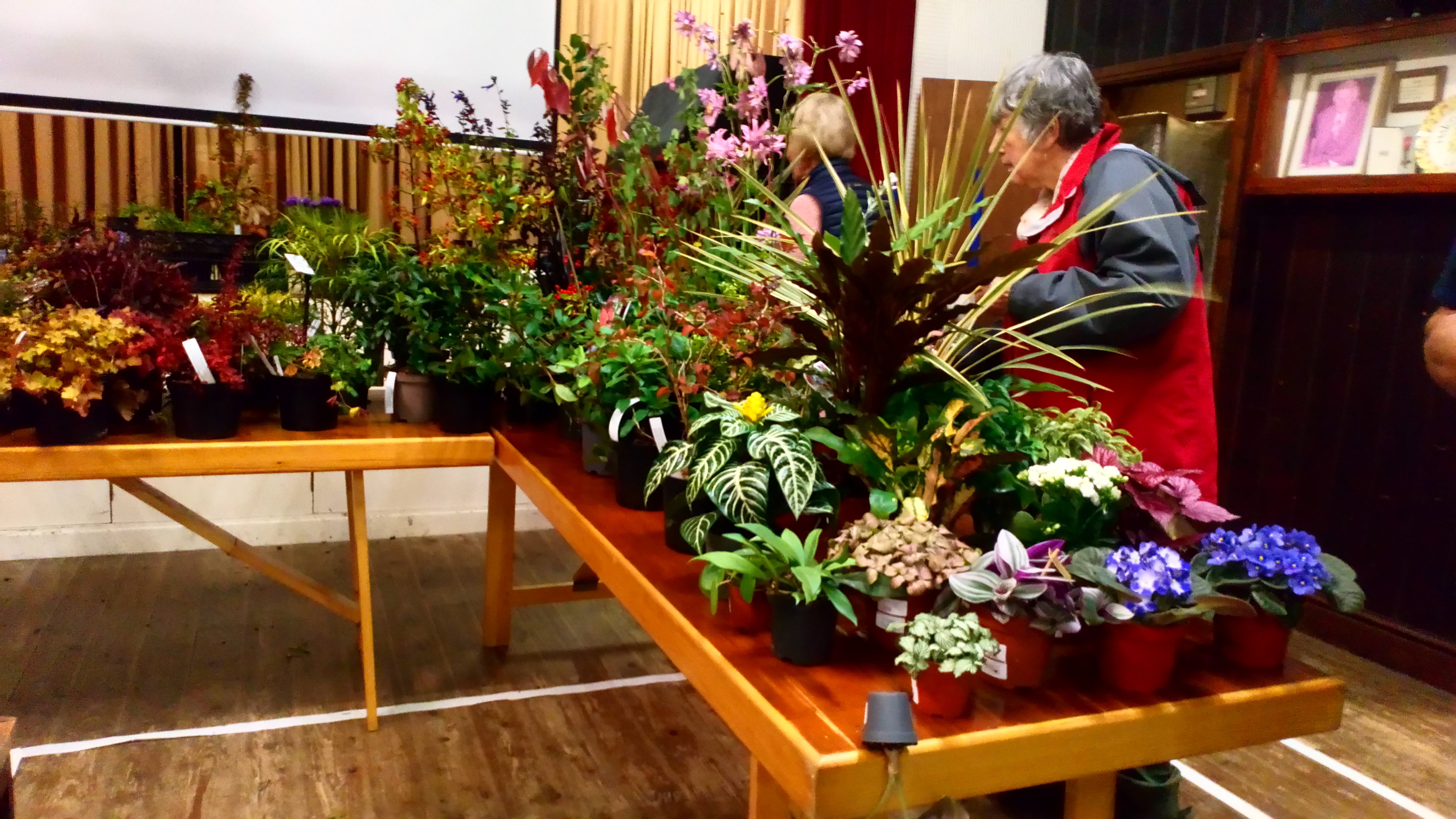
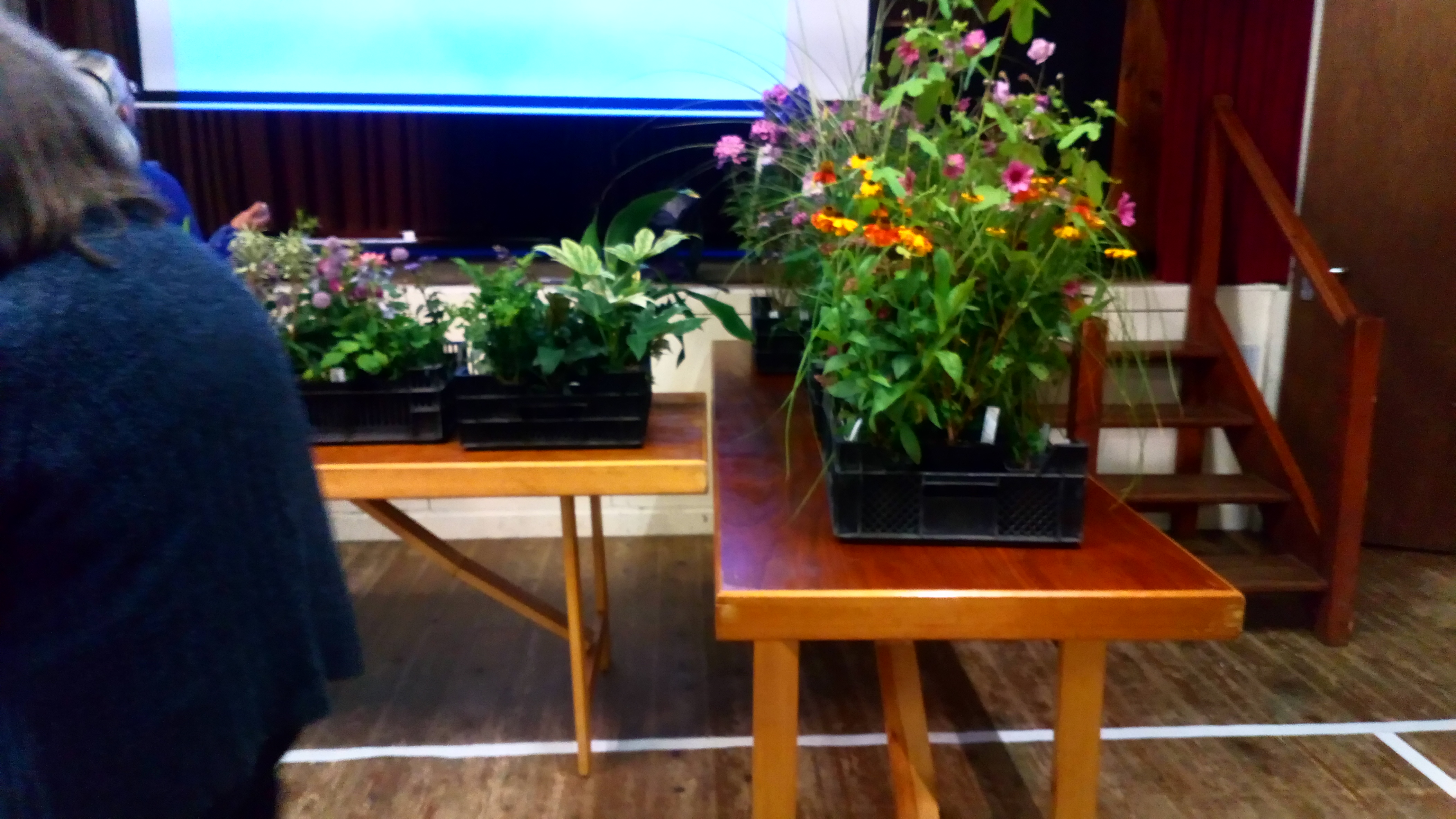
We thanked Richard and his support act Mabel (his dog) for his informative and entertaining presentation and took full advantage of the beautiful plants which he had brought for sale from the nursery.

Native Plants as Garden Flowers; Invitation to Local Gardening Clubs; Plant Swap and Sale

Native Plants as Garden Flowers – Talk by Bob Brown of Cotswold Garden Flowers

We were lucky to once again hear an entertaining talk from Bob Brown, founder of the Cotswold Garden Flowers nursery. He started by encouraging us to put the right plant in the right place – something we all know but need constantly reminding of! 

The initial list of headings was to outline the bullet points of his talk i.e. Acclimatised & Easy, Invasive, Garden Worthy etc. Bob went on to describe the different types of plants within the headings and started with the Welsh poppy (hurrah!) and we had conversations about the habits of the plant. He continued to describe many different types of plants which come into the native plant varieties including Achillea, seakale, viper’s bugloss, Mullein, Veronica spicata and many more.

Woodland plants were described next and include Aquilegia vulgaris, Allium sphaerocephalon, wood anemone amongst many others. 

Woodland Edge plants  & bulbs came next, such as the lawn daisies, hen & chicks, single Campanula, Colchicum autumnale, Pulmonaria, celandine varieties etc.

Grasses were the next category, including woodland grasses and Bob is keen on using plants needing structural support being grown within grasses, using the grasses as the support. Dogwoods, which look good with grasses, (Cornus sanguinea ‘Midwinter Fire’ in particular) are a favourite – he advises to cut them right down in winter.

Ferns of different types were next and his particular favourite, Polypodium vulgare, because it is evergreen in the winter but has died down by June and so makes way for other plants.

Iris types and the different areas in which they flourish came next and we discussed the very smelly Iris foetedissima (roast beef plant) & had a chat then about what the smell actually is like!
Primula varieties, which have been grown here since Eizabethan times, are a good bombproof plant for many areas. 

Roses, particularly varieties of the small Rosa pimpinellifolia ,were discussed, and then many more of the different native plants including the shrubs Salix purpurea (purple willow) and the different varieties of Sambucus nigra (elder), both of which are fast growing and invasive.

We thanked Bob for his informative and entertaining presentation and took full advantage of the beautiful plants which he had brought for sale from the nursery.


Invitation to Local Gardening Clubs

Drefach Felindre Gardening Club and Llechryd and District Gardening Club have each kindly invited all Cothi Gardeners to attend any of their meetings, which are listed below. We hope that their members will also choose to attend our meetings this year and beyond.

Drefach Felindre Gardening Club

All meetings are held at 7.30 pm in the Red Dragon Hall.  Guests simply pay £2 per meeting which includes refreshments.

Open evening October 5th

The speaker is Stuart Akkermans, ‘Cae Hir’: A Welsh Garden with a Dutch History. Light refreshments to follow. This event is free to Cothi Gardeners Club members.

Wednesday, 2nd November 2022 ‘The Gardens at Winchester Cathedral’, Emma Sharpe

Wednesday, 30th November 2022 ‘Biodynamic Gardening’, Louise Cartwright

Llechryd and District Gardening Club

Meetings are held in Boncath Hall, SA37 0JL

Wednesday 12 October at 7.30pm
‘The Treasures of Tadjikistan and Uzbekistan’ with Bob & Rannveig Wallis
Bob and Rannveig Wallis were plant hunting in Central Asia before the pandemic and this illustrated talk starts on the border with Afghanistan and goes via Samarkand and Tashkent to the Chatkai Range. This is the centre of Tulip and bulbous Iris development and also features Fritillaria and Corydalis. Superb photographs and an excellent speaker. Last club plant table of 2022.

Wednesday 9 November at 7.30pm
‘Costa Rica’ with Julian Cremona
Julian Cremona’s brilliant photography brings this small country’s amazing wildlife and flora to life. Dense broadleaf evergreen forest, palm trees, mangroves, mosses, orchids and tropical plants as well as monkeys, sloths, anteaters, snakes and iguanas. Annual Club Seed Swap. 


Plant Swap and Sale for the NGS 9 October 2022

John and Helen of Cothi Gardeners are holding their annual plant swap and sale to raise funds for the NGS on 9 October at 1pm at Ty’r Maes, Ffarmers SA19 8JP.

There will be loads of plants for sale, a lot more than last year, when just about everything went!
There will also be a table of plants that are available for a small donation. These are generally perfectly garden worthy plants that for presentational reasons are not quite up to selling standard.

People are encouraged to bring in plants to swap. Last year some wonderful plants arrived and were seized on immediately.

Tea, coffee, biscuits and cakes will be provided. If you bring extra cakes, that would be great too.
There is no charge for refreshments, but as funds are being raised for NGS charities – donations are always welcome.

A word about parking. We will be using our bottom field, opposite the turn to Ffarmers, for parking and there will be NGS signs up.
The area in front of the house will be available for loading and unloading plants.


August Social; Telegraph Garden and Indoor Plant Centre

August – time for the Cothi Gardeners’ annual social event! This year it was held at the Telegraph Garden and Indoor Plants Centre and adjacent Blossoms Cafe in Llangadog. 

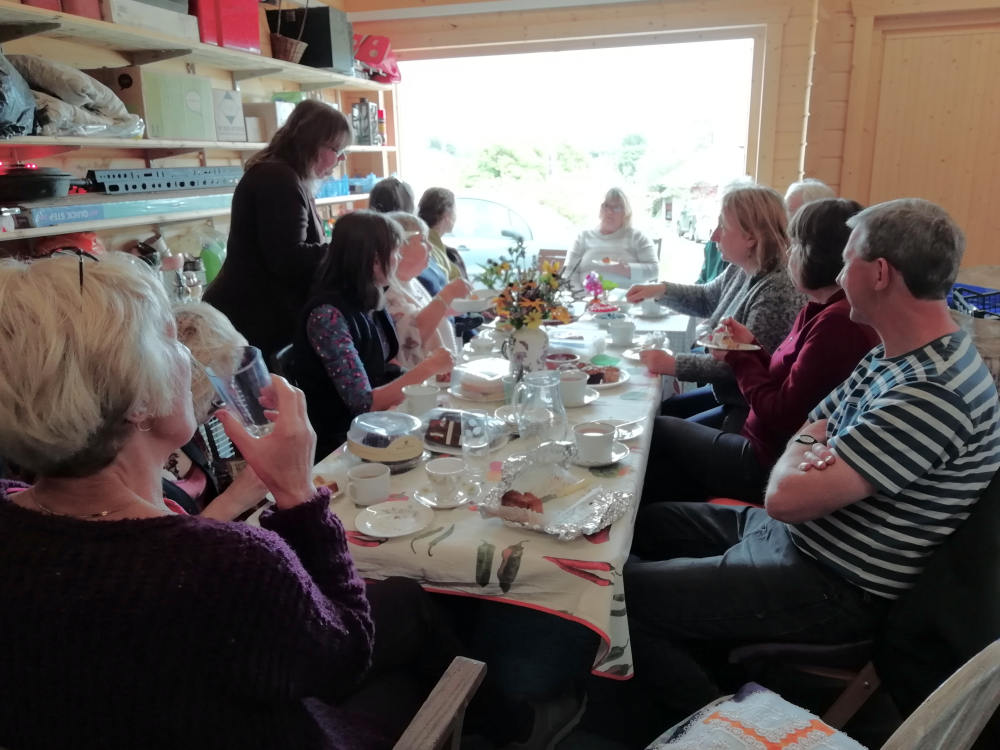
Much anticipated by members, the event proved immensely popular and was extremely well attended. Following a talk by Carol from the Garden Centre, and a chance to wander through the Garden Centre and buy plants, members were able to choose from a very varied menu of savoury dishes, as well as the all-important cake, at the Blossoms Cafe. It was a coolish evening after the heat of the previous week, so the cafe felt warm and welcoming, and it was soon filled with voices and laughter as we all caught up with each other and what we had been doing. The general consensus seemed to be that the food was delicious (I can vouch for my Greek Salad), and the cakes looked mouthwatering!

The social was also an opportunity to celebrate belatedly the tenth anniversary (which was actually in 2021) of the Cothi Gardeners Club, and say thank you to Yvonne who started the club back in 2011, providing us with the pleasure of regular talks on the subject close to our hearts and the opportunity of socialising with like minds. Long-term member Donna would shortly be moving away from the area, so on the occasion of her last meeting we all wished her well for the future and settling in to her new home.

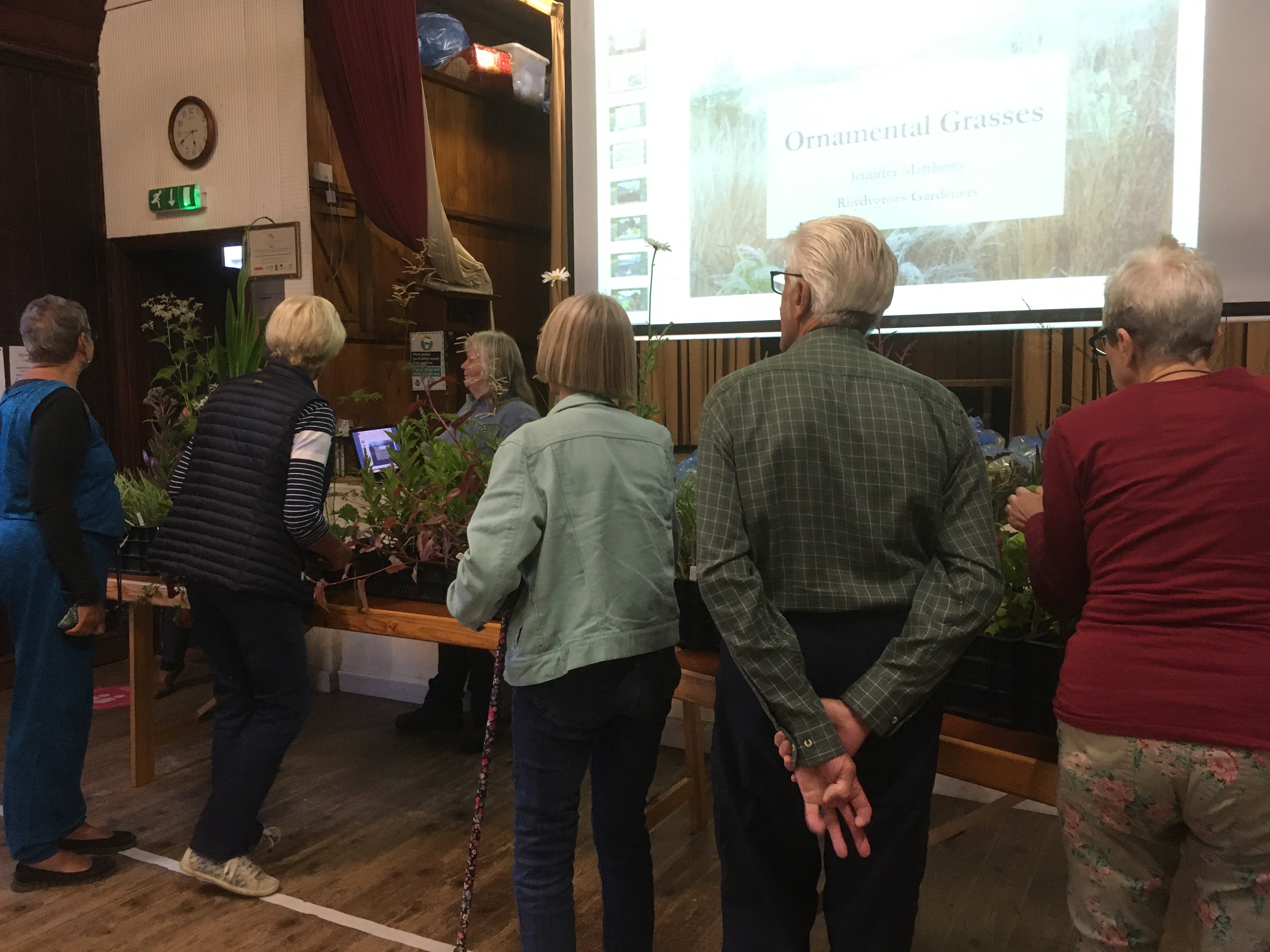
Members of Cothi Gardeners listening to Carol’s talk at the August Social

Telegraph Garden and Indoor Plant Centre

Carol has always enjoyed gardening and been passionate about plants.  Whilst working for the National Trust in Wales as their Grants Manager, she used to break the journey up and down Wales by stopping at different Garden Centres en route.  Sadly the experience tended to be the same at every one, giving a groundhog day feeling.  When Carol retired after working for 31 years for the National Trust, she set up a small Garden Centre on space rented from the Works Antiques Centre in Llandeilo.  However, illness and parking/space problems forced the closure of this Centre.  When Carol and her husband Steve moved to the Telegraph Inn at Llangadog, her daughter Lara saw the opportunity of converting the damp and overgrown area behind the building into a garden centre and The Telegraph Garden and Indoor Plants Centre was born. Although in retirement, Carol enjoys helping out and, in total, the Garden Centre in Llangadog now has 4 members of staff.

Running a garden centre can be more complicated than you might think. One of the skills you need is anticipation – for example, you need to be able to anticipate which plants Monty Don might talk about on Gardeners’ World!  Carol gave the example of Lunaria, or Honesty. Carol had plenty in stock, and they had sat happily on their table without a great deal of interest being shown until Monty Don showed some Honesty in his garden one Friday evening, and all the stock went almost instantly. You need to anticipate what plants people will want when, which means being able to second guess the weather, fashions, television gardening programmes, etc. Obviously the ideal would be for people to want to buy plants year round, and the Garden Centre encourages that, but the winter months can be quite difficult in that respect.

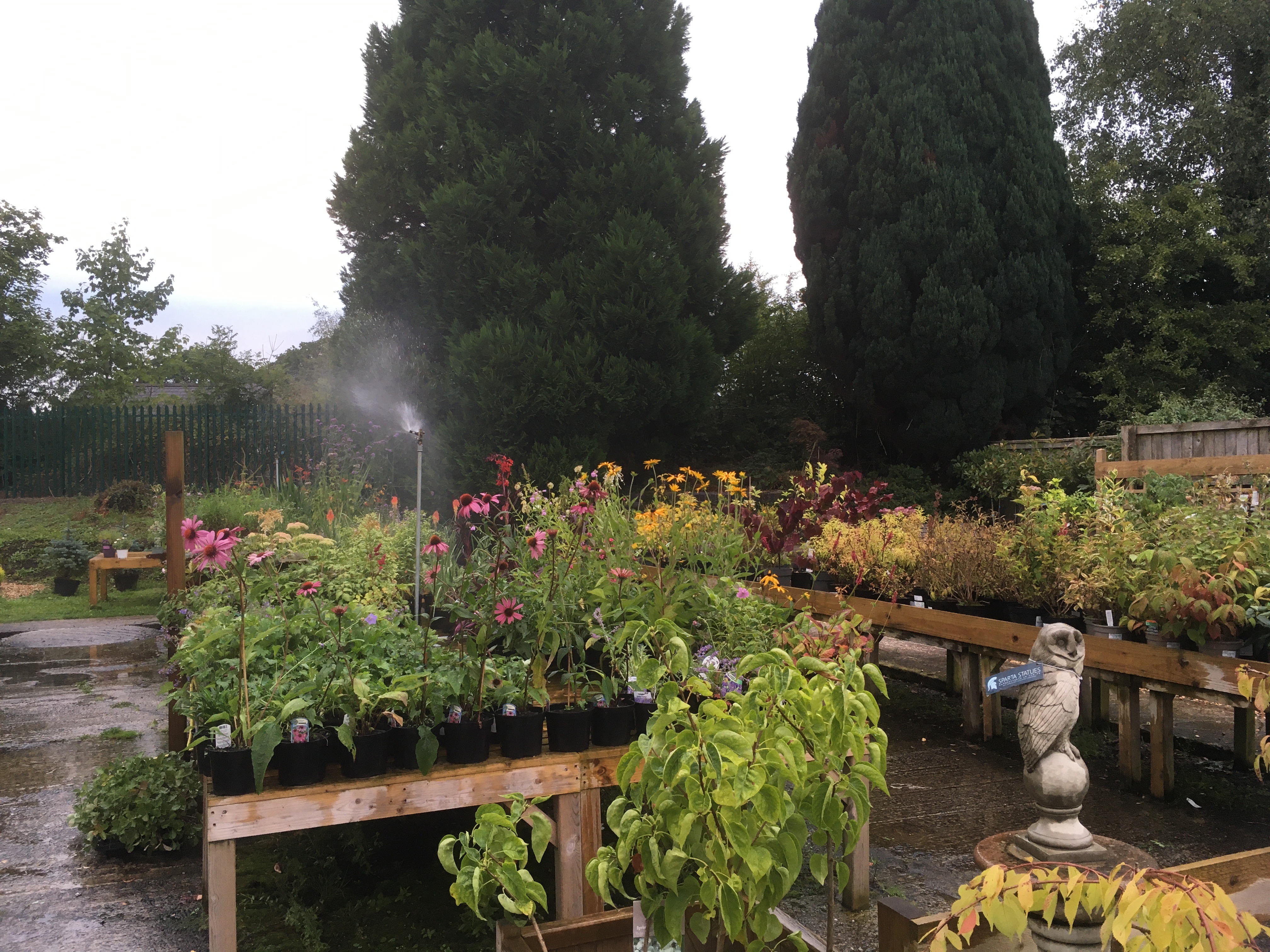
When creating the Telegraph Garden Centre, Carol’s daughter Lara designed the area to look like a garden. The wish was for people to enjoy looking round and to relax there, even if they did not buy anything. Certainly the displays of massed perennials for sale in pots look very much like well-composed garden beds.

At the Garden Centre they are very careful about the sourcing of plants and keen to support other local producers where possible. All the trees, decorative and fruit, are raised in Worcestershire. The bedding plants are sourced in Powys, and all the herbs are grown organically in Ceredigion.

If it is not possible to source some perennials, these are grown from cuttings or seed, and in fact many of the plants in the garden centre are raised there. For example, Nepeta ‘Blue Dragon’ was almost impossible to get hold of, but one plant was sourced and there are now young plants of Blue Dragon available to buy. Here Carol holds one of her favourite plants, Calamintha nepeta, which she grew from seed.

The Indoor Plant Centre is also a great success, with a wide variety of indoor plants always available.  This has proved enormously popular, particularly with the younger generation who really enjoy this form of gardening.

At the Garden Centre, they try to be as environmentally friendly as possible, with peat-free and reduced- peat compost always available.  Pots are recycled at the Centre on behalf of customers and charities for onward use. During the course of the year, as appropriate, plants are  divided, repotted, cut back and tidied up and the whole process started again ready for sale the following year. Customers can have their hanging baskets refilled with no charge for labour, only for the plants and compost used.

One of the downsides of running a garden centre is the paperwork, which is substantial. To counter that, there is the pride in supplying quality plants to customers, and there is the joy of propagating,  creating and nurturing new plants..

Carol finished by giving us all some of her tips. When she’s taking cuttings, she dips them first into liquid seaweed fertiliser and then into rooting powder. Cuttings should always be placed around the edge of the pot, and you need to keep them damper than you would think. Vitax Q4 is really good for plants that are looking a little tired and need perking up. Finally, when dividing plants it helps to take some root off; it might look a little brutal, but it encourages the plant to make more.

On that final note, Carol encouraged the Club members to explore the garden centre and the range of plants available, and we all made the most of the opportunity!

Ornamental Grasses; August Social

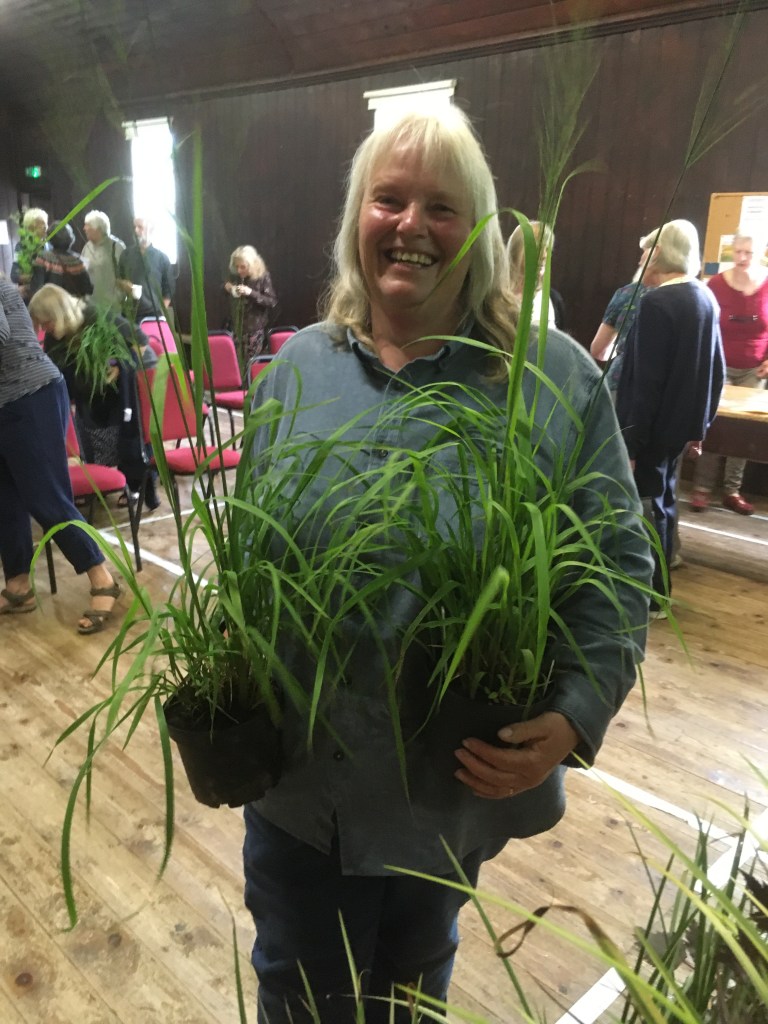
There was a great turn-out of members and guests for the excellent July talk given by Jennifer Matthews, who had travelled from Rhyd-y-Groes Gardens in the Preseli Mountains, where for 20 years until 2017 she ran Moorland Cottage Plants nursery. Now Jenny offers services such as garden design and photography, and has been opening her own garden for the National Garden Scheme for 22 years.

As background, Jenny began by telling us about her garden, which was just an upland field to begin with, explaining that she has always tried to garden with nature. It now contains, among other elements, a herbaceous perennial border, lime lollipops, a wildflower meadow including bluebells in spring, a shrub border including rhododendrons, and an ornamental meadow with cultivated native grasses and big, bold perennials.

Jenny’s introduction to grasses explained their importance as a plant family – from cereals for food and fodder to ground cover and now more and more to another plant group that gardeners are adding to their repertoire of ornamental plants.  Grasses offer elegant linear forms and year-round interest along with low maintenance.

There are three types of grasses – true grasses, sedges and rushes, and bamboos. True grasses have a wide variety of colour and growth habit, with round stems, while ‘sedges have edges’, the stems being almost triangular. Rushes have solid, round stems and need more moisture than sedges. Bamboos in their turn have hard woody stems – they can be specimen plants but also make effective screens and hedges.

Grasses can be variegated – with white, cream or yellow variegation; they can be plain green, yellow (these often do best in shade) or blue (for hot, sunny situations). There are also red, copper and brown grasses.  They do not have vivid, showy flowers, but the flowers do provide attractive structures which last well from summer into autumn.Jenny described all the different situations in which grasses can be used: herbaceous borders, island beds, mixed borders and beds, woodland gardens, architectural garden styles, flowering lawns, meadow and orchard gardens, ornamental meadows, bog gardens and water gardens (largely rushes). There are grasses for dry shade, damp shade, part shade, sunny and open sites, as well as well-drained and very sunny locations.

Jenny gave us tips on caring for grasses (they are fairly low maintenance – she described her own regime of weeding and dividing if necessary in spring, and cutting back in winter as the grasses themselves being to collapse), and for propagating them (always wait until you see the first signs of growth in spring or early summer – some grasses will be later than others). She also ran through a list of perennials which make good companion plants for grasses, a good selection of all of which she had brought with her for sale to members. After questions and warm appreciation for a fascinating talk, our appetites suitably whetted, many members made a beeline for the array of beautiful plants for sale.

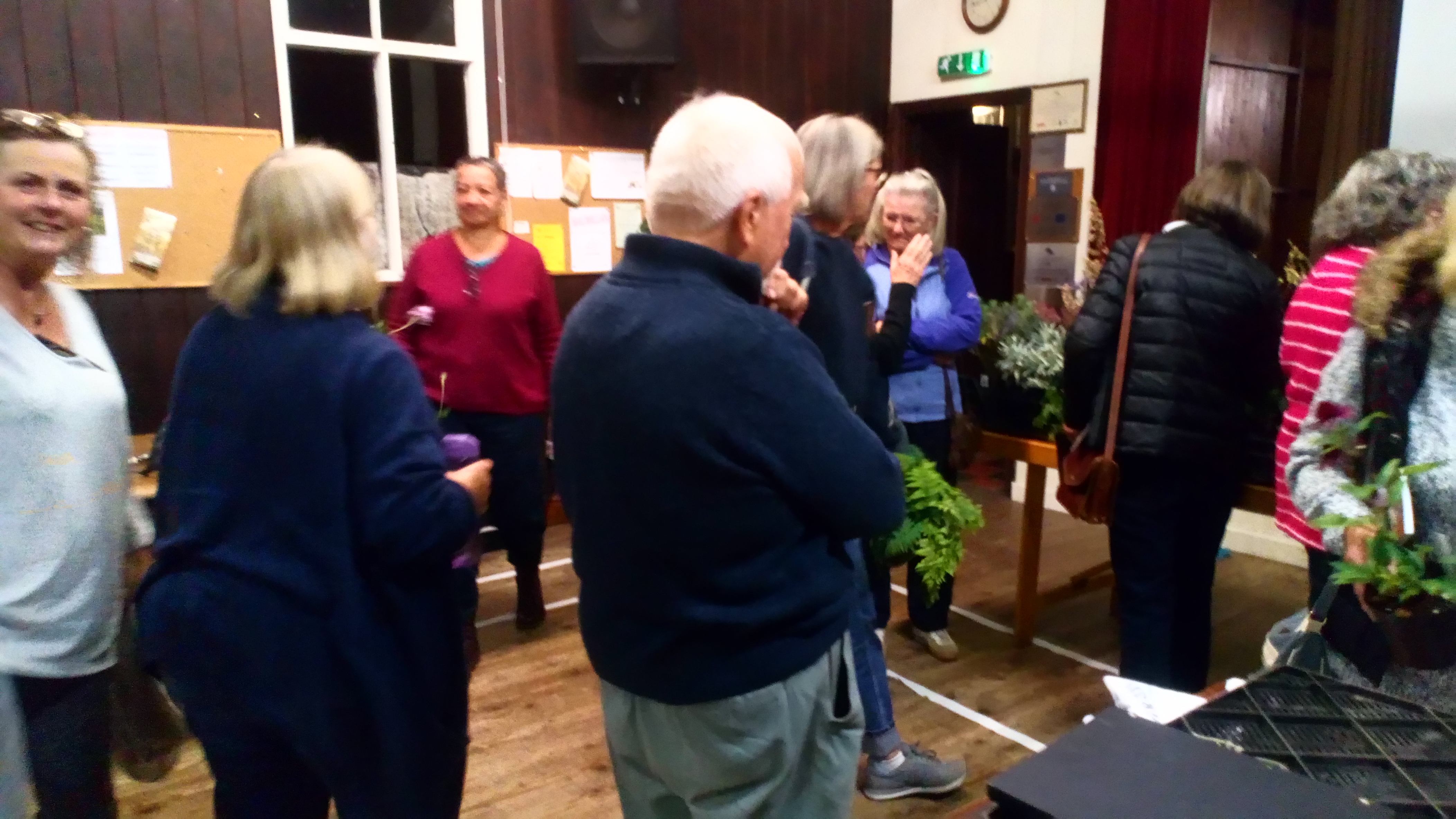
Cothi Gardeners’ members enthusiastically inspecting the plants for sale

August Social

It was agreed that the August Social would be held at the Telegraph Garden Centre on 17 August in the early evening. The event will include a talk as well as refreshments – more details to follow, so watch this space…


Happy New Year!

Happy New Year to everyone.

This is a brief post to let you know that our 2022 programme starts next week. We are having the first two meetings by Zoom and then will hopefully be able to have ‘in person’ meetings from March onwards – fingers crossed!

Next weeks’ meeting is on Wednesday 19th January, 7.15pm for a 7.30pm start when Carole Whittaker will be talking to us on “The History, Medicinal Qualities and care of Monarda

These beautiful perennials from North America have been utilised since 2,500 BC by the Native American peoples for their medicinal qualities.  But the history does not stop there!  The talk covers all aspects of caring for these unusual, late summer perennials.

Carole and her husband, Pete, have established a beautiful garden, Glyn Bach, in Pembrokeshire which is home to their National Collection of Monarda. The garden is open through the NGS and Plant Heritage. Click here for their website.

If you would like to join the Zoom meeting and have not received the email with the invitation please contact Fiona at cothigardeners@gmail.com so she can send it through to you.

Monarda Collection at Glyn Bach Garden ©Carole & Pete Whittaker

For the rest of the years’ programme click here. NB we plan on holding our much delayed AGM at the March meeting.

Terrific Terry; Fantastic Festive Food; Final Call for Committee Members; AGM date for your diary

Terry Walton – The Life of a Media Allotmenteer

Terry Walton made his long delayed visit to Cothi Gardeners for our November meeting. He was certainly worth the wait and gave us a highly entertaining and informative talk.

Terry

The first part of the talk was about how, after retiring from his career as MD of a precision engineering company, he came to be a media allotmenteer appearing on various radio and television programmes. Currently he is a regular Friday afternoon feature on Radio 2’s Jeremy Vine Show and on Radio Wales. Both shows are live broadcasts; for the former he manages to perform his various tasks, often one handed, while communicating via mobile phone with the studio.

First Slide - with Jeremy Vine                  Terry Walton 2

He started gardening on an allotment as a child of 4, building up the number of plots he managed to 11 and growing vegetables which he put into veg boxes and then sold to local householders. It being illegal to sell produce from an allotment, he only charged for the box itself and not the veg it contained. By the time he was 17 he was able to buy his first car. He continued to garden his allotment throughout his career, as a hobby.

Terry gardens organically. His allotment is about the size of centre court at Wimbledon, water is collected from a nearby mountain stream and he has an unheated greenhouse on site. He uses a 4 crop rotation which reduces pest problems and maintains fertility, has no paths (they waste growing space!) and is self-sufficient for all his vegetables, freezing summer crops for winter consumption. Seeds that require extra warmth for germination are placed in the airing cupboard at home for 48hrs, moved to a windowsill and from there out to the greenhouse.

Parsnips:

  • Don’t sow in the ground
  • Germinate the seeds on damp kitchen towel, wait until the root shows then
  • Plant into fibre pots with the bases removed, 2 to a pot. This way they can be planted out without disturbance and the root will not be obstructed and so is less likely to fork.
  • In due course plant out in a drum for long roots, or into the ground under a fleece cloche, thinning to 1 per pot and at a distance of 9” apart.

Leeks:

  • He grows early, mid and late season varieties.
  • They are sown into seed trays, 35/tray, so a total of 105 every year.
  • When approx. 6” high he uses a crowbar to make a hole in the ground into which the leeks are dropped.
  • A piece of 6” long, 3” diameter plastic pipe is then placed over each leek which will allow them to grow long and straight, and increase the length of blanched stem.

Beans:

  • To germinate, place in a freezer bag half filled with semi moist compost.
  • Plant into recycled polystyrene cups (which keeps compost warm and so gives them a head start)
  • Once planted out in the ground, water twice a week with a watering can of water with a handful of lime dissolved in it. This helps prevent flower drop.

Courgettes:

  • To help reduce mildew early in the season, mix 1 part milk to 1 part water and water or spray over the leaves – mildew likes acid conditions to germinate.

Peas:

  • Germinate as for beans
  • Plant out in a shallow trench.

Lettuce:

  • To keep continuity and avoid a glut, sow into pots 6 each of Iceberg and Lollo Rosso every 2 weeks, then plant out.
  • Grow under cloches in March, then in open. Keep going until October
  • Sow cut and come again in greenhouse for the winter

Onions:

  • Don’t wait until the end of the season to start using them, use from when they are big enough.
  • When drying off make sure ventilation is good. If weather is bad dry in the greenhouse on mesh to give greater circulation

Brassicas:

  • To combat Cabbage White decimation spray with water in which rhubarb leaves have been soaking for 3 weeks. Repeat after rain. This deters the butterflies.
  • Or grow under netting/enviromesh.
  • To prevent Cabbage Root Fly place 2 pieces of damp proof membrane, with V shaped cuts, around base of each plant.

Carrots:

  • Grow in drums for longer, straighter roots
  • Harvest through the winter.
  • Sow in February in greenhouse under bubble wrap for an early crop.
  • Sowing into the ground: dribble in compost, then seeds and then cover with more compost for good germination.
  • Cover with enviromesh to avoid Carrot Root Fly

Potatoes:

  • Earlies – Grow in a drum in a cold greenhouse. Place a layer of manure mixed with compost in the bottom
  • Add the potatoes and then add layers of the manure/compost mix as they grow until the drum is full
  • In the ground use green manures and well rotted manure in the potato bed for a good crop

Peppers:

  • Alternate with Coleus carina or French Marigolds to help with White fly.

Spring Onions:

  • Sow in buckets every 2 weeks

Tomatoes:

  • Drape bananas over the tomato trusses to help ripening later in the season – the ethylene relased by the banana skins helps ripen the fruit.

Garlic:

  • Best varieties to grow are UK ones

Strawberries:

  • Plant up runners and scrap original plants after 3 years
  • Cover with netting to avoid bird predation

Other tips:

  • Keep a wormery for excellent, rich compost
  • Collect sheep droppings, place in a hessian sack in water for 3 weeks, use the water as a plant feed
  • Use green manures e.g. vetches and ryes
  • Use nematodes to help reduce slug populations – repeat every year once the soil warms up.
  • Use a pressure spray to blast aphids off plants then water well to drown them.
  • To grow giant pumpkins feed them 6 pints of beer a day!!

Book signing

Book signing


Some topical tips from Julian:

I thought we were doing well this year with being ahead of the game in the garden and struggled to think of any topical tips for late November, but Fiona then reminded me we’ve still got to plant our tulip bulbs, still need to cut back the roses, and still need to raise pots off the ground to stop problems with freezing – so there you go, no time to put your feet up just yet. And a few suggestions for a dry day.


Cothi Gardeners Christmas Lunch at the Forest Arms, Brechfa

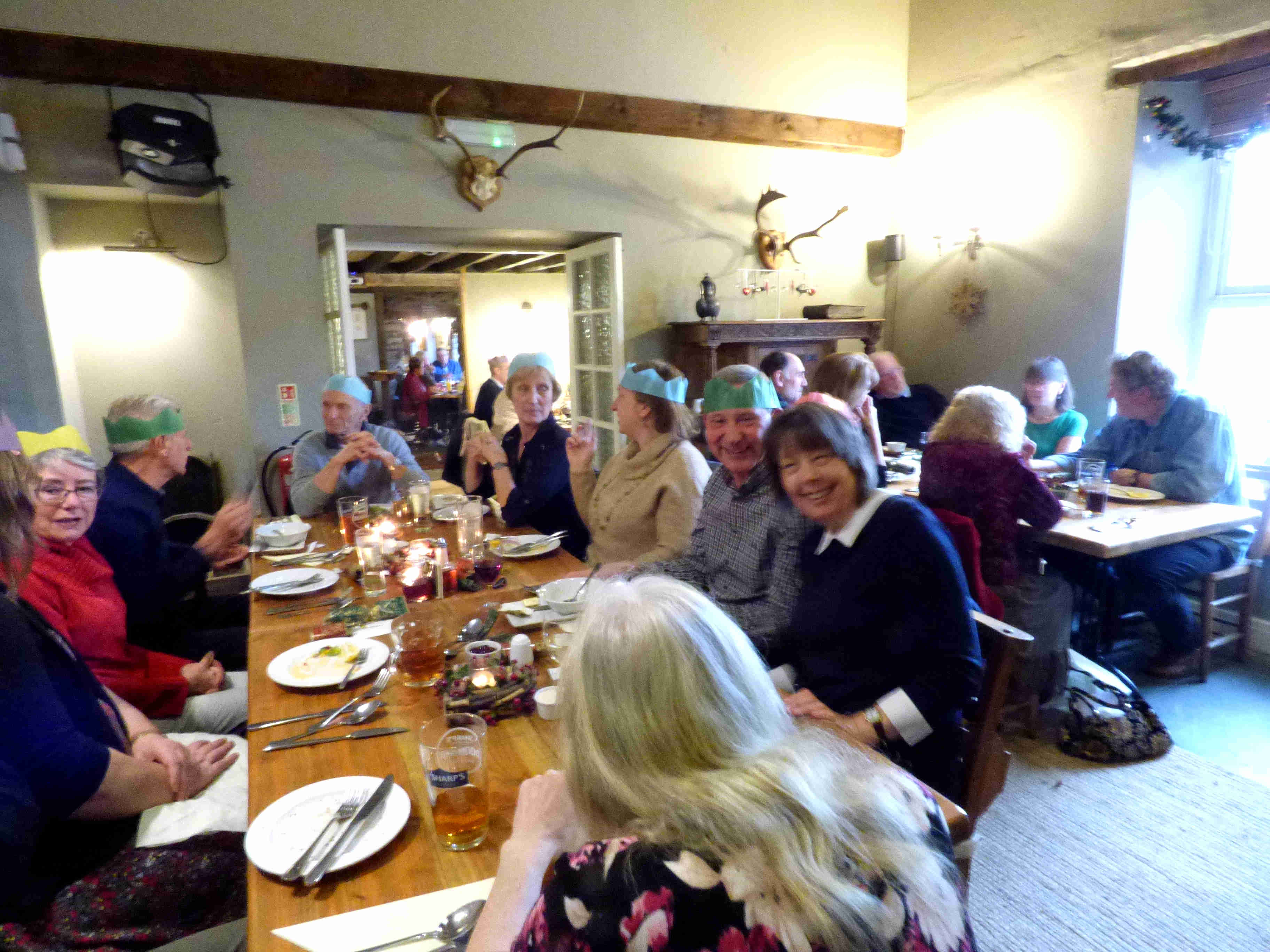
A highly successful end to the Cothi Gardener’s season.  A high turnout of members contributed to a thoroughly enjoyable lunch – excellent food, festive atmosphere and great company. A big thank you to George and Louise and their staff and to all who came to make it such a success.


Apologies for the poor quality of the photos but light levels were challenging!


Committee Members Needed

As those who have attended the last few meetings will already know, we have three committee members retiring from their current committee roles in January. A huge thank you to Brenda and Yvonne, our programme secretaries and Julian our Chairman. All members should consider serving on the committee at some point to help the club to continue forward into the future. It isn’t onerous and is often great fun. Obviously it’s very important to find someone prepared to take on the role of chairman. It would be for 1 year with the option of continuing for a maximum of 3. Please give it some serious thought and if you are prepared to join us then please give your name to Julian by 9th January 2019


Finally remember to put the date for the AGM in your diary: Wednesday, January 16th at 7.30pm. Bring a plate of food to share and be prepared for Derek’s Quiz!

Membership renewals:

For existing members who renew their membership before or at the AGM in January the fee will be £10 (normally £14).

In addition, the committee decided that we should introduce a new fee for couples. This would normally be £25 but will be £18 if renewed before or at the AGM in January 2019.


All that remains is to wish you a very Happy Christmas and peaceful, healthy and productive 2019


Fungal Fascination; Committee Commitment; Membership Renewals; TERRY WALTON; Christmas Lunch

Fascinating and Phenomenal Fungi

Bruce Langridge enthralled us with his enthusiastic and informative talk on ‘Fascinating and Phenomenal Fungi’ at our October meeting. Knowing very little about fungi when he arrived at the National Botanic Garden of Wales 15 years ago where his role as Head of Interpretation was “to create interpretation that informs, entertains and fascinates all Garden visitors, whatever their age, gender or background”. Finding that the NBGW included a meadow of international importance for fungi fired his enthusiasm to find out more and raise awareness of this amazing and important form of life. His annual Wales Fungus Day, started in 2013, has been taken up by the Mycological Society in 2015 and expanded into a National Fungus Day.

Embroidered Fungi

Bruce gave us a potted history from fungi’s evolution over a billion years ago to the present day when it is thought that there could be over 100 million different types. The importance of fungi to the planet’s ecosystem is huge. 85 – 90% of plants have a symbiotic relationship with one sort of fungus or another (fungi don’t photosynthesise and plants are not always very efficient in taking up necessary nutrients from the soil). Certain fungi are indicators of old meadows which have not had modern farming practices applied to them. The pink Waxcap is on such example (coincidentally Julian had counted nearly 70 of these in one of his meadows that afternoon). Some fungi are edible but Bruce advised caution as there are often ‘lookalikes’ which are poisonous; or in one case an edible one can be infected by a poisonous one! In addition, picking wild fungi causes damage to the fungus through trampling and soil impaction. Other fungi such as Dutch Elm Disease, Ash Dieback and Honey Fungus kill plants, while others have hallucinogenic properties eg. Magic Mushrooms and Fly Agaric and many have been used in Chinese and Japanese medicine for 1000’s of years. One of the top 5 most poisonous fungi in the world, the Destroying Angel, was found by Bruce locally.

Examples of fungi brought in to the meeting

Bruce’s slides and examples demonstrated the diversity of shape and colour from the bright red Elf Cups to yellow Witches’ Butter and the Bird’s Nest Fungus, often accompanied by interesting and amusing anecdotes.

Finally, Bruce told us a little about lichens (a combination of fungi and algae and sometimes bacteria as well) and rusts and smuts. Lichens are a sign of pure air, however they do not like acid rain so many are dying out. The NBGW is the first Botanic Garden in Europe to try a conservation technique, transplanting rare lichens onto a willow tree in the gardens to try and save them. So far the results have been very encouraging. (https://botanicgarden.wales/about-the-garden/wildlife/lichens-in-the-garden/)

For anyone who is interested, Bruce runs fungi walks at the Botanic Gardens and also suggests joining the Carmarthenshire Fungi Group (http://www.carmarthenshirefungi.co.uk/)


Committee Members Needed

As those who have attended the last few meetings will already know, we have three committee members retiring from their current committee roles in January. A huge thank you to Brenda and Yvonne, our programme secretaries and Julian our Chairman. All members should consider serving on the committee at some point to help the club to continue forward into the future. It isn’t onerous and is often great fun. Obviously it’s very important to find someone prepared to take on the role of chairman. It would be for 1 year with the option of continuing for a maximum of 3. Please give it some serious thought and if you are prepared to join us then please give your name to Julian by 9th January 2019


Membership

Due to the healthy state of the club’s finances this year, the committee has decided that there will be a one off discount for membership renewals as follows:

For existing members who renew their membership before or at the AGM in January the fee will be £10 (normally £14).

In addition, the committee decided that we should introduce a new fee for couples. This would normally be £25 but will be £18 if renewed before or at the AGM in January 2019.


Terry Walton

It’s hard enough getting those fiddly seeds into compost or trimming just the right side-shoots without holding your mobile phone to your ear and providing a running commentary to thousands of Radio 2 listeners at the same time.

© Terry Walton

If you haven’t already guessed, our speaker in November will be Terry Walton. “The Life of a Media Allotmenteer” promises to give us a look behind the scenes as Terry tells us about life on his allotment in the Rhondda and how he has given growing advice on the radio each month for over twelve years.

© Terry Walton

A gardener of over 40 years’ experience, Terry has worked plots on the same site since he was a boy, learning from his father and other allotment gardeners. Many of you will be familiar with his enthusiastic style, so do come along on November 21st to meet Terry. Mobile phones not necessary!

Guests and visitors welcome, £3, to include refreshments. The talk begins at 7.30pm.


Christmas Lunch

November’s meeting is your last chance to book in for our Christmas lunch. It is to be held at the Forest Arms, Brechfa on Wednesday December 12th from 12.30pm. The form together with the menu (which is also listed in a previous post) will be out on the ‘Meet & Greet’ table. You will need to give your food choices, noting any allergies/dietary requirements, plus a £10 deposit per person. The full cost of the lunch is £20 per person.


Topical Tips

Lilium regale – A fabulous scented species lily with large funnel shaped white flowers in the summer. The seed pods have just ripened and lilies are fairly easy to grow with fresh seed. Keep it in the fridge until maybe mid March and then sow it in a pot outside. You do need to keep slugs and mice away from them, but you can get good germination rates and it’ll take about 4 years for the lilies to flower.

Autumn planting

It’s a great time of the year for new planting now, before the frosts arrive, while the soil is still warm and with all that recent ‘wonderful’ rain having soaked the ground….

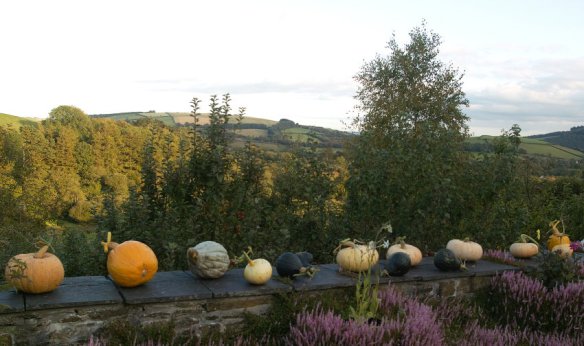
Winter Squash

For everyone with winter squash, it’s probably a good time to ripen them off for about 10 days in a warm, dry place to toughen and dry up the skins, before moving to a cool, frost free place to allow them to store well for longer.


Green’s Leaves; Fantastic Fungi; Terry Walton; Christmas Lunch

Paul Green of Green’s Leaves Nursery

September’s meeting saw a very welcome return by Paul Green from Green’s Leaves Nursery. Paul once again built his talk around a fantastic and diverse selection of plants that he’d brought along, persuading us of the merits of plants which look great at this early autumn period and on into winter.

Ranging through grasses, trees and small perennials, there was something for everyone to enjoy, and the talk was laced with practical tips (remember to lift any outside pots off the ground over winter to prevent water logging and root death), to snippets of fascinating information (Alder Buckthorn is not only one of the main larval food plants for the caterpillars of the Brimstone Butterfly, but also originally the favoured wood for making high quality charcoal to incorporate into gun powder!)

An enjoyable evening all round, and great to see several new members join us.


Bruce Langridge – ‘Fantastic and Phenomenal Fungi’

Next week’s talk on ‘Fantastic and Phenomenal Fungi’ by Bruce Langridge promises to be really interesting – Bruce is responsible for establishing the Wales Fungi Day at the National Botanic Garden of Wales, taking place this Sunday 14th October and it’s been so successful that a similar event is now held at over 80 venues nationally. Click here for more information.


Terry Walton – “The Life of a Media Allotmenteer”

Advance notice for November’s meeting when our speaker  will be Terry Walton on the subject “The Life of a Media Allotmenteer”. Terry promises to give us a look behind the scenes as he tells us about life on his allotment in the Rhondda and how he has given growing advice on the radio each month for over twelve years.

A gardener of over 40 years’ experience, Terry has worked plots on the same site since he was a boy, learning from his father and other allotment gardeners. Many of you will be familiar with his enthusiastic style, so do come along on November 21st  to meet Terry. Click here for his facebook page.

Guests and visitors welcome, £3, to include refreshments. The talk begins at 7.30pm.


Christmas Lunch

Initial bookings for the lunchtime Christmas meal at The Forest Arms, Brechfa are coming in, so don’t forget to sign up soon – there may be a limit on numbers which we could broach this year, with the increased membership. The cost is £20 per head. Please give your menu choices (including any dietary requirements/allergies) plus a 50% deposit when you book your place. The menu is shown below. The date is Wednesday December 12th, 12.30 for 1 pm.


Monthly Tips

3 Tips from Julian……………..

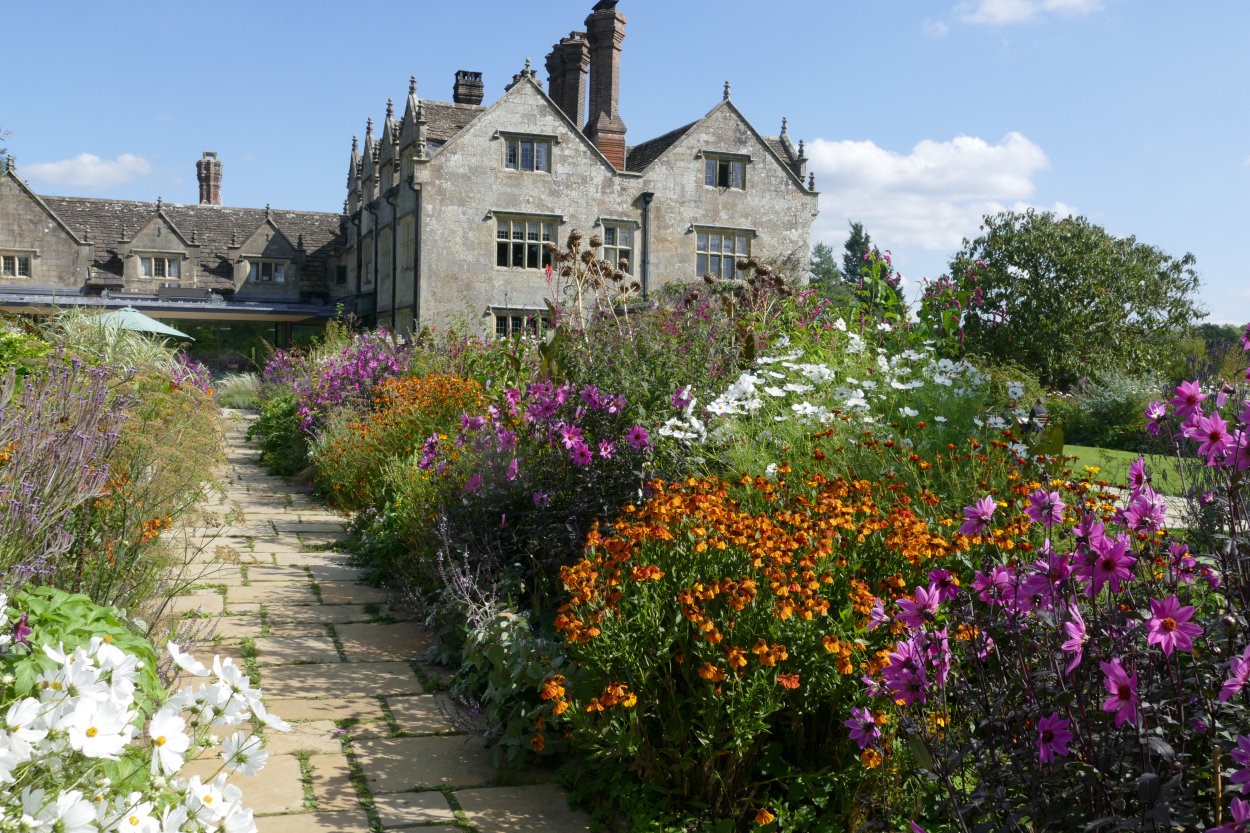
I find myself collecting seeds from quite a few plants at this time of the year. Obviously It’s a good idea to collect them on a dry day if you can manage that, but also it’s worth labelling them and quickly storing them in the fridge so that they don’t become too dry which can easily happen if they’re left on the side in a warm house. We had a few days in Sussex recently and were fortunate to visit Gravetye Manor which was the home of William Robinson at the beginning of the last century. He was perhaps the driving force in moving gardens towards a more naturalistic, less formal type of garden design. However I didn’t know until this visit that he injured himself very badly after slipping on a stile whilst walking to church, and spent the last 25 years of his life confined to a wheel chair. But apparently right up to the end of his days, he loved scattering seeds of his favourite plants around his garden and meadows and enjoying the excitement of seeing what germinated.

Gravetye Manor flower garden

I’ve also found that the 2 pronged weeding fork I mentioned earlier in the year as a great tool will work as a bulb planting implement for small bulbs like Crocus and fritillaries, which limits the extent to which you have to bend over. But I’ve also found it’s not a good idea to twist it too much, or you end up with a single pronged fork! Which is still ok for bulb planting, and for using as a strut or support but not so good for weeding!

Finally I’m guessing a lot of people will have a surfeit of apples this year. We have, so I’ve been juicing and freezing a lot. This generates quite a lot of pulp and trimmings. I did read that mice and voles love apples (certainly our rats do!) So I’ve been scattering all the apple debris around near where I’ve planted my Crocus in the hope that the rodents are distracted by the smell and taste of this. And therefore leave the corms alone. In previous years I’ve sometimes lost 80% of newly planted Crocus within a few days (in spite of dousing them in Chilli powder and vinegar) with them being systematically dug up and eaten. Fingers crossed, but so far I haven’t seen any signs of dug out, chomped Crocus this year. Also although it sounds a bit messy, actually all the bits turns brown very quickly and they have the added bonus of attracting in the few slugs we currently have left in the garden, which can then very easily be dealt with at night if you go round with a torch. In whatever way you like to do that! Of late since bending not’s so good for me, I’ve been using John’s suggested method of stamping on them, though I suppose if I sharpened the spike on my weeding fork I could try skewering…


Garden Safari in pictures and an Invitation

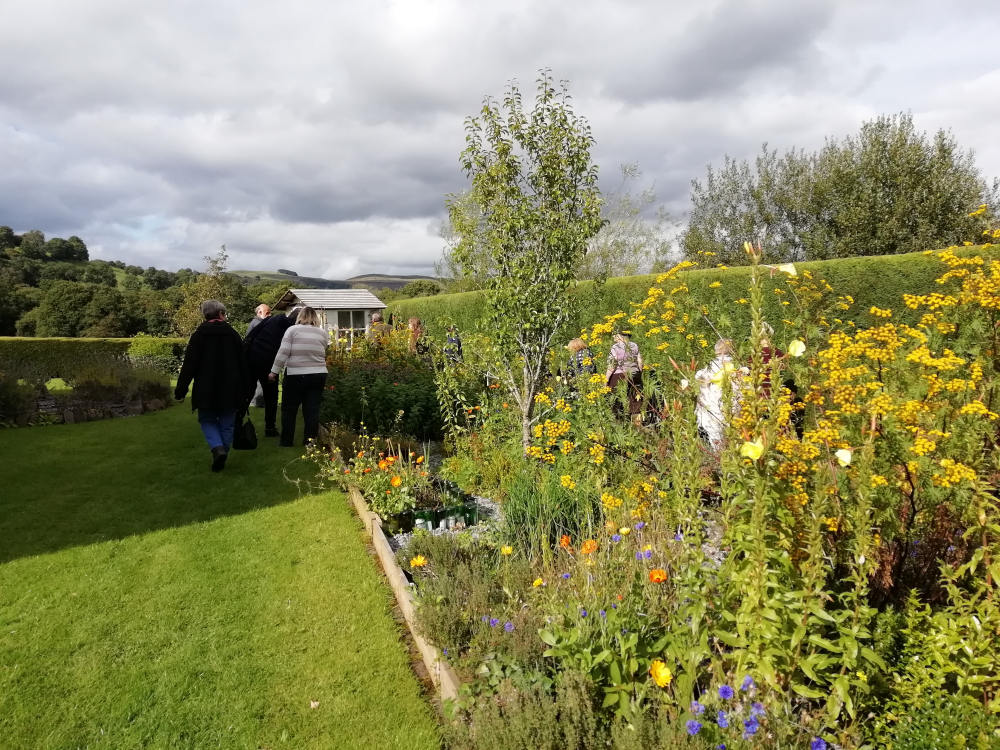
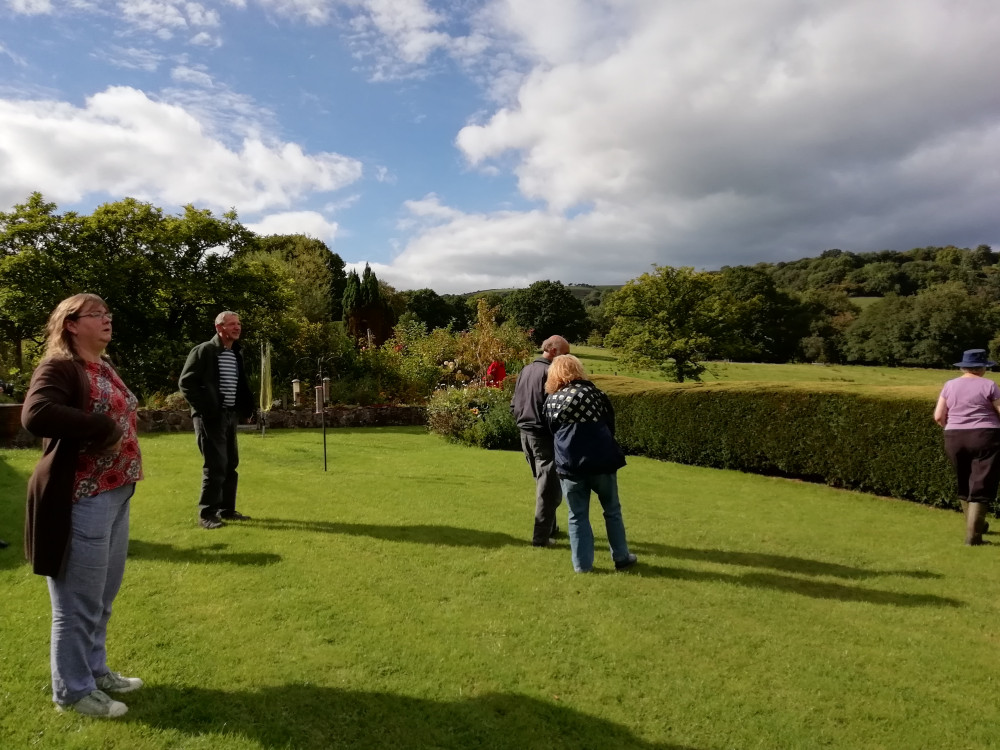
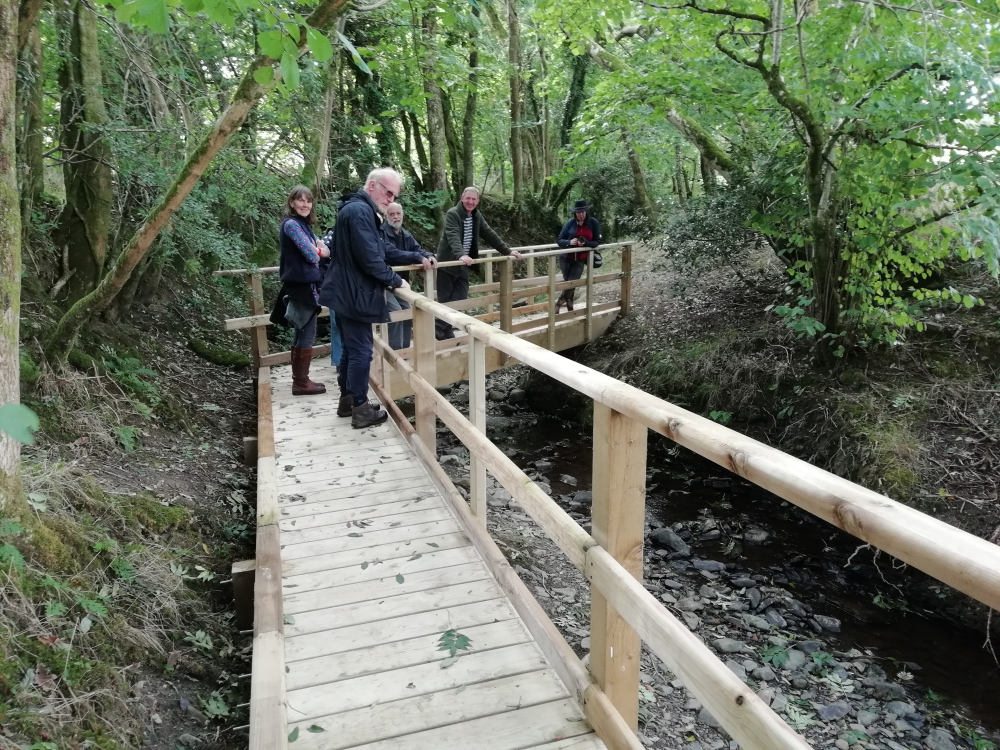
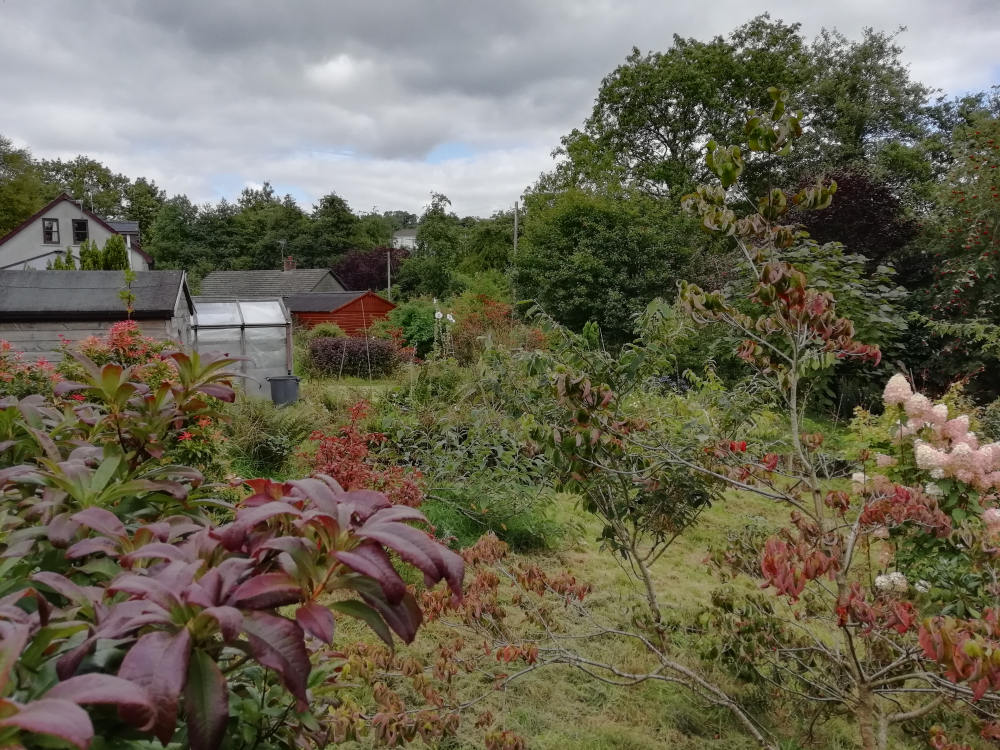
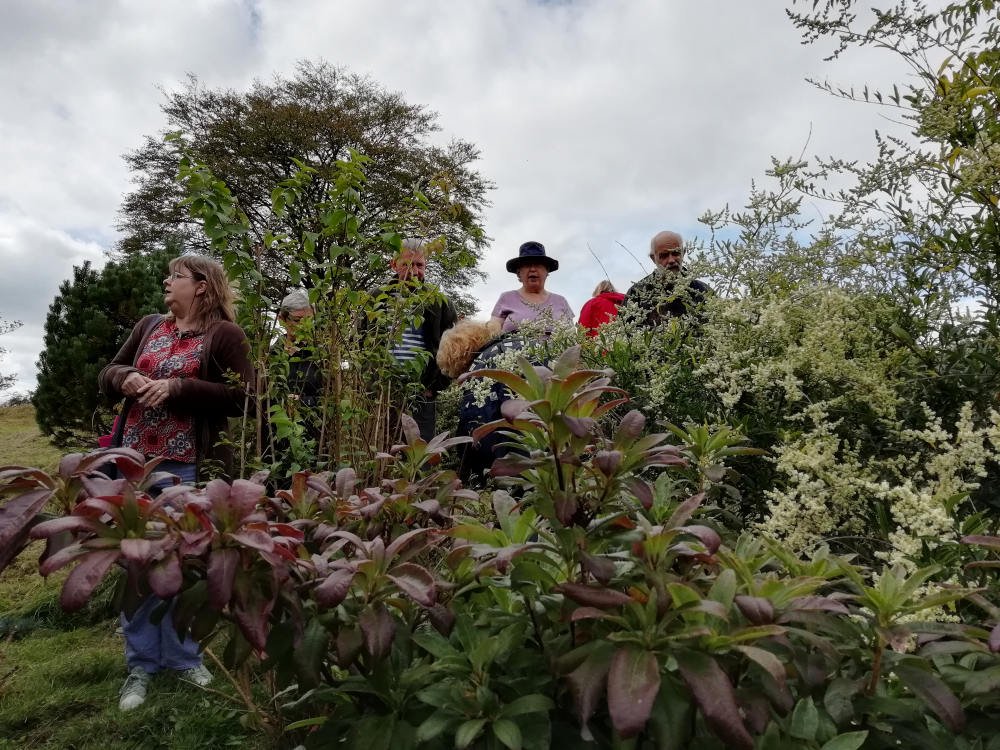
This year’s Garden Safari was  a highly enjoyable occasion. Both gardens we visited, Ty Dwr and Ddol Brenin were looking lovely. Many thanks to Yvonne and Colin and Tina and Derek for allowing us to see their gardens and to everyone who came for making the afternoon such a success.

Ty Dwr

Ddol Brenin


An Invitation from Drefach Velindre Gardening Club …………

“We would like to invite members of your Gardening Club to our Open Meeting on Wednesday 3rd October at 7.30pm in the Red Dragon Hall.

Pat O’Reilly MBE will give a talk on “Fascinated by Fungi”. Refreshments will be provided at the end of the meeting.”


Socials, safaris and Green’s Leaves

Summer Social

In spite of many members being away, our August get together still managed to garner a reasonable attendance. This year we had the additional attraction of the presentation of the cheque of £500, our donation from the Plant Fair proceeds, to Clive from Wales Air Ambulance. Again many thanks to everyone who made this possible.

John, Jenny and Julian hand over the cheque to Clive from Wales Air Ambulance


Growing Challenge

The evening was also the culmination of our Growing Challenge. This year we were asked to grow something that would appeal to pollinators. It proved to be a very real challenge for many of us due to the extraordinary weather we have experienced – a long, hard winter, the prolonged ‘Beast from the East’ Spring and then the summer drought which only came to an end a week or so before the meeting.

Nonetheless there were some very interesting results …………..

Jane: Beebombs……. to quote from the bee bomb website: “Hand made in Dorset, Beebombs are a mix of 18 British wildflower seeds, fine, sifted soil and locally sourced clay. Our seeds are native species and designated by the Royal Horticultural Society as “Perfect for Pollinators” . Beebombs just need to be scattered onto cleared ground to create a wildflower meadow that will bringthebeesback”. Jane said her ‘bomb’ proved very successful. Click here for the  Beebombs website.

Gordon: Teazle; Cardoons and Bumble Bees. Both proved excellent at attracting pollinators. Gordon’s photo shows the amazing number of bumble bees on one Cardoon flowerhead.

Jenny: Herbs and Cosmos. Both attracted insects, the Marjoram being the favourite.

John: John’s first choice plant failed to flower in time so not to be outdone, he had as a backup a Rudbeckia.  Rudbeckias are excellent late flowering plants for attracting butterflies in particular.

Brenda: Nepeta. A popular cottage garden plant always attractive to many insects.

Julian: Salvias – Julian realised that the Salvias he had chosen had flowers with long throats which made them inaccessible to bees as their proboscis were not long enough to reach the nectar. However Bumble Bees managed to overcome this by chewing a hole in the base of the flower ‘robbing’ the nectar without pollinating!

Fiona: Herbs and flowers. Planted to ceate a succession of flowers through the year. This worked up to a point with the Alliums and Borage flowering early. Unfortunately the Dill was a casualty of the drought and flowered late and poorly and coincided with marjoram in the garden which all insects seemed to prefer!

Jenny L: Sarracenia – a novel take on the subject, Jenny brought her carnivorous, insect attracting  plant!

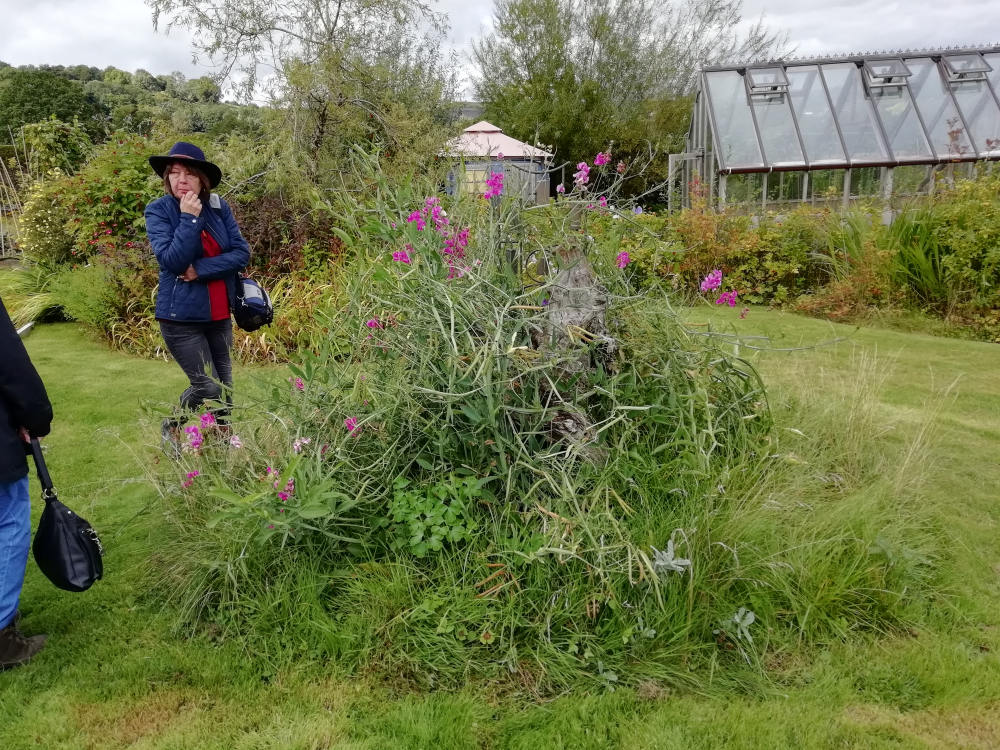
Julian had also brought along some Erodium manescavii seeds  to demonstrate how ingenious they are, creating a spiral ‘auger’ to drive them into the ground as they dry. If on a hard surface, they will then straighten out when wet. Small hairs along the stem and seed head speed up the transition.

The challenge discussion was then followed by a buffet of delicious food brought by those attending and a light-hearted competition on garden bird feathers identification kindly organised by Colin.


This year’s Garden Safari takes place on Friday 7th September with visits to Yvonne and Colin and Tina, Derek and Kates’ gardens. Parking is limited at both gardens so we are asked to car share, meeting in Ffarmers village hall car park at 1.15pm and going on to Yvonne’s for 1.30pm. We will then head over to Tina’s rounding off the afternoon with tea and cake. If those that can could bring a small offering (cake, biscuits, sandwiches, etc) to share that would be a great help.


Paul Green of Green’s Leaves Nursery

Our regular meeting in September takes place on Wednesday the 19th when Paul Green makes a welcome return. Green’s Leaves Nursery in Newent was established over twenty years ago and since then Paul and his team have become firm favourites among gardeners looking for something out of the ordinary. Paul is an entertaining speaker with a wealth of knowledge about rather unusual plants which will nevertheless grow well in our climate. He is always on the look-out for something new, but tests all new species for hardiness before putting them on general sale, and, of course, he will be bringing a selection of plants for sale on the evening.

Click here for his website.