Since the last Cothigardeners blogpost, I guess many of us were clobbered with a short sharp night time snowfall … 
which, coming in mid November, with leaves still on the trees, caused a lot of branch and other damage around the garden, as well as a few mature trees knocked over by sheer weight of snow. For anyone unfamiliar with it, we’ve found a Draper Tree Pruner With Telescopic Handle invaluable for reaching any branches ripped off a long way from the ground, without having to use a ladder, which I’m always wary about. Click here for more details on this bit of kit.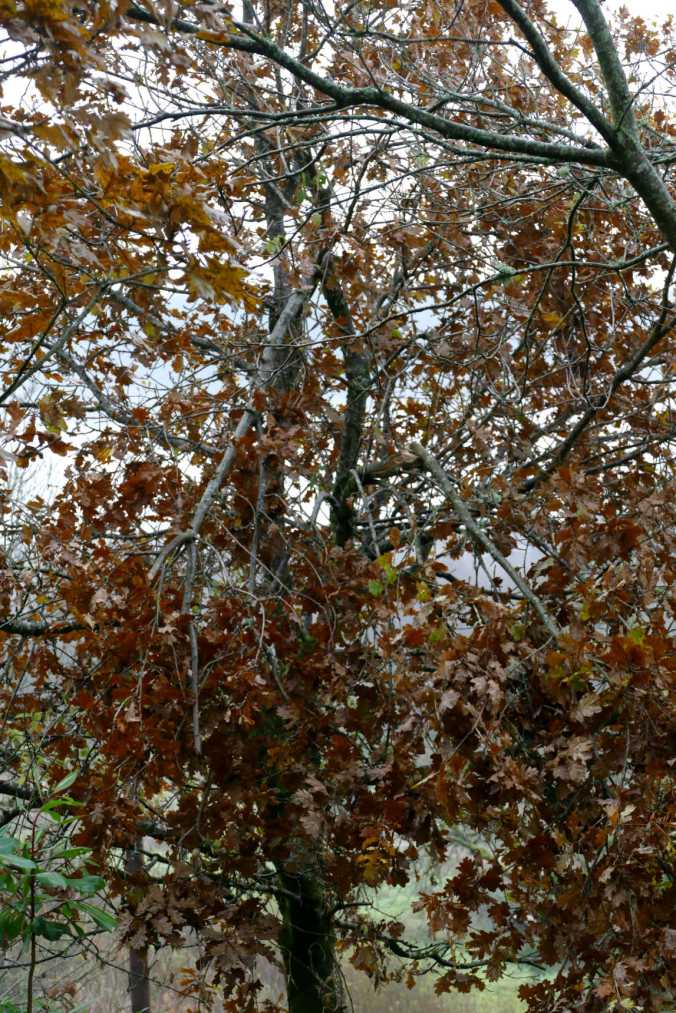
It has both a lopper and a pruning saw which can be worked independently, and although we don’t use it often, it pays for itself after one such episode. However there’s always still some damage which has to be tackled with a chainsaw really… 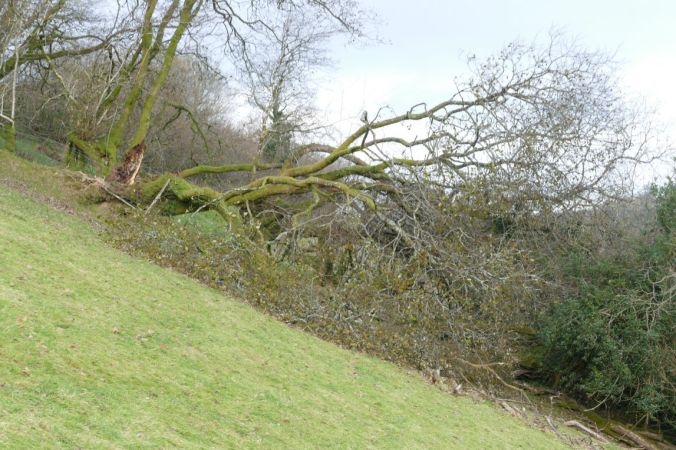
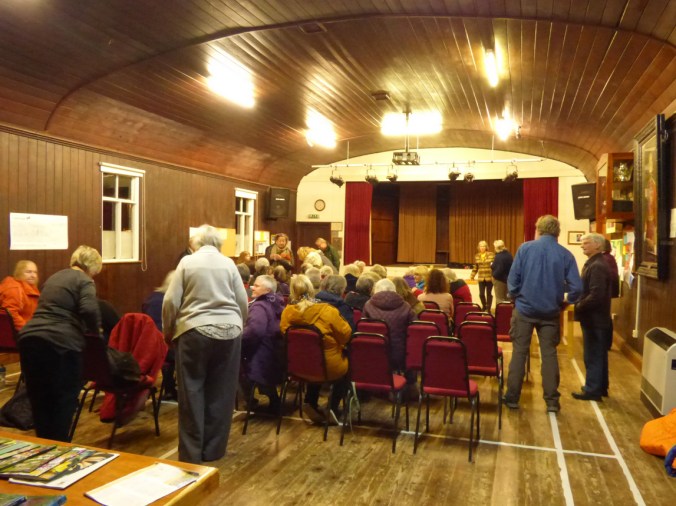 Fortunately the snow had all gone by the time Di O’Keefe came to talk to us last month about her wonderful work helping hedgehogs in West Wales. Di began by explaining how she came to set up the West Wales Hedgehog Rescue, and has gradually built up an extensive network of volunteers and helpers, including our very own Jenny, which means that at any one time she can have up to 40 hedgehogs in her temporary care.
Di explained a little about the hedgehog year, mentioning that by November any hedgehog weighing less than 600 g, or easily caught in daytime, is unlikely to be able to hibernate and survive the winter, so would probably benefit from an assessment by Di or one of her team, who can be contacted day or night(!) via her facebook page, click here.
Di mentioned some of the stresses and diseases, or simply being born later in the year, that can cause hedgehogs to be so light pre hibernation. Di uses rehydration, gentle warming techniques and then supplementary feeding, as well as appropriate medication to revitalise such borderline viable hedgehogs.
Di also explained the normal breeding cycle of the hedgehog which begins after emergence in spring and can typically end up with 6 to 10 hoglets being born, often after several matings with different males. The baby hoglets are born blind and without spines, but these all develop within the first fortnight. Di frequently receives litters of orphan hedgehogs which need feeding every 2.5 hours for the first couple of weeks or so. All being well, they can be moved onto solids shortly afterwards.
Di stressed that cat food is probably the best food for anyone wanting to feed hedgehogs in the garden, not bread or milk since they are lactose intolerant, and also not meal worms, which are too high in phosphorus.
Their normal diet is mainly invertebrates across quite a wide range – beetles, centipedes, worms, slugs and snails, with occasional bird’s eggs and chicks, and since this diet is similar to badgers, it’s often the case that hedgehogs avoid areas with a significant badger population.
The high turn out for Di’s excellent and comprehensive review of these very special nomadic and solitary small mammals that some of us are fortunate to see in our gardens on an occasional or more regular basis, showed how hedgehogs still hold a very special place in our affections all these years after Mrs. Tiggywinkle was penned.
 For more specific information on ways to help hedgehogs in our gardens there’s an excellent summary, “Gardening with Hedgehogs” which you can access here.
 Finally a reminder for everyone who’s booked for the Cothi gardener’s Christmas lunch, that it’s on this coming Wednesday, December 11th at the Forest Arms, Brechfa, arriving from 12.00 to 12.30pm. Having decided against having crackers on the table to save waste, anyone who wants to wear festive attire will be most welcome. See you all there, and a very happy Christmas and New Year to all readers.







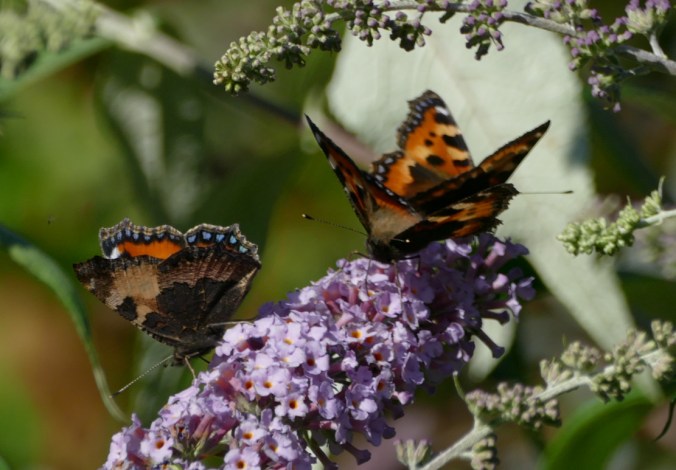 Along with a few like Japanese Knotweed and Rhododendron ponticum which were introduced and have since turned out to be more of a nuisance!
 In addition he was involved in bringing nearly 24,000 young tea plants from China to establish a fledgling tea industry for the British Empire in the Himalayan foothills in India.
 They have collected many novel plant species and cultivars from trips to South East Asia.
 For any disappointed not to be able to grab a packet of Dahlia merckii seed after Neil Barry’s talk, Julian apologises – they all got snapped up very quickly. But he does have more available which he’ll bring along to next month’s meeting (£1 per packet for club funds). Julian suggests anyone who has the seeds already, keeps them in the fridge until late February and then sows the longish black seeds, not the remaining chaff, into seed compost kept in a warm place until germination has taken place. Then grow them on and prick out in a frost free place to be planted out in late spring. Just like tomatoes really, and they should germinate as easily. You do have to watch out for slugs whilst the plants and shoots are young, but then they grow away quickly and you should be rewarded with similar flowers to these next summer, which as Julian mentioned, are a brilliant late season pollen source for honey and bumble bees. Plus the tubers should be hardy enough to survive in the ground over winter, maybe with a little extra mulch.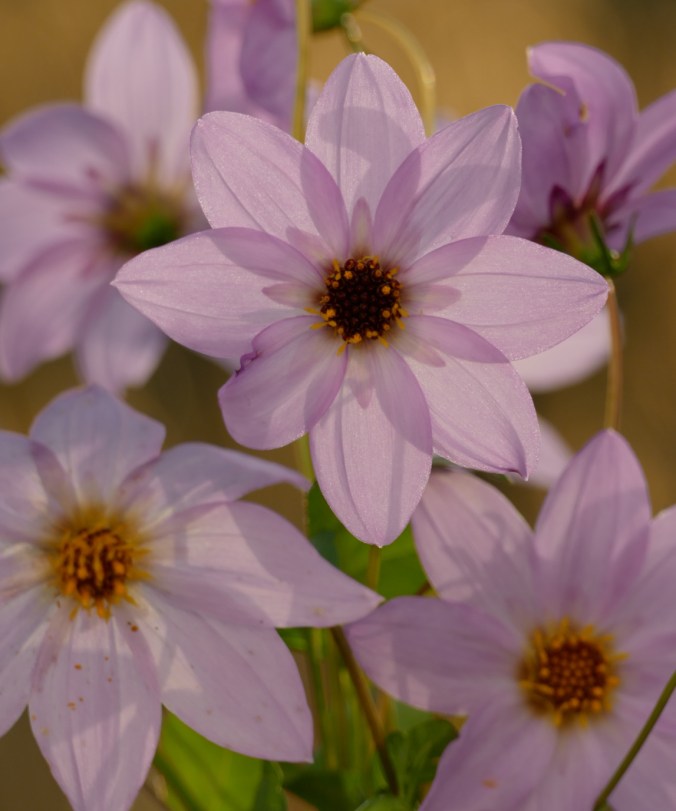

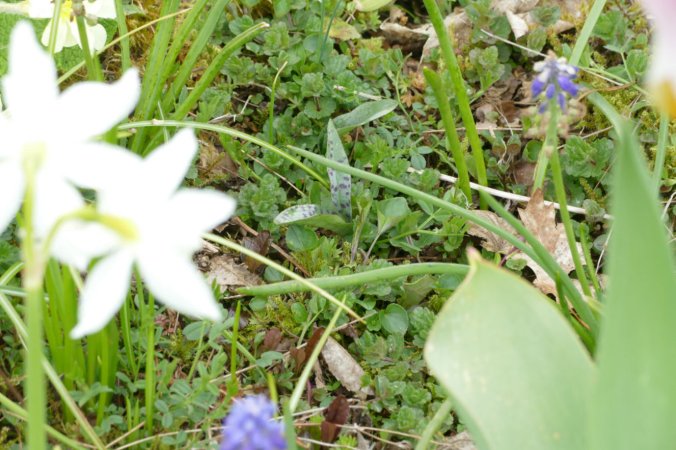
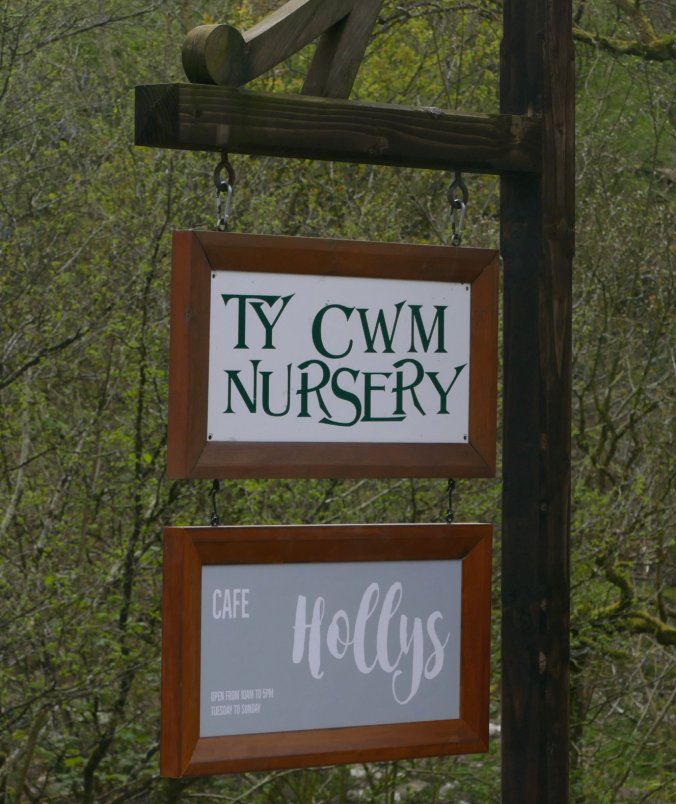
 Helen Warrington who has owned Ty Cwm for 15 years has talked to Cothi on a number of occasions, and the nursery is located in a small cwm, or valley, in lovely countryside just west of the Teifi valley, 600 feet above sea level, so the plants have to be tough to survive.
 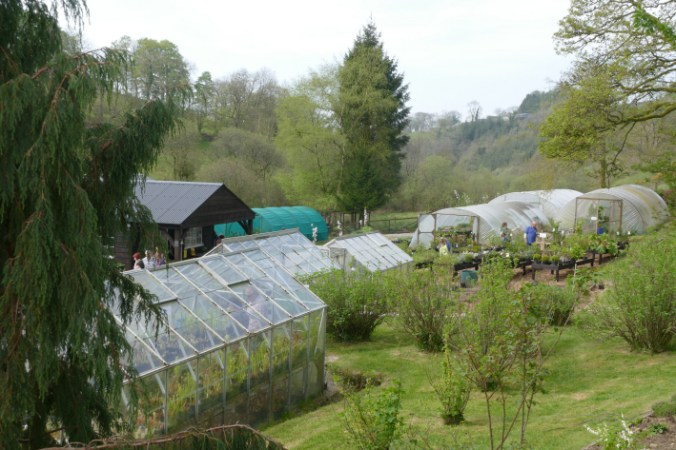 Well worth a visit sometime for those who’ve never made it before.
  The cafe is open from 10.00 am to 5 pm, except Mondays.
  For anyone wanting to see what Steve Lloyd, our May speaker has to look after, maintain, and propagate from, a trip to Hergest at this time of the year, is always a delight.



 There will be lots of plants for sale and lovely lunches and teas on site in their own cafe.
 Many thanks for those of you who have already booked in and paid up. The absolute final deadline will be the evening of our May meeting, so if you haven’t yet confirmed your place, do give it some thought. We hope you’ll be able to join us.

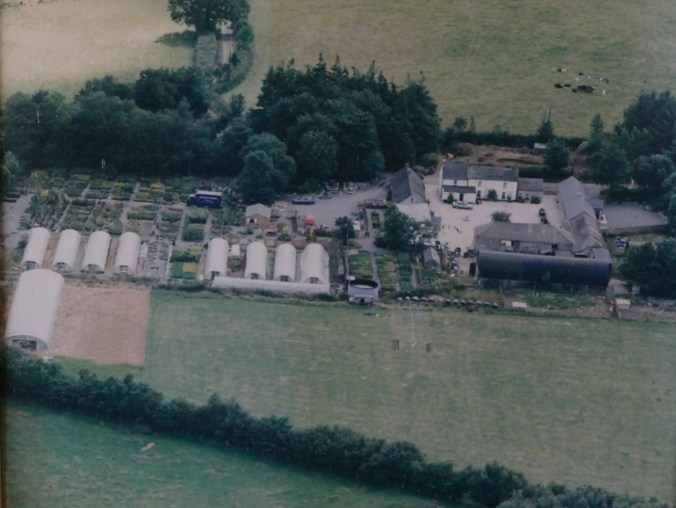
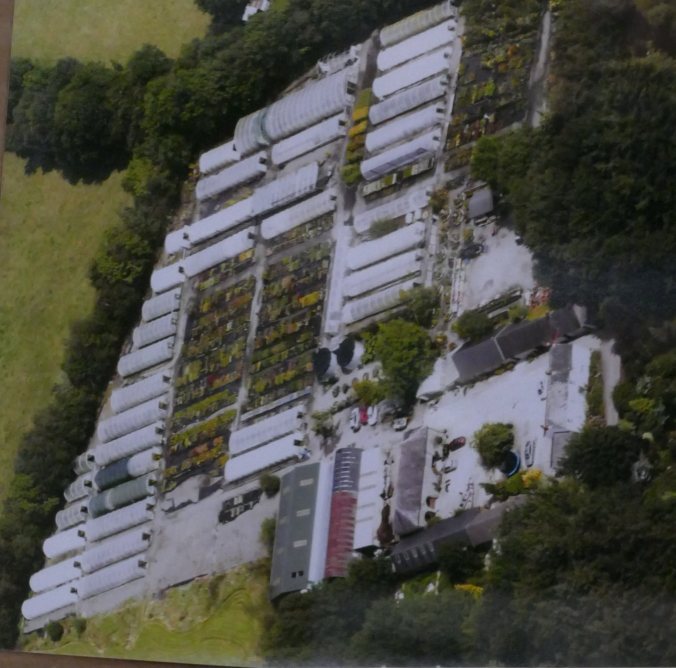

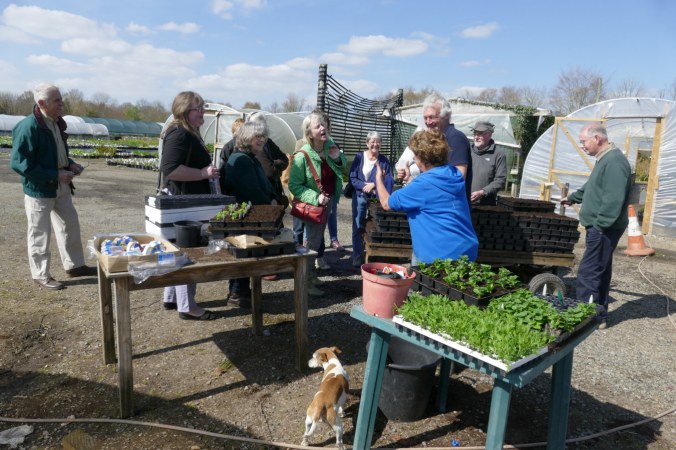
 There was even a mini potting-on contest, which Jack won hands down, with an almost machine like efficiency, a blur of dibber and hands, plug plants and labels.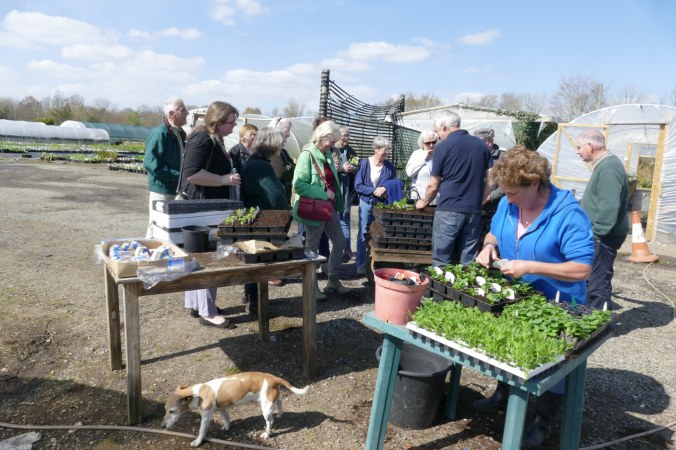

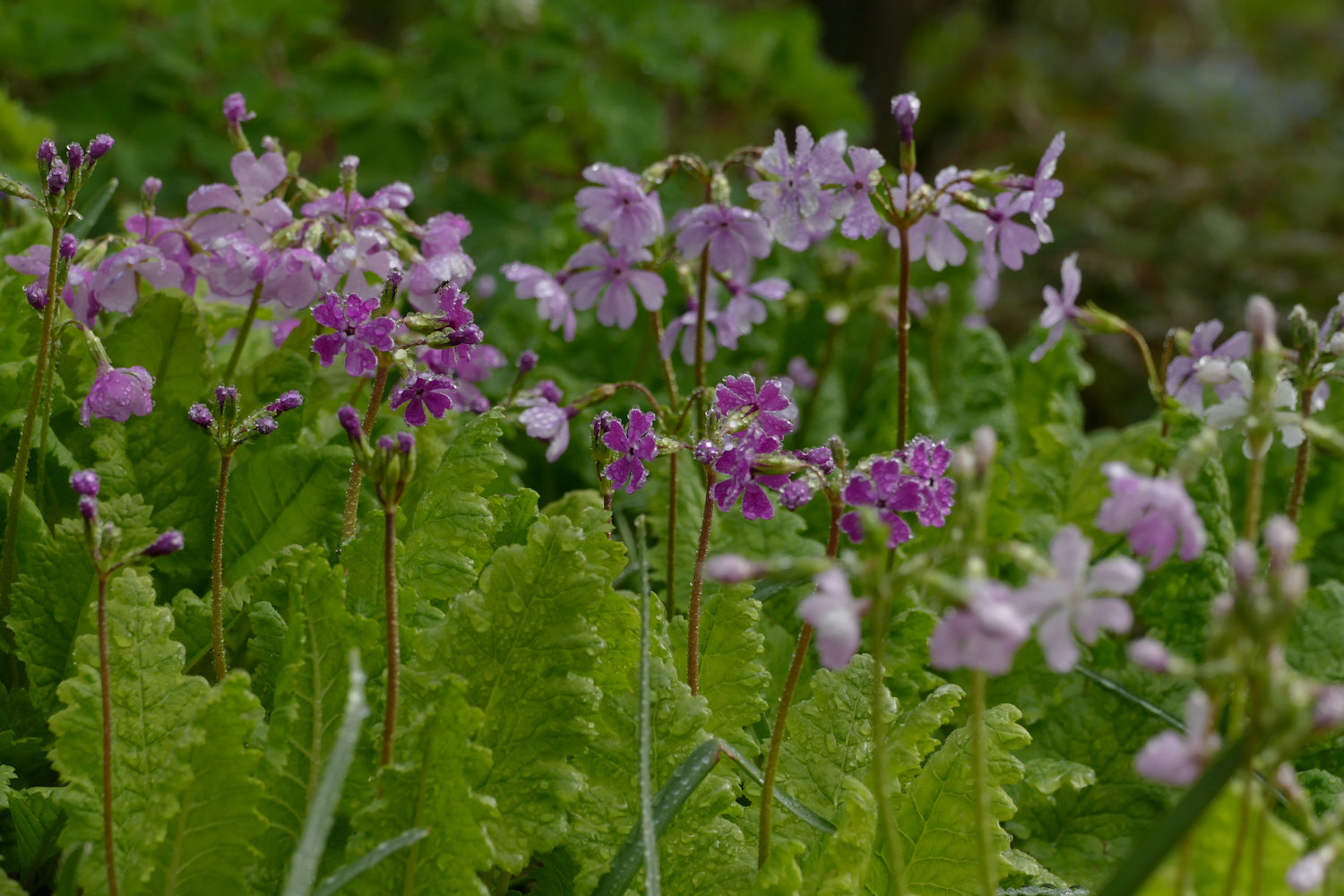
 his National Collection of Primula sieboldii (guess who liked these…) which were at their peak…
 … past the huge open plant sale area…
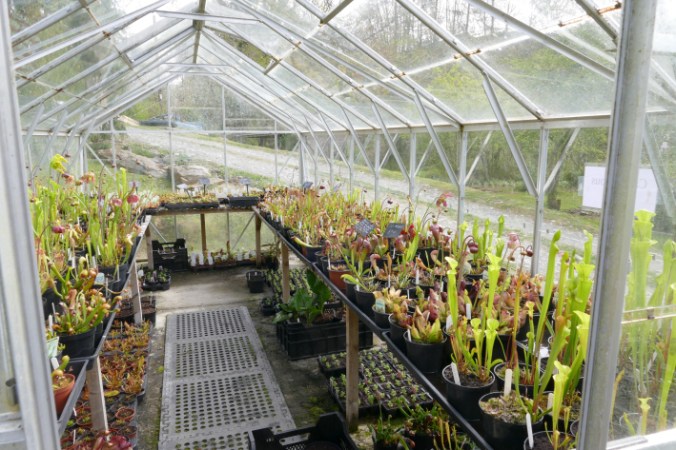
 … and then into the more recent tunnels holding a recently acquired National Collection of carnivorous Sarracenia, or pitcher plants.
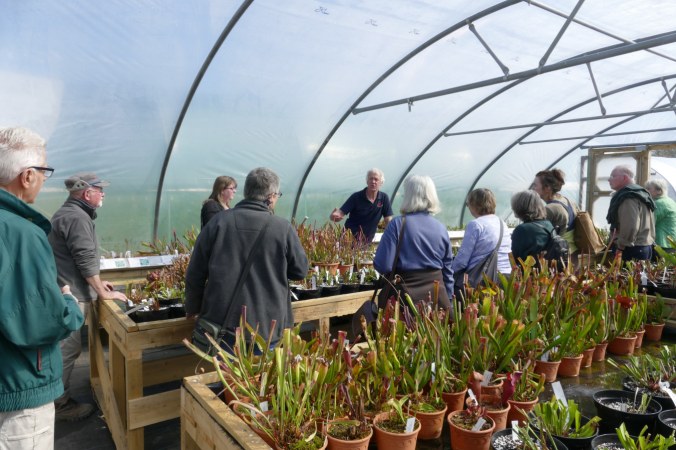 Richard and staff have recently been working on cutting back last year’s pitchers to allow room for the new growths and flowers. Along with making divisions which end up in a separate sales tunnel.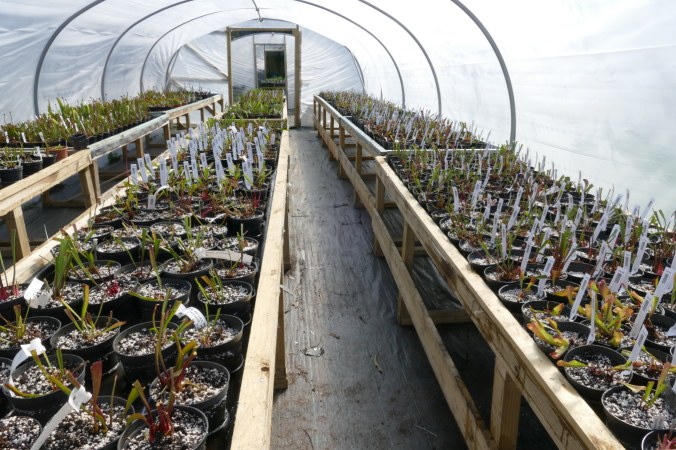

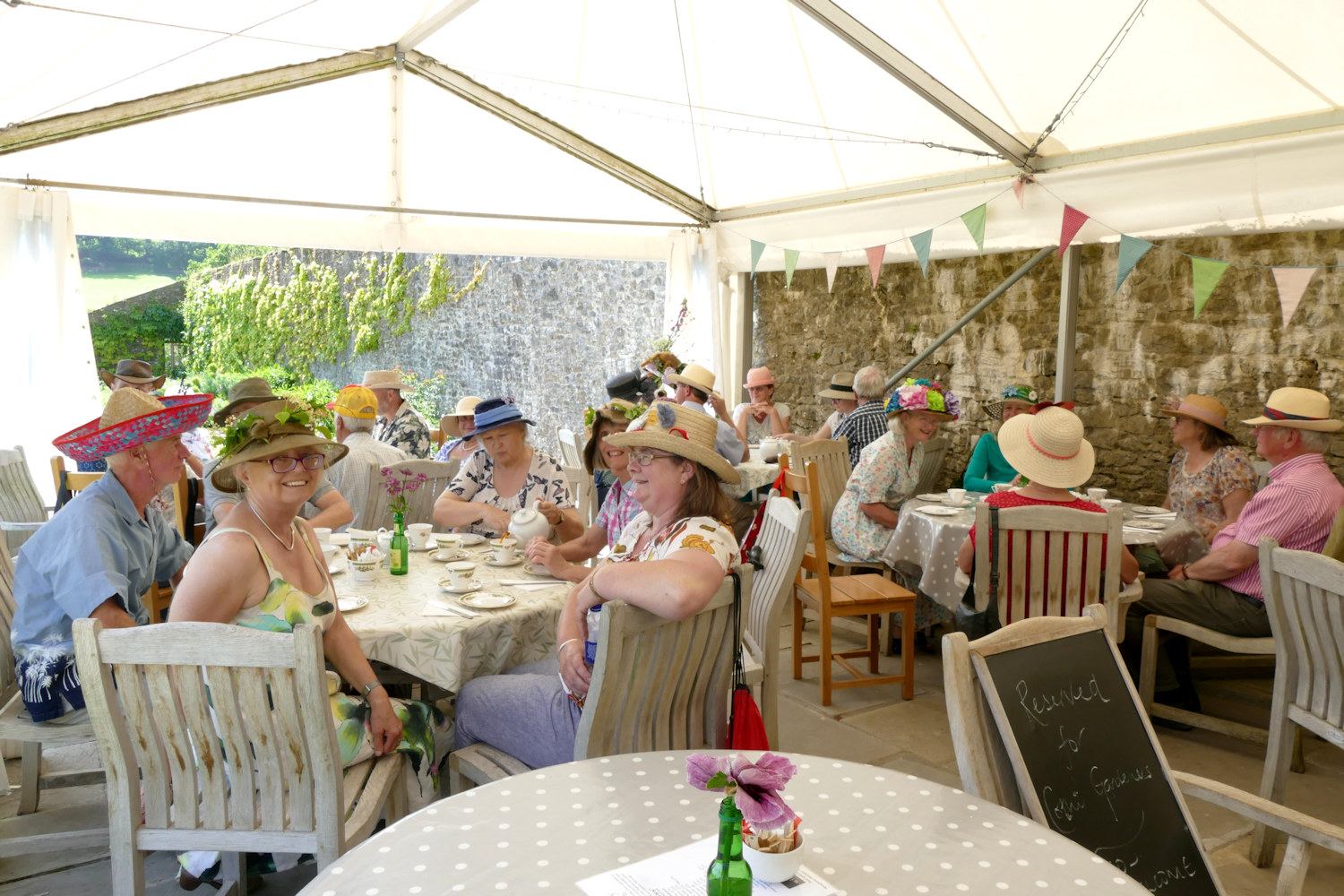
 … before back to the cafe for tea and cakes.



















 Cothi Gardeners