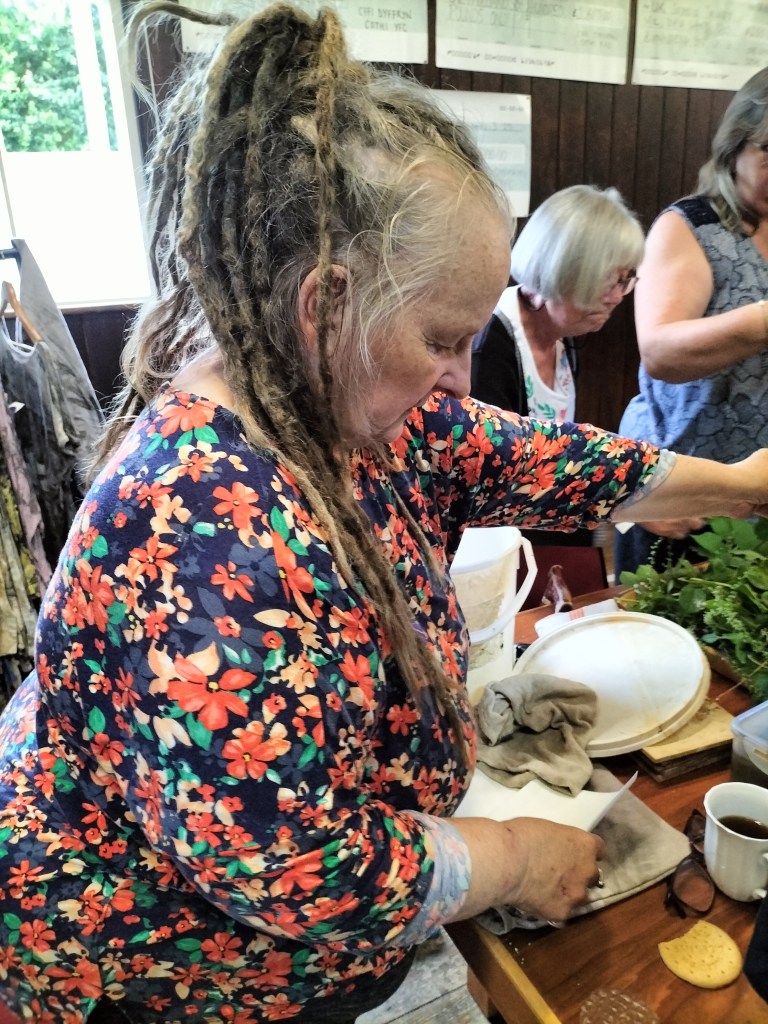
Julietis a mixed media artist who is fascinated by experimental processes. She is keen to pass on to others her skill and collected information about printing, and the workshop today particularly shows how eco printing (using 100% natural materials such as cotton, linen, wool and silk plus the organic materials which provide the patterns) can result in surprisingly beautiful artworks reflecting the diversity of nature, and can be done at home.
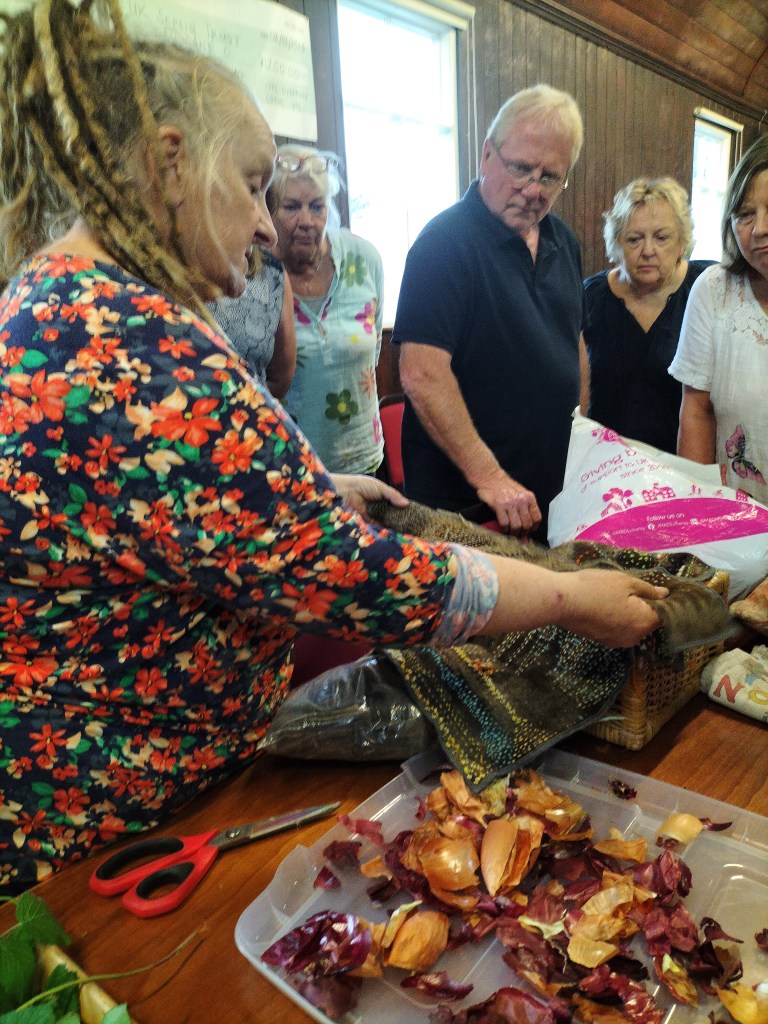
The chemicals normally used in printing on an industrial scale are harmful to the environment and thus to ourselves, both to use and dispose of. The fabric can be washed using a soap solution, without losing the colours or patterns and Juliet brought with her examples of blankets, scarves and items of clothing which she had made using her dyed fabrics, many obtained from charity shops.
Juliet first became involved in eco printing through the work of Nicola Brown who is the author of the book “Eco Printing in the Dirty Pot” which describes in detail the processes and endless possibilities of using this system.
In order to give it a try ourselves, she provided a wide variety of plant material, leaves, moss and onion skins etc. which we could use in our artworks. She provided us with squares of dampened paper about 6” x 6” on which we arranged our chosen bits of plants etc. These were then sandwiched, one on top of the other, in blocks of about 5 and placed between two ceramic tiles. At the end of the process, this meant that impressions would be seen on both sides of the paper.
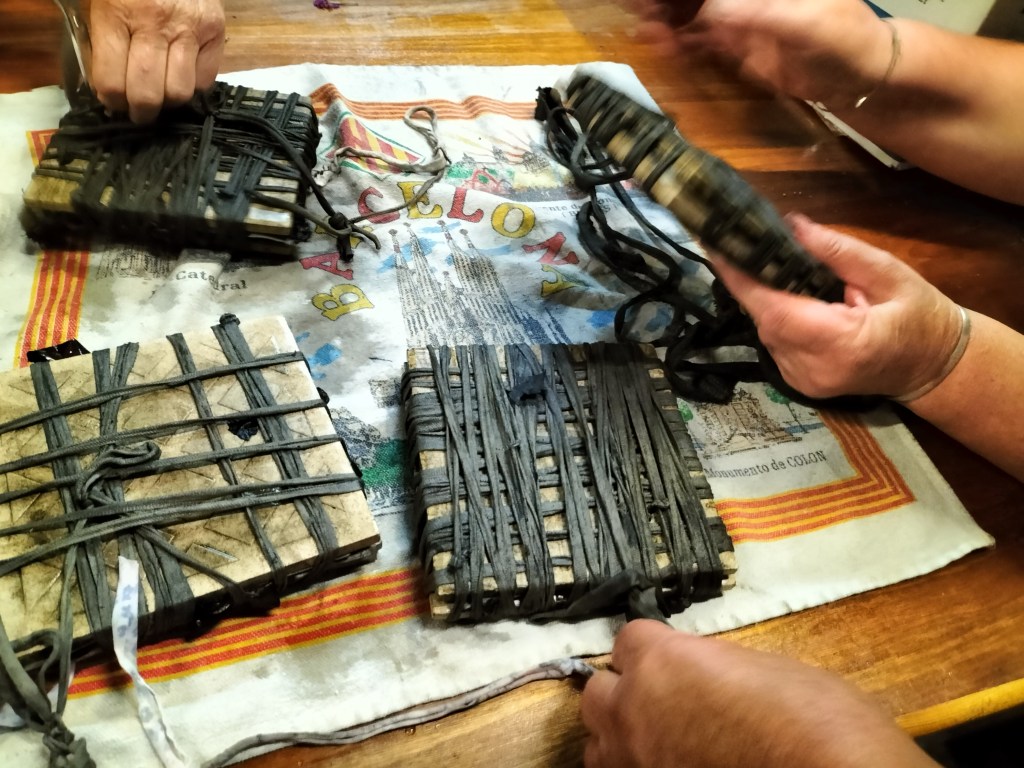
The tiles were then bound tightly together using strong fabric tape.The plant materials vary dependant on where they have come from and the results will depend on how well you know your area. For instance, an oak leaf from your local area will not give the same result as one from further away – weather, soil type and tannin content all make a difference.
A way of providing a different dimension is to wind cloth around a fairly chunky-sized copper pipe and then securing it with string which results in a tie-dyed effect.
We went outside for the next part. In an aluminium vessel (referred to as the Dirty Pot), the fluid which would fix or cure the images was boiling over a gas stove. This fluid comprised of Eucalyptus leaves and bark, with water and vinegar, plus some onion skins and bits of rusty metal. This was happily boiling away, much like a witch’s cauldron – it was a bit like nursery school on steroids. The artworks, which had been named, were then lowered into the pot, still sandwiched in the tiles, and left for one hour to cure.
Whilst we waited, we did some “slow stitching” – using lengths of different coloured wool to create patterns on pieces of eco dyed wool.
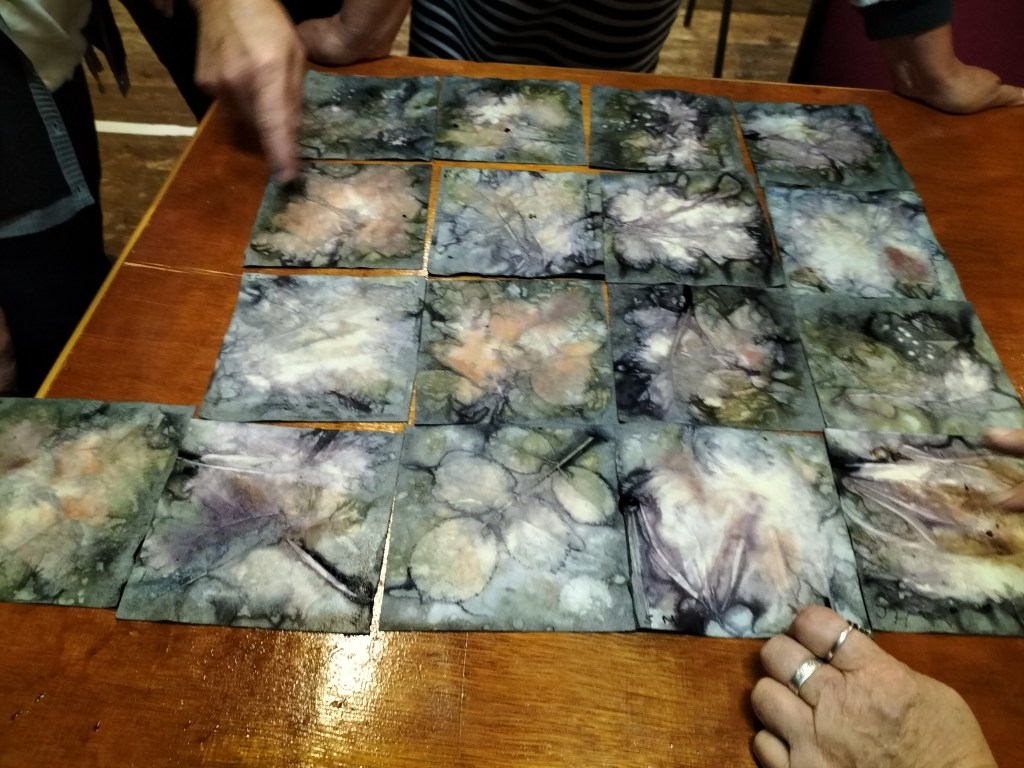
At the big reveal, we were amazed at the variety of the different shapes and the diversity of colours in the images and when this system is applied to natural fabrics. The fact that it can be washed and used as we do with the usual factory-dyed items is excellent and gave us all food for thought.
Juliet was thanked for her very interesting demonstration and talk.
Summer Social
Cothi Gardener members are reminded that our summer social this year will be Pizzas at The Plough at Felingwm, which is now owned by Joseph Atkin, who was the Head Gardener at Aberglasney Gardens. This will be on 20th August at 6pm, and Joseph will be giving us a talk on Dahlias. Car-sharing, where possible, is recommended.
On Friday, 18 April at 8pm BBC2 will be showing the next episode of ‘Gardener’s World’ which will feature a clip of Fiona and Julian’s garden Gelli Uchaf Garden showcasing their daffodils. If you can’t catch it on Friday, the programme is repeated at 9am on Saturday, 19 April. For those in the UK and with a TV licence you will also be able to watch it on iPlayer.
You can read about the filming in Julian’s blog post about daffodils, spring and lambing.
As a reminder, in 2025 Gelli Uchaf garden will be open for the NGS on the following weekends, for either 10.30 am or 2.30 pm arrival times:
April 19th and 20th May 24th and 25th June 14th and 15th July 5th and 6th
If you’d like to visit the garden in 2025 on one of the opening dates given above, then you need to email thegardenimpressionists@gmail.com, or phone: 01558 685119, giving at least 24 hour’s notice, to book a visit.
Paul and Liz O’Neill have been gardening at Llwyngarreg for 24 years, when they originally turned a field into a garden open to the public for the NGS with a variety of different environments: peat beds, azaleas and rhododendrons, a tropical bed with Tetrapanax and ginger lilies, a fritillary meadow, gravel beds creating a dry garden (see right), to mention just a few.
A soil map of Wales shows that generally the pH is about 6-6.5, so on the acidic side. Some plants are calciphile (lime-lovers), and others are calcifuge (lime-haters), and there are plenty in-between. But even then things are not so simple. Buddleja, honeysuckle, and ash are defined as being calciphile, but generally do well in Wales. This talk focuses on plants that must have or don’t mind a low pH soil, starting with trees and shrubs, and moving on to plants that grow beside or under them.
To start with – Rhododendrons, the plant that first triggered Paul’s interest in gardening. First come the species, considered to have ‘snob value’, compared to the ‘commoner’ hybrids. A lot of species rhododendrons originate from the Himalayas, but also from North America, and Europe, including Portugal (R. ponticum) and the Caucasus.
They generally come true from seed, which is how Paul has grown many of the species that he has, including R. calophytum (left), which over the years has made a huge plant. Species can take up to 20 years to flower if grown from seed – meriting a glass of champagne when one flowers for the first time! R. cinnabarinum is another favourite, this time grown from cuttings.
Hybrid rhododendrons come from crossing different species. They are generally tougher, easier to grow, and flower earlier in life. They are propagated by cuttings or layers. Paul’s favourite is R. ‘Pink Walloper’, while Liz’s is R. ‘Sappho’ (right) , a lovely old hybrid from Waterer’s Nursery in Surrey – the plant’s only fault is that it is a bit straggly.
Both species and hybrid rhododendrons hate having wet feet – so if you garden on clay soil, plant them on a bit of a mound.
Finally there are what we call the Azaleas (although they are of course Rhododendrons). They can be evergreen, such as R. ‘Hinomayo’ which forms a dense bush (so much so it can be pruned to shape with a hedge trimmer). They are also deciduous – R. luteum (left), from the Caucasus, with its scented yellow flowers and gorgeous autumn colour. The latter can tolerate really sticky grey clay, and Paul and Liz plant them on what they call the ‘killing grounds’ where many other plants won’t survive. R. occidentale, again scented, is from America.
Next come the Camellias. Over time, even in our environment, they can get large (in Cornwall they have been known to take the chainsaw to them!). Some examples Paul gave are C. ‘Donation’, C. ‘Debbie’, and C. ‘Jury’s Yellow’ (right).
Most magnolias want acid conditions – and they vary from huge trees to shrubs such as M. stellata. At Llwyngarreg one of the stars of the show is M. ‘Caerhays Surprise’, a magnificent hybrid bred at Caerhays Garden in Cornwall.
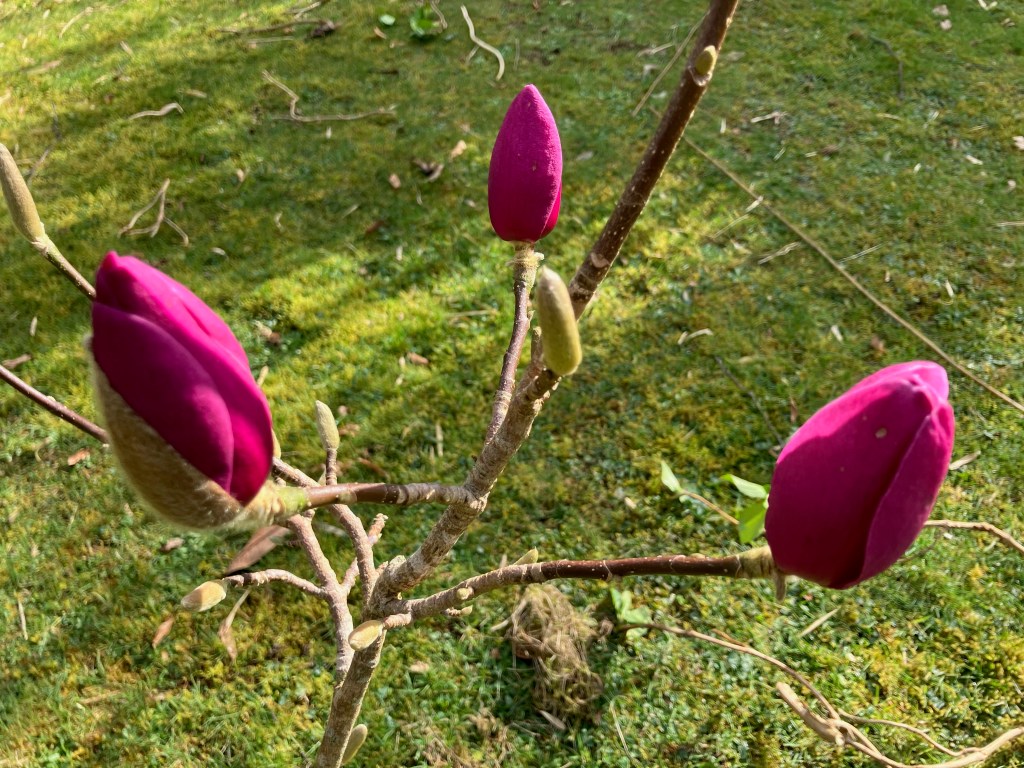
Another is M. ‘Black Tulip’ (left, in bud), a Mark Jury hybrid from New Zealand (which in addition to flowering in the spring can also flower again in September). M. loebneri ‘Merrill’ is pure white with a delicious coconut fragrance in the sun.
Another of the magnolias that Paul and Liz grow is M. ‘Yellow River’ (right), a lovely yellow flower, but as it is late the flowers can sometimes get lost among the emerging foliage. M. ‘Daphne’ is probably the yellowest of the Magnolias, but late, with the flowers coming out with the leaves. Paul recommends the Arboretum Wespelaar in Belgium as a place to see the many species and varieties of Magnolia.
Moving on to other shrubs, a hydrangea that not so many people are aware of is H. aspera subsp sargentiana, with large velvety leaves and lacy flowers which tolerates deep shade underneath beech trees. On the other side of the path from the Hydrangea is a mass of the ginger lily Cauttleya spicata ‘Robusta’, rather surprisingly also enjoying the shade.
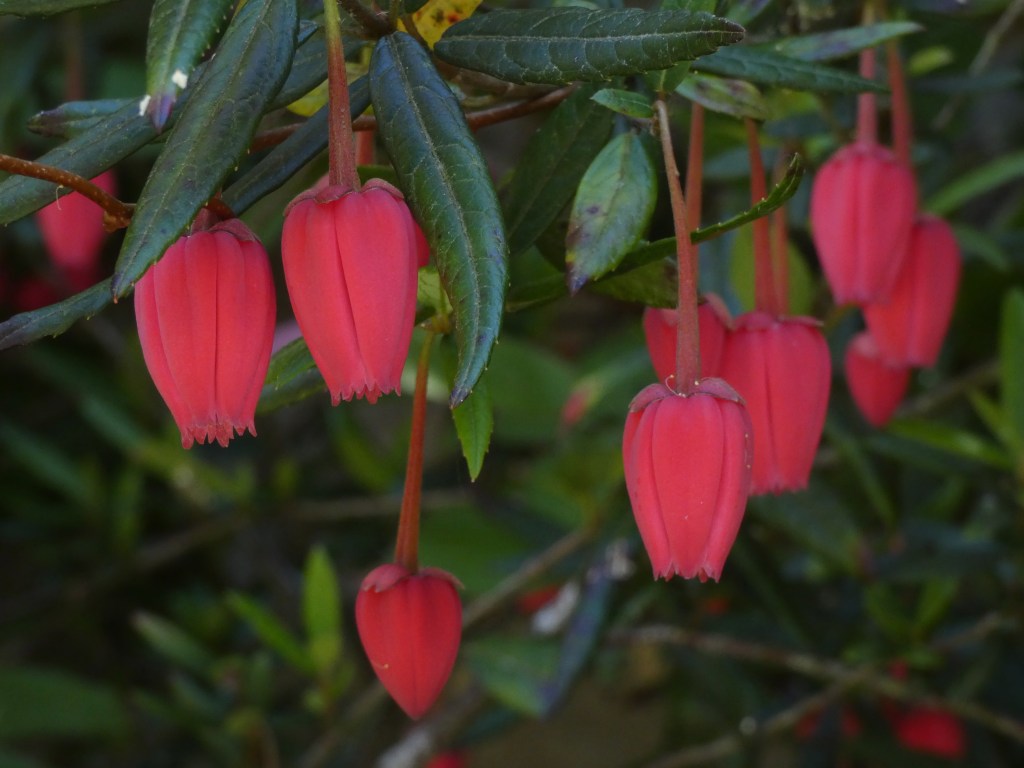
Crinodendron hookerianum has magnificent red bells in spring, and like many other acid-loving plants hails from Chile. There are also now other white and pink-flowered varieties, although they have not yet been tried at Llwyngarreg.
Paul and Liz started by planting trees at Llwyngarreg, including Parrotia persica (with tiny red flowers in late winter) and Nyssa sylvatica (the tupelo), both with fiery autumnal foliage.
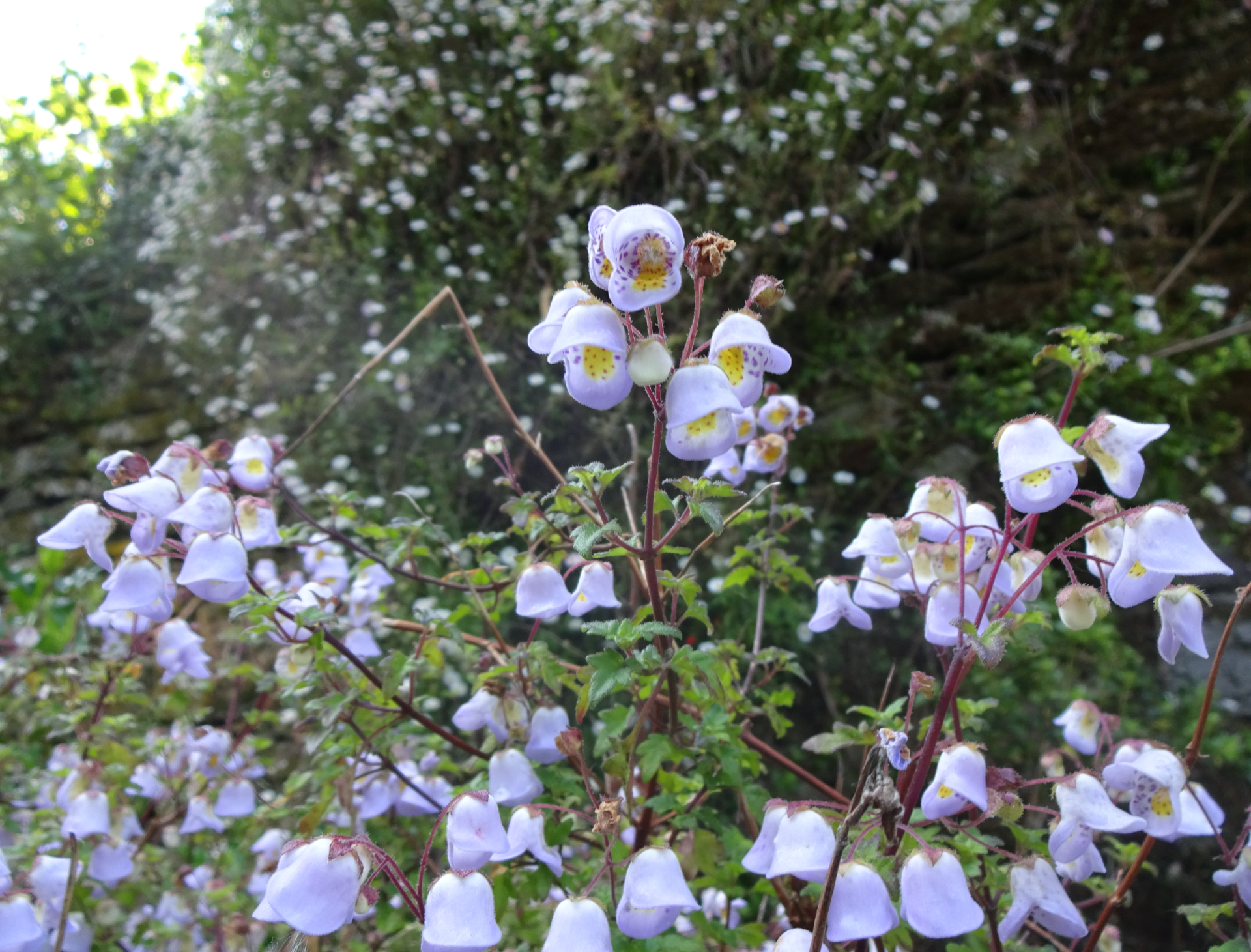
Eucryphia lucida ‘Ballerina’ is a small evergreen tree with lovely pink flowers in late summer, although here in west Wales we cannot grow the huge eucryphias (trunks like trees!) you see in Northern Ireland. Enkianthus campanulatus has small pink-tinged bells in the spring, with fantastic autumn colour. Jovellana violacea, a sub-shrub, has pale purple bell-shaped flowers with a yellow throat; also from Chile, Desfontainea spinosa has holly-like leaves and tubular red and yellow flowers, a lovely shrub, which in west Scotland can be a tree up to twenty feet tall. The latter is a true acid-lover and will die if it comes anywhere near an alkaline soil.
Jovellana violaceaDesfontainea spinosa
Moving on to climbers – the star of the show is Tropaeolum speciosum, a perennial nasturtium with red flowers and blue berries, renowned for growing very well in Scotland. It is often lost in gardens when first planted, because slugs graze it off.
Amongst perennials, Meconopsis, the Himalayan poppy, are perhaps the ultimate acid-lovers. They are definitely challenging to grow, and need a shady, damp bed with no sun. M. ‘Lingholm’ – the one to grow if you are only going to grow one type – used to seed around in the peat beds, but not so much any more as summers have become hotter and drier.
M. horridula, being monocarpic, takes three years to reach flowering size and then dies after flowering. So too does M. x complexa (it used to be called napaulensis), flowering red or yellow after two to three years.
Primula capitata (right), with its striking blue flowers, is a short-lived peat-lover of moist woodlands. It comes easily from seed if you sow the seed green and don’t cover it.
Another primula for a peat bed is P. flaccida – a lovely lavender blue but it is loved by vine weevil. P. ‘Arduaine’ has ice-blue flowers in January and February. P. poissonii is a candelabra primula which likes wet feet. P. viallii will grow in any soil, but thrives in a peat bed.
Roscoea ‘Harvington Evening Star’ is a dark purple. It comes up late in the year, and slugs don’t like it, always a bonus. It has a tendency to flop over, but it has a long flowering season from mid-Summer to October. Trilliums are invariably expensive to buy, but it is hard to understand why. Trillium luteum, for example, is easy to propagate by chopping it into small pieces, each with an eye, and replanting. Cypripedium, hardy slipper orchids, are gorgeous but difficult to grow, and always expensive.
Cardiocrinum giganteum, known as the giant Himalayan lily, is a truly impressive plant at up to 4m high with gloriously scented flowers (see left, with Liz). Slugs adore them so they can be difficult to grow for that reason. They produce masses of seed after flowering, but it takes seven years from seed to a flowering plant!
Gentians need moist, peaty soil, and also full sun. A good place to buy gentians is Aberconwy Nursery near Bodnant Gardens. G. asclepiadea is a great late summer plant and will tolerate light shade. Corydalis alata (blue flowers), C. flexuosa (blue flowers) and C. solida (purple flowers) are plants that need shade and moisture.
Two favourite plants in the lily family are Nomocharis alata, which requires moist peat, and Lilium mackliniae.
Podophyllum delavayi, P. ‘Spotty Dotty’ and P. ‘Kaleidoscope’ are plants for a moist and shady spot.
Myosotidium hortensia, the Chatham Island forget-me-not, is a challenging plant for acid soil, and unfortunately completely slug-delicious. It must have no sun at all.
At the very low ground level Paul and Liz plant Saxifraga stolonoifera, which makes huge mats of leaves covered in white flowers, and two Chilean plants – Asteranthera ovata, and Philesia magellanica which requires a pure acid soil.
Ginger lilies do surprising well – they prefer an acid soil but don’t have to have it. Hedychium edgeworthii (yellow) and H. ‘Tara’ (orange), produce some of the most exotic-looking flowers you can grow in the UK.
Other plants not requiring acid soilthat grow well at Llwyngarreg include Epimedium, lovely for its new foliage, and Aquilegia. Primula pulverulenta prefers a woodland environment rather than wet feet. Primula bulleyana (orange-yellow) and beesiana also do well. So too do Rodgersia podophyllum, which is easy to propagate, and Matteucia struthiopteris (the Ostrich fern).
At the time of this talk, the second half of March, some of the highlight plants in the garden at Llywngarreg are listed below:
Snakeshead fritillaries, which love wet grassland. Paul and Liz started with ten pots, over the years religiously collected the seed and sowed it – and now they have a whole fritillary meadow; sadly, Mr Badger has developed a taste for the fritillaries.
Ground cover in the form of Eomecon chionantha with poppy like white flowers from China, which can be quite a thug; also Maianthemum racemosum.
Rhododendron arboreum ‘Album’ is now starting to flower properly. So too is R. calophytum, which this year is much pinker in flower than it has been previously.
Magnolia ‘Caerhays Surprise’ (left), M. ‘Merrill’ and a large M. stellata, along with M. ‘Black Tulip’, which is a very reliable flowerer.
The talk concluded with a video of a dramatic burning of the Monocot bed, largely populated with Miscanthus but also Dierama. Paul and Liz have discovered that the simplest way to tidy up the grass beds is to cut down all the old foliage, and then set fire to the bed!!
In response to a question about tropical-looking plants that he would recommend, Paul suggested Tetrapanax papyrifera. It can be a little bit tender, and even though it was cut back by the hard frosts of December 2022, it has come back strongly. You need to be careful when handling it, as it has little brown hairs which make you cough badly. Paul also recommends cannas and hedychiums.
The talk was fast-paced, very informative, and delivered with lots of humour. The web editor, for one, came away with a long list of plants new to her to try in the garden. All those present were very appreciative and made a beeline for the plant sales table afterwards.
Llwyngarreg Garden is open for the NGS (which supports seven main and other guest charities) every day by appointment, but please check the website and ring beforehand.
Plant Sale for NGS Charities 12 May
John and Helen Brooks will be holding a plant sale for NGS Charities on Saturday, 12 May from 1pm at their garden Ty’r Maes, Ffarmers, Carmarthenshire, SA19 8JP. As usual there will be lots of plants for sale, to swap and to order online, all proceeds going to NGS Charities.
For our October meeting, three members of the Club volunteered to give short talks about their gardens ranging from borderline hardy shrubs and perennials to ponds.
Sheena’s Borderline Hardy Trees and Shrubs
Sheena’s garden is situated at 700’ with a northwest aspect; it has evolved over the years from a field to a garden where shrubs and trees are the main focus. There have been successes and failures with plants that might be considered to be borderline hardy in this area. The soil in the garden is acidic, and most of the plants featured, with the exception of the first, are ericaceous; they are all more-or-less evergreen.
Borinda papyrifera is one of the bamboos from Yunnan that has survived (just!). Borinda lushuianensis (originally known as Yunnan 4, much simpler to pronounce) did not survive any quite mild winters here, but B. papyrifera has proved to be tougher.
Said to be hardy to -14°C to -16°C, as a small plant it did not come through the very hard winter of 2010-11. We decided to give it one more chance, and by 2020 (above) it had made an impressive specimen in the garden.
December 2022 saw some fairly low temperatures in our area, certainly into double figures below freezing. It became clear that B. papyrifera had suffered badly, and initially Sheena wasn’t sure it would survive – but it has, and developed a number of new shoots this year, although it may be a few years before it recovers to the size that it was. The young canes are a powdery blue-grey initially, maturing to olive green, with large silvery-buff sheaths, and develop up to a height of 7m. If you have the space, it is definitely a ‘statement’ plant.
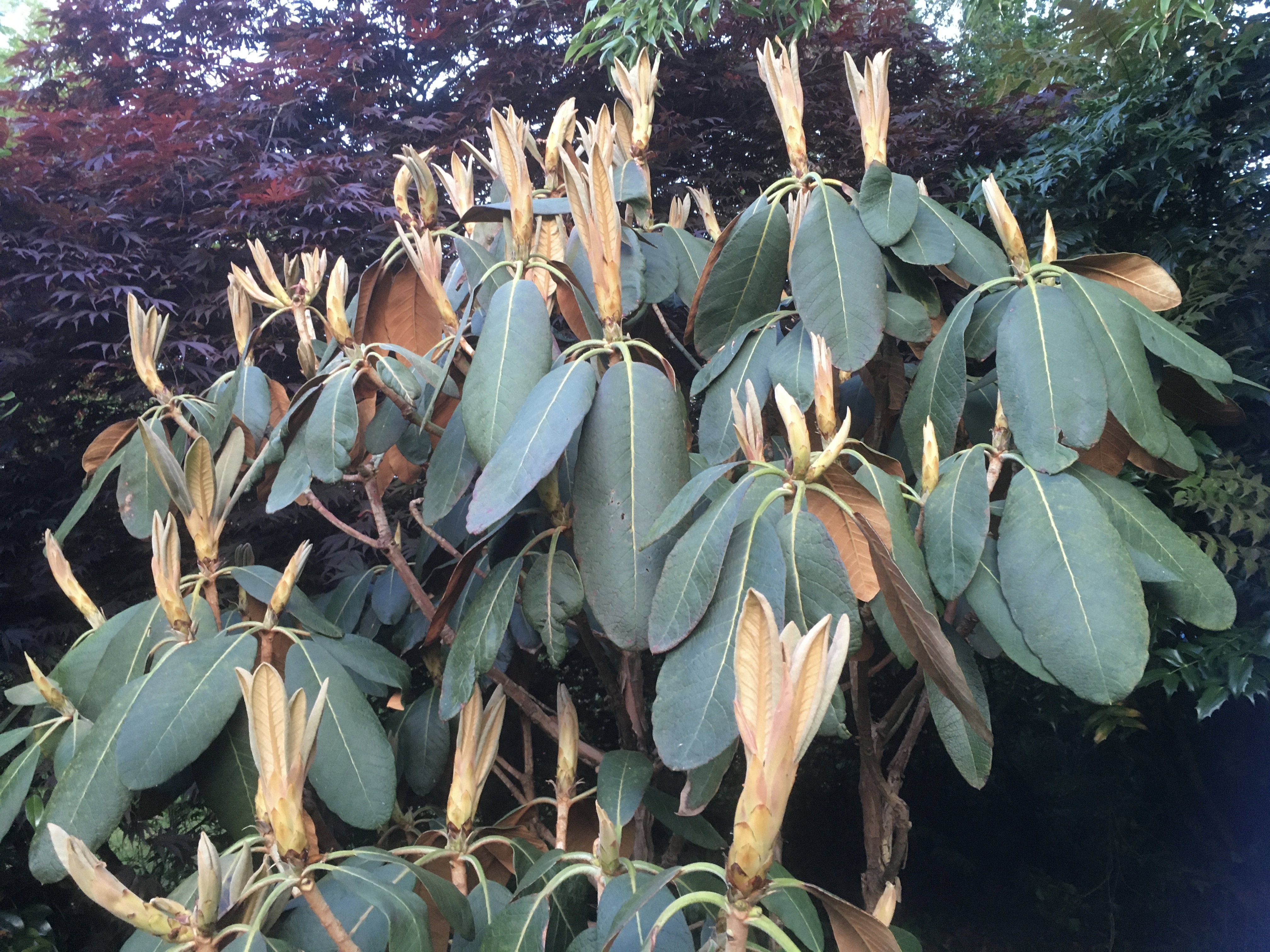
Of the large-leaved rhododendrons, R. falconeri has proved to be the hardiest (it has not suffered in even the coldest temperatures while others, such as R. sinogrande, have). It is a striking plant, with leathery dark green leaves, fawn indumentum when the leaves emerge, deepening to a rusty colour on the underside of the leaves, peeling pinky-brown stems and pale yellow flowers with a maroon blotch. It has not been extremely floriferous here, but the young leaves make up for that as they emerge.
The west wall of the house is the only place where Crinodendron hookerianum has proved happy, and it is now a very large plant. It has elongated dark green leaves and lantern-shaped crimson flowers are suspended from its branches in May, giving the shrub its name of the lantern tree. In our part of the country, it definitely requires a sheltered position.
Another red-flowered plant, this time with bright scarlet flowers, is Embothrium coccineum, which takes over from the Crinodendron flowering in late May and June. It is an evergreen or semi-evergreen small tree with clusters of bright scarlet tubular flowers (hence its name of the Chilean firebush). It has not proved to be very long-lived in the garden (Sheena thinks that late frosts in May were the culprit).
A replacement, a sucker from her parents’ garden, even though still quite small, came through last winter unscathed, even though it is said to be hardy to -5°C to -10°C.
Finally, Eucryphia x intermedia ‘Rostrevor’ is a hybrid between E. glutinosa and E. lucida, which originated in Co. Down. It forms a columnar, evergreen small tree which bearing masses of scented white flowers abuzz with insects; its flowering period of late summer makes it particularly valuable in the garden, and this variety has proved to be very hardy.
Sally’s New Garden with Hardy Perennials and Grasses
After studying painting Sally at college, Sally practised as an artist for 10 years. She was influenced by medieval depictions of the flowery mead in her later work. Gardening became Sally’s main interest after moving to a house with a big garden in Oxfordshire. For ten years she ran a specialist plant nursery, with most of the plants grown from cuttings or seeds, selling out at Rare Plant Fairs, Specialist Plant Fairs and Yellow Book Gardens among others. A few years ago she moved to the Cothi Gardeners area and began to develop her new garden from scratch, focussing on hardy perennials. She has a greenhouse where she propagates perennials from seed and cuttings. To the south of the house is a border 15m long and 5m deep. Huge stumps of C. leylandii had to be removed by a tree surgeon to be able to make best use of this space. The soil is deep and rich, quite a contrast to the heavy clay in Oxfordshire.
The garden to the rear is north-facing and exposed, backing onto set-aside land with plenty of wild flowers. In this area in 2021 Sally decided to try a no-dig flowerbed which she planted up exclusively from seeds and cuttings she had raised herself.
The no-dig bed was created by laying down cardboard, adding compost and cut material on top. It has been a great success and become a varied tapestry of perennials.
In her gardening style, Sally has been very inspired by Piet Oudolf and his use of perennials and grasses, and plants particularly to attract pollinators. She gardens exclusively organically, and uses only peat-free compost. She doesn’t water plants after two weeks have passed since planting, unless a plant dehydrates completely.
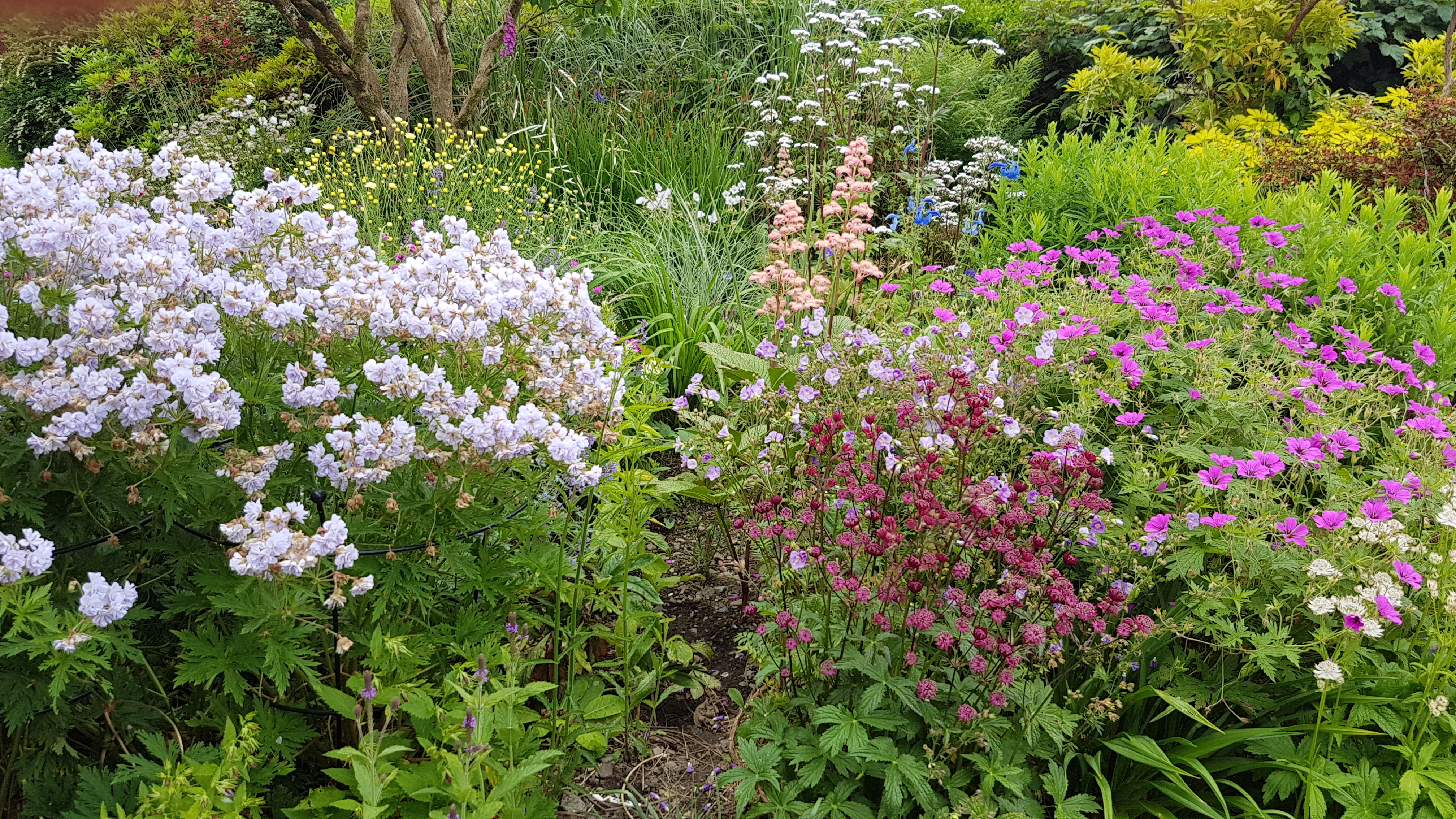
Sally showed us many pictures from her garden of beautiful combinations of hardy perennials and grasses. A group of plants Sally uses widely are the hardy geraniums – including G. ‘Patricia’, G. pratense, G renardii, G. ‘Rozanne’ (which flowers from May to October), and G. ‘Cloud Nine’ raised by Helen Warrington of local Ty Cwm Nursery. The latter is extremely floriferous over a long period, and the bees have an unusual trick to get at the pollen, by making a hole on the underside of the first petal layer.
G. ‘Cloud Nine’ with G. ‘Patricia’ and Astrantia ‘Buckland’
Among the grasses are Miscanthus ‘Morning Light’, which as the name suggests catches the light beautifully, and Miscanthus malepartum, which is extremely tough. Molinia caerulea ‘Transparent’ is another favourite, as it stays small in the border until mid-summer, but then shoots up with stems as much as 8 feet tall, making a real statement without taking up too much space.
Deschampsia cespitosa with Geranium ‘Rozanne’
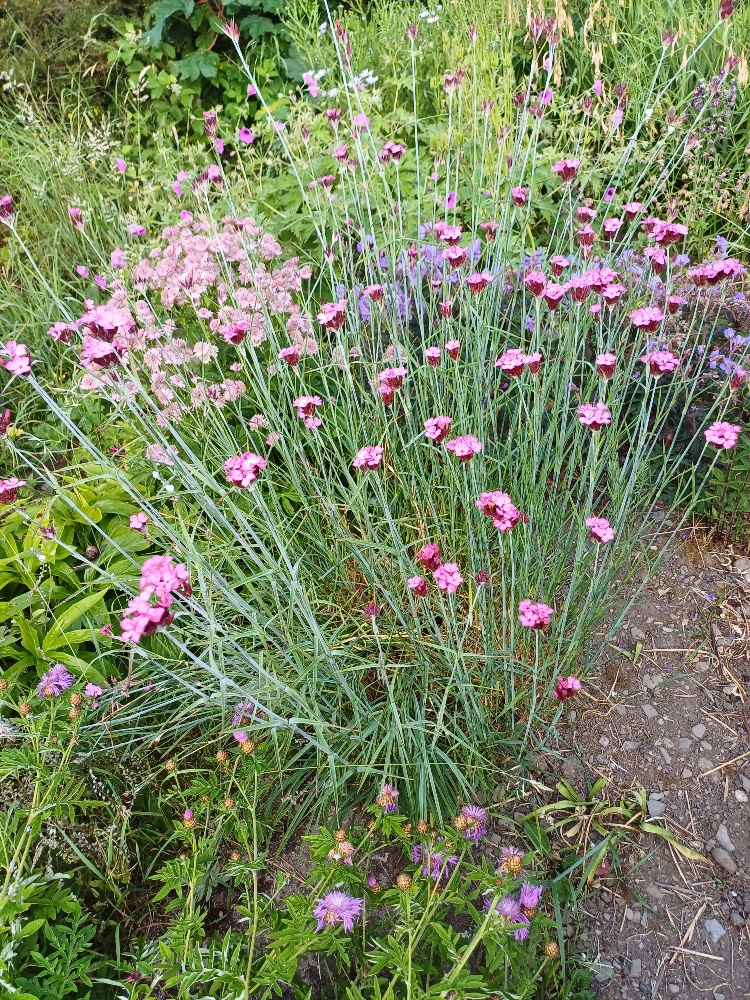
Sally has particular praise for Dianthus carthusianorum, with its single pink flowers held on tall stems above narrow, grassy, grey-green leaves; it flowers all summer long.
Other perennials that Sally uses include Salvia ‘Purple Rain’, Papaver ‘Royal Chocolate Distinction’, Asphodeline luteum, Phlox ‘Hesperis’ (with violet flowers that become almost luminous at night), Salvia uliginosa, Salvia turkestanica, Knautia macedonica, Morina longifolia (hailing from Tibet), Centaurea ‘Pulchra Major’ and Selenium wallichianum.
A beautiful grouping of plants from Sally’s garden
Elena’s Tropical Pond in Wales
Twelve years ago Elena moved from Trinidad to the Cothi Gardeners area – where the climate and vegetation couldn’t be more different! There was an unused patch of grass in her garden, with just 4 daffodils and half-a-dozen bluebells, which she had been considering turning into a ‘tropical pond’. The site is exposed to the north and the east, and on top of a rubble heap – not promising! Then along came lockdown in 2020, creating an opportunity, and providing a much-needed focus for activity.
The first step was to lay the outline of the pond with twigs on the grass. Then Elena dug up from her garden and divided any plants with tropical-looking foliage. She also scavenged what she could from friends.
But, in lockdown, where to get the materials? James, Elena’s next-door neighbour, came to the rescue. He supplied both the butyl liner, and the soft cushioning layer. He also borrowed a mini-digger to dig the pond.
Even with the mini-digger, the spoil heap proved to be a tough proposition – the pond became shallower, and shallower… Elena collected the stones for the pond, to hide the butyl liner, from the small stream which runs along the boundary of the garden. More of the butyl liner was used to create a bog garden to one side of the pond. Lifting the canopy on the sycamore trees has been effective, giving the stems a tropical appearance.
Then Elena spent hours placing pots in and around the pond, and the next thing the pond needed was a waterfall. Lockdown again turned out to be the provider, as Farmyard Nurseries had been clearing out their sheds and discovered a water fountain – just what was needed!
What of the plants? They include a Banana (which stays out all year, wrapped in the winter), Gunnera, Persicaria (which was gifted as a bunch and distributed about under the stones), watercress (also from a friend), Macleaya and even a carnivorous plant (which also overwinters!). Gingers (Hedychium) also are surprising and beautiful plants in this environment. Houseplants are brought out for a summer holiday, including Hibiscus and Bougainvillea.
Gravel has been put down around the pond, joining to the existing path, which has been lined with trellis screens bought online. At the base are ferns, which have proved to be very hardy. Hostas have been hung in pots from the tree adjoining the path, and stumps have filled with thyme and evergreen ferns.
It is just a tiny pond, but it attracted so much wildlife, almost immediately: birds, snails, dragon- and damsel-flies, frogs, toads, newts and lots of hedgehogs. The frogs come in huge numbers, as Elena and her grandchildren discovered in the spring when they went down to the pond at night to explore!
Around the pond the hedges have really thickened up, and the planting has become lusher and lusher. Many plants have died, but lots have survived. Making the pond has been an enjoyable journey; the tropical feel of the pond reminds Elena of Trinidad and the plants of gardening friends old and new.
Neighbour James, who came to the rescue with materials, with his daughters by what is now a very tropical-looking pondBench with bling
John’s October Plant Sale
John and Helen held a very well-attended plant sale for NGS charities in early October, which has so far raised a sum of over £1000 for the charities. This figure will rise as there are plants still to be delivered and collected. John and Helen would like to thank all those who contributed plants, bought plants and helped out on the day. The autumn plant sale has been so successful they may well hold another sale in the spring of next year – so watch this space…
I’m guessing most of us Cothigardeners view November as one of the quietest times in the garden. The weather’s often poor, the light levels dim and the days short.
So great to have some pictures and words from Elena showing what she’s been up to …
Been spending my days preparing some new beds … while spending my evenings buried in garden porn … changing my mind constantly about what to plant.
A wonderful moment of evening light reflecting on the last of the autumn colour on our trees, looking across the meadow to the river.
Elena has also forwarded on this confirmation from the NGS Great Garden Party Just Giving Website of the brilliant Cothigardeners’ donations arising from September’s 4 garden parties. Shown below:
A great effort by all considering that the total raised was about £12,000 nationally apart from the amazing effort by the CEO George Plumptre who raised a further £12,000 from a raffle he organised. Very sadly a lot of other parties were stymied by Covid restrictions introduced in mid September.
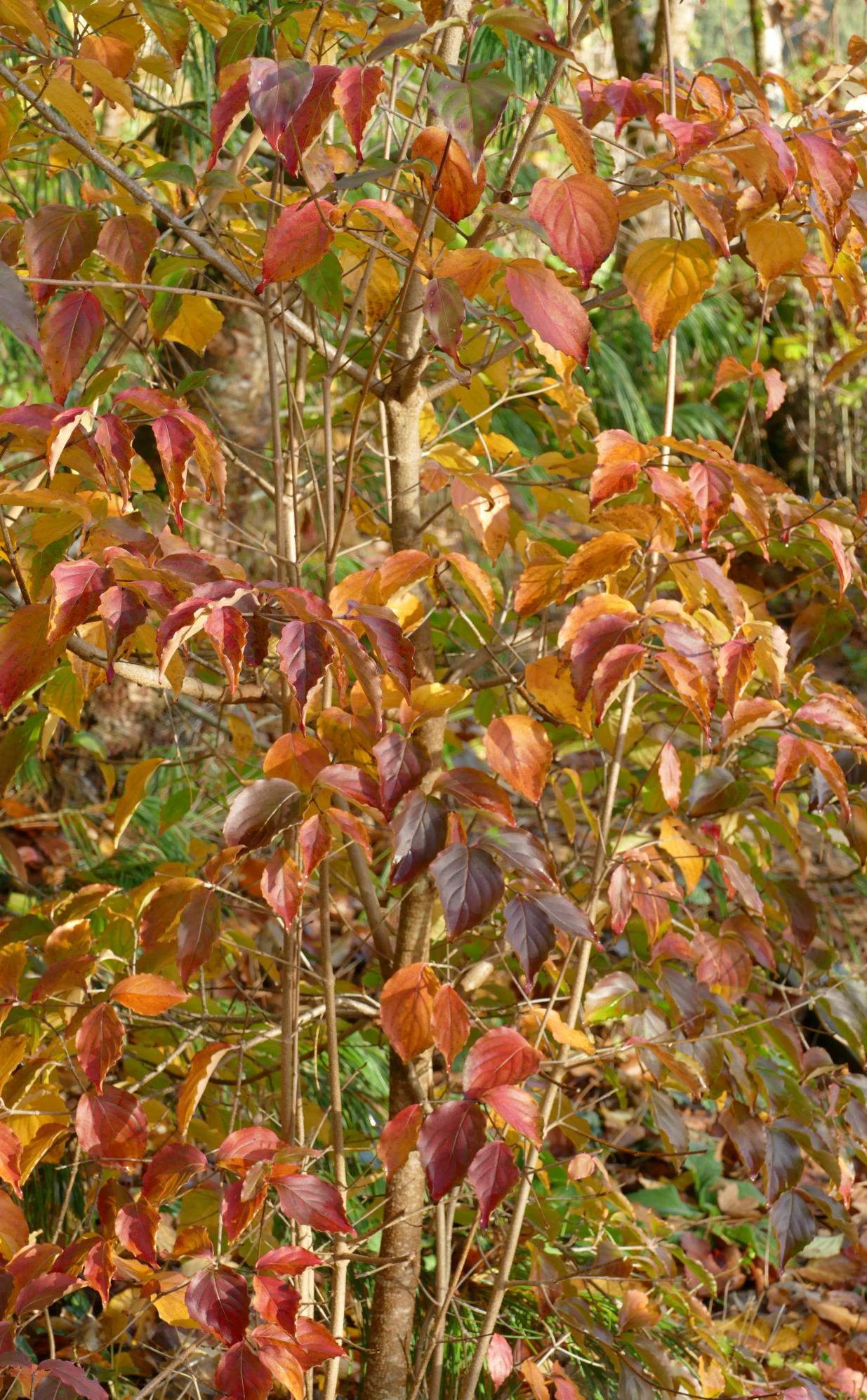
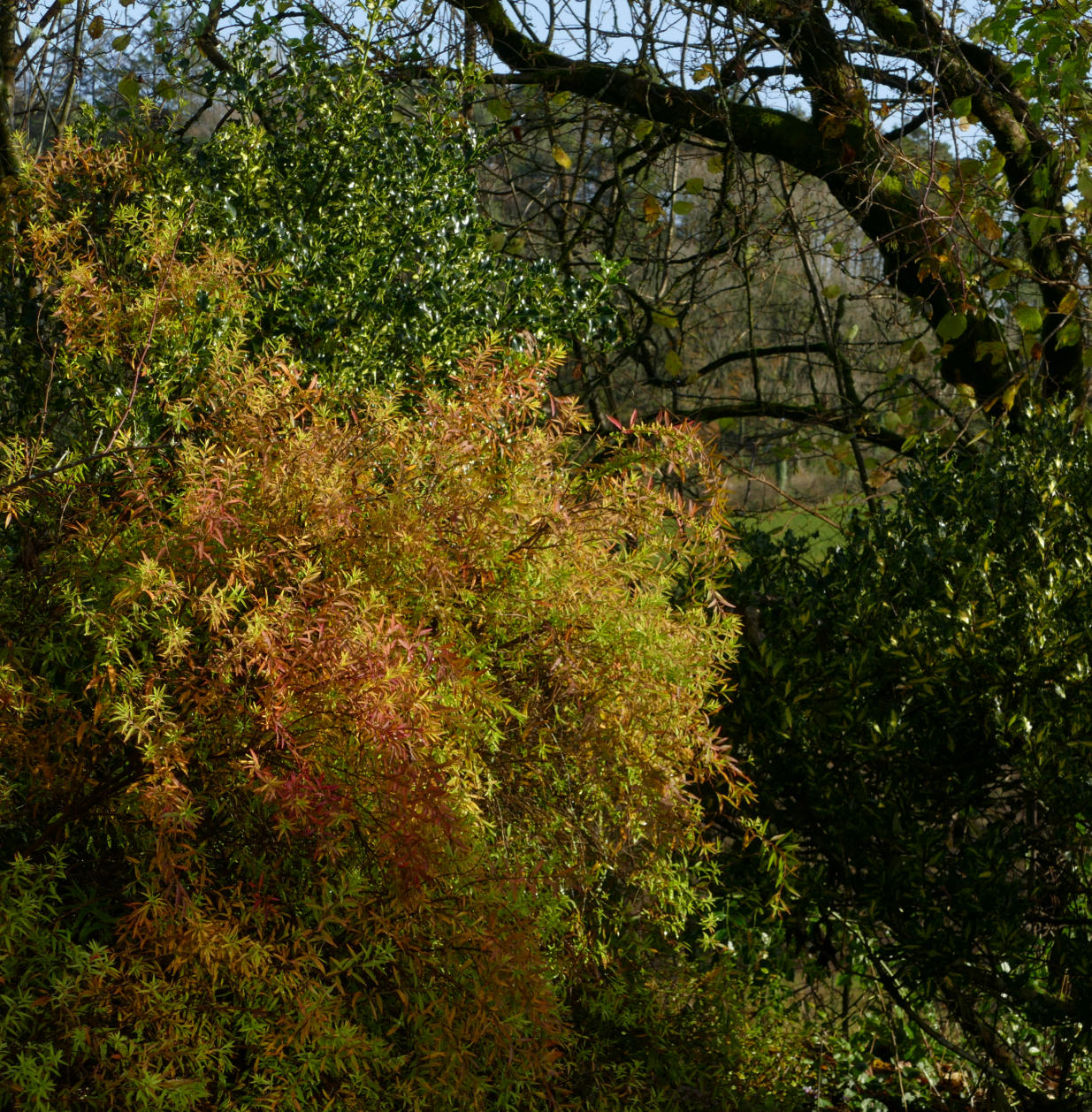
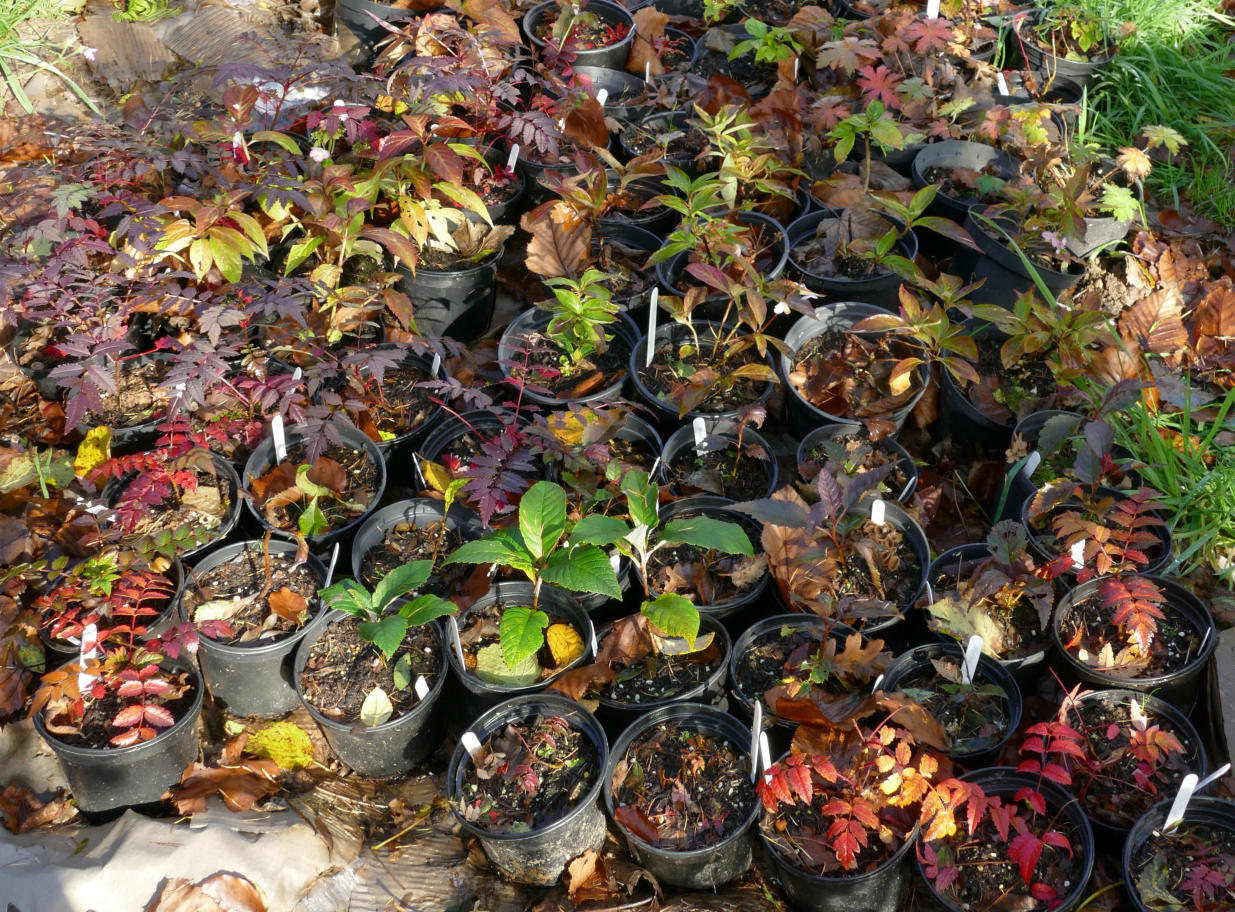
November always seems a time of mundane tidying up jobs with us, before the first of the spring bulb shoots push through which is already happening mid month. But there’s still some autumn leaf colour around, and always valued as being the last leaves to fall.
A Cornus kousa chinensis grown from seed (top); a Golden Spirea, and below some of the Hergest Croft trip Sorbus seedlings, showing signs of great potential autumn colour for years ahead.
But once all the leaves have fallen it really leaves the bones of the garden and the evergreen plants.
What to do with these as they grow bigger over time, and tend to merge as, typically, we’ve probably planted some of them too close together?
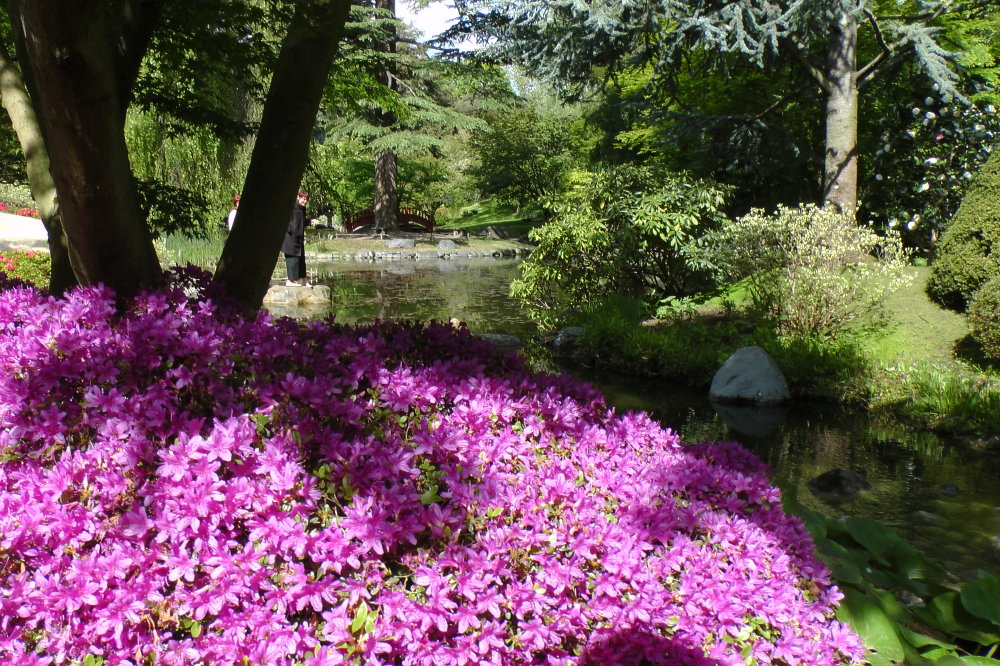
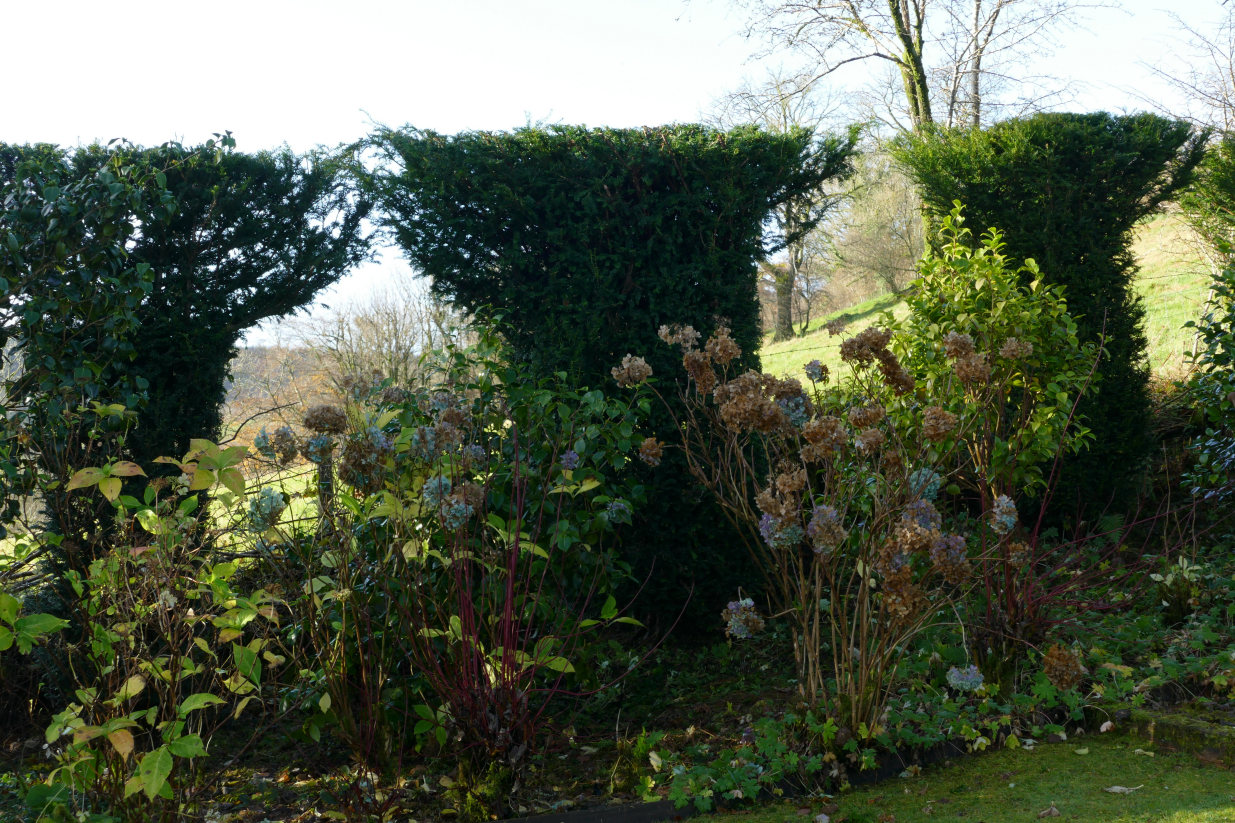
Well this stunning garden, below, which we were fortunate to visit in Paris a few years back in autumn and then in early May, had some beautifully cloud pruned Camellias, and a very Japanese feel to areas of it:
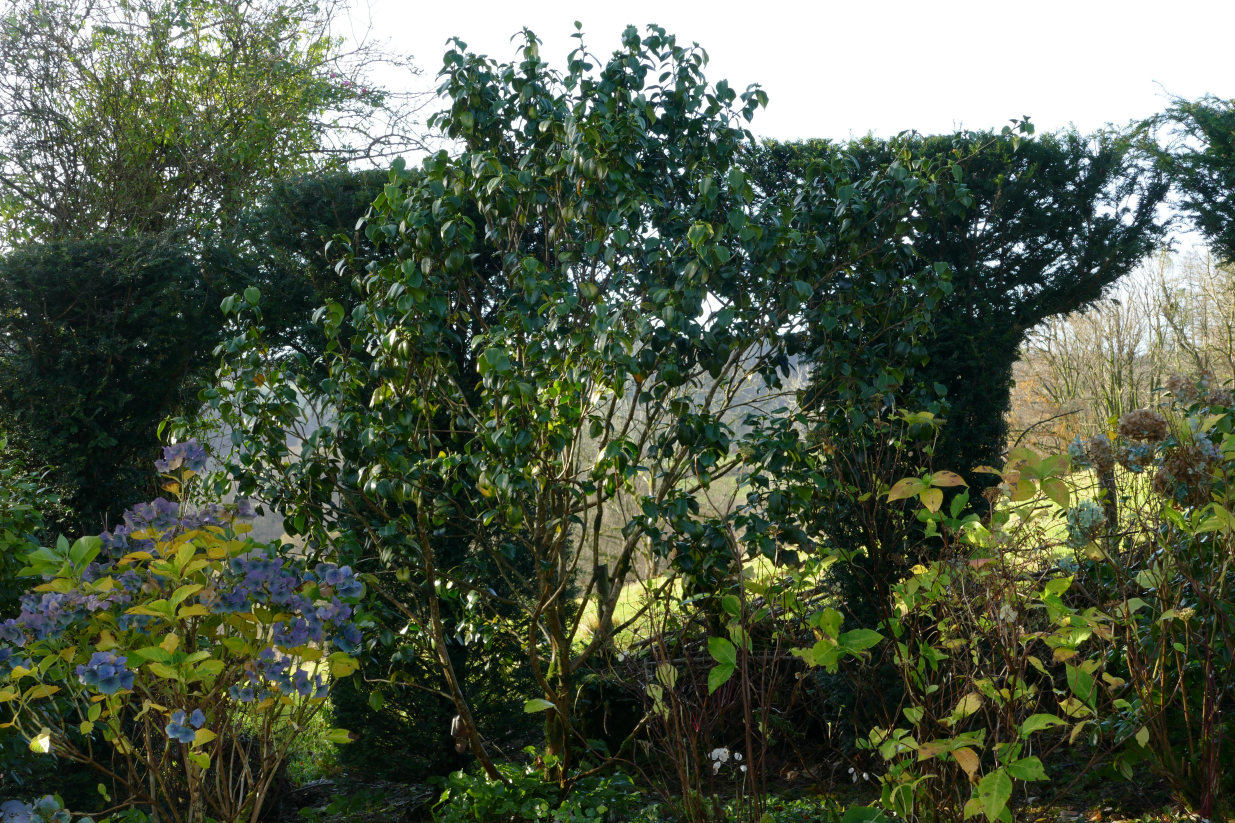
So at last after over a decade of slow growth, I thought I’d have a go with a bit of cloud pruning on some of our Camellias , which are at last becoming quite dense foliage shrubs for most of the year, when they’re not in flower, and frankly not that visually interesting like this.
Before beginning any work I found myself back at the website of the amazing Tikorangi garden in New Zealand, and in particular this article by the owner Abbie Jury” In praise of Pruning”. Click here.
She quotes the advice of gardener, sculptor and retired florist, David Anyon : He “emphasises that what he does isn’t pruning so much as shaping, to create mood and drama. He’s convinced that if more gardeners got stuck into a little clipping and shaping of their trees and shrubs from the outset, it would help to prevent mish-mashed jungles.”
In turn she also writes the piece below, which struck a chord with us since our garden has now moved past the newly planted feel in quite a few areas. I’m guessing this may also apply to some other members who’ve now been gardening in the same place for quite some time.
“As the plants grow and start to compete for more space, often intertwining and encroaching on their neighbours, the whole effect starts to meld into the mishmash referred to by David.
A very different set of skills are needed to take the garden to its next level of maturity – lifting the skirts of larger plants to expose the trunks, creating layers, thinning, shaping, changing some of the underplanting to meet different conditions for starters.”
She also adds :
David Anyon also refers to what he calls ‘defuzzing’ – removing little twiggy bits and dead bits from branches of larger plants. He sees it as making for cleaner, more attractive trunks and framing small spaces and vistas in the garden. I couldn’t agree more. This defuzzing is, I decided a while ago, one of the most satisfying and fun aspects of gardening. You can’t defuzz in young, juvenile gardens- there is not enough to defuzz. But it has a most rewarding impact in an older garden.
So I’ve just discovered I really agree with this advice! It’s actually a very satisfying benign way to spend an hour or two, even in the poor light and rain of late autumn and early winter, working over some of the denser evergreen Camellias to expose a few bare branches and let a little more light into the lower levels. I guess there are other evergreens which would benefit, though the defuzzing and raising of the canopy works just as well with smaller deciduous shrubs or trees, like Acers, as they get a bit bigger. (Albert Khan views again below …)
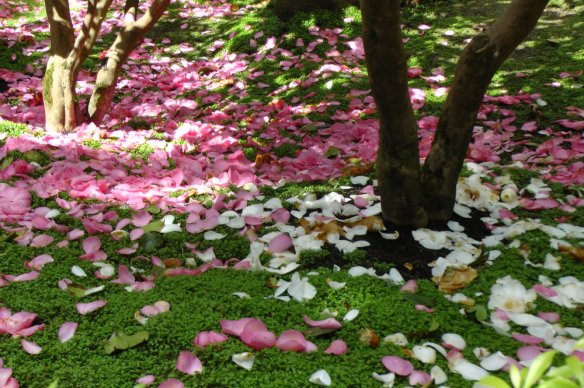
So maybe something others might fancy trying out? Rather like thinning apples, it’s a bit of a wrench to cut off healthy stems with developing flower buds, so it’ll be a gradual process over a year or two I guess. But you’re only likely to achieve the sort of gorgeous effect I photographed at Albert Khan below if you do, by allowing light and petals to reach beneath the flower laden branches, and lie amongst the bare trunks.
So a stunning scene of (early May) beauty to reflect on as we near the end of the year. (Many thanks to Fiona for some of these photos from our trips)
It was lovely to hear from Moira very recently that she was able to join Joseph Atkins, Aberglasney’s head gardener, who has very kindly planted a newish New Zealand cultivar of Magnolia – Tikitere, in memory of her husband Keith Brown, in the gardens, behind the mansion. In due course a label will record the dedication of the tree in Keith’s memory, so a wonderfully fitting memorial for a great Carmarthenshire gardener and friend of many of us in Cothigardeners, who passed away earlier in the year. Many thanks for Moira’s permission to include her photos:
For anyone wanting to see what Magnolia Tikitere looks like in flower, here’s a glowing short tribute to its merits from Charles Williams, the owner of Caerhays gardens in Cornwall. Click here to view.
Finally, as always, it would be lovely to hear from any members about their favourite plants, or things in their gardens as we go through the next few winter months. It doesn’t look like physical meetings will still be possible anytime soon, so if you want to read about other member’s gardens, then do send me something!
Why not write even just a few words – it’s a great way to keep the grey cells working, and send an image or two, preferably resized down to less than 1 MB? I can’t promise to put everything up online immediately, but usually within a fortnight, and it’s another way of keeping in touch and passing on information.
Time flies and a couple of short walking breaks for us in September and early October means I haven’t updated members on the outcome of the garden parties which were held early in September, so here goes!
Elena collated all the information, so many thanks to her for doing this and passing it on, and in the end the four events raised a total of £560, which we all agreed to donate exclusively to Marie Curie since they took such good care of Dave, Avril and family at the end of his life. The sums raised were as follows…
Ros & Mark £65
Fiona & Julian £100
Elena £165
Helen & John £230
Given that the total raised across the UK from this NGS conceived event was a little under £40,000, of which a massive £12, 000 was down to the efforts of the charity’s CEO, George Plumtre ( click here for more feedback), this represents a great achievement by our small club, so many thanks to all who were involved in any way. Andy, our treasurer has arranged to make the payment direct to Marie Curie.
As well as the money raised, the events proved to be a most welcome chance to meet up and chat, as some of the feedback comments from those present illustrate…
Having deprived ourselves of human company for almost six months, we accepted the kind invitation to a garden party with a degree of trepidation. With masks and gloves at the ready, we set off on what seemed like a marathon journey of some 20 miles – the furthest we had ventured since March! We were lucky…. the sun was shining, the roads quiet and the houses, fields and woodlands reassuringly just as we remembered. We were greeted by the sounds of cheerful conversation and laughter from small groups of friends. Seeing your immaculate garden, the teas, and super cakes sampled along with relaxed ‘catch-up’ conversations with friends left us feeling more energized than we have both felt for a long time. Jane and Ivor Stokes
Thank you for the very nice garden visit. It was lovely to see your new pond. What a great little get together with good company, food and drinks. Your efforts were greatly appreciated, especially to those of us who don’t get out much! Jenny Long
We have broken out. Thank you so much, we really enjoyed ourselves so much we didn’t notice the time. All the best. Daisy and John Hufferdine
The company of others can be made so enjoyable outdoors in a garden – the beauty of plants and abundant insects – the chat and the afternoon tea – lovely!! Tina and Derek Marshall
It was great to be able to sit and chat to friends old and new and to know that the funds raised were going to a cause that means a lot to us. Your mulled fruit cup was particularly welcome on a rather damp evening! It also gave us enormous pleasure to be able to host our own garden party. It was lovely to be able to have a long chat with friends we had not seen for months, some of whom had barely been out of the house since lockdown. What a wonderfully enjoyable way to do something to help others. John and Helen Brooks
Attending the Garden Parties and being part of small groups meant that we could talk to people more easily. It was so interesting to hear about other people’s gardens and to learn about their lives and interests. Jane and Stephen Thomley
Thoroughly enjoyed our tea time visit to your garden and grounds with delicious nibbles and warming drinks. Most of all the opportunity at last to see and speak with friends in a safe outdoor environment. Many thanks to you both and a superb effort made by all to raise a significant sum for those who care and nurse us in our hour of need. Ann & Anthony Frost
It was great to be able to host an outside socially distanced garden party, and by doing so raise some useful funds for our nursing charities. It’s difficult to think of a safer environment than an upland Carmarthenshire garden with just a few local guests, and everyone loved the chance to meet up, natter and enjoy a bit of tea and cake out in the sunshine, even if it was unseasonably chilly! The butterflies even put on a great show in spite of this. We must try to repeat this in the months ahead whilst normal and inside social gatherings remain off limits to help retain our sanity, and create further chances to meet up safely with a few friends. Julian and Fiona Wormald
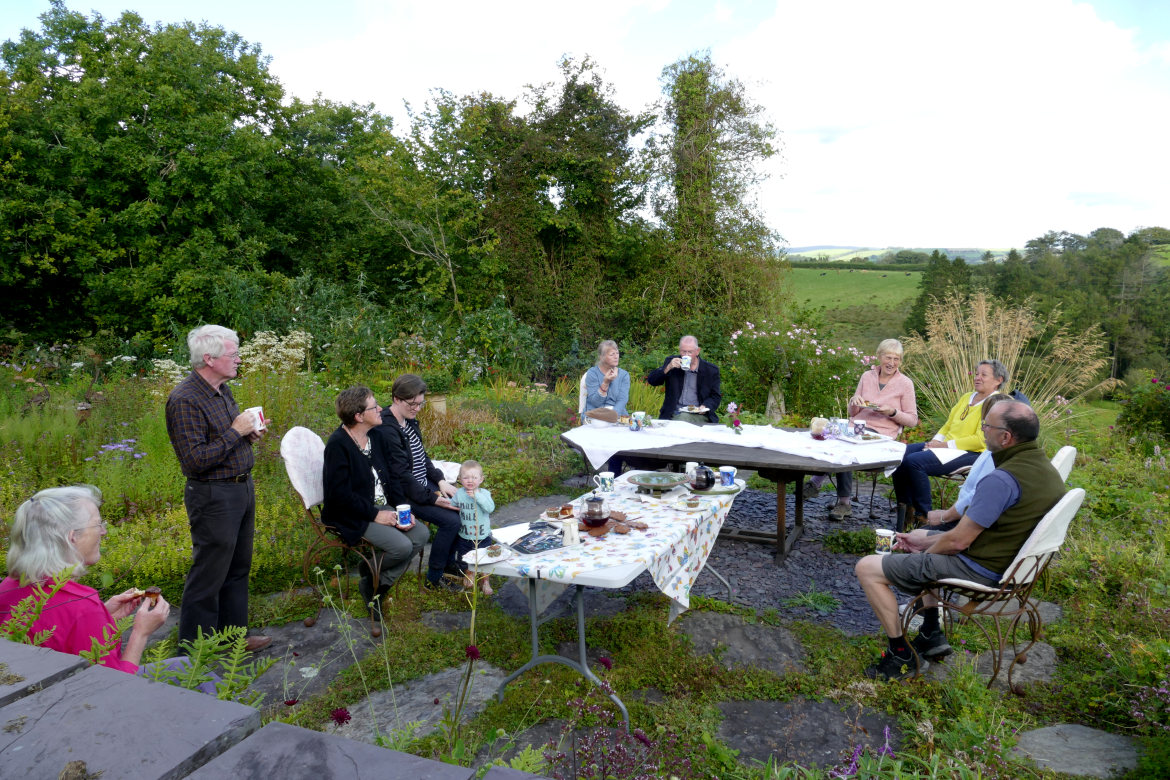
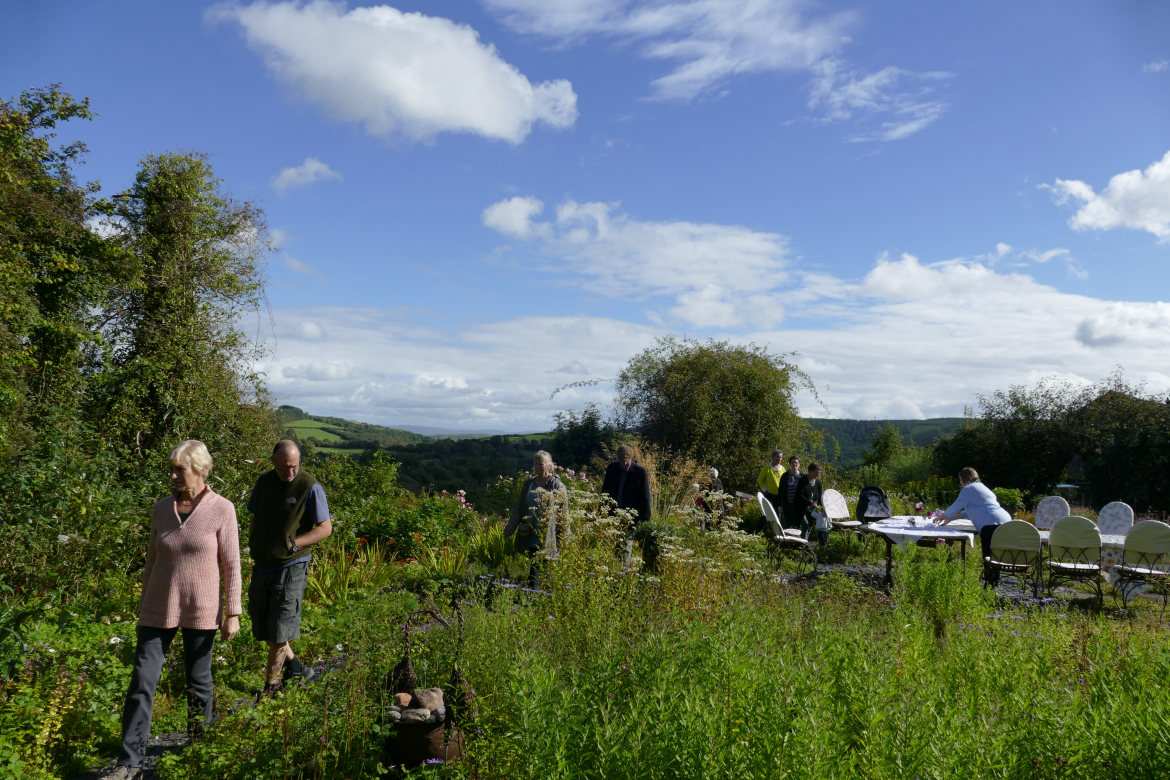
I even have a few photos from our event, included above, to show that in spite of the decidedly iffy weather at the beginning of September, we escaped with no rain, the sun shone, and the butterflies fluttered.
Though not as dramatically as the previous week, when a Small Tortoiseshell landed on my face, a unique experience for me. Any similarities with the image for the cover of “Silence of the Lambs” are entirely coincidental!
We’re well into autumn now, with leaves colouring up nicely here…
Sorbus “Olymic Flame” above, and Acer aconitifolium below, always being reliable and the first to show…
Along with the always early and dramatic red stemmed Cornus sibirica, between the 2 hollies …
I’m very grateful for the following photos sent in by Tina and Derek to show that they’ve all been working hard in the garden recently …
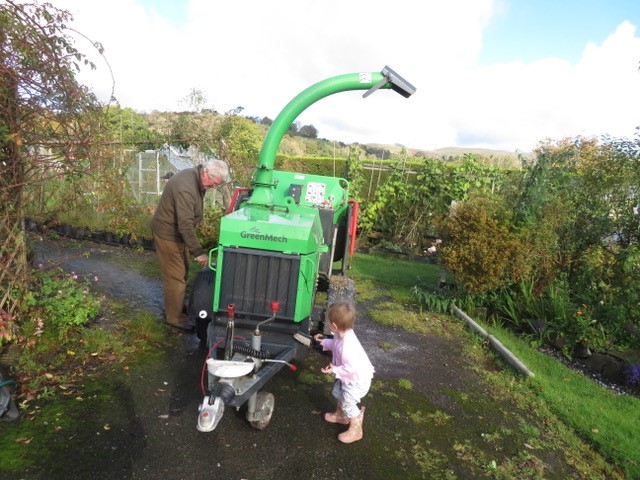
After a day of chipping …
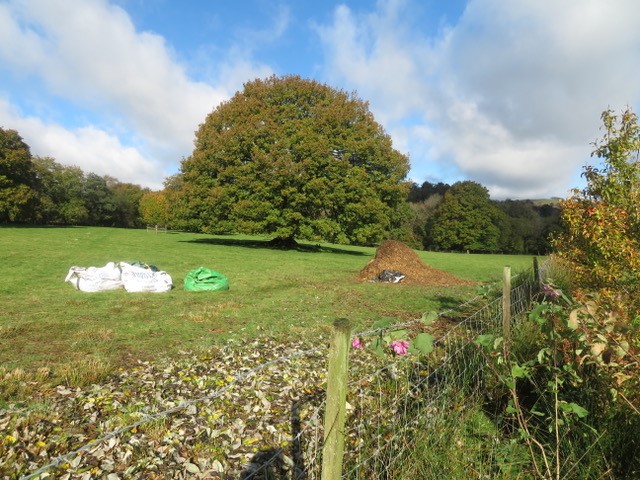
This mountain of clippings still has to be moved and the 4 bags are all half full
All the willows from here planted 10 yrs ago to soak up the water, were cut down and the chippings are being stored here …
I’ve planted a red oak behind the compost – grown from an acorn …
The autumn garden…
Thanks Tina and Derek.
Any ideas what these are, and have you seen them in your garden recently, or indeed ever?
They’re a bit bigger than a honey bee. I’m including them because we hadn’t seen them before, and these were found as part of a large colony just above the beach at Pwllgwaleod, at ankle height on the coastal path walk round Dinas Island in Pembrokeshire last Thursday.
To save the suspense they’re Ivy mining bees, Colletes hederae, a species which only arrived in the UK in 2001 in Dorset and has spread West and North since. If you click here, you can see that it hasn’t really been recorded much up here yet. The name reflects the fact that they emerge very late in the year and feed mainly on Ivy flowers, but the obvious yellow pollen might have come from nearby flowering gorse.
The ones you see here are all mated females taking collected pollen down into the burrows which they’ve just excavated and which house their eggs and then larvae. The pollen will feed the larvae as they mature, pupate and then emerge late next year to begin their new cycle. They aren’t “social” bees so only have a brief annual adult existence. So for anyone with flowering ivy in, or near their gardens, it’s not too late to go and have a look for these recent immigrant bees, if we get a sunny day in the next week or two.
You probably won’t find the males now. They emerge a bit earlier and are ready to mate with the females as soon as these emerge from their own burrows later in September, and then, job done, the males disappear from the scene.
This little bit about bees got me thinking about a photo quiz you can all have a go at.
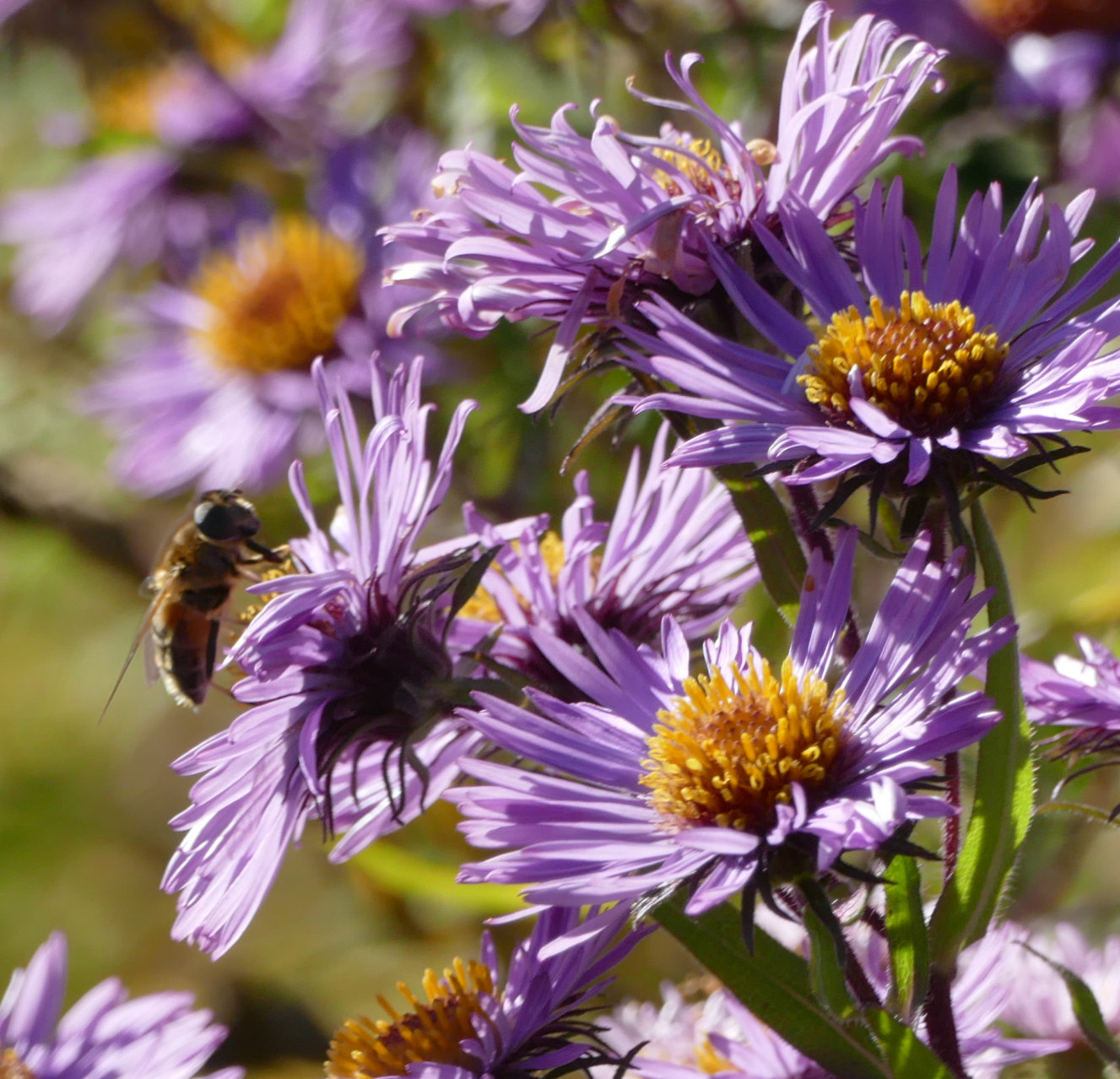
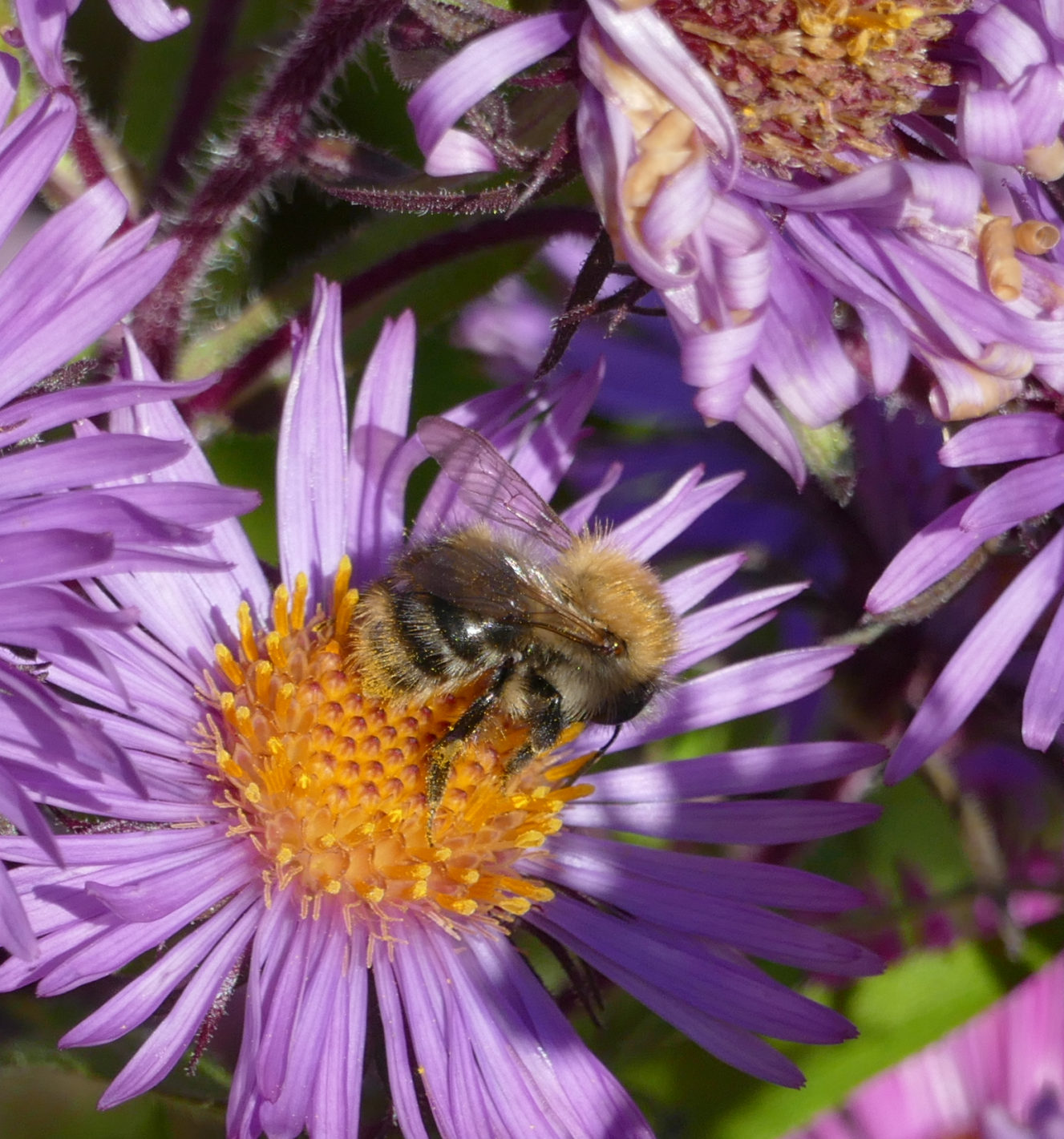
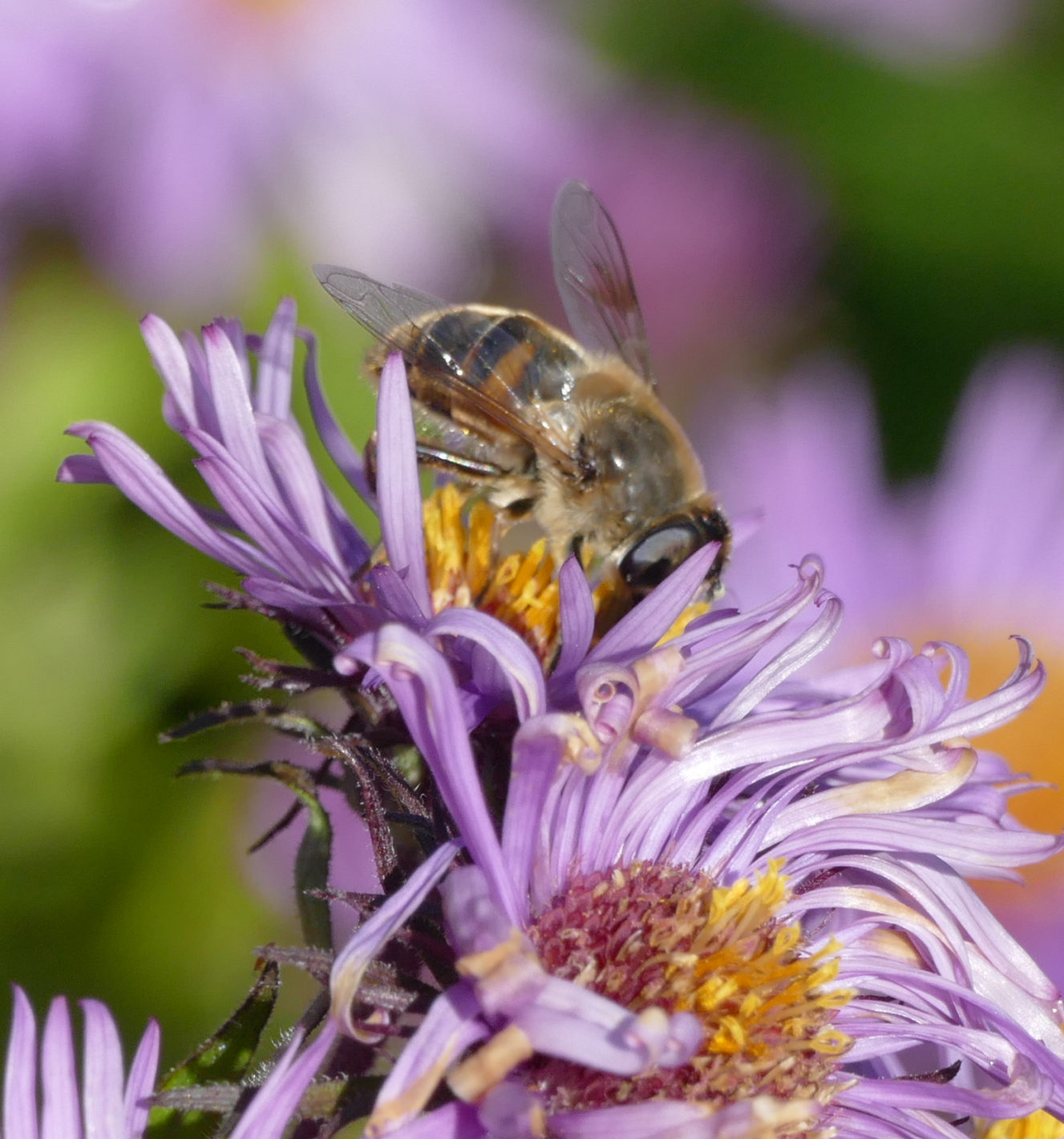
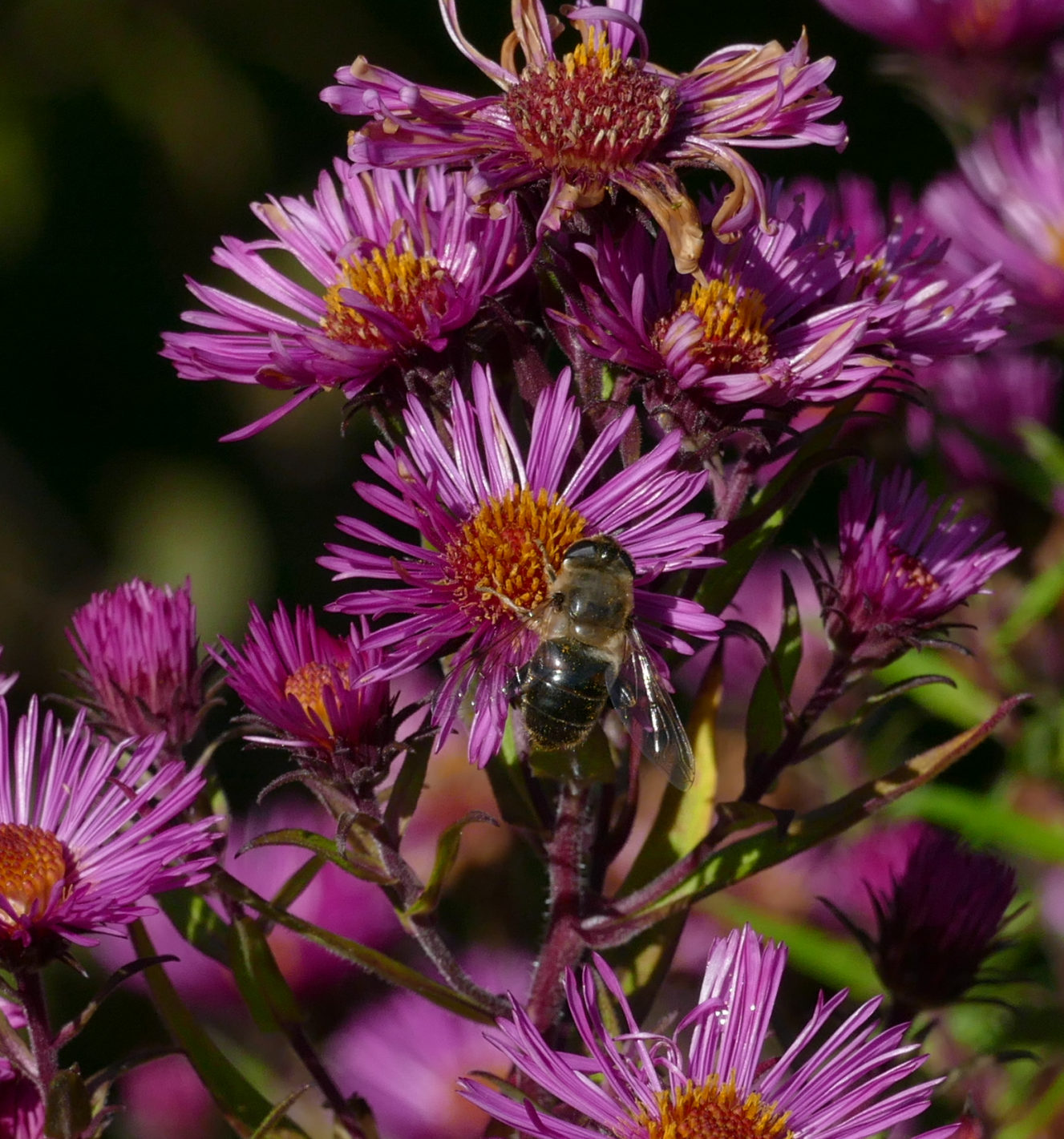
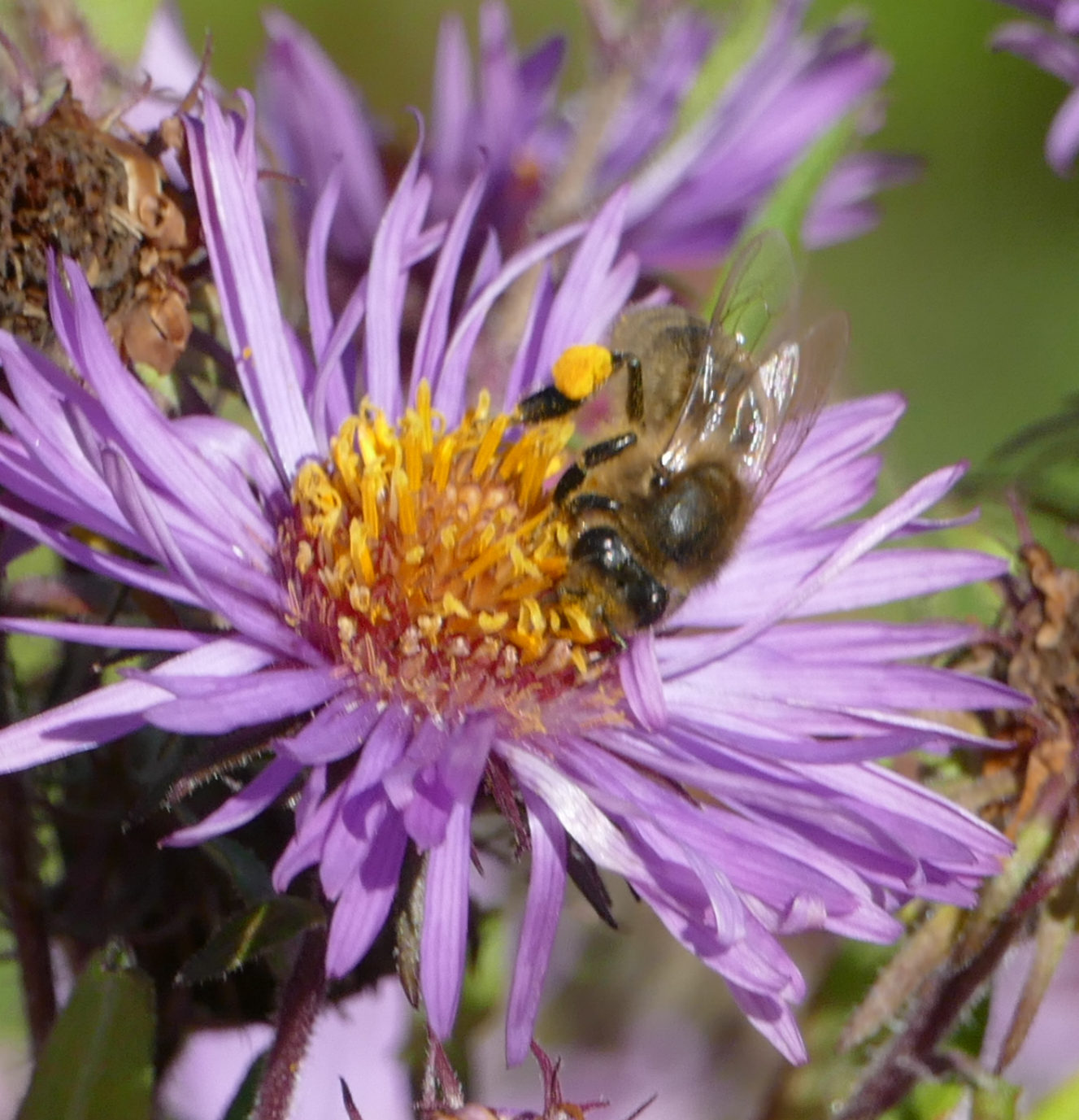
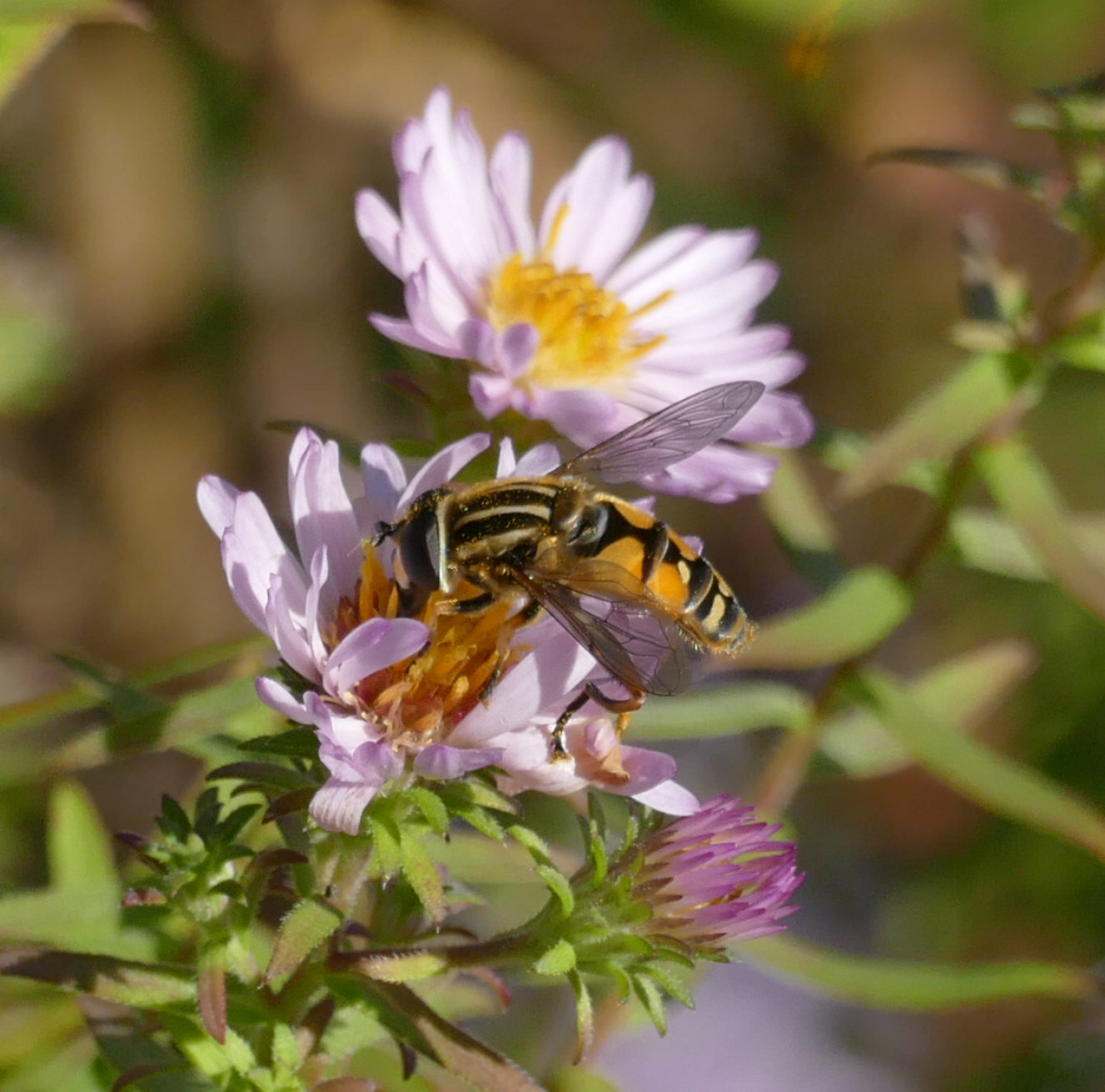
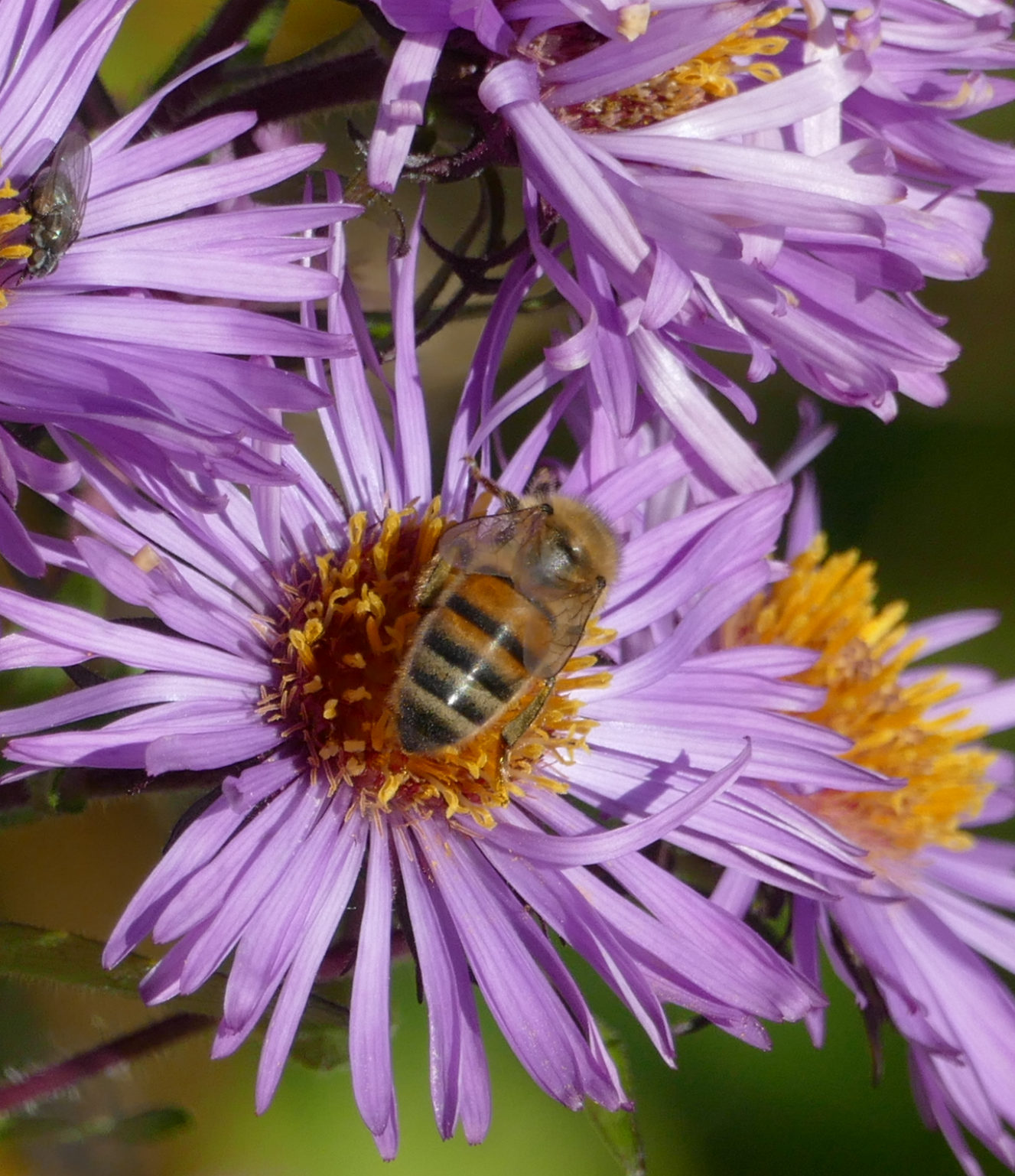
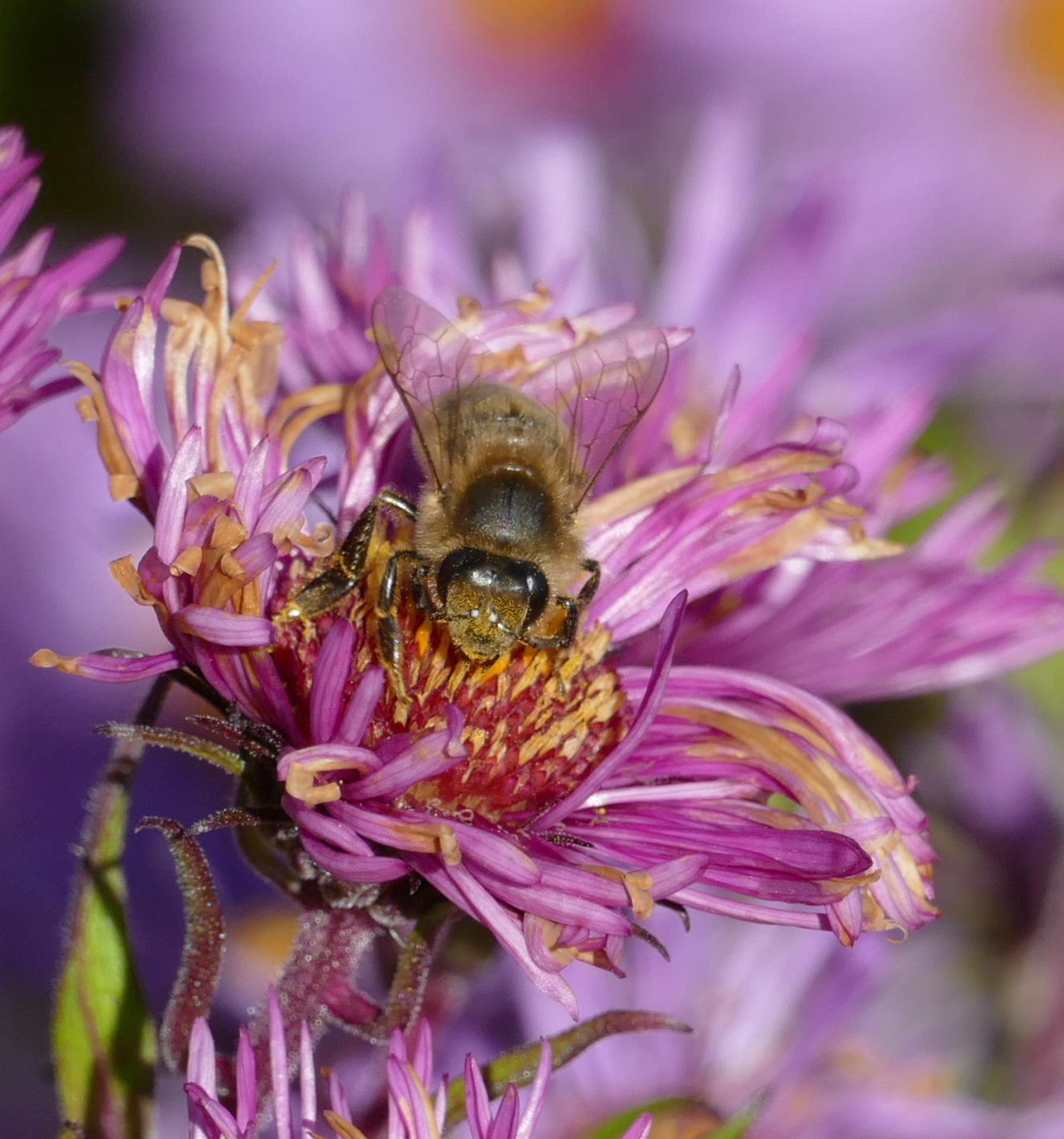
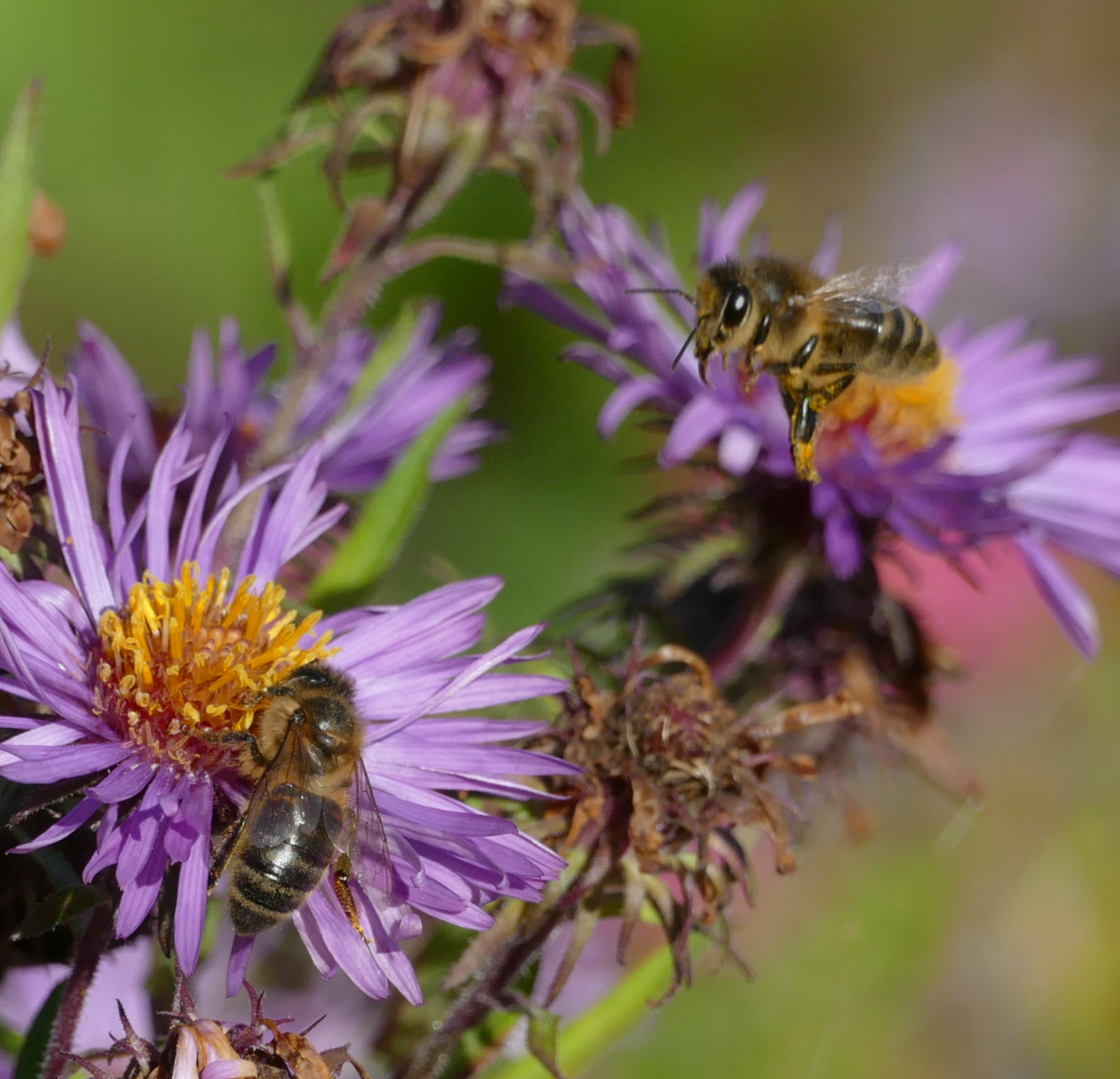
Asters are often mentioned as a great late season nectar source for insects, which they are, but with lots of honeybees around still in our garden, actually very few ever seem to visit the Asters except on a warm sunny day. So for a bit of fun how many honeybees are included in the images below?
The answer is 6, with a single bumblebee. The rest are all bee look alike flies.
And maybe a little easier, on the following 4 images, which has 2 honeybees included, which has 2 flies, and which has one of each?
Easy, eh? Flies, Bees, and one of each in the last 2 pictures.
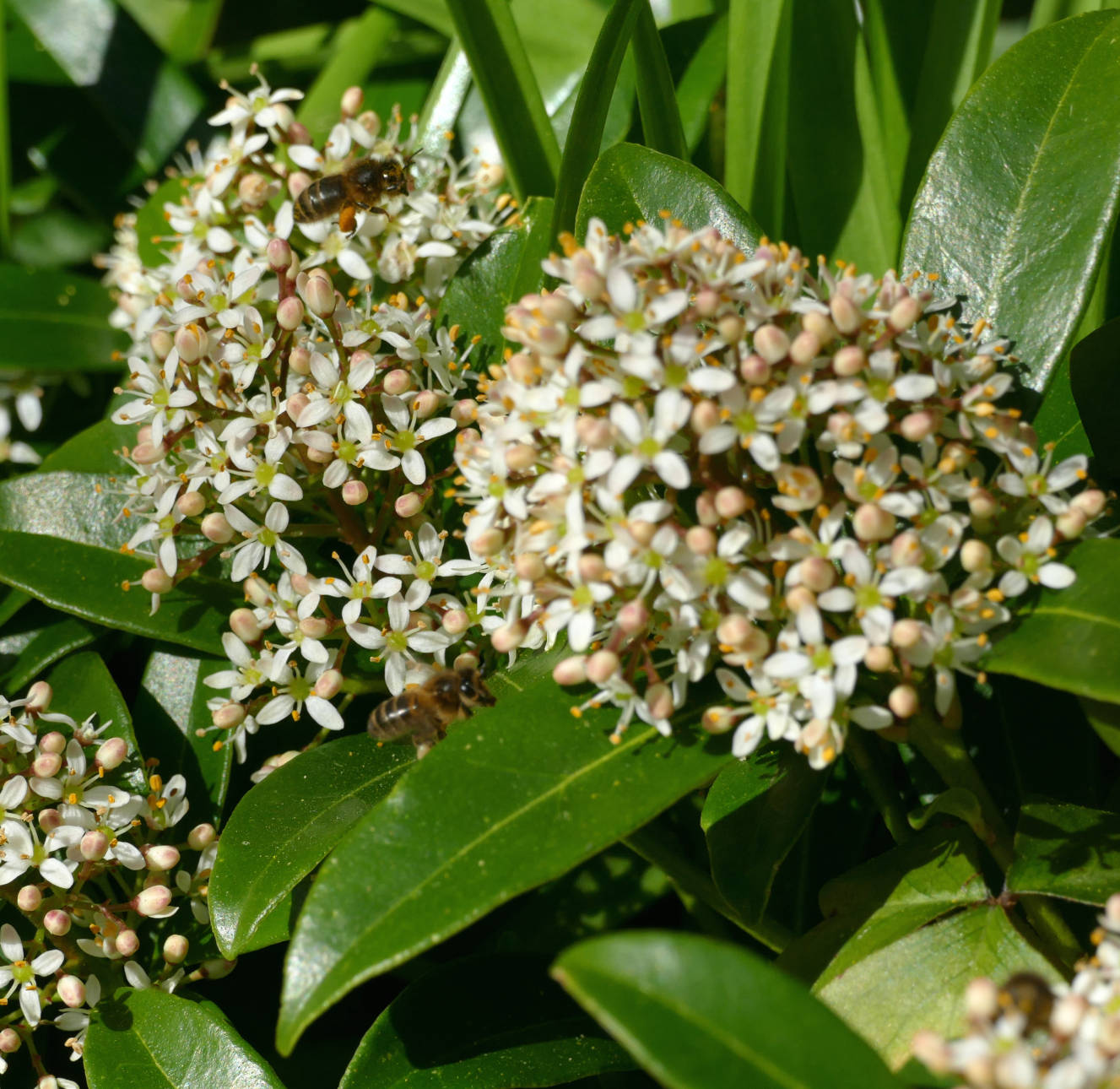
And if they aren’t on our Asters, then which flowers are they visiting most of the time? Well, mainly the Himalayan Balsam half a mile away in the village, which brings them home with characteristic white dusting on their backs.
But in a recent light bulb moment, I’ve realised that many of their preferred plants, which they do bother to visit in our garden, throughout the year, originate in the Himalayas or other mountainous Asian areas –
Daphne bholua,
Skimmia
Persicaria amplexicaulis,
Geranium procurrens,
Persciaria vaccinifolia.
Could it be that these all produce a richer or more nutritious nectar, or produce it in greater quantity under our often cool and wet conditions? Who knows, and I can’t seem to find any work which has been done on this. But perhaps it’s more than a coincidence that the largest of the only 8 species of honey bee found across the world, Apis laboriosa, lives most of its life cycle outside in the elements on huge single slab combs, protected only by a cliff overhang high up in the Himalayas.
For a fascinating recent short video of how the locals actually harvest the honey from these large honey bees, (no Health and Safety here, folks), together with some amazing scenery, then do have look below – really wonderful!
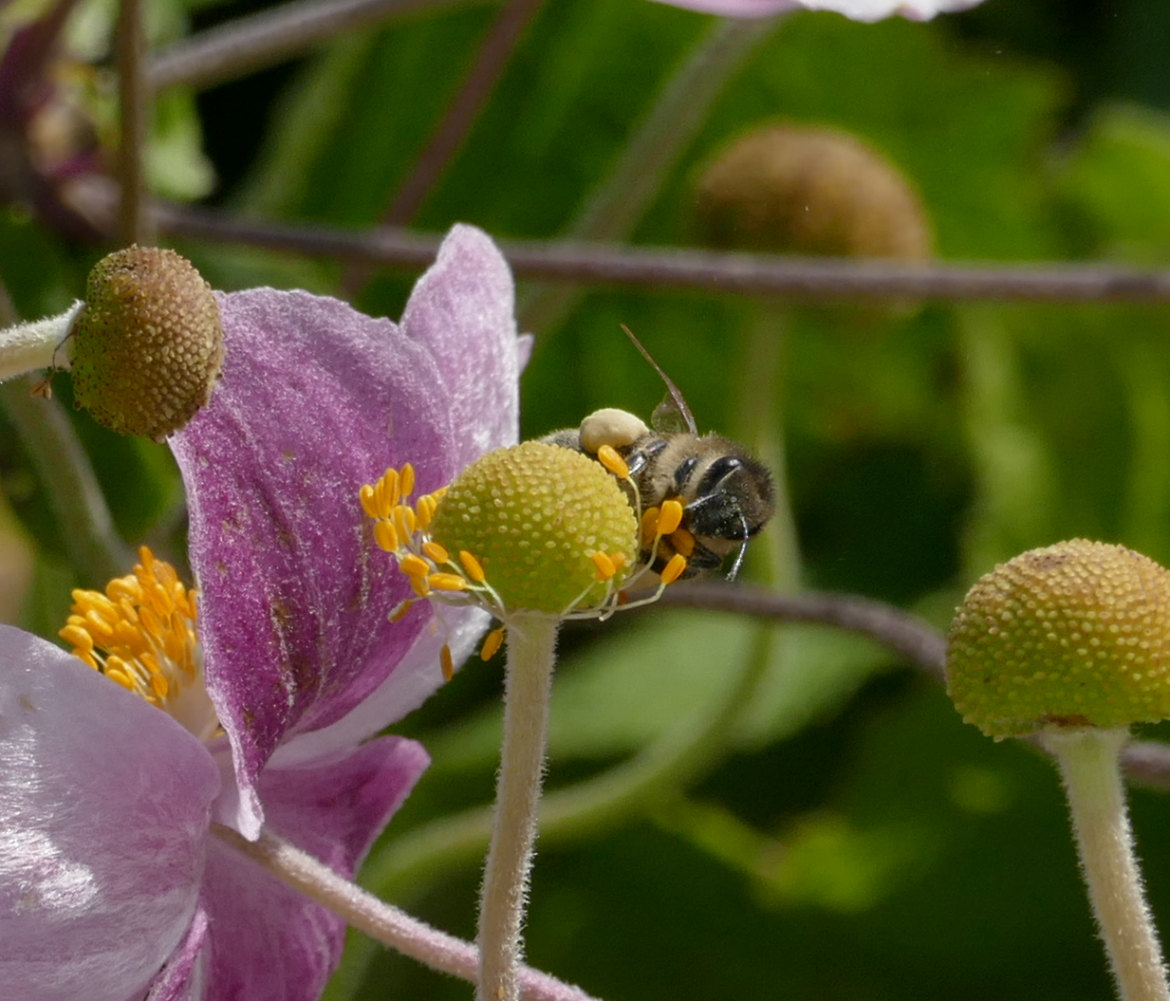
Meanwhile in a change from our normal autumnal tidy up regime, this year I’m leaving alone anything which the bees will visit, like the Japanese Anemones below, until the frosts take the last flowers out, since they can still seemingly get something of value even once the petals have dropped.
Finally, as always, it would be lovely to hear from a few members about their favourite plants, or things in their gardens as we go through the next few leaner months. It doesn’t look like physical meetings will be possible anytime soon, so if you want to read about other member’s gardens, then do send me something!
Why not write even just a few words – it’s a great way to keep the grey cells working, and send an image or two, preferably resized down to less than 1 MB? I can’t promise to put everything up online immediately, but usually within a fortnight, and it’s another way of keeping in touch and passing on information.
Or use the Cothigardeners Facebook Page.
You can send things to me at:
Cothigardeners@gmail.com
Thanks again to Tina and Derek for contributing to this post.
As all members will know there’s still no real hint of when Wales lock down will be lifted for any sort of social gathering, so for now our monthly meetings sadly aren’t possible.
Thanks to those Cothigardener members who’ve sent me some pics of their plots over the last few weeks. At last we have some rain again, and after kicking off a bit of hay making here already, we can all reflect on the irony of lock down coinciding with what has been an amazing and record breaking sunny spring. The Met Office website has some interesting facts and maps to illustrate just how unusual the weather has been this year. It seems a long time ago now, that a run of quite hard frosts spoiled the benign start to our gardening year and caused a bit of damage to many of our gardens…
Here’s some words from Elena to accompany scenes from her garden in mid May …
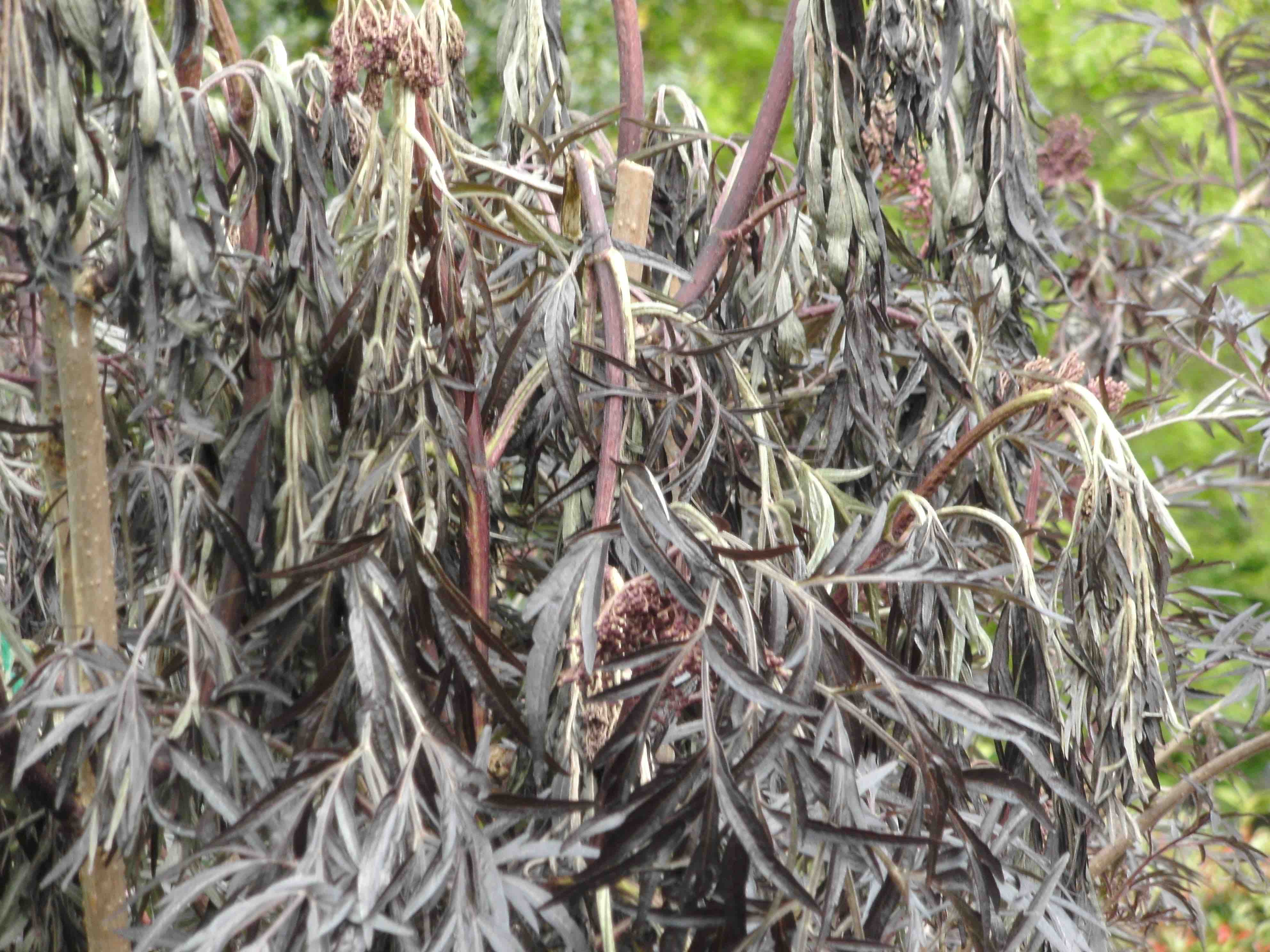
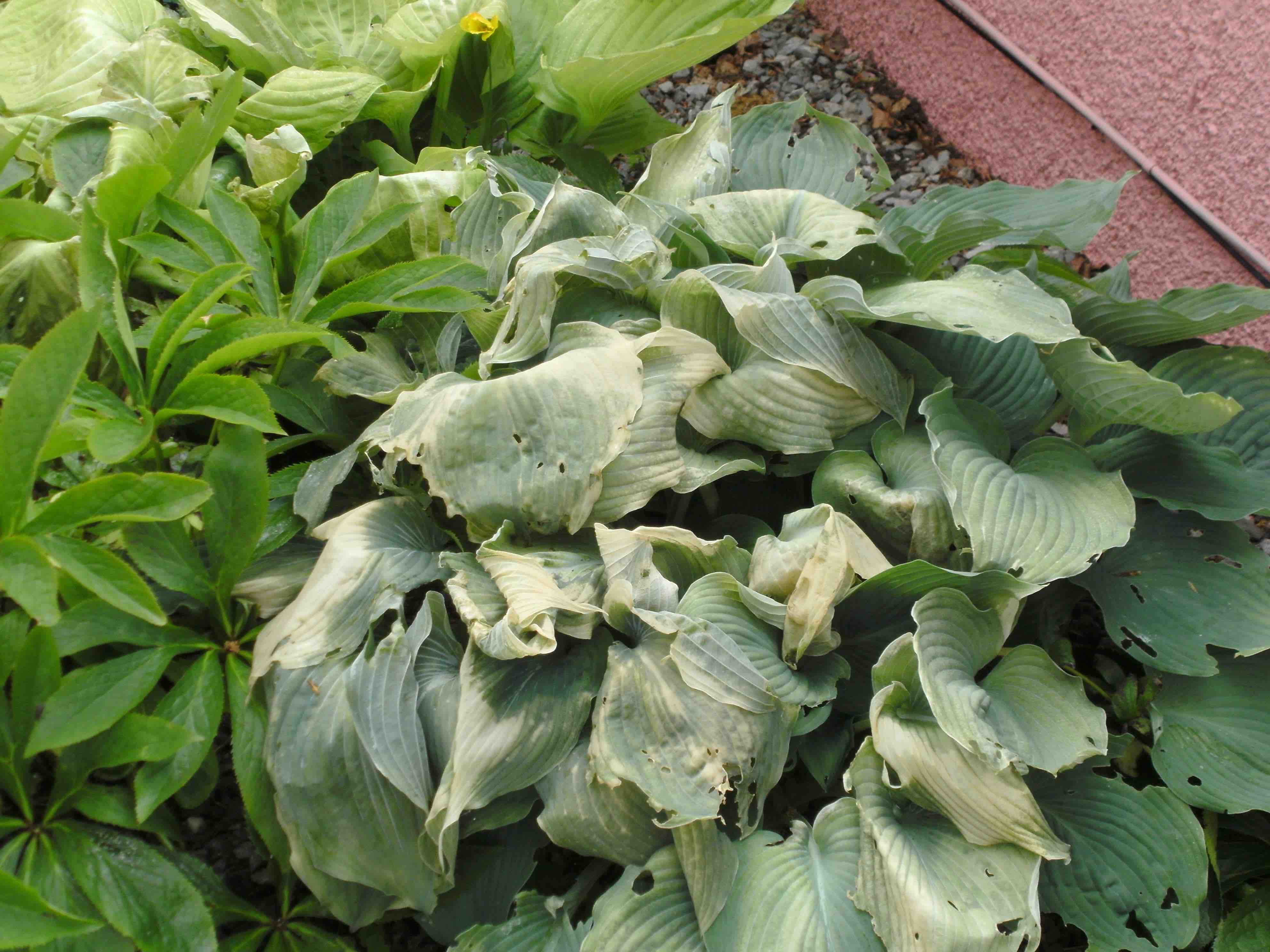
All the oaks, beech, ash have also been badly nipped. Not a pretty sight, but so it goes in a Welsh garden!
Frosted Black Lace Elder
Frosted Fern
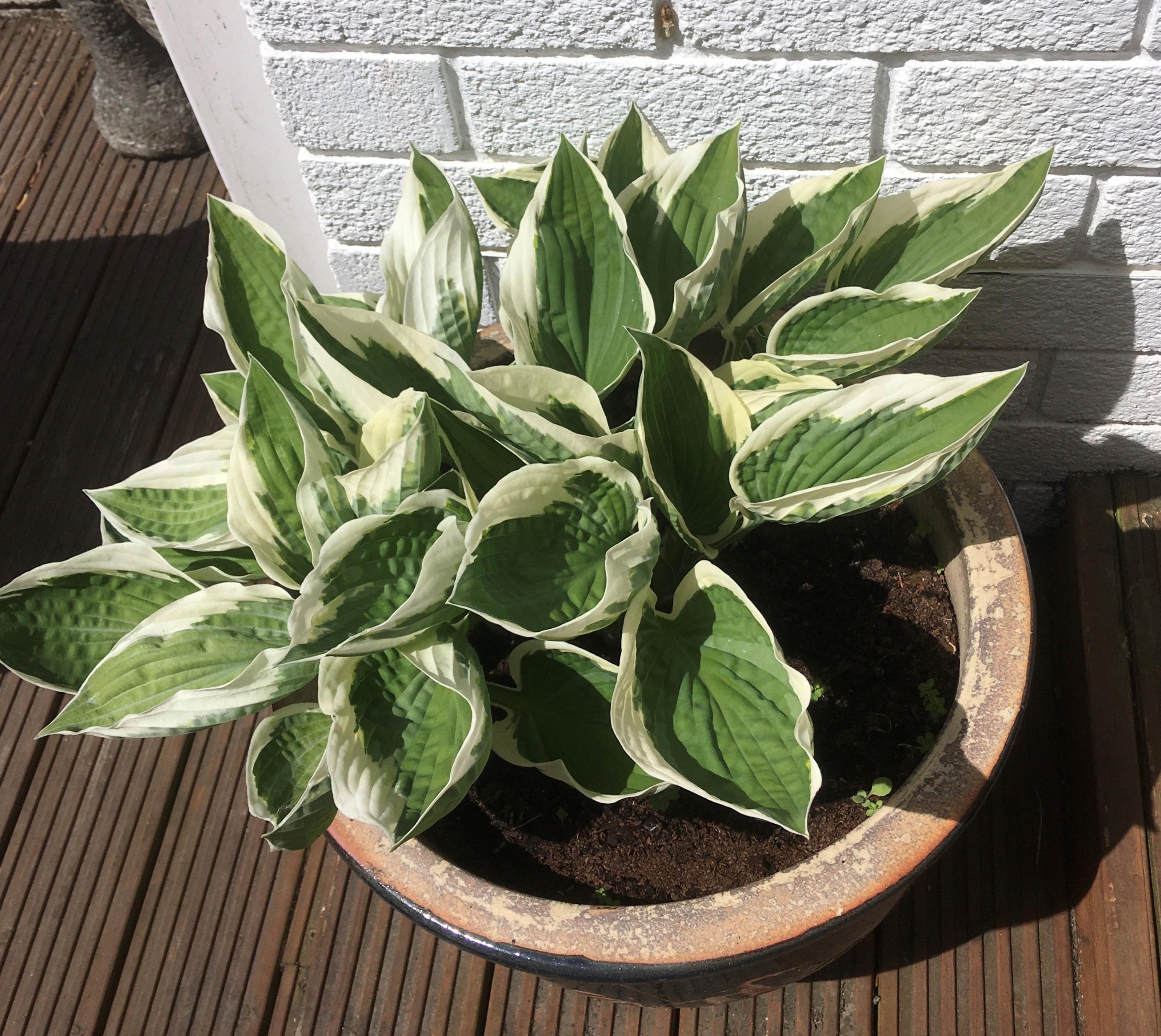
Frosted Hosta
Frosted Persicaria
Frosted Wisteria.
In our own garden Persicarias seem the worst affected plants too, apart from vegetables growing outside – courgettes and squash were badly damaged losing most of their leaves, potatoes got leaf tips nipped …
but enviromesh, water bottles and woolly mats seemed to mitigate the worst of the minus 3 temperatures, and all but 3 squash plants seem to have recovered and are growing away within a fortnight. Will they still fruit though?
In the hay meadow even some early orchids keeled over, probably because the flowers are about two weeks ahead of normal, following the sunny dry spring weather.
________
Many thanks to Derek for this insight into how he and Tina have protected some of their fruit from marauding birds in what looks like a highly organised and impressive system …
With the arrival of Bullfinches this has become urgent – we can cope with the interest and demands of Sparrows, Wrens, Blackbirds and Thrushes, but Bullfinches are real experts! Our local wild birds are well catered for with the enormous planting of fruit trees and bushes throughout the garden and grounds, but we are being a bit precious about these within the cage. The fruit is a mixture of old favourites, and some fun varieties, we’ll see how they all get on. The cage was until recently used to house chickens for a friend, but they are all now rehomed. It measures 7 metres by 4 metres, is made of aluminium, and was sourced from Harrod Horticultural some years ago. I have included a planting plan – the Chives and Strawberries are not only welcome in their own right, but of course they encourage pollinators
_______
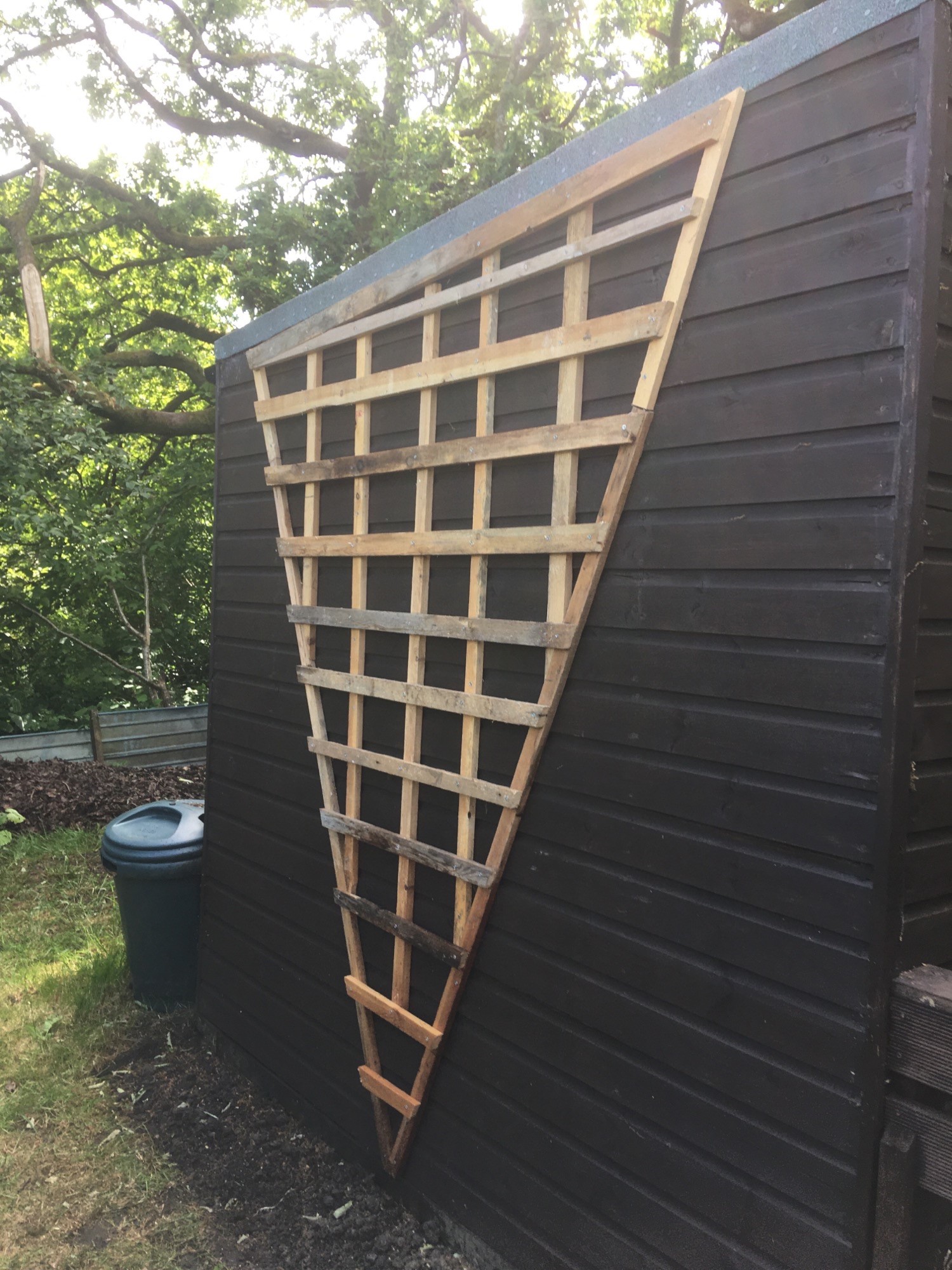
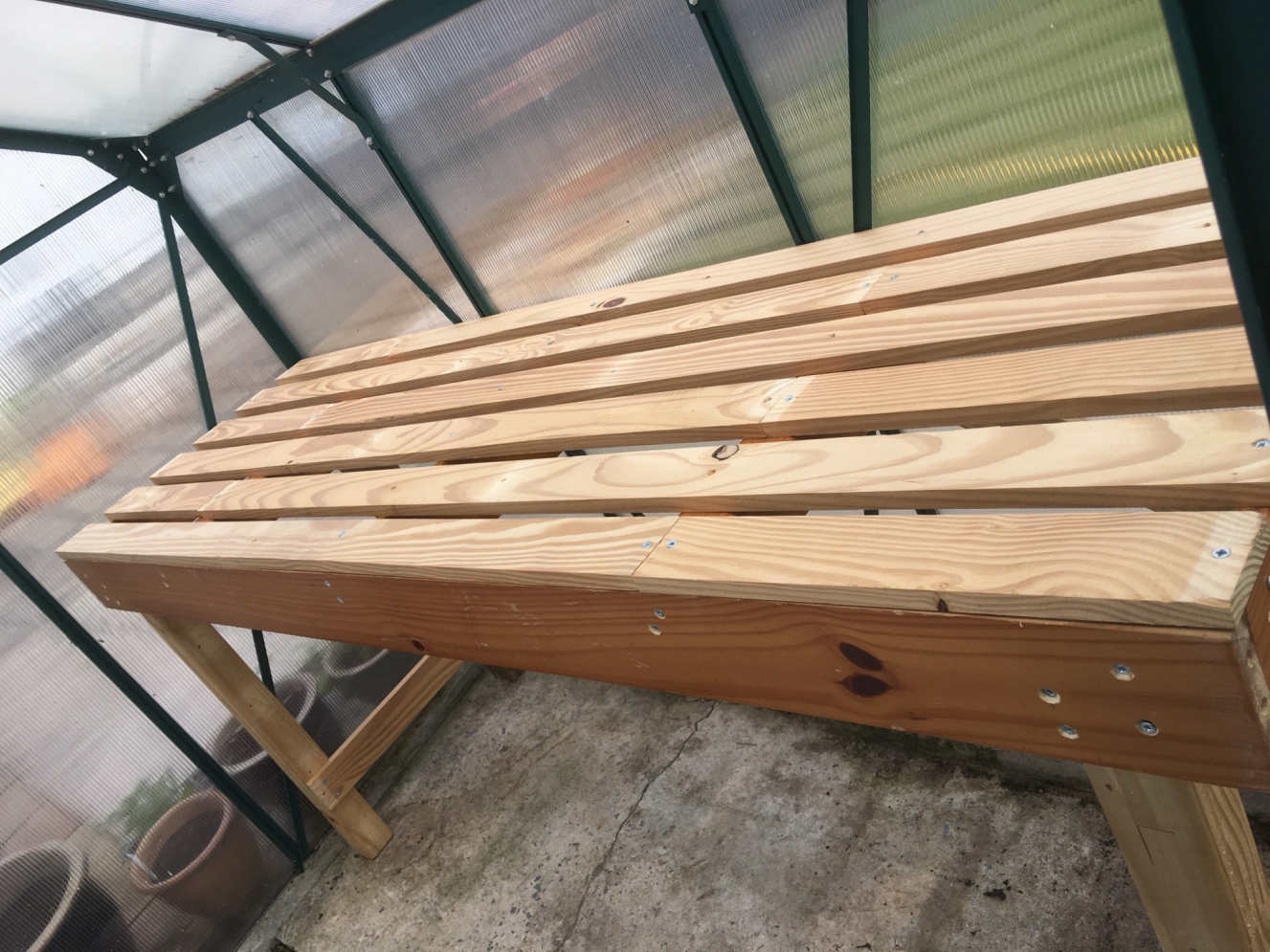
Meanwhile thanks to Alison for these photos, showing how nifty Peter has been at recycling an old bed into both trellis work and new greenhouse staging …
________
Meanwhile Sandy sent me these pictures of her amazing Pyracantha clambering over the side of her cottage and covered in flowers …
____
Finally a plant suggestion for members, and then a discovery I’ve made in our garden both related to honey bees.
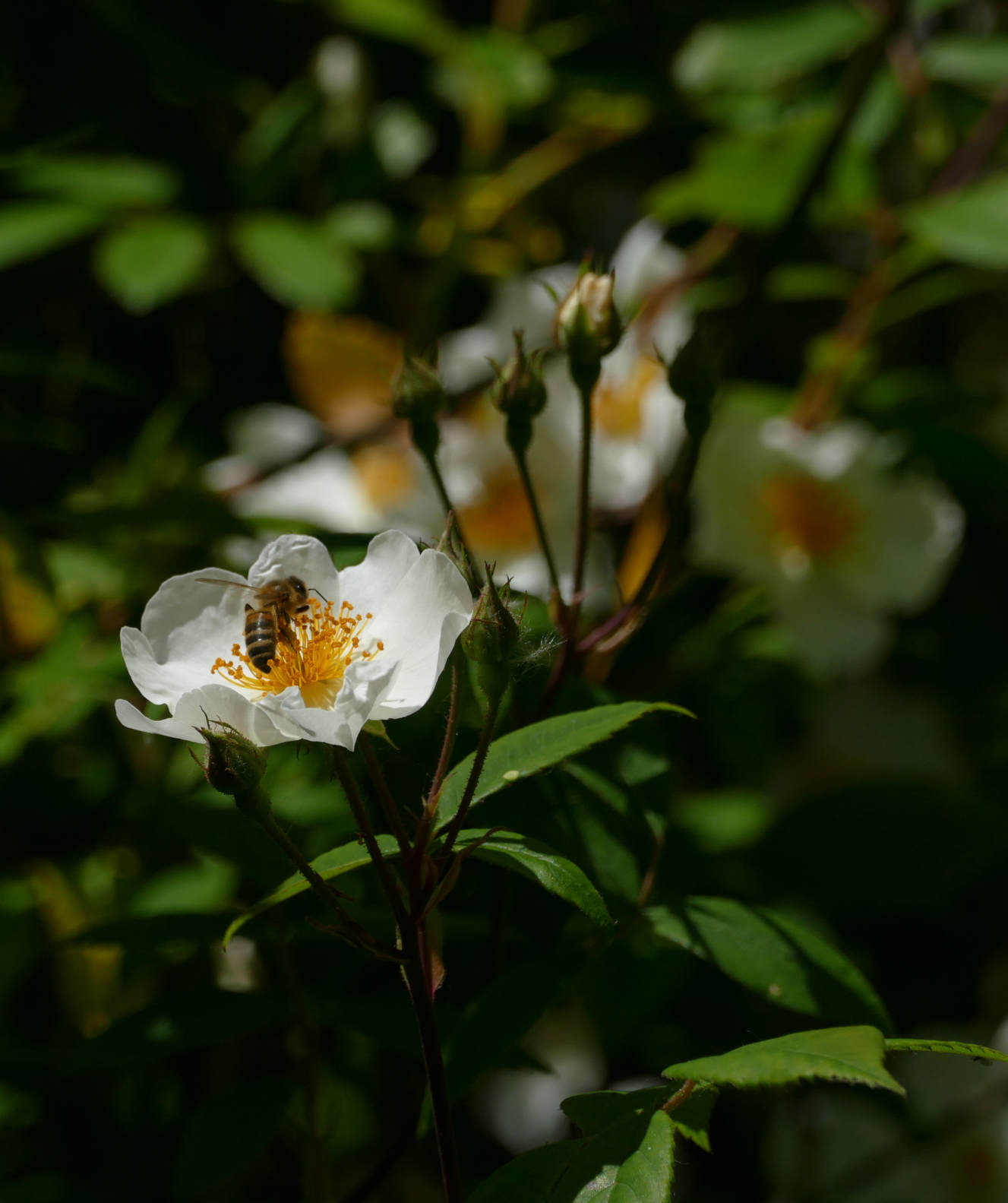
Ever since a visit to Sheldon Manor in Wiltshire in June nearly 30 years ago we’ve been great fans of growing vigorous Clematis and Rambling roses into mature trees to add flower interest. Since learning a bit more about honey bees, I realise that hives can often struggle to find good food sources in June – the early spring flowers are over, there aren’t many hay meadows left with wildflowers, and later natives like bramble and willow herbs still haven’t begun to bloom.
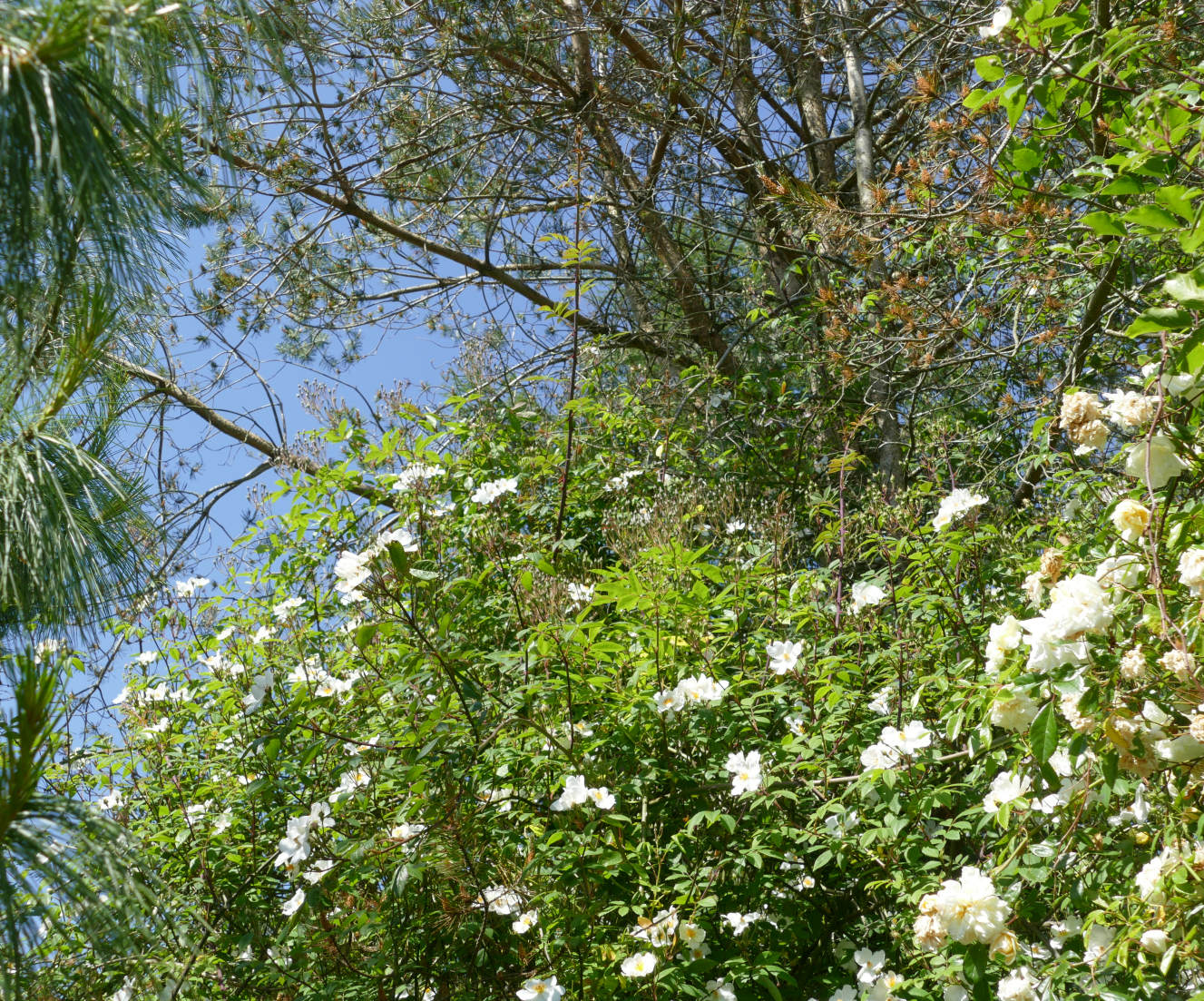
Enter what I now call the “White Dragon” rose. I found this as a seedling growing in the garden back in 2010, probably coming from a hip of the well know vigorous rambling rose “Kiftsgate” which we already had in the garden. But this seedling when it first flowered produced bigger, earlier, and more scented flowers than “Kiftsgate”, which honeybees and bumbles adore. After noting it had grown shoots over 15 feet long in a year, I planted the still young plant into a rotten hollow centred tree stump, filled with compost which was quite close to the base of a youngish oak in 2012.
This rose has incredible bendy stems, and is almost disease free (unlike “Kiftsgate” or “Paul Himalayan Musk”, which we also grow), with young foliage with purple tints, so it’s easy to train around a wire base, or into a tree, even if it is quite thorny. Once it gets going though, it makes its own way ever higher with no need for help. It roots very easily from cuttings, so if anyone fancies a cutting of this local origin rose this autumn, let me know.
The video clip above is of another plant taken as a cutting from the mother seedling which has now made it almost to the top of the still growing Oak. (apologies for the noisy background). This daughter rose is already making good progress going up into a Scots Pine, and probably now only 8 years old, but must already be producing thousands of blooms over about a 4 week period at “June gap” time. You can see at the top of the plant you’re getting up to 50 quite big flowers per cluster.
The bees completely ignore the other creamy named rose “Alberic Barbier”, to the right, and although most roses produce no nectar, the pollen is invaluable, particularly in this time of seasonal shortage.
The second clip I’m including is to pass on an interesting bit of bee behaviour which has been obvious for the previous four warm afternoons. Up until about 2 pm, the worker bees (all female) have been busy entering and leaving the hive on foraging trips for pollen and nectar. They’re early risers and work long hours. They don’t hang around and are almost quiet as they whizz in and out of the hive entrance. Then in early afternoon, the air around the hive suddenly becomes really noisy. Look closely and you’ll see that bigger bees, with much larger eyes, the male drones, suddenly begin to leave the hive. And they’re noisy. It almost sounds like a bee swarm.
But look even more closely and you’ll notice that they all spend a very short time before flying off, cleaning their large eyes/face with their front legs. Why?
Well these chaps are off to complete the still poorly understood part of the bee’s life cycle that involves them flying into specific “drone congregation areas”. An average of 11,000 drones from tens of different colonies fly out to these specific well defined areas which are typically between 15 and 40 metres up in the sky and about 100 by 50 metres wide and may be a kilometre or more from their base hive. And they only fly on suitable warm afternoons up until about 5 pm.
Within these areas they fly around expectantly, waiting and hoping for a virgin queen bee to appear on the scene. The quickest 10 or 20 drones will chase her and if lucky will manage to mate with the queen, who then flies back to her hive after 20 minutes or so with enough sperm on board to enable her to lay hundreds of thousands of eggs over the rest of her lifetime in the hive. If the queen flies past just outside the invisibly bordered congregation area, the drones ignore her and won’t chase her.
The “lucky” drones are mortally injured by the force of the act of mating, and fall to earth dying. Poor things…
The same invisibly bordered congregation areas are used every year – sometimes over centuries. No one really knows how the bees find them.
So maybe the drones are clearing their eyes before take off after a day spent inside in the dark, stoking up on honey for the chase, so that they’ll be better able to spot any queens as soon as possible. I doubt if the queen has any time to select her suitors based on how tidy they look …
Anyway it probably comes as no surprise to readers that with the change to cold damp weather today, the ladies are stillforaging, though clearly not as much as before, but there’s no sight or sound of the drones, who are clearly putting their feet up inside the warmth of the hive.
Feeding.
And maybe having the equivalent of a good bee natter. But who knows?
__
Finally, as always, it would be lovely to keep hearing from members about their favourite plants, or things in their gardens as we go through the next few months. Why not write a few words and send an image or two, preferably resized down to less than 1 MB? I can’t promise to put everything up online immediately, but usually within a fortnight, and it’s a great way of keeping in touch and passing on information.
Or use the Cothigardeners Facebook Page.
You can send things to me at:
Cothigardeners@gmail.com
Thanks again to all who have contributed to this post.
So we head towards May, still firmly in national lock down, and having enjoyed one of the most glorious, quiet, sunny and peaceful springs I can remember. Ever.
Many thanks to those members who’ve sent me some pictures from their gardens recently :
From Derek and Tina a couple of weeks ago:
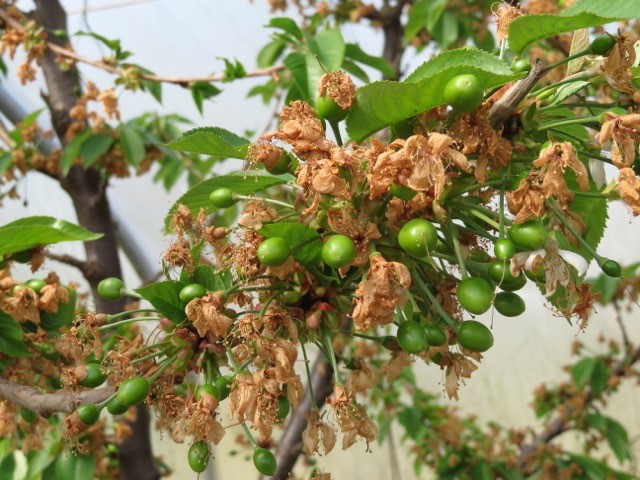
Cherries pollinated by bumblebees…
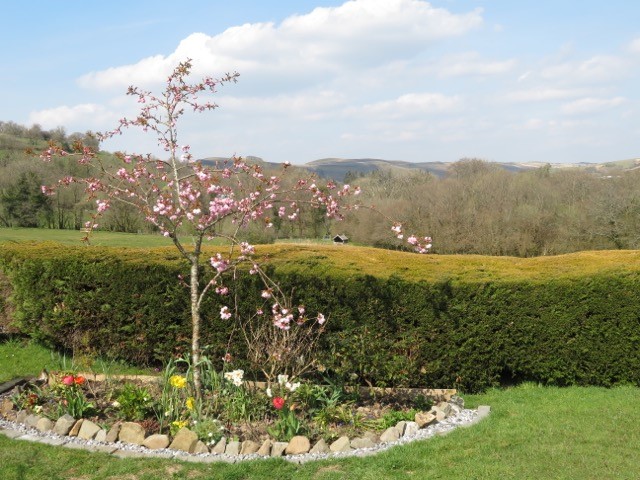
Distant hills across the garden hedge
Peaches hand pollinated by JoJo
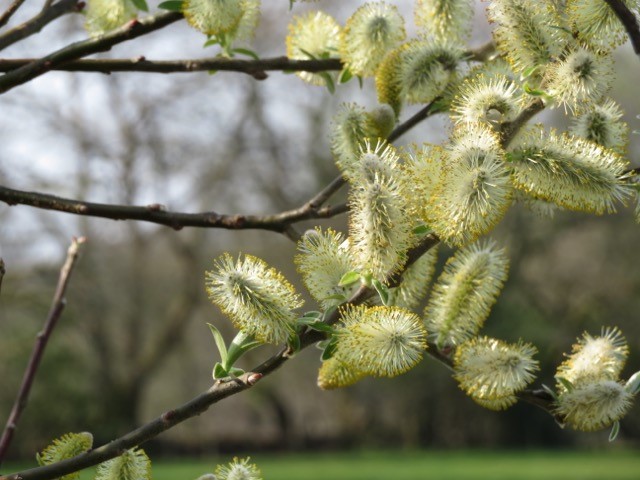
Why we love spring.
Thanks too for these images and descriptions from Elena :
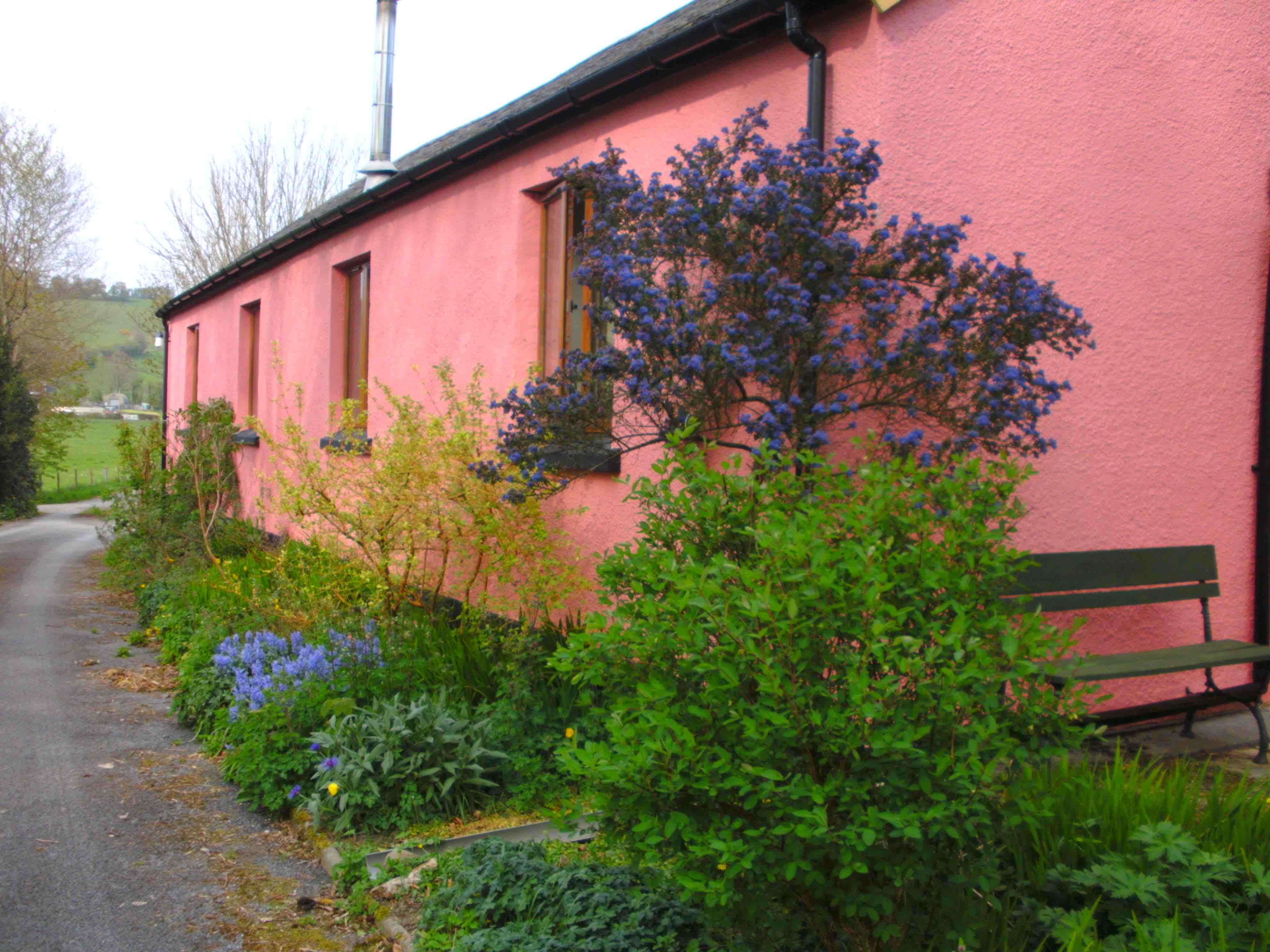
Warm weather, Ceanothus and pink walls, almost Caribbean!
Bluebells are having a great year. Anyone else noticed that they have seeded everywhere since last year?
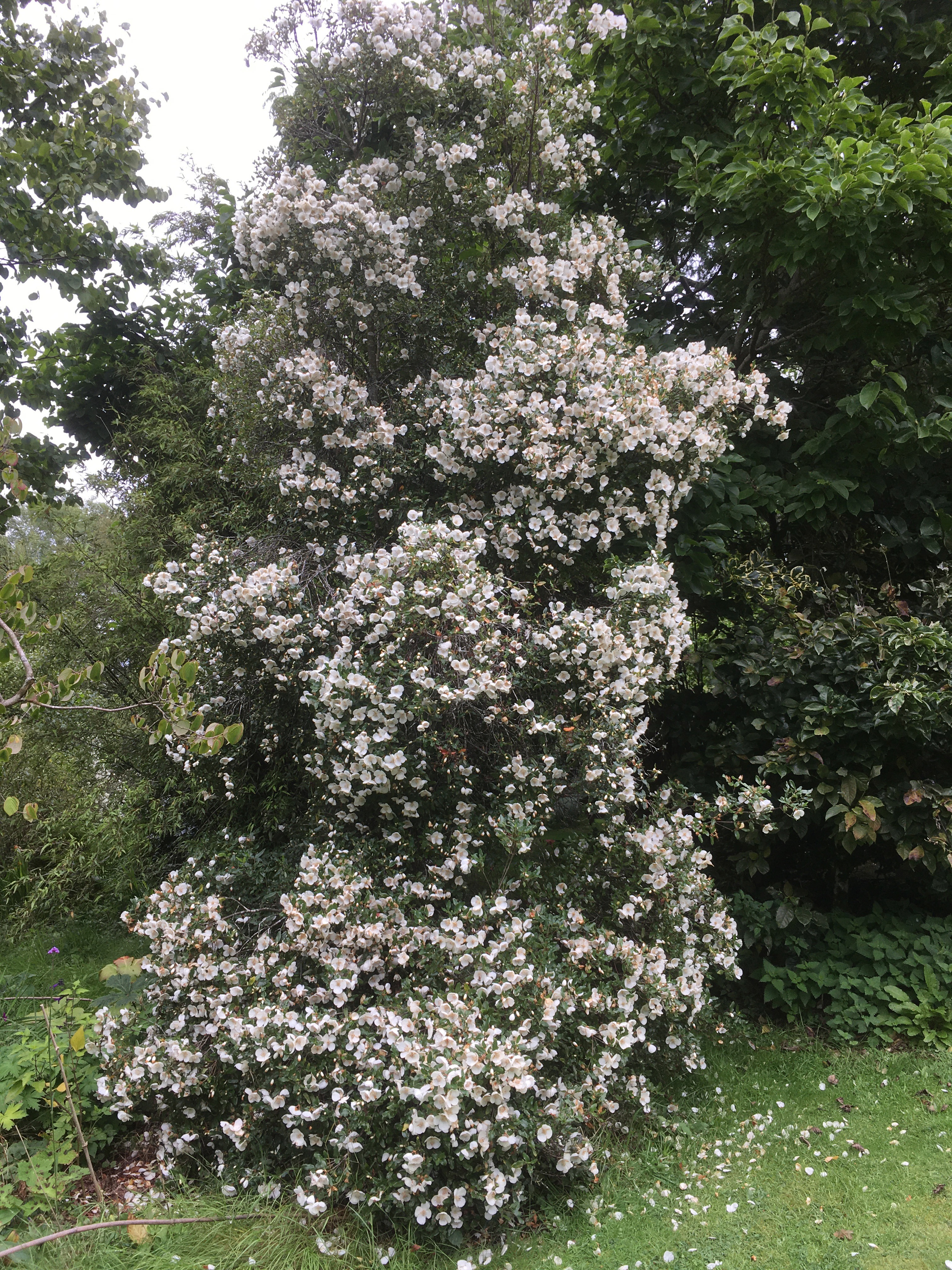
The white broom in full bloom! Not sure if the yellow one in front has made it through the winter though 😦
Wonderful pop of colour from these. Getting more today in my order from Ty Cwm. BTW Helen tells me Ty Cwm are having a fantastic year for sales, she is well pleased! Gwenda reports that Roberts are also having a great year and judging by Farmyard’s posts they are too!
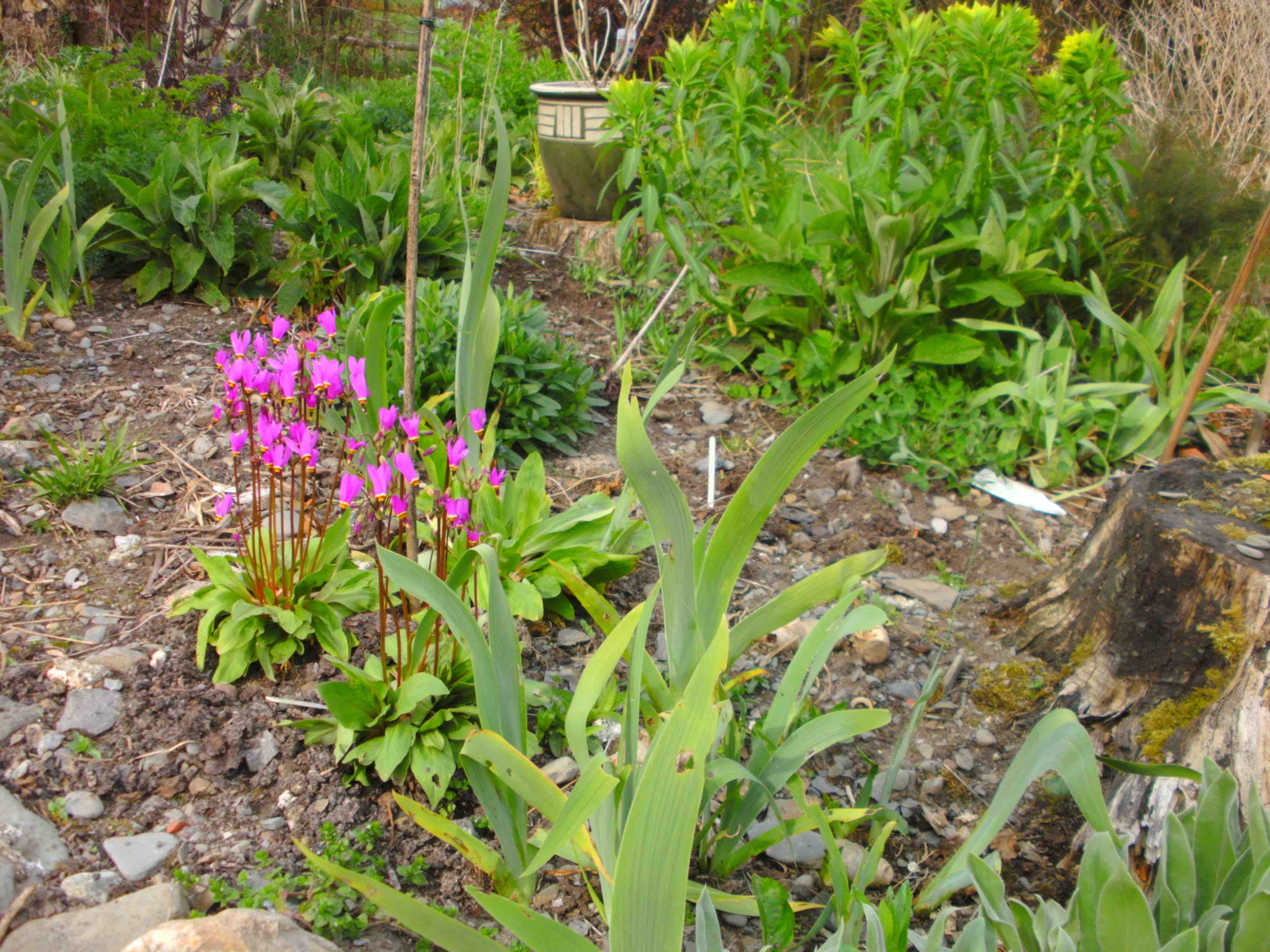
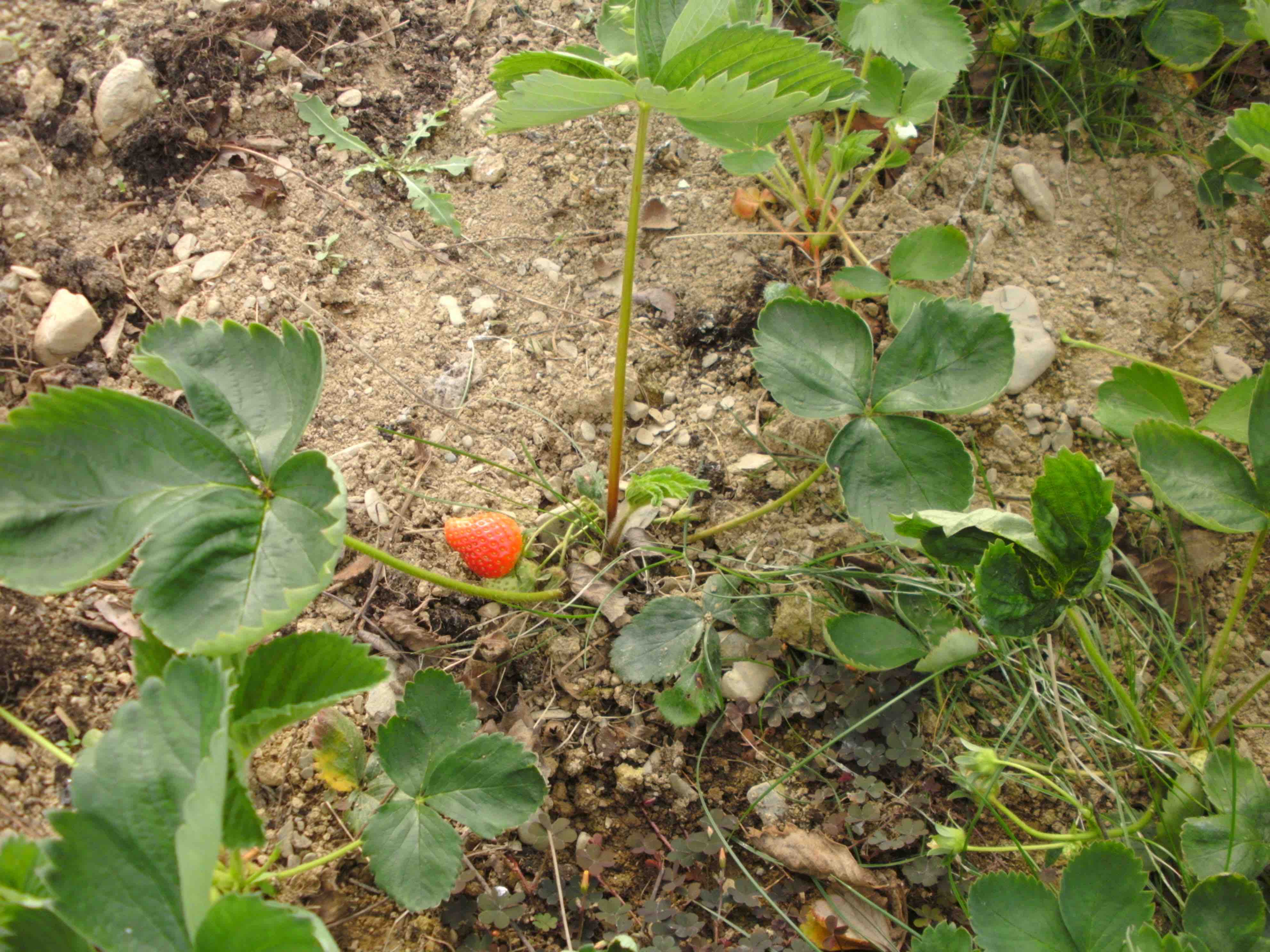
The first of our strawberries in the polytunnel. Looks like we will have a huge crop this year!
And also for these from Alison :
And for these from Yvonne:
Here are some pictures from my garden taken last week.
The pink, over the top, flowers of Prunus kanzan are wonderful at this time of year. They follow on from Prunus Tai Haku with its single white flowers.
The unnamed Magnolia which was sold to me as wilsonii, but clearly isn’t. However, the flowers are wonderfully scented and loads of flowers from a young age.
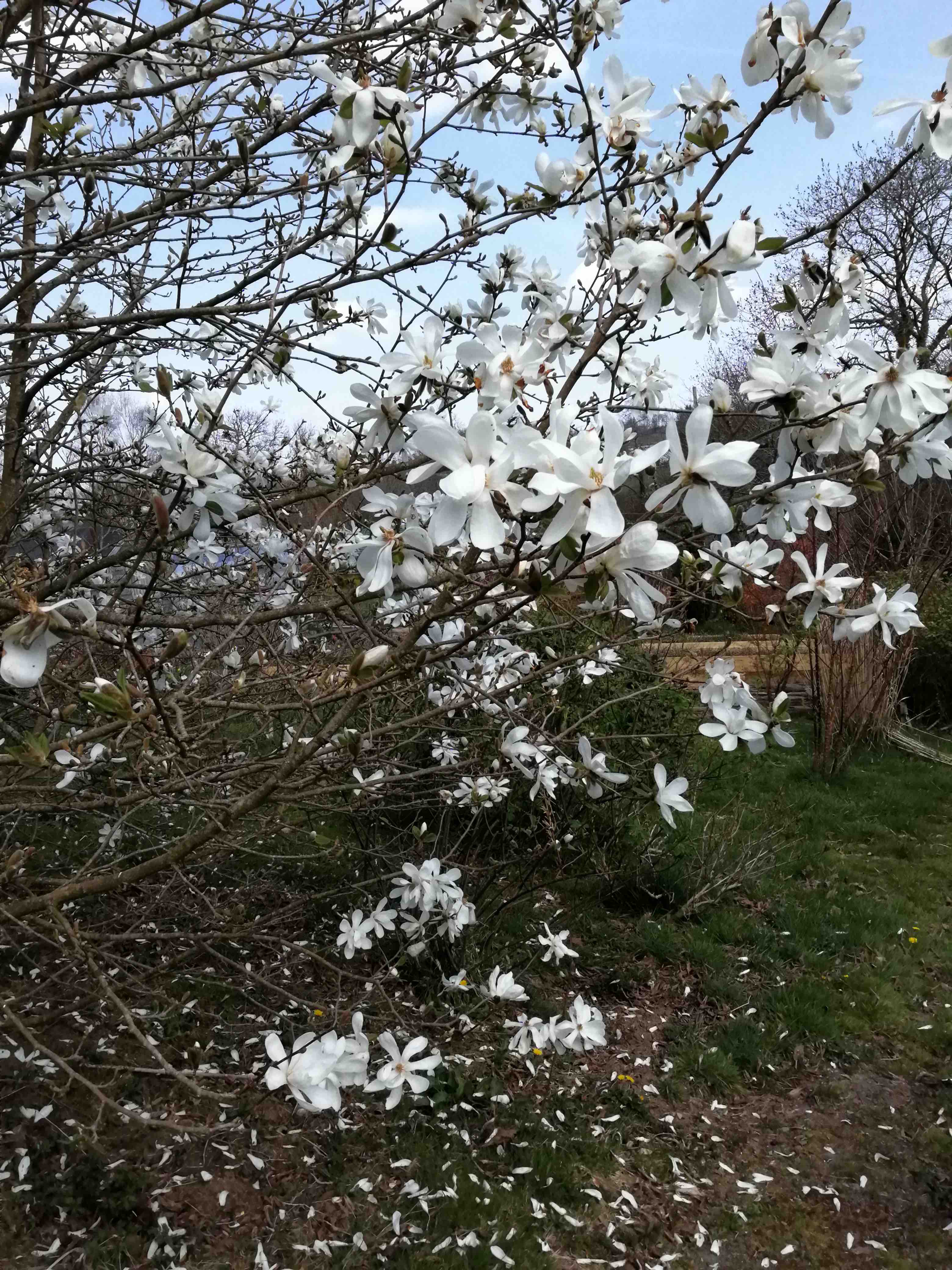
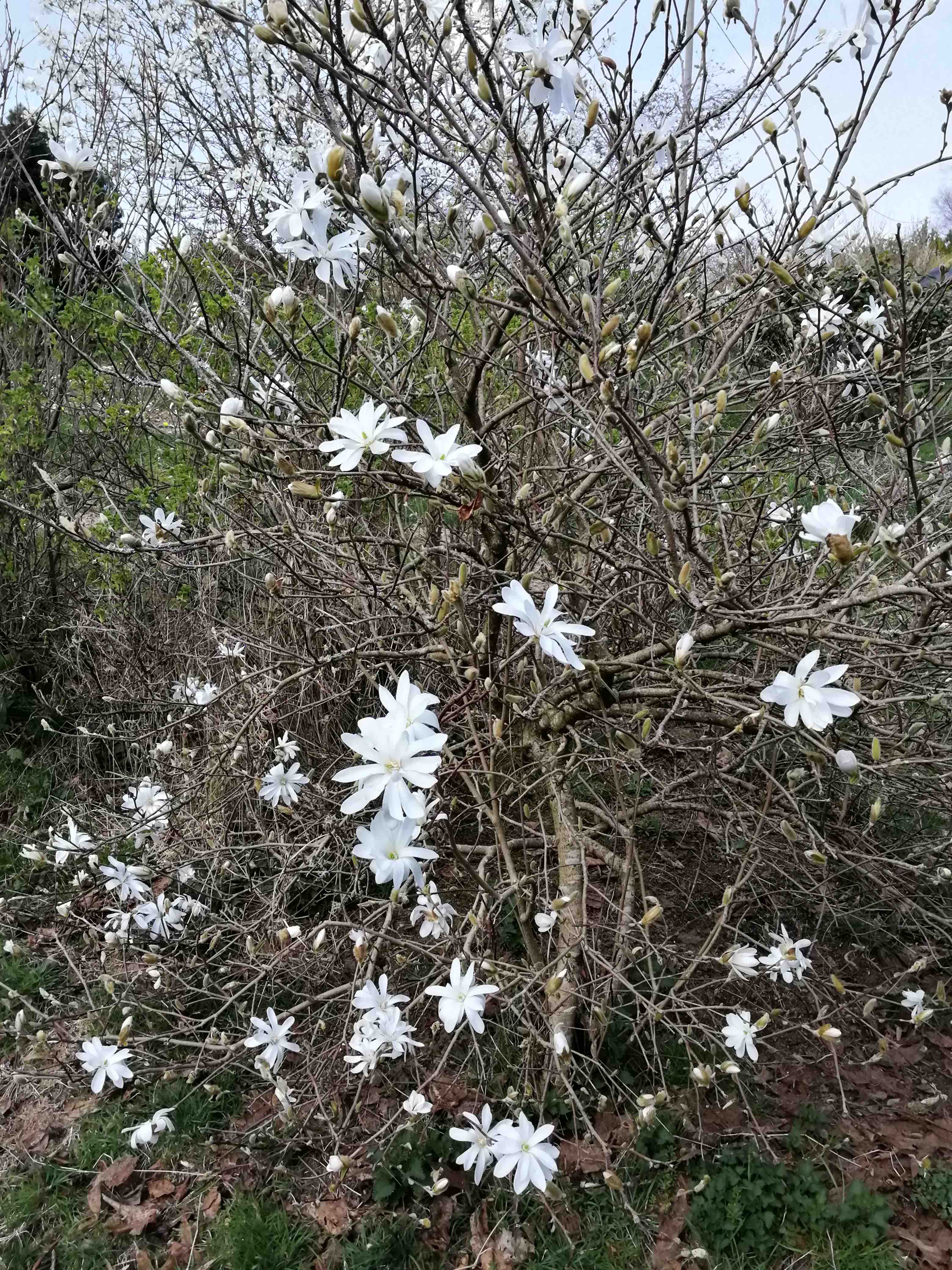
Also, Magnolia stellata flowering well this year.
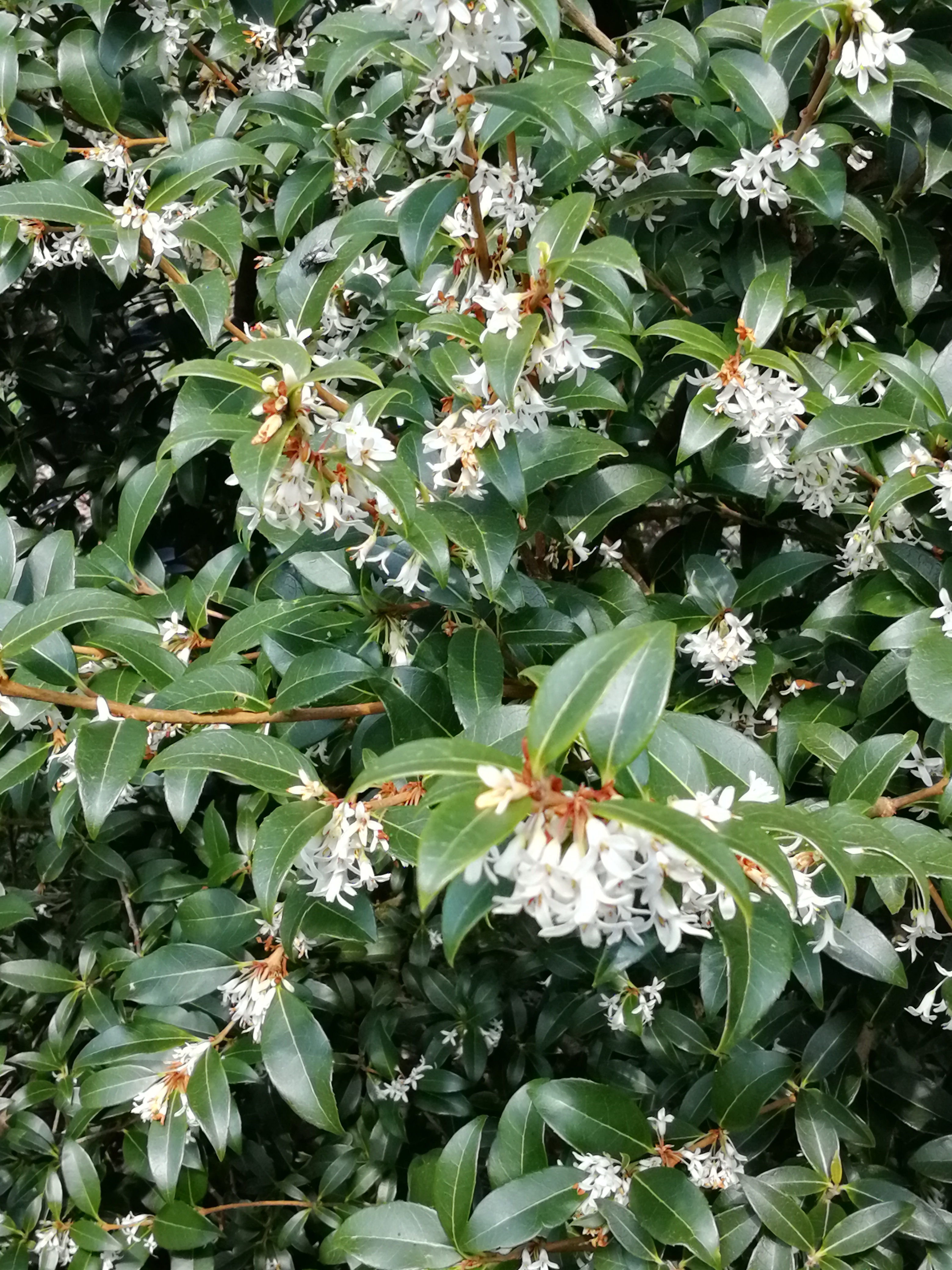
Evergreen Osmanthus delavayi, coming to the end of its flowering period, but still has lots of small white scented flowers.
Amelanchier lamarckii, raised from seed, has started flowering.
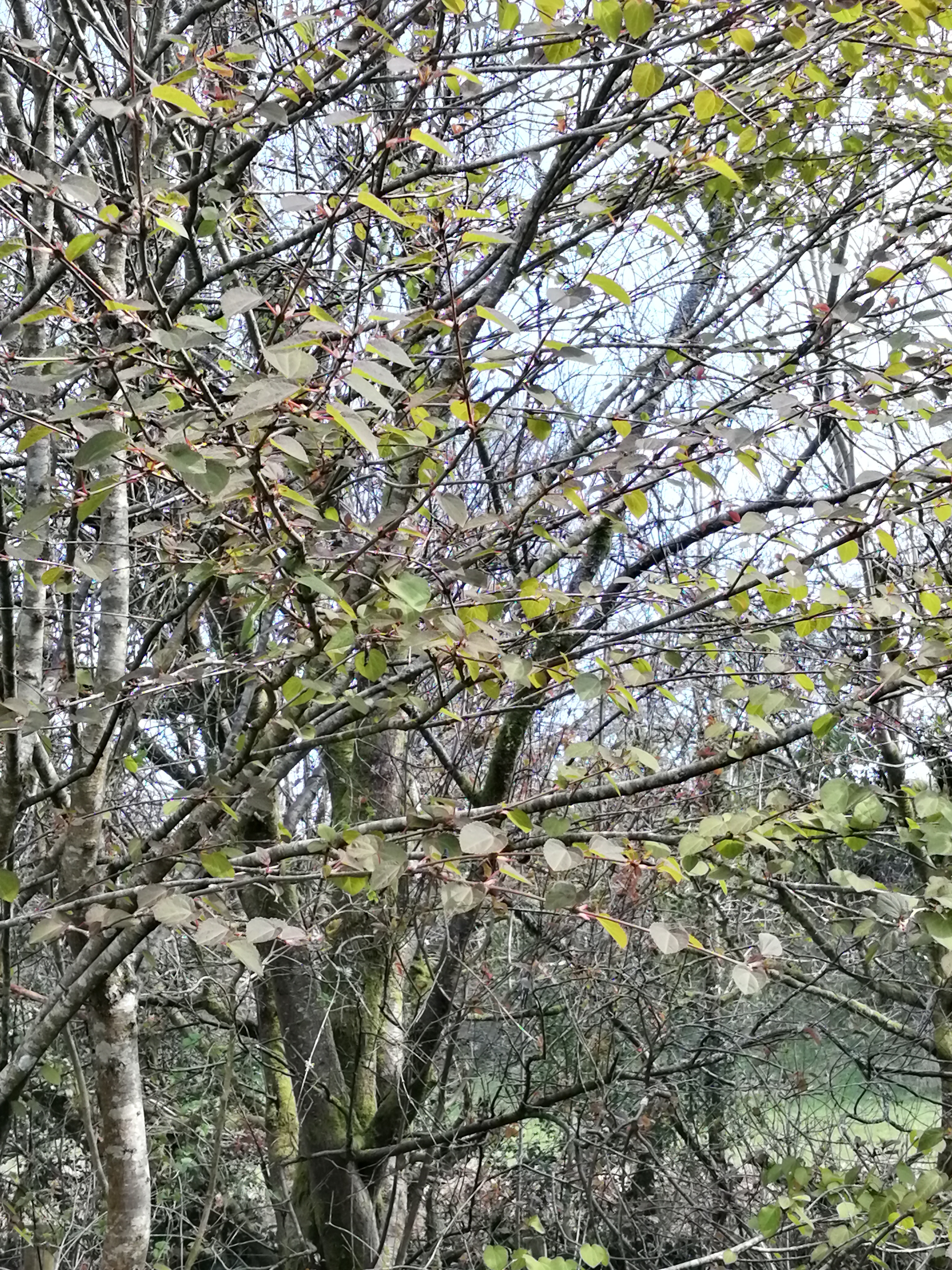
I love the leaves of Cercidiphyllum japonica as they come out, slightly bronze. This small tree has wonderful autumn foliage, smelling like burnt sugar.
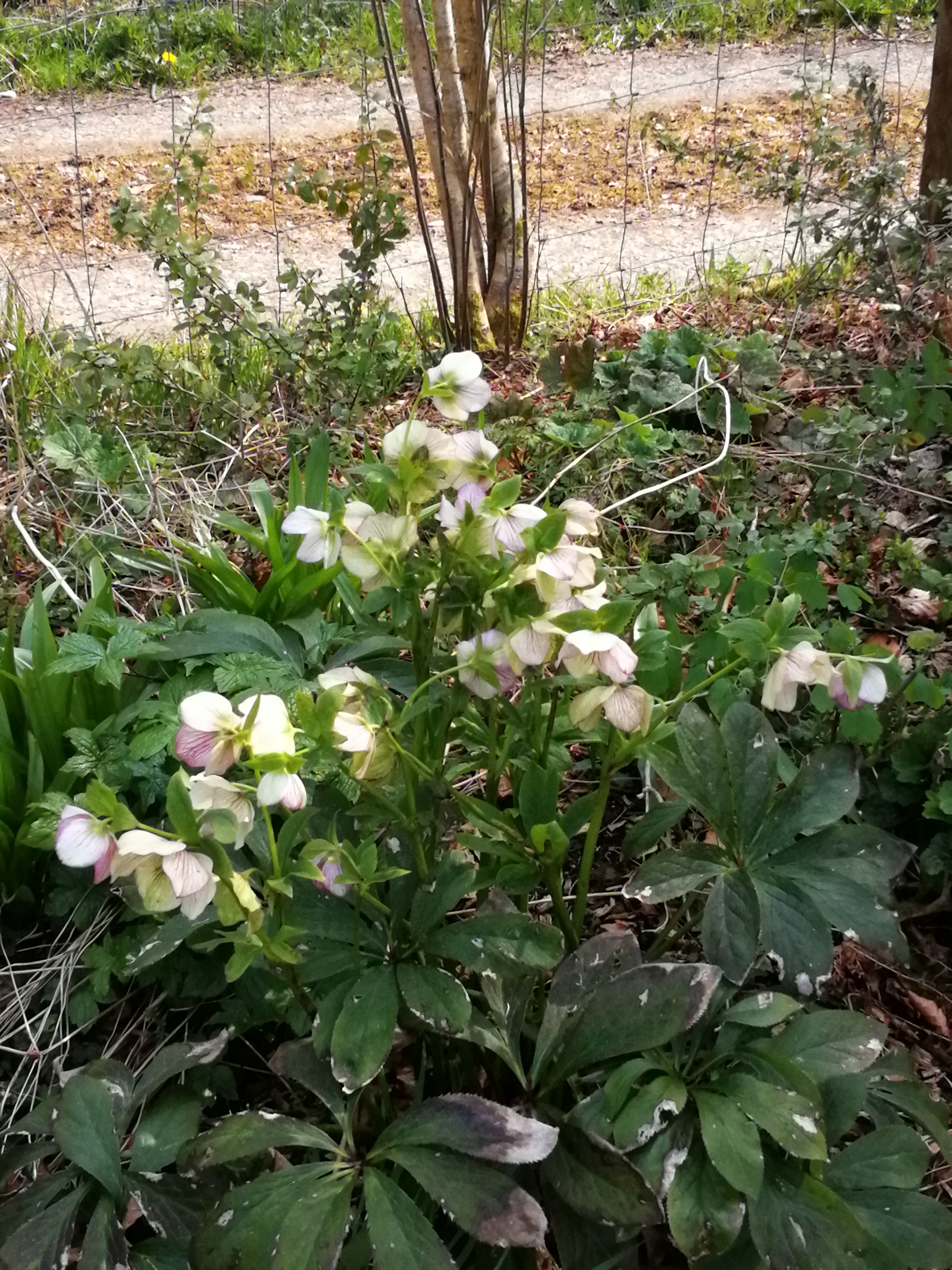
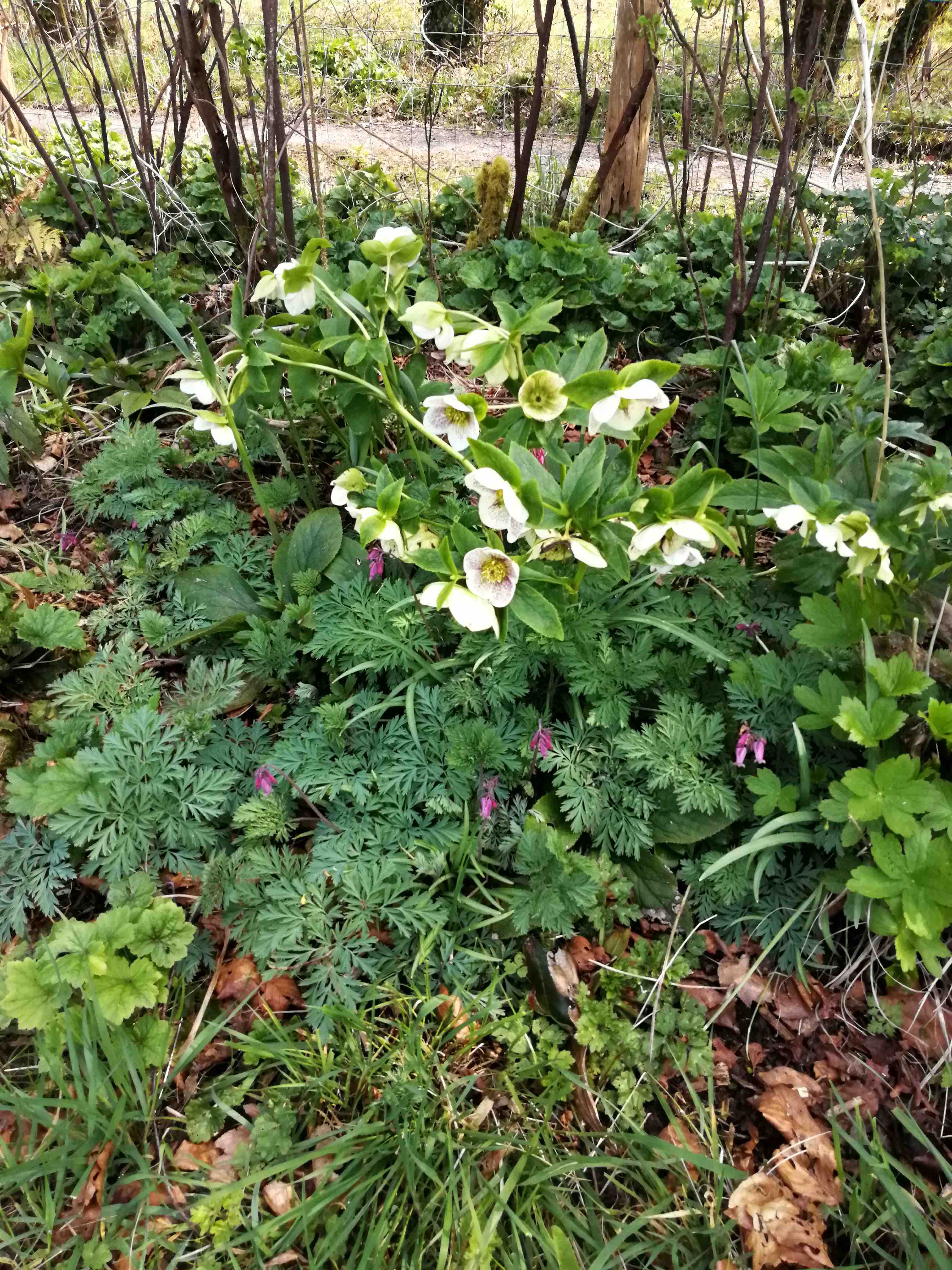
Hellebores and Leucojum ‘Gravetye Giant’ still looking good.
The raised beds have been rejuvenated with new boards, and the arch has been installed. Watch this space for more developments.
And Avril’s passed on how her and Dave’s grandson Freddie, has caught the gardening bug young, and has been sowing and growing seeds and selling the plants from their garden in Norfolk to raise funds for cancer research… over £45 raised on the first day!
For those itching to get out and about to look at other gardens at this always exciting time of the year, here are two links to initiatives to bring garden experiences into your homes.
The first, locally, is a new garden blog set up by Joseph Atkin of Aberglasney Gardens, which as yet hasn’t made it out onto their website, but you can access by clicking here. It’ll keep you up to date with how the gardens are looking, with fabulous photos by award winning local photographer Nigel McCall.
Secondly, the National Garden Scheme has been setting up a whole range of video’d garden tours of gardens which would normally have been opening for charity, but currently remain closed under pandemic restrictions Click here for more, and also how one can still support the charity’s wonderful work, especially vital in these challenging times.
To close, a few snippets from our own garden.
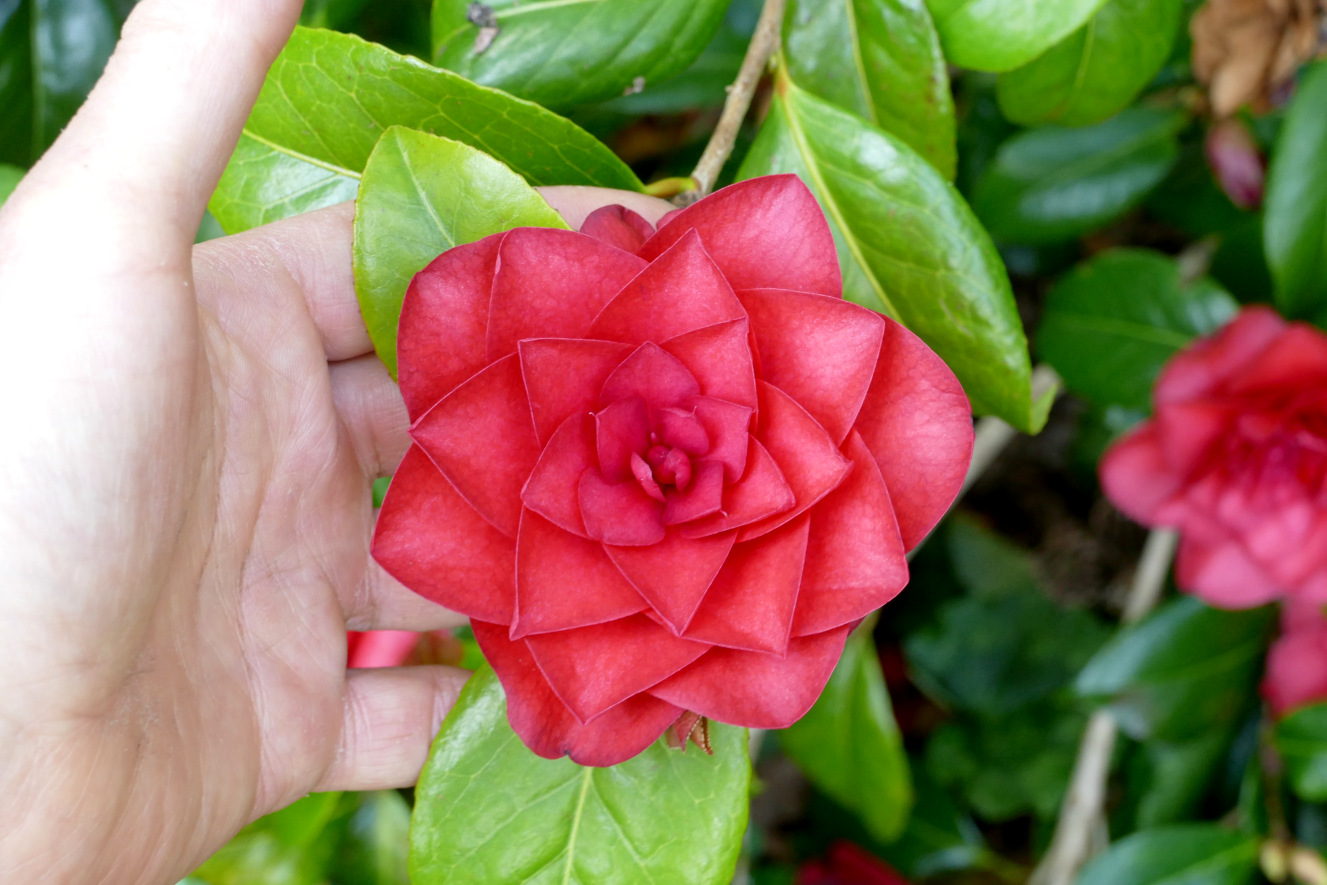
Firstly a Camellia recommendation – Camellia “Les Jury”.
Nearly a decade ago we planted perhaps a dozen named forms of Camellias which we thought we’d carefully researched. They’ve taken years to really get going, but this year has been their best ever. However many, maybe most, have flowers which don’t die gracefully, leaving browning petals. But this one, has always been a star performer for us and largely escapes this failing.
It also seems to flower over a really long period – nearly two months, and even better the new shoots and leaves are tinged with red/brown for several weeks. Plus it’s doing this in spite of me planting it within a few feet of a mature larch tree. So if you fancied a blast of strong colour, which looks great in any light, but especially backlit in the evening, then why not think about getting one?
OK it’s red, and doesn’t attract any insects, but heck, you occasionally need to make the odd sacrifice 🙂
And now one of the benefits of doing a blog. I thought after all these years, because I was writing this piece, just who was Les Jury? Which after a fair bit of ferreting on the internet brought me to the amazing New Zealand Jury garden at Tikorangi and their multi generational family of gardeners and plant breeding history, which I’d never heard about before. If you haven’t either, then you can read loads about the place and the people if you click here.
It turns out that “Les Jury” was the final Camellia of Les’ breeding programme and a very fitting tribute though we (it turns out) have several other named and AGM Camellias out of this same stable.
Secondly, Fiona spotted this splendid small metallic sheened moth, probably a Green Longhorn, Adela reaumurella, in the garden this week. One of the family of Fairy Longhorn micro-moths, we’ve never seen it before,But it was a real treat to watch as a small group of males sat on the leaves of Cornus kousa ‘Miss Satomi’, waiting, and almost casting their enormous antennae to try to catch a passing female…
For anyone thinking that daffodils finished weeks ago, some of the later forms like “Merlin”, “St Piran”, “Oryx” and “Trellisick” can provide colour, height and even fabulous scent right to the end of a very sunny April…
Finally, as always, it would be lovely to keep hearing from members about their favourite plants, or things in their gardens as we go through the next few months. Why not write a few words and send an image or two, preferably resized down to less than 1 MB? I can’t promise to put everything up online immediately, but usually within a fortnight, and it’s a great way of keeping in touch and passing on information.
Or use the Cothigardeners Facebook Page.
You can send things to me at:
Cothigardeners@gmail.com
Thanks again to all who have contributed to this post.
Most members will already have received news from Jenny that very sadly our planned meeting next Wednesday has had to be cancelled. We hope that we can rearrange the talk from Marion Stainton for some time next year, and are very grateful to Marion for her understanding on this matter.
In a very fast moving situation with the Covid 19 outbreak, and with many members either away, ill or preferring not to attend, regrettably cancelling the meeting seemed to be the most sensible step to take.
Apologies to all, and do pass on this news to anyone you think might have been planning to attend.
With the weather apparently improving a little next week, at least we can all look forward to more time outside in the fresh air, observing our gardens and the natural world, which are blissfully oblivious to all that’s occurring in the human sphere of influence, explode with typical spring exuberance.
And there’s always something that’s benefited from our mixed weather of late. Edgworthia chrysantha, a deciduous relative of Daphnes, is flowering better than ever right now (below), with wonderfully scented flower clusters on bare branches which apparently always produce new growth in three directions.
A native of South West China (and Nepal and Japan), it fortunately has a more uplifting presence than their recent inadvertent coronavirus export.
A very Happy New Year to all Cothi gardeners and readers of this blog.
For any who couldn’t make our Christmas meal at The Forest Arms in December, the photos illustrate how we filled the dining area to capacity, and once again had a brilliant meal and chance to catch up, thanks to the hard work and attention of George, Louise and their staff. Very many thanks to them all.
So we now dash into 2020, and the gardening challenges of a new decade, beginning with our AGM in about 10 days time on Wednesday January 15th at 7.30 pm, though as always it would be great if everyone can arrive early from 7 pm to help set up tables, etc so that the actual AGM can begin promptly.
Yvonne reminds members that The AGM is a necessary and useful event for a group like ours, it being a chance to socialise more than at our regular speaker meetings. For those who haven’t been before, and dread AGM’s – firstly it doesn’t take very long, and, secondly there won’t be any arm twisting on the night, though should anyone wish to be considered for a position at this late stage, do let Yvonne know asap, and at least one week before the meeting please. The AGM agenda is as below:
1. Apologies
2. Minutes of 2019 AGM
3. Matters Arising
4. Chairman’s Report
5. Treasurer’s Report
• Membership fee to be increased to £15 per person per year
• Membership year to be changed to 1 February to 31 January. Accounts year to remain unchanged
6. Election of Officers
Chairman
Treasurer
7. AOB
The AGM will be followed by supper (please bring a plate of food to share) and then Derek’s quiz, which in a lighthearted way always checks our brains are still working after the Christmas festivities.
There will also be a short auction of items which are not necessarily garden related, which will help to raise funds to supplement the club’s income. If you have anything you would like to donate, please let Yvonne know as soon as possible.
Donations which have already been pledged are:
Some special snowdrops from Julian
Books from Anne & Philip Large
In previous years we’ve had a really good turnout for this evening, and it’s a great start to the new year so look forward to seeing many of you there.




















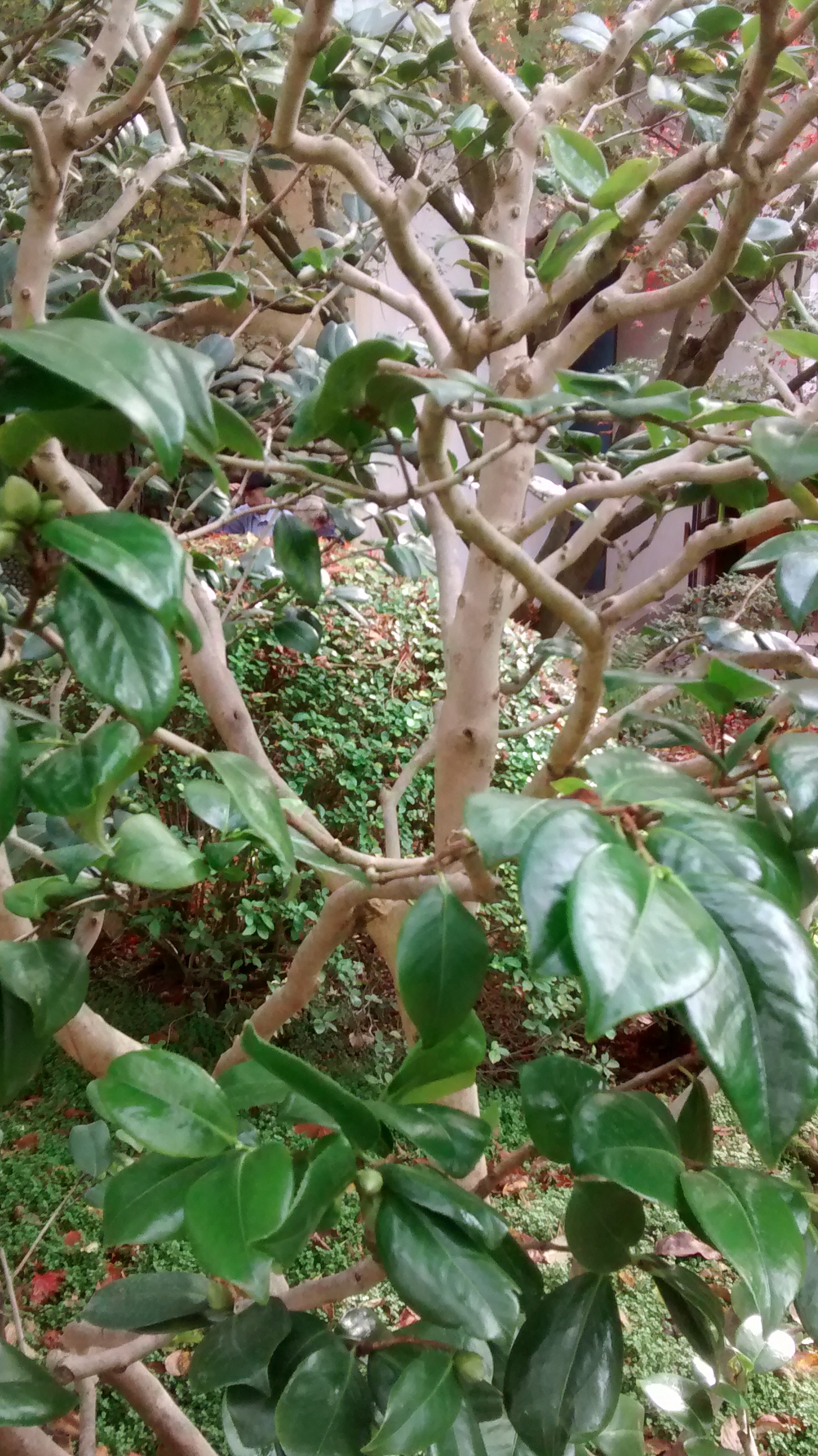



 I guess there are other evergreens which would benefit, though the defuzzing and raising of the canopy works just as well with smaller deciduous shrubs or trees, like Acers, as they get a bit bigger. (Albert Khan views again below …)

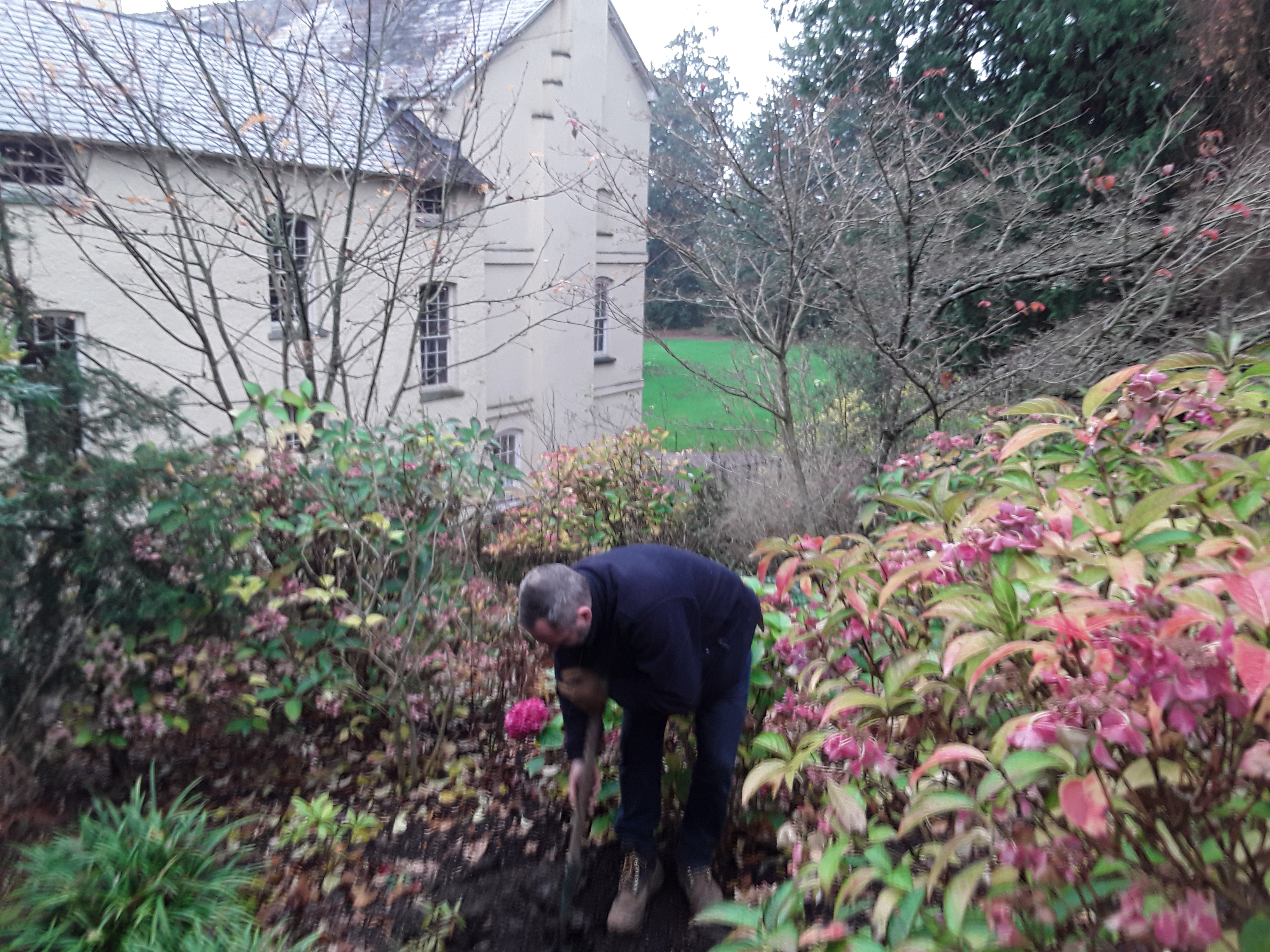








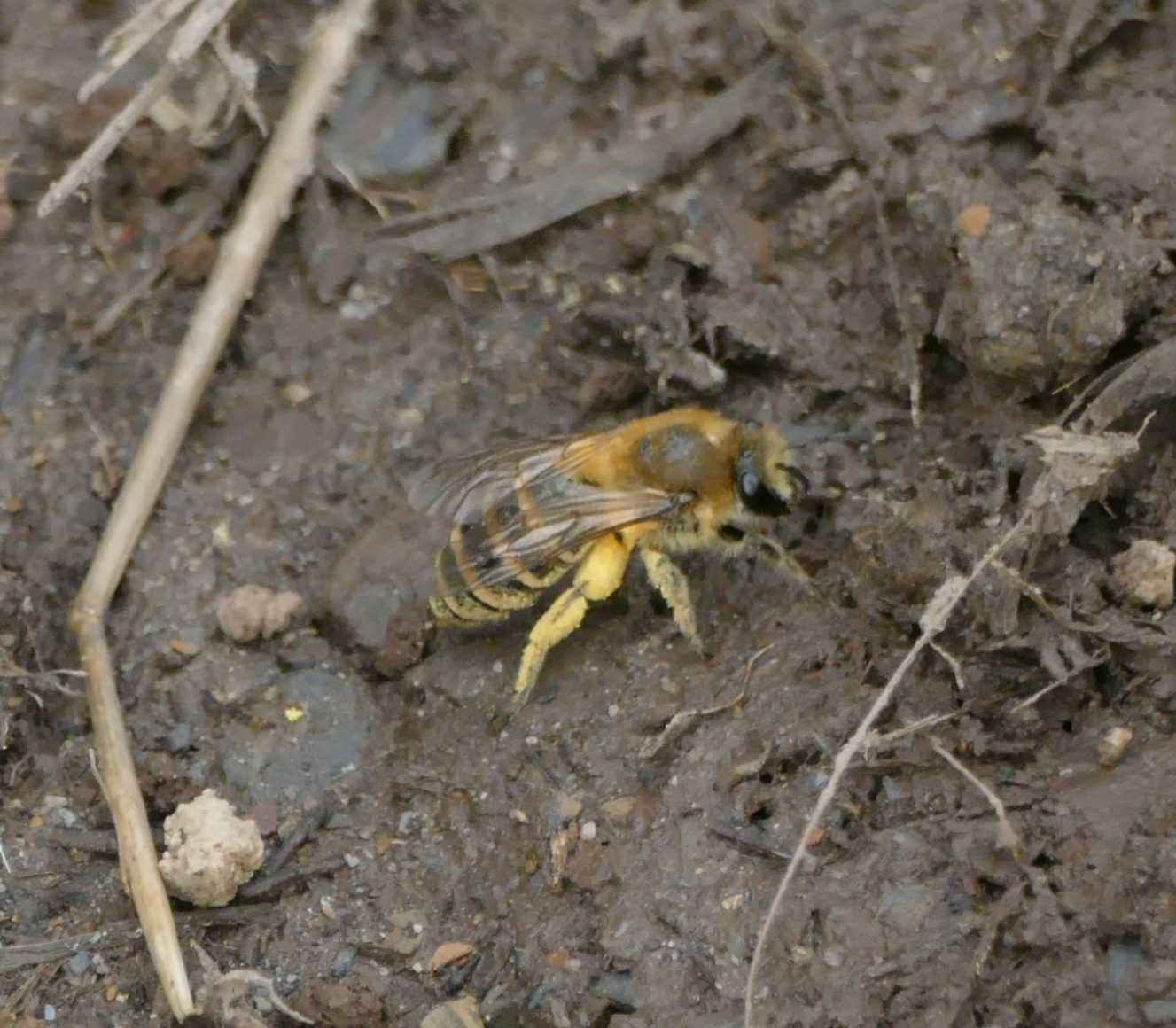 Any ideas what these are, and have you seen them in your garden recently, or indeed ever?
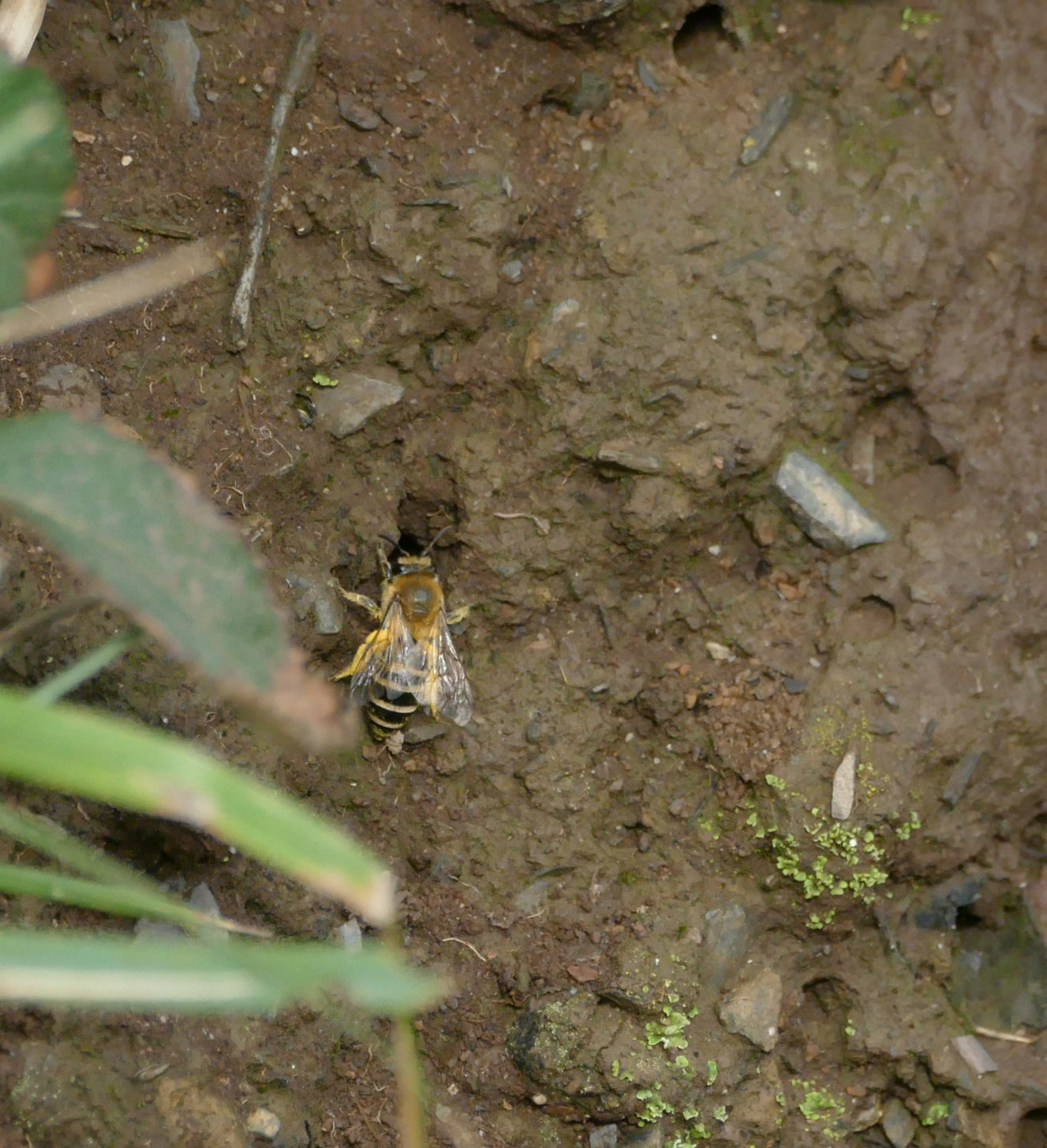 I’m including them because we hadn’t seen them before, and these were found as part of a large colony just above the beach at Pwllgwaleod, at ankle height on the coastal path walk round Dinas Island in Pembrokeshire last Thursday.
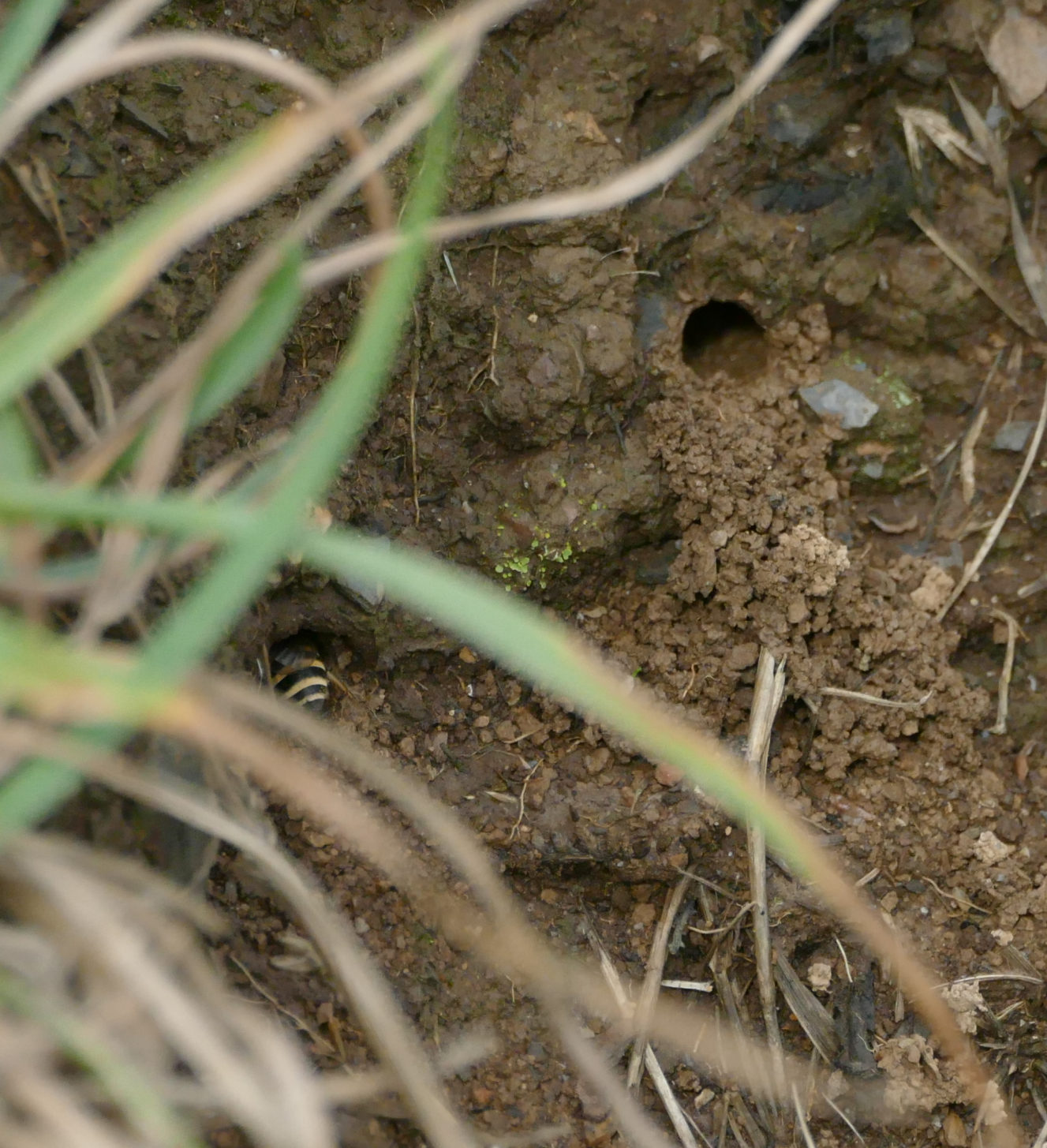








 Well, mainly the Himalayan Balsam half a mile away in the village, which brings them home with characteristic white dusting on their backs.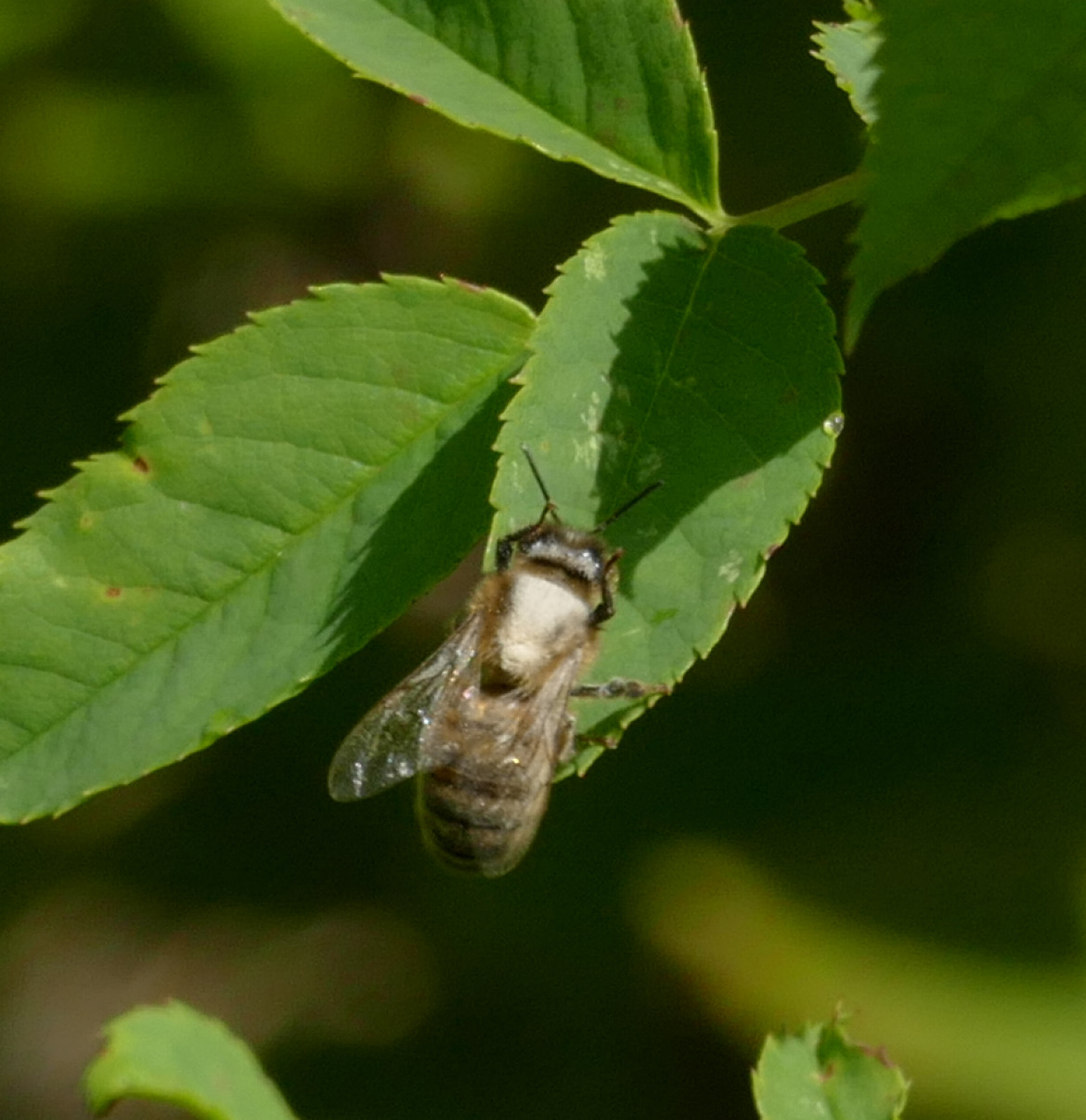







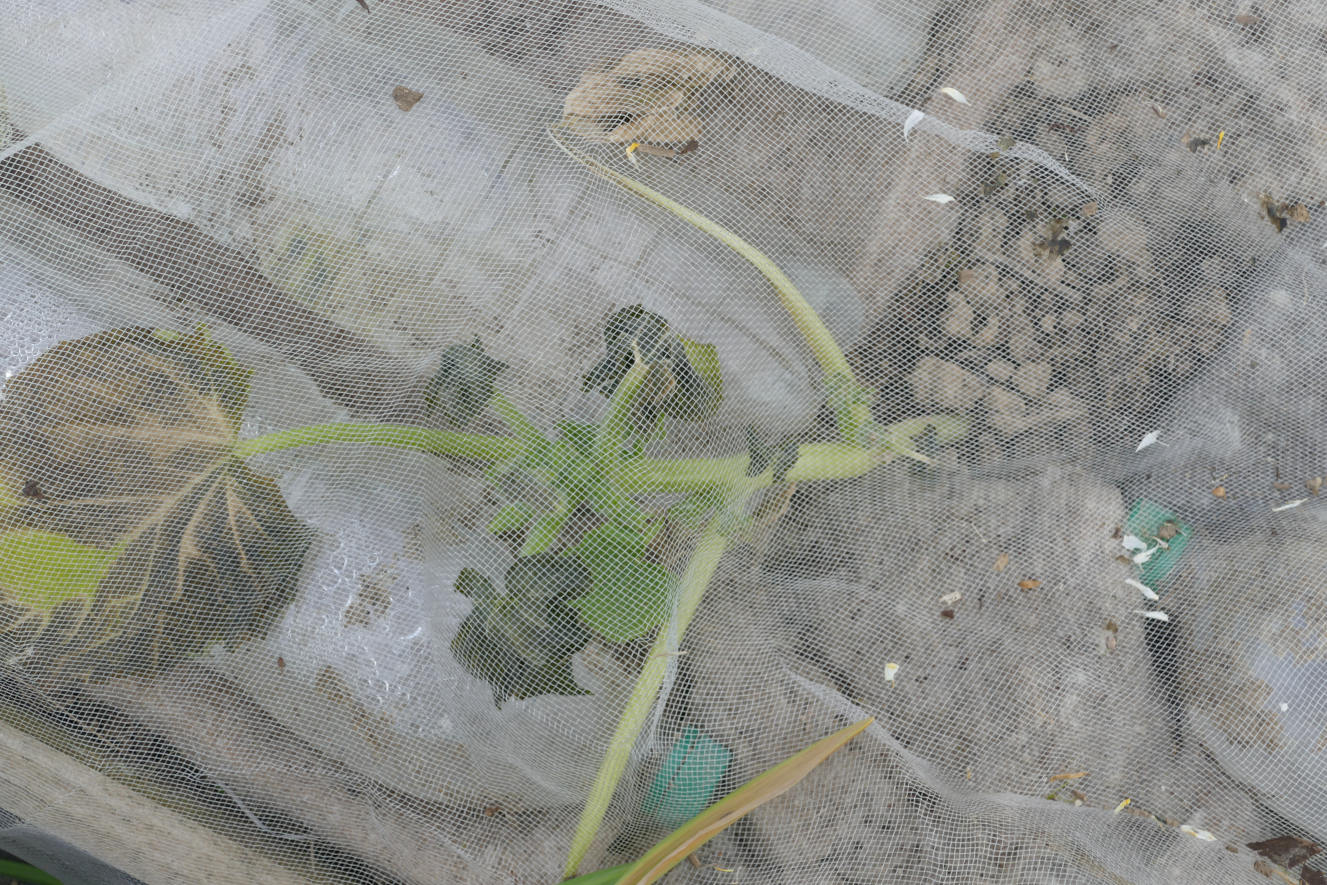
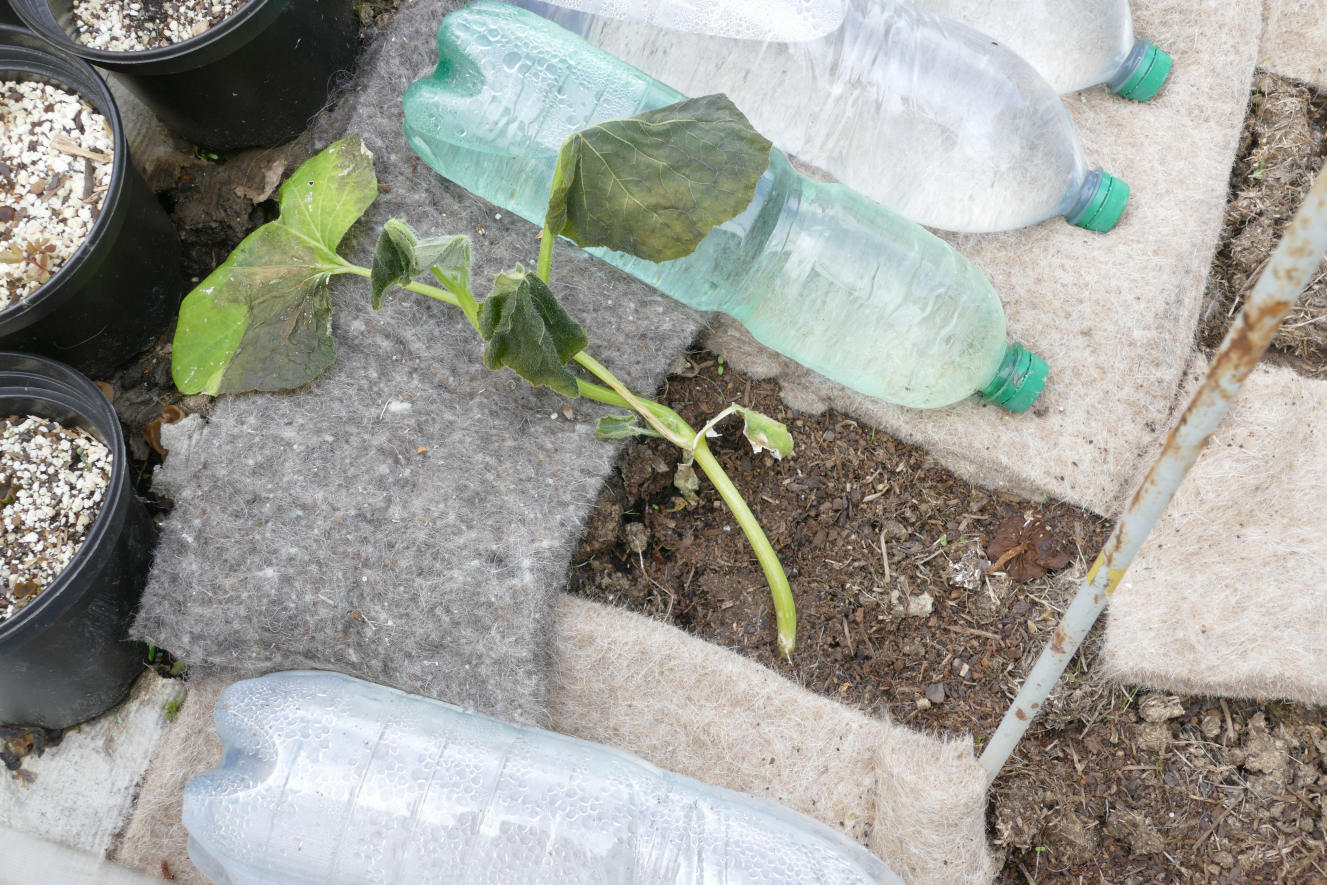 but enviromesh, water bottles and woolly mats seemed to mitigate the worst of the minus 3 temperatures, and all but 3 squash plants seem to have recovered and are growing away within a fortnight. Will they still fruit though?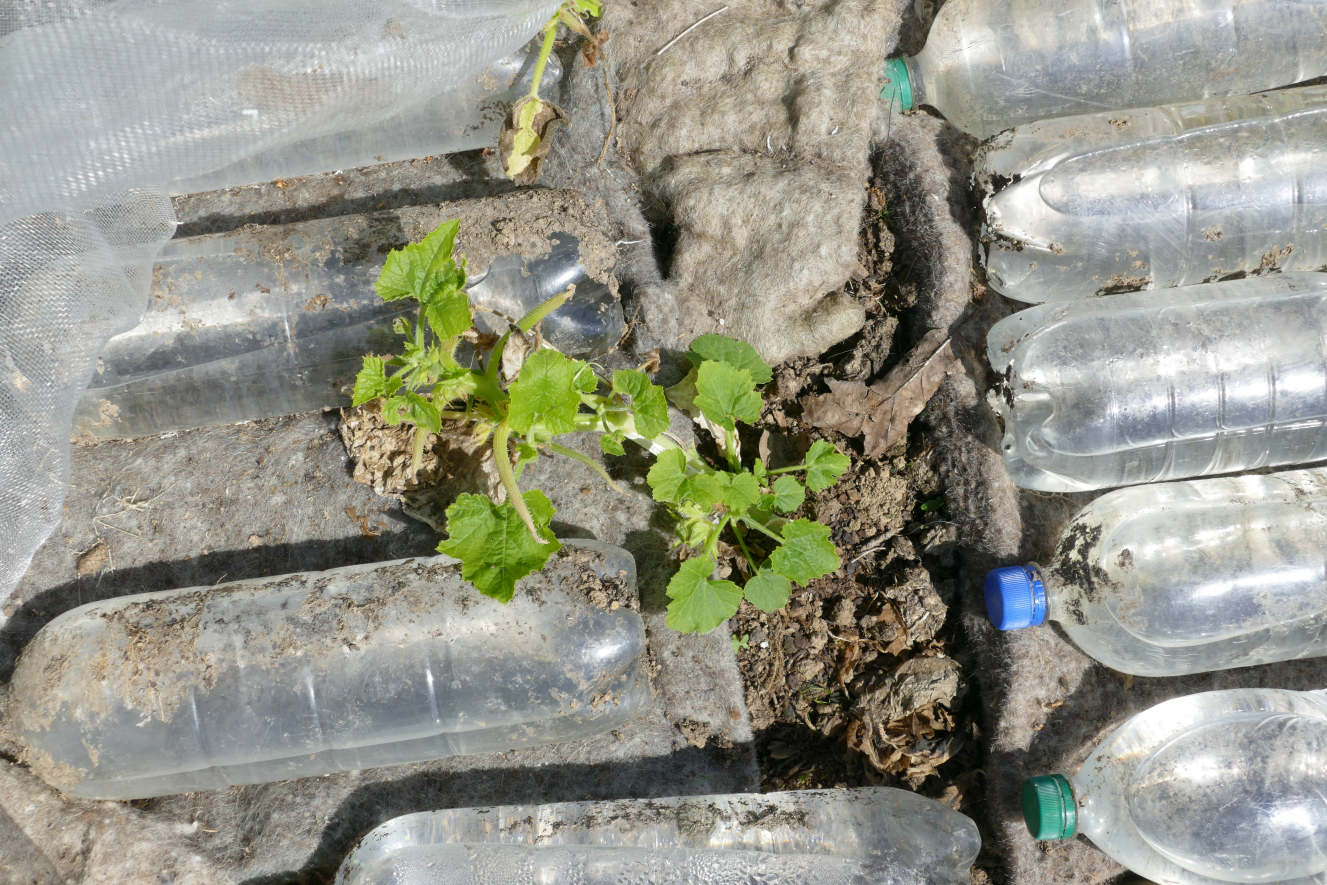

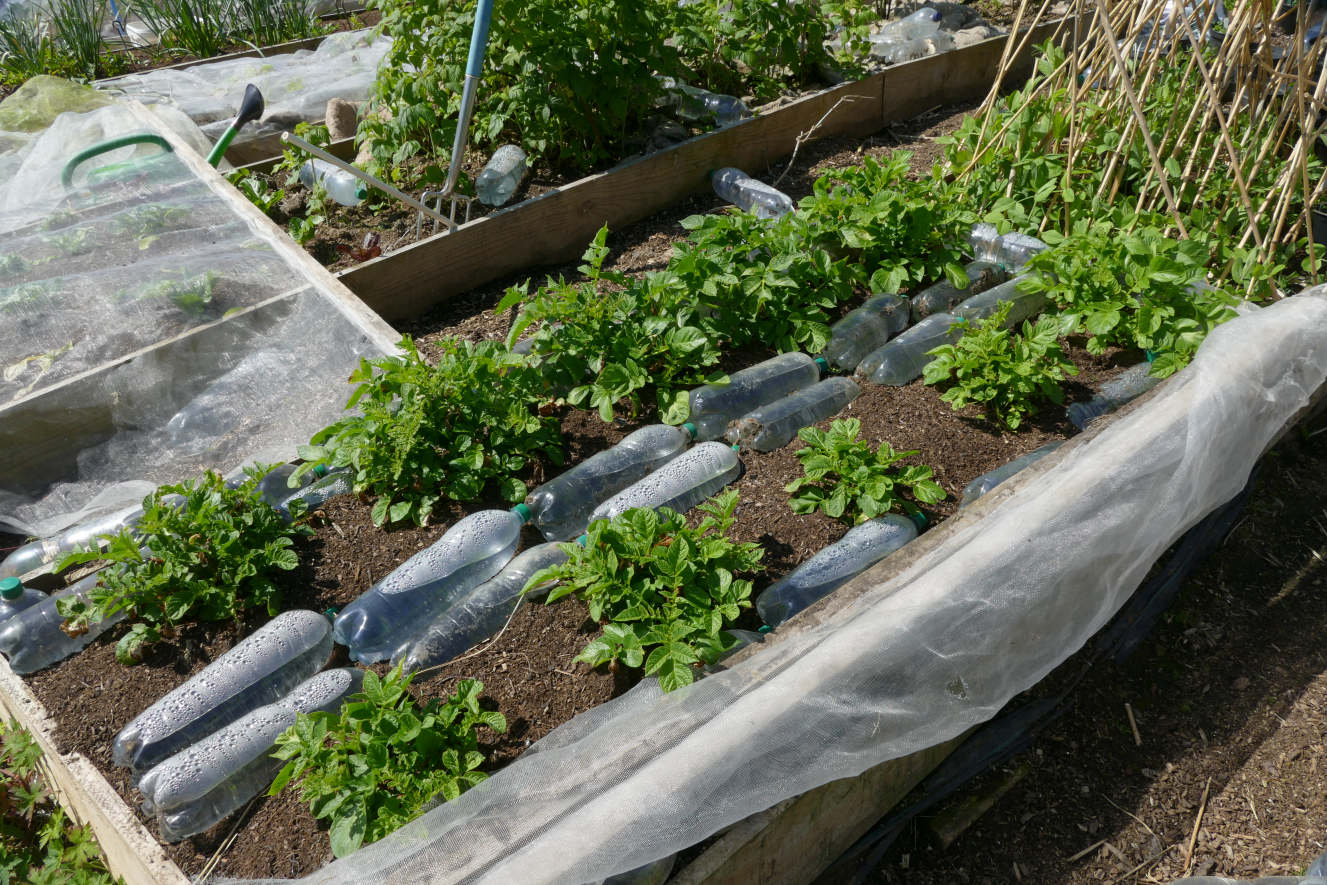 In the hay meadow even some early orchids keeled over, probably because the flowers are about two weeks ahead of normal, following the sunny dry spring weather.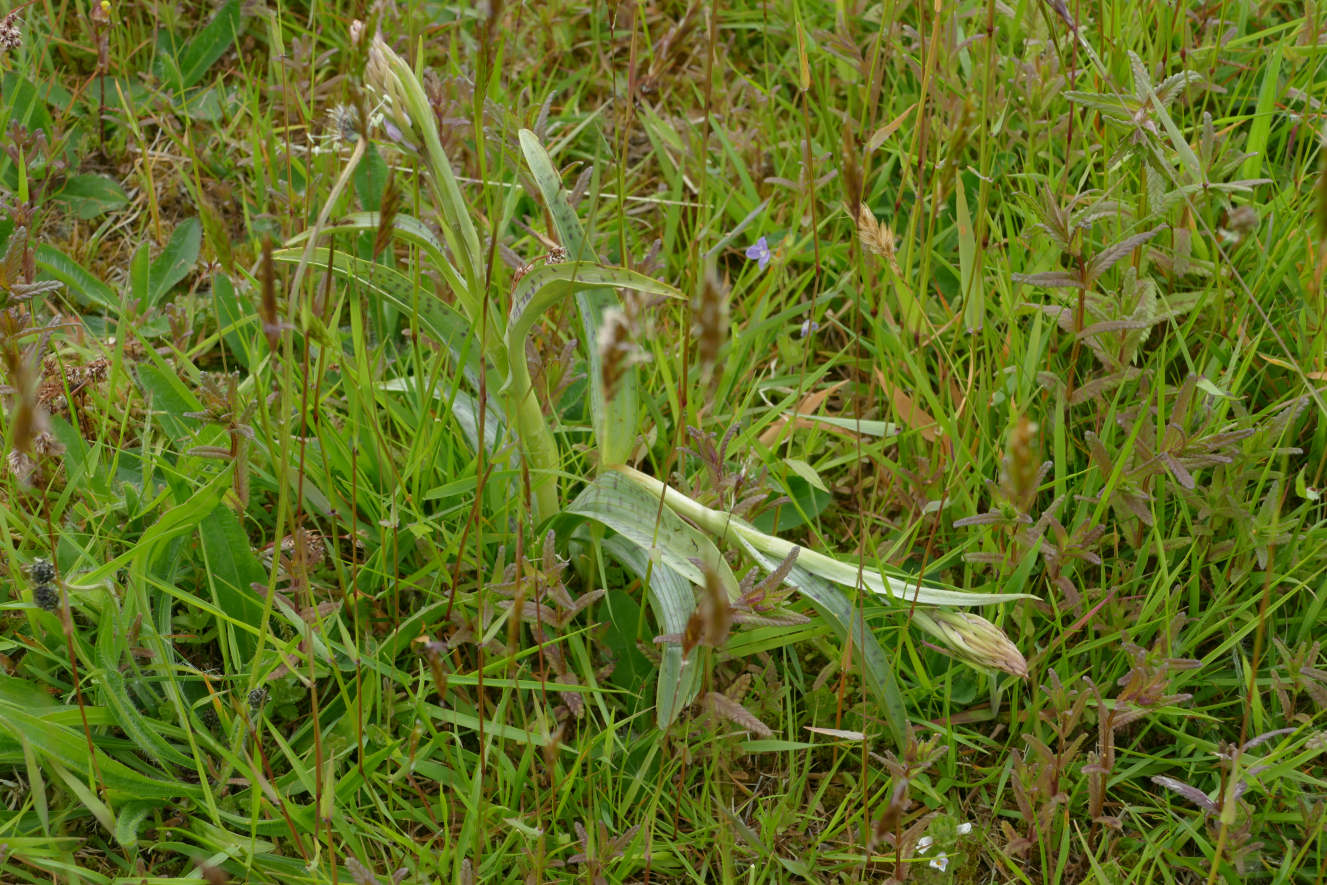

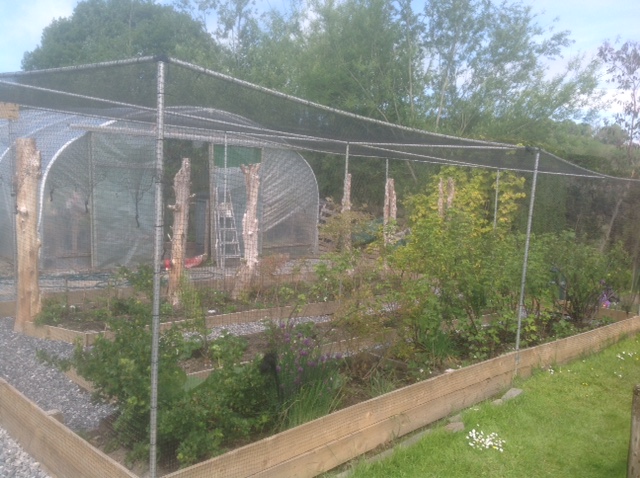





 After noting it had grown shoots over 15 feet long in a year, I planted the still young plant into a rotten hollow centred tree stump, filled with compost which was quite close to the base of a youngish oak in 2012.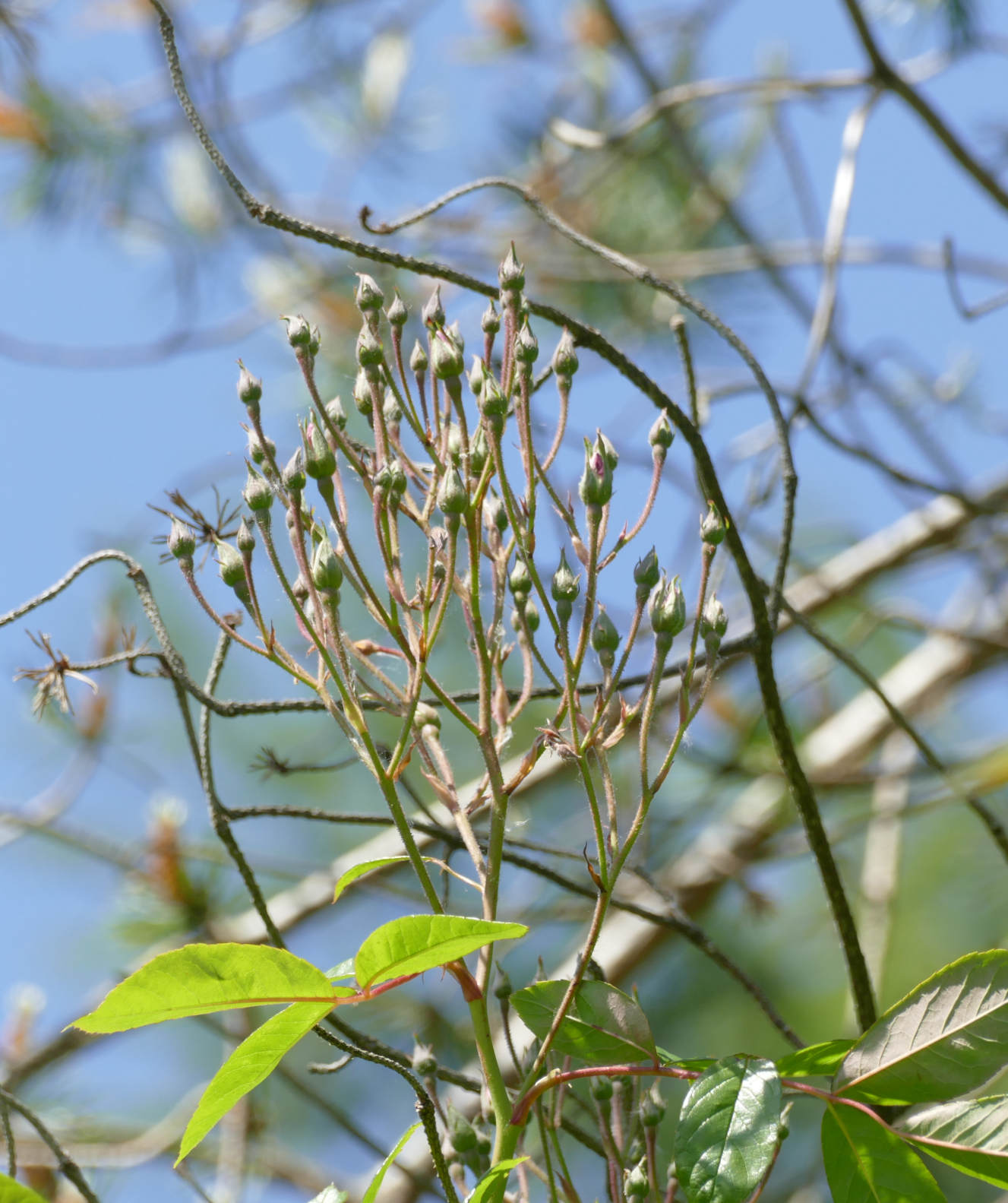








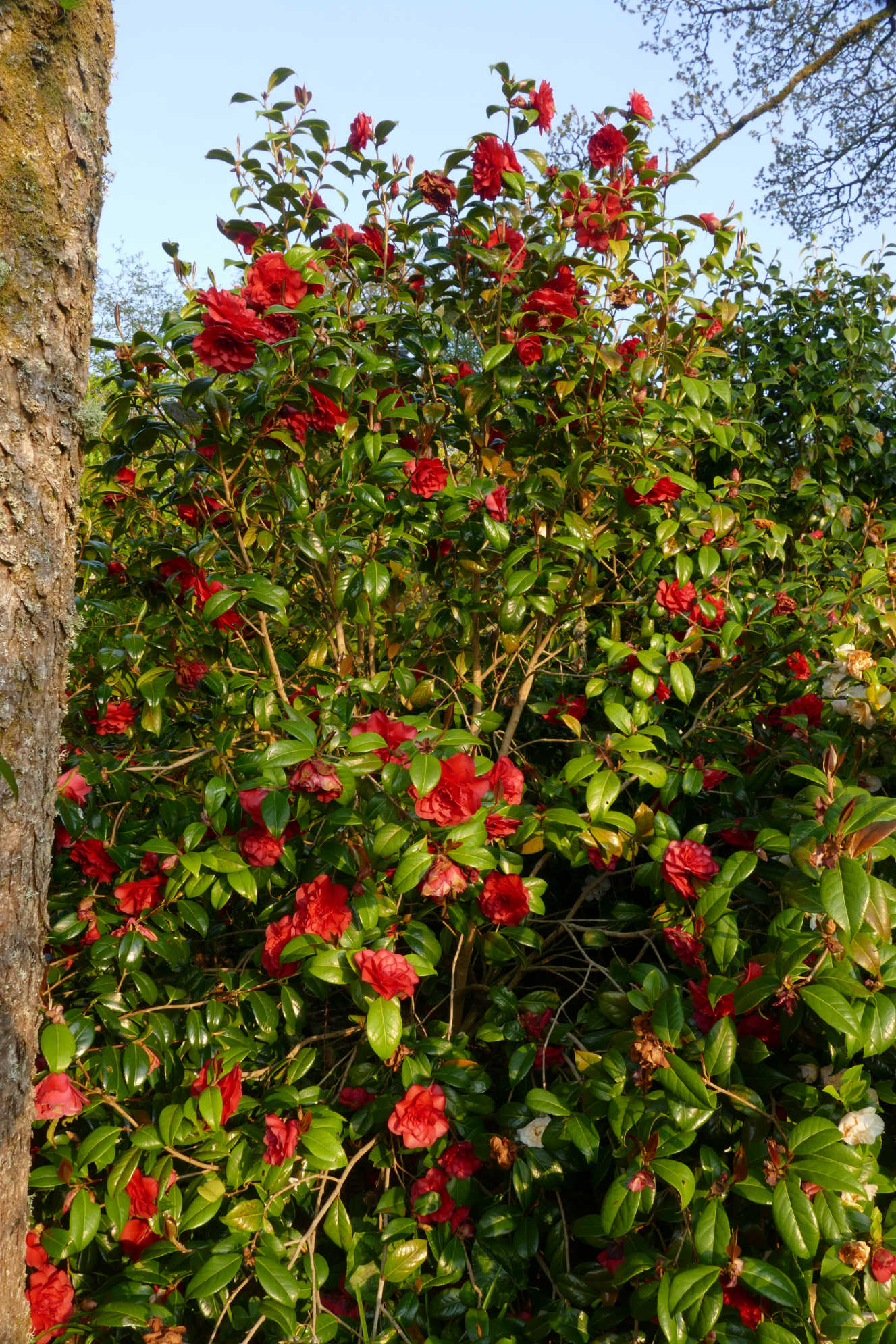
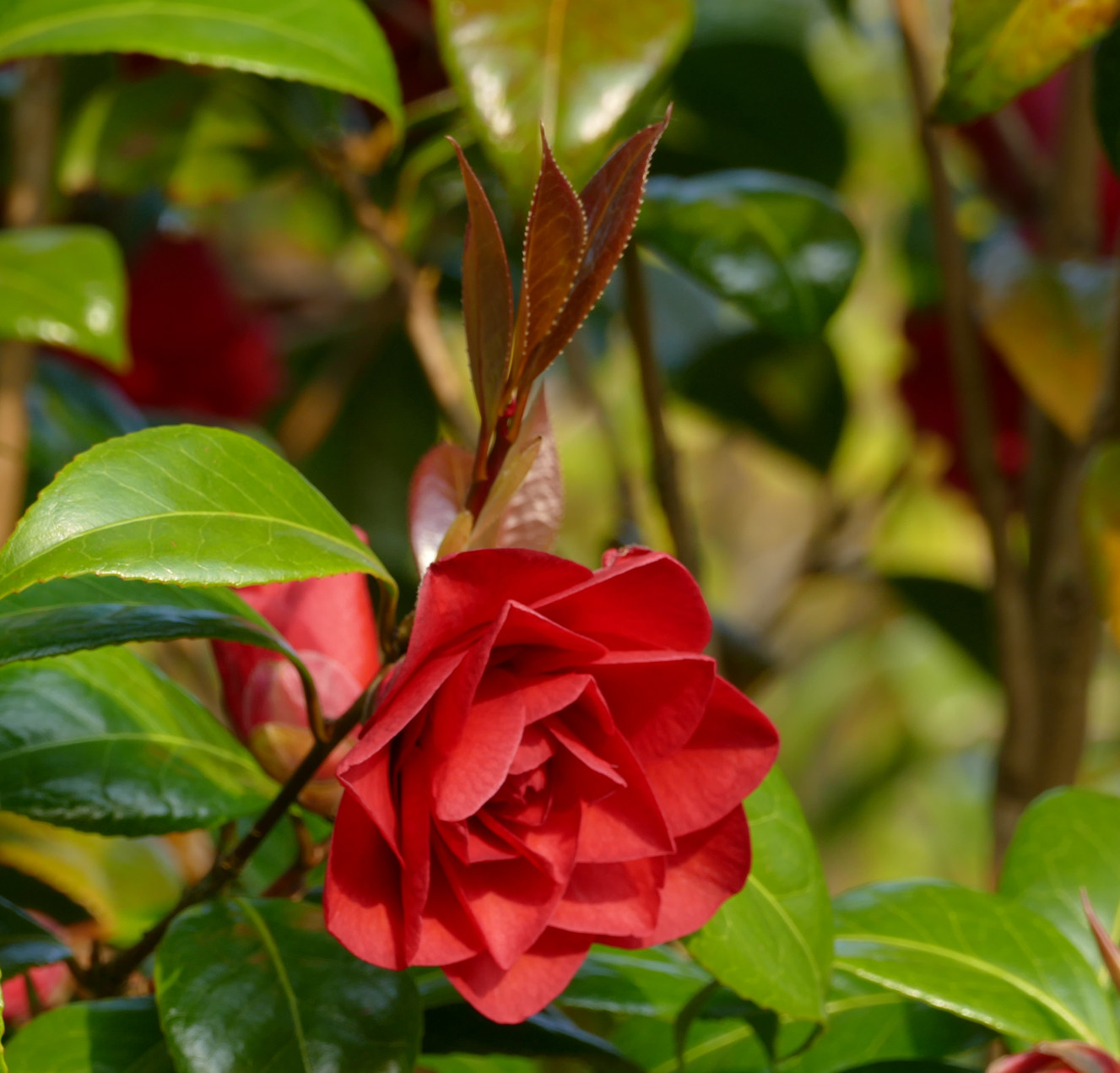 Plus it’s doing this in spite of me planting it within a few feet of a mature larch tree. So if you fancied a blast of strong colour, which looks great in any light, but especially backlit in the evening, then why not think about getting one?

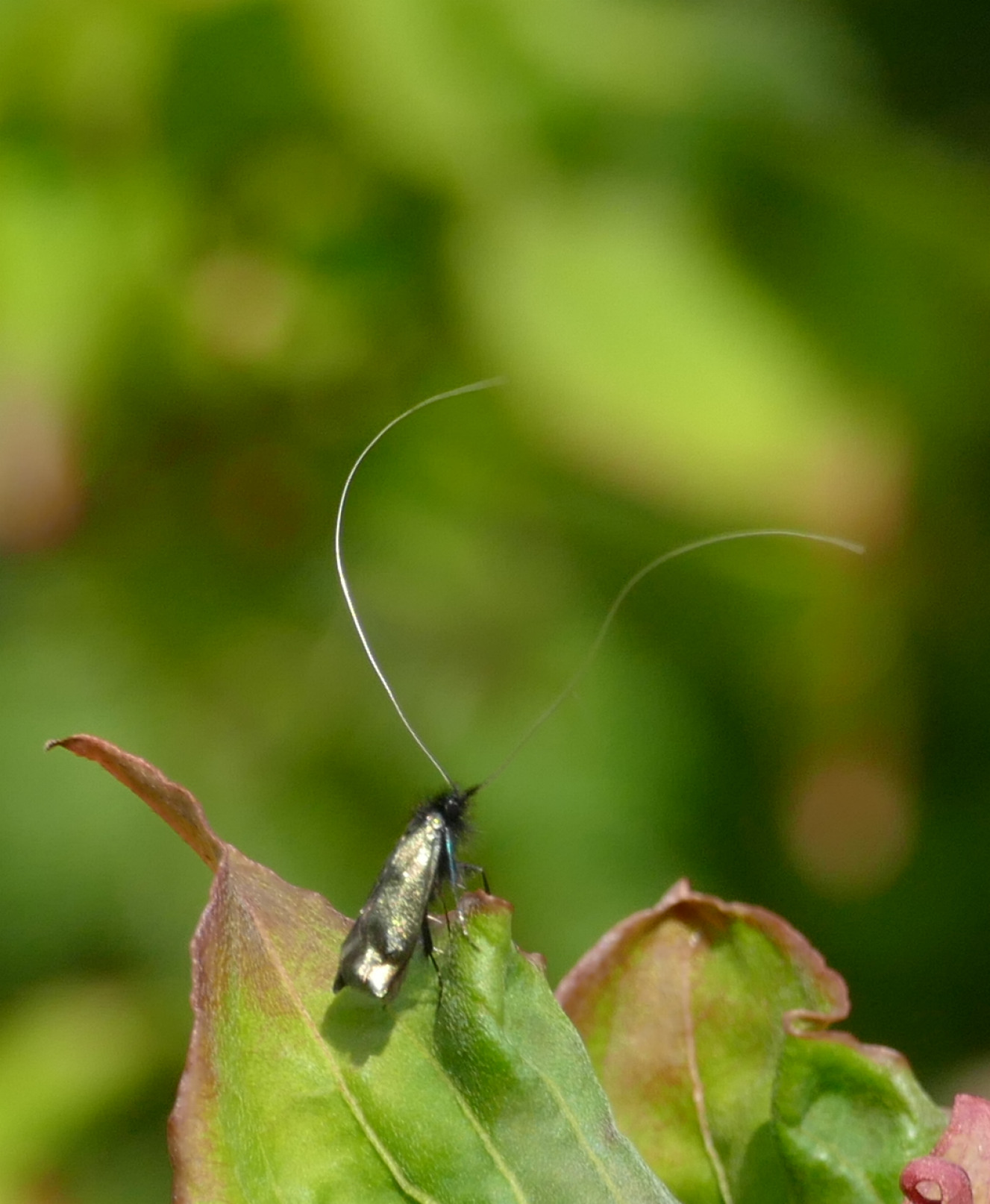 One of the family of Fairy Longhorn micro-moths, we’ve never seen it before,
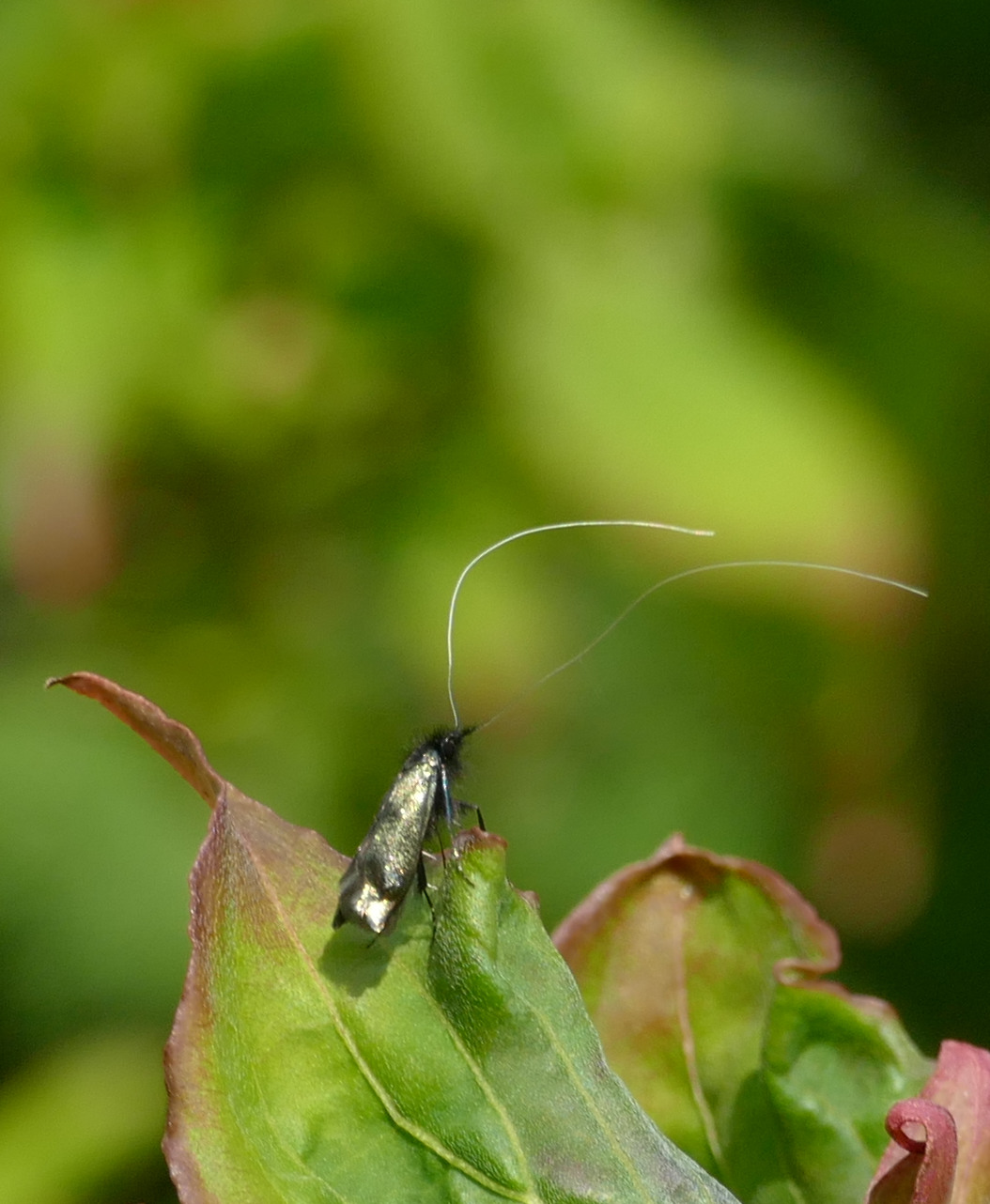 But it was a real treat to watch as a small group of males sat on the leaves of Cornus kousa ‘Miss Satomi’, waiting, and almost casting their enormous antennae to try to catch a passing female…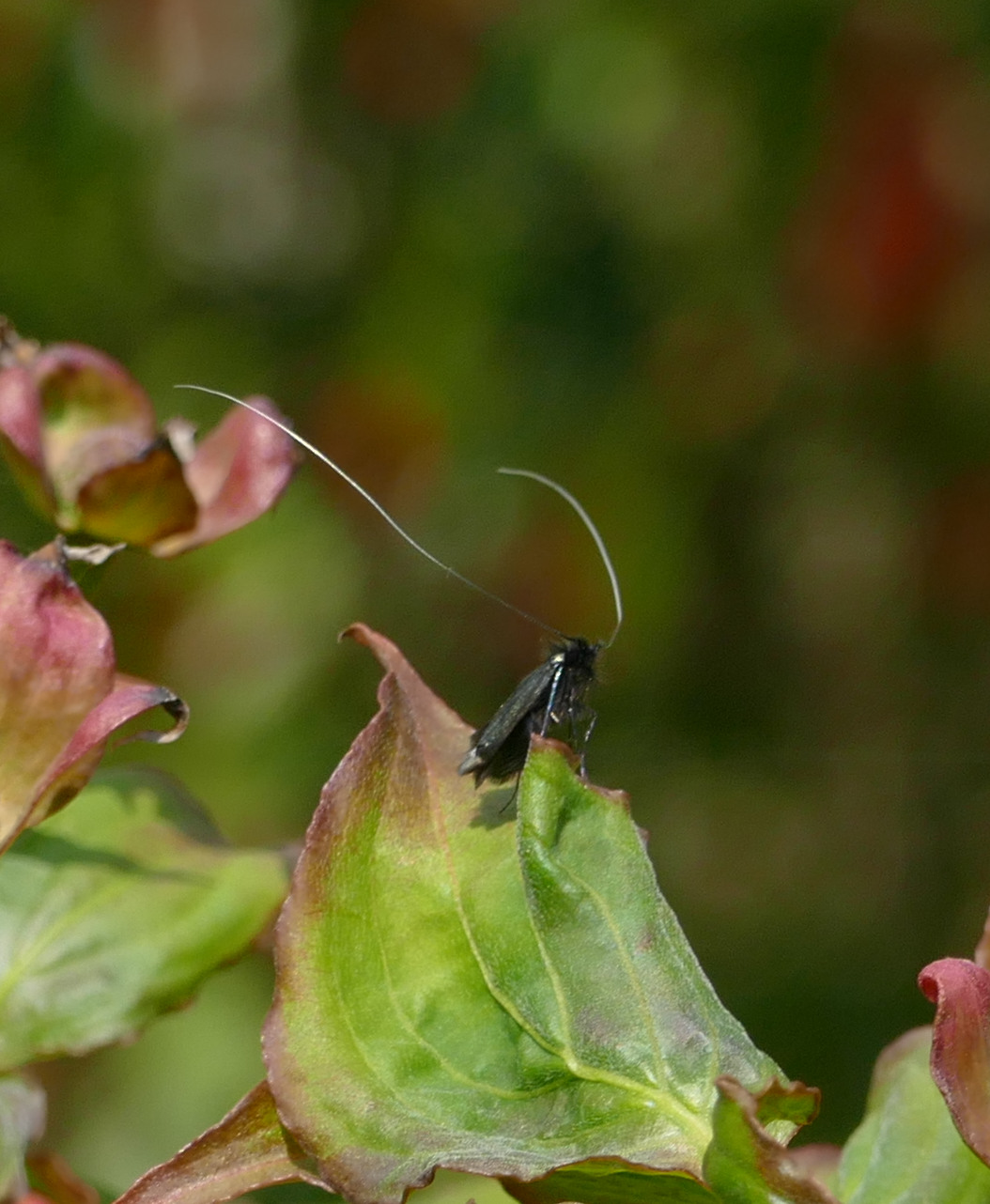





 Cothi Gardeners