The Flower Garden by Sara Redman; Upcoming Club Events

Sara grew up on a farm and worked for the council for 30 years but had always been a keen gardener with an award winning allotment, and then she bought her smallholding, where she now lives, in 2015. The house needed renovating, and she spent 2 years preparing the ground for the Flower Meadow, which opened as a business in 2017 when she joined all the local markets to start selling flowers.

There are now 2 polytunnels (with another to come), and a greenhouse (with another on the way). The smallholding is totally organic, with ducks for slug control and she makes all her own compost. She only does any serious weeding twice yearly, uses no plastics and sticks to a permaculture system. She only attempts to grow flowers that are happy in the smallholding and feels it’s a waste of time trying to bring on unhappy plants. She joined the “Flowers from the Farm” organisation in 2018 which is a group of (nationally) like-minded flower growers which you can find near you on their website .

The flowers from Sara are not posted, and can only be bought either from the farm (from £15 per bouquet) or from events she attends; she has done demonstrations at the Royal Welsh show, and the RHS show in Cardiff although there are sadly no more RHS shows in Wales now. She did the Chelsea Flower Show once, but says never again!

There are flower workshops at the smallholding and the premises are also used for other types of craft sessions. Supplies for weddings are a big part of the business (and weddings can be held on the smallholding) but with a caveat that the flowers are returned to the farm afterwards thus reducing waste. When arranging flowers, foam is completely avoided and chicken wire is used. Sometimes she makes whole flower installations for weddings.

There are Christmas wreath making sessions and some sessions for children. There is a wild flower meadow at the farm which is just cut down by hand once yearly, otherwise it needs no attention. She keeps bees (they must think they are in heaven!) and donkeys.

Lots of types of dahlias are grown and planted twice as deep as normal and are unusually generally left in the ground in the winter, although in the last wet winter, about half of them were lost. Dahlia plants are surrounded by sheep’s wool which deters the slugs. Although the farm is on a hill, it does get quite wet.

She uses the greenhouse for growing plants from seed and recommends only using fresh compost for this as it loses its nutrients. She starts growing sweet peas (her favourite flower) in the greenhouse in September but only grows them on in the polytunnel as the site is windy which they can’t handle. She also uses thee flowers from shrubs which are useful for greenery in arrangements – Eucalyptus is really handy and is easy to grow from seed.

Making compost is never-ending and she uses a concrete mixer to combine ingredients with alpaca poo which is brilliant because it can be used straight from the point of delivery.

Dawn thanked Sara for an entertaining and useful talk and encouraged us to make a note of the Open Day at the Flower Meadow which happens on 10th August 2024.


Upcoming Club Events

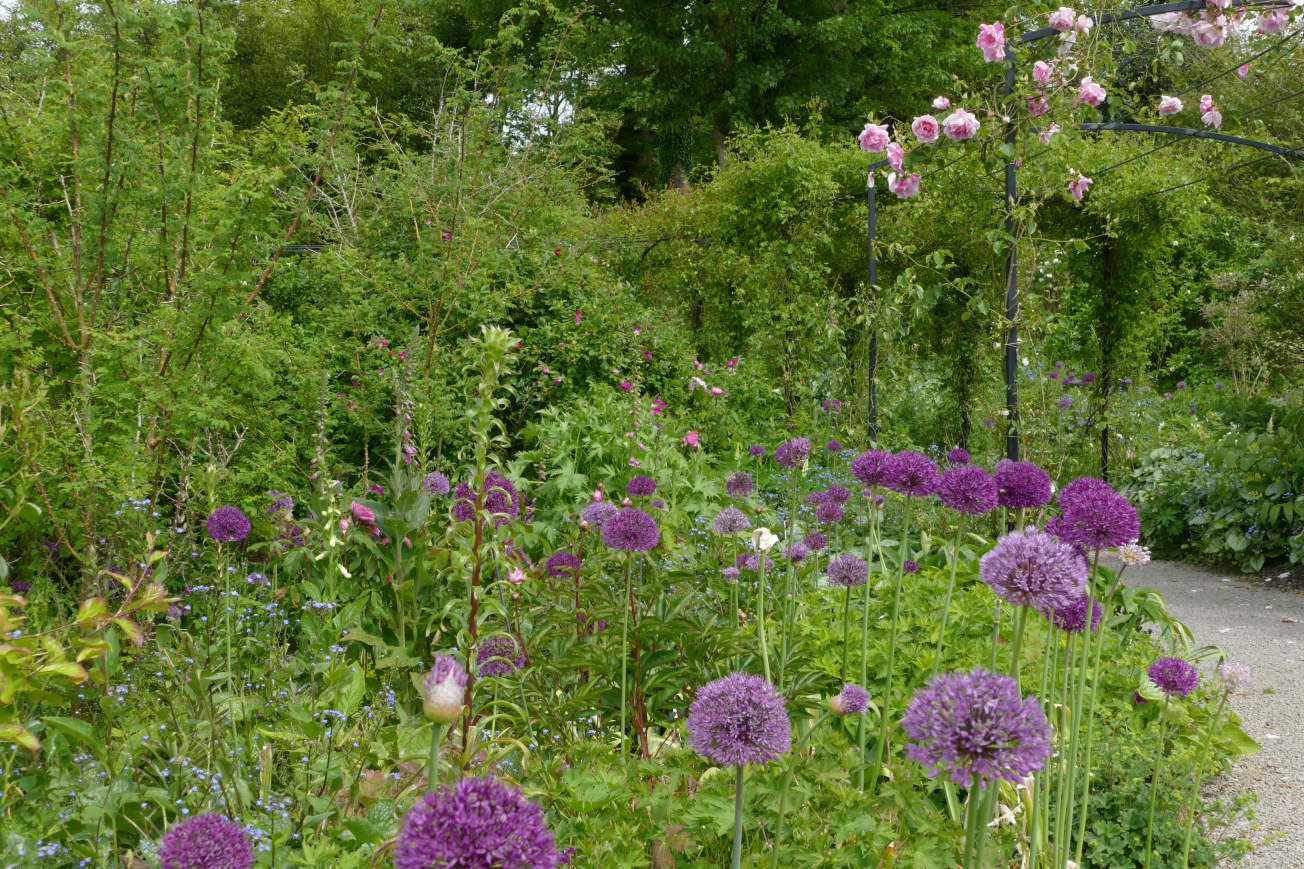
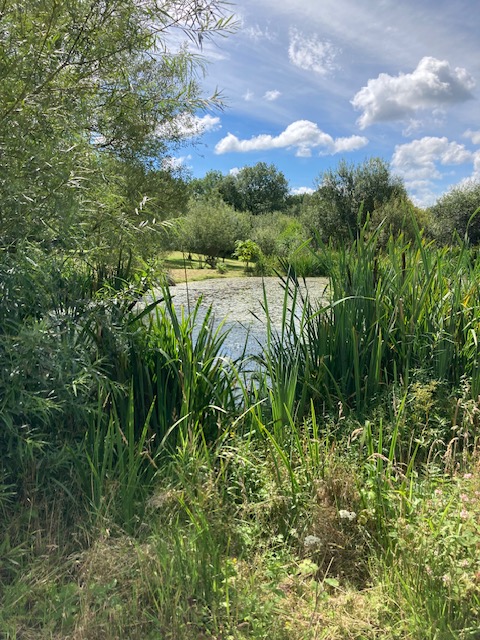
Members are reminded that our club summer social will be on Wednesday 21st August, probably (by general consensus!) at Dawn’s house – Cae Caradog, Ffarmers SA19 8NQ – see pictures below. Please think of any activities we could do outside and remember to bring food to share.

Our October meeting, on 16th, will be hosted by Richard Bramley of Farmyard Nurseries and he will take questions, following the format of the radio programme “Gardeners’ Question Time”. So please make a note in advance of any problems (garden related!) that you would like a solution for.
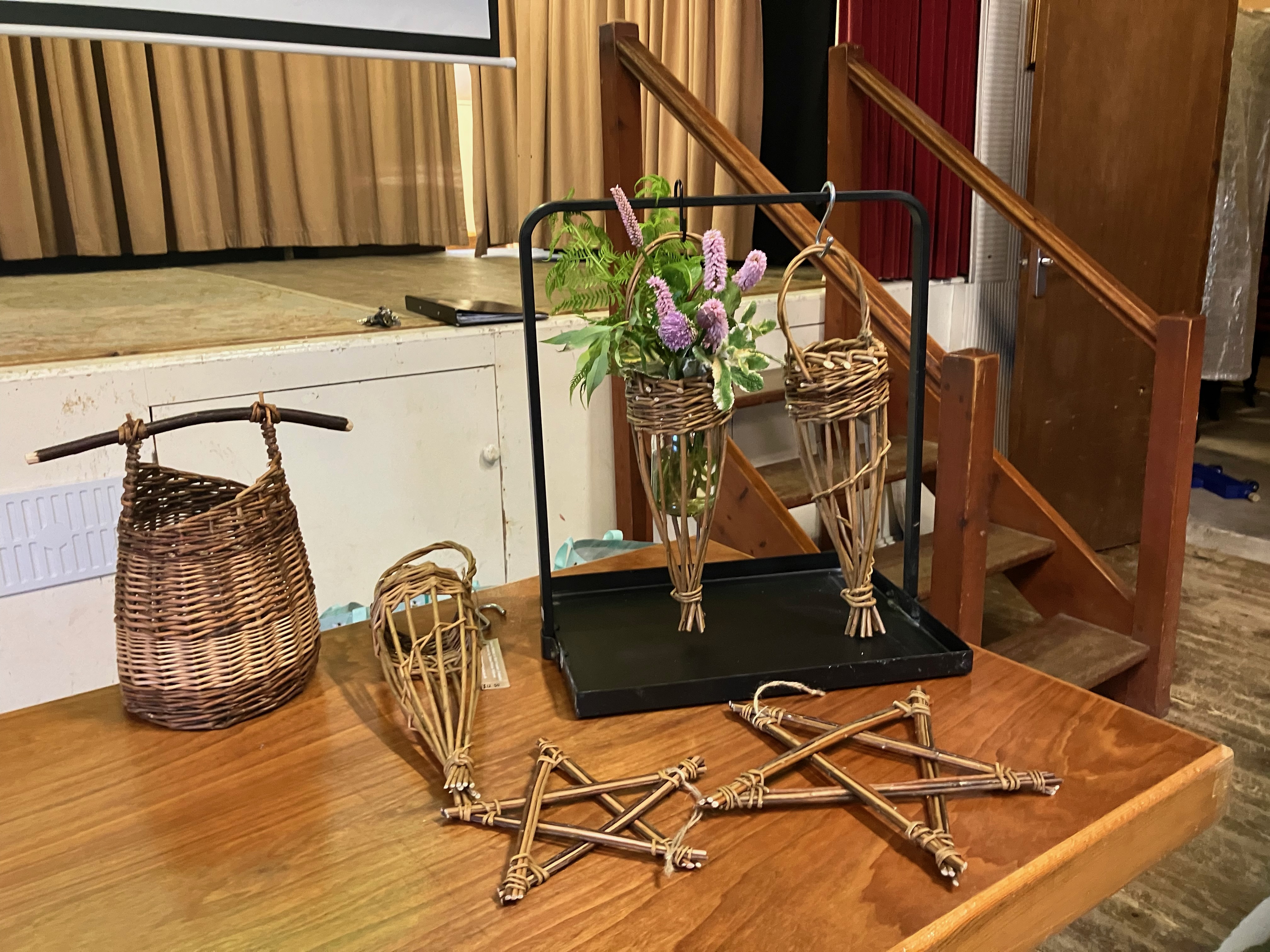
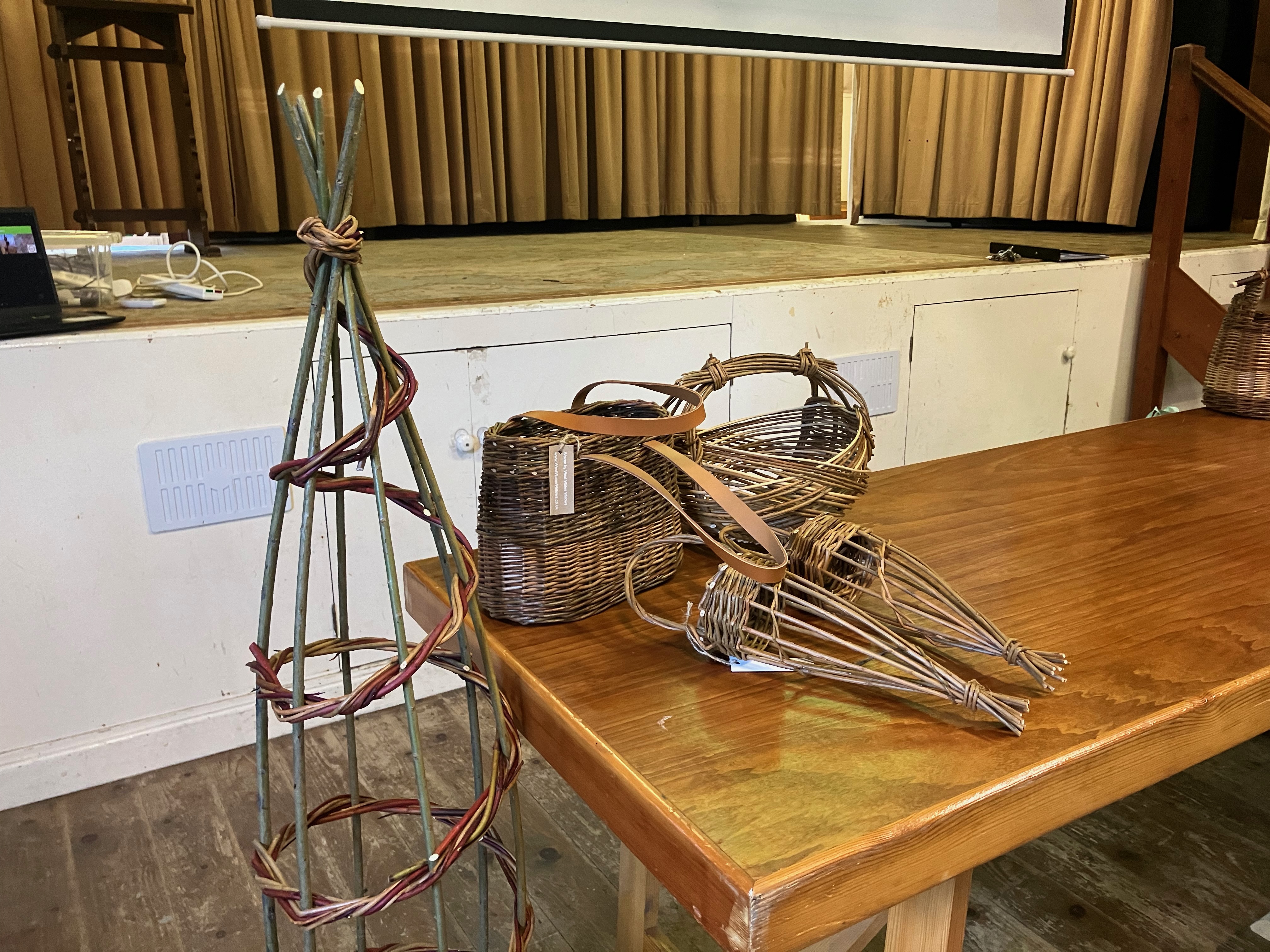
Ten Ways to Use Willow in the Garden (and Beyond) by Justine Burgess


Justine began working with willows as a basket weaver ten years ago; she had always been interested in gardening and then eight years ago she and her husband Alan founded West Wales Willows on ten acres of land in Gwernogle (two acres of which are devoted to willow). They hold the National Collection of Salix for Plant Heritage, currently the only one in the country. The nursery was visited by Frances Tophill for  one of the Gardener’s World Winter Special programmes at the end of 2023, and has also featured on ITV’s Coast and Country series.

The nursery will be open for the NGS on 22 June from 10am to 4pm, and will be open as part of the Tywi Valley Open Studios from 27 July to 4 August, running taster willow weaving workshops on 29 July. An Open Weekend 4-6 October, when the winter colours are already starting to show through, will focus on growing willow.

On to the ten ways to use willow:

No. 1 – Plant Willow for Pollinators. Willow is very early flowering, some varieties as early as late January and early February in a ‘normal’ year (this winter it was considerably earlier). Five years ago, the National Botanic Garden of Wales analysed the pollen content of spring honey, and found that it was made up of 80-85% willow pollen, showing just how important it is for bees. This would probably mostly have been the wild growing willow such as the goat willow – Salix caprea – and the crack willow – S. fragilis. Of the more decorative varieties, S. udensis ‘Sekka’ is a magnet for all sorts of insects including bees, wasps and even bluebottles! S. gracilistyla ‘Melanostachys’ has black catkins, and makes a very good-shaped shrub in the garden, reaching only 7ft after a number of years. S. gracilistyla ‘Mount Aso’ has bright pink catkins, and is also not huge.

No. 2 – Plant for Winter Colour. The winter colour of willow stems ranges from pale white through yellow and orange, green and brown, to purple and black. The purple-barked willow is Salix daphnoides, the black-barked willow is S. nigricans, and the orange-barked willow is often a form of S. alba ‘Britzensis’. It is also worth remembering that there are alpine willows, growing no more than 2 ft tall. Frost intensifies the stem colour of all willows.

No. 3 – Plant a Fedge. What’s a fedge? It’s a cross between a fence and a hedge. It is a decorative barrier, rather than a stock-proof one, created by planting willow stems in the shape of a lattice. To keep the fedge at a reasonable size, it is best to cut off all the current year’s growth once the leaves have fallen. S. nigricans, the black-barked willow, is stunning when planted in this way. 

No. 4 – Plant Something Bigger. This could be something like a willow dome, or a willow tunnel. To create stability, you need to plant the willow rods 12 inches into the ground. Willow doesn’t like competition, so in order to get it to grow strongly you need to use membrane; Justine has recently been experimenting with cardboard and wood chip to see how they will perform in place of membrane. Some people have used willow to create mini-domes to provide shelter from the sun in summer for chickens and for dogs. In Germany a willow cathedral has even been created. 

No. 5 – Use Willow Baskets. Willow stems , of course, are perfect for weaving baskets – and what could be better than collecting your own fruit and vegetables in baskets and trugs woven from your own willow!

No. 6 – Incorporate Willow Garden Structures. In the vegetable garden you can use willow to create supports for runner beans and sweet peas as well as mini-pumpkins. Willow also makes a great base for a wedding arch decorated with flowers and greenery. The only thing is that willow structures don’t last forever – four seasons is about the limit.

No. 7 – Make Willow Water. The bark of willow is packed full of growth hormones at the base of the stem when in growth. Take one-year-old willow stems, cut them into 1.5-inch chunks and cover them with water. Use about one-third willow to two-thirds water. The water will only last for one to two weeks before you have to make another batch, but it can be used as a replacement for hormone rooting powder. 

No. 8 – Chop and Drop (Ramial Woodchip). One- or two-year old willow wood, chipped, which breaks down really fast, is amazing for feeding fruit trees. It is also brilliant for making hot beds. You can use wild willow for this. The wood should be cut no later than May, because after that you won’t get much regrowth. The leaves from the wood can be dried, chopped, and then go into the compost bin.

No. 9 – Build a Dead Hedge. Dead hedges are great homes for insects and can serve as good temporary fences.

No. 10 – Make Something Fun! Willow is great for making sculptures – for example, a stag, a hare, even just a big ball.

Justine then took questions from the audience. She recommended Salix nigricans and S. triandra ‘Blacktop’ as the best black-stemmed willows. She confirmed that willows need quite a lot of sun – about 6 to 8 hours in the summer, so you shouldn’t plant them on the north side of a hedge. They also don’t like being next to established trees. They need a lot of water, although they don’t have to be in wet ground. They don’t like chalky ground, and love clay or clay on shale. Willow stems should be cut during the dormant season. As they dry, they lose one-third of their width. They should be allowed to dry for three to four months, then rehydrated. A bundle of 5-foot long willow lengths should be submersed under water for 5 days to fully rehydrate for weaving.

West Wales Willows run a variety of different courses, at Gwernogle, at Myddfai Community Hall, at Abergwili and at Denmark Farm Conservation Centre


Remember to browse the rest of the Cothi Gardeners’ website for other upcoming events, the Surplus to Requirements section and updates to Members’ Gardens. If you have any ideas for new content or would like to contribute a piece about your own garden, please contact cothigardeners@gmail.com.


The Climate Change Resilient Garden by Kim Stoddart; John and Helen’s Plant Sale for NGS Charities on 12 May

Kim Stoddart is a gardener, journalist, author and gardening teacher. She writes for The Guardian, specifically regarding gardening in the current climate change environment, and is editor of “Amateur Gardening” magazine. She has co-written the book “The Climate Change Garden” which has recently been updated and has just published “The Climate Change Resilient Vegetable Garden”.

She also runs the very popular Green Rocket courses where she teaches techniques which she has taught for many years, and has a smallholding in the Synod Inn area of 2.3 acres, of which a third of an acre is used for growing produce. She keenly boosts biodiversity there and doesn’t use pesticides or chemicals. In general, apart from growing in containers, she does not use fertilisers but concentrates on improving soil health which brings its own challenges, since the property is 750 ft above sea level and is often subject to quite serious flooding.

At the begining of her talk Kim encouraged us to think about how things worked in the past, how people had to have productive gardening plots which were not costly and could be maintained as easily as possible. Some of the solutions found in the past have been forgotten or discarded in favour of a quick fix, off-the-shelf solution.

She encourages us all to make time to sit and be kind to ourselves, enjoy our surroundings, including the wildlife, and not to feel we have to make everything neat – weeds are not the enemy! Examples of extreme weather have been studied by Kim in order to understand weather unpredictability and how to discourage pests and diseases that come with it, and what we can do to effectively and cheaply negotiate problems.

Recycling and upcycling, inventing ways of making making a cost effective, productive and beautiful garden need to be seriously considered and will give lots of satisfaction. Think creatively when problem solving, it does not need to be stressful! Do not pamper plants, overprune, or spend hours weeding, sometimes it works to make plants work harder to survive and flourish. If you have a gap in the flower garden, stick a vegetable in there, they often look great and you can (hopefully) eat them. The “no dig” method is proven to be effective and works well, or the German Hugelkultur method which in addition pretty much eliminates the necessity for watering. It helps to use mycorrhizal fungi which will encourage root growth and improve health – only effective when growing organically, as the fungi and fertilisers/pesticides tend to fight and restrict plant growth.

Kim had brought copies of her book for sale, and answered questions from the audience. The link for Kim’s courses is www.greenrocketcourses.com. Dawn thanked Kim for her very enjoyable talk.


John and Helen’s Plant Sale for NGS Charities on 12 May

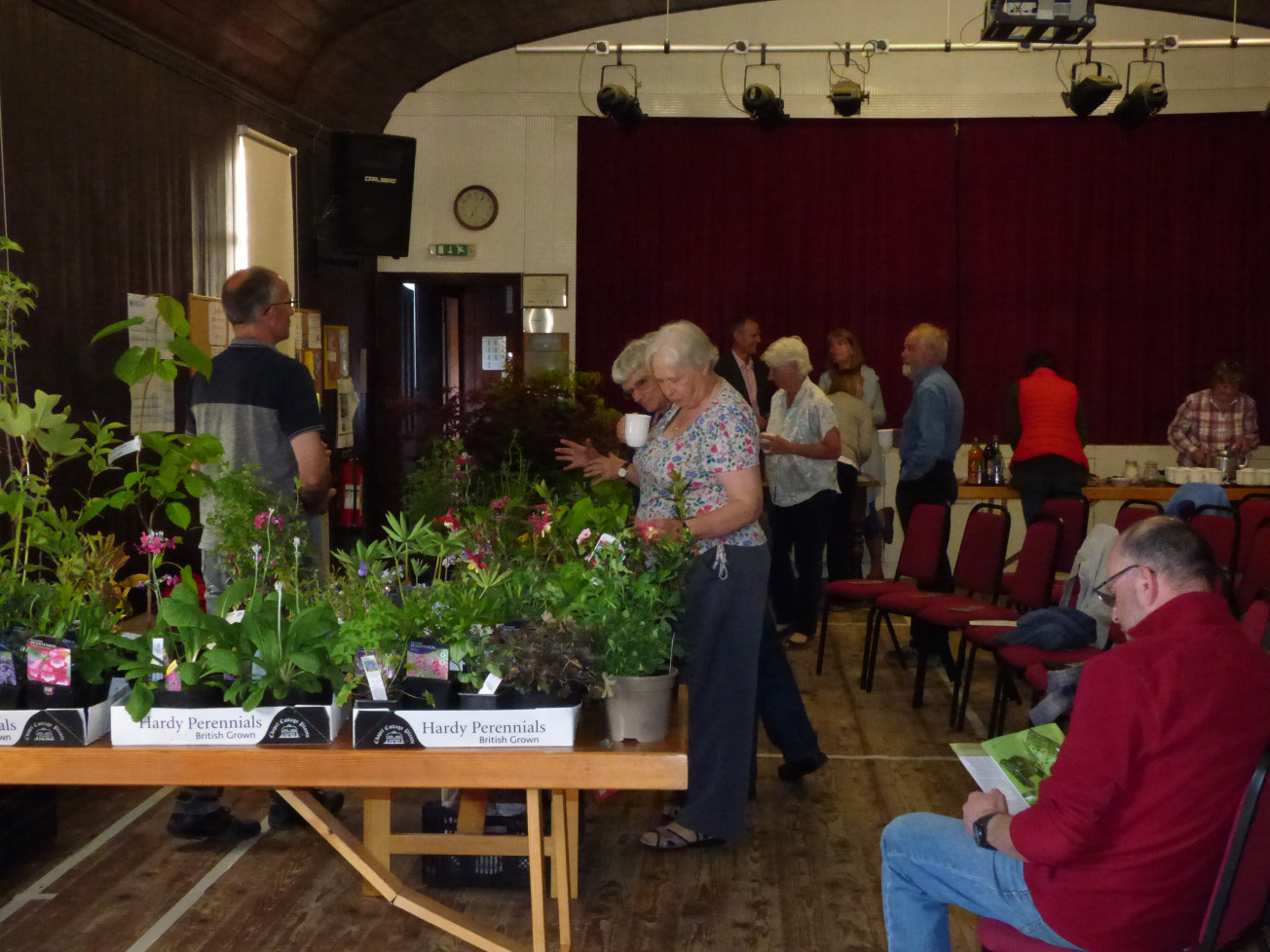
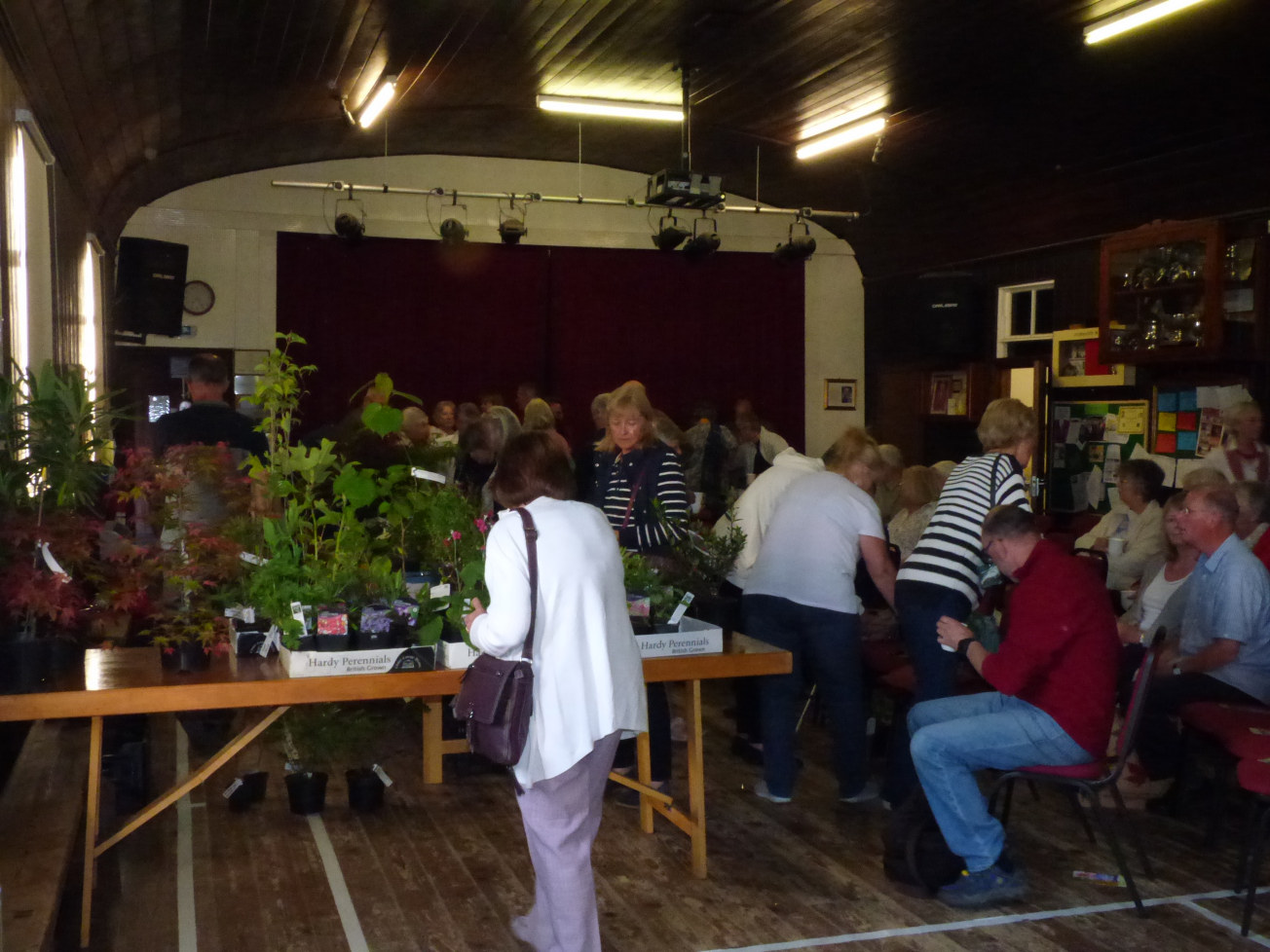
We were reminded about John & Helens’ plant sale at Ty’r Maes, Ffarmers, SA19 8JP on Sunday 12th May from 1 pm. Donations are encouraged as payment – the proceeds are for the National Garden Scheme charities. Plants can be ordered in advance – emails will be sent to club members at the end of April with a list of available plants to order.


Remember to browse the website for other upcoming events, the Surplus to Requirements section and updates to Members’ Gardens. If you have any ideas for new content or would like to contribute a piece about your own garden, please contact cothigardeners@gmail.com.

Steve Lloyd’s Workshop; Aberglasney Tea Party; June Garden Safari.

There was a fantastic turn out for the recent Cothigardeners workshop on propagation, held with Steve Lloyd from Hergest Croft gardens in Herefordshire, with 28 guest visitors joining club members to pick up tips from Steve’s vast experience and knowledge from 40 years of work at Hergest.

In a wonderful wide ranging review of his favoured methods and timings for seeds and different types of cuttings everyone went away with tips to try. And many of us were able to take away material to try their hand at propagation from some of the samples of unusual shrubs and trees which he brought along. Steve clearly put a lot of thought and effort into cramming all sorts of plants and cuttings into his van for this event.

My personal favourite points were to incorporate more perlite in the seed and compost medium (Steve uses a 2 to 3 ratio); using seaweed based products only as an early mild feed, and reversing a bag placed over cuttings on a daily basis to avoid excessive moisture dripping onto leaves.

Steve and Mel also brought along a huge range of trees and plants for sale, which he’s recently propagated, and these proved very popular with visitors.

Finally Steve kindly offered to host a trip for club members this autumn to Hergest Croft to take us round the gardens there for a  tour and opportunity to collect seeds from some of the huge, and varied plant collections growing there. Fiona is following up on this, and hopes to have a date for a visit in the near future, for members to mark in their diaries.

Many thanks to Steve and Mel for travelling over to us, and giving us all such a fabulous evening.


Yesterday saw many members visiting Aberglasney for our second annual tea party held on the tea room terrace. Once more the weather was stunning, the food amazing, and the gardens looked superb.

We were really fortunate to time it whilst Aberglasney’s own resident award winning photographer, Nigel MacCall was trying out a new super tall tripod to enable him to get different perspective photos of the gardens. Nigel told us he’s been working in the gardens for over  5 years, though usually on his own at first light, and dusk, so it was a rare chance to see him in action.  For those who don’t know, he’s twice won first prize in the prestigious international IGPOTY garden photography competition with photos he’s taken at Aberglasney.  He’s even apparently been given a special dispensation to do selective pruning to create the perfect shot! Click here to see some of his award winning images. He explained he wasn’t a great photographer of people but was taken by some of the mad hats on show, and so Donna was summoned to pose amongst the Iris and Alliums…

That Nigel has so many stunning vistas to photograph is largely down to the hard work and inspired planting schemes devised over the last decade by head gardener Joseph Atkin, aided by his team of helpers. There’s no question that Aberglasney is becoming more popular, with greater visitor numbers over the years, because of the exceptional standard of garden design and plantings,  whatever the time of year. We’re exceptionally lucky to have such a world class garden with wonderful tea room on our doorstep.
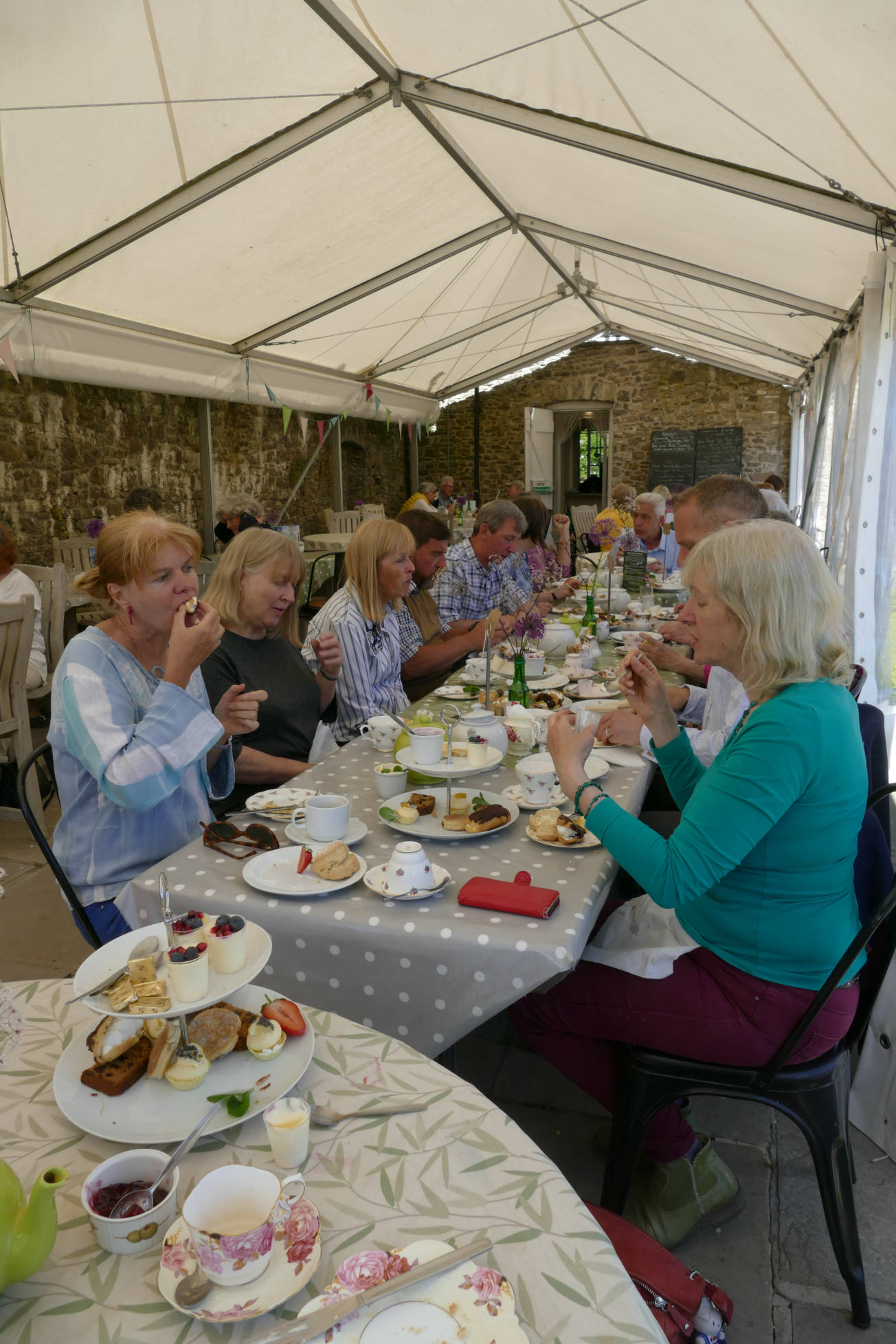
Whilst trying to get a photo of some of the assorted mad hats which several members wore for the occasion……my clear backdrop of the garden scene was interrupted as someone walked past… and then we all noticed who it was…

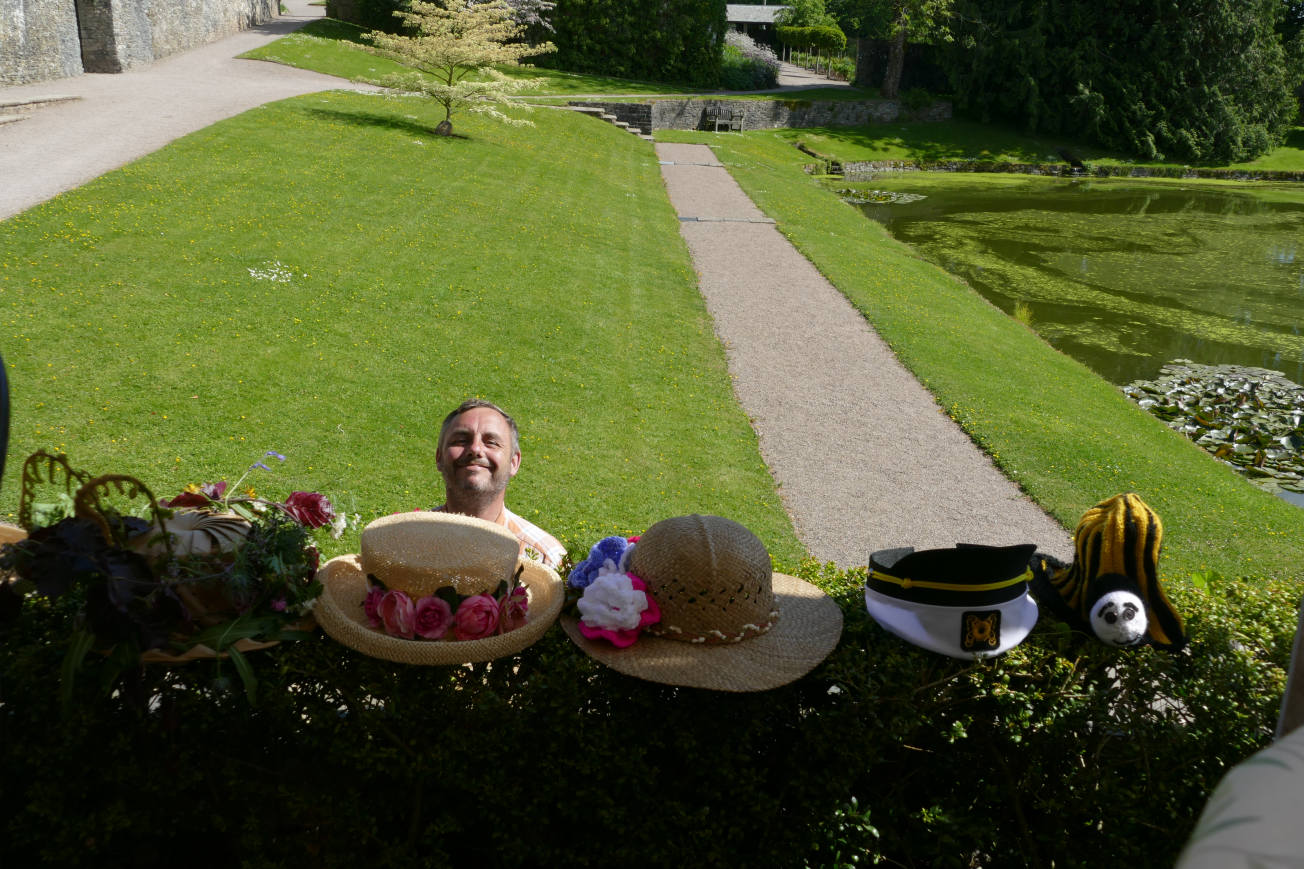
Thanks very much to Joseph for this good humoured pose, and indeed for everyone at Aberglasney for making it such a lovely day out for us all.


The garden safari date has been fixed for Sunday June 9th, with planned visits to  several member’s gardens. Yvonne will send out an email with more details in due course for any members able to join this enjoyable day out.


A reminder that June’s meeting promises to be another great one with Helen Picton from the UK’s most famous Aster (Michaelmas Daisy) nursery, Old Court Nursery Malvern  coming to talk to us about her favourite plants, and how to grow them. Helen will also be bringing along plants for sale. Click here for Helen’ Website for a flavour of what she grows.


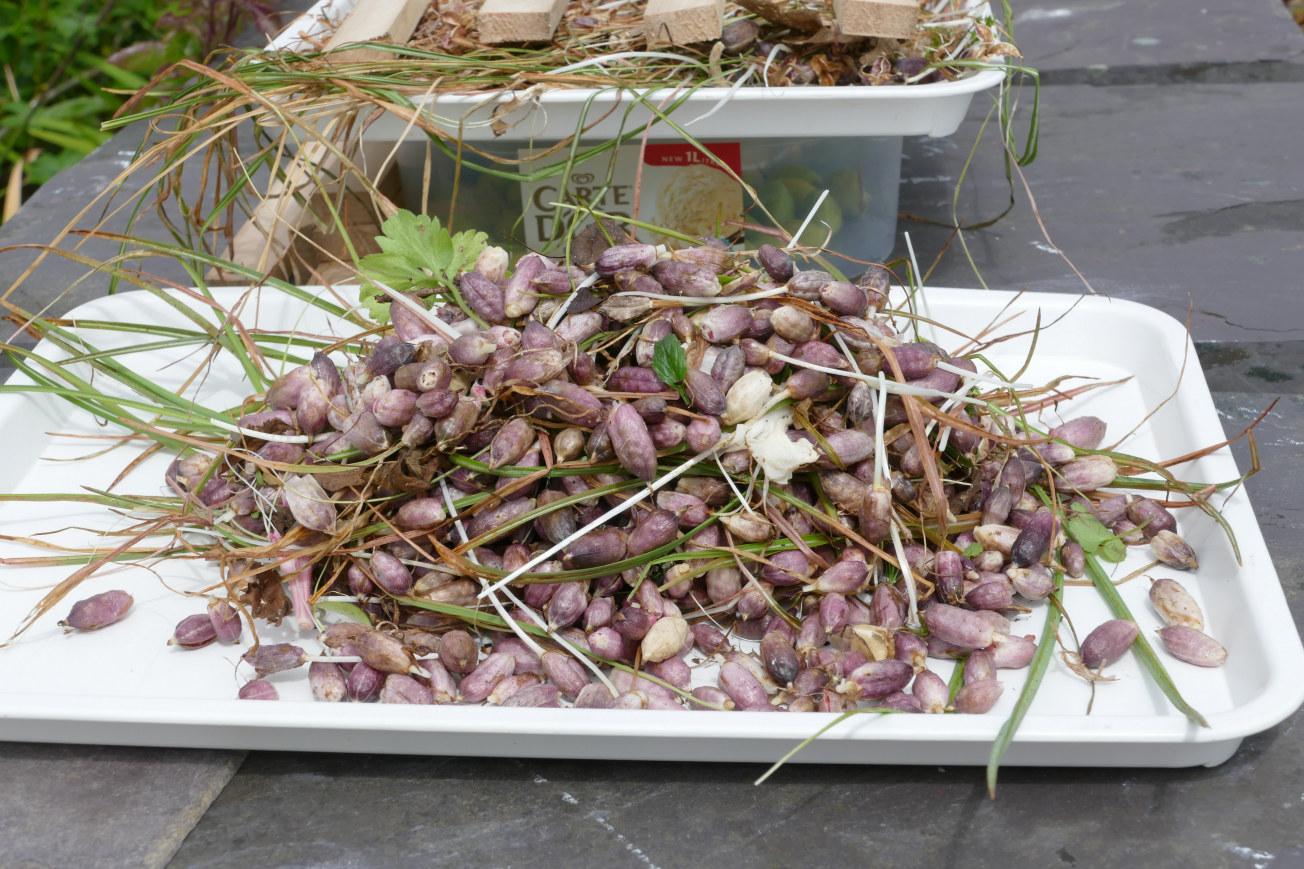
Finally, as a quick reminder, now’s the perfect time to collect seeds from Crocus and snowdrop seed pods. A little earlier than usual, in our garden this has been a bumper year, and even if the seed is just scattered straight away in other areas of the garden, it’s a really easy way to get plants established without the fag of having to plant yet more bulbs. Though sowing just beneath the soil surface will probably give higher germination success.

Gardeners’ World – featuring Gelli Uchaf Garden

Gardeners’ World

Saturday March 5th at 8pm (Friday March 4th if you are in England!)

Gelli Uchaf Garden

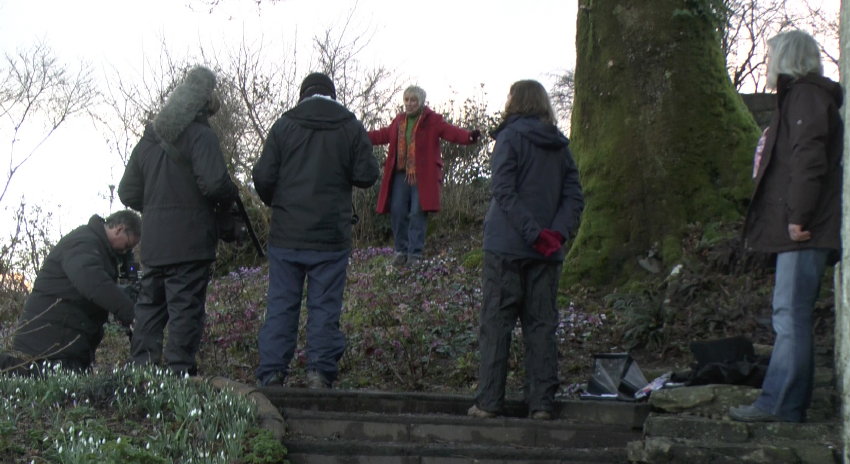
We were rather pleased to get a call from a BBC2 Gardeners’ World researcher a few weeks ago asking about what Spring bulbs we grew and a bit of background to the garden and ourselves. We were told decisions would be made whether to come and see if we were suitable in the next few days…… a call duly came through and a visit from the recce team was scheduled for the following week. Two very nice chaps came and spent a couple of hours with us walking round the garden and chatting in cold, mizzly conditions while recording it all on a hand held video camera. Now we have been down this path before with the Beeb and it is at this point that we don’t hear anything further – for whatever reason we haven’t been quite what they were looking for. So we were more than a little surprised but delighted to get a call a couple of days after the recce to arrange dates for filming the following week.

S1010039 (2)

Filming crocus in the snow!

SDIM5508 (2)

Crocus opening in some sunshine

S1010047 (2)

Another take – in the rain!

S1010055 (2)

Filming Carol Klein as dusk falls

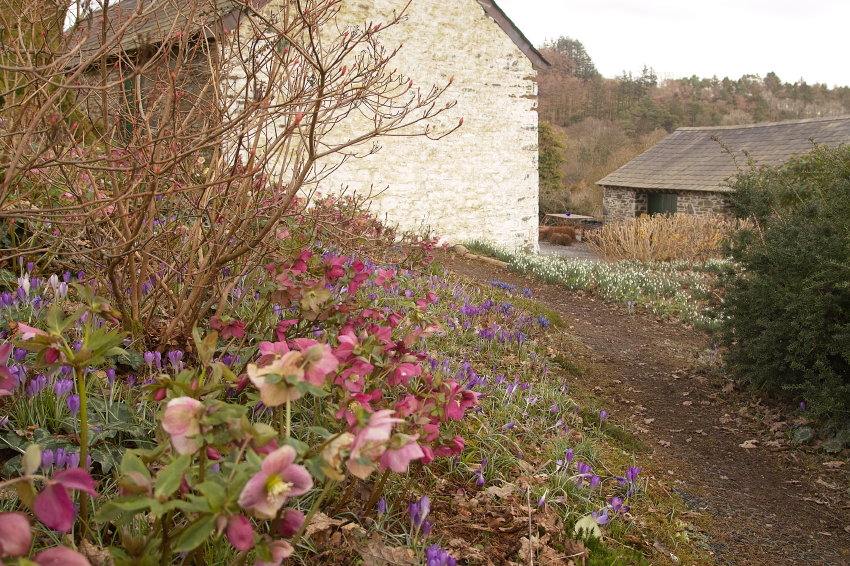
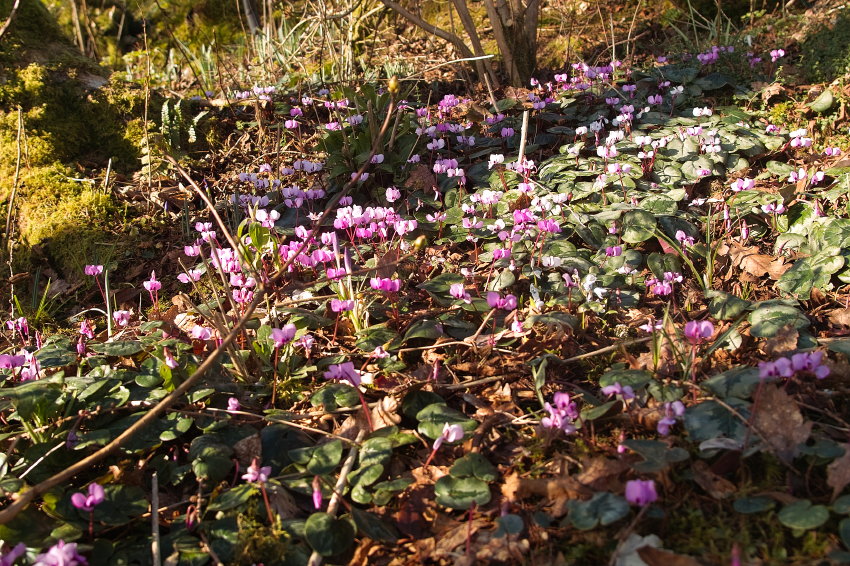
We would have to say it was the garden with its profusion of early spring flowers – Cyclamen, Snowdrops, Hellebores, Iris reticulata, Scilla mischtschenkoana et al all doing their best to impress, rather than the 2 gardeners that convinced the Beeb to come. The weather threw everything at us, mercifully with the exception of strong winds, which was brilliant as it demonstrated just what these wonderful Spring plants have to cope with and yet still manage to delight us with their early colour.

S1000021 (2)  S1010035 (2)  SDIM5739 (2)  SDIM5601 (2)

The three days of filming, one with the full team of five including the lovely Carol Klein, will be condensed down to about 6 minutes and will be broadcast in the first episode of the new series of BBC2 Gardeners’ World on Friday 4th March if you live in England, and Saturday 5th March at 8.30pm if you live in Wales.

FW & Carol Klein (3)

SDIM5554 (2)


You can read a write-up about it on the NGS website by following this link:

http://www.ngs.org.uk/what-we-do/news/bbc-gardeners-world-will-feature-colourful-welsh-ngs-garden-gelli-uchaf-in-carmarthenshire.aspx

or our own blog/website by following this link:

https://thegardenimpressionists.com/2016/02/15/tarka-on-stage-imogen-and-typhoon-tv-funny-valentine/

Fiona and Julian Wormald

A Rabbit’s Eye View – Workshop with Noel Kingsbury on October 22nd, 2015

SDIM4946 (2)
Who were the real stars of last Thursday? The wonderful enthusiasm and communication skills of our speaker? The gorgeous late autumnal light? Our massed Persicaria vaccinifolia and Saxifrage fortunei?

SDIM4768 (2)

No, on reflection, I’ve come to the conclusion that whilst all of these were critical to such a successful day, the really important feature was the mix of gardeners who’d travelled to this remote part of the UK to learn and share with Dr. Noel Kingsbury and indeed each other. Several had driven over 100 miles, and so had to make more than a day of it. One of our happy band, a garden designer from Pennsylvania had even flown over from the USA to take part – and built a family holiday around this event. There was a warmth, enthusiasm and good humour to the whole day, which I think everyone benefited from.

SDIM4876 (2)

Such is the high regard for Noel’s pretty unique blend of knowledge, not just of gardens and their design, but more crucially of plant growth, ecology and their interactions – something one reads or hears about very rarely in the mainstream garden media. And a key subject in assessing how plants will perform in a garden setting over the medium to long term. As well as how much intervention is likely to be necessary to achieve one’s desired aims.

SDIM4943 (2)

When we’d thought about volunteering to host such an event we’d (typically) probably not thought as much as we should about how we would have coped in the atrocious weather that can sometimes hit around now. Although the day before was wet and windy, and played havoc with my attempts to keep paths leaf free, Thursday dawned dry and by the time the first folk were arriving, blue sky was beginning to appear.

SDIM4888 (2)

Noel kicked off with a discussion considering an imaginary plot of bare soil, and, left un- managed, how it would become colonised over 1, 2, 3, 5,10, 50 and 100 years. An intriguing way of thinking about firstly what natural trends we are seeking to combat or control in our role as garden designers and managers. ( A hint of the default 100 year dominant landscape plant in this part of the world  – a seedling oak at the base of a Japanese Maple, below)…

SDIM4947 (2)

Secondly of what strategies plants have to out compete or simply survive amongst their neighbours, and indeed thirdly the likely futility over the very long term (without generational garden management) of combating these natural ecological trends of plant succession.

SDIM4939 (2)

And very helpful ideas for any gardeners like us, who are facing the inevitable slowing down that comes with ageing, and want to try the steer the garden into a lower maintenance phase, without losing its inherent appeal. (How many different plant species inhabit the small section of ground above? How much weeding is necessary here? And what does it look like in April or May? See the end of post for more).

SDIM4919 (2)

I remember reading a letter in the RHS Garden magazine recently from a gardener nearing the point of having to let go of a garden lovingly created over 20 years, and then enjoyed for another 10, but now beginning to become too much to manage. When to let go? Perhaps we need to move into more of an enjoyment stage after 20 years of creating, and stop fiddling! Not that we haven’t enjoyed the journey so far…

SDIM4882 (2)

Group discussions followed together with a good power point talk to flesh out more about examples of different types of ‘perennials’. Just howperennial they might be, and how by examining growth and flowering habits gardeners can work this out for themselves, by considering taking the rabbit’s eye view of what the plant looks like at ground level. (Clonal Asters growing through Saxifrage below)…

SDIM4940 (2)

By lunchtime the weather was sufficiently sunny for many to take food outside to eat – pretty rare for us in late October, and later, the afternoon session took the form of a garden based walk looking at how we’ve used plants within the garden in a sometimes unique way based on the conditions which we have to deal with up here. Again we all learned much from Noel’s thoughts and ideas and group involvement. The day finished with more cakes and tea, before everyone headed home.

SDIM4890 (2)

Keen to try to find out what visitors thought about the day, we were very grateful to everyone for filling out a simple end of event questionnaire. Only 1 other participant had ever been on a garden based workshop before, and everyone ranked the day as both excellent, and also excellent value for money (from excellent, good, average, disappointing). And it was great that as well as making it non profit making, we were still able to donate part of everyone’s fee as a garden entrance charge to the National Gardens Scheme charities.

SDIM4920 (2)

Would we ever do it again? Well Noel has clearly led such workshops all over the world, and he would be a very difficult act to follow, such were his knowledge, teaching and communications skills. But it was such a success that maybe some similar event might happen again, perhaps at a different time of the year.

SDIM4901 (2)