Time flies and a couple of short walking breaks for us in September and early October means I haven’t updated members on the outcome of the garden parties which were held early in September, so here goes!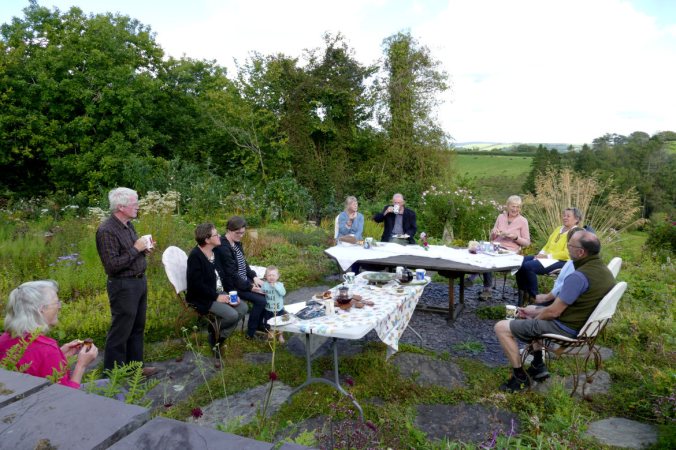
Elena collated all the information, so many thanks to her for doing this and passing it on, and in the end the four events raised a total of £560, which we all agreed to donate exclusively to Marie Curie since they took such good care of Dave, Avril and family at the end of his life. The sums raised were as follows…
Ros & Mark £65
Fiona & Julian £100
Elena £165
Helen & John £230
Given that the total raised across the UK from this NGS conceived event was a little under £40,000, of which a massive £12, 000 was down to the efforts of the charity’s CEO, George Plumtre ( click here for more feedback), this represents a great achievement by our small club, so many thanks to all who were involved in any way. Andy, our treasurer has arranged to make the payment direct to Marie Curie.
As well as the money raised, the events proved to be a most welcome chance to meet up and chat, as some of the feedback comments from those present illustrate…
Having deprived ourselves of human company for almost six months, we accepted the kind invitation to a garden party with a degree of trepidation. With masks and gloves at the ready, we set off on what seemed like a marathon journey of some 20 miles – the furthest we had ventured since March! We were lucky…. the sun was shining, the roads quiet and the houses, fields and woodlands reassuringly just as we remembered. We were greeted by the sounds of cheerful conversation and laughter from small groups of friends. Seeing your immaculate garden, the teas, and super cakes sampled along with relaxed ‘catch-up’ conversations with friends left us feeling more energized than we have both felt for a long time. Jane and Ivor Stokes
Thank you for the very nice garden visit. It was lovely to see your new pond. What a great little get together with good company, food and drinks. Your efforts were greatly appreciated, especially to those of us who don’t get out much! Jenny Long
We have broken out. Thank you so much, we really enjoyed ourselves so much we didn’t notice the time. All the best. Daisy and John Hufferdine
The company of others can be made so enjoyable outdoors in a garden – the beauty of plants and abundant insects – the chat and the afternoon tea – lovely!! Tina and Derek Marshall
It was great to be able to sit and chat to friends old and new and to know that the funds raised were going to a cause that means a lot to us. Your mulled fruit cup was particularly welcome on a rather damp evening! It also gave us enormous pleasure to be able to host our own garden party. It was lovely to be able to have a long chat with friends we had not seen for months, some of whom had barely been out of the house since lockdown. What a wonderfully enjoyable way to do something to help others. John and Helen Brooks
Attending the Garden Parties and being part of small groups meant that we could talk to people more easily. It was so interesting to hear about other
people’s gardens and to learn about their lives and interests. Jane and Stephen Thomley
Thoroughly enjoyed our tea time visit to your garden and grounds with delicious nibbles and warming drinks. Most of all the opportunity at last to see and speak with friends in a safe outdoor environment. Many thanks to you both and a superb effort made by all to raise a significant sum for those who care and nurse us in our hour of need. Ann & Anthony Frost
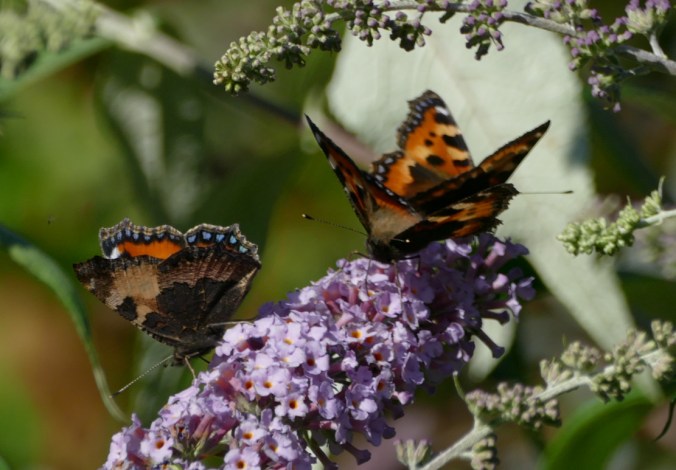
It was great to be able to host an outside socially distanced garden party, and by doing so raise some useful funds for our nursing charities. It’s difficult to think of a safer environment than an upland Carmarthenshire garden with just a few local guests, and everyone loved the chance to meet up, natter and enjoy a bit of tea and cake out in the sunshine, even if it was unseasonably chilly! The butterflies even put on a great show in spite of this.
We must try to repeat this in the months ahead whilst normal and inside social gatherings remain off limits to help retain our sanity, and create further chances to meet up safely with a few friends. Julian and Fiona Wormald
I even have a few photos from our event, included above, to show that in spite of the decidedly iffy weather at the beginning of September, we escaped with no rain, the sun shone, and the butterflies fluttered.
Though not as dramatically as the previous week, when a Small Tortoiseshell landed on my face, a unique experience for me. Any similarities with the image for the cover of “Silence of the Lambs” are entirely coincidental!
We’re well into autumn now, with leaves colouring up nicely here…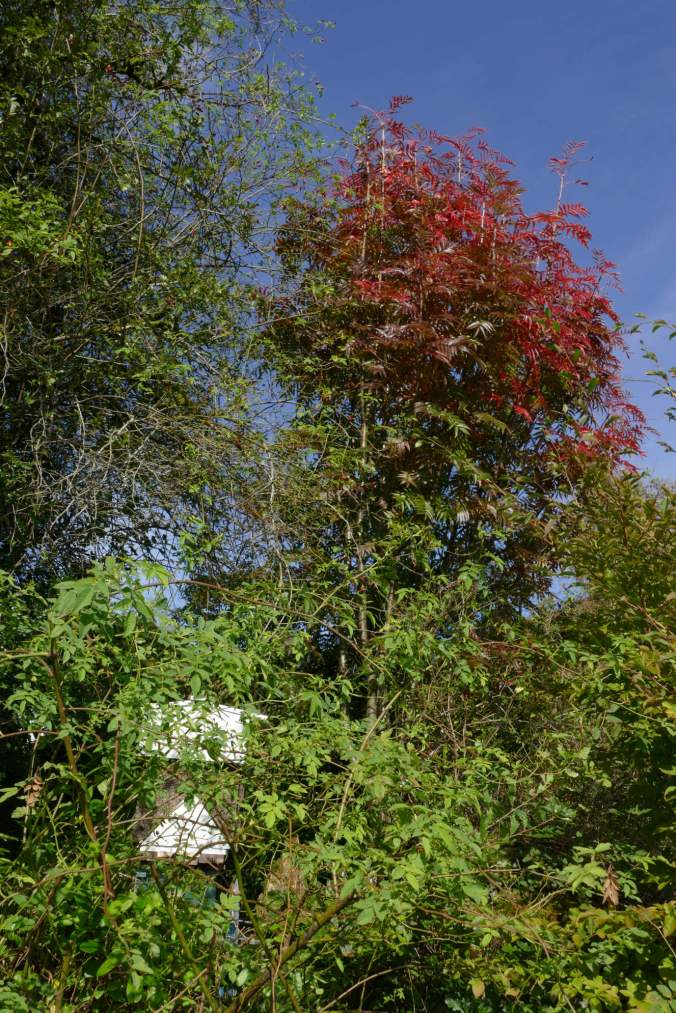
Sorbus “Olymic Flame” above, and Acer aconitifolium below, always being reliable and the first to show…
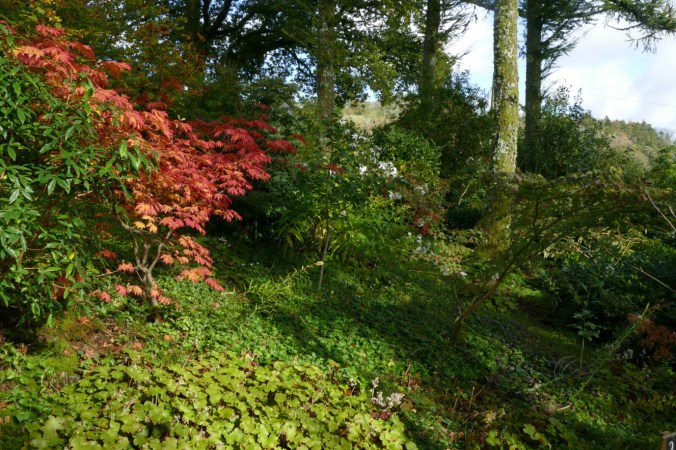
Along with the always early and dramatic red stemmed Cornus sibirica, between the 2 hollies …

I’m very grateful for the following photos sent in by Tina and Derek to show that they’ve all been working hard in the garden recently …
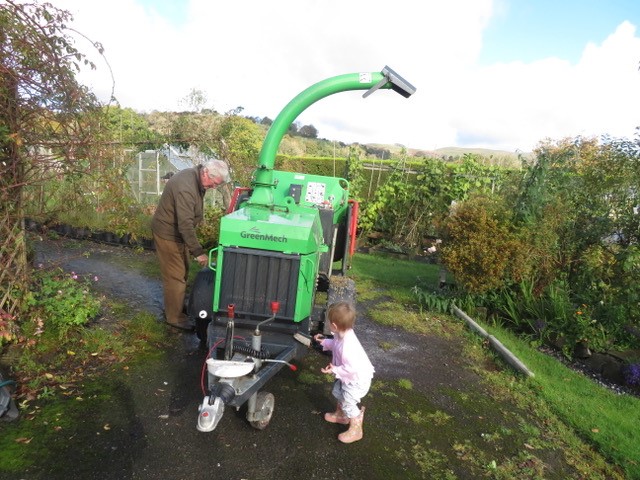
After a day of chipping …

This mountain of clippings still has to be moved and the 4 bags are all half full

All the willows from here planted 10 yrs ago to soak up the water, were cut down and the chippings are being stored here …
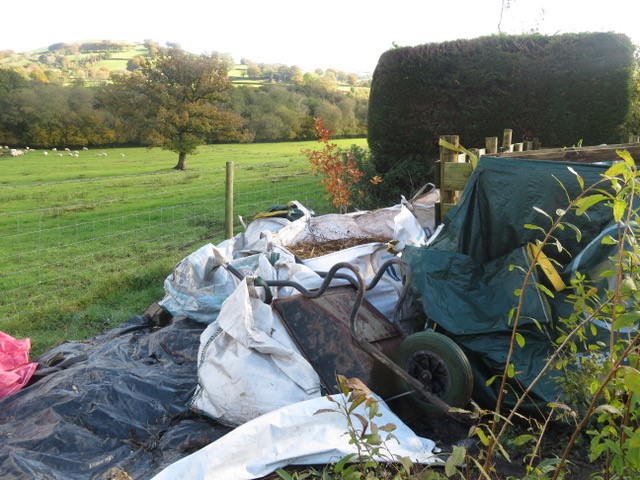
I’ve planted a red oak behind the compost – grown from an acorn …
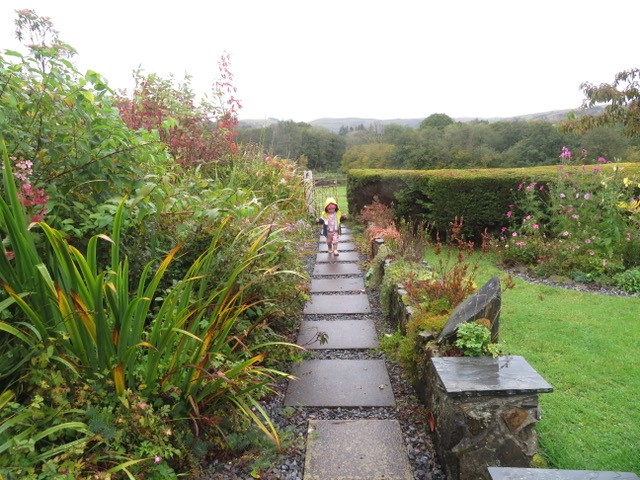
The autumn garden…
Thanks Tina and Derek.
 Any ideas what these are, and have you seen them in your garden recently, or indeed ever?
They’re a bit bigger than a honey bee.  I’m including them because we hadn’t seen them before, and these were found as part of a large colony just above the beach at Pwllgwaleod, at ankle height on the coastal path walk round Dinas Island in Pembrokeshire last Thursday.
To save the suspense they’re Ivy mining bees, Colletes hederae, a species which only arrived in the UK in 2001 in Dorset and has spread West and North since. If you click here, you can see that it hasn’t really been recorded much up here yet. The name reflects the fact that they emerge very late in the year and feed mainly on Ivy flowers, but the obvious yellow pollen might have come from nearby flowering gorse.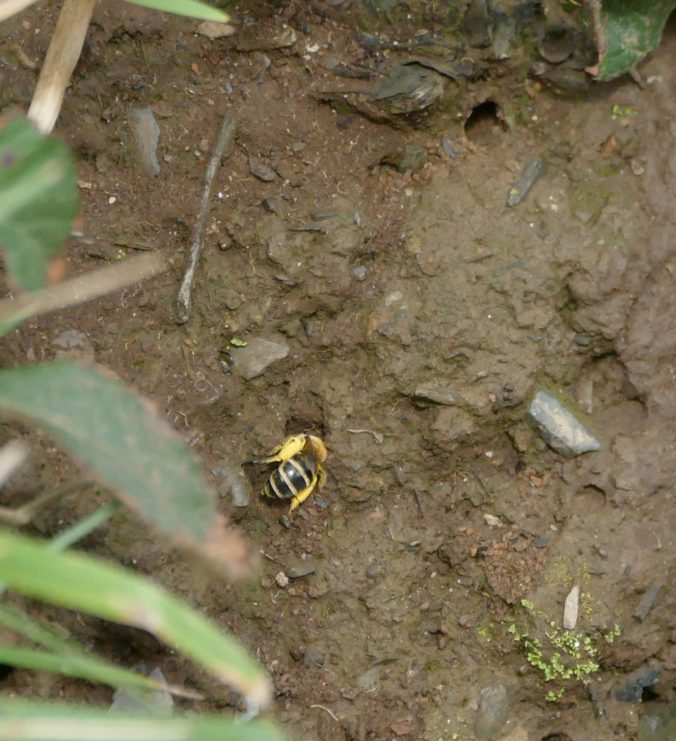
The ones you see here are all mated females taking collected pollen down into the burrows which they’ve just excavated and which house their eggs and then larvae. The pollen will feed the larvae as they mature, pupate and then emerge late next year to begin their new cycle. They aren’t “social” bees so only have a brief annual adult existence. So for anyone with flowering ivy in, or near their gardens, it’s not too late to go and have a look for these recent immigrant bees, if we get a sunny day in the next week or two.
You probably won’t find the males now. They emerge a bit earlier and are ready to mate with the females as soon as these emerge from their own burrows later in September, and then, job done, the males disappear from the scene.
This little bit about bees got me thinking about a photo quiz you can all have a go at.
Asters are often mentioned as a great late season nectar source for insects, which they are, but with lots of honeybees around still in our garden, actually very few ever seem to visit the Asters except on a warm sunny day. So for a bit of fun how many honeybees are included in the images below? 
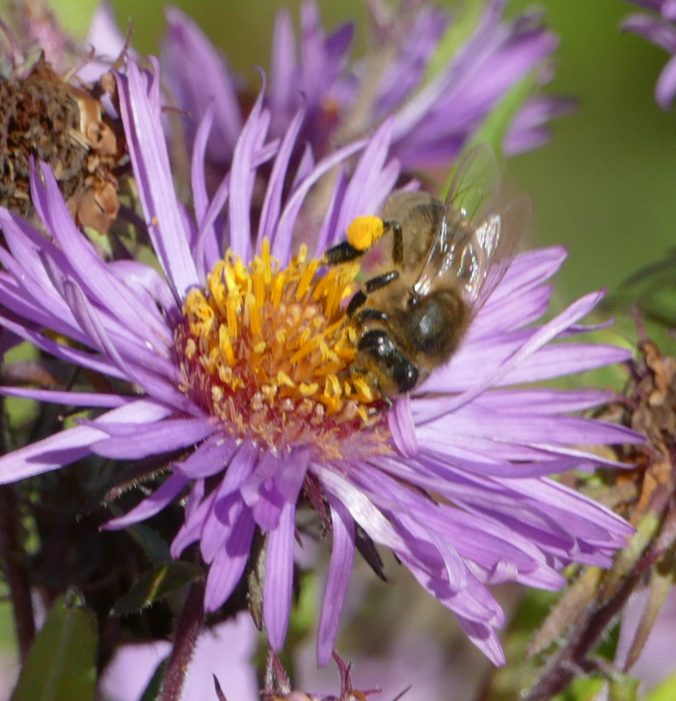
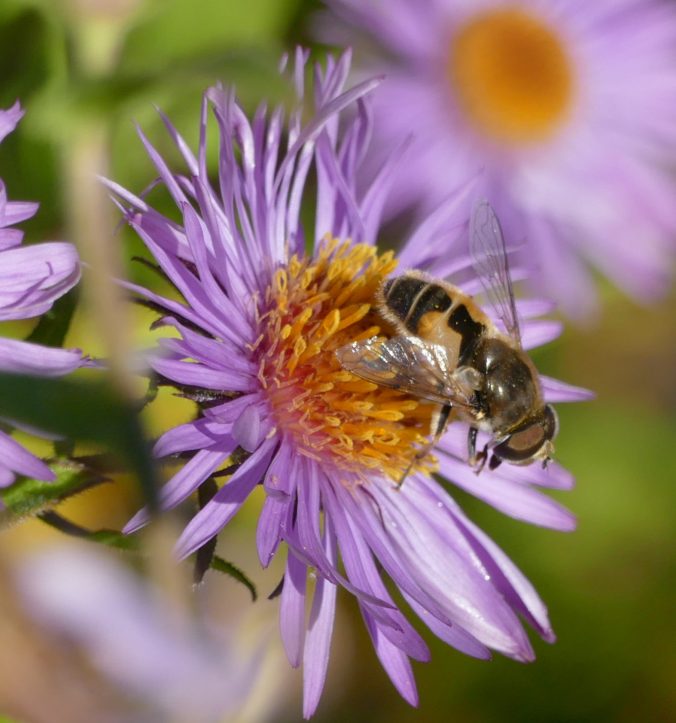


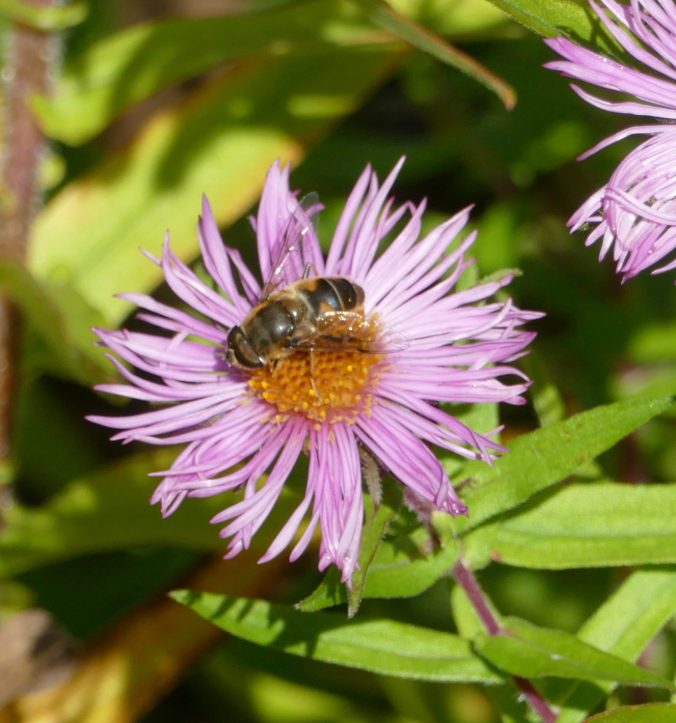


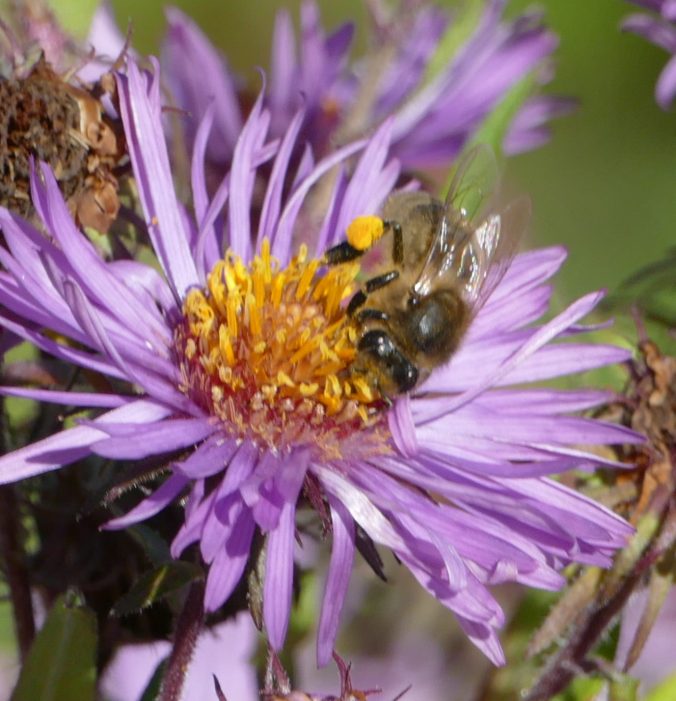
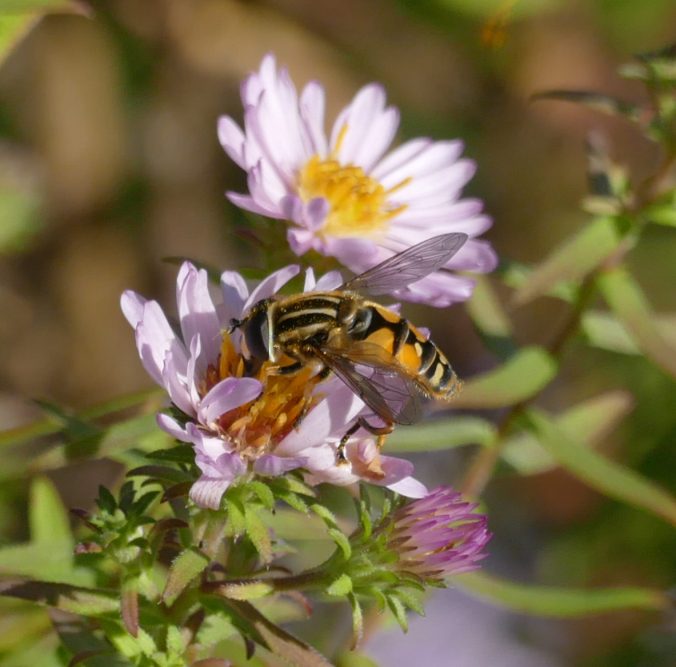
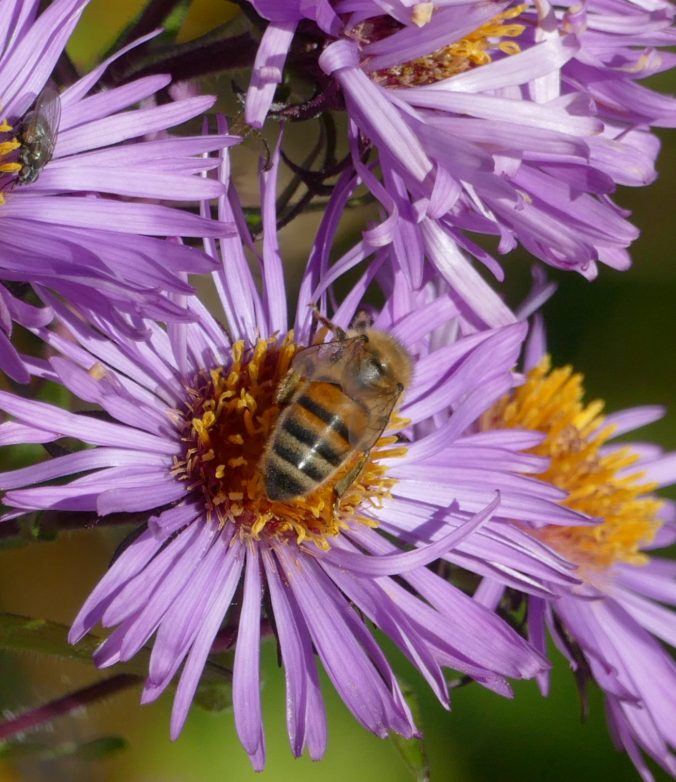


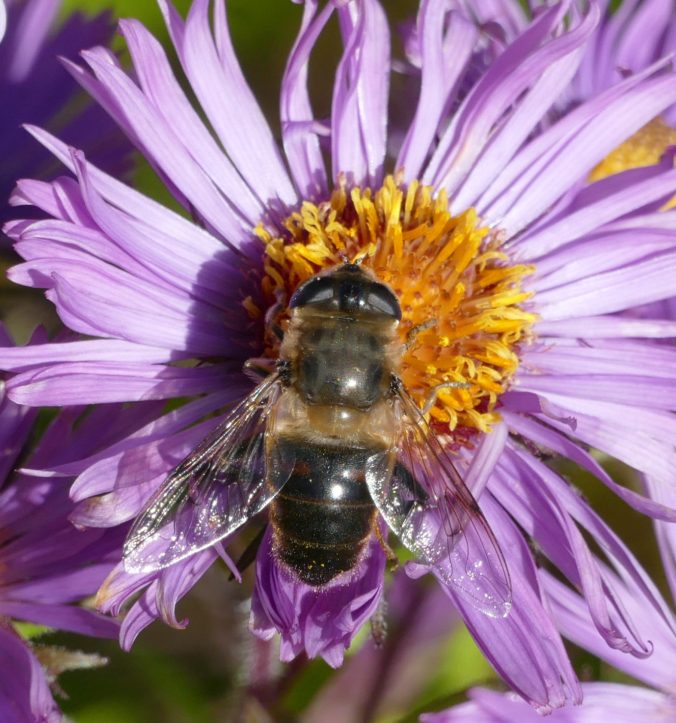
The answer is 6, with a single bumblebee. The rest are all bee look alike flies.
And maybe a little easier, on the following 4 images, which has 2 honeybees included, which has 2 flies, and which has one of each?


Easy, eh? Flies, Bees, and one of each in the last 2 pictures.
And if they aren’t on our Asters, then which flowers are they visiting most of the time? 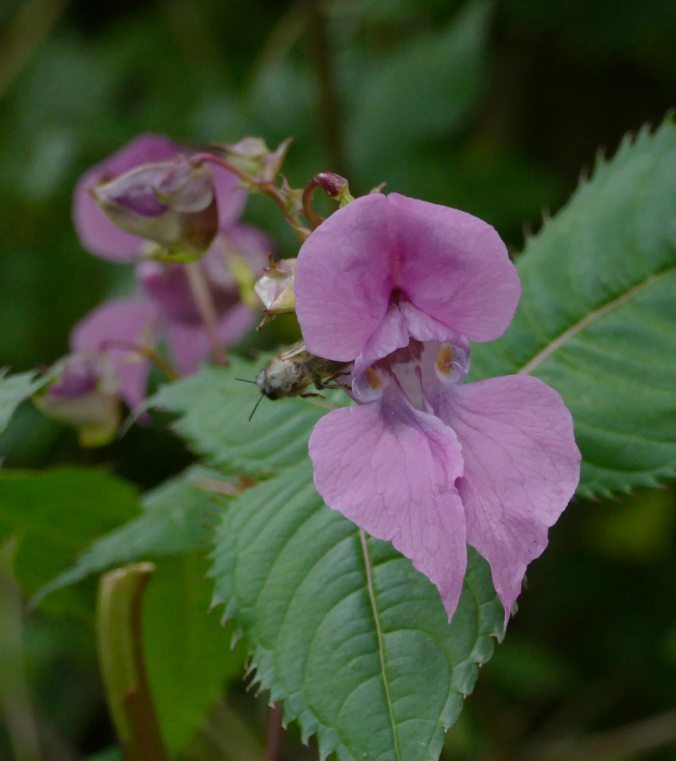 Well, mainly the Himalayan Balsam half a mile away in the village, which brings them home with characteristic white dusting on their backs.
But in a recent light bulb moment, I’ve realised that many of their preferred plants, which they do bother to visit in our garden, throughout the year, originate in the Himalayas or other mountainous Asian areas –
Daphne bholua,

Skimmia
Persicaria amplexicaulis,
Geranium procurrens,
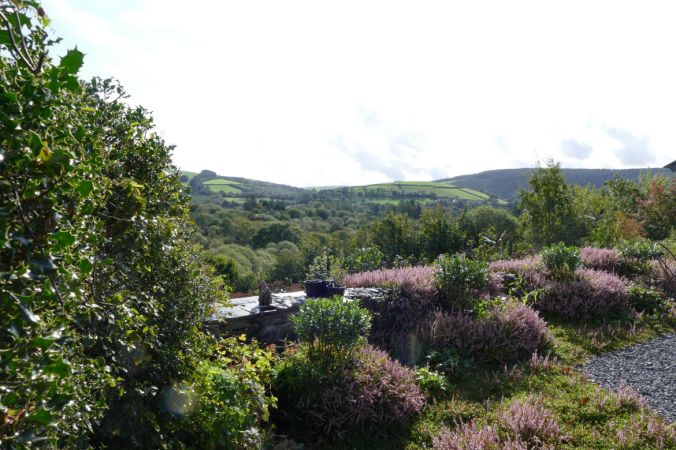

Persciaria vaccinifolia.
Could it be that these all produce a richer or more nutritious nectar, or produce it in greater quantity under our often cool and wet conditions? Who knows, and I can’t seem to find any work which has been done on this. But perhaps it’s more than a coincidence that the largest of the only 8 species of honey bee found across the world, Apis laboriosa, lives most of its life cycle outside in the elements on huge single slab combs, protected only by a cliff overhang high up in the Himalayas.
For a fascinating recent short video of how the locals actually harvest the honey from these large honey bees, (no Health and Safety here, folks), together with some amazing scenery, then do have look below – really wonderful!
Meanwhile in a change from our normal autumnal tidy up regime, this year I’m leaving alone anything which the bees will visit, like the Japanese Anemones below, until the frosts take the last flowers out, since they can still seemingly get something of value even once the petals have dropped.

Finally, as always, it would be lovely to hear from a few members about their favourite plants, or things in their gardens as we go through the next few leaner months. It doesn’t look like physical meetings will be possible anytime soon, so if you want to read about other member’s gardens, then do send me something!
Why not write even just a few words – it’s a great way to keep the grey cells working, and send an image or two, preferably resized down to less than 1 MB? I can’t promise to put everything up online immediately, but usually within a fortnight, and it’s another way of keeping in touch and passing on information.
Or use the Cothigardeners Facebook Page.
You can send things to me at:
Cothigardeners@gmail.com
Thanks again to Tina and Derek for contributing to this post.













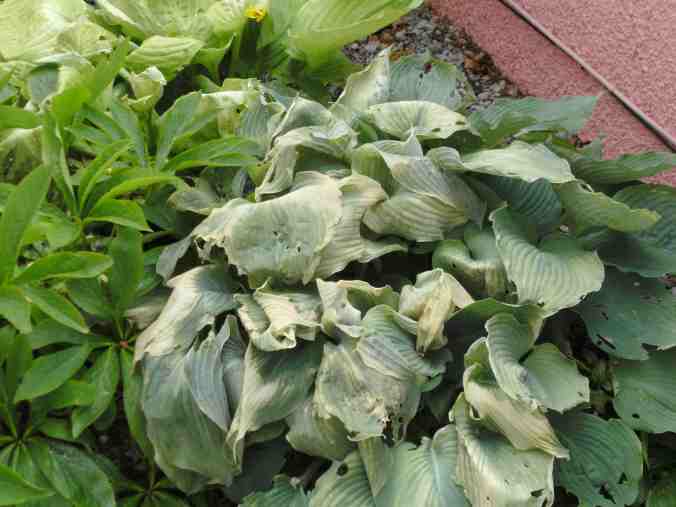


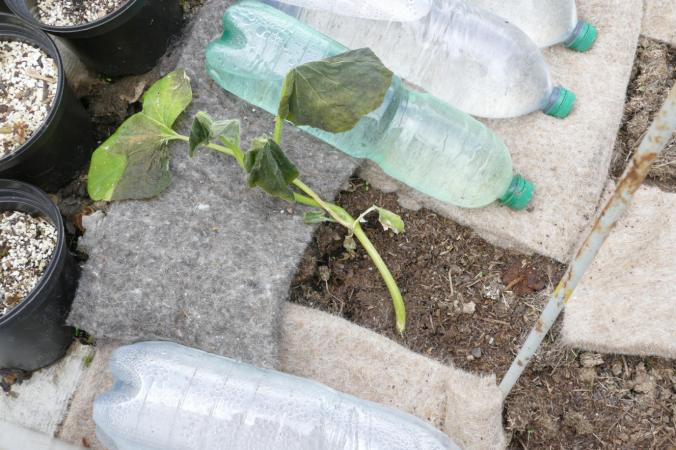 but enviromesh, water bottles and woolly mats seemed to mitigate the worst of the minus 3 temperatures, and all but 3 squash plants seem to have recovered and are growing away within a fortnight. Will they still fruit though?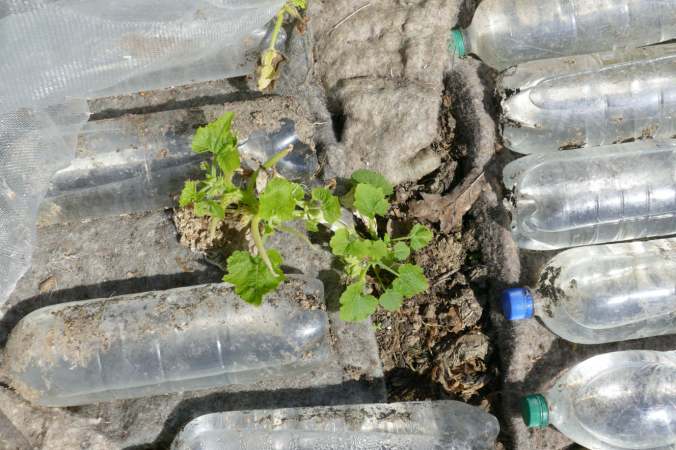
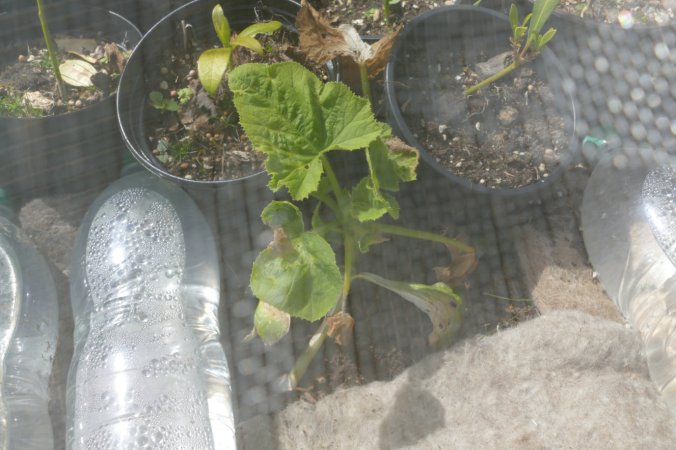
 In the hay meadow even some early orchids keeled over, probably because the flowers are about two weeks ahead of normal, following the sunny dry spring weather.



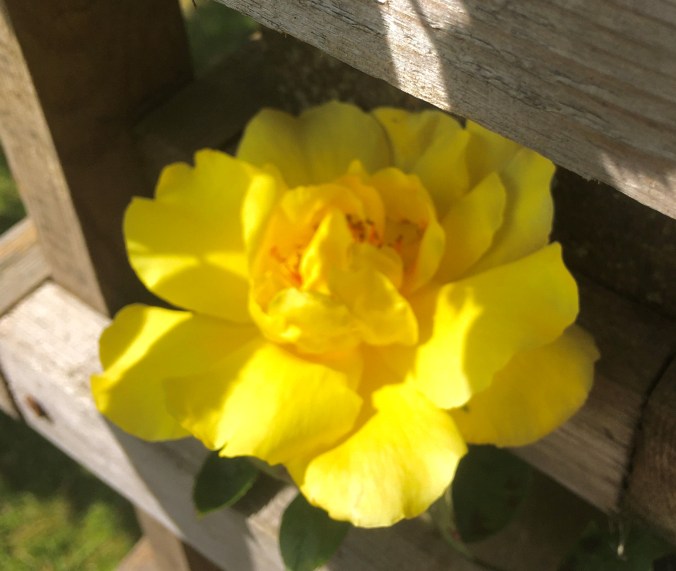


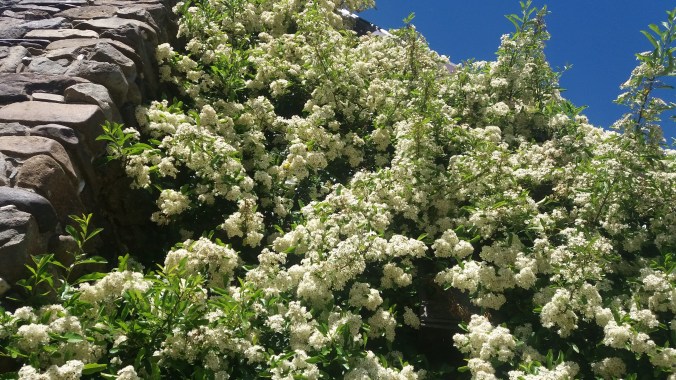
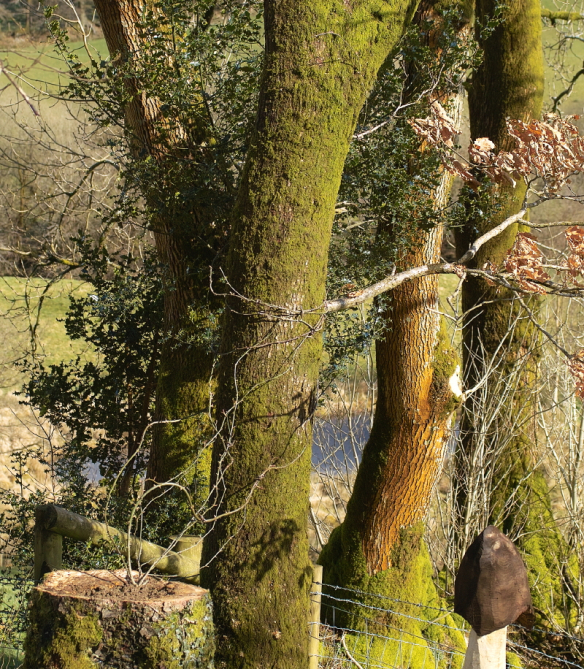
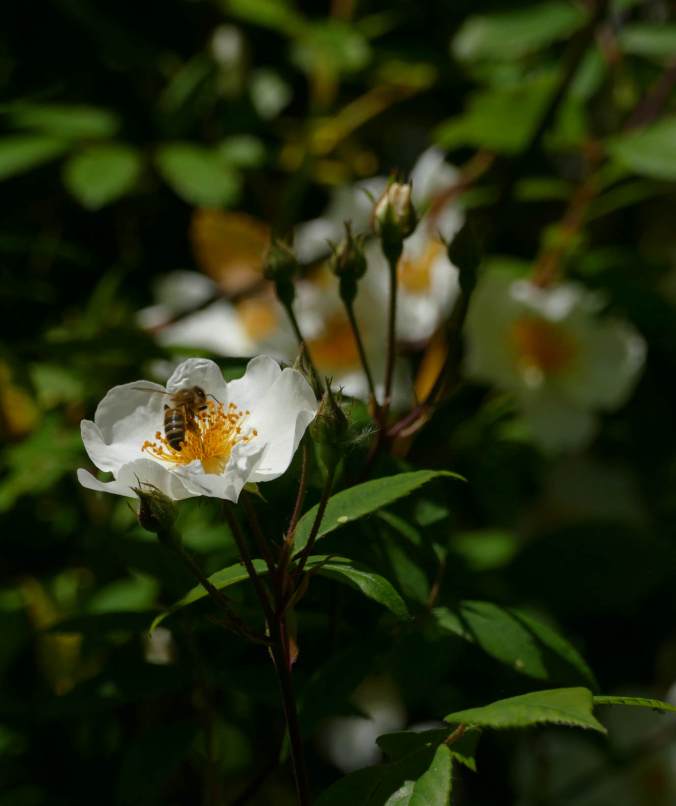 After noting it had grown shoots over 15 feet long in a year, I planted the still young plant into a rotten hollow centred tree stump, filled with compost which was quite close to the base of a youngish oak in 2012.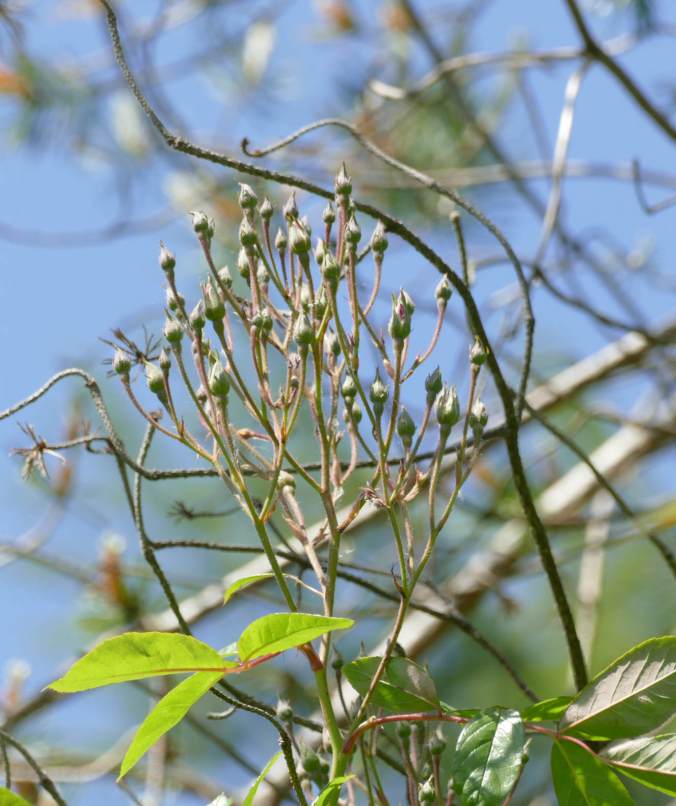
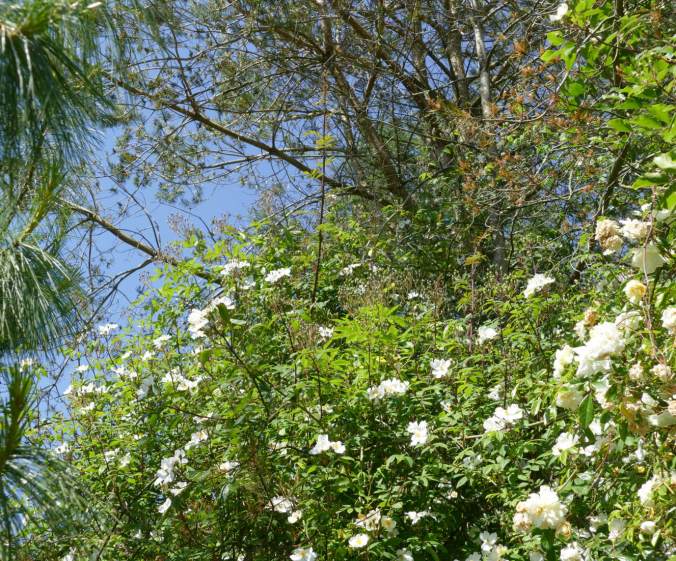


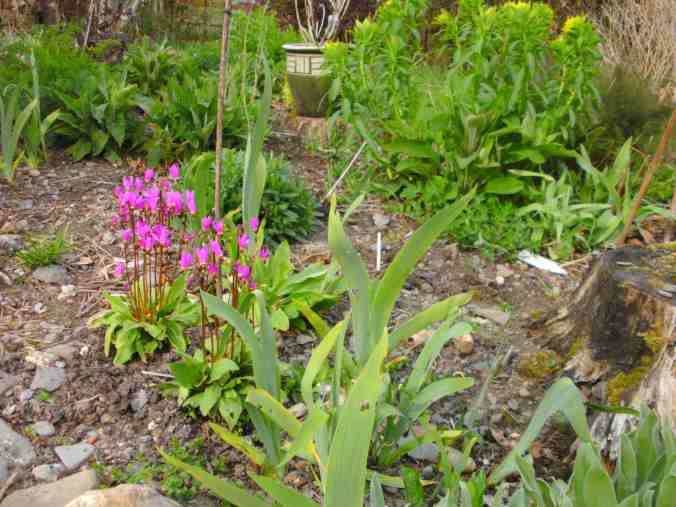

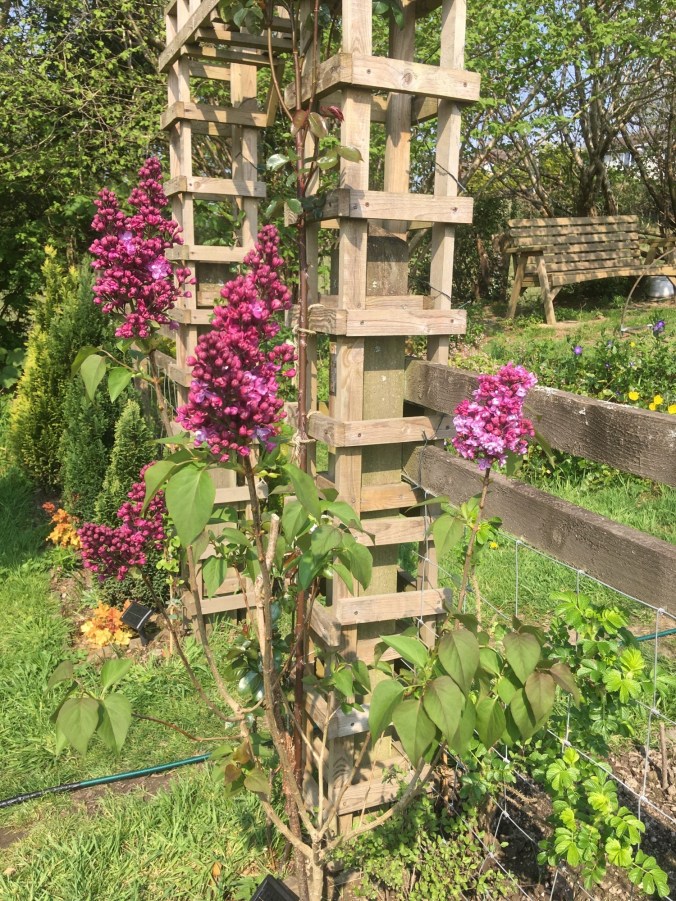


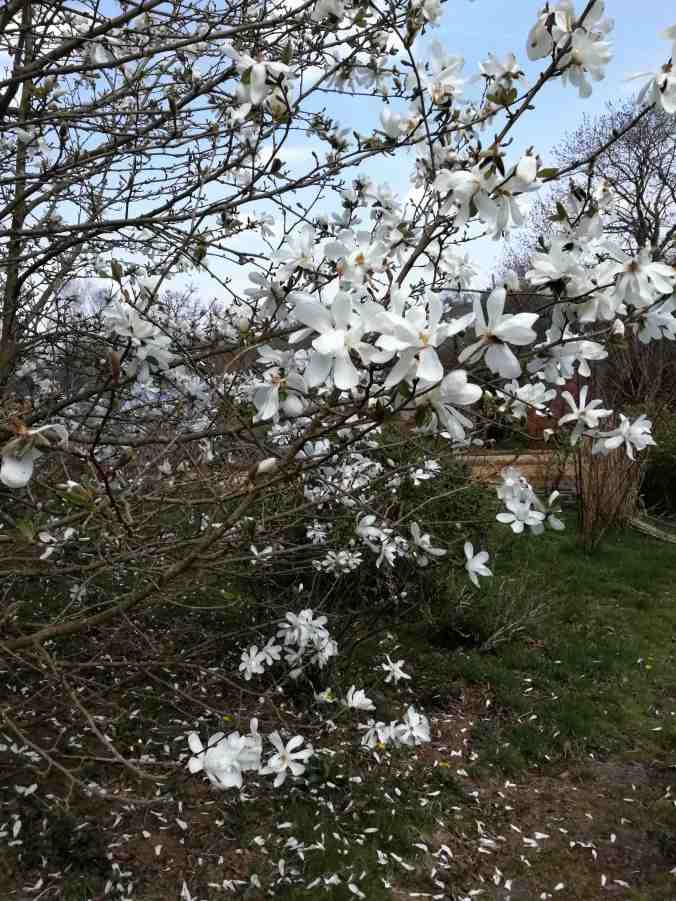






 Plus it’s doing this in spite of me planting it within a few feet of a mature larch tree. So if you fancied a blast of strong colour, which looks great in any light, but especially backlit in the evening, then why not think about getting one?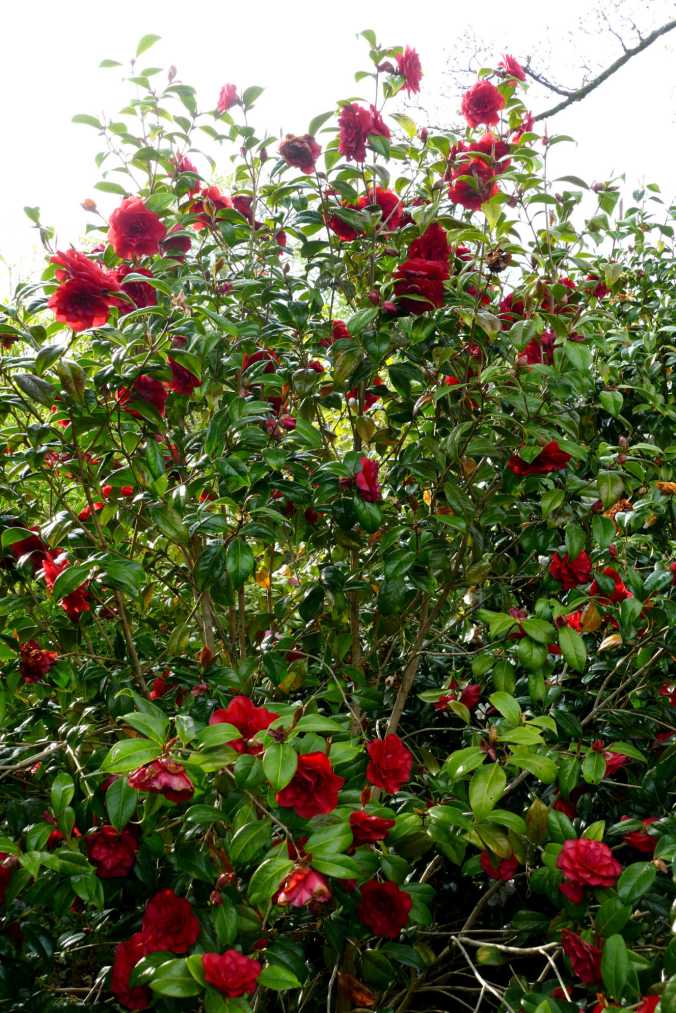
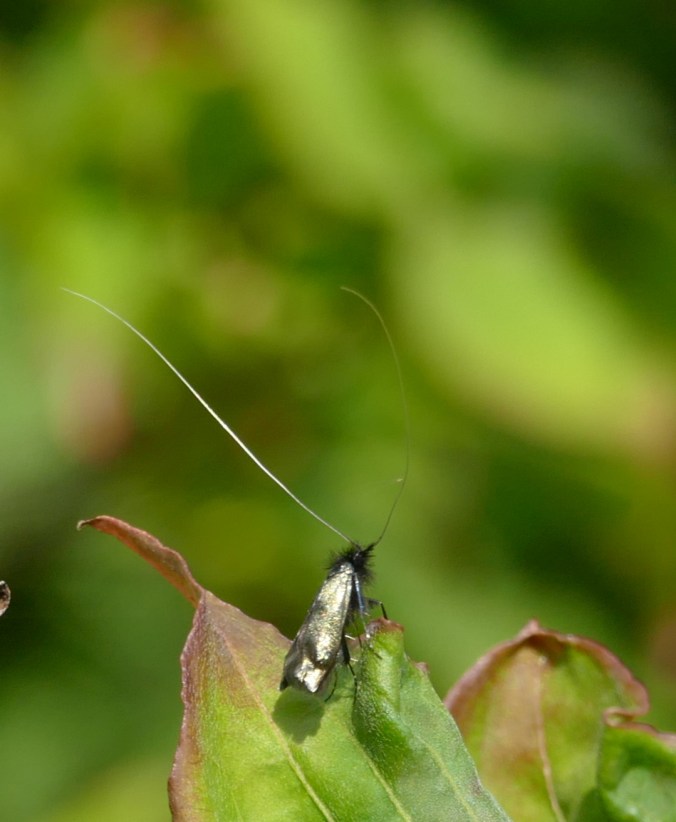
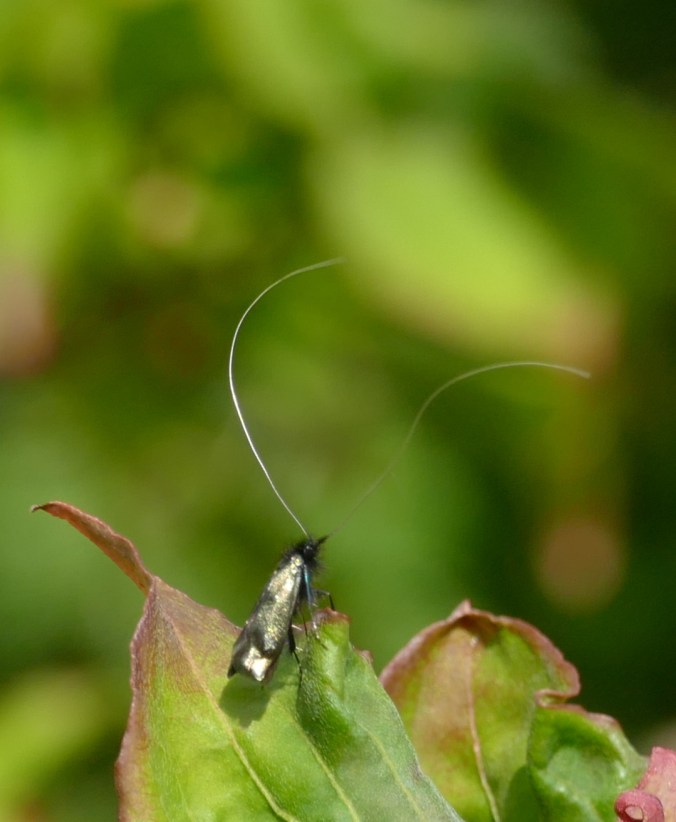 One of the family of Fairy Longhorn micro-moths, we’ve never seen it before,
 But it was a real treat to watch as a small group of males sat on the leaves of Cornus kousa ‘Miss Satomi’, waiting, and almost casting their enormous antennae to try to catch a passing female…
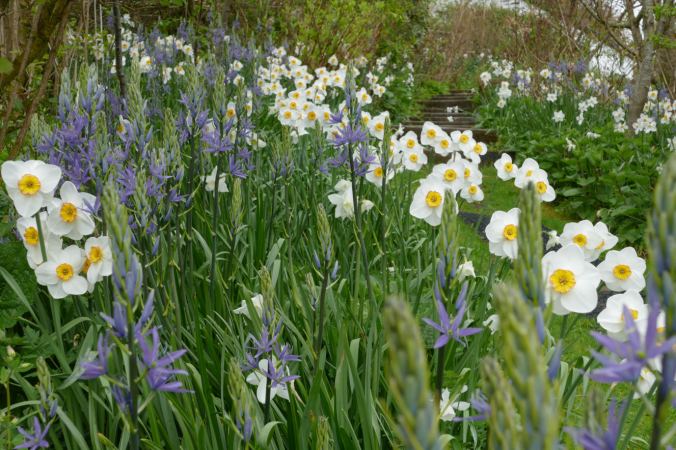
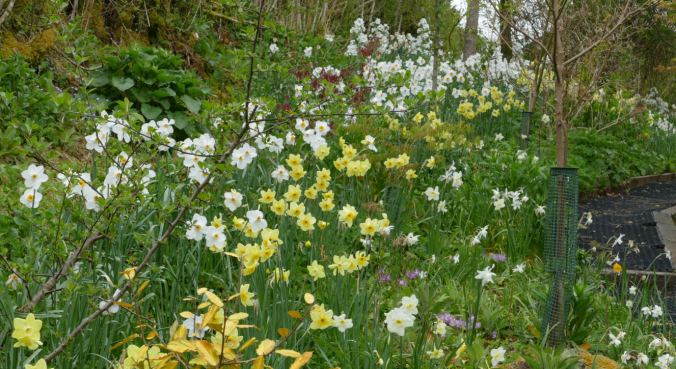

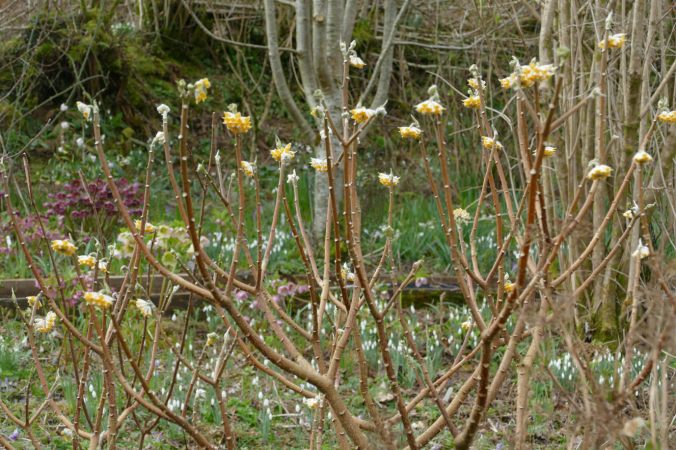



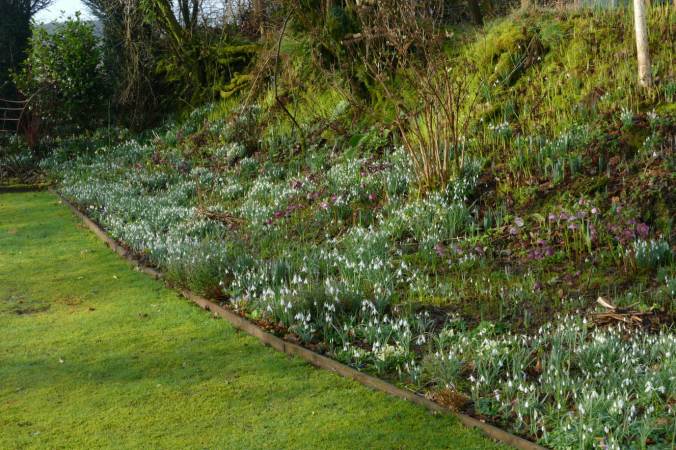
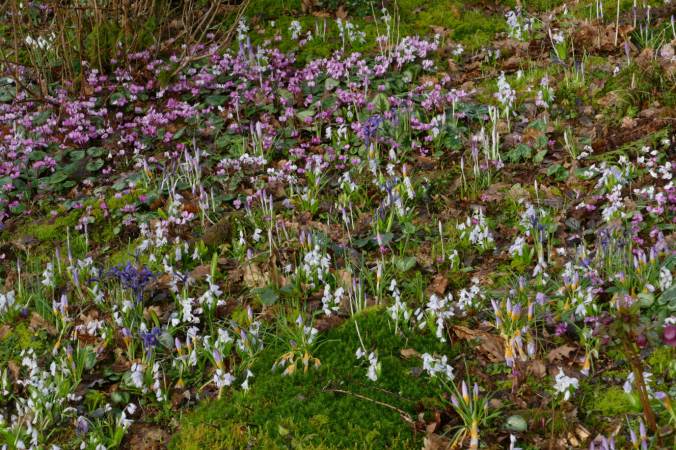 And thank goodness that many spring bulbs seem to shrug off all this inclement weather and look almost as good after storms Ciara and Dennis have whizzed through.


 Along with a few like Japanese Knotweed and Rhododendron ponticum which were introduced and have since turned out to be more of a nuisance!
 In addition he was involved in bringing nearly 24,000 young tea plants from China to establish a fledgling tea industry for the British Empire in the Himalayan foothills in India.
 They have collected many novel plant species and cultivars from trips to South East Asia.
 For any disappointed not to be able to grab a packet of Dahlia merckii seed after Neil Barry’s talk, Julian apologises – they all got snapped up very quickly. But he does have more available which he’ll bring along to next month’s meeting (£1 per packet for club funds). Julian suggests anyone who has the seeds already, keeps them in the fridge until late February and then sows the longish black seeds, not the remaining chaff, into seed compost kept in a warm place until germination has taken place. Then grow them on and prick out in a frost free place to be planted out in late spring. Just like tomatoes really, and they should germinate as easily. You do have to watch out for slugs whilst the plants and shoots are young, but then they grow away quickly and you should be rewarded with similar flowers to these next summer, which as Julian mentioned, are a brilliant late season pollen source for honey and bumble bees. Plus the tubers should be hardy enough to survive in the ground over winter, maybe with a little extra mulch.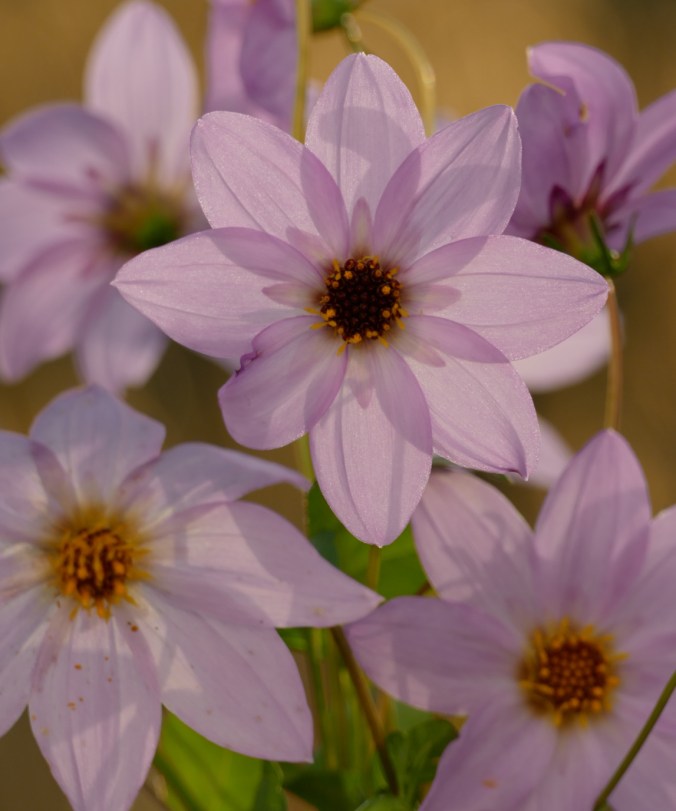

 Cothi Gardeners