Three Local Gardens; John’s Plant Sale

For our October meeting, three members of the Club volunteered to give short talks about their gardens ranging from borderline hardy shrubs and perennials to ponds.

Sheena’s Borderline Hardy Trees and Shrubs

Sheena’s garden is situated at 700’ with a northwest aspect; it has evolved over the years from a field to a garden where shrubs and trees are the main focus. There have been successes and failures with plants that might be considered to be borderline hardy in this area. The soil in the garden is acidic, and most of the plants featured, with the exception of the first, are ericaceous; they are all more-or-less evergreen. 

Borinda papyrifera is one of the bamboos from Yunnan that has survived (just!). Borinda lushuianensis (originally known as Yunnan 4, much simpler to pronounce) did not survive any quite mild winters here, but B. papyrifera has proved to be tougher.

Said to be hardy to -14°C to -16°C, as a small plant it did not come through the very hard winter of 2010-11. We decided to give it one more chance, and by 2020 (above) it had made an impressive specimen in the garden.

December 2022 saw some fairly low temperatures in our area, certainly into double figures below freezing. It became clear that B. papyrifera had suffered badly, and initially Sheena wasn’t sure it would survive – but it has, and developed a number of new shoots this year, although it may be a few years before it recovers to the size that it was. The young canes are a powdery blue-grey initially,  maturing to olive green, with large silvery-buff sheaths, and develop up to a height of 7m. If you have the space, it is definitely a ‘statement’ plant.

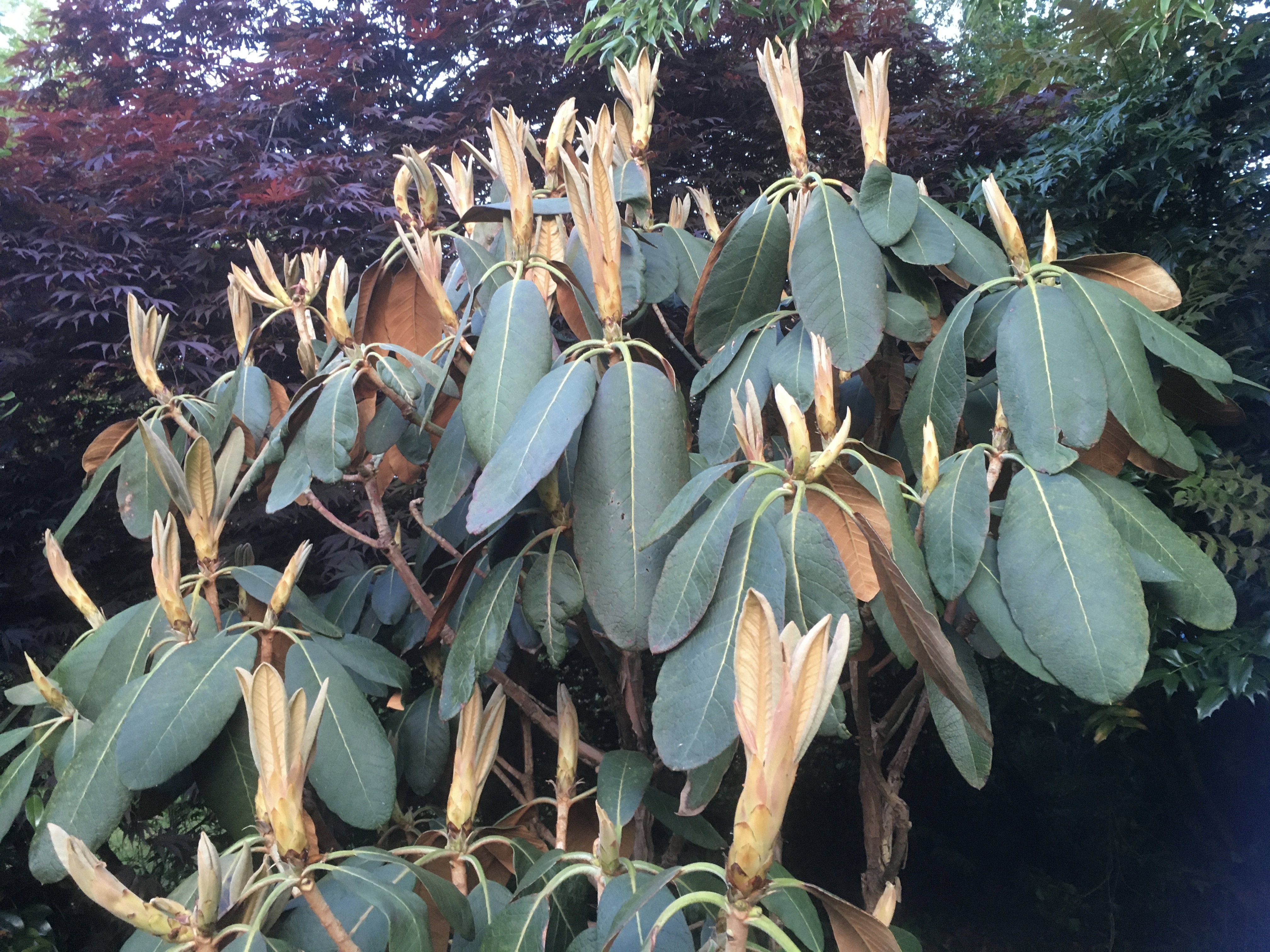
Of the large-leaved rhododendrons, R. falconeri has proved to be the hardiest (it has not suffered in even the coldest temperatures while others, such as R. sinogrande,  have). It is a striking plant, with leathery dark green leaves, fawn indumentum when the leaves emerge, deepening to a rusty colour on the underside of the leaves, peeling pinky-brown stems and pale yellow flowers with a maroon blotch. It has not been extremely floriferous here, but the young leaves make up for that as they emerge.

The west wall of the house is the only place where Crinodendron hookerianum has proved happy, and it is now a very large plant. It has elongated dark green leaves and lantern-shaped crimson flowers are suspended from its branches in May, giving the shrub its name of the lantern tree. In our part of the country, it definitely requires a sheltered position.

Another red-flowered plant, this time with bright scarlet flowers, is Embothrium coccineum, which takes over from the Crinodendron flowering in late May and June. It is an evergreen or semi-evergreen small tree with clusters of bright scarlet tubular flowers (hence its name of the Chilean firebush). It has not proved to be very long-lived in the garden (Sheena thinks that late frosts in May were the culprit).

A replacement, a sucker from her parents’ garden, even though still quite small, came through last winter unscathed, even though it is said to be hardy to -5°C to -10°C.

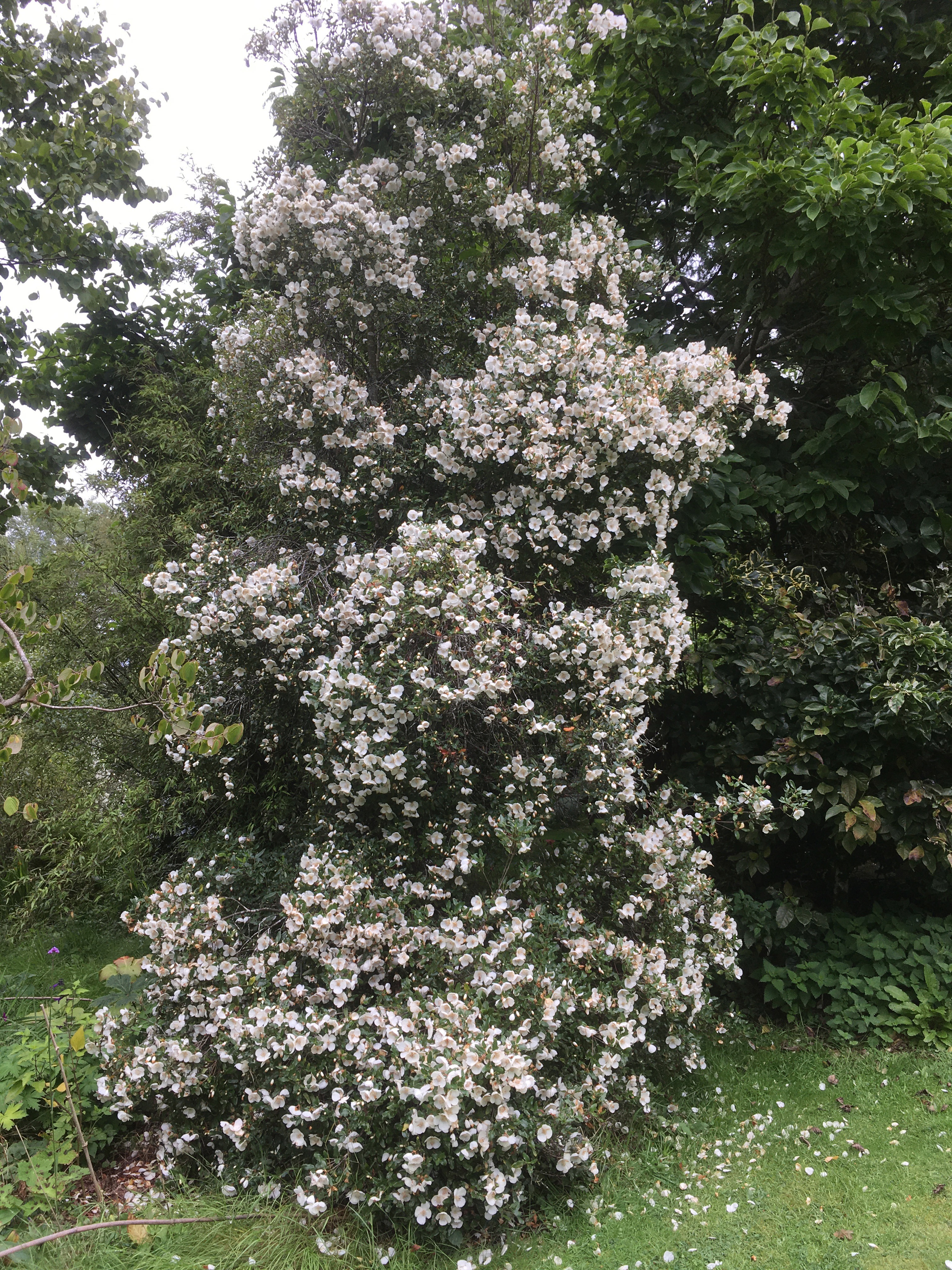
Finally, Eucryphia x intermedia ‘Rostrevor’ is a hybrid between E. glutinosa  and E. lucida, which originated in Co. Down. It forms a columnar, evergreen small tree which bearing masses of scented white flowers abuzz with insects; its flowering period of late summer makes it particularly valuable in the garden, and this variety has proved to be very hardy.


Sally’s New Garden with Hardy Perennials and Grasses

After studying painting Sally at college, Sally practised as an artist for 10 years.  She was influenced by medieval depictions of the flowery mead in her later work. Gardening became Sally’s main interest after moving to a house with a big garden in Oxfordshire. For ten years she ran a specialist plant nursery, with most of the plants grown from cuttings or seeds, selling out at Rare Plant Fairs, Specialist Plant Fairs and Yellow Book Gardens among others. A few years ago she moved to the Cothi Gardeners area and began to develop her new garden from scratch, focussing on hardy perennials. She has a greenhouse where she propagates perennials from seed and cuttings. To the south of the house is a border 15m long and 5m deep. Huge stumps of C. leylandii had to be removed by a tree surgeon to be able to make best use of this space. The soil is deep and rich, quite a contrast to the heavy clay in Oxfordshire.

The garden to the rear is north-facing and exposed, backing onto set-aside land with plenty of wild flowers. In this area in 2021 Sally decided to try a no-dig flowerbed which she planted up exclusively from seeds and cuttings she had raised herself.

The no-dig bed was created by laying down cardboard, adding compost and cut material on top. It has been a great success and
become a varied tapestry of perennials.

In her gardening style, Sally has been very inspired by Piet Oudolf and his use of perennials and grasses, and plants particularly to attract pollinators. She gardens exclusively organically, and uses only peat-free compost. She doesn’t water  plants after two weeks have passed since planting, unless a plant dehydrates completely.

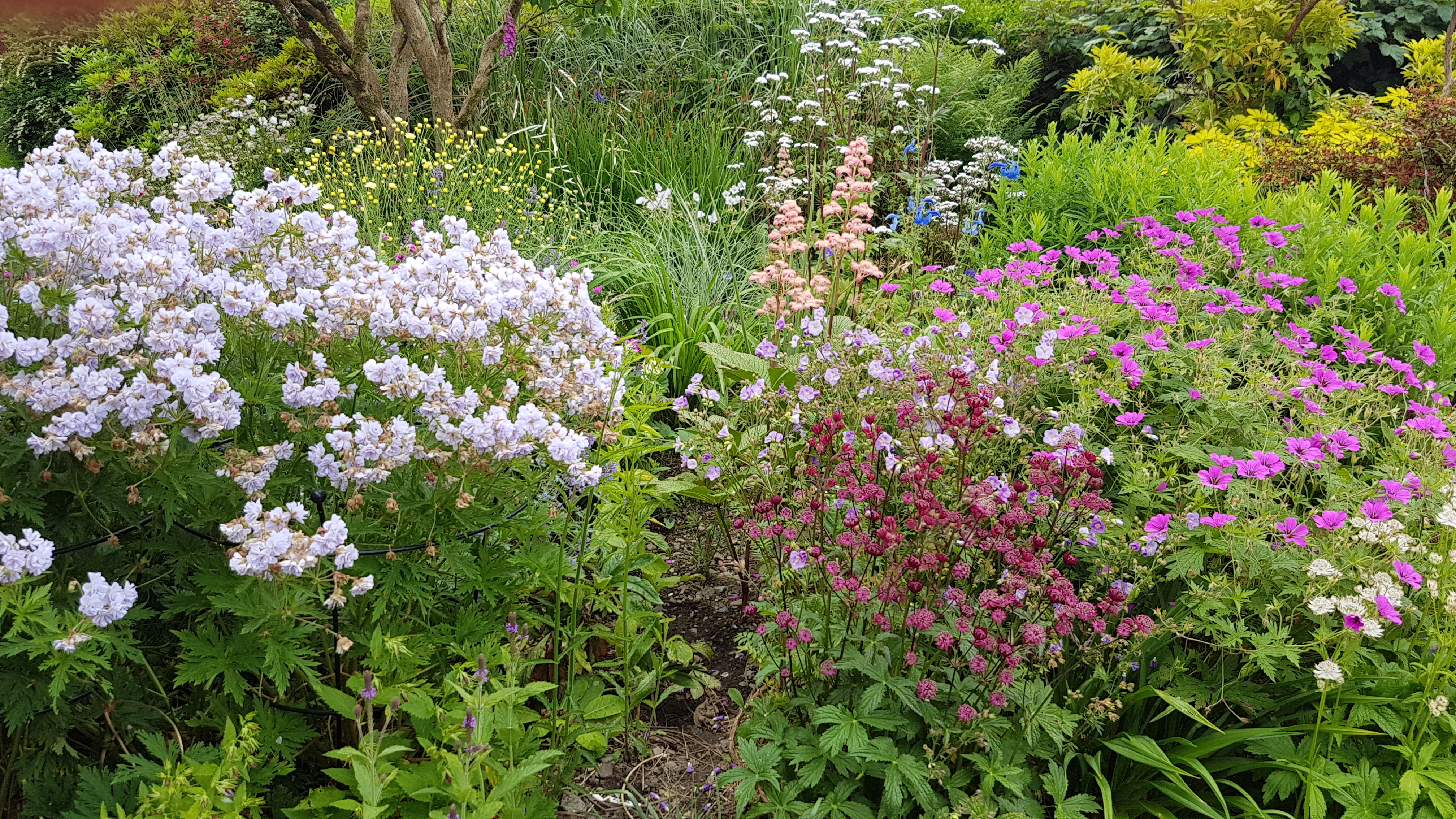
 Sally showed us many pictures from her garden of beautiful combinations of hardy perennials and grasses.  A group of plants Sally uses widely are the hardy geraniums – including G. ‘Patricia’, G. pratense, G renardii, G. ‘Rozanne’ (which flowers from May to October), and G. ‘Cloud Nine’ raised by Helen Warrington of local Ty Cwm Nursery. The latter is extremely floriferous over a long period, and the bees have an unusual trick to get at the pollen, by making  a hole on the underside of the first petal layer.

G. ‘Cloud Nine’ with G. ‘Patricia’ and Astrantia ‘Buckland’

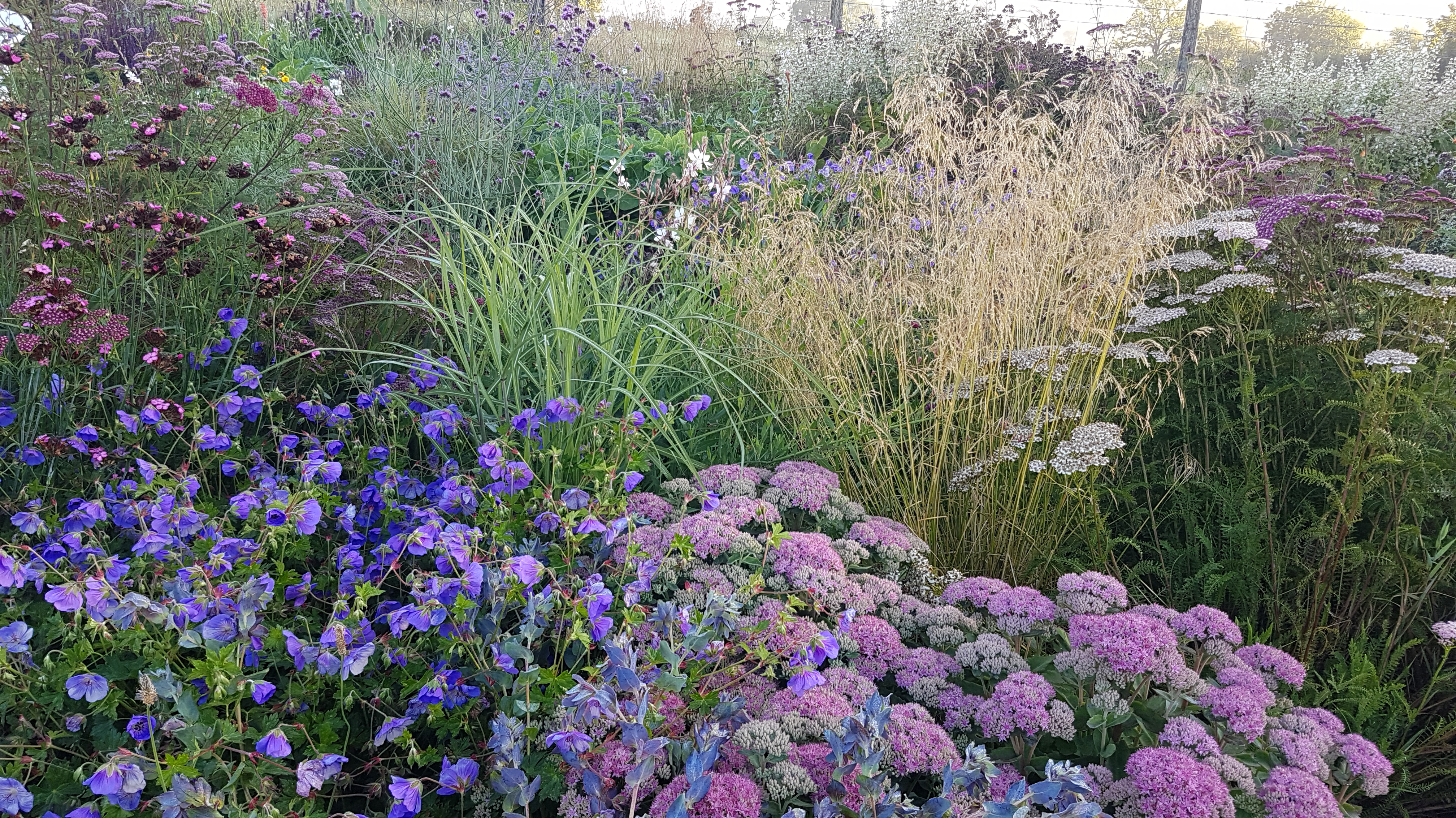
 Among the grasses are Miscanthus ‘Morning Light’, which as the name suggests catches the light beautifully, and Miscanthus malepartum, which is extremely tough. Molinia caerulea ‘Transparent’ is another favourite, as it stays small in the border until mid-summer, but then shoots up with stems as much as 8 feet tall, making a real statement without taking up too much space.

Deschampsia cespitosa with Geranium ‘Rozanne’

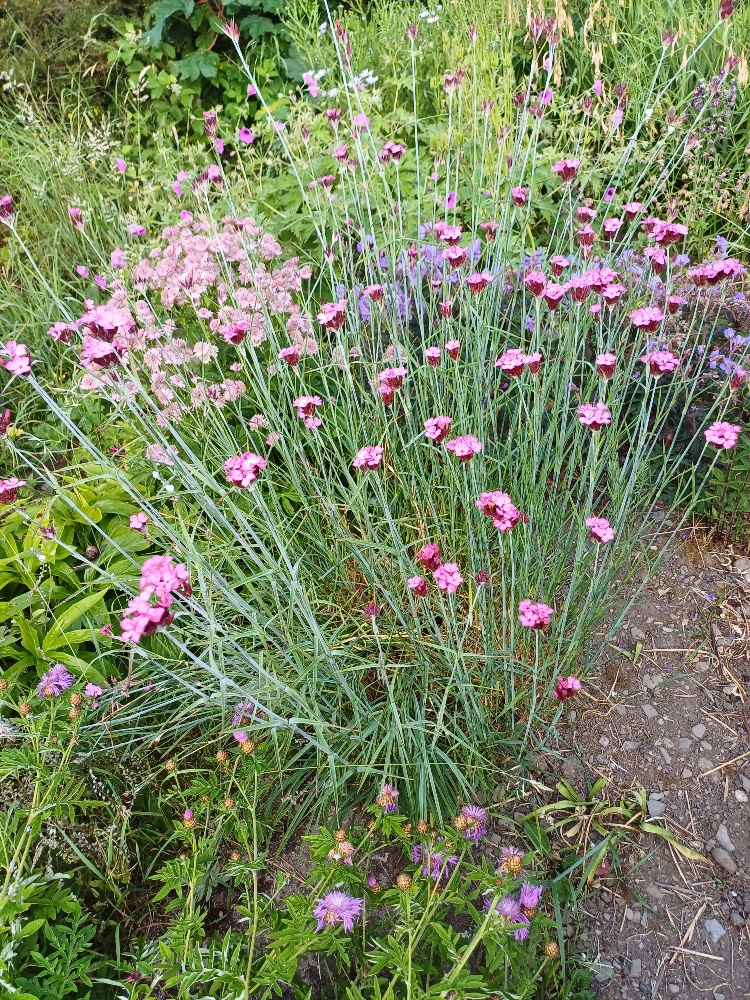
 Sally has particular praise for Dianthus carthusianorum, with its single pink flowers held on tall stems above narrow, grassy, grey-green leaves; it flowers all summer long. 

Other perennials that Sally uses include Salvia ‘Purple Rain’, Papaver ‘Royal Chocolate Distinction’, Asphodeline luteum, Phlox ‘Hesperis’ (with violet flowers that become almost luminous at night), Salvia uliginosa, Salvia turkestanica, Knautia macedonica, Morina longifolia (hailing from Tibet), Centaurea ‘Pulchra Major’ and Selenium wallichianum.

A beautiful grouping of plants from Sally’s garden

Elena’s Tropical Pond in Wales

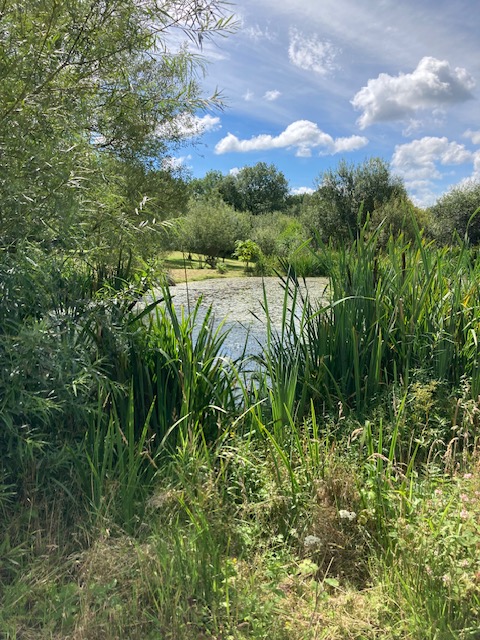
Twelve years ago Elena moved from Trinidad to the Cothi Gardeners area – where the climate and vegetation couldn’t be more different! There was an unused patch of grass in her garden, with just 4 daffodils and half-a-dozen bluebells, which she had been considering turning into a ‘tropical pond’. The site is exposed to the north and the east, and on top of a rubble heap – not promising! Then along came lockdown in 2020, creating an opportunity, and providing a much-needed focus for activity. 

The first step was to lay the outline of the pond with twigs on the grass. Then Elena dug up from her garden and divided any plants with tropical-looking foliage. She also scavenged what she could from friends.

 But, in lockdown, where to get the materials? James, Elena’s next-door neighbour, came to the rescue. He supplied both the butyl liner, and the soft cushioning layer. He also borrowed a mini-digger to dig the pond.

Even with the mini-digger, the spoil heap proved to be a tough proposition – the pond became shallower, and shallower… Elena collected the stones for the pond, to hide the butyl liner, from the small stream which runs along the boundary of the garden. More of the butyl liner was used to create a bog garden to one side of the pond. Lifting the canopy on the sycamore trees has been effective, giving the stems a tropical appearance.

Then Elena spent hours placing pots in and around the pond, and the next thing the pond needed was a waterfall. Lockdown again turned out to be the provider, as Farmyard Nurseries had been clearing out their sheds and discovered a water fountain – just what was needed!

What of the plants? They include a Banana (which stays out all year, wrapped in the winter), Gunnera, Persicaria (which was gifted as a bunch and distributed about under the stones), watercress (also from a friend), Macleaya and even a carnivorous plant (which also overwinters!). Gingers (Hedychium) also are surprising and beautiful plants in this environment. Houseplants are brought out for a summer holiday, including Hibiscus and Bougainvillea.

 Gravel has been put down around the pond, joining to the existing path, which has been lined with trellis screens bought online. At the base are ferns, which have proved to be very hardy. Hostas have been hung in pots from the tree adjoining the path, and stumps have filled with thyme and evergreen ferns.

 It is just a tiny pond, but it attracted so much wildlife, almost immediately: birds, snails, dragon- and damsel-flies, frogs, toads, newts and lots of hedgehogs. The frogs come in huge numbers, as Elena and her grandchildren discovered in the spring when they went down to the pond at night to explore! 

Around the pond the hedges have really thickened up, and the planting has become lusher and lusher. Many plants have died, but lots have survived. Making the pond has been an enjoyable journey; the tropical feel of the pond reminds Elena of Trinidad and the plants of gardening friends old and new. 


John’s October Plant Sale

John and Helen held a very well-attended plant sale for NGS charities in early October, which has so far raised a sum of over £1000 for the charities. This figure will rise as there are plants still to be delivered and collected. John and Helen would like to thank all those who contributed plants, bought plants and helped out on the day. The autumn plant sale has been so successful they may well hold another sale in the spring of next year – so watch this space…


August Garden Safari and Picnic

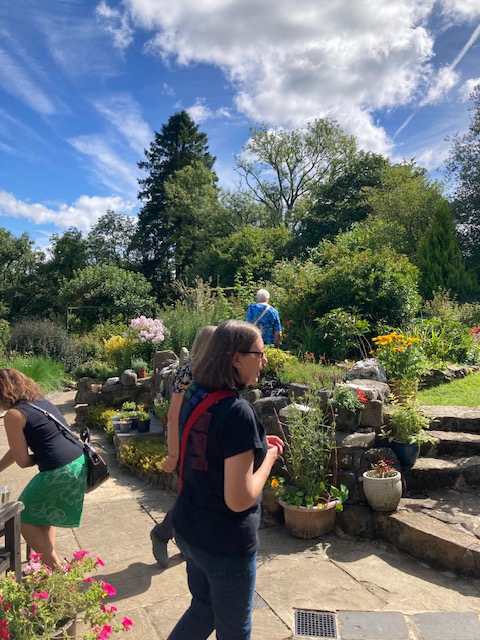
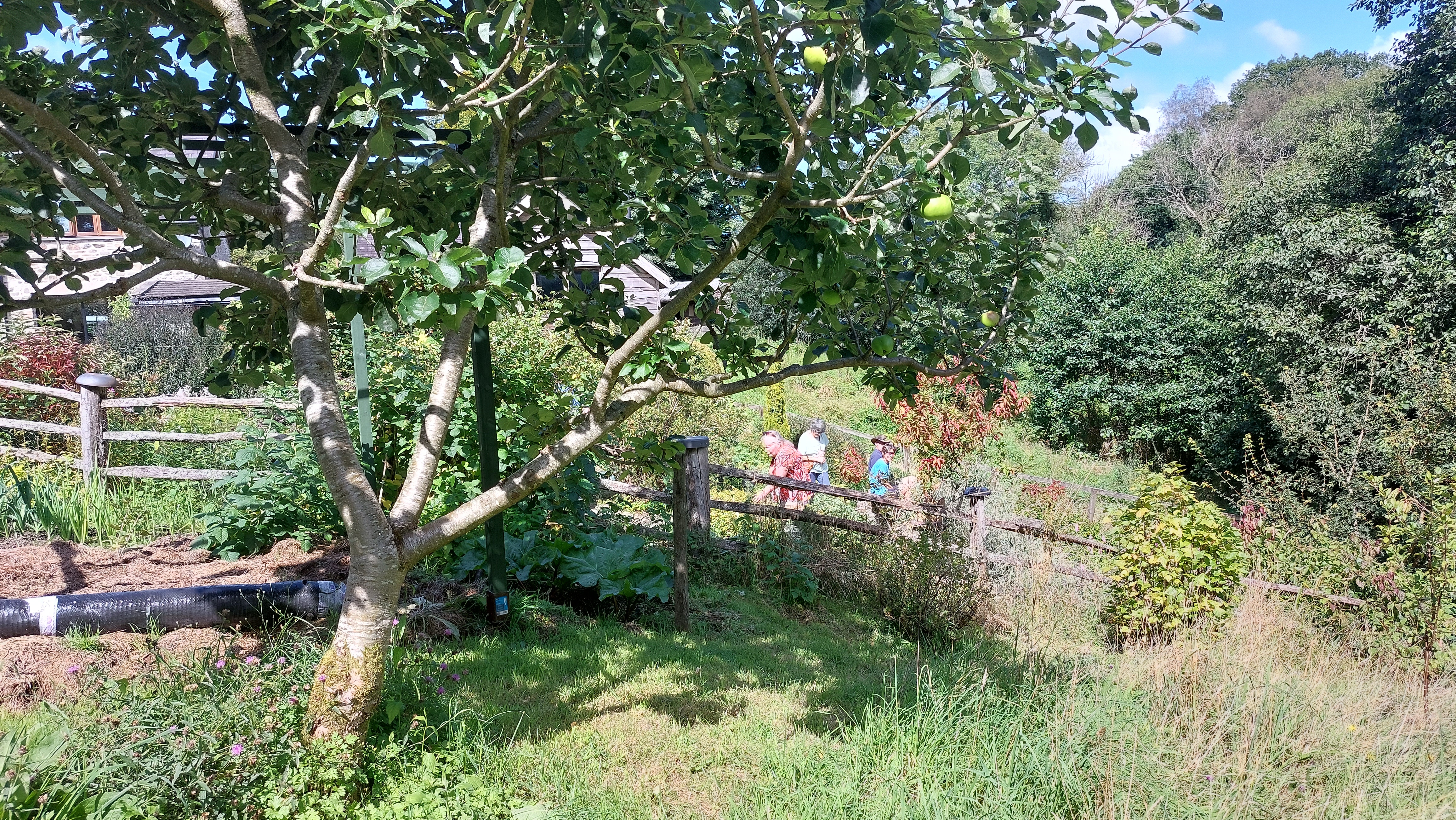
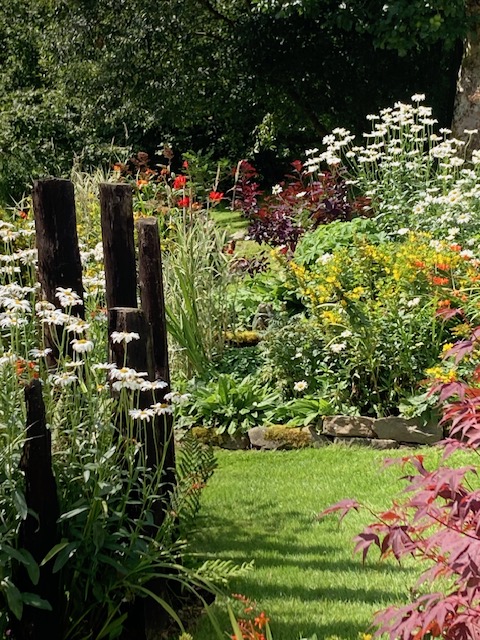
Previous garden safaris had been very successful and popular occasions, so for this year’s August event it was decided to repeat the experience, with members offering three gardens for the safari in Crugybar, Ffaldybrenin and Ffarmers. It was our great good fortune that, despite the grey and soggy conditions that have prevailed for much of August, we had a lovely sunny day for it. An enjoyable time was had by all, there was much of interest to be seen in all the gardens, and great thanks are due to those who opened their gardens for us. Here are a selection of photos from the day.

Jane’s Garden

Jenny and Gordon’s Garden

Dawn and Nick’s Garden


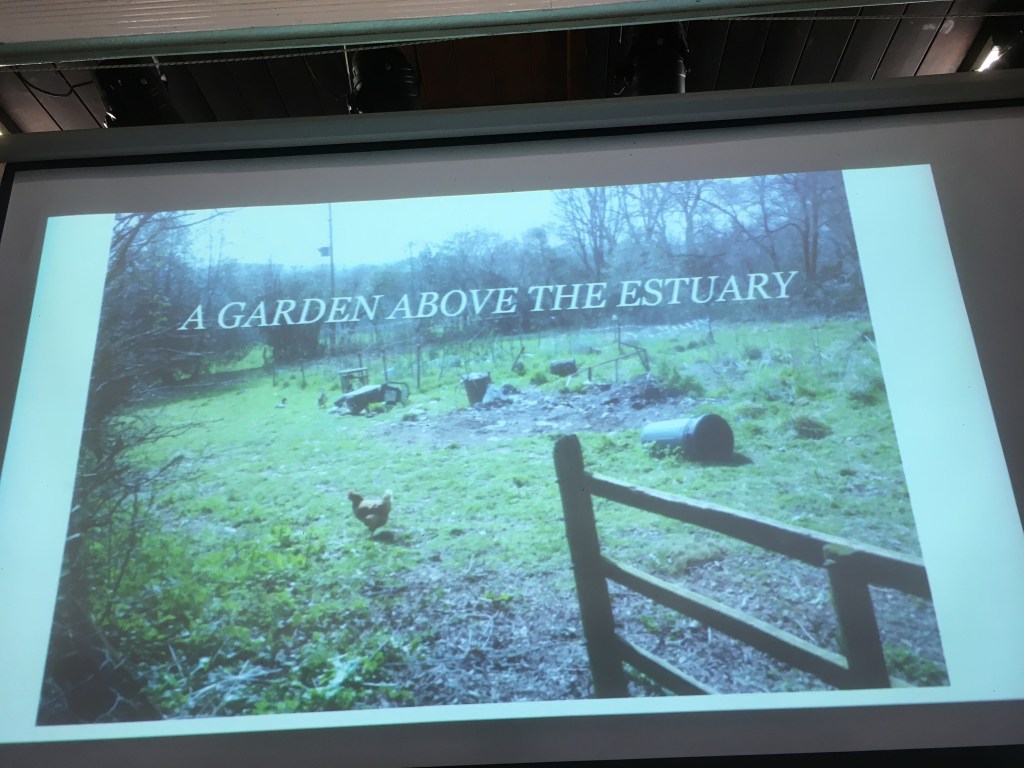
‘A Garden above the Estuary’ – a Talk by Adam Alexander; Pottiputki; Updated Website

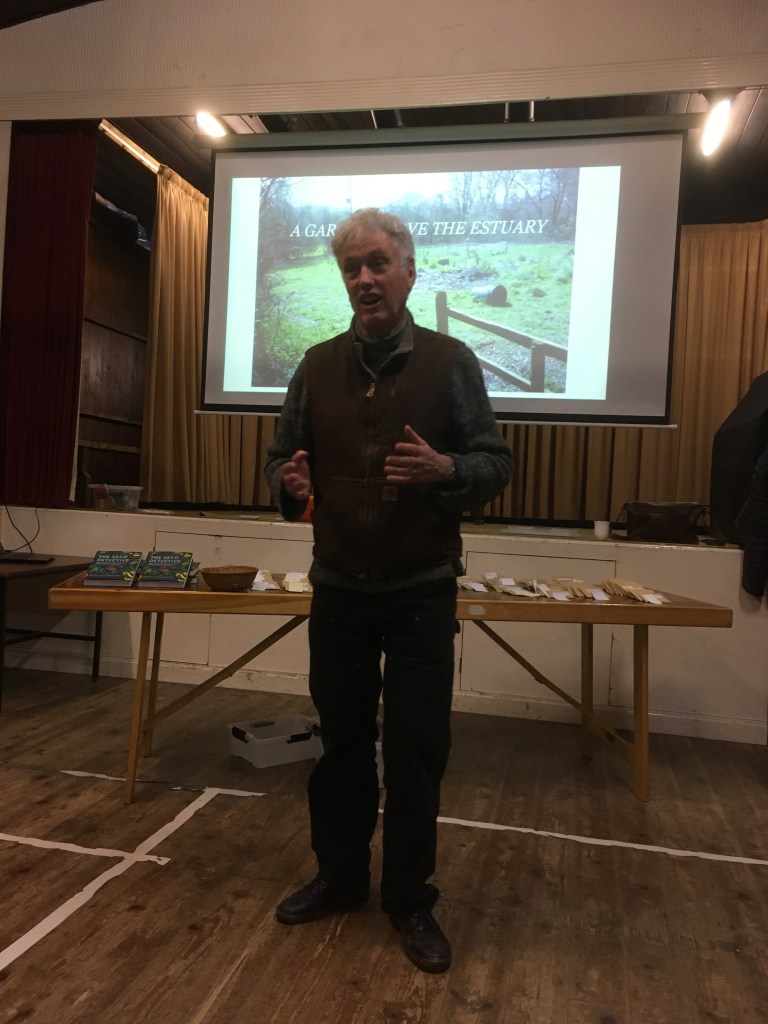
The 2023 year of talks opened with this fascinating and entertaining talk on the creation of Adam’s current garden which combined practical tips with stories of adventures tracking down vegetable seed and its links with food identity and culture, and the history of many vegetable seeds and their names. Adam’s particular interest is the conservation of the genetic diversity of edible crops.

As background, Adam told us that he has grown something every year for the table from a very young age. Despite having trained as a film-maker, Adam became a market gardener in the mid-late seventies; then that was what Adam describes as a “mug’s game”, as there was little interest in unusual vegetables such as purple-podded peas or yellow courgettes, and he returned to the film industry. That was a job that enabled him to travel widely and led directly to Adam’s interest in acquiring and protecting vegetable seeds with a history and cultural connection.

That is where this story begins – in Donetsk in 1988, where Adam had travelled as producer of a film about a Welsh industrialist who founded the steel industry in Ukraine. In the hotels of the time vegetables were not in great supply on the menu, and Adam ventured to the local market with an interpreter. There he encountered an old lady selling the surplus of vegetables she had grown, from seed she had saved herself, from seed saved previously by her mother and her grandmother. Adam bought some peppers and took them back to the hotel kitchen and was blown away by the sweetness, fruitiness and hint of heat. During his stay Adam returned to the market several times to buy more peppers (which are a very important part of the culture in parts of the former Soviet Union and eastern and central Europe, and central to the food identity of the peoples there). The taste of the pepper was unique and he wondered about saving seed to take home to propagate for conservation purposes; seed was duly dried on the window sill of the hotel and has successfully been propagated and conserved, so that it can now be distributed to displaced Ukrainians to reconnect them with their home.

Fast forward to 2013. By now, Adam was growing over 500 varieties of vegetable for the various seed libraries and gene banks. He grows at least 70 varieties each year to renew each of the seeds that he has. This takes a lot of space, which Adam found in different gardens, but he really needed to have everything in one place. So in 2013 he moved from the Forest of Dean to Monmouthshire, to a property outside Chepstow 170m above the Severn Estuary.

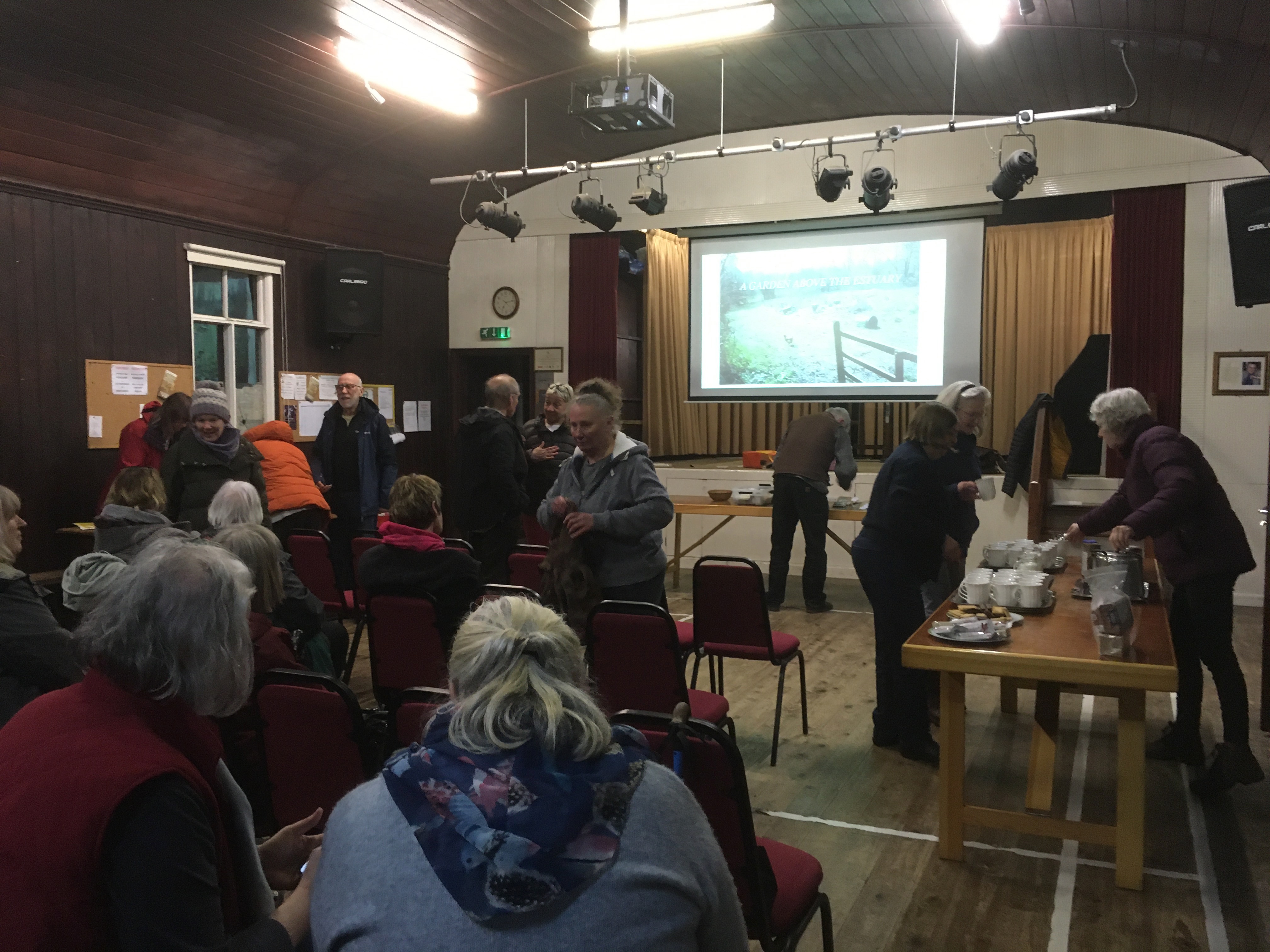
With the property came a field to transform into his garden; it was effectively an unrestored wild flower meadow, in which the previous owners had kept chicken and had a lot of bonfires (as the opening slide of the presentation illustrates).

In the spring of 2014, having covered parts of the ground with anything he could find (polythene, corrugated iron sheets etc.) for weed suppression, he planted potatoes (excellent for cleaning the ground) through black plastic. Then some raised beds were built in terraces to maximise the light in an East-West orientation. Adam had always used cedar for his raised beds, as it was readily available from plantations in the Forest of Dean. If you turn the cedar boards in your raised beds around every couple of years, they can last for up to 20 years.

Within 2 or 3 months, Adam had created the framework and the shape for the garden that he needed. There were 14 raised beds, each one-metre wide, which means you never have to walk on them. You can extend the season by using clear polythene film with metal hoops. As the beds are all the same length, these cloches can be re-used, and typically last five years. He also uses and re-uses fleece in the same way for warmth and to keep pests out.

While some digging was required to create the framework of the garden, the basic philosophy is to keep digging to a minimum and use black mulch (polythene or membrane) to grow through; it warms the soil and gives off heat at night creating a micro-climate for the plants. The aim is also to recycle and re-use materials as much as possible.

The contents of a 40-foot duck pond provided the base, spread on the ground and covered with black polythene, for two 30-foot polytunnels, the first of which was erected in October 2014. The polytunnels had been with Adam since 1976 and have moved with him to all of his different gardens ever since. In his raised beds within them, now in March, he has peas and broad beans in flower, fennel for eating, herbs, salad crops right through the winter and cauliflowers beginning to heart up. A trickle irrigation system is essential – he is lucky to have his own spring water (with a pH of 6.9) for this, one of the original attractions of this site.

One of the crops that Adam plants in his polytunnels is garlic – but not any old garlic! One of his filming assignments took him to Oman, home to damask roses and famed for its rose water. In Oman terraces tumble 100 metres down into ravines with the most amazing irrigation system. Adam saw garlic being cultivated, and got into conversation with the owner of the hotel where he was staying. It turned out that the plantation of garlic that Adam had seen belonged to the hotel owner; this was in April, and Adam asked him to send some garlic when it was ready, not really expecting that this would be possible. In June, having been away, Adam walked into his house to find a strong smell and a large plastic sweet jar covered in stamps and with the appropriate immigration certificate. In South Wales, Adam plants this garlic in a polytunnel in October through black polythene. The mountains of Oman in the winter experience a dry cold. This is replicated in the polytunnel where, even if the air temperature drops, the soil temperature is maintained. The garlic in the polytunnel can be harvested in the green in May, and then after that for storing in June/July. It is a hardneck variety, and doesn’t keep terribly well beyond October.

Adam also wanted polytunnels for broad beans; he grows three crops in a year in sequence, from autumn through to April, so that they do not cross-pollinate. A delicious broad bean is ‘Bowland Beauty’, which was originally bred for exhibition.

It has to be said that timing is key in terms of getting crops into the ground. Since 1976 Adam has kept a diary of what he sows when, the temperature, conditions etc. This is giving very direct information about climate change. Saving seed helps to build in local adaptations, which means that plants from very different environments from our own will in time thrive here. Carrot ‘Red Elephant’ from Australia is a good case in point. Adam has grown it outside in beds for a number of years. He discovered by chance, from seed spilt in the bed while collecting, that it can grow with absolute neglect when sown in October outside for early harvesting – there is no need for special forcing varieties.

None of Adam’s growing would be possible without compost. He uses all sorts of old materials to make the compost bins, including pallets and old carpet (this has to be pure wool). A lot of grass is used in the compost, which has the benefit of generating heat, but it does have to be turned regularly (once a week).

The last thing that Adam installed on his new site was a greenhouse, which he uses for tomatoes, capsicum, cucumbers, lemongrass, okra, ginger etc. A propagator is also key for starting seed off in early spring. There is only one cucumber which he now grows, for its taste, which comes from Syria. He encountered it in Aleppo, in what was known as the ‘fertile crescent’, and he now grows out a number of vegetables from the seed bank there for seed. The cucumber is unusual in that it has both male and female flowers. Seed is now being distributed to displaced Syrians, including those in camps in Jordan; later this year they will be sent to camps in Kurdistan.

Polytunnels or greenhouses allow you to create controlled environments for the production of seed; you can water when necessary during the growing period, and keep the crops dry when seed is setting.

One of the things that Adam has discovered on his travels is that growers like to mix things up together, and that plants don’t mind being crowded; polytunnels or a greenhouse allow him to do both of these things. Sweetcorn is an example: he has had good success growing 9 or 10 plants in a small block a foot apart, producing very good crops. Sweetcorn is a wind-pollinated crop, and growing them in a polytunnel gives good control (rather than the wind blowing the pollen far and wide, tapping the plants means the pollen falls where it needs to).

Moving on to the seed that Adam grows, here is a whirlwind tour through just a few of them:

  • Fava bean ‘Syrian Small’ – first seen in Damascus, being wheeled through the streets in barrows piled high. They are traditionally eaten whole when young, but can also be eaten shelled. The seed is now primarily being distributed to displaced Syrians.
  • Radish ‘Pasque’, is a French radish, which is lifted in the autumn, stored in clamps, and then eaten at Easter. It is an interesting plant in that the flowers start white, but then turn pink once they have been pollinated.
  • Fava Mourda Reina Mouz (‘Purple Queen’) is a purple broad bean from Catalonia (another very interesting area for endangered vegetable varieties), which Adam is growing out to make safe for the future.
  • Blue potatoes from Atacama in Chile – they have a shape like Pink Fir Apple, but are deep blue right through; they are now being included in an official breeding programme to establish their blight-resistance.
  • Pea ‘Champion of England’ is the only pea still in cultivation of the 13 listed as having any merit out of the 200 catalogued by the RHS at the end of the nineteenth century. Although held in seed libraries, it returned to commercial seed catalogues in 2016, originating in the US. Adam still held some seed from 2009, so that seed is now being grown for comparison to see whether the newly-listed variety is the true original variety.
  • Pea ‘Daniel O’Rourke’ was one of the most successful varieties of pea in the United States until the 1920s. Its name derives from the 1852 Derby winner, when it was introduced to the UK the following year, as a marketing strategy to encourage growers in the UK to buy it.
  • Pea ‘Fesol Negre del Belgarda’ is a purple-flowered, black pea from Catalonia grown for drying and storing.
  • Pea ‘Panther’ is a pea that the Heritage Seed Library was told grew to about two foot in height – but in fact grows to three times that!
  • Pea ‘Jaune de Madras’ is one of the peas used by Mendel in his work on genetics. It is a mange-tout pea, its name implies it had originated in India. However, it was being introduced to the UK at the time that yellow Madras curry, which was a British invention, was very popular, so the name was purely a marketing strategy. In the US, it was called ‘Golden Sweet’, and it is now sold here as that as well.
  • Blue Hopi Maize hails from very arid regions of Arizona, where three inches of rain falls in a year if they are lucky. There it is sown in very deep holes to reach the damp where it can germinate. It is sown in clumps, and the drooping leaves create shade and a particular micro-climate which enables them to grow in such a harsh climate. There is a particular culture around blue maize within the Hopi nation where it used to make blue polenta, and the ability to grow blue maize is key to winning the heart of the woman a man wants to marry.
  • Tomatoes – Adam grows many different tomatoes from all over the world – including ‘Burmese Sour Tomato’ from Yangon (which is recently in demand thanks to ‘Gardener’s World’), and ‘Bolivian Orange Cherry.’

Adam stressed the importance of using green manures over winter. A very important one is Caliente Mustard – its biofumigant properties attack pathogens such as onion white rot in the soil. He also grows comfrey as a feed for plants, particularly tomatoes.

Autumn in Adam’s garden is all about harvesting. Beetroot is a great crop, as you don’t need many plants to produce masses of seeds (33,000 seeds from a single plant!). Cucumbers are much tricker – the cucumbers have to be almost rotten, and even then there is no guarantee the seed will be viable.

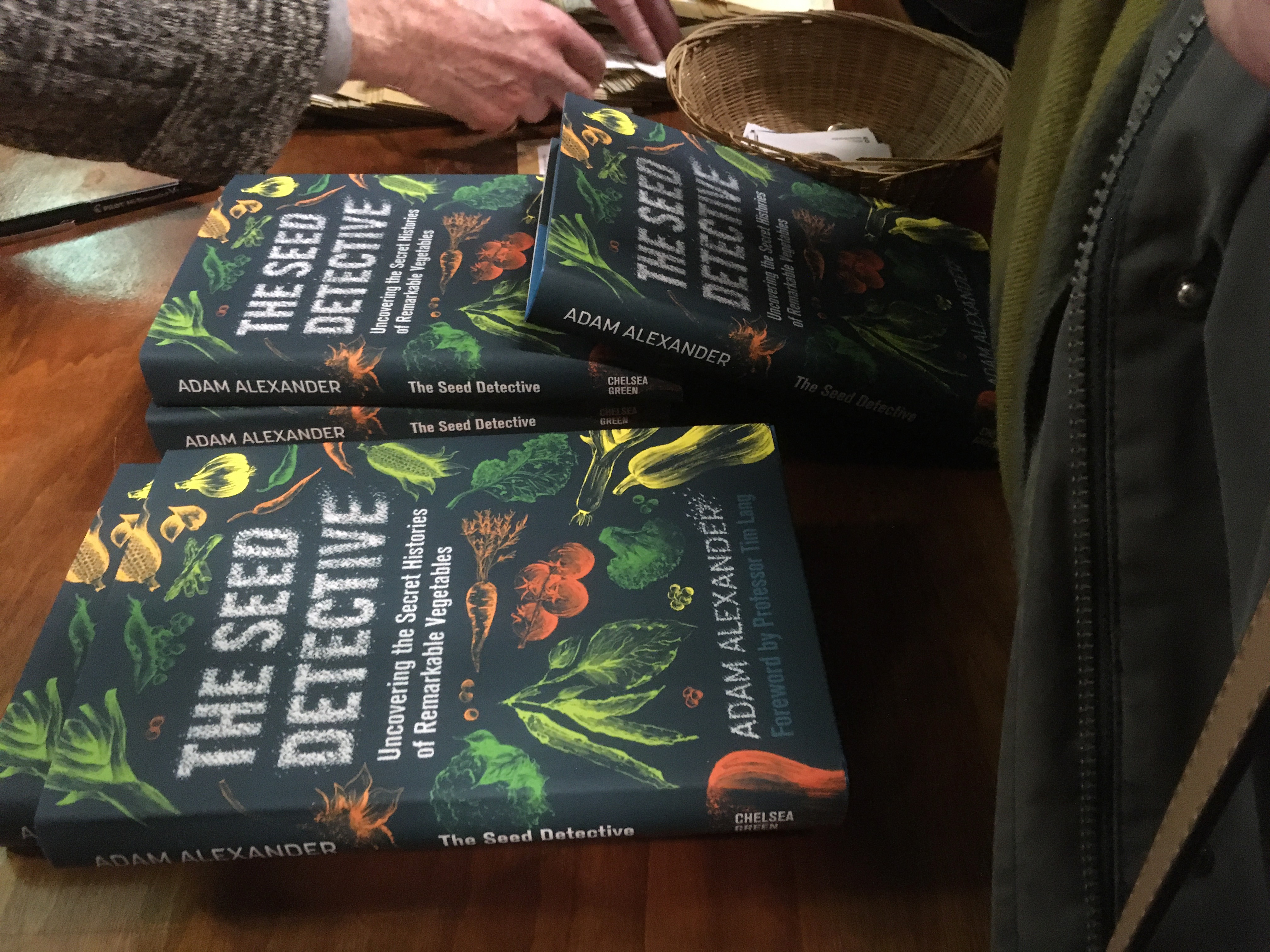
On that note of seed harvesting, Adam’s talk came to a close. Appreciative thanks were expressed for such a wide-ranging, erudite, and engrossing talk, and there was then a rush for the table where different seed varieties were laid out, along with Adam’s book ‘The Seed Detective’.


Pottiputki

At our last meeting Julian introduced us to the Finnish tree-planting tool, the Pottiputki. Although originally designed for forestry planting, Julian has discovered it is invaluable for transplanting snowdrop divisions. He has created this video to show how the tool can be used and to demonstrate the process of dividing snowdrops in the green. Thank you Julian!


Updated Cothi Gardeners Website

The Cothi Gardeners website has recently undergone a bit of an update, and now includes a new section for members to write about their garden as it changes through the year – highlight ‘Members’ Gardens through the Year’ from the main menu at the top of the page. The more members who would like to contribute pieces about their gardens the better! Please contact cothigardeners@gmail.com with your text and photographs (or any queries you may have), and the web editor will do the rest.

Sex, Lies and Putrefaction – a talk by Timothy Walker; October Plant Swap and Sale; December Festive Tea

During the Covid-19 lockdowns of 2020-21, the Zoom talks organised by Fiona Wormald in lieu of our in-person meetings were a beacon of light which helped to lift the gloom of the general isolation. This repeated Zoom talk at our November meeting was shown in our meeting hall so that we could all enjoy for a second time what was a fascinating talk with the added benefit of social interaction, tea and biscuits!

Timothy Walker is a highly respected British botanist who was the Director of The Oxford Botanic Garden and Harcourt Aboretum from 1988 – 2014. He is passionate about plants, particularly regarding conservation and pollination, and is the author of several books on these subjects.

The talk began with with a quote from Charles Darwin in his ‘Origin of Species’ where he identified the relationship between the flower and the bee, and how they were perfectly adapted to each other, describing “pollination biology”. One of the many ways in which this was demonstrated was with the orchid, where a visiting hawk moth was able to reach over 12 inches into the flower in order to obtain the nectar. So, it was pointed out, not only did the moth end up with food, it also helped with pollination by dusting itself with pollen as it left which was then transferred to the next orchid it visited.

Pollen grains are different on each variety of plant, and fertilisation will generally only work when pollen of one variety is transferred from the anthers (male) to the stigma (female) of another plant of the same variety. Moving the pollen from one plant to another occurs via animals, insects, wind and (rarely) water. Even slugs can be pollinators (!), but not often. Plants have different ways of attracting pollinators, such as colour and scent, (though some use both, plus pattern); some, such as a number of trees, produce catkins where the pollen is then blown away to hopefully land on another catkin. The birch tree cleverly has a flap on the flower which protects the catkin and opens on landing, thus preventing random spillage of the seed. There are plants which actually inject pollen into the atmosphere. Grasses are almost always blown on the wind with only very few, such as the Canadian Pondweed, using water as a vehicle. Around 87% of water plant pollination is done by animal life, the majority being bees and wasps.

Night-flowering plants (such as nicotiana and night-scented stock) are hard wired to attract (mostly) moths via scent. Again, a short proboscis is catered for with a short pollen tube (or it could be the other way round!). The same theory applies to butterflies.

Birds obviously help with pollination and they particularly favour red flowers, although they also see UV colours; bats help as well, although they are quite clumsy and throw stuff around a bit.

Pollen is a highly nutritious substance and the whole organisation of fertilisation runs on a reward or bribe system benefitting both parties. The fig is a clever example of pollination where the fig flower is hidden inside what is effectively a brood chamber and a female wasp enters through a hole. She lays eggs; the male wasps hatch first and fertilise the unborn female wasps, create exit tunnels for those female wasps to move on to the next fig, and then die. Thus, if humans eat the fig they also eat the poor dead male wasps – not a reward for them but probably extra protein for the human!

Victoria amazonica is a South American water lily, which attracts a beetle of the Scarabaeidae family; it crawls into the flower, eats so much pollen that it gets drunk & is then too confused to remember its way home, eventually leaving the flower only to stagger on to the next one. Hopefully the wife (or husband) doesn’t possess a rolling pin otherwise there will be trouble!

There are, however, flowers that don’t smell good at all (to humans anyway), such as Dracunculus vulgaris, which smells like rotting meat and Helicadiceros muscivorus (or Dead horse Arum, which is probably a clue). These plants are largely pollinated by flies.

This really interesting Zoom talk by Timothy was just as entertaining the second time around, very well put together and certainly educational.


John and Helen’s October Plant Swap and Sale

John and Helen Brooks held a plant sale at their garden Ty’r Maes on a Sunday afternoon in October to raise funds for the National Garden Scheme charities. It was very well attended, with visitors coming from as far away as North Pembrokeshire.

There was a great variety of plants on sale, provided by members of the Cothi Gardeners, and mostly of course by John and Helen themselves. The plants on offer ranged from trees, such as Paulownia tomentosa (the Foxglove tree) through to a great variety of perennials, including asters, geums, crocosmia, geraniums, hesperantha, persicaria, primula, rudbeckia, salvia, and many others. A great bonus of the afternoon was the enormous quantity of delicious cake provided by volunteers along with teas, and the opportunity to chat with other gardeners.

In total the amount raised for the NGS charities was a fantastic £900! This is a reflection of the tremendous generosity of the plant providers, Cothi Gardeners members and other visitors, and we should never forget the hard work that goes into organising such an event, including the refreshments.


Festive Christmas Tea on 14 December

This year the Cothi Gardeners are celebrating Christmas by holding a festive tea at Granny’s Kitchen in Lampeter at 3.30pm on 14 December. Twenty-two of us are attending, and it’s bound to be a jolly (and delicious) event, bringing to an end a year when we have finally been able to hold in-person meetings and celebratory gatherings again. Long may it continue!


Ornamental Grasses; August Social

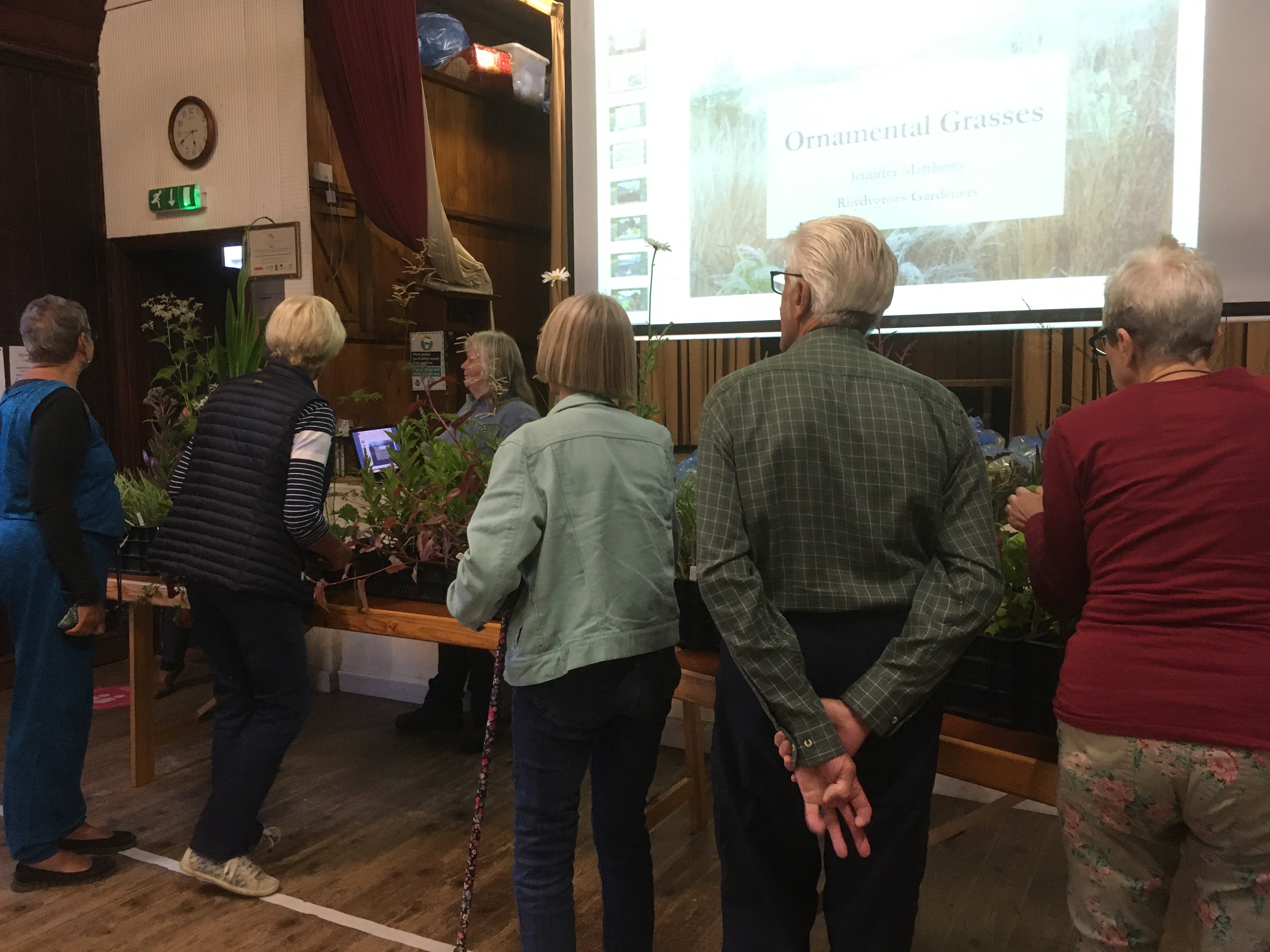
There was a great turn-out of members and guests for the excellent July talk given by Jennifer Matthews, who had travelled from Rhyd-y-Groes Gardens in the Preseli Mountains, where for 20 years until 2017 she ran Moorland Cottage Plants nursery. Now Jenny offers services such as garden design and photography, and has been opening her own garden for the National Garden Scheme for 22 years.

As background, Jenny began by telling us about her garden, which was just an upland field to begin with, explaining that she has always tried to garden with nature. It now contains, among other elements, a herbaceous perennial border, lime lollipops, a wildflower meadow including bluebells in spring, a shrub border including rhododendrons, and an ornamental meadow with cultivated native grasses and big, bold perennials.

Jenny’s introduction to grasses explained their importance as a plant family – from cereals for food and fodder to ground cover and now more and more to another plant group that gardeners are adding to their repertoire of ornamental plants.  Grasses offer elegant linear forms and year-round interest along with low maintenance.

There are three types of grasses – true grasses, sedges and rushes, and bamboos. True grasses have a wide variety of colour and growth habit, with round stems, while ‘sedges have edges’, the stems being almost triangular. Rushes have solid, round stems and need more moisture than sedges. Bamboos in their turn have hard woody stems – they can be specimen plants but also make effective screens and hedges.

Grasses can be variegated – with white, cream or yellow variegation; they can be plain green, yellow (these often do best in shade) or blue (for hot, sunny situations). There are also red, copper and brown grasses.  They do not have vivid, showy flowers, but the flowers do provide attractive structures which last well from summer into autumn.Jenny described all the different situations in which grasses can be used: herbaceous borders, island beds, mixed borders and beds, woodland gardens, architectural garden styles, flowering lawns, meadow and orchard gardens, ornamental meadows, bog gardens and water gardens (largely rushes). There are grasses for dry shade, damp shade, part shade, sunny and open sites, as well as well-drained and very sunny locations.

Jenny gave us tips on caring for grasses (they are fairly low maintenance – she described her own regime of weeding and dividing if necessary in spring, and cutting back in winter as the grasses themselves being to collapse), and for propagating them (always wait until you see the first signs of growth in spring or early summer – some grasses will be later than others). She also ran through a list of perennials which make good companion plants for grasses, a good selection of all of which she had brought with her for sale to members. After questions and warm appreciation for a fascinating talk, our appetites suitably whetted, many members made a beeline for the array of beautiful plants for sale.

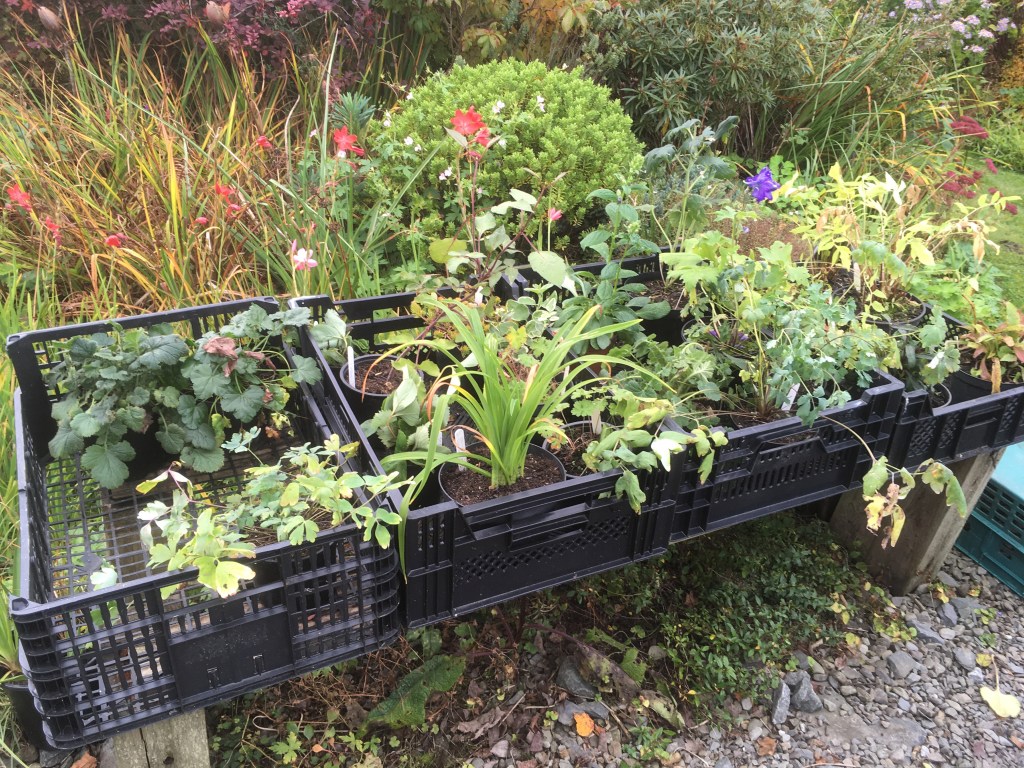
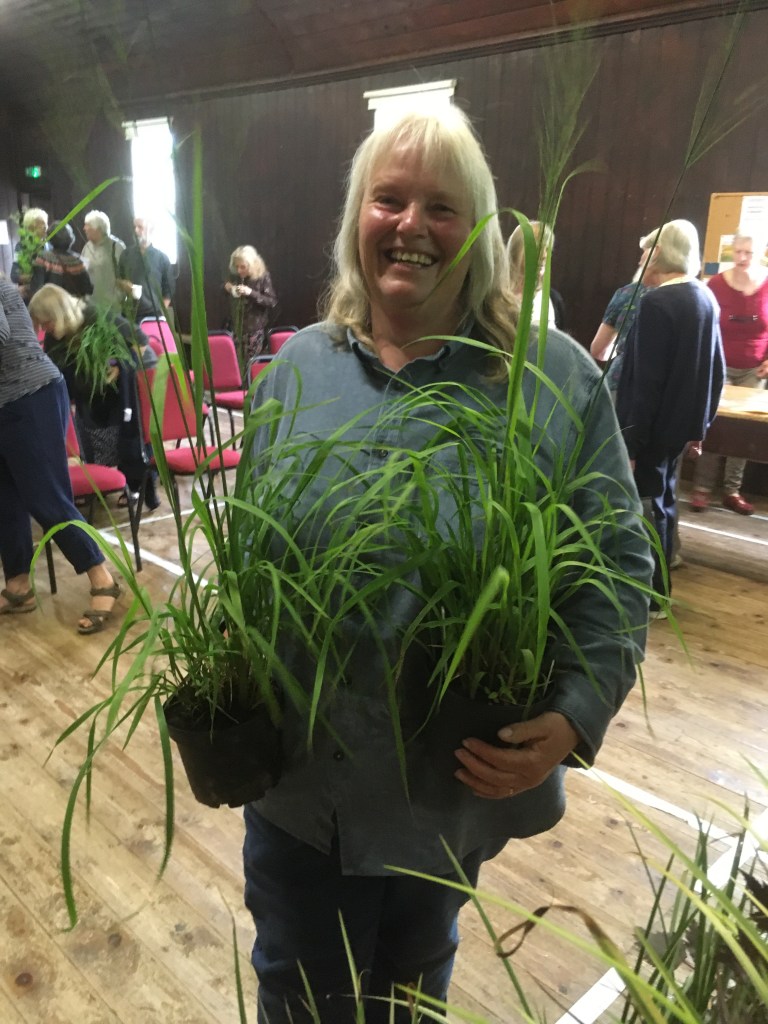
Cothi Gardeners’ members enthusiastically inspecting the plants for sale

August Social

It was agreed that the August Social would be held at the Telegraph Garden Centre on 17 August in the early evening. The event will include a talk as well as refreshments – more details to follow, so watch this space…


Happy New Year!

Happy New Year to everyone.

This is a brief post to let you know that our 2022 programme starts next week. We are having the first two meetings by Zoom and then will hopefully be able to have ‘in person’ meetings from March onwards – fingers crossed!

Next weeks’ meeting is on Wednesday 19th January, 7.15pm for a 7.30pm start when Carole Whittaker will be talking to us on “The History, Medicinal Qualities and care of Monarda

These beautiful perennials from North America have been utilised since 2,500 BC by the Native American peoples for their medicinal qualities.  But the history does not stop there!  The talk covers all aspects of caring for these unusual, late summer perennials.

Carole and her husband, Pete, have established a beautiful garden, Glyn Bach, in Pembrokeshire which is home to their National Collection of Monarda. The garden is open through the NGS and Plant Heritage. Click here for their website.

If you would like to join the Zoom meeting and have not received the email with the invitation please contact Fiona at cothigardeners@gmail.com so she can send it through to you.

Monarda Collection at Glyn Bach Garden ©Carole & Pete Whittaker

For the rest of the years’ programme click here. NB we plan on holding our much delayed AGM at the March meeting.

Provisional Programme for Early 2021; Survey about Local Nature Reserve; NGS Gardens Opening in 2021

For any other Cothigardeners, like Fiona, who were efficient enough to mark the diary, you’ll see that today, Wednesday December 15th was due to have been our pre-Christmas get together and lunch.

Sadly, that’s been off the agenda for a long time now, but given the ongoing state of restrictions which will certainly stretch into the early part of 2021, Elena and Fiona have made a valiant effort at coming up with a revised possible programme for the early part of 2021, which was to have been filled with a bumper selection of visiting speakers, since it’s the tenth anniversary year of the founding of the club by Yvonne and Colin and friends.

The early meetings for 2021 are now planned to be Zoom events, which whilst not being accessible to all, at least gives the opportunity for some members to interact in a remote way!

For anyone unfamiliar with ZOOM,  you do need to download the ZOOM app in advance onto your device, and you’re then sent a personal secure code, which you’ll need to use to allow you to join the meeting on the night.

We will email anyone hoping to be part of these meetings more details in due course.

The programme, below, is still a little tentative so do please bear with it, and look out for more notifications from Elena when physical meetings or even garden visits can take place again:

Kari Astri – “Water, shade, clay and weeds” – Date to be confirmed.
How this gardener is still learning to embrace and love her garden, (and most of the things that dwell within it).
Many of us don’t inherit a garden that is a blank space. We may have our own ideas and planting preferences, but how the garden develops is also shaped by what is already there. I’ll be sharing thoughts on gardening, planting and some new favourite plants from the last few years spent working on the ongoing project that is our quarter-acre garden in Wiltshire.
Kari has already visited and talked to Cothigardeners twice before in recent years, so we’re really delighted that she’s offered to give us a new talk via Zoom, at very short notice.

Wednesday, 17th February 7.30pm ZOOM meeting
Dr. Lizzie Wilberforce – title still to be announced. Lizzie has over 10 years experience as the conservation manager for the reserves of the Wildlife trusts of South West wales, and is always an interesting speaker, with her background as an ecologist. She’s recently changed jobs and is now working as Nature Reserves Project officer for Plantlife Cymru. We’re very grateful for her stepping into this February slot at short notice.

Wednesday, 17th March 7.30pm ZOOM meeting.
Philip Aubury – “The answer lies in the soil”. Good gardening starts here. Soil improvement, fertilisers and compost making.
Philip’s career started as a Nurseryman, then lecturer, Parks Manager until he finally became Director of Birmingham Botanical Gardens in 1987. He retired in 2007.

Wednesday, 21st April 7.30pm ZOOM meeting
Julian Wormald (from Cothigardeners!) – “Wildflowers, Meadows and Gardens – challenging ideas for more naturalistic gardens.”
This will look at various aspects of wildflower hay meadows – their biodiversity, aesthetics, creation, ecology and management; and contrast this very briefly (since this is a time reduced zoom talk) with currently trendy “pictorial” meadows. Finally, it’ll consider how we can learn from wildflower hay meadows to develop more naturalistic and diverse plant based communities in our gardens. This section mainly focuses on our grass free multicultural meadow terrace garden: how it’s developed over 20 years, is maintained and changes through the seasons.

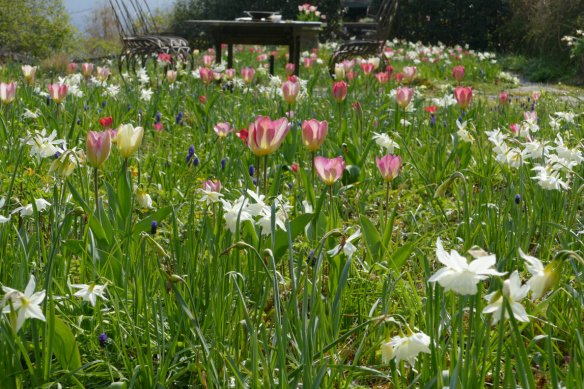
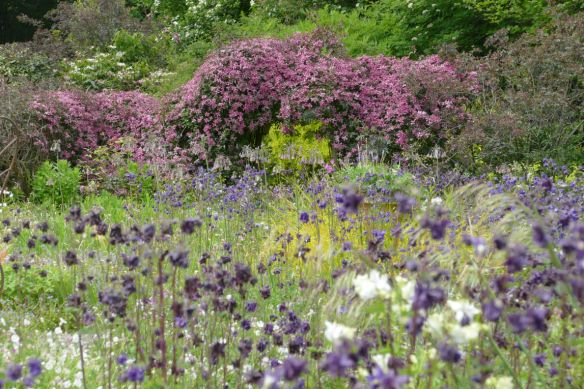
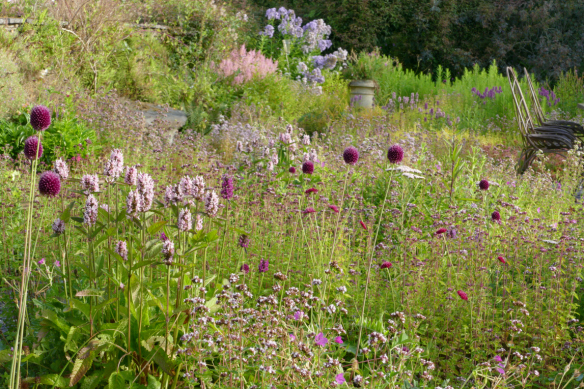
Lots of ideas for people to think about as our gardens are springing into life.

Wednesday, 19th May 7.30pm ZOOM meeting
Stephen Anderton – “Courageous Gardening”
A fresh approach to gardening. Stephen investigates gardeners’ techniques, ideas and inspiration, in everything, from breeding and pruning to planting and design. He shows remarkable gardens from all over the world and explains how their makers have single-mindedly planned and created exciting effects. The many unconventional ideas on offer here make this one of his most popular lectures.
Stephen is the long-standing garden writer for the Times, as well as a lecturer and author. Trained originally in Drama and then Landscape Design, he worked in historic gardens where, latterly as National Gardens Manager for English Heritage, he was responsible for several major restoration projects. Discovering Welsh Gardens was published in 2009; his official biography Christopher Lloyd, His Life at Great Dixter appeared in March 2010 and Lives of the Great Gardeners in 2018.


For those keen on outside visits, Elena has plans for these possible visits for later in the year when the weather improves – further details to follow :

Helen Warrington, Ty Cwm Nursery – An open air talk at her nursery.
Bob Brown – A visit to his garden for a guided tour.
Garden Safari – Visits to our very own Cothi Gardeners members gardens.

Plus if we’re not allowed back into the hall for a longer period:

The possibility of an outdoor cinema in the grounds of Coronation Hall

A film: ‘Flicker and Pulse – A year in an English garden’

A striking and poignant portrayal of time passing in a beautiful English walled garden. Using real-time and time-lapse footage, the film explores the relationship between the seasons and the plants and people who work within the walls of the garden. The Beeches, Barcombe is an 18th Century house with 8 acres of land and gardens which include the 300 year old lovingly restored walled garden in which the film was shot.


Dr. Lizzie Wilberforce (our February speaker) has sent a link to a survey she’s created on how people view wildlife, and visits they might make to nature reserves – in particular the local Plantlife Cymru reserve at Cae Blaen-dyffryn, click here to view, which is located beside the Pumsaint to Lampeter road. It only takes a couple of minutes to complete, but if you’re able to, do please have a go – it’ll provide useful insights for Lizzie and Plantlife into how much we all know about, and use this lovely orchid rich site. Please click here to complete the survey.


It’s a bit early to be planning garden visits for 2021, given the time of year, and changing Covid restrictions, but the National Gardens Scheme (NGS) has many local gardens due to be opening by arrangement to visitors next year. We’re still lucky to have 3 lovely nearby Cothigardeners’ gardens which will be open to visit under the NGS next year:

John and Helen at Ty’r Maes (April to October)
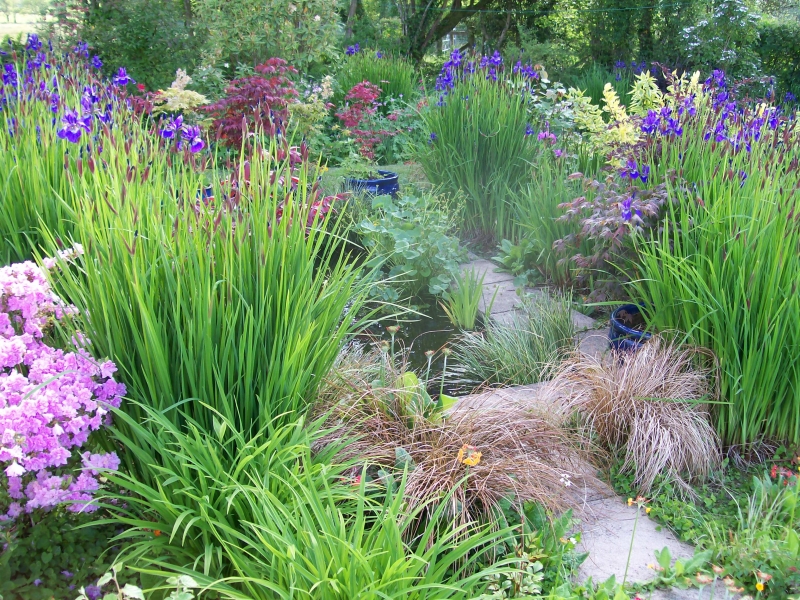
Brenda and Alan at Bwlchau duon (June to August)
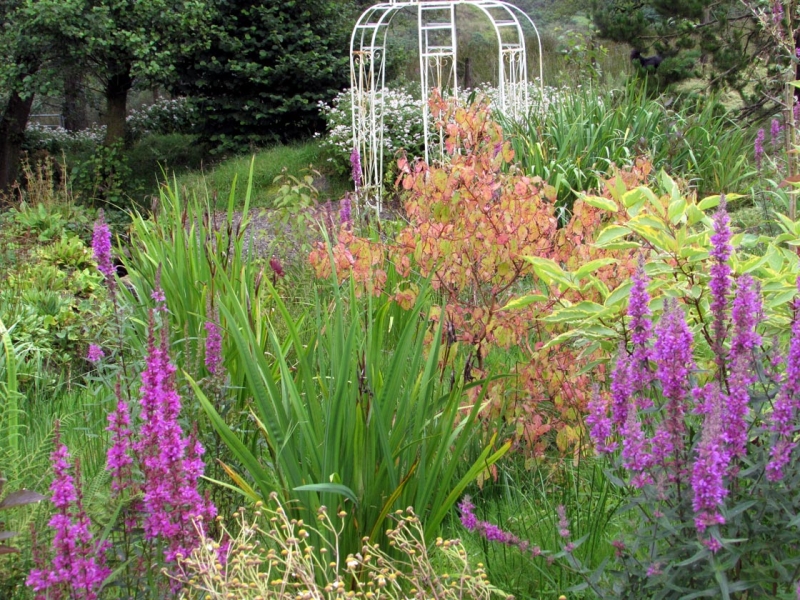
Julian and Fiona at Gelli Uchaf (January to October).

Click here to find the complete listing of gardens in Wales which are opening in this way, with pictures and details of all the gardens involved.


Finally, to finish this rather long post, and as flagged up to members by Elena in her recent email, this is going to be my last post as website manager. 😊👍😢 (Take your pick!)

After 2 years as chair of Cothigardeners followed immediately by 2 years doing the website, it’s time for a bit of a break, and for the club to have a different input on things. You’ll see that I’m going to surface again anyway with a ZOOM talk in April, which I hope you’ll be interested in, and am still going to be doing my own blog and website, but I need a bit of a break from too much screen and keyboard work, which has anyway been increasing for another project.

For all of you quiet, retiring folk who haven’t yet volunteered to Elena to take over the website, do please give it some thought, and make a positive new year resolution, and tackle a new challenge. It’s great fun, keeps the brain cells working and I’m happy to talk anyone through how it’s done, having done this with 3 other people already, to set up or run their own blogs, and who all got the hang of it in a couple of hours or less.

I’m always here as a back up adviser/problem solver, as indeed are the clever “Happiness Engineers” at WordPress, who are only a click away if anything untoward happens – it rarely does, believe me.

Plus, you’ll have the satisfaction of deciding what to include, and then seeing how many people read or look at what you put up on the web. I see that over the last 2 years, about 1500 people per annum from 42 different countries have seen a little about what’s going on in Pumsaint!

I started our own website as a complete computer technophobe. The fact that I’m still going after 10 years, and well over half a million words, shows how easy it is, and how much I value doing it, both as a way of creating a record, spreading information, and as a stimulus to finding out new things.

Thanks to everyone for looking at anything I’ve churned out over the last 2 years, and for everyone who’s sent me anything to include on this website. Fiona and I send everyone our very best wishes for a happy and peaceful Christmas, and hope to see you soon in 2021. (And thanks to Fiona for creating the wintry images for this post).

What are we all doing in November? In praise of Pruning and Defuzzing.
I’m guessing most of us Cothigardeners  view November as one of the quietest times in the garden. The weather’s often poor, the light levels dim and the days short.

So great to have some pictures and words from Elena showing what she’s been up to …

Been spending my days preparing some new beds … while spending my evenings buried in garden porn … changing my mind constantly about what to plant.

A wonderful moment of evening light reflecting on the last of the autumn colour on our trees, looking across the meadow to the river.

Elena has also forwarded on this confirmation from the NGS Great Garden Party Just Giving Website of the brilliant Cothigardeners’ donations arising from September’s 4 garden parties. Shown below:

A great effort by all considering that the total raised was about £12,000 nationally apart from the amazing effort by the CEO George Plumptre who raised a further £12,000 from a raffle he organised. Very sadly a lot of other parties were stymied by Covid restrictions introduced in mid September.


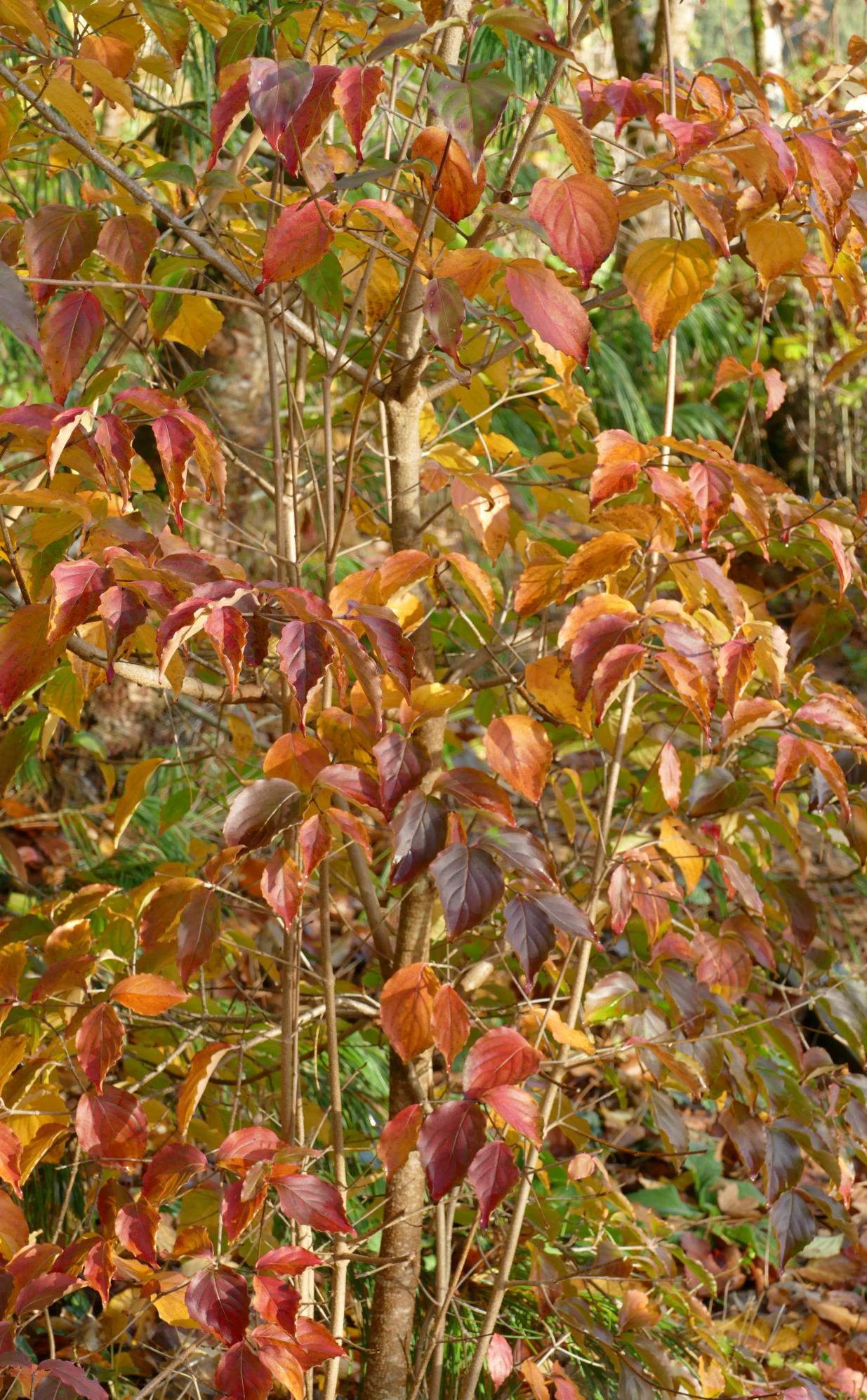
November always seems a time of mundane tidying up jobs with us, before the first of the spring bulb shoots push through which is already happening mid month. But there’s still some autumn leaf colour around, and always valued as being the last leaves to fall.

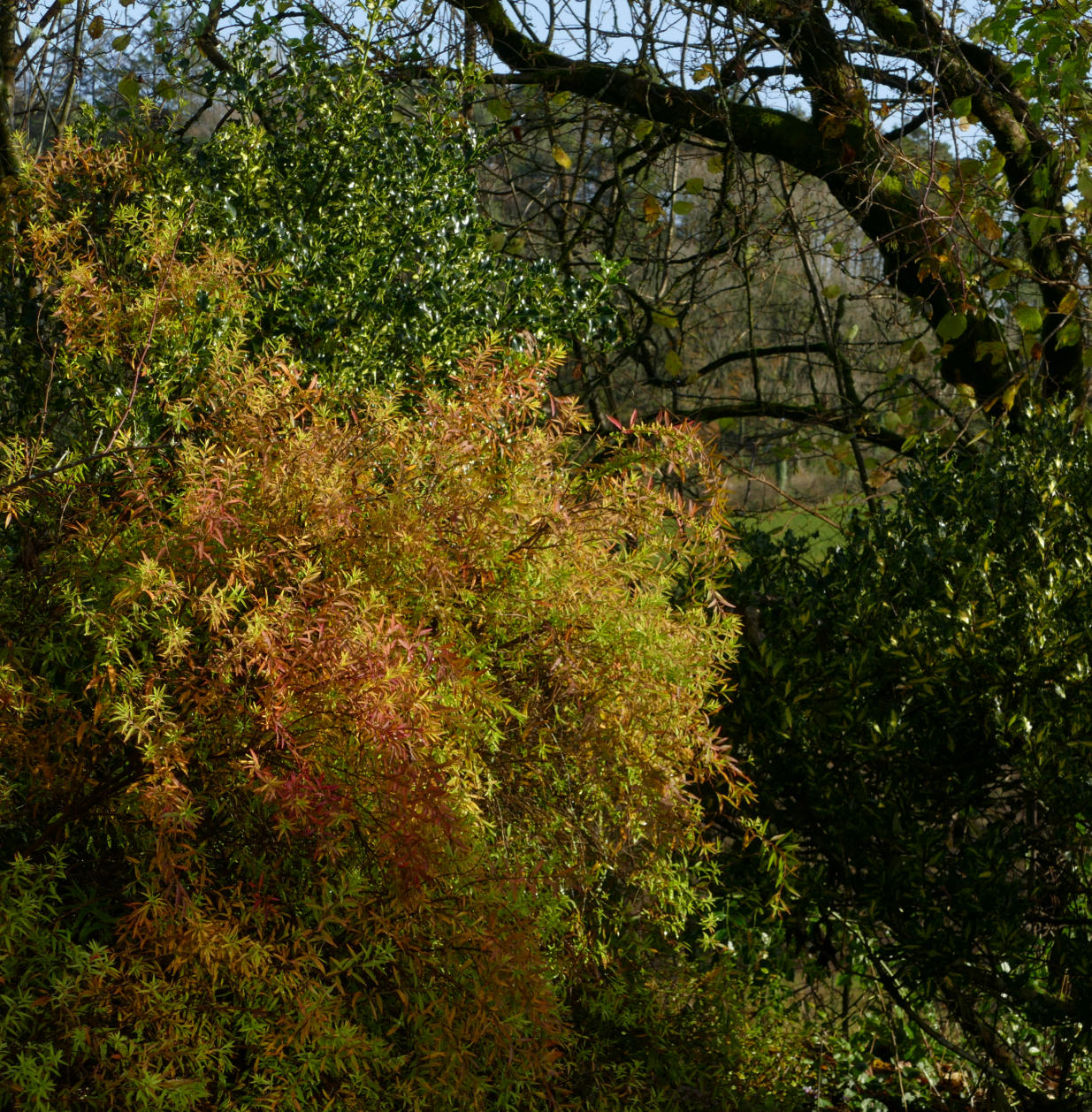
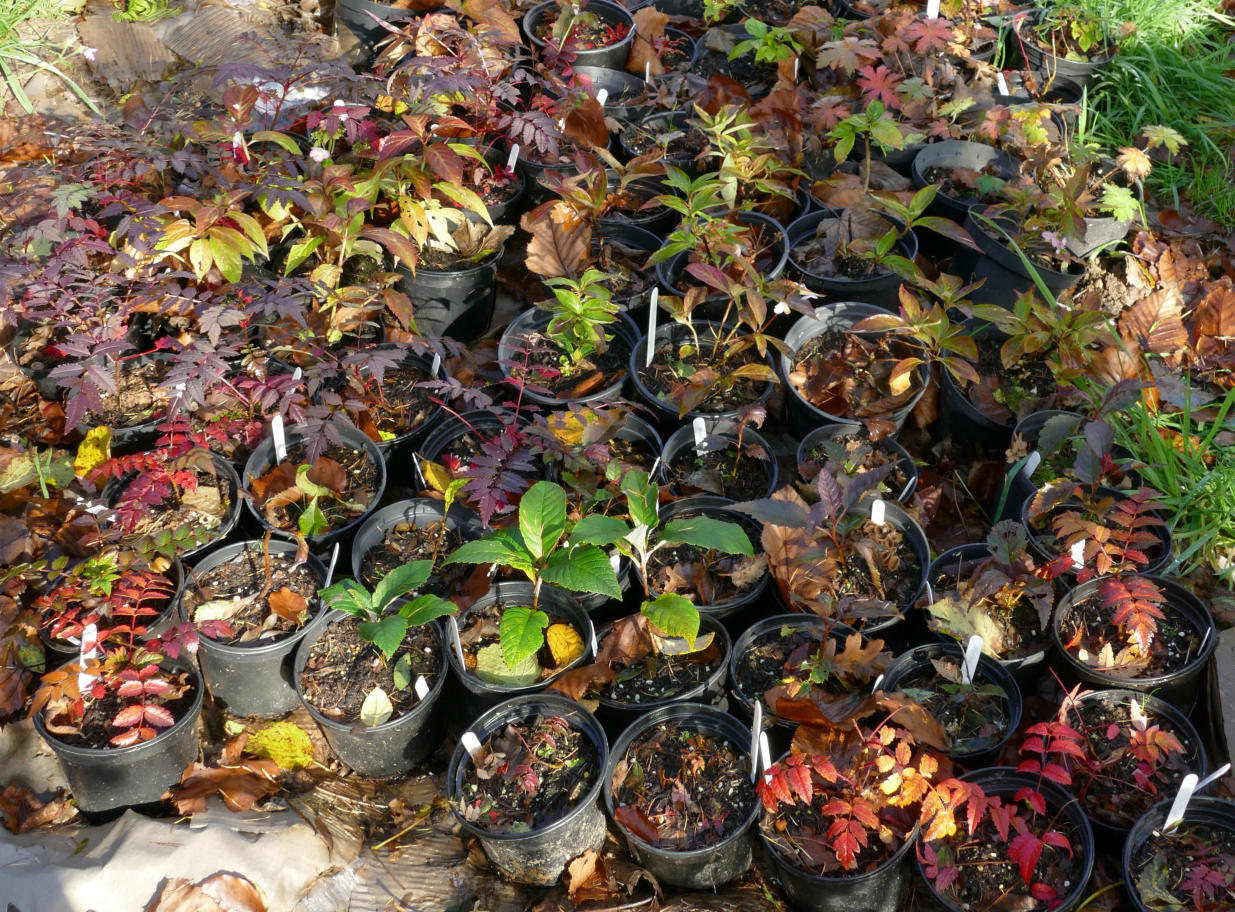
A Cornus kousa chinensis grown from seed (top); a Golden Spirea, and below some of the Hergest Croft trip Sorbus seedlings, showing signs of great potential autumn colour for years ahead.

But once all the leaves have fallen it really leaves the bones of the garden and the evergreen plants.

What to do with these as they grow bigger over time, and tend to merge as, typically, we’ve probably planted some of them too close together?

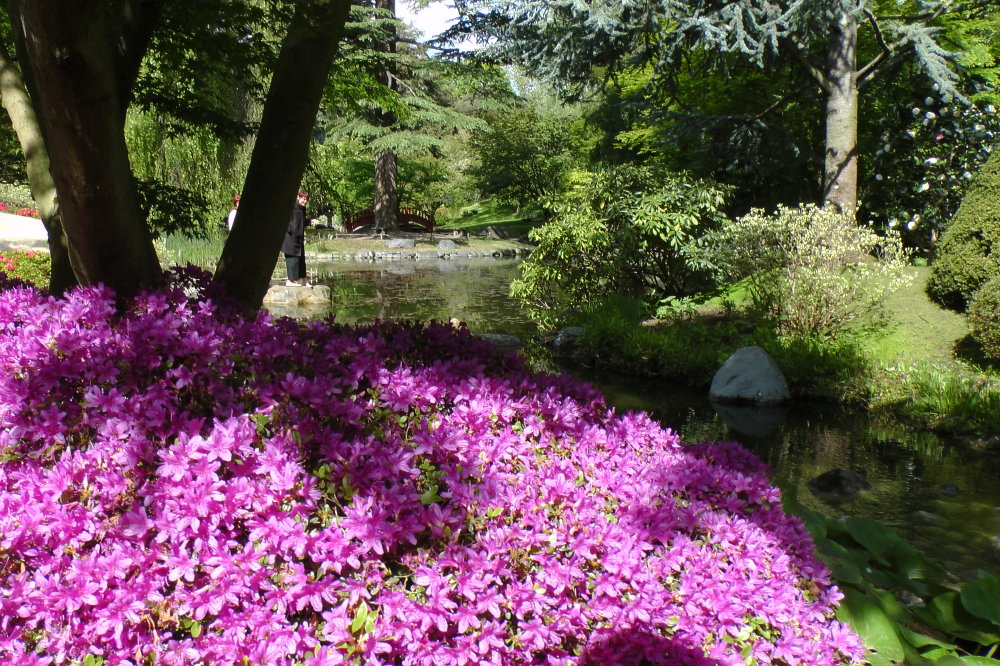
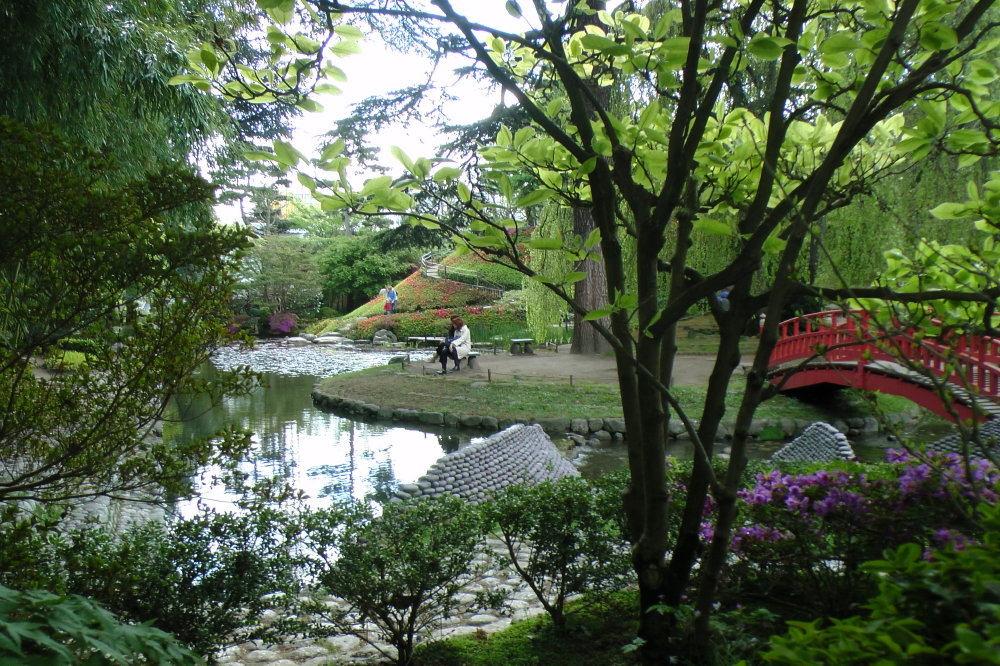
Well this stunning garden, below, which we were fortunate to visit in Paris a few years back in autumn and then in early May, had some beautifully cloud pruned Camellias, and a very Japanese feel to areas of it:

(Jardin de Albert Khan, Paris. For such a stunning place, it has a really poor website though! )

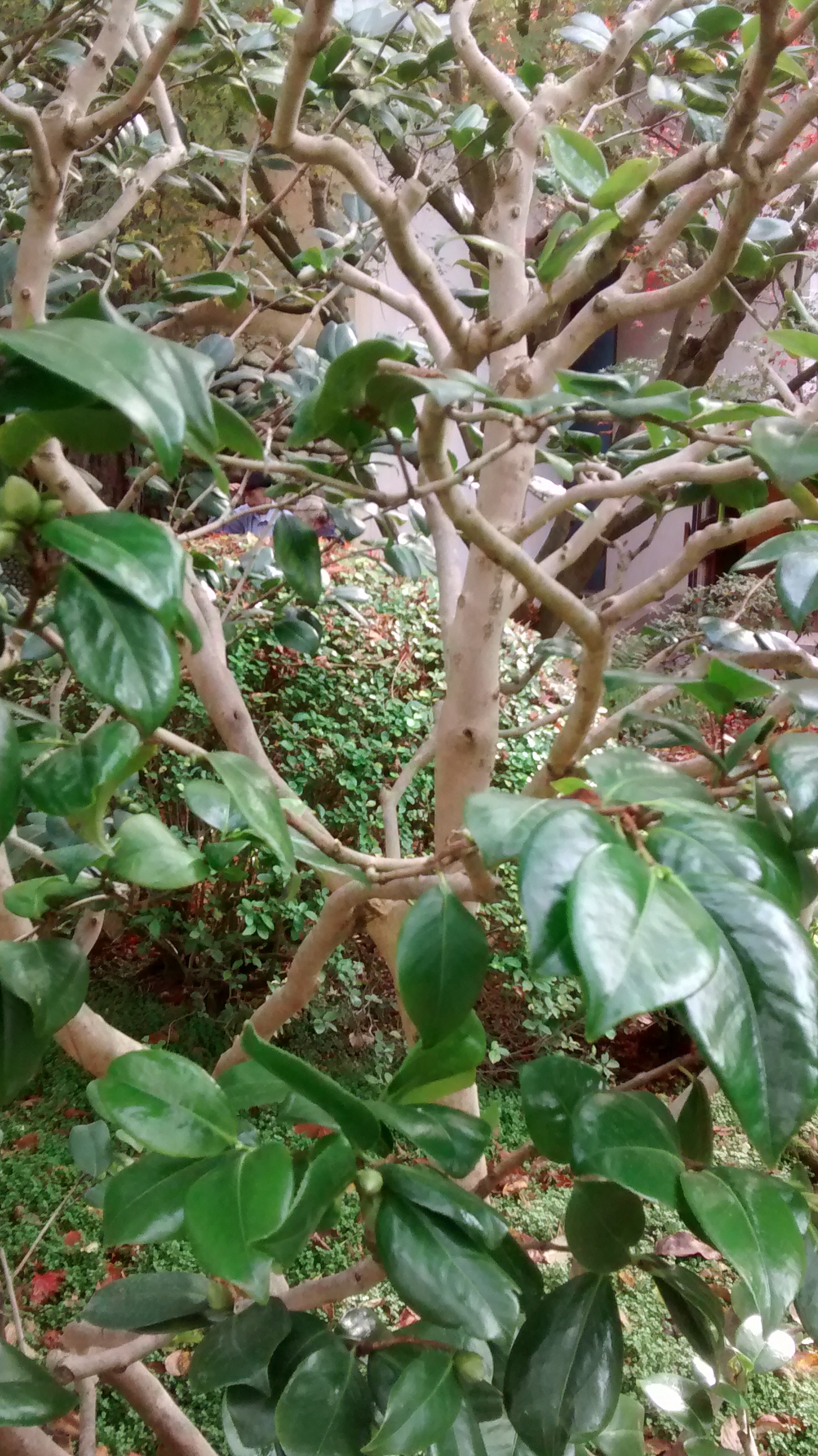
So at last after over a decade of slow growth, I thought I’d have a go with a bit of cloud pruning on some of our Camellias , which are at last becoming quite dense foliage shrubs for most of the year, when they’re not in flower, and frankly not that visually interesting like this.

Before beginning any work I found myself back at the website of the amazing  Tikorangi garden in New Zealand, and in particular this article by the owner Abbie Jury” In praise of Pruning”. Click here. 

She quotes the advice of gardener, sculptor and retired florist, David Anyon : He “emphasises that what he does isn’t pruning so much as shaping, to create mood and drama. He’s convinced that if more gardeners got stuck into a little clipping and shaping of their trees and shrubs from the outset, it would help to prevent mish-mashed jungles.”

In turn she also writes the piece below, which struck a chord with us since our garden has now moved past the newly planted feel in quite a few areas. I’m guessing this may also apply to some other members who’ve now been gardening in the same place for quite some time.

“As the plants grow and start to compete for more space, often intertwining and encroaching on their neighbours, the whole effect starts to meld into the mishmash referred to by David.

A very different set of skills are needed to take the garden to its next level of maturity – lifting the skirts of larger plants to expose the trunks, creating layers, thinning, shaping, changing some of the underplanting to meet different conditions for starters.”

She also adds :

David Anyon also refers to what he calls ‘defuzzing’ – removing little twiggy bits and dead bits from branches of larger plants. He sees it as making for cleaner, more attractive trunks and framing small spaces and vistas in the garden. I couldn’t agree more. This defuzzing is, I decided a while ago, one of the most satisfying and fun aspects of gardening. You can’t defuzz in young, juvenile gardens- there is not enough to defuzz. But it has a most rewarding impact in an older garden.

So I’ve just discovered I really agree with this advice! It’s actually a very satisfying benign way to spend an hour or two, even in the poor light and rain of late autumn and early winter, working over some of the denser evergreen Camellias to expose a few bare branches and let a little more light into the lower levels. I guess there are other evergreens which would benefit, though the defuzzing and raising of the canopy works just as well with smaller deciduous shrubs or trees, like Acers, as they get a bit bigger. (Albert Khan views again below …)

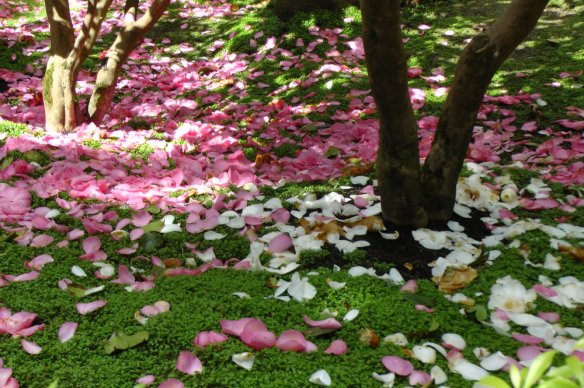
So maybe something others might fancy trying out? Rather like thinning apples, it’s a bit of a wrench to cut off healthy stems with developing flower buds, so it’ll be a gradual process over a year or two I guess. But you’re only likely to achieve the sort of gorgeous effect I photographed at Albert Khan below if you do, by allowing light and petals to reach beneath the flower laden branches, and lie amongst the bare trunks.

So a stunning scene of (early May) beauty to reflect on as we near the end of the year. (Many thanks to Fiona for some of these photos from our trips)


It was lovely to hear from Moira very recently that she was able to join Joseph Atkins, Aberglasney’s head gardener,  who has very kindly planted a newish New Zealand cultivar of Magnolia  – Tikitere, in memory of her husband Keith Brown, in the gardens, behind the mansion. In due course a label will record the dedication of the tree in Keith’s memory, so a wonderfully fitting memorial for a great Carmarthenshire gardener and friend of many of us in Cothigardeners, who passed away earlier in the year. Many thanks for Moira’s permission to include her photos:

For anyone wanting to see what Magnolia Tikitere looks like in flower, here’s a glowing short tribute to its merits from Charles Williams, the owner of Caerhays gardens in Cornwall. Click here to view.


Finally, as always, it would be lovely to hear from any members about their favourite plants, or things in their gardens as we go through the next few winter months. It doesn’t look like physical meetings will still be possible anytime soon, so if you want to read about other member’s gardens, then do send me something!

Why not write even just a few words – it’s a great way to keep the grey cells working, and send an image or two, preferably resized down to less than 1 MB? I can’t promise to put everything up online immediately, but usually within a fortnight, and it’s another way of keeping in touch and passing on information.

Or use the Cothigardeners Facebook Page.

You can send things to me at:

Cothigardeners@gmail.com

Garden Party Update; Mid Autumn News.

Time flies and a couple of short walking breaks for us in September and early October means I haven’t updated members on the outcome of the garden parties which were held early in September, so here goes!

Elena collated all the information, so many thanks to her for doing this and passing it on, and in the end the four events raised a total of £560, which we all agreed to donate exclusively to Marie Curie since they took such good care of Dave, Avril and family at the end of his life. The sums raised were as follows…

Ros & Mark         £65

Fiona & Julian   £100

Elena                  £165

Helen & John    £230

Given that the total raised across the UK from this NGS conceived event was a little under £40,000, of which a massive £12, 000 was down to the efforts of the charity’s CEO, George Plumtre ( click here for more feedback), this represents a great achievement by our small club, so many thanks to all who were involved in any way. Andy, our treasurer has arranged to make the payment direct to Marie Curie.

As well as the money raised, the events proved to be a most welcome chance to meet up and chat, as some of the feedback comments from those present illustrate…

Having deprived ourselves of human company for almost six months, we accepted the kind invitation to a garden party with a degree of trepidation. With masks and gloves at the ready, we set off on what seemed like a marathon journey of some 20 miles – the furthest we had ventured since March! We were lucky…. the sun was shining, the roads quiet and the houses, fields and woodlands reassuringly just as we remembered. We were greeted by the sounds of cheerful conversation and laughter from small groups of friends. Seeing your immaculate garden, the teas, and super cakes sampled along with relaxed ‘catch-up’ conversations with friends left us feeling more energized than we have both felt for a long time. Jane and Ivor Stokes

Thank you for the very nice garden visit. It was lovely to see your new pond. What a great little get together with good company, food and drinks. Your efforts were greatly appreciated, especially to those of us who don’t get out much! Jenny Long

We have broken out. Thank you so much, we really enjoyed ourselves so much we didn’t notice the time. All the best. Daisy and John Hufferdine

The company of others can be made so enjoyable outdoors in a garden – the beauty of plants and abundant insects – the chat and the afternoon tea – lovely!! Tina and Derek Marshall

It was great to be able to sit and chat to friends old and new and to know that the funds raised were going to a cause that means a lot to us. Your mulled fruit cup was particularly welcome on a rather damp evening! It also gave us enormous pleasure to be able to host our own garden party. It was lovely to be able to have a long chat with friends we had not seen for months, some of whom had barely been out of the house since lockdown. What a wonderfully enjoyable way to do something to help others. John and Helen Brooks

Attending the Garden Parties and being part of small groups meant that we could talk to people more easily. It was so interesting to hear about other
people’s gardens and to learn about their lives and interests. Jane and Stephen Thomley

Thoroughly enjoyed our tea time visit to your garden and grounds with delicious nibbles and warming drinks. Most of all the opportunity at last to see and speak with friends in a safe outdoor environment. Many thanks to you both and a superb effort made by all to raise a significant sum for those who care and nurse us in our hour of need. Ann & Anthony Frost

It was great to be able to host an outside socially distanced garden party, and by doing so raise some useful funds for our nursing charities. It’s difficult to think of a safer environment than an upland Carmarthenshire garden with just a few local guests, and everyone loved the chance to meet up, natter and enjoy a bit of tea and cake out in the sunshine, even if it was unseasonably chilly! The butterflies even put on a great show in spite of this.
We must try to repeat this in the months ahead whilst normal and inside social gatherings remain off limits to help retain our sanity, and create further chances to meet up safely with a few friends. Julian and Fiona Wormald

I even have a few photos from our event, included above, to show that in spite of the decidedly iffy weather at the beginning of September, we escaped with no rain, the sun shone, and the butterflies fluttered.

Though not as dramatically as the previous week, when a Small Tortoiseshell landed on my face, a unique experience for me. Any similarities with the image for the cover of “Silence of the Lambs” are entirely coincidental!


We’re well into autumn now, with leaves colouring up nicely here…

Sorbus “Olymic Flame” above, and Acer aconitifolium below, always being reliable and the first to show…

Along with the always early and dramatic red stemmed Cornus sibirica, between the 2 hollies …

I’m very grateful for the following photos sent in by Tina and Derek to show that they’ve all been working hard in the garden recently …

After a day of chipping …

This mountain of clippings still has to be moved and the 4 bags are all half full

All the willows from here planted 10 yrs ago to soak up the water, were cut down and the chippings are being stored here

I’ve planted a red oak behind the compost – grown from an acorn …

The autumn garden…

Thanks Tina and Derek.


Any ideas what these are, and have you seen them in your garden recently, or indeed ever?

They’re a bit bigger than a honey bee. I’m including them because we hadn’t seen them before, and these were found as part of a large colony just above the beach at Pwllgwaleod, at ankle height on the coastal path walk round Dinas Island in Pembrokeshire last Thursday.

To save the suspense they’re Ivy mining bees, Colletes hederae, a species which only arrived in the UK in 2001 in Dorset and has spread West and North since. If you click here, you can see that it hasn’t really been recorded much up here yet.  The name reflects the fact that they emerge very late in the year and feed mainly on Ivy flowers, but the obvious yellow pollen might have come from nearby flowering gorse.

The ones you see here are all mated females taking collected pollen down into the burrows which they’ve just excavated and which house their eggs and then larvae. The pollen will feed the larvae as they mature, pupate and then emerge late next year to begin their new cycle. They aren’t “social” bees so only have a brief annual adult existence.  So for anyone with flowering ivy in, or near their gardens, it’s not too late to go and have a look for these recent immigrant bees, if we get a sunny day in the next week or two.

You probably won’t find the males now. They emerge a bit earlier and are ready to mate with the females as soon as these emerge from their own burrows later in September, and then, job done, the males disappear from the scene.


This little bit about bees got me thinking about a photo quiz you can all have a go at.

Asters are often mentioned as a great late season nectar source for insects, which they are, but with lots of honeybees around still in our garden, actually very few ever seem to visit the Asters except on a warm sunny day.  So for a bit of fun how many honeybees are included in the images below?

The answer is 6, with a single bumblebee. The rest are all bee look alike flies.

And  maybe a little easier, on the following 4 images, which has 2 honeybees included, which has 2 flies, and which has one of each?


Easy, eh? Flies, Bees, and one of each in the last 2 pictures.


And if they aren’t on our Asters, then which flowers are they visiting most of the time? Well, mainly the Himalayan Balsam half a mile away in the village, which brings them home with characteristic white dusting on their backs.

But in a recent light bulb moment, I’ve realised that many of their preferred plants, which they do bother to visit in our garden, throughout the year,  originate in the Himalayas or other mountainous Asian areas  –

Daphne bholua,

Skimmia

Persicaria amplexicaulis,

Geranium procurrens,

Persciaria vaccinifolia.

Could it be that these all produce a richer or more nutritious nectar, or produce it in greater quantity under our often cool and wet conditions? Who knows, and I can’t seem to find any work which has been done on this. But perhaps it’s more than a coincidence that the largest of the only 8 species of honey bee found across the world, Apis laboriosa, lives most of its life cycle outside in the elements on huge single slab combs, protected only by a cliff overhang high up in the Himalayas.

For a fascinating recent short video of how the locals actually harvest the honey from these large honey bees, (no Health and Safety here, folks),  together with some amazing scenery, then do have look below – really wonderful!

Meanwhile in a change from our normal autumnal tidy up regime, this year I’m leaving alone anything which the bees will visit, like the Japanese Anemones below, until the frosts take the last flowers out, since they can still seemingly get something of value even once the petals have dropped.


Finally, as always, it would be lovely to hear from a few members about their favourite plants, or things in their gardens as we go through the next few leaner months. It doesn’t look like physical meetings will be possible anytime soon, so if you want to read about other member’s gardens, then do send me something!

Why not write even just a few words  – it’s a great way to keep the grey cells working, and send an image or two, preferably resized down to less than 1 MB? I can’t promise to put everything up online immediately, but usually within a fortnight, and it’s another  way of keeping in touch and passing on information.

Or use the Cothigardeners Facebook Page.

You can send things to me at:

Cothigardeners@gmail.com

Thanks again to Tina and Derek for contributing to this post.

Mid July Update

Nearly a month has passed from the last update, and although Wales is now out of extreme lock down, and people can travel more freely, indoor meetings still seem to be a fair way off.

Hopefully all members have been keeping busy over the last few weeks, but not much information from members has reached me over the last few weeks, (!) which is why I’ve held off posting for this length of time.

(Eryngium alpinum)


Many thanks to Yvonne who sent me this …

Have you heard of Love Orchids? They’re based in New Milton, near Bournemouth. They used to supply the supermarkets, but when lock down came, that all halted, so they started selling direct to the public.

These arrived promptly. They all have 2 spikes, and were well packed. 


I’ve had a request from a member who’s asked me if other Cothi members have had any landscaping work done by Eynon Price based near Llandeilo, since she’s planning a major redesign of her garden. If anyone has any feedback about Eynon that they’d like to share, if they send it to me, I can forward it on to Jane.  Thanks. Cothigardeners@gmail.com


Members may have picked up that some Welsh NGS gardens are now opening, though   with some necessary restrictions thanks to the Covid pandemic.  Here at Gelli Uchaf we hope to have our first socially distanced visitors this weekend after a delay because of changing weather forecasts. John and Helen are also now opening, as we are, by prior arrangement only.

The full list of bookable NGS garden visits are accessible here. Sadly such visits won’t for now have teas or the same amount of social interaction as previously. Equally it will mean that visits are likely to be much quieter and more private, so brilliant for peacefully appreciating the gardens. Plus of course, as before, they’ll help to raise funds for the mainly nursing charities which the NGS supports.

We had our own private guided tour of John and Helen’s garden last week, on a rare trip out for us, and it’s looking stunning and has recovered really well after the late frosts which hit some of the Magnolias hard. We also did a bit of mutual plant swapping – a trade of some Sorbus seedlings from the Hergest trip last year for many perennial delights from John’s garden. Thanks John and Helen. Well worth a visit for any who haven’t been for a while.


Here the rather mixed bag of weather of late has caused challenges with making hay, though the upside to this is the meadow flowers are looking lovelier than ever this year.

Rambling roses which looked stunning towards the end of June have been brought to an abrupt end by all the damp grey conditions, but our apples have never looked as good, and after the very dry spring the foliage still seems to be in surprisingly good shape in spite of the dreary July weather.

The RHS recently posted a great short video on thinning apples. I never used to bother doing this when the apple trees were small. I couldn’t bear losing fruit. But it really does make a difference to the quality of a crop, and also helps to prevent biennial cropping where a tree produces so much one year, it takes a year off the following season to recover. It’s not too late to do this, as this video explains. The other way of looking at it is that you should pick off all the fruit and diseased fruitlets anyway to limit disease in subsequent years, so removing excess numbers now, saves picking time later.


With limits on options for travelling for many people, I thought I’d share a link to Gardening Masterclass zoom sessions. This has been spun out of a physical programme of events which were planned to take place throughout this summer with some of the most well known gardeners and designers from the UK, and further afield. Obviously the physical events have been cancelled, but Annie Guilfoyle and Noel Kingsbury who set up this concept decided to go online with it.

This You Tube link explains more about it, and then switches to an hour long discussion with Fergus Garrett from Great Dixter, widely regarded as one of the greatest English gardens, into how he’s coping with the challenges of the pandemic, and how he designs and creates the amazing displays there. If you can bear the sometimes dodgy video images, where internet speeds are clearly a bit poor, it’s worth a look.  It’s just one of many such pieces currently available, which might give us all an alternative viewing option for a wet July evening.


I shan’t include any video footage of the other 2 honeybee swarms that have moved in over the last month, but the short video clip shows just how much honey bees seem to appreciate the pollen in opium poppies.

This particular stunning form was given to us as seed by Jane and Ivor Stokes years ago, but being a poppy has decided not to appear for a few years now. This year we have just two plants, but the bees adore the pollen so much, that even with just a single flower open at any one time, half a dozen will try to cram in at the same time. Whether the pollen is laced in any way, isn’t clear, but I have discovered that it’s only the pollen they’re after. Apparently all poppies lack nectaries, so don’t produce any nectar.

It’s been estimated that a typical wild honey bee colony will need to harvest about 20 kg of pollen to sustain it over a season, so every little helps. A commercial hive may need 50 % more than this. Since a bee with well loaded pollen sacs will only carry about 15 mg per trip, that means 1.3 million pollen foraging trips per season to collect the weight of pollen needed!  So the more pollen laden flowers around, the better.

We’re just coming to the end of The Bees Needs Week 2020 organised by Bumblebee Conservation Trust. Again, no physical events this year, but click here for more information on how it’s vital we all grow appropriate flowers to help support our pollinators.  Their 5 top suggestions for helping are :

1. Grow more flowers, shrubs & trees

2. Let it grow wild

3. Cut grass less often

4. Don’t disturb insect nests and hibernation spots

5. Think carefully about whether to use pesticides


Finally, as always, it would be lovely to hear from members about their favourite plants, or things in their gardens as we go through the next few months. Why not write a few words and send an image or two, preferably resized down to less than 1 MB? I can’t promise to put everything up online immediately, but usually within a fortnight, and it’s a great way of keeping in touch and passing on information.

Or use the Cothigardeners Facebook Page.

You can send things to me at:

Cothigardeners@gmail.com

Thanks again to Yvonne for contributing to this post.