This year’s Cothi Gardeners Christmas Social was held at Ystrad Nurseries near Llandovery. It was, for a change, a sunny afternoon, the alpacas greeting us as our cars pulled in. We all arrived in time to have a good browse around the nursery before the demonstration
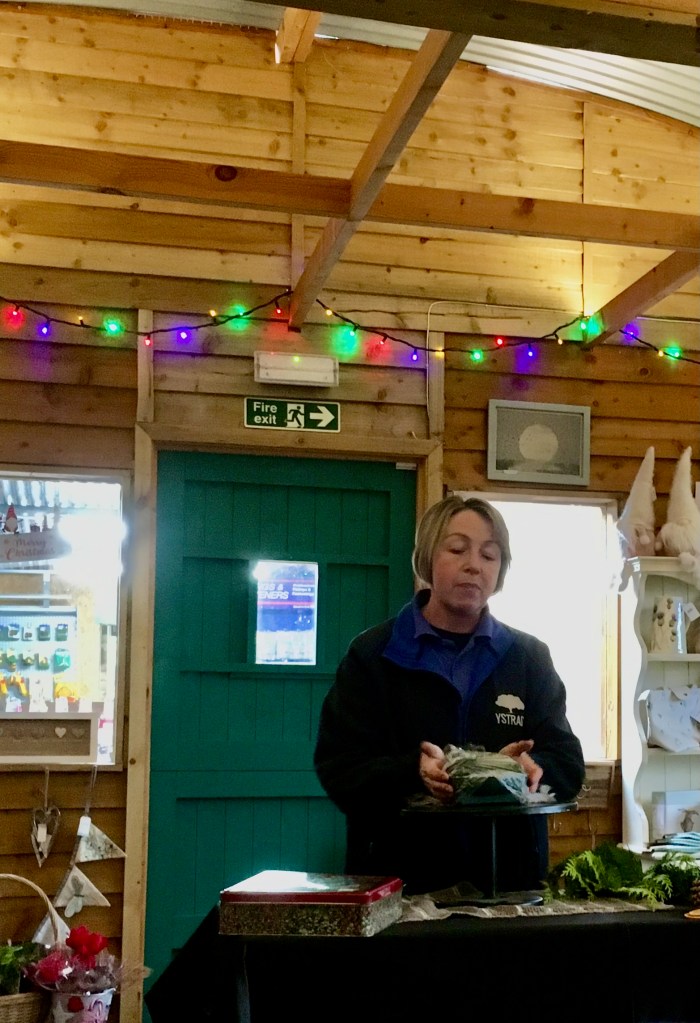
Julie began the demonstration by telling us a bit about the history of the nursery and timber yard, particularly since 2016, when John and Laura Morgan bought Ystrad, having seen the potential to bring together her background in running a nursery and John’s expertise in the timber business. Since then they have grown the business significantly, and from an original staff of three at Ystrad in 2016, there are now over 30. Ystrad Nurseries itself now also has florist Sian on site, and has embarked on phased improvements, beginning with the car park and entrance. Julie herself has worked here since 2020, having previously been a primary school teacher.
First we saw how to build up an arrangement that could be adapted either for the table, or for placing on graves, using a square block of oasis in a circular base, Starting at the bottom, it is best to avoid prickly holly and to create a base layer with fronds from spruce or cypress. The holly can go in as the next layer. Julie recommends pieris for the centre of the arrangement, which at this time of year has flower buds. To add berries and ensure they show up well, take off any surrounding leaves. When adding skimmia do the same and strip the leaves to highlight the purple flower. For a table arrangement, you can then place a candle-holder with candle in the centre.
Julie then explained how to wire items onto an arrangement, such as dried orange slices, and also demonstrated bow-making.
After that, we turned to wreaths. Nowadays moss is less favoured, and people are choosing straw-based rings for the base as a more sustainable option. The straw rings, once purchased, can be re-used the following year if allowed to dry out and stored safely. The greenery can be fixed in place with either wire or twine, using small clusters of foliage as you go, again starting with spruce, but incorporating a range of foliage such as osmanthus, choisya, skimmia, leucothoe and pieris. From this you can then adapt the decoration depending on whether the wreath is for a grave, a door or table arrangement.
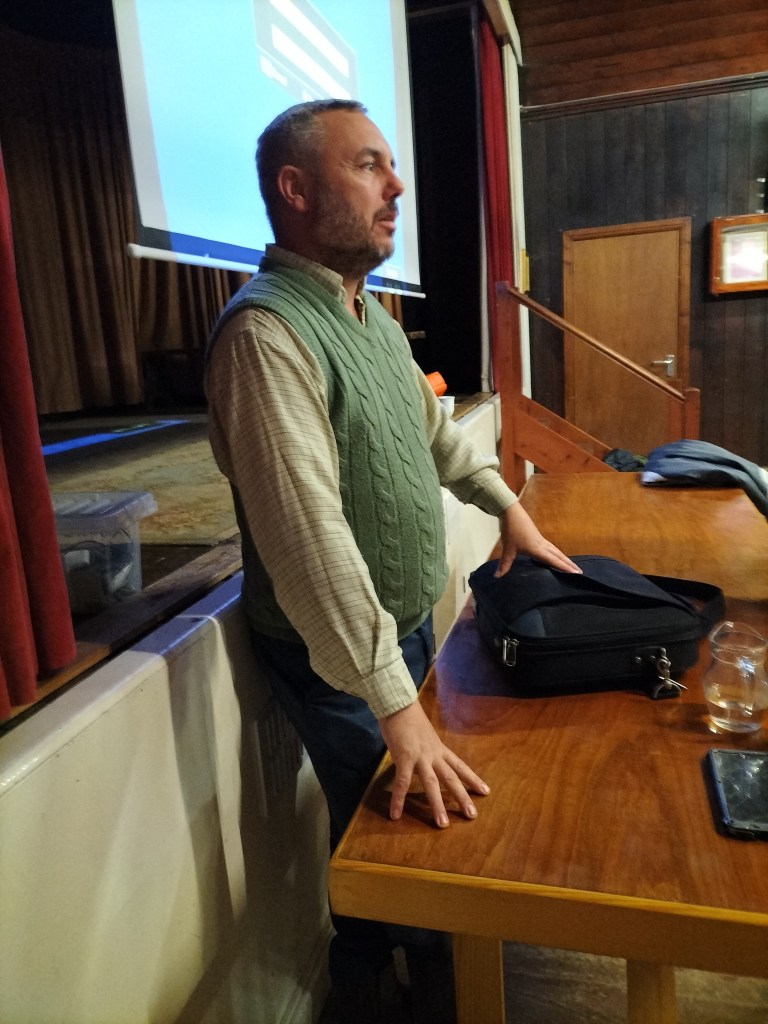
Julie with straw base for a wreathFinished wreath for table decoration
After thanking Julie for her interesting and informative presentation, everyone had an appetite for the delicious and plentiful tea that Ystrad Nurseries had provided. We weren’t going to need supper after that, and a grand time was had by all!
NGS Donations in 2023
Cothi Gardeners Club are fortunate to have among our members John and Helen from Ty’r Maes and Julian and Fiona from Gelli Uchaf who open their gardens for the National Garden Scheme in Carmarthenshire and Pembrokeshire. Across the two counties as a whole there were 3,514 visitors, of which 2,130 were from Open Days and 1,384 from By Appointment visits. That is a return to the visitor numbers seen in 2019 and previously. In 2023 the total raised for charity was £26,638 (up from £20,300 in 2022) – a fantastic increase!
In total the National Garden Scheme has been able to donate £3,403,960 to beneficiaries in 2023. This record amount is testament to the hard work and dedication of all those who open their gardens to the public and all the volunteers who contribute.
For our October meeting, three members of the Club volunteered to give short talks about their gardens ranging from borderline hardy shrubs and perennials to ponds.
Sheena’s Borderline Hardy Trees and Shrubs
Sheena’s garden is situated at 700’ with a northwest aspect; it has evolved over the years from a field to a garden where shrubs and trees are the main focus. There have been successes and failures with plants that might be considered to be borderline hardy in this area. The soil in the garden is acidic, and most of the plants featured, with the exception of the first, are ericaceous; they are all more-or-less evergreen.
Borinda papyrifera is one of the bamboos from Yunnan that has survived (just!). Borinda lushuianensis (originally known as Yunnan 4, much simpler to pronounce) did not survive any quite mild winters here, but B. papyrifera has proved to be tougher.
Said to be hardy to -14°C to -16°C, as a small plant it did not come through the very hard winter of 2010-11. We decided to give it one more chance, and by 2020 (above) it had made an impressive specimen in the garden.
December 2022 saw some fairly low temperatures in our area, certainly into double figures below freezing. It became clear that B. papyrifera had suffered badly, and initially Sheena wasn’t sure it would survive – but it has, and developed a number of new shoots this year, although it may be a few years before it recovers to the size that it was. The young canes are a powdery blue-grey initially, maturing to olive green, with large silvery-buff sheaths, and develop up to a height of 7m. If you have the space, it is definitely a ‘statement’ plant.

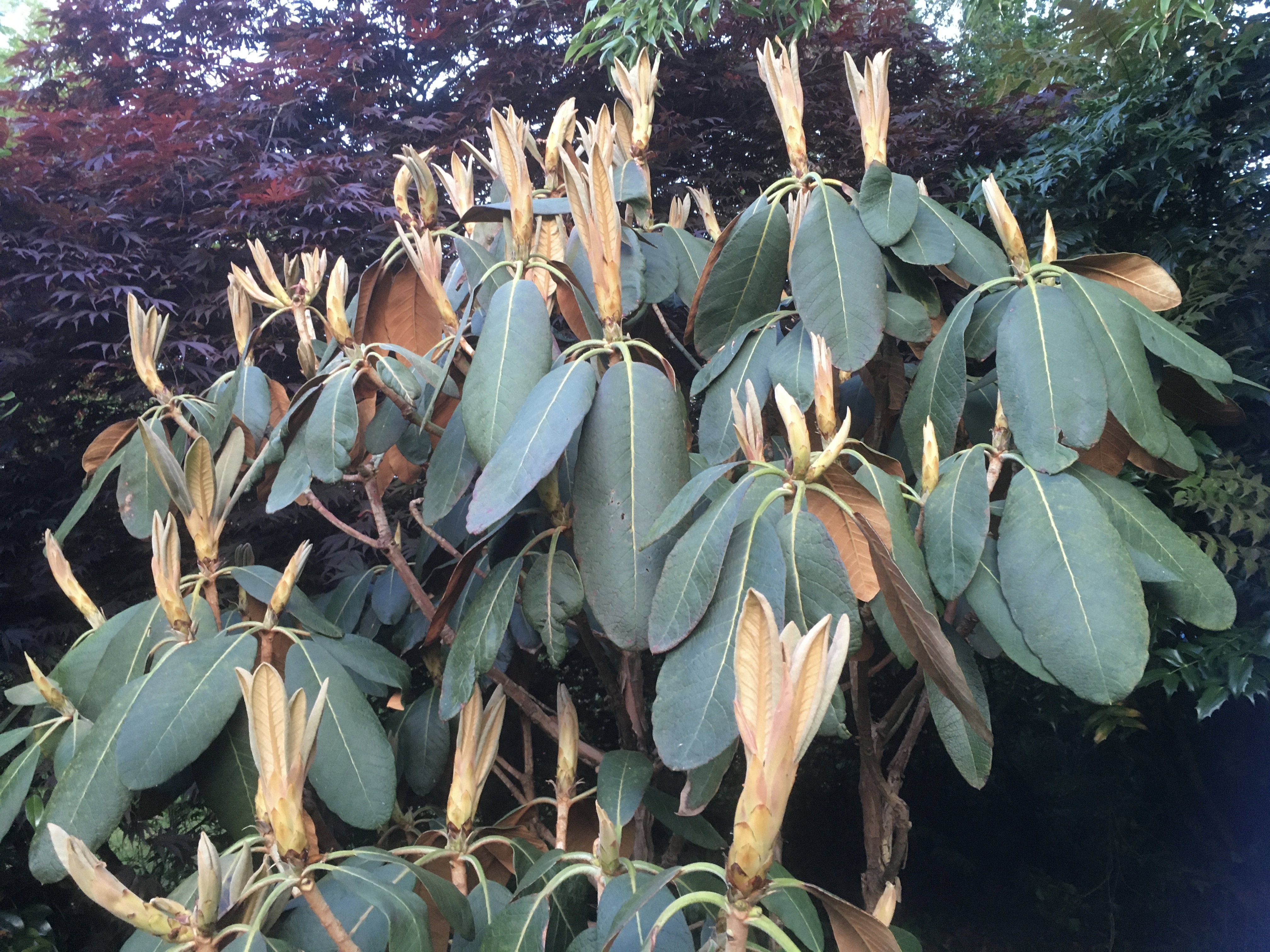
Of the large-leaved rhododendrons, R. falconeri has proved to be the hardiest (it has not suffered in even the coldest temperatures while others, such as R. sinogrande, have). It is a striking plant, with leathery dark green leaves, fawn indumentum when the leaves emerge, deepening to a rusty colour on the underside of the leaves, peeling pinky-brown stems and pale yellow flowers with a maroon blotch. It has not been extremely floriferous here, but the young leaves make up for that as they emerge.
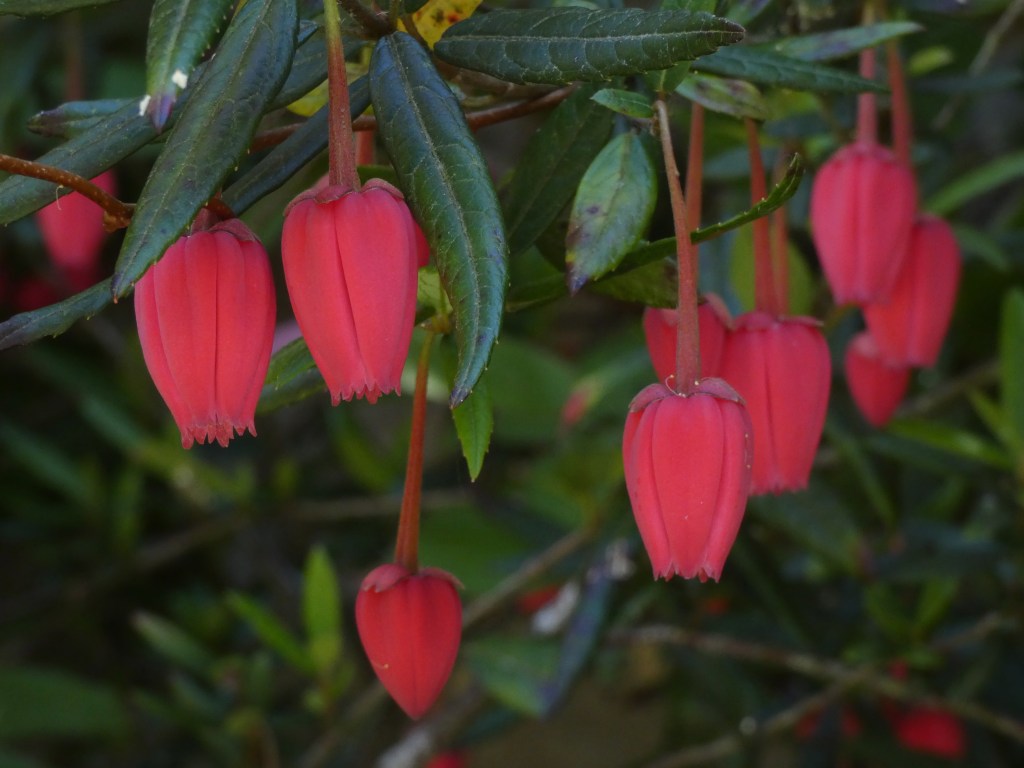
The west wall of the house is the only place where Crinodendron hookerianum has proved happy, and it is now a very large plant. It has elongated dark green leaves and lantern-shaped crimson flowers are suspended from its branches in May, giving the shrub its name of the lantern tree. In our part of the country, it definitely requires a sheltered position.
Another red-flowered plant, this time with bright scarlet flowers, is Embothrium coccineum, which takes over from the Crinodendron flowering in late May and June. It is an evergreen or semi-evergreen small tree with clusters of bright scarlet tubular flowers (hence its name of the Chilean firebush). It has not proved to be very long-lived in the garden (Sheena thinks that late frosts in May were the culprit).
A replacement, a sucker from her parents’ garden, even though still quite small, came through last winter unscathed, even though it is said to be hardy to -5°C to -10°C.
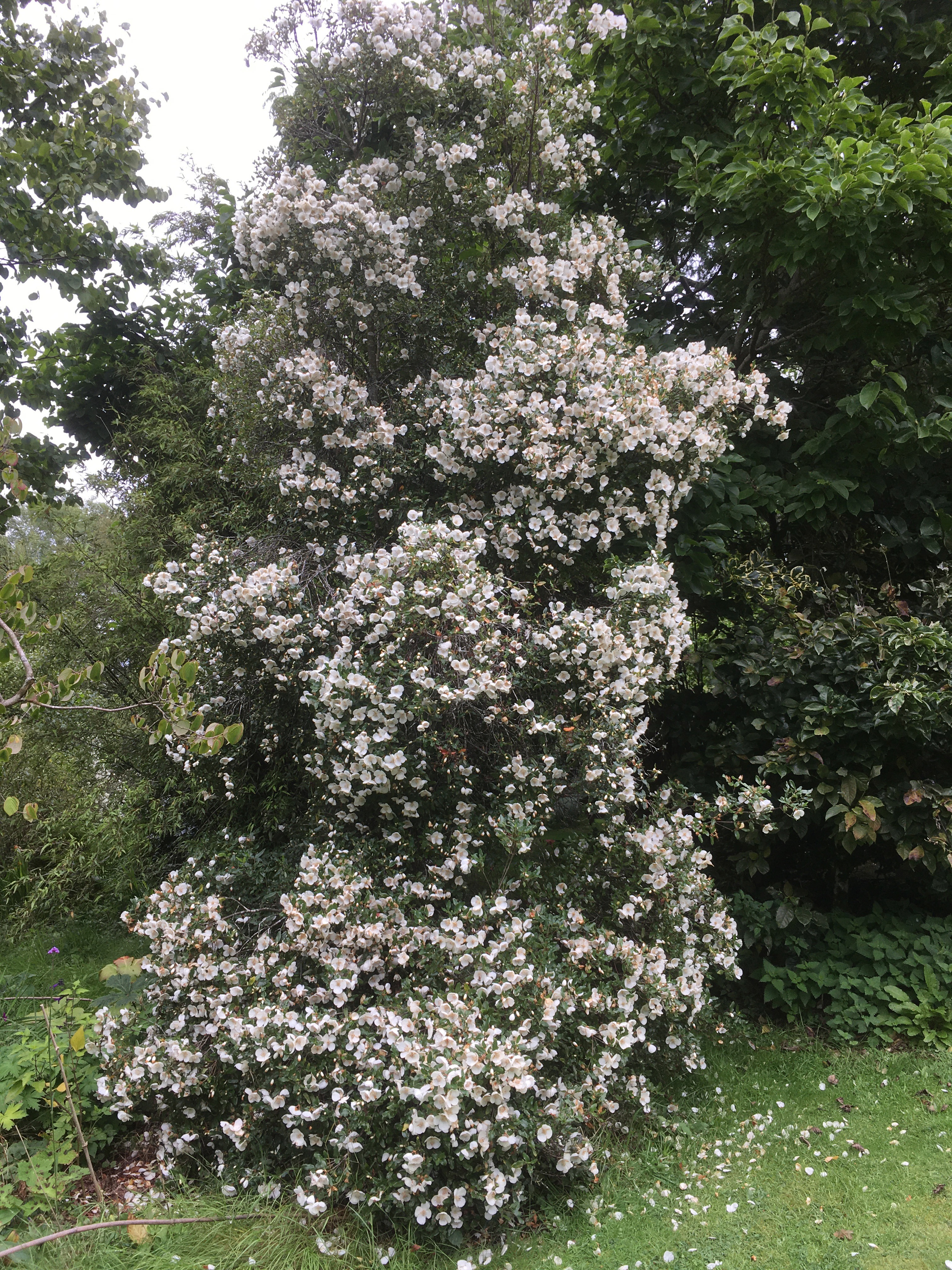
Finally, Eucryphia x intermedia ‘Rostrevor’ is a hybrid between E. glutinosa and E. lucida, which originated in Co. Down. It forms a columnar, evergreen small tree which bearing masses of scented white flowers abuzz with insects; its flowering period of late summer makes it particularly valuable in the garden, and this variety has proved to be very hardy.
Sally’s New Garden with Hardy Perennials and Grasses
After studying painting Sally at college, Sally practised as an artist for 10 years. She was influenced by medieval depictions of the flowery mead in her later work. Gardening became Sally’s main interest after moving to a house with a big garden in Oxfordshire. For ten years she ran a specialist plant nursery, with most of the plants grown from cuttings or seeds, selling out at Rare Plant Fairs, Specialist Plant Fairs and Yellow Book Gardens among others. A few years ago she moved to the Cothi Gardeners area and began to develop her new garden from scratch, focussing on hardy perennials. She has a greenhouse where she propagates perennials from seed and cuttings. To the south of the house is a border 15m long and 5m deep. Huge stumps of C. leylandii had to be removed by a tree surgeon to be able to make best use of this space. The soil is deep and rich, quite a contrast to the heavy clay in Oxfordshire.
The garden to the rear is north-facing and exposed, backing onto set-aside land with plenty of wild flowers. In this area in 2021 Sally decided to try a no-dig flowerbed which she planted up exclusively from seeds and cuttings she had raised herself.
The no-dig bed was created by laying down cardboard, adding compost and cut material on top. It has been a great success and become a varied tapestry of perennials.
In her gardening style, Sally has been very inspired by Piet Oudolf and his use of perennials and grasses, and plants particularly to attract pollinators. She gardens exclusively organically, and uses only peat-free compost. She doesn’t water plants after two weeks have passed since planting, unless a plant dehydrates completely.
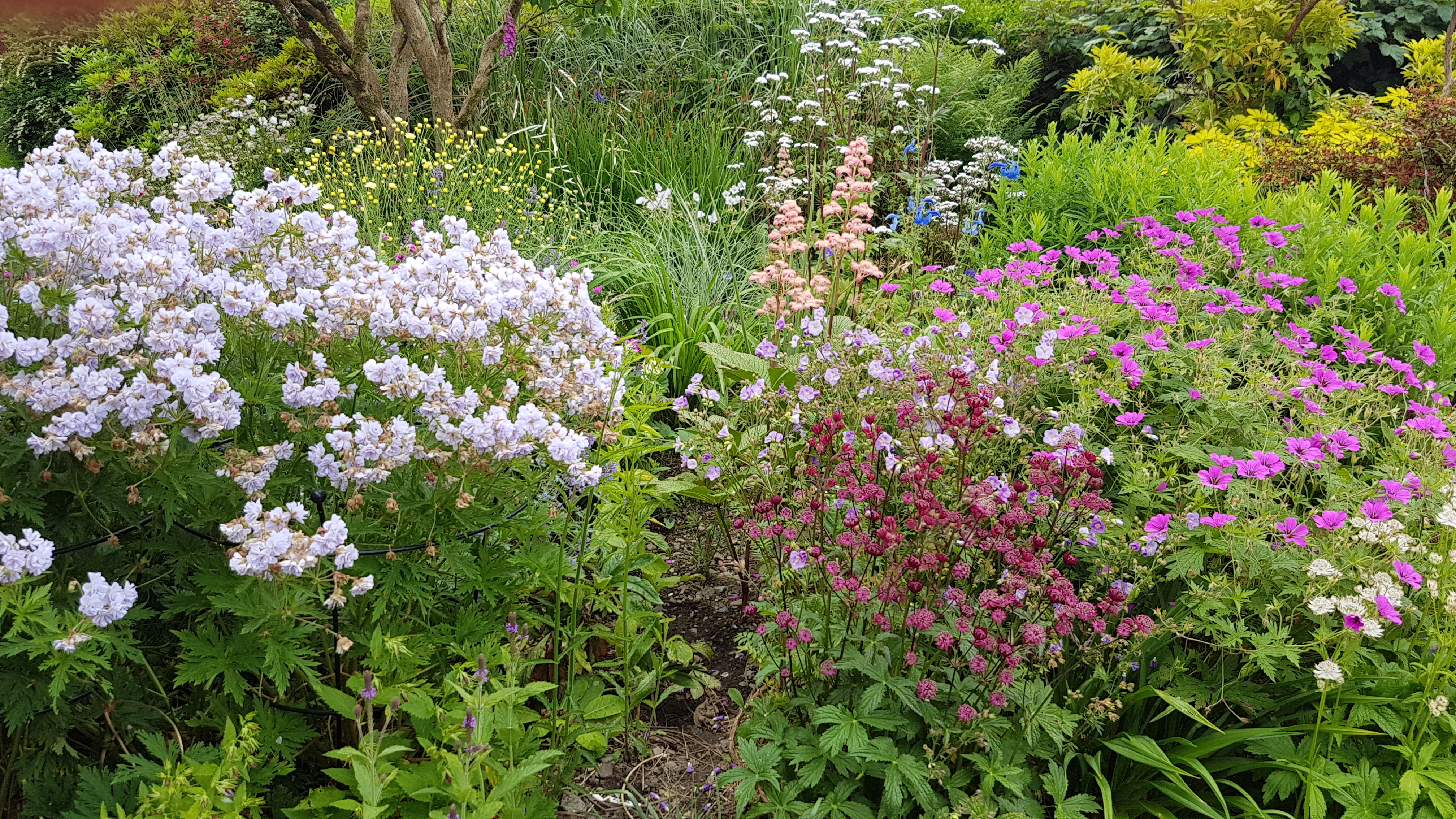
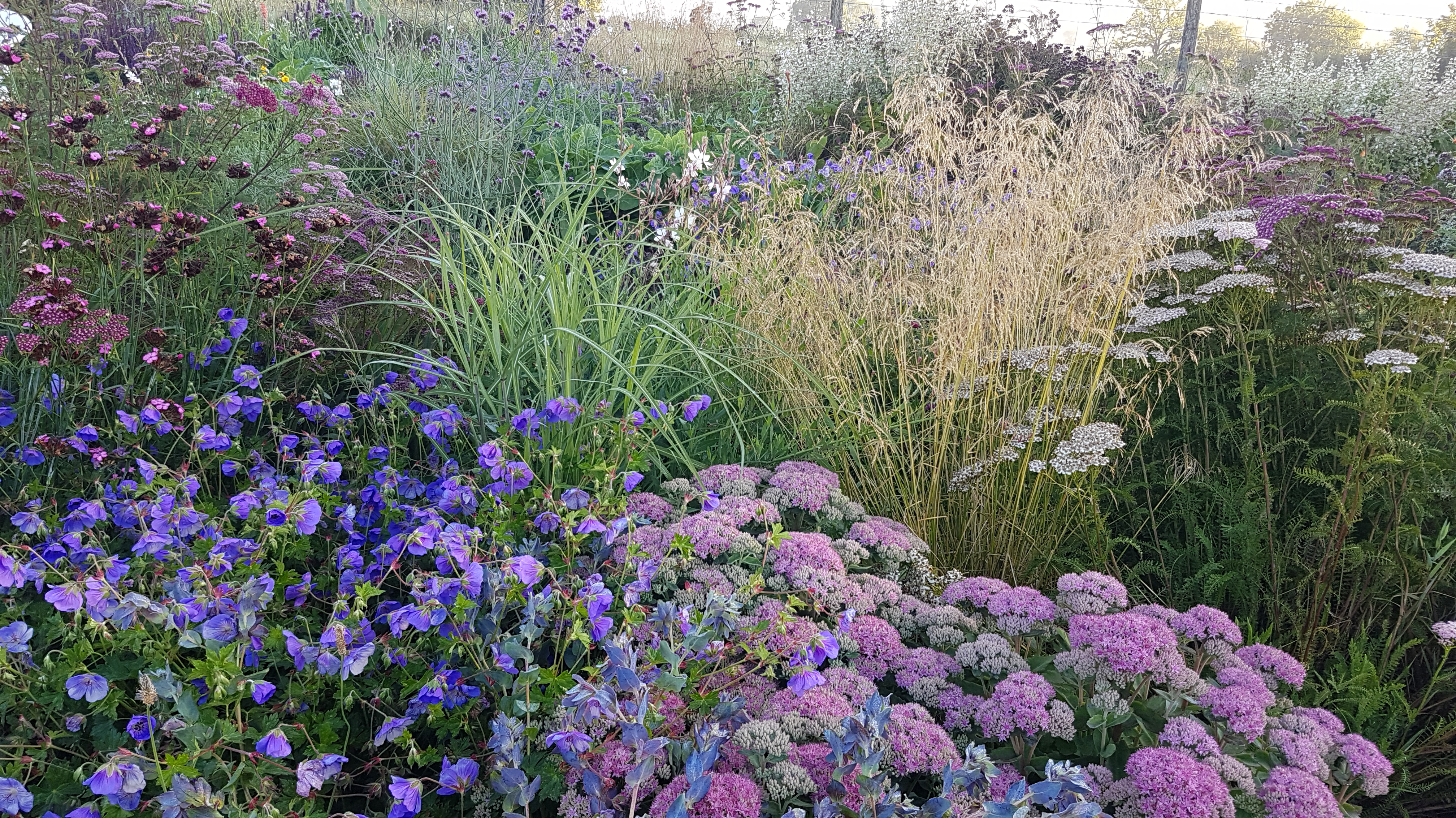
Sally showed us many pictures from her garden of beautiful combinations of hardy perennials and grasses. A group of plants Sally uses widely are the hardy geraniums – including G. ‘Patricia’, G. pratense, G renardii, G. ‘Rozanne’ (which flowers from May to October), and G. ‘Cloud Nine’ raised by Helen Warrington of local Ty Cwm Nursery. The latter is extremely floriferous over a long period, and the bees have an unusual trick to get at the pollen, by making a hole on the underside of the first petal layer.
G. ‘Cloud Nine’ with G. ‘Patricia’ and Astrantia ‘Buckland’
Among the grasses are Miscanthus ‘Morning Light’, which as the name suggests catches the light beautifully, and Miscanthus malepartum, which is extremely tough. Molinia caerulea ‘Transparent’ is another favourite, as it stays small in the border until mid-summer, but then shoots up with stems as much as 8 feet tall, making a real statement without taking up too much space.
Deschampsia cespitosa with Geranium ‘Rozanne’
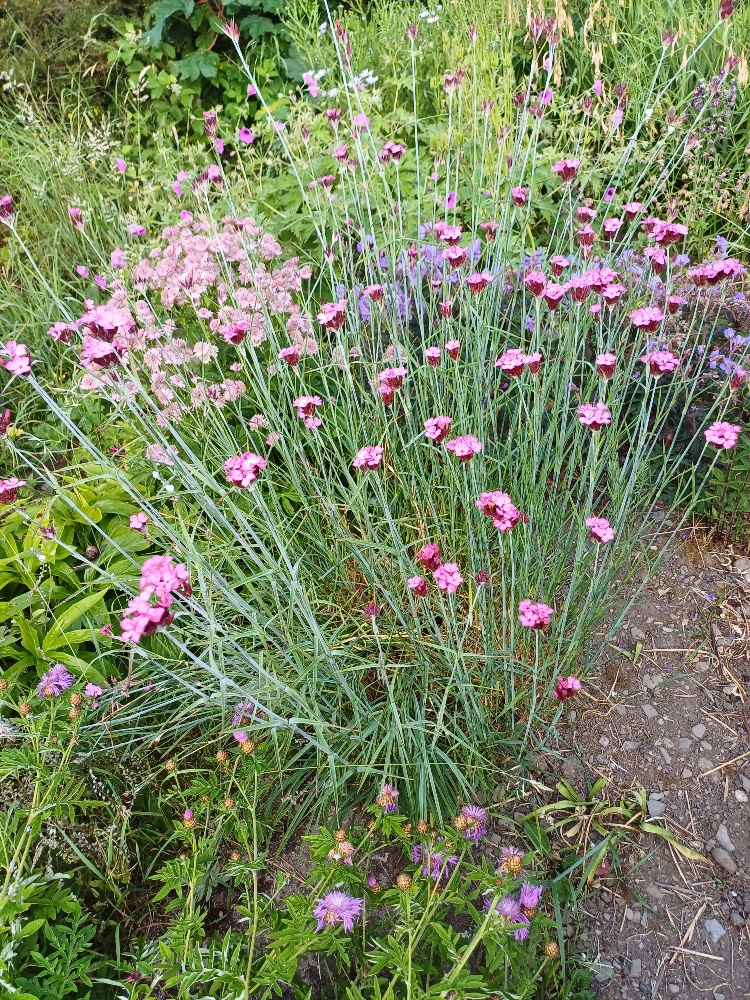
Sally has particular praise for Dianthus carthusianorum, with its single pink flowers held on tall stems above narrow, grassy, grey-green leaves; it flowers all summer long.
Other perennials that Sally uses include Salvia ‘Purple Rain’, Papaver ‘Royal Chocolate Distinction’, Asphodeline luteum, Phlox ‘Hesperis’ (with violet flowers that become almost luminous at night), Salvia uliginosa, Salvia turkestanica, Knautia macedonica, Morina longifolia (hailing from Tibet), Centaurea ‘Pulchra Major’ and Selenium wallichianum.
A beautiful grouping of plants from Sally’s garden
Elena’s Tropical Pond in Wales
Twelve years ago Elena moved from Trinidad to the Cothi Gardeners area – where the climate and vegetation couldn’t be more different! There was an unused patch of grass in her garden, with just 4 daffodils and half-a-dozen bluebells, which she had been considering turning into a ‘tropical pond’. The site is exposed to the north and the east, and on top of a rubble heap – not promising! Then along came lockdown in 2020, creating an opportunity, and providing a much-needed focus for activity.
The first step was to lay the outline of the pond with twigs on the grass. Then Elena dug up from her garden and divided any plants with tropical-looking foliage. She also scavenged what she could from friends.
But, in lockdown, where to get the materials? James, Elena’s next-door neighbour, came to the rescue. He supplied both the butyl liner, and the soft cushioning layer. He also borrowed a mini-digger to dig the pond.
Even with the mini-digger, the spoil heap proved to be a tough proposition – the pond became shallower, and shallower… Elena collected the stones for the pond, to hide the butyl liner, from the small stream which runs along the boundary of the garden. More of the butyl liner was used to create a bog garden to one side of the pond. Lifting the canopy on the sycamore trees has been effective, giving the stems a tropical appearance.
Then Elena spent hours placing pots in and around the pond, and the next thing the pond needed was a waterfall. Lockdown again turned out to be the provider, as Farmyard Nurseries had been clearing out their sheds and discovered a water fountain – just what was needed!
What of the plants? They include a Banana (which stays out all year, wrapped in the winter), Gunnera, Persicaria (which was gifted as a bunch and distributed about under the stones), watercress (also from a friend), Macleaya and even a carnivorous plant (which also overwinters!). Gingers (Hedychium) also are surprising and beautiful plants in this environment. Houseplants are brought out for a summer holiday, including Hibiscus and Bougainvillea.
Gravel has been put down around the pond, joining to the existing path, which has been lined with trellis screens bought online. At the base are ferns, which have proved to be very hardy. Hostas have been hung in pots from the tree adjoining the path, and stumps have filled with thyme and evergreen ferns.
It is just a tiny pond, but it attracted so much wildlife, almost immediately: birds, snails, dragon- and damsel-flies, frogs, toads, newts and lots of hedgehogs. The frogs come in huge numbers, as Elena and her grandchildren discovered in the spring when they went down to the pond at night to explore!
Around the pond the hedges have really thickened up, and the planting has become lusher and lusher. Many plants have died, but lots have survived. Making the pond has been an enjoyable journey; the tropical feel of the pond reminds Elena of Trinidad and the plants of gardening friends old and new.
Neighbour James, who came to the rescue with materials, with his daughters by what is now a very tropical-looking pondBench with bling
John’s October Plant Sale
John and Helen held a very well-attended plant sale for NGS charities in early October, which has so far raised a sum of over £1000 for the charities. This figure will rise as there are plants still to be delivered and collected. John and Helen would like to thank all those who contributed plants, bought plants and helped out on the day. The autumn plant sale has been so successful they may well hold another sale in the spring of next year – so watch this space…
Joseph was the Head Gardener at Aberglasney Gardens from 2011 until 2022, when he left to run The Plough in Felingwm, where he grows as much produce as possible for use in the pub, and is keen to obtain sustainable and local produce from nearby.
In gardening, he has always been keen to use and promote succession of planting in order to provide constant, all year round interest and make less work into the bargain. Hurrah!
His first early flower which works so well, particularly valuable if short of space, is the snowdrop. There are so many varieties which will flower at different times and will happily sit around other early bulbs in order to provide early spring succession.
The two types of cyclamen (Cyclamen hederofolium and Cyclamen africanum) are particularly valued because of the length of their flowering period and because the tubers will happily regrow for decades. If they can be planted in mounds or banks, their full effect and beauty can be easily seen.
Following snowdrops, Crocus appear (he’s particularly keen on the variety ‘Vanguard’), so interplanting with these two and also dwarf Dutch Iris will provide lots of interest. Iris lazica are also fairly bombproof, with the advantage that the leaves can be cut after flowering without detriment – they are winter flowering but will last until March/April.
Obviously tulips and narcissi (he particularly recommends Narcissus ‘W. P. Milner’) are good for interplanting and in Aberglasney Gardens it was known for some daffodils still to be flowering into July. Hellebores also always do well, starting in February and continuing into May; they will give very good value, coming up year after year. The different types of Camassia and Allium will provide interest for the Spring gap, and Iris (he recommends the dark Iris chrysographes) are good for the June gap.
Kniphofia (red-hot pokers), (particularly K. rooperi which will flower all through the season) also provide height and texture and they do not need cutting back in autumn. Geranium varieties are long flowering and, if cut back during the season, will flower again. Crocosmia provide fantastic pops of colour and, once established, can be split to provide more plantings. The variety ‘Hellfire’, an extremely vivid red, is recommended.
Shrubs are such good value and, once established, will provide lots of interest with very little attention. There has been a lot of work invested in what is now a huge selection of Hydrangea varieties with many different types and colours of flowers. For a smaller, later flowering Hydrangea, H. paniculatum ‘Brussels Lace’ will flower from July until the first frosts. The evergreen shrub Coronilla ‘Citrina’, which is compact and rounded, will grow in a sheltered position providing lemon yellow flower umbels in late winter and early spring.
Don’t be afraid of dahlias! They are long flowering and the answer is to stick to 5 different types; the tubers are well-suited to filling in gaps in the late summer garden. Joseph particularly likes the smaller ‘Downham Royal’ which is a darker variety and very long flowering.
Calendula and Verbena are both long flowering but do prefer drier conditions. Cerinthe major ‘Purpurascens’ has a silvery leaf, is self-seeding and will virtually grow anywhere, so is very good value.
For autumn colour, the trick is to plant trees where they catch the light and they will really shine. Acers of different types are always stunning and worth the expense if planted well. We shouldn’t forget foliage for autumn/winter planting, it will provide lots of variation in colour and texture.
Joseph then answered questions from the audience:
The science of planting – it’s concentrating on what gives pleasure to the eye.
Flowering time of different plants – try not to think too hard. What works best is to plant different types of one plant.
Keep a diary! It’s invaluable.
Problems with creeping buttercup – if it’s a problem in a lawn, scarify with a rake to remove it. Under a hedge – mulch or put down membrane and then plant as soon as possible.
Mound planting of shrubs – don’t dig a hole, just put a dish in the top of the mound, place the shrub into the hollow on the mound and heap up soil around it. Look after it well in the 1st year, half as well in the 2nd year and then leave it alone!
Rhododendron – bear in mind that they have very shallow roots, but they will work well in most conditions. They will grow in a shady border or at the edge of woodland but need watering well, particularly when first planted.
Elena thanked Joseph for an entertaining and useful talk with helpful slides.
John’s End-of-Season Plant Sale – 8 October – in Aid of NGS Charities
Start time 1.00pm Sunday 8 October at Ty’r Maes Ffarmers SA19 8DP
On the A482 look for the yellow NGS sign 7m SE of Lampeter. 8m NW of Llanwrda. 1½m N of Pumsaint opposite the turn to Ffarmers.
There will be loads of plants for sale – at least twice as many as last year. People are also encouraged to bring plants to swap. Donations are welcome, as the aim is to raise money for NGS charities.
FREE entry; tea, coffee and biscuits are provided – if you would like to donate a cake, they are always most welcome!
Parking is on the field opposite the turn to Ffarmers (weather permitting!), although the area near the house will be available for loading and unloading plants .
Committee Vacancies
Early in 2024 two of Cothi Gardeners Club committee members (the Chair and Deputy Chair/Marketing) come to the end of their term on the committee and are retiring from their roles, having served for a number of years including during the very difficult time of Covid. It is a rewarding experience to be part of the committee of such a vibrant and friendly club, so members are asked to give this serious consideration. If you are interested or if you have questions, please contact Elena.
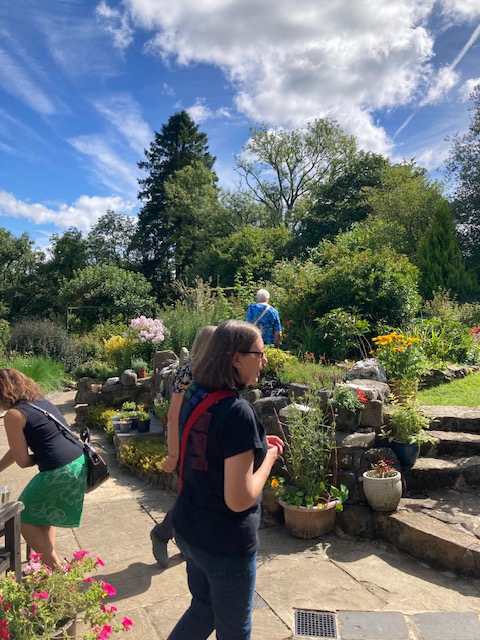
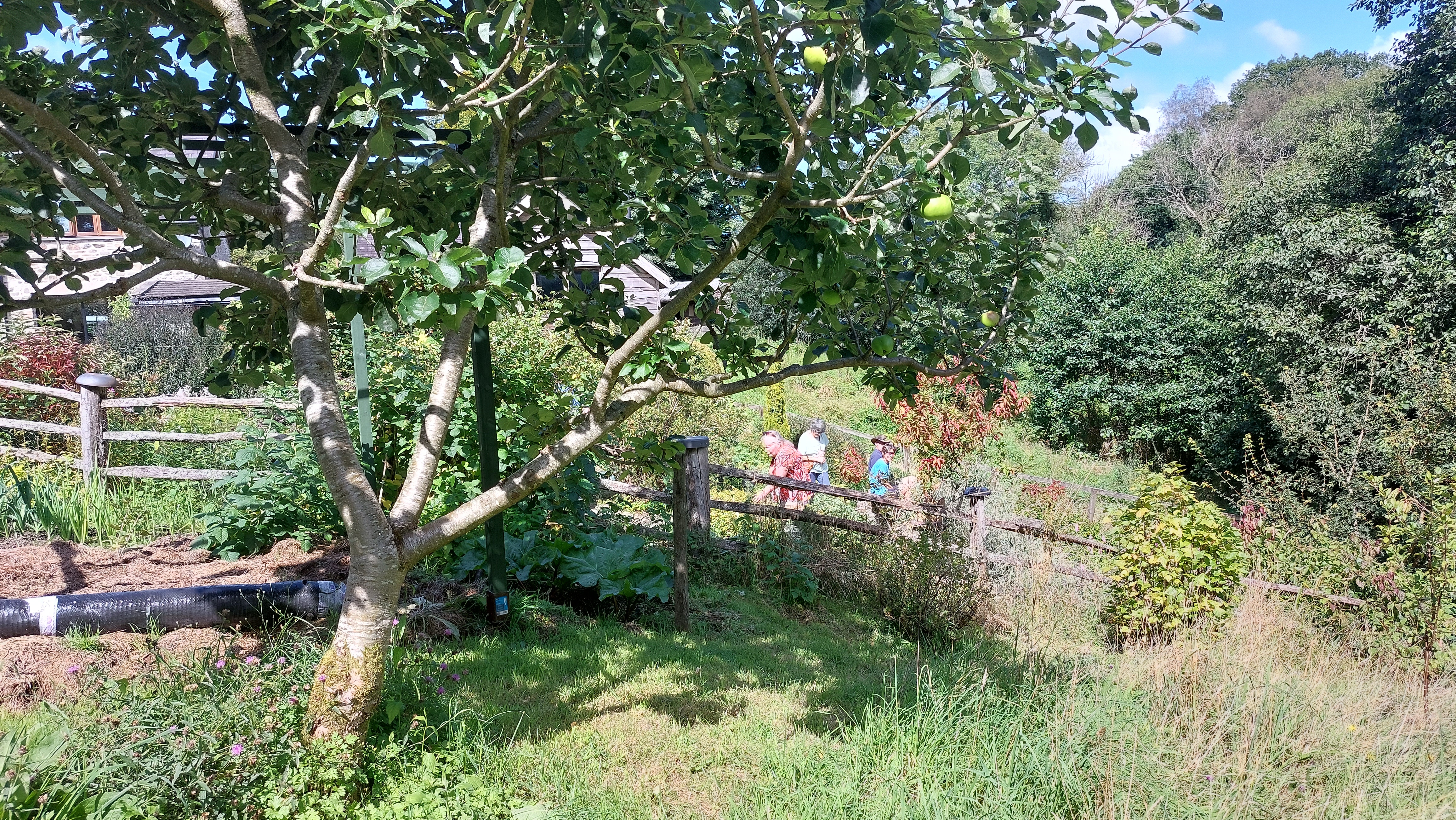
Previous garden safaris had been very successful and popular occasions, so for this year’s August event it was decided to repeat the experience, with members offering three gardens for the safari in Crugybar, Ffaldybrenin and Ffarmers. It was our great good fortune that, despite the grey and soggy conditions that have prevailed for much of August, we had a lovely sunny day for it. An enjoyable time was had by all, there was much of interest to be seen in all the gardens, and great thanks are due to those who opened their gardens for us. Here are a selection of photos from the day.
The talk at the July meeting was given by El James, Horticulturalist at the National Botanic Garden of Wales. For background El told us that the National Botanic Garden had opened in 2000, meaning that at 23 years old it is very young for a botanic garden. The advantage of this youth is that there is a freedom to experiment, which is sometimes absent when traditions have to be adhered to. The Garden houses the largest single-span greenhouse in the world (this still remains true 23 years on), housing the Garden’s Mediterranean plant collection. The total acreage is 560, with the ornamental gardens making up 180-200 of those acres; the rest of the space includes recently restored parkland with lakes, cascades and waterfalls and the Waun Las Nature Reserve. The Garden also houses the national seedbank and herbarium.
El explained that she started work as an apprentice at the National Botanic Garden four years ago (the scheme has been running for 10 years). For the last year she has been looking after the nurseries and Welsh plants section. There is a Welsh Native Compound in the Garden, although it is rather out-of-the -way, and there are hopes to redevelop that and bring Welsh native plants into more prominence within the Garden.
Within the Welsh Native Compound they aim to mimic the habitat found in four specific wildlife areas within Wales: the Breidden Hills in Powys, Cwm Idwal in the North, Kenfig near Bridgend, and the Great Orme near Llandudno. By having an area where these native plants can be seen, it is hoped to encourage more people to grow native wild flowers in their gardens. With native plants, it is not just about those with attractive flowers ( the ‘lookers’) – so many of them are associated with great stories from history and mythology.
The Botanical Society of Britain and Ireland recently released the Plant Atlas 2020, providing an overview of the distribution of plants in Britain and Ireland, and showing just how threatened many plants are. There are now more non-native than native plants in the UK! At the Millennium Seed Bank at Wakehurst Place they have banked 98% of UK flora from at least one population of each plant. However, as of 2019, 75% of Welsh plant populations had not been banked, and this is the rationale behind the Welsh seed bank at the National Botanic Garden. It is important to have seed from different populations, as plants growing in different parts of the country may have difference characteristics and require different conditions. El has recently been propagating Rumex rupestris, the shore dock, which is one of the most threatened vascular plants in Europe. She needs to grow on 150 plants from seed collected in south Wales, and currently has 20! It is important to have seed saved from this Welsh population, in addition to seed previously saved from the population in south-west England.
Dr Kevin McGinn is in charge of developing the National Seedbank of Wales and the Herbarium at the National Botanic Garden. The aim is to collect seed from all red-listed plants (50% of the seed to be stored at the Millennium Seed Bank and 50% at the National Seedbank of Wales), focussing on species that do not yet have Welsh-origin collections at the Millennium Seed Bank. At the Science Labs at the National Botanic Garden, the seeds are stored in freezers. In some cases this works well as the freezing process acts as stratification, but it can also cause some seed to go into deep dormancy, so different strategies for germination are required.
The team only collect seed from areas where they have the permission of the landlord, and when they visit a site it is to collect seed specifically from one or more species. There are strict rules and regulations which govern seed-collecting; only up to 20% of seed is ever collected, and depending on populations or circumstances it can be 10% or less. One of El’s favourite sites is at Baglan near Port Talbot, an old industrial site where wildlife has regenerated. On her first visit there she was fortunate to locate Clinopodium acinos, wild basil-thyme, almost immediately, growing in rubble and out of old brickwork. In terms of scenery, a visit to heathland in Anglesey to look for seed of Viola lactea, the pale dog violet, was a great contrast. Anglesey has also been visited to source seed of Hottonia palustris, the water violet. Close to Anglesey is the Treborth Botanic Garden, part of Bangor University, which is well-worth a visit. Another seed-collecting visit in partnership with the Millennium Seed Bank was to Pembrokeshire to collect seed of Populus tremula, the poplar tree.
Once seed has been collected, along with a herbarium specimen, details are entered on the IRIS database. In time, it is hoped to digitise the herbarium collection. The Garden Explorer database can be accessed online to see details of any plant in the National Botanic Garden, including photographs and location(s).
Another major activity in the summer is the harvesting of green hay from the Waun Las National Nature Reserve. The hay meadows are managed specifically for wild flowers, and include many different varieties. of orchid. In partnership with the National Trust, green hay is being laid around Paxton’s Tower to encourage a greater diversity of wild flowers in that area. It is quite a labour-intensive process to dry the seed laid out on tarpaulin and then sieve it. The seed is usually sold in bulk, but some years it is available in small quantities from the shop at the Garden.
El gave us a fascinating and very informative talk, brimming over with her enthusiasm for her subject and chosen career. The audience had plenty of questions and comments, and thanked her for such an interesting evening.
Mad Hatter’s Tea Party
In early June, to take advantage of the amazing weather at that time, a Mad Hatter’s Tea Party was held for members at the wonderful Gelli Uchaf gardenfor the purpose of viewing the garden, particularly the wild flower meadows, sporting a mad hat and consuming a delicious tea.
The wild flower meadow was at its peak, everybody had brought quantities of amazing sandwiches, scones, cake and seasonal berries, and the hats were inventive, inspiring and humorous. The sun duly shone, and laughter and good conversation abounded.
Visit to Llwyngarreg Garden
Following a fascinating talk from Paul O’Neill at the June meeting of the Club, our Chair arranged a visit for members to Paul and Liz’s garden, Llwyngarreg, on the border of Carmarthenshire and Pembrokeshire, for mid-July. It had been very wet, but the rain managed to hold off for the entire afternoon! And what a privilege to be shown around the garden by Liz and Paul, in the sun, to hear its history and how it’s changed, and to be the beneficiaries of all their insights into the plants that they grow.
Appropriately, given Paul’s love of bamboos, the garden visit starts with a walk through a bamboo tunnel. This illustrates Liz and Paul’s readiness to adapt with changing climate conditions – it was previously a willow arch, but with time proved too dry for the willows, so they were replaced with bamboo. Willows still play a big role in the garden with various inventive seats and structures made from them. Bamboos are a major feature, with many unusual varieties including Borinda macclureana (a Keith Rushforth collected seedling, now many metres high). There is a real focus on trees (the acers are all grown from seed) and shrubs, particularly rhododendrons, including a number of the large-leaved varieties – many of which also are grown from seed. In mid-July we saw the beautiful and scented Rhododendron auriculatum, the latest flowering species rhododendron. in flower at just 7 years from seed! It was the first time that I have seen the gorgeous scarlet climber Tropaeolum speciosum growing through shrubbery outside Northern Ireland or Scotland.
We all exclaimed at the profusion of Agapanthus (campanulatus hybrids) growing in the soil in the garden. Paul explained that everyone is surprised – they grow here both in 2.5 metres of wet peat, and also 2.5 inches of gravelly soil over rock – two completely different environments. They looked spectacular with orange crocosmia in peat, and with dierama in the gravel beds.
Agapanthus with CrocosmiaAgapanthus with Dierama
There is so much variety in the garden: after exploring the trees, shrubs and bamboos, we emerged onto lawns with lovely perennial borders and a Japanese-style bridge.
After tea and cake (of course!), and arguing amicably over plants in the sales area (of course!), we made our way home. But not before Paul showed the bamboo aficionados two very unusual specimens – the walking stick bamboo with its swollen nodes (invasive), and Himalayacalamus falconeri ‘Damarapa’ with its colourful striped canes (too tender, I fear, for mid-Wales).
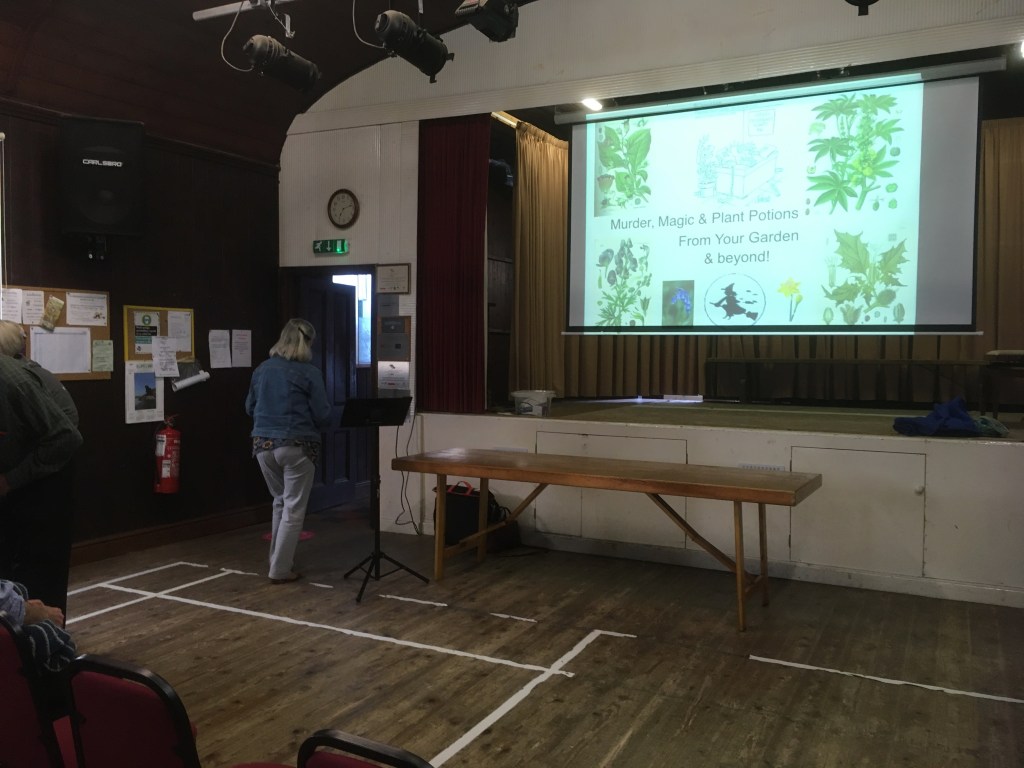
Marion opened by telling us that her talk would be about ornamental and native plants – their history, their less well-known aspects and their ability to both heal and harm. The definition of ‘poisonous’ can range from a nettle sting to causing death. The talk would cover just some of the plants that can be described as poisonous, highlighting those that can be both good and bad.
A good example is the yew tree. All parts of the tree are poisonous, apart from the red flesh of the berries. Symptoms of poisoning can range from stomach upset to heart failure. There are records of yew clippings being thrown into a field where sheep then died after eating them. Traditionally, yew trees have been grown in churchyards and in that environment there are many ancient specimens – in Perthshire there is a tree recorded as being between two and three thousand years old. It was believed that yew trees became poisonous by feeding on the dead bodies buried in the ground in the churchyards, and for that reason they also became associated with witches (another theme in this talk). On the positive side, yew has more recently become known as the source of the anti-cancer chemical taxane, which has had many benefits.
A number of gardens were sources of information for this talk – the Chelsea Physic Garden, the Alnwick Garden Poison Garden and the Welsh National Botanic Garden. The latter contains the Apothecary Hall, a recreation of an apothecary’s shop as it would have been in 1919. Many herbal plants include ‘officinalis’ in their Latin name, indicating that they were used for medicinal purposes, primarily at home. If these domestic remedies failed, people would turn to the apothecary., who would have turned plants into powders, pills and tinctures – the raw materials would be contained in labelled drawers. An example photograph from the Apothecary Hall showed us a drawer labelled with various plants we would consider poisonous, including Aconite. The latter ingredient was included in a prescription (which can be seen there) dated 23 June 1918 – but we don’t know what was wrong with the patient, nor whether they recovered!
Plants are, of course, still used in medicine; now, much more rigorous testing and isolation of the active ingredient is carried out. This ingredient is then made up or synthesised (created artificially). The World Health Organisation estimates that 80% of the world’s population rely on plant-based remedies, while 40% of the industrialised countries use medicines based on plant extracts, and 33% of new medicines developed in the last 25 years have been made from or are synthesised versions of plants. For example, the anti-malarial ingredient artemisinin was isolated in Artemisia annua (sweet wormwood) in the 1970s which was effective, but then resistance developed. However, now an American trial is using the whole plant, which contains 10 different anti-malarial properties, which is proving very effective (as it is harder for the parasite to develop resistance to 10 different components).
The poisonous ingredients found in plants fall into a number of groups:
Alkaloids: this group includes the poppy, which provides morphine.
Glycosides: this group includes foxgloves, whose active ingredient is used to treat heart problems.
Saponins: only some plants containing these are poisonous. The group includes the soapworts, but also the little corncockle, which used to be a problem in hayfields.
Essential oils (terpenes and sesquiterpenes): many of us are familiar with the great variety of essential oils available. One example is lemon balm essential oil which is now being studied for the treatment of agitation and aggression in Alzheimer’s Disease, and also for the treatment of epilepsy. Essential oils are widely available, but as they are very concentrated they can be problematic if they are not correctly diluted.
Peptides and Proteins: peptides (as found in gardenia, for example,) are widely used in skincare preparations.
Pyrethrins and Pyrethroids: deriving from plants from the Chrysanthemum family, pyrethrum is an insecticide (used against ants, for example). Care should be taken to use it in the evening to avoid damaging other insects such as bees.
There are three ways in which a person may be killed by a plant:
they may ingest it accidentally;
they may be given the plant with intent to kill them;
they may self-administer it.
There are a number of plant families which contain poisonous plants (although not all the plants in the family may be poisonous:
Solanaceae: this family contains potatoes (which is why you should cut out any parts of potatoes with green colour for the high concentration of glycoalkaloids) but also deadly nightshade; it contains Nicotiana tabacum (tobacco), as well as the lovely scented N. sylvestnis.
Apiaceae: this is the carrot family, so again it contains a vegetable that we eat as well as hemlock (Socrates was sentenced to die by drinking hemlock). Its similarity to wild carrot means great care should be exercised. Giant hogweed, in the same family, is phytotoxic, and so the juice can cause severe blistering and burns when exposed to sunlight. Dill, parsley and parsnip also have the potential to be skin irritants.
Ranunculaceae: this is the buttercup family, including Aconitum (all parts of which are extremely poisonous), Delphinium and Helleborus (which has irritant sap).
Liliaceae: cat-owners will no doubt be aware of the danger these plants pose to cats. All parts of the plant are toxic to cats, including the leaves, flowers and pollen, even in very small amounts. The autumn crocus (Colchicum autumnal) is also a toxic plant, but is used in the treatment of gout.
Papaveraceae: this is the poppy family, which is the source of the painkillers morphine and codeine with all their adverse and beneficial effects.
Euphorbiaceae: many of the spurges contain irritant sap which is phytotoxic. The castor-oil plant, Ricinus communis, is a member, giving us castor oil (used for many things including the promotion of hair growth in men, but also the deadly poison ricin). It is the coating of the bean that contains the most ricin – one bean contains enough to kill a human, and it would take four beans to kill a horse.
Amaryllidaceae: two plants in this family very familiar to us in Wales are the daffodil and the snowdrop. Both plants contain galantamine, which is used in the treatment of Alzheimer’s Disease in its early stages. Indeed, daffodils are grown commercially for this purpose, including near Talgarth in the Brecon Beacons. Bluebells are another member of this family, everywhere in the hedgerows and woods at this time of year, with a medical history going back to the thirteenth century for the treatment of leprosy. Bluebells are now being investigated as a possible control for mycobacterial infections, including tuberculosis. It is known that badgers eat bluebells, so is it possible that they are self-medicating for tuberculosis? Bluebell bulbs have been shown to contain at least 15 different compounds, some of which are similar to those used in the treatment of HIV and cancer, and others have diuretic and astringent properties. On a more mundane note, the juice from bluebell bulbs was traditionally used in place of starch.
Plantaginaceae: an important plant in this family is the foxglove, which contains digitoxin and digitalin. These are compounds which have a low therapeutic index (where there is only a narrow margin between the amount needed to be medically effective and the amount that would do harm). Despite being so well-known to us today, its use to treat heart disease is relatively recent. In 1598, Gerard in his Herbal declared that the foxglove had no place in medicine; although it would have been used by wise women to treat throat problems based on the doctrine of signatures. It was also later used as a diuretic to treat dropsy (which in retrospect makes sense as fluid build-up can be caused by congestive heart failure).
Marion went on to discuss some of the plants, whether native or introduced, which might serve as starter plants in a witch’s garden. The first four have been referenced in the context of the ‘witches’ flying brew’, supposedly used by witches before mounting their broomsticks!
The first is Aconitum, or wolfsbane. It has the reputation of being one of the most poisonous plants in the garden (although it is also a wild plant). It can be absorbed even through broken skin. It can give rise to severe stomach problems and slow the heart, sometimes fatally. Gloves should always be worn when handling the plant. It was used in warfare to poison arrow tips and to poison the water supplies of besieged castles; it was also used to administer the death penalty in some Greek cities.
Another ingredient in this brew was Atropa belladonna, or deadly nightshade, named after Atropos who in Greek mythology wields the scissors of death. Poisonous as it is, atropine is also an antidote to the nerve agent sarin, and was issued as such to US troops in the Iraq war. The ‘belladonna’ in the name comes from the Italian for ‘beautiful woman’ and refers to its use in dilating pupils to make eyes appear more attractive; atropine is still in use in optometry for specific purposes.
A second member of the nightshade family is henbane, Hyoscyamus niger, containing hyoscine causing hallucinations, as well as vision problems, forgetfulness, weakness and sleepiness. Along with the mandrake root, again of the same family and containing hyoscine, it also makes up part of the flying brew.
Datura, thornapple or jimsonweed, is another plant with a low therapeutic index. The plant has been used as an anaesthetic and asthma treatment, as well as a hallucinogenic. It is worth noting that Brugmansia, often grown in gardens, has the same properties.
Amongst other plants is Sambucus nigra , the elder. In addition to being used to create elderflower cordial and elderberry wine, both flowers and berries have anti-bacterial and anti-viral properties. However, the roots and some parts are very poisonous, so care is needed. Elder trees were often planted in graveyards, and were believed to be protective if planted by a house. In Ireland witches traditionally rode eldersticks rather than broomsticks; the most powerful wand in the Harry Potter books was the Elder Wand.
The box, or Buxus sempervirens, is a native plant commonly used for edging in gardens, but it also contains buxine and is poisonous to us (it can cause a skin rash) and animals. Boxwood extract may boost the immune system, and it was once used in place of quinine to reduce a fever.
Marion was keen to stress that the purpose of her talk had not been to make us concerned, but to bring out the hidden elements behind the history of many plants which she hoped would add to our enjoyment of plants. Members of the audience shared their experiences of contact with some of the plants she had mentioned, and the meeting closed with a big thank you to Marion for a fascinating and enjoyable talk.
Members Only – Mad Hatters Tea Party
Cothi Gardeners’ Club members are invited to a Mad Hatters Tea Party (hats obligatory, the madder the better!) on 14 June at Fiona and Julian’s wonderful garden in Rhydcymerau, when the wild flower meadow should be at its best. If you are a member, and haven’t already let Elena know that you would like to be there, please get in touch with her directly, or email Cothi Gardeners and I will forward your query on. Julian has very kindly prepared a couple of videos to introduce the garden to new members of the club and remind existing members of its delights.
Janine runs Heartsease Plant Nursery, based near Cenarth, where she grows herbaceous perennials and bulbs, especially shade tolerant plants, and is a devotee of Galanthus (Snowdrops), Helleborus and Hepatica as well as Epimediums.
Epimediums are valued especially for their ability to thrive in both shady and dry conditions and are particularly useful for ground cover. They are rhizomatous shady perennials which prefer acidic conditions. Many are evergreens with common names such as Bishops Hat, Barrenwort, Horny Goat Weed (the supposed aphrodisiac!) and Fairy Wings and are particularly sought after for ground cover. Epimediums have been cultivated since Roman times.
In 1775, the infamous German physician and botanist Philipp Franz von Siebold was seconded to the Dutch East India company in Japan and was stationed there for 5 years. He did a significant amount of work on Epimediums which were valued for both flowers and foliage and brought them back to Britain, along with the Hosta and Japanese Knotweed.
Two hundred years later, in 1975, the renowned Japanese Plant Hunter and breeder Mikinori Ogisu had a particular interest in Epimediums, as did plantsman gardeners Roy Lancaster and Robin White, which greatly increased awareness about these plants. There is still work continuing on the discovery of new Epimedium varieties in China.
Breeders today are particularly interested in cultivating larger and longer flowering varieties, with even greater tolerance of drought and shade. Many flower colours and shades can now be seen, with ever more diverse habits and appearance, and leaf shapes and colours are more varied than ever. Epimediums can be grown in varied conditions and some will thrive in pots. They are happy planted under trees and shrubs and look excellent under Japanese Maples, Hydrangeas, Cornus sibirica, Rhodedendrums, Magnolias, Azaleas and many more. Whereas in the past they were often thought of as a yellow flowered plant, they can now also be found with cream, pink or red flowers. Many are reliable evergreens such as Epimedium x rubrum, whose pretty heart shaped leaves are bronze when young, darkening to red-brown in autumn and Epimedium ‘Pink Champagne’ which is a hybrid cultivar, with attractive bronze-red, mottled foliage and a profusion of pink-red hanging flowers in spring. Leaf colours now vary from black through the spectrum to red. They are good partners for Spring flowers such as Snowdrops and Hellebores and are extremely low maintenance.
There are very few pests and diseases affecting Epimediums, although they can be prone to vine weevil damage and unfortunately rabbits do like them. Tobacco Rattle Virus causes thickening and malformation of leaves but there are very few perils altogether.
There is a National Collection at Brentwood in Essex run by Roger and Linda Hammond.
To celebrate the 40th anniversary of Llechryd & District Gardening Club, Fergus Garrett of Great Dixter will present a talk on ‘Great Dixter, Past, Present & Future’ on 9 August at 7.30pm in Boncath Village Hall, Boncath SA37 0JL. This talk on Christopher Lloyd’s iconic English Garden is sure to be popular so entry is by TICKET ONLY.
Cothi Gardeners members are invited to enjoy this wonderful opportunity to hear one of Britain’s foremost gardeners speak on the Great Dixter legacy and his vision for the future of the Great Dixter Charitable Trust. There will also be a plant sale and refreshments, and Boncath Hall is accessible, has toilets and good seating capacity. Visitors are asked to car share, as parking will be at a premium.
Tickets are limited and can be purchased very easily online at a cost of £5.00 each. Payment is by BACS after your ticket is confirmed. Tickets will then be delivered by email to your inbox.
Cothi Gardeners members are invited to attend the meeting on Thursday 4 May, open to all local garden club members, at the Vestry, Capel Newydd, Crescent Road, Llandeilo, SA19 6HN at 7.30pm. Bob Brown, the founder of Cotswold Garden Flowers in Evesham, will be talking about paeonies, described by the RHS as “slow growing but rewarding aristocratic plants with a brief but keenly anticipated” flowering period.
There are also vacancies for a day trip to Stockton Bury Gardens. The coach will leave Jones International depot, Llandeilo (time to be confirmed) on Thursday May 18th 2023, calling at The Old Railway Line Garden Centre and then on to Stockton Bury Gardens. The trip which includes the cost of the coach and entry to Stockton Bury Gardens is £33.00 per person. If you are interested please contact Denise Durham .
Remember to keep checking the Events page on our site, updated regularly, for more events as they are notified to the web editor.
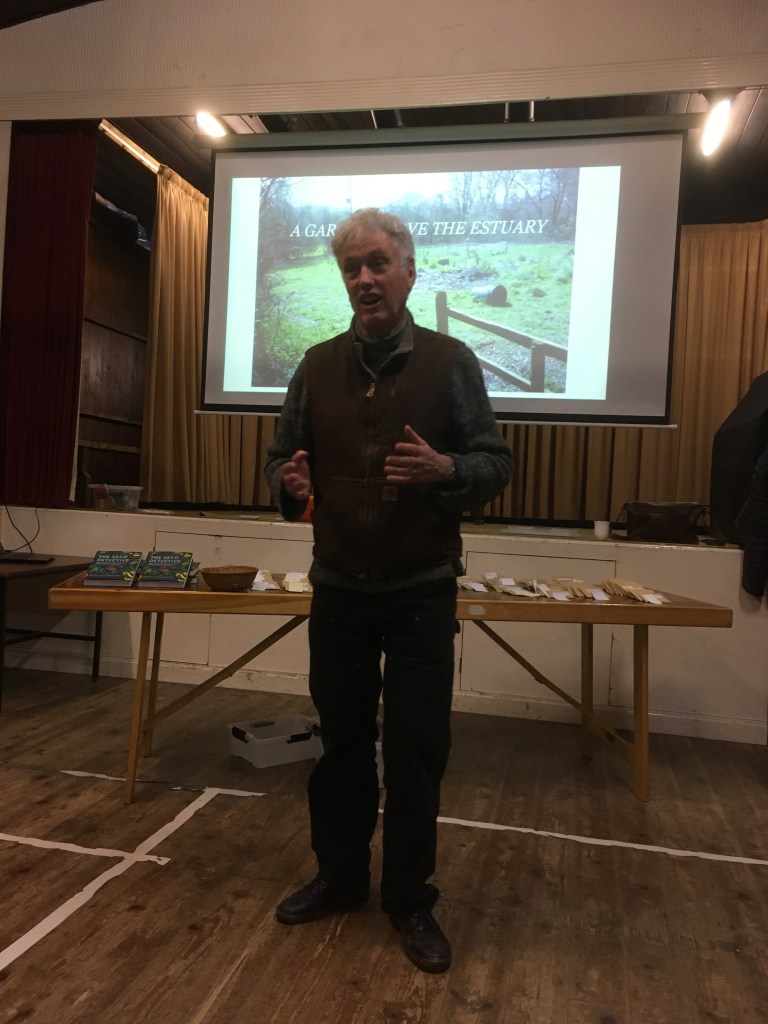
The 2023 year of talks opened with this fascinating and entertaining talk on the creation of Adam’s current garden which combined practical tips with stories of adventures tracking down vegetable seed and its links with food identity and culture, and the history of many vegetable seeds and their names. Adam’s particular interest is the conservation of the genetic diversity of edible crops.
As background, Adam told us that he has grown something every year for the table from a very young age. Despite having trained as a film-maker, Adam became a market gardener in the mid-late seventies; then that was what Adam describes as a “mug’s game”, as there was little interest in unusual vegetables such as purple-podded peas or yellow courgettes, and he returned to the film industry. That was a job that enabled him to travel widely and led directly to Adam’s interest in acquiring and protecting vegetable seeds with a history and cultural connection.
That is where this story begins – in Donetsk in 1988, where Adam had travelled as producer of a film about a Welsh industrialist who founded the steel industry in Ukraine. In the hotels of the time vegetables were not in great supply on the menu, and Adam ventured to the local market with an interpreter. There he encountered an old lady selling the surplus of vegetables she had grown, from seed she had saved herself, from seed saved previously by her mother and her grandmother. Adam bought some peppers and took them back to the hotel kitchen and was blown away by the sweetness, fruitiness and hint of heat. During his stay Adam returned to the market several times to buy more peppers (which are a very important part of the culture in parts of the former Soviet Union and eastern and central Europe, and central to the food identity of the peoples there). The taste of the pepper was unique and he wondered about saving seed to take home to propagate for conservation purposes; seed was duly dried on the window sill of the hotel and has successfully been propagated and conserved, so that it can now be distributed to displaced Ukrainians to reconnect them with their home.
Fast forward to 2013. By now, Adam was growing over 500 varieties of vegetable for the various seed libraries and gene banks. He grows at least 70 varieties each year to renew each of the seeds that he has. This takes a lot of space, which Adam found in different gardens, but he really needed to have everything in one place. So in 2013 he moved from the Forest of Dean to Monmouthshire, to a property outside Chepstow 170m above the Severn Estuary.
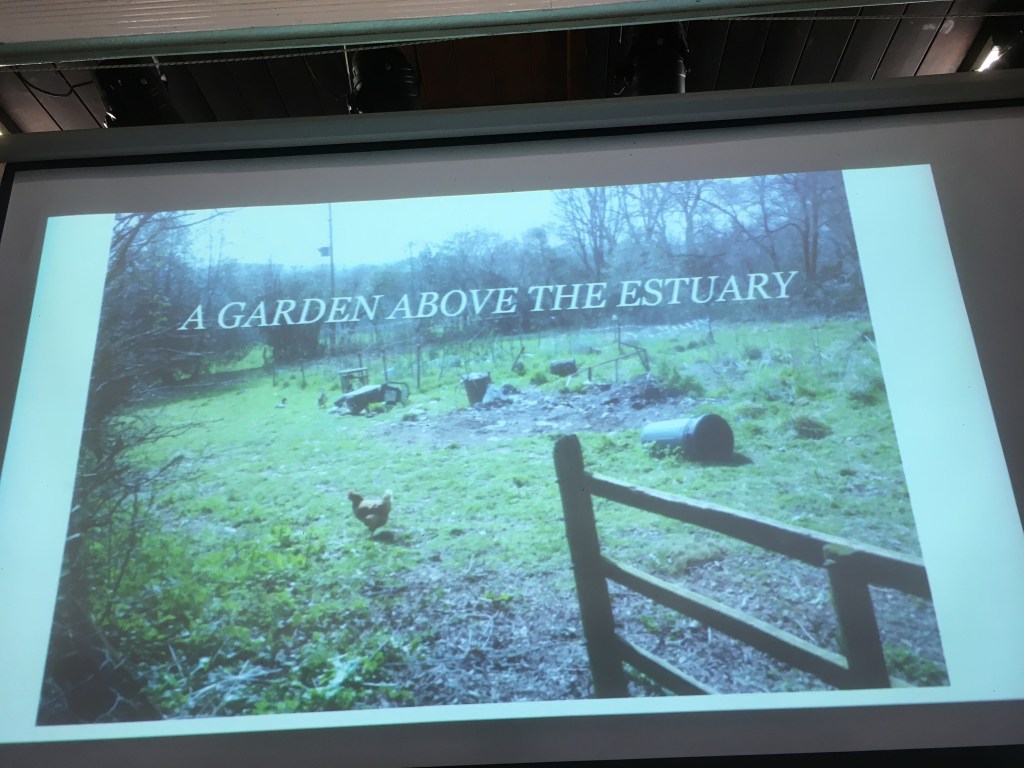
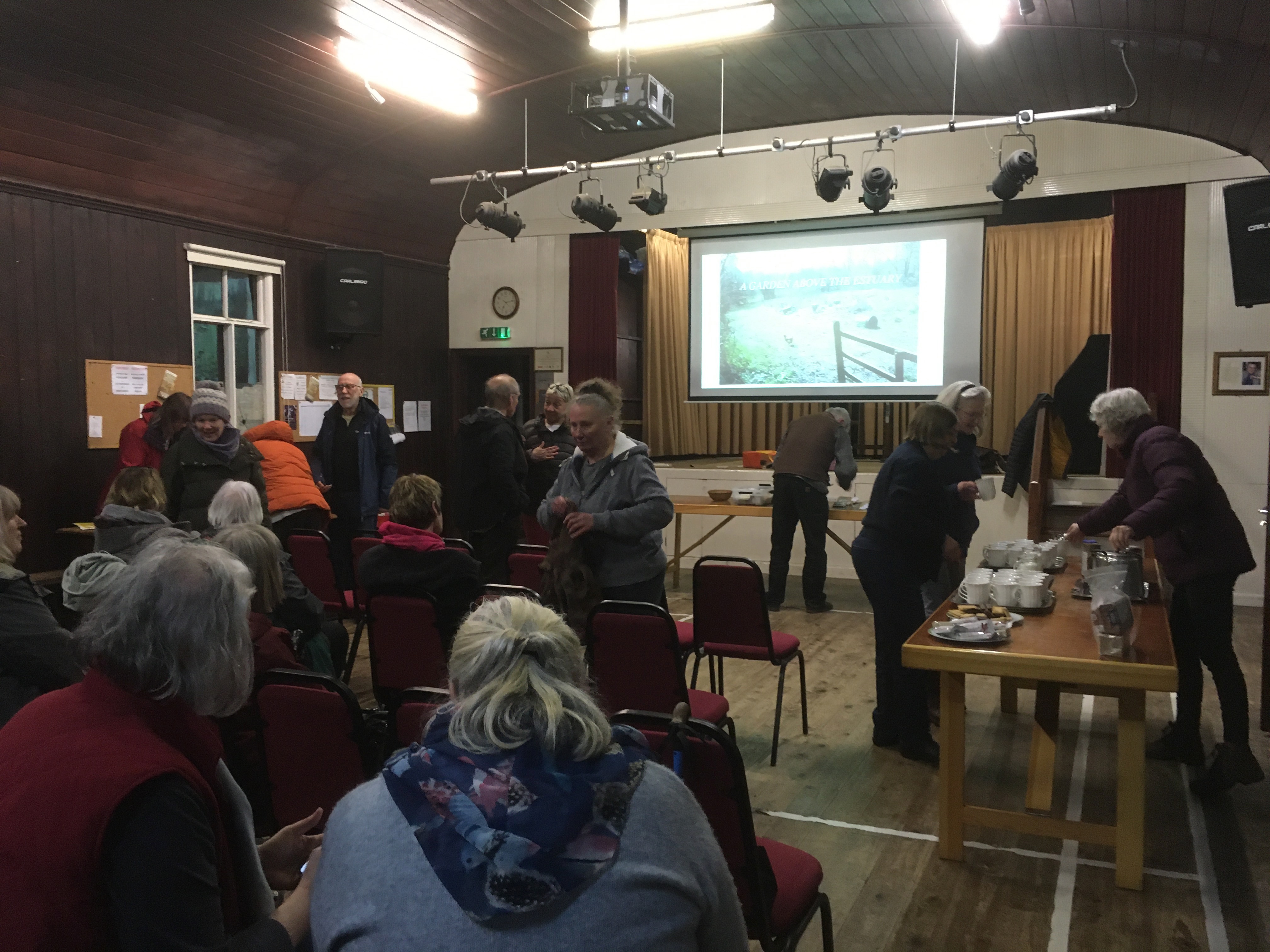
With the property came a field to transform into his garden; it was effectively an unrestored wild flower meadow, in which the previous owners had kept chicken and had a lot of bonfires (as the opening slide of the presentation illustrates).
In the spring of 2014, having covered parts of the ground with anything he could find (polythene, corrugated iron sheets etc.) for weed suppression, he planted potatoes (excellent for cleaning the ground) through black plastic. Then some raised beds were built in terraces to maximise the light in an East-West orientation. Adam had always used cedar for his raised beds, as it was readily available from plantations in the Forest of Dean. If you turn the cedar boards in your raised beds around every couple of years, they can last for up to 20 years.
Within 2 or 3 months, Adam had created the framework and the shape for the garden that he needed. There were 14 raised beds, each one-metre wide, which means you never have to walk on them. You can extend the season by using clear polythene film with metal hoops. As the beds are all the same length, these cloches can be re-used, and typically last five years. He also uses and re-uses fleece in the same way for warmth and to keep pests out.
While some digging was required to create the framework of the garden, the basic philosophy is to keep digging to a minimum and use black mulch (polythene or membrane) to grow through; it warms the soil and gives off heat at night creating a micro-climate for the plants. The aim is also to recycle and re-use materials as much as possible.
The contents of a 40-foot duck pond provided the base, spread on the ground and covered with black polythene, for two 30-foot polytunnels, the first of which was erected in October 2014. The polytunnels had been with Adam since 1976 and have moved with him to all of his different gardens ever since. In his raised beds within them, now in March, he has peas and broad beans in flower, fennel for eating, herbs, salad crops right through the winter and cauliflowers beginning to heart up. A trickle irrigation system is essential – he is lucky to have his own spring water (with a pH of 6.9) for this, one of the original attractions of this site.
One of the crops that Adam plants in his polytunnels is garlic – but not any old garlic! One of his filming assignments took him to Oman, home to damask roses and famed for its rose water. In Oman terraces tumble 100 metres down into ravines with the most amazing irrigation system. Adam saw garlic being cultivated, and got into conversation with the owner of the hotel where he was staying. It turned out that the plantation of garlic that Adam had seen belonged to the hotel owner; this was in April, and Adam asked him to send some garlic when it was ready, not really expecting that this would be possible. In June, having been away, Adam walked into his house to find a strong smell and a large plastic sweet jar covered in stamps and with the appropriate immigration certificate. In South Wales, Adam plants this garlic in a polytunnel in October through black polythene. The mountains of Oman in the winter experience a dry cold. This is replicated in the polytunnel where, even if the air temperature drops, the soil temperature is maintained. The garlic in the polytunnel can be harvested in the green in May, and then after that for storing in June/July. It is a hardneck variety, and doesn’t keep terribly well beyond October.
Adam also wanted polytunnels for broad beans; he grows three crops in a year in sequence, from autumn through to April, so that they do not cross-pollinate. A delicious broad bean is ‘Bowland Beauty’, which was originally bred for exhibition.
It has to be said that timing is key in terms of getting crops into the ground. Since 1976 Adam has kept a diary of what he sows when, the temperature, conditions etc. This is giving very direct information about climate change. Saving seed helps to build in local adaptations, which means that plants from very different environments from our own will in time thrive here. Carrot ‘Red Elephant’ from Australia is a good case in point. Adam has grown it outside in beds for a number of years. He discovered by chance, from seed spilt in the bed while collecting, that it can grow with absolute neglect when sown in October outside for early harvesting – there is no need for special forcing varieties.
None of Adam’s growing would be possible without compost. He uses all sorts of old materials to make the compost bins, including pallets and old carpet (this has to be pure wool). A lot of grass is used in the compost, which has the benefit of generating heat, but it does have to be turned regularly (once a week).
The last thing that Adam installed on his new site was a greenhouse, which he uses for tomatoes, capsicum, cucumbers, lemongrass, okra, ginger etc. A propagator is also key for starting seed off in early spring. There is only one cucumber which he now grows, for its taste, which comes from Syria. He encountered it in Aleppo, in what was known as the ‘fertile crescent’, and he now grows out a number of vegetables from the seed bank there for seed. The cucumber is unusual in that it has both male and female flowers. Seed is now being distributed to displaced Syrians, including those in camps in Jordan; later this year they will be sent to camps in Kurdistan.
Polytunnels or greenhouses allow you to create controlled environments for the production of seed; you can water when necessary during the growing period, and keep the crops dry when seed is setting.
One of the things that Adam has discovered on his travels is that growers like to mix things up together, and that plants don’t mind being crowded; polytunnels or a greenhouse allow him to do both of these things. Sweetcorn is an example: he has had good success growing 9 or 10 plants in a small block a foot apart, producing very good crops. Sweetcorn is a wind-pollinated crop, and growing them in a polytunnel gives good control (rather than the wind blowing the pollen far and wide, tapping the plants means the pollen falls where it needs to).
Moving on to the seed that Adam grows, here is a whirlwind tour through just a few of them:
Fava bean ‘Syrian Small’ – first seen in Damascus, being wheeled through the streets in barrows piled high. They are traditionally eaten whole when young, but can also be eaten shelled. The seed is now primarily being distributed to displaced Syrians.
Radish ‘Pasque’, is a French radish, which is lifted in the autumn, stored in clamps, and then eaten at Easter. It is an interesting plant in that the flowers start white, but then turn pink once they have been pollinated.
Fava Mourda Reina Mouz (‘Purple Queen’) is a purple broad bean from Catalonia (another very interesting area for endangered vegetable varieties), which Adam is growing out to make safe for the future.
Blue potatoes from Atacama in Chile – they have a shape like Pink Fir Apple, but are deep blue right through; they are now being included in an official breeding programme to establish their blight-resistance.
Pea ‘Champion of England’ is the only pea still in cultivation of the 13 listed as having any merit out of the 200 catalogued by the RHS at the end of the nineteenth century. Although held in seed libraries, it returned to commercial seed catalogues in 2016, originating in the US. Adam still held some seed from 2009, so that seed is now being grown for comparison to see whether the newly-listed variety is the true original variety.
Pea ‘Daniel O’Rourke’ was one of the most successful varieties of pea in the United States until the 1920s. Its name derives from the 1852 Derby winner, when it was introduced to the UK the following year, as a marketing strategy to encourage growers in the UK to buy it.
Pea ‘Fesol Negre del Belgarda’ is a purple-flowered, black pea from Catalonia grown for drying and storing.
Pea ‘Panther’ is a pea that the Heritage Seed Library was told grew to about two foot in height – but in fact grows to three times that!
Pea ‘Jaune de Madras’ is one of the peas used by Mendel in his work on genetics. It is a mange-tout pea, its name implies it had originated in India. However, it was being introduced to the UK at the time that yellow Madras curry, which was a British invention, was very popular, so the name was purely a marketing strategy. In the US, it was called ‘Golden Sweet’, and it is now sold here as that as well.
Blue Hopi Maize hails from very arid regions of Arizona, where three inches of rain falls in a year if they are lucky. There it is sown in very deep holes to reach the damp where it can germinate. It is sown in clumps, and the drooping leaves create shade and a particular micro-climate which enables them to grow in such a harsh climate. There is a particular culture around blue maize within the Hopi nation where it used to make blue polenta, and the ability to grow blue maize is key to winning the heart of the woman a man wants to marry.
Tomatoes – Adam grows many different tomatoes from all over the world – including ‘Burmese Sour Tomato’ from Yangon (which is recently in demand thanks to ‘Gardener’s World’), and ‘Bolivian Orange Cherry.’
Adam stressed the importance of using green manures over winter. A very important one is Caliente Mustard – its biofumigant properties attack pathogens such as onion white rot in the soil. He also grows comfrey as a feed for plants, particularly tomatoes.
Autumn in Adam’s garden is all about harvesting. Beetroot is a great crop, as you don’t need many plants to produce masses of seeds (33,000 seeds from a single plant!). Cucumbers are much tricker – the cucumbers have to be almost rotten, and even then there is no guarantee the seed will be viable.
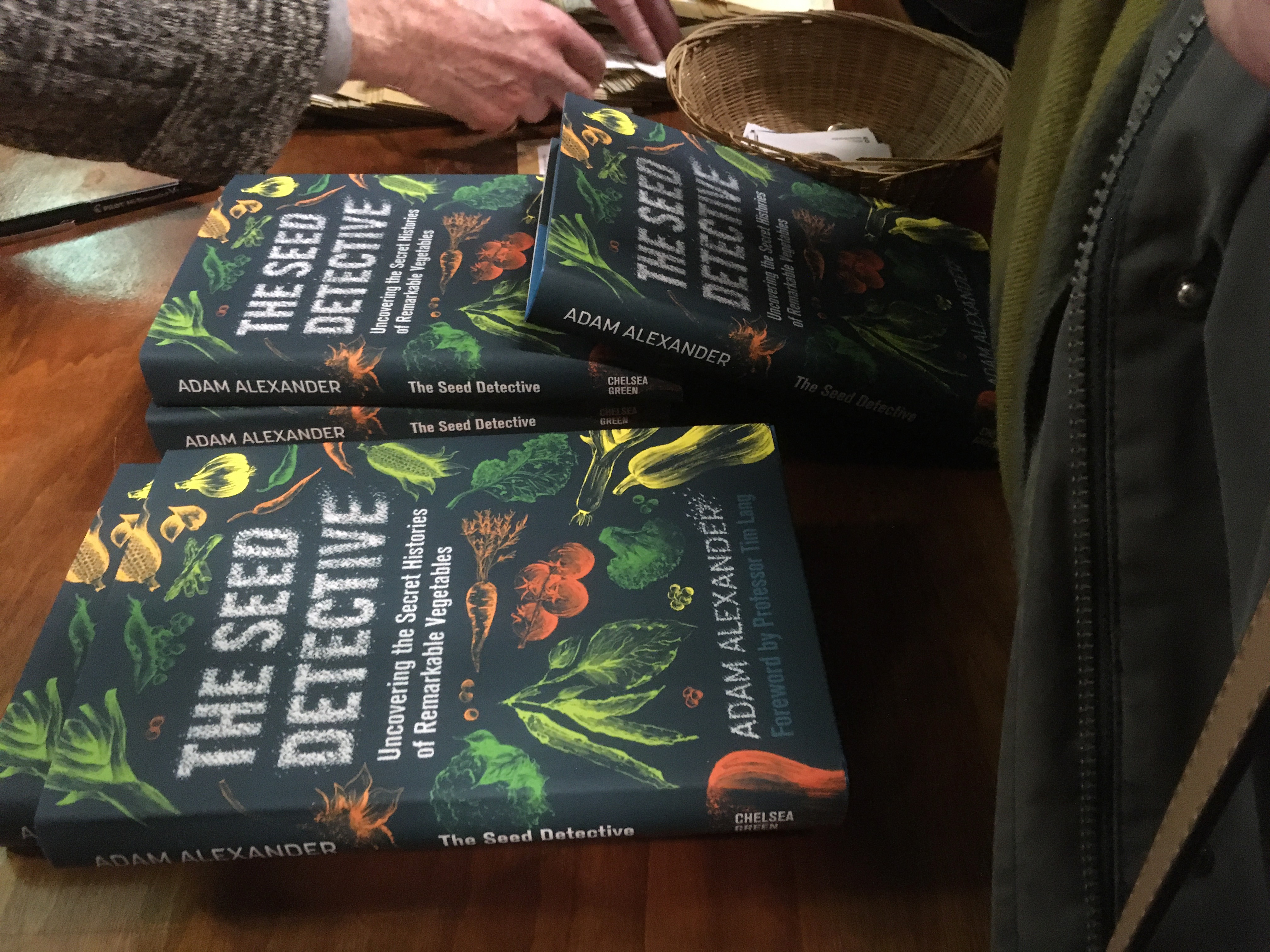
On that note of seed harvesting, Adam’s talk came to a close. Appreciative thanks were expressed for such a wide-ranging, erudite, and engrossing talk, and there was then a rush for the table where different seed varieties were laid out, along with Adam’s book ‘The Seed Detective’.
Pottiputki
At our last meeting Julian introduced us to the Finnish tree-planting tool, the Pottiputki. Although originally designed for forestry planting, Julian has discovered it is invaluable for transplanting snowdrop divisions. He has created this video to show how the tool can be used and to demonstrate the process of dividing snowdrops in the green. Thank you Julian!
Updated Cothi Gardeners Website
The Cothi Gardeners websitehas recently undergone a bit of an update, and now includes a new section for members to write about their garden as it changes through the year – highlight ‘Members’ Gardens through the Year’ from the main menu at the top of the page. The more members who would like to contribute pieces about their gardens the better! Please contact cothigardeners@gmail.com with your text and photographs (or any queries you may have), and the web editor will do the rest.
During the Covid-19 lockdowns of 2020-21, the Zoom talks organised by Fiona Wormald in lieu of our in-person meetings were a beacon of light which helped to lift the gloom of the general isolation. This repeated Zoom talk at our November meeting was shown in our meeting hall so that we could all enjoy for a second time what was a fascinating talk with the added benefit of social interaction, tea and biscuits!
Timothy Walker is a highly respected British botanist who was the Director of The Oxford Botanic Garden and Harcourt Aboretum from 1988 – 2014. He is passionate about plants, particularly regarding conservation and pollination, and is the author of several books on these subjects.
The talk began with with a quote from Charles Darwin in his ‘Origin of Species’ where he identified the relationship between the flower and the bee, and how they were perfectly adapted to each other, describing “pollination biology”. One of the many ways in which this was demonstrated was with the orchid, where a visiting hawk moth was able to reach over 12 inches into the flower in order to obtain the nectar. So, it was pointed out, not only did the moth end up with food, it also helped with pollination by dusting itself with pollen as it left which was then transferred to the next orchid it visited.
Pollen grains are different on each variety of plant, and fertilisation will generally only work when pollen of one variety is transferred from the anthers (male) to the stigma (female) of another plant of the same variety. Moving the pollen from one plant to another occurs via animals, insects, wind and (rarely) water. Even slugs can be pollinators (!), but not often. Plants have different ways of attracting pollinators, such as colour and scent, (though some use both, plus pattern); some, such as a number of trees, produce catkins where the pollen is then blown away to hopefully land on another catkin. The birch tree cleverly has a flap on the flower which protects the catkin and opens on landing, thus preventing random spillage of the seed. There are plants which actually inject pollen into the atmosphere. Grasses are almost always blown on the wind with only very few, such as the Canadian Pondweed, using water as a vehicle. Around 87% of water plant pollination is done by animal life, the majority being bees and wasps.
Night-flowering plants (such as nicotiana and night-scented stock) are hard wired to attract (mostly) moths via scent. Again, a short proboscis is catered for with a short pollen tube (or it could be the other way round!). The same theory applies to butterflies.
Birds obviously help with pollination and they particularly favour red flowers, although they also see UV colours; bats help as well, although they are quite clumsy and throw stuff around a bit.
Pollen is a highly nutritious substance and the whole organisation of fertilisation runs on a reward or bribe system benefitting both parties. The fig is a clever example of pollination where the fig flower is hidden inside what is effectively a brood chamber and a female wasp enters through a hole. She lays eggs; the male wasps hatch first and fertilise the unborn female wasps, create exit tunnels for those female wasps to move on to the next fig, and then die. Thus, if humans eat the fig they also eat the poor dead male wasps – not a reward for them but probably extra protein for the human!
Victoria amazonica is a South American water lily, which attracts a beetle of the Scarabaeidae family; it crawls into the flower, eats so much pollen that it gets drunk & is then too confused to remember its way home, eventually leaving the flower only to stagger on to the next one. Hopefully the wife (or husband) doesn’t possess a rolling pin otherwise there will be trouble!
There are, however, flowers that don’t smell good at all (to humans anyway), such as Dracunculus vulgaris, which smells like rotting meat and Helicadiceros muscivorus (or Dead horse Arum, which is probably a clue). These plants are largely pollinated by flies.
This really interesting Zoom talk by Timothy was just as entertaining the second time around, very well put together and certainly educational.
John and Helen’s October Plant Swap and Sale
John and Helen Brooks held a plant sale at their garden Ty’r Maes on a Sunday afternoon in October to raise funds for the National Garden Scheme charities. It was very well attended, with visitors coming from as far away as North Pembrokeshire.
There was a great variety of plants on sale, provided by members of the Cothi Gardeners, and mostly of course by John and Helen themselves. The plants on offer ranged from trees, such as Paulownia tomentosa (the Foxglove tree) through to a great variety of perennials, including asters, geums, crocosmia, geraniums, hesperantha, persicaria, primula, rudbeckia, salvia, and many others. A great bonus of the afternoon was the enormous quantity of delicious cake provided by volunteers along with teas, and the opportunity to chat with other gardeners.
In total the amount raised for the NGS charities was a fantastic £900! This is a reflection of the tremendous generosity of the plant providers, Cothi Gardeners members and other visitors, and we should never forget the hard work that goes into organising such an event, including the refreshments.
Festive Christmas Tea on 14 December
This year the Cothi Gardeners are celebrating Christmas by holding a festive tea at Granny’s Kitchen in Lampeter at 3.30pm on 14 December. Twenty-two of us are attending, and it’s bound to be a jolly (and delicious) event, bringing to an end a year when we have finally been able to hold in-person meetings and celebratory gatherings again. Long may it continue!
Richard Bramley, here preparing to give his talk, is from Farmyard Nurseries with 3 acres of land and 50 polytunnels near Llandysul, where 90% of the stock for sale is grown outside which helps to produce hardy plants of many varieties.
He is very keen to encourage people to think more about the colour and interest of plants – trees and shrubs can be grown in autumn and into winter. Starting with Acers, which are not as difficult to grow as is often thought (though they don’t like wind), he showed many of the different colours, shapes and textures that can be provided by planting them. Liquidambar styraciflua, or Sweetgum, is more tolerant of wind though it doesn’t come into leaf until later in the season. Berberis thunbergii, although it is a bit prickly, is particularly worth having because it is so colourful and produces berries and flowers in addition. Also they can be kept at a smaller size if required by hard pruning, without any detriment to the look of the plant.
Winter stems, such as the many different varieties of Cornus, provide different upright shapes with a wide variety of colours and are very hardy. C. alba ‘Baton Rouge’ is one of the very bright red varieties during the winter and again Cornus produce flowers and berries.
There was a lot of discussion about Hydrangeas! The mopheads were described as ‘blocky’, whereas the Lacecap varieties of Hydrangea macrophylla are to be encouraged. Hydrangeas are (generally) enthusiastic growers and do provide colour in the flowering gap, while the H. paniculata varieties can reach up to 18 – 20 ft. Climbing Hydrangeas need to be treated differently at pruning time as they flower from the previous year’s growth but they will tolerate some shade during the flowering season which makes them very useful.
Fuchsia will grow happily into autumn and, although they will tolerate wet, they do need plenty of light. Chrysanthemum (if cut down in spring) will last into autumn. Lavender, Nepeta, Astrantia and Campanula plus many of the daisy family, if cut down after previous flowering, can do surprisingly well. There are nearly 200 varieties of Aster now which can continue through autumn and the hybrids don’t get mildew, plus they will tolerate some shade.
Rudbeckia ‘Goldsturm‘ will also last, as will Leucanthemum, Helenium, Persicaria, Autumn Salvia, Kaffir Lillies, Solidago (Golden Rod), Heliopsis and many more varieties of flowers and shrubs, given some care, will reward the grower in spades (see what I did there).
Grasses will give lots of interest in the winter and there are some quite remarkable ones to try. Imperata cylindrica (Japanese Bloodgrass) when planted in a drift looks as if it’s on fire. Panicum virgatum varieties are very varied and do well when established. Grasses are deciduous and demand very little in the way of care, can be easily split, can be grown from seed and some of them flower. There are endless varieties of grass to choose from now that will provide an addition to the garden in the cooler months.
We thanked Richard and his support act Mabel (his dog) for his informative and entertaining presentation and took full advantage of the beautiful plants which he had brought for sale from the nursery.