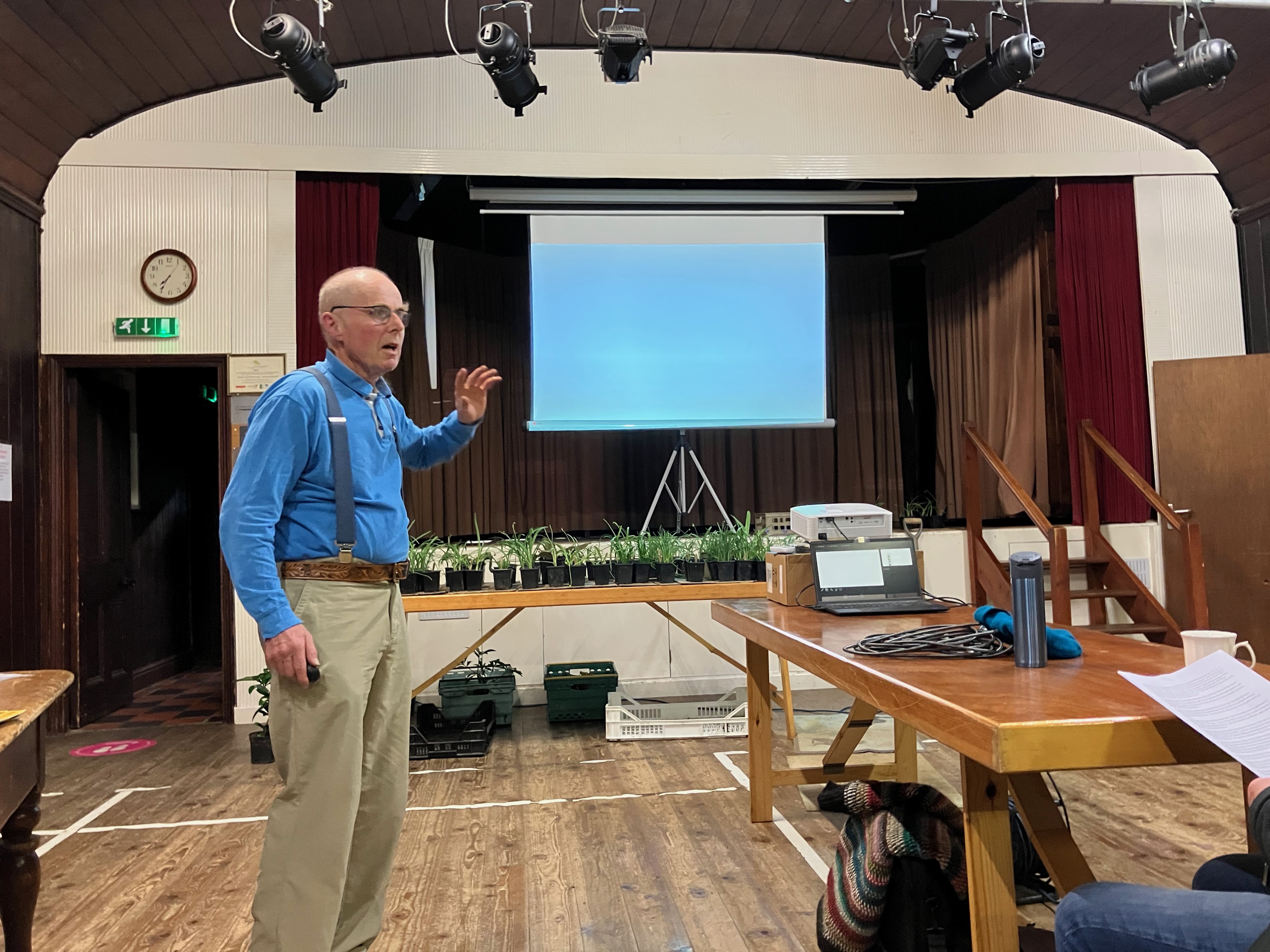
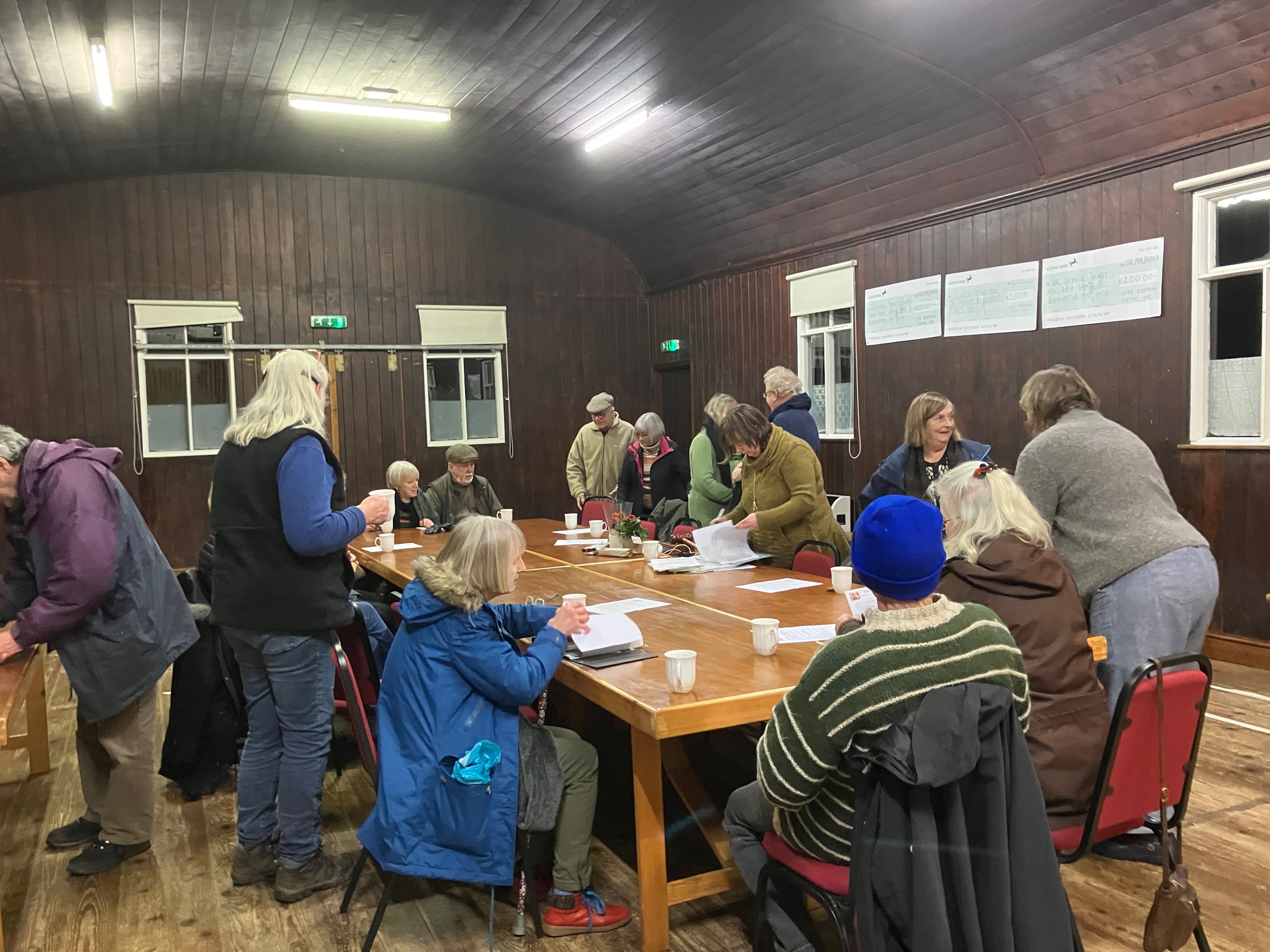
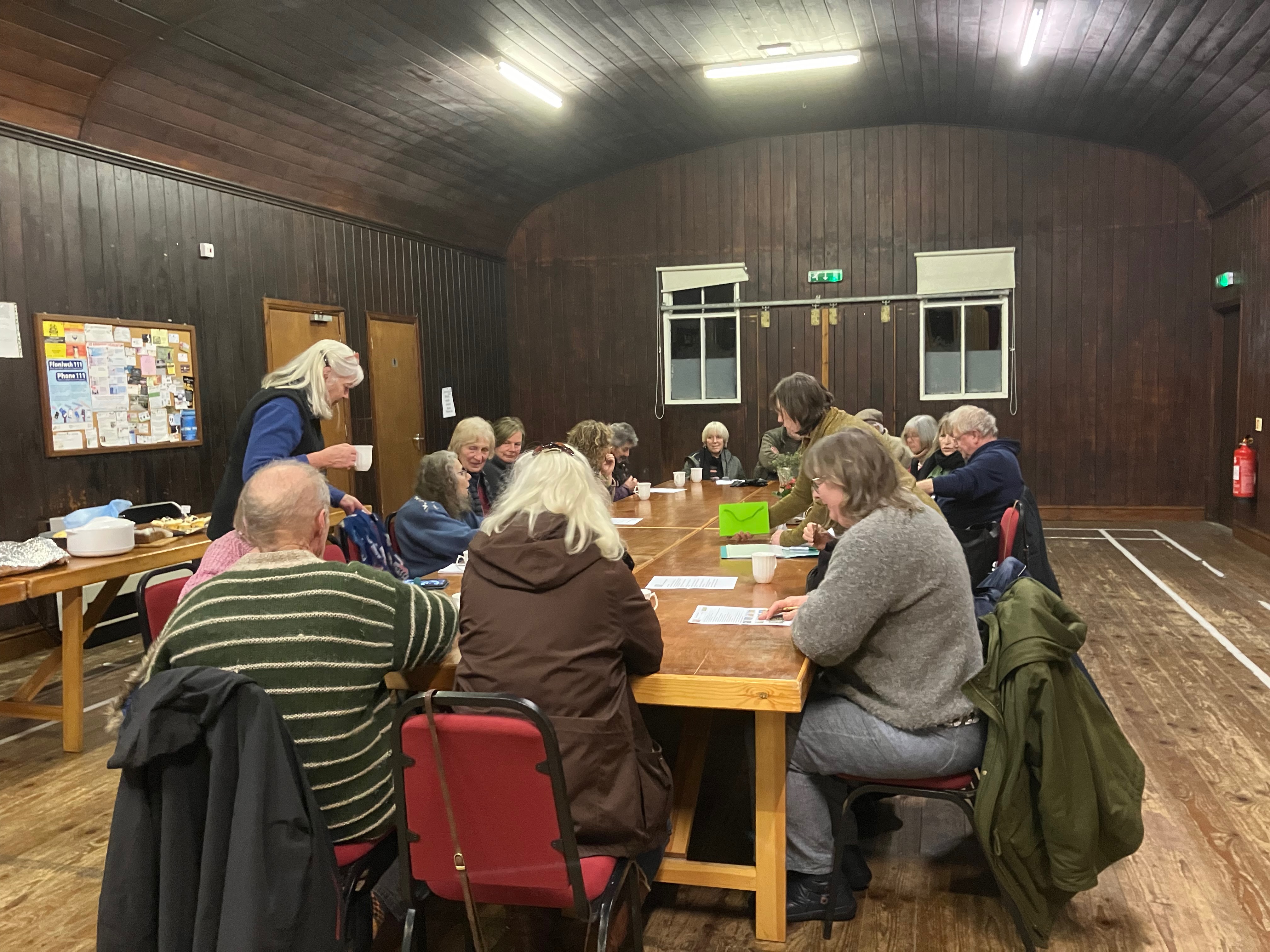
The September meeting was chaired by our Treasurer, Rob, who greeted everyone and started the conversations by saying that his gardening year had resulted in good and bad results – rust on his garlic, mildew on his onions but a bumper apple crop!
Apple diseases were discussed and some people had experienced scab on their apple trees, for which there is no cure. The leaves need to be removed and disposed of by burning or binning them but definitely not putting them in the compost as it is a fungal disease. Jo pointed out that if, for instance, a tree is transplanted, all the leaves can be removed and it will not affect the tree greatly as the roots will continue to flourish.
We discussed the pruning of apple trees and, as Rob said, if the tree is doing well and producing decent fruit, there is no need to get too excited about pruning – if it ain’t broke,don’t fix it – and don’t prune for the sake of it! Happy news in a way, as some people admitted to being nervous about doing it. If we do prune, there is a need to keep open the middle of the tree (try throwing a hat through it) and taking off water shoots which will drain energy from the tree. Rob pointed out that pruning really needs to be learnt in a practical way, i.e. when we’re in front of an actual tree with a person who has the know-how. Learning on a youngish (8 – 15 years old) tree would work best.
Pressing apples is a way to use excess; juice can be bottled and the bottles then pasteurised, or it can be heated in a large pan and then bottled. This way, it will last for months. There are apple pressing days in the grounds of Lampeter University on 27th September, at Watson & Pratts Lampeter on 28th September, or at Aberglasney Gardens on 5th October. Take your apples and containers for the juice.
We also discussed pear trees; it’s best to pick the pears before they are fully ripe, then ripen them indoors so that they don’t go mushy. The difficulty of netting cherry trees was discussed, but no-one had a real answer on that one.
Sandy told us that she successfully picks redcurrants before they are ripe and then ripens them indoors, and it seems to work. Blueberries seem to flourish in the ground mostly and are happy even in flooded areas as they like their feet being wet, as do cranberries. Tracey wanted to know if anyone has picked Leycesteria (Himalayan Honeysuckle) berries and it seems it might not be worth it, though they do make good jam.
We talked about blossom end rot in courgettes, tomatoes, peppers etc; the cause may be erratic watering. We had general chats about preserving heat in a greenhouse or polytunnel, Rob advises that, although a through-draught is necessary during the day, closing everything up at night (especially when you have in there a water container which will have warmed up during the day) is usually best.
We discussed the use of the formula called Dipel for the eradication of caterpillars on brassicas. Dipel is a natural bacterium which affects the digestive system of the caterpillars and causes them to die. It cannot be purchased in the garden centre or a shop but it is available online. It is a question as to whether the dead caterpillars might be eaten by birds and kill them.
Radish pods (produced when the radish have gone to seed) are delicious and apparently the “Rat’s tail” variety sold by a company called Real Seeds are the very best if you want to eat the pods. In a similar vein, there has apparently been a trial of parsley-style leaves grown on pea shoots which produce good yields.
General information on seeds – Woolmans have now bought up Johnsons Seeds and they also supply seeds to Sarah Raven. Since the prospect of a discount for seeds from Woolmans is possible, this might be worth organising.
Carol asked about obtaining some Yellow Rattle seeds; these can probably be obtained locally from Fiona and Julian Wormald in July or August when they cut their hay.
Tracey pointed out that the posters which had been organised to advertise the club, and hopefully entice more members, need to be distributed and any help with that would be appreciated.
We were all then quite keen to have some of the delicious food on display, which had been brought to share by those present at the meeting.
October Meeting
‘Fritillaries on Four Continents’ with Robert Wallis will be the talk at our next meeting on October 15th. Bob and Rannveig Wallis are well known for their amazing collection of bulbs and their garden, Llwyn Ifan, in Carmarthenshire.. They are seasoned travellers and plant hunters and successful exhibitors for the Alpine Society Shows.
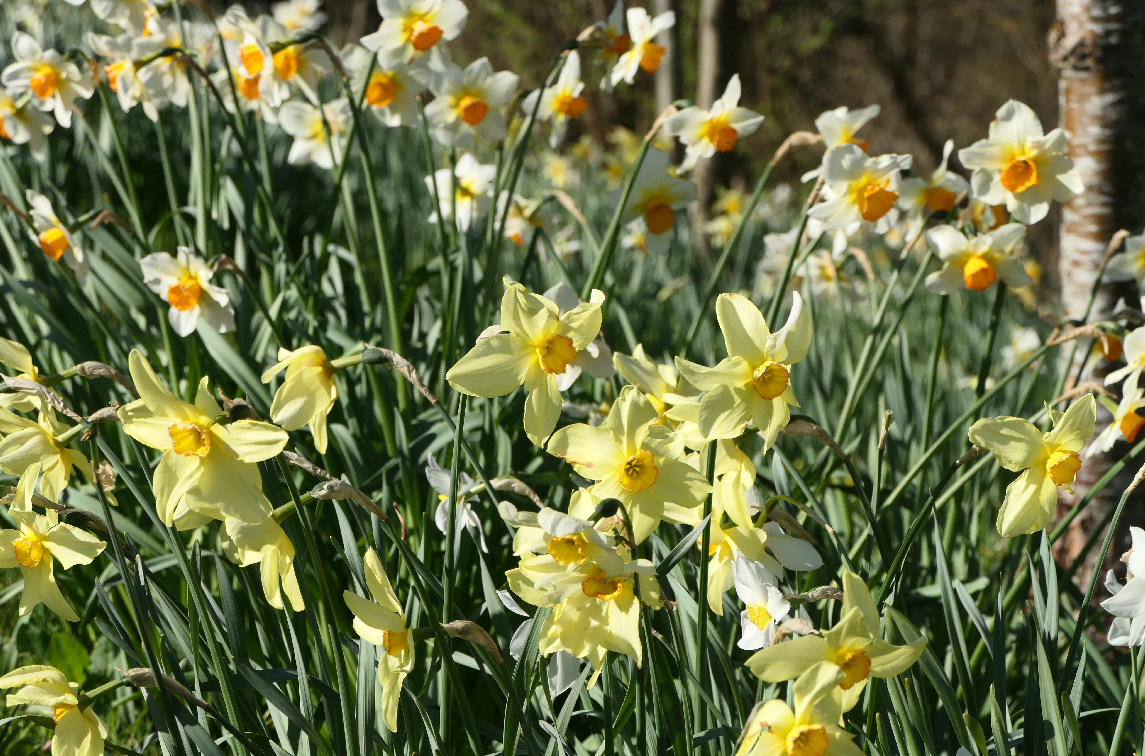
On Friday, 18 April at 8pm BBC2 will be showing the next episode of ‘Gardener’s World’ which will feature a clip of Fiona and Julian’s garden Gelli Uchaf Garden showcasing their daffodils. If you can’t catch it on Friday, the programme is repeated at 9am on Saturday, 19 April. For those in the UK and with a TV licence you will also be able to watch it on iPlayer.
You can read about the filming in Julian’s blog post about daffodils, spring and lambing.
As a reminder, in 2025 Gelli Uchaf garden will be open for the NGS on the following weekends, for either 10.30 am or 2.30 pm arrival times:
April 19th and 20th May 24th and 25th June 14th and 15th July 5th and 6th
If you’d like to visit the garden in 2025 on one of the opening dates given above, then you need to email thegardenimpressionists@gmail.com, or phone: 01558 685119, giving at least 24 hour’s notice, to book a visit.
Sandy has been a beekeeper for eight years now, and has never lost her enthusiasm for them, in fact it plainly just increases. She began by explaining that in this country we have the North European bees, which used to include the black bee species, although these have now died out, along with some other previously commonly found species. We need to conserve bees now, their numbers in general are declining and they are amongst the most useful pollinators.
Within a hive, the different types of bees are workers, drones and of course, a queen. At the beginning of the summer season, the hive will increase by 100/day and by July, by 2000/day. In a healthy hive there can be anything from 20,000 to 80,000 bees and a single queen will be the sole egg layer. Royal jelly, which is a nutrient rich solution derived from propolis, is fed to the queen and the larvae by the workers although the queen will only ever be fed this for her life. Queen cells are not made in the same way as the worker and drone cells (which are hexagonal), they are larger and hang generally at the bottom of a frame. When the queen emerges, she will have a stinger and, if she should need to use it, will not die as the other bees do. If more than one queen emerges from the hive they will fight until one of them dies.
Drones are male bees and they do no work and expect to be fed by the female worker bees. Their only job is to mate with a virgin queen, which they do in mid-air during a nuptial flight, and they die shortly after mating. They are bigger than workers, their cells are larger and they cannot sting. Multiple drones will mate with the queen, ensuring the longevity of hive numbers. She will store their sperm in her spermatheca for future use. Whereas the worker bees have specific jobs to do right from the point where they emerge from their cells, drone bees don’t do anything except look out for a passing queen but on mating successfully, will leave their sex organs inside her and die, so it’s not such a happy outcome for him. When the queen has had her mating flight and returns to the hive, she will be cleaned and fed and her egg laying duty will begin within two or three days. She also plays a crucial role in regulating the colony through pheromones, which will determine the temperament of the bees and influences social behaviour.
The workers will emerge from their cells after nine days and their first job will be to clean their cell, ready for re-use. The process of growth will take approximately 21 days from the egg, which grows into a larva then a pupa and finally an adult. They will then for two or three days be employed in housekeeping duties, after which they will be a nursery attendant, taking any mess away, then an attendant to the queen. After this a worker will be a wax maker then a guard bee (warding off any possible threats) and finally a honey maker, accepting nectar from foragers, putting it in a cell and capping it off. After this the honey will never deteriorate. Foragers will collect pollen, water, nectar and propolis which comes from trees and they will carry in the collected pollen on their legs.
Foragers will communicate sources of food by doing a “waggle dance” which the other bees can interpret as to how far, which direction etc.
Swarming of bees from the hive is a natural solution to make another colony, which is likely to be if the hive is overcrowded and there is an abundance of food. .A new queen will have been made and the old queen will take a proportion of the bees off to find another home; scout bees will be sent off to look – it could be in a tree initially and then they’ll find a small opening somewhere, with accessible water nearby, maybe in a wall where they can establish another hive and start to make wax for the new cells. The new queen will remain in the original hive.
Worker bees will look constantly for sources of forage, starting in January with snowdrops and making the most of tree pollen. The bees will put different types of pollen of diverse colours in each cell.
Sandy finished by answering questions on bees:
There is a good amount of reading on the subject available; also there is a novel “The Bee” which was recommended by one member of the audience.
Life span of bees – winter bees will live for around 6 months but in the summer, because of the workload, bees will only last 6 to 8 weeks.
Construction of hives – generally they are made from cedar wood because it weathers well, but there are now polystyrene hives, which are warmer.
Wasps – will construct their own nests or nest in a hole in the ground, excavating quite large amounts of soil.
Catching a swarm – can be done more easily if they are in a tree, ideally the queen is caught first so that the rest of the bees will follow.
Sandy was thanked for a very interesting talk and slide show, which everyone enjoyed and which sparked quite a bit of discussion afterwards.
Following the AGM in February, Cothi Gardeners’ Club has a new Committee:
Chair
Tracey Parkin
Treasurer
Rob Usher
Secretary
Carol Cook
Programme Co-ordinator
Carol Carpenter
Website Admin
Sheena Wakefield
Members: please remember that Sheena welcomes contributions for the website or ideas for new content. You can also view upcoming club talks and external events on the website.
As a reminder, the next talk on 16th April will be ‘Aberglasney: A Calendar Year’ by Nigel McCall. Nigel’s book of the same name will be available for purchase (£20, please bring cash) – it features his beautiful photographs of the gardens through the seasons, with plant identification by Joseph Atkin (former Head Gardener at Aberglasney). The book’s foreword has been written by Chris Beardshaw. Note that the meeting will start 15 minutes earlier than usual, at 7.15pm.
Richard was well-known to many of us from previous entertaining talks at our meetings and from visits to his fabulous nursery in Llandysul. So after words of welcome to members and visitors from Dawn, our Chair, without further ado the audience launched into their questions.
First up was Sandy, who asked how the changing climate was affecting Farmyard Nurseries, and how his business can help gardeners in that respect. Farmyard Nurseries is moving to peat-free compost, which is challenging. So far they are using peat-reduced compost (30% peat), although one of the issues is lack of government guidance. As much as possible is recycled, and bonfires are now banned. Generally, it would appear that the trend in the UK is for milder winters and wetter summers. Having said that, we all remember the fortnight-long cold spell in December 2022 when the temperatures dipped to -15! Richard lost many plants he wasn’t expecting to lose, including daffodils, snowdrops and Spiraeas. In the end he decided he couldn’t safeguard the Sarracenias, they would have to take their chances, and of all things they survived! So they are monitoring and adapting as they go. Richard is worried about water though. The nursery’s borehole is small; they have recently expanded to four water storage tanks, but that is really a drop in the ocean of what they need.
Talking of Sarracenias, Dawn had recently heard Richard speak on ‘On Your Farm’ on Radio 4 where he had mentioned a special feed for his pitcher plants when there are not enough flies about. Richard noted that there had been fewer flies about this summer than usual. A Sarracenia needs only about 3 flies to be viable but under normal circumstances they can consume many. One thing that some people do is to drop a fish food pellet into the pitchers. Richard uses a Floranid grass fertiliser which is very mild (2 teaspoons diluted in water in a washing-up liquid bottle) and a squirt into each pitcher.
Fiona brought up the subject of ground cover as a means of minimising bare soil and reducing weeding. What would Richard recommend? He agreed that bare soil just encourages weeds. Persicaria is a genus which has many good ground cover varieties. A less well-known form with small leaves is Persicaria vaccinifolium with a mass of pale-pink flower which goes on for months (and is also very effective in pots). For shade Chrysosplenium and also Pachysandra are very useful. Verbena corymbosa ‘Gravetye’ is good in sunny spots. There is also the tiny-leaved Gunneramagellanica for sun or light shade and damp soil. Ground-cover shrubs there are a-plenty: Potentilla, dwarf Hebes, Cotoneasters, Hydrangeas… There are over 200 Hydrangeas in the woodland garden at Farmyard Nurseries, which have really come into their own this year. You can also, depending on your soil, consider alpines as well as herbs (marjoram and oregano varieties are excellent). Richard uses mint in his wildflower meadow, as it competes with the grasses and the flowers are loved by bees.
Another question related to the depth at which new shrubs should be planted. The general advice is to plant them at the level they were at in the pot. But what about roses? We were all agreed that we no longer knew what the advice is about roses, as it seems to have changed. It always used to be that the graft point or union should be above the ground – now you sometimes see advice to plant it 4” deep. Good advice can generally be found from reputable rose growers such as David Austin and Peter Beales. Received wisdom does change over the years – delicate and very accurate rose pruning is now often replaced by using hedge cutters. A tip from Richard is never to prune your roses hard before March (before that your hard-pruned roses may be affected by winter die-back).
Ruth had grown some Echinacea plants from seed which were now a good size, and she was wondering whether to plant them out now or wait until spring. Richard warned her that generally Echinacea don’t like it in this part of the world, although you can sometimes get away with the standard E. purpurea or alba (which happily Ruth’s are). The essential thing is keep Echinacea dry through the winter as it doesn’t like the combination of wet and cold.
On the subject of seeds – there was a question about hollyhocks and whether the stems should be collected and hung up to dry inside, or whether to leave them on the plants in the garden. On clarifying that the seed was green, and therefore not yet ripe, he recommended both courses of action. It seemed to be generally agreed that for some plants such as hollyhocks and also grasses that it works to cut the stems with the seedpods still attached and lay them down directly on pots or on planting trays/guttering with perlite.
Julian asked Richard to share his two greatest successes and his worst failure during the life of the nursery. Richard replied that the very best thing to have happened was his daughter Ruth, and the worst thing that had happened was the long Covid that Ruth had suffered from, destroying her future as a potential Olympic athlete. The silver lining was that Ruth had turned turned to plants during that difficult time, in particular house plants, and now she runs that part of the nursery. The second best thing to have happened was getting to Chelsea on the first attempt! If he is honest, there had been lots of highs and Richard would do it all over again. One of his favourite things is to wander around the garden and nursery of an evening when everyone has gone home, and to see what has been achieved. Richard’s staff are a loyal and dedicated team, and he recognises that he owes them so much.
Next, a question about a damson – it’s a shrub variety, about 6’ high, from the Midlands. In six years, it has not produced a single damson! Richard said that stone fruits can be slow to get going. He asked whether it flowered well (it doesn’t), and flowers late, after the apples. Richard’s suggestion was to make the damson think that it’s dying, by chopping a circle around its roots. The other alternative is to to ring bark it, the ring being half-an-inch wide. A follow-on question involved two saplings, a wild plum and a sunset cherry, which had been given to a member in pots. Where should they be planted? Somewhere with plenty of sun and not too windy. Still on the subject of damsons, a questioner had a damson which bears very little fruit, but two seedlings have arisen nearby – would they be likely to fruit? Over seedlings you have no control, so theoretically they might. The closer to the species they are, the more reliably they are likely to fruit.
Sheena mentioned her trouble getting Japanese anemones to establish in her garden. Richard replied that it seems to be pot luck with Japanese anemones – they either like you (when they can grow very strongly) or they don’t. Erigeron karvinskianus is another.
Gordon asked about a 1’-high Eucalyptus with a single stem that he had bought for £3 – how could you resist?! The problem with Eucalyptus, particularly on a single stem, is that they have a tendency to blow over. To keep the juvenile foliage, you should cut it back hard every year, making it less likely to blow over. When cut back like that, Eucalyptus can make a great evergreen screen. Plants that generally do well in the damp soil in Wales, and can be good screens, are willows, Cornus, birch and poplar.
Carol had a question about her young ‘Bardsey Island’ apple tree, on which the lower leaves are developing brown and blotchy patches. She also has another Welsh apple, ‘Pig aderyn’, which is smaller but is doing better. The ‘Bardsey Island’ is planted close to a soakaway, and Carol wondered whether that might be affecting it. Richard thought not, unless the soakaway was making the soil very damp. He noted that smaller trees will often establish better. ‘Bardsey Island’ is a superb apple though. He added that he had quite a number of them, and they hardly fruited. The damp climate of Wales very often led to canker in apple trees. There was some debate about whether you can, or cannot, grow apples in Wales. The Club’s previous speaker in September had definitely been of the view that you can; Richard’s view is that you can’t – but sometimes you can!
Sandy asked about tall plants for a lined pond which she has recently made deeper. Options suggested were Iris, Typha minima (a miniature bulrush), plants in the Scirpus family, Pontaderia cordata, and even Equisetum. Apparently dayliles and Schisostylus also do will in water.
The final question came from Ruth, who asked about some young rhododendrons she had planted in a bed where Verbena bonariensis were becoming quite prolific. Richard was of the view that the rhododendrons wouldn’t suffer, as the Verbena are light and airy, and rhododendrons like shade, but that Ruth should just keep an eye on them. He did note that V. bonariensis will seed everywhere. Also, the young rhododendrons may well have come from Holland where they would have been forced into bud, so they may naturally pause flowering for a year or two. In fact, it would be a good thing to debud them next year, to ensure that they grow into good, strong bushes.
Farmyard Nurseries organise a Gardening Weekend every winter in Llandysul. In 2025 it will be organised for the days around 16 February. It’s a fabulous event that certainly brightens up a dreary time of year with talks, a central display and plants for sale. A date for everyone’s diary!
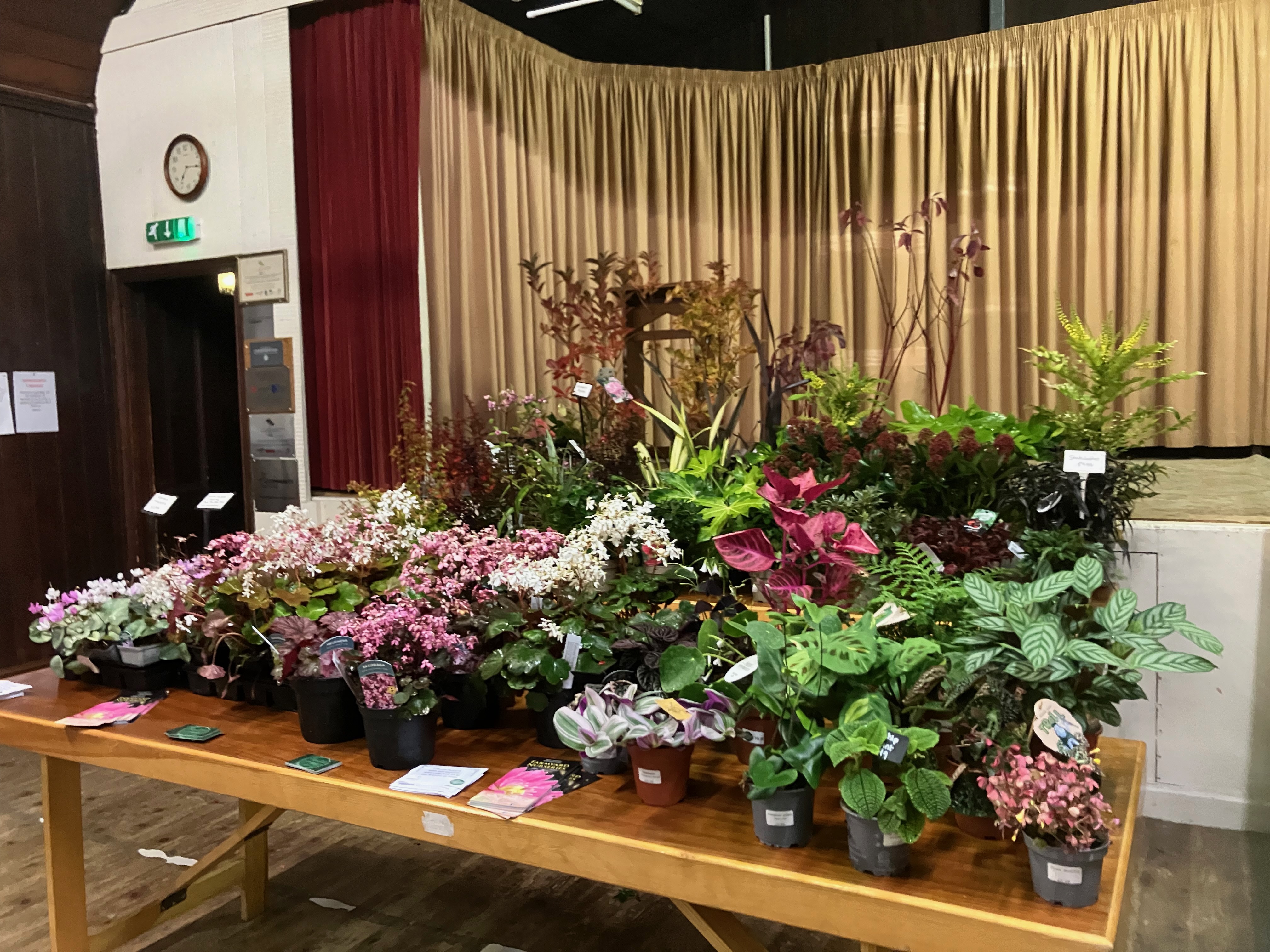
That brought to an end a very entertaining and informative hour, during which Mabel had befriended anyone in the audience she suspected of harbouring food about their person! Richard was thanked by Dawn and by an enthusiastic round of applause from the audience, and everyone made a beeline for the many beautiful plants for sale that Richard had brought to the meeting and arranged in a mouthwatering display.
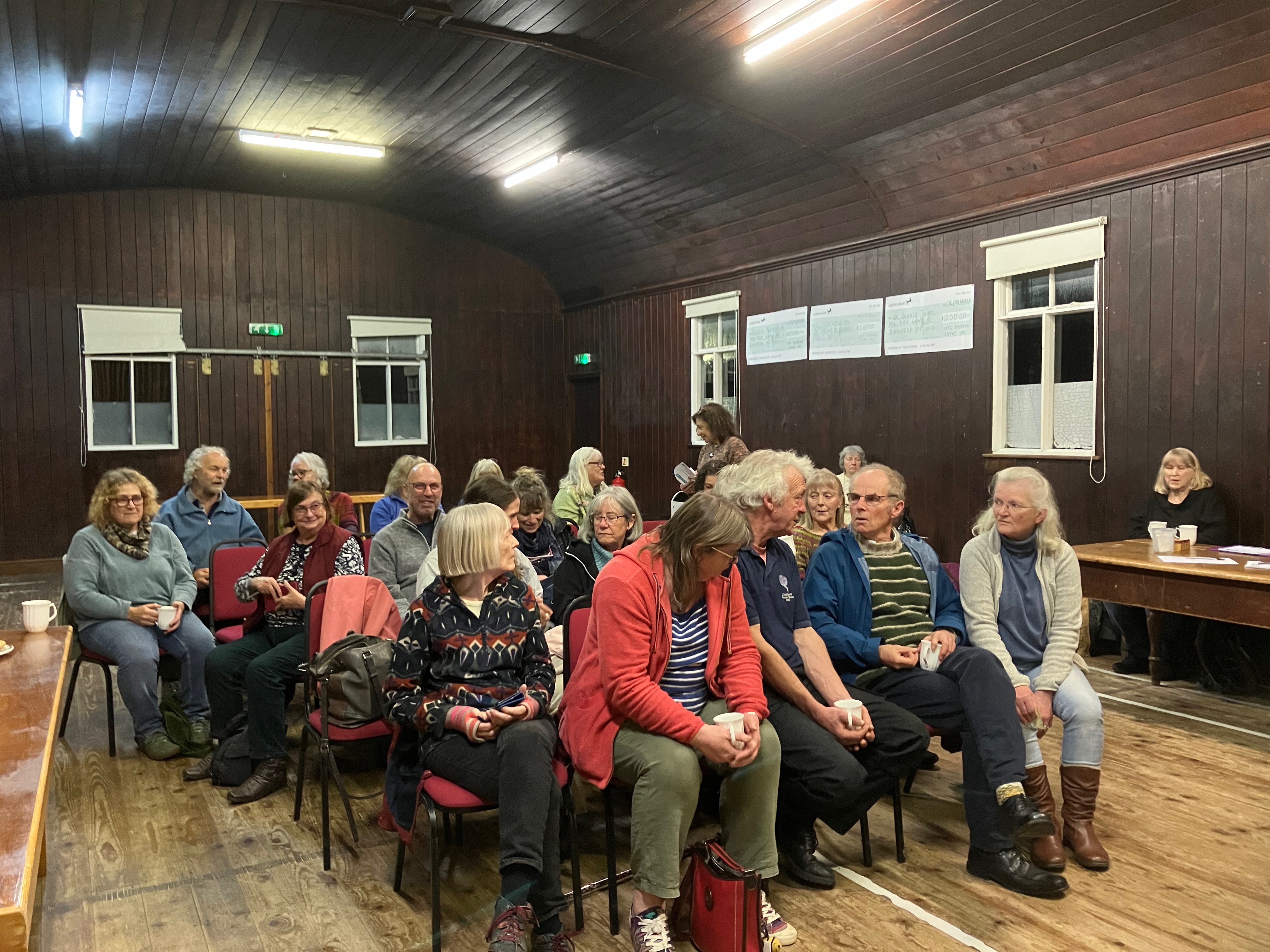
The beautiful display of pllants for saleTea and talk before the start of the meeting
Carwyn has been involved with the history and growing of apples for many years now, and has written books on the subject, firstly “Afalau Cymru”, also published in English as “Apples of Wales”. This was in parallel with a book which records the first National collection of Welsh apple varieties, and both books were best sellers within the first 3 months. He then published a book on Welsh food stories and the more recent story of the Welsh landscape. This begins with the fortunes of orchards here and the fact that so muchof the environment has been lost to industrialisation.
We started with a quiz about the names of varieties of apple that have been and, to some extent, are still grown in Wales. Not sure how well we did here with our answers, but some of the names made the audience laugh and we found that some of the unlikely sounding ones actually were apples!
There are apparently over 7000 known varieties of apple in the world, but the currently commercially available apples were all bred originally from the Golden Delicious, Red Delicious and Cox, and unfortunately most on the supermarket shelves were picked around 6 months ago. The most prolific apple producers in the world are USA, Poland and China. Historically and even recently, Wales has not been very closely associated with apple production – Lynne Yates mentioned in her cookbook (2010) that “Wales has never produced much fruit as the soil conditions are not suitable”.
However, in the Mabinogion (combining Celtic mythology and Arthurian romance, written 12th-13th century), Queen Rhiannon at her wedding feast orders her husband’s men to “wait outside in the orchard”. There are many Welsh names which can be linked with the word apple, for instance Afallon (or Avalon) meaning place of fruit/apples. The Bishop of St Davids in 1326 had gardens and orchards and many ordinary people had fruit trees and bushes. There is a record of 2 women in 1390 in St Asaph who had 2 orchards.
After 1536, following the Act of Union then the dissolution of monasteries, it seems the rich became richer and nobles of the land were able to invest in fruit production; there is a record from 1618 documenting the growth of lemons, oranges, figs, nectarines etc which had not been grown in Britain previously. Apple trees by this time were being distinguished between sweet and sour apples and it is recorded that a quantity of sweet apple trees in fruit were worth 15 pigs!
In the 1700s small plots were often available to cottagers for growing veg, flowers, herbs and 5 or 6 apple trees, and gardens were beginning to be seen as places of pleasure and gentle recreation. A land use survey around this time recorded that, of 850 acres in Brecknockshire, 350 acres were used for apples. Around this time, apples were embedded within Welsh culture via place names and many allusions were being made to fruit in folk songs and poetry.
The First and Second World Wars obviously had a great effect on fruit production and many trees were grubbed out to provide land for the most necessary vegetables – if you had a couple of apple trees in your garden they must have been highly prized.
It is not true that apple trees will not survive in very wet areas, neither is it true that the trees must be correctly and frequently pruned. The Bishop’s Palace near Carmarthen has a very old orchard, still flourishing and producing, and yet when the River Towy floods, the waters can often be seen half way up the confines of the walled garden.
To conclude the talk, a discussion was held around the loss of skills within horticulture and fruit growing. The Welsh government is taking small steps to address this and there are some subsidies for orchards plus encouragement of the use of apples for their nutritional value, but some joined up thinking is required around production and subsidies and how to use the food being produced. The government does need to facilitate and not lead because there are people outside of government who have the knowledge required.
Several questions were put to Carwyn about pruning and he encouraged not to overprune and certainly not to prune in the first year. Also, when did the idea of pruning begin? – apparently the Romans knew about it..
We really enjoyed the talk; Dawn thanked Carwyn and a raffle was held for one of Carwyn’s books.
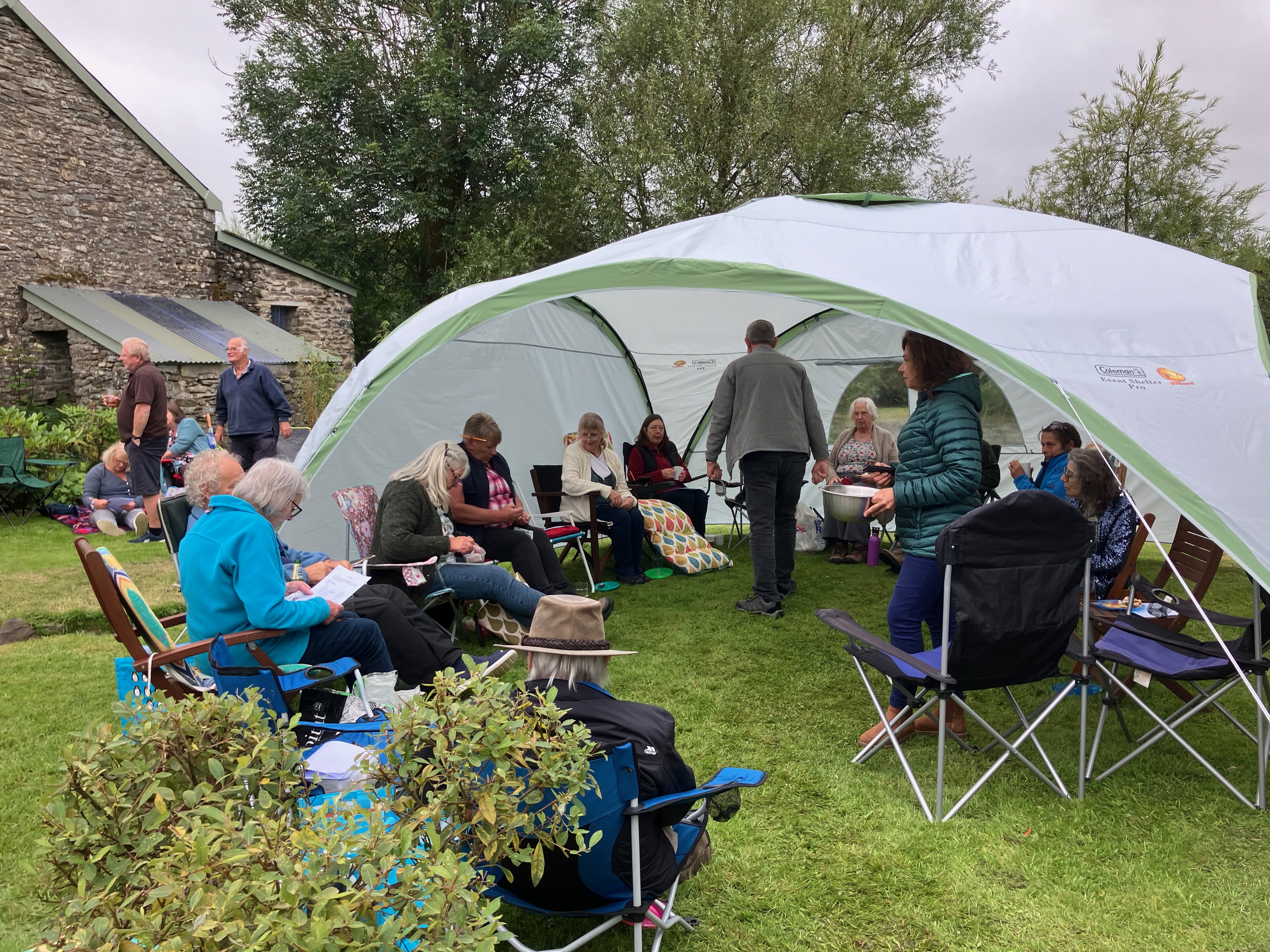
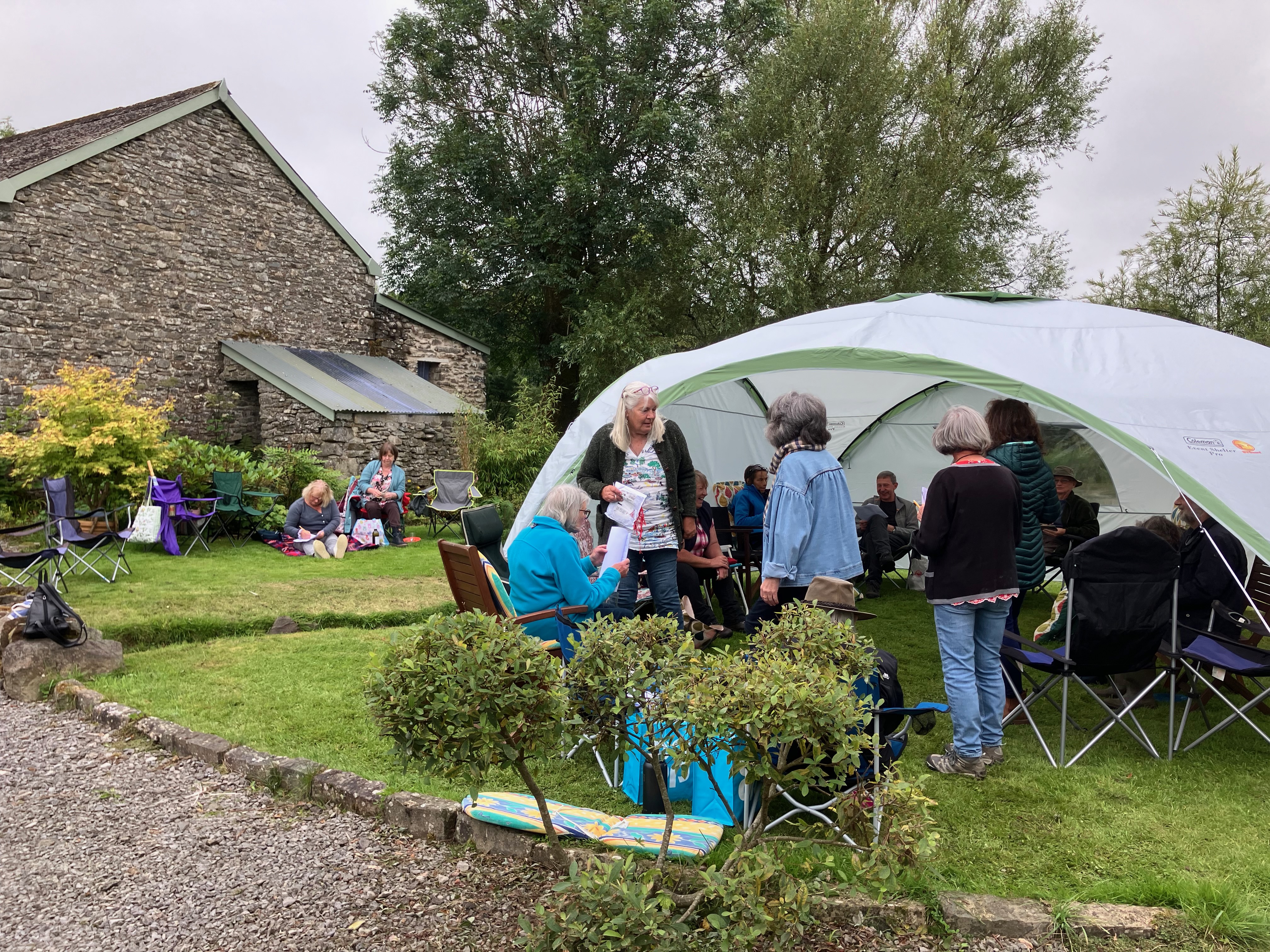
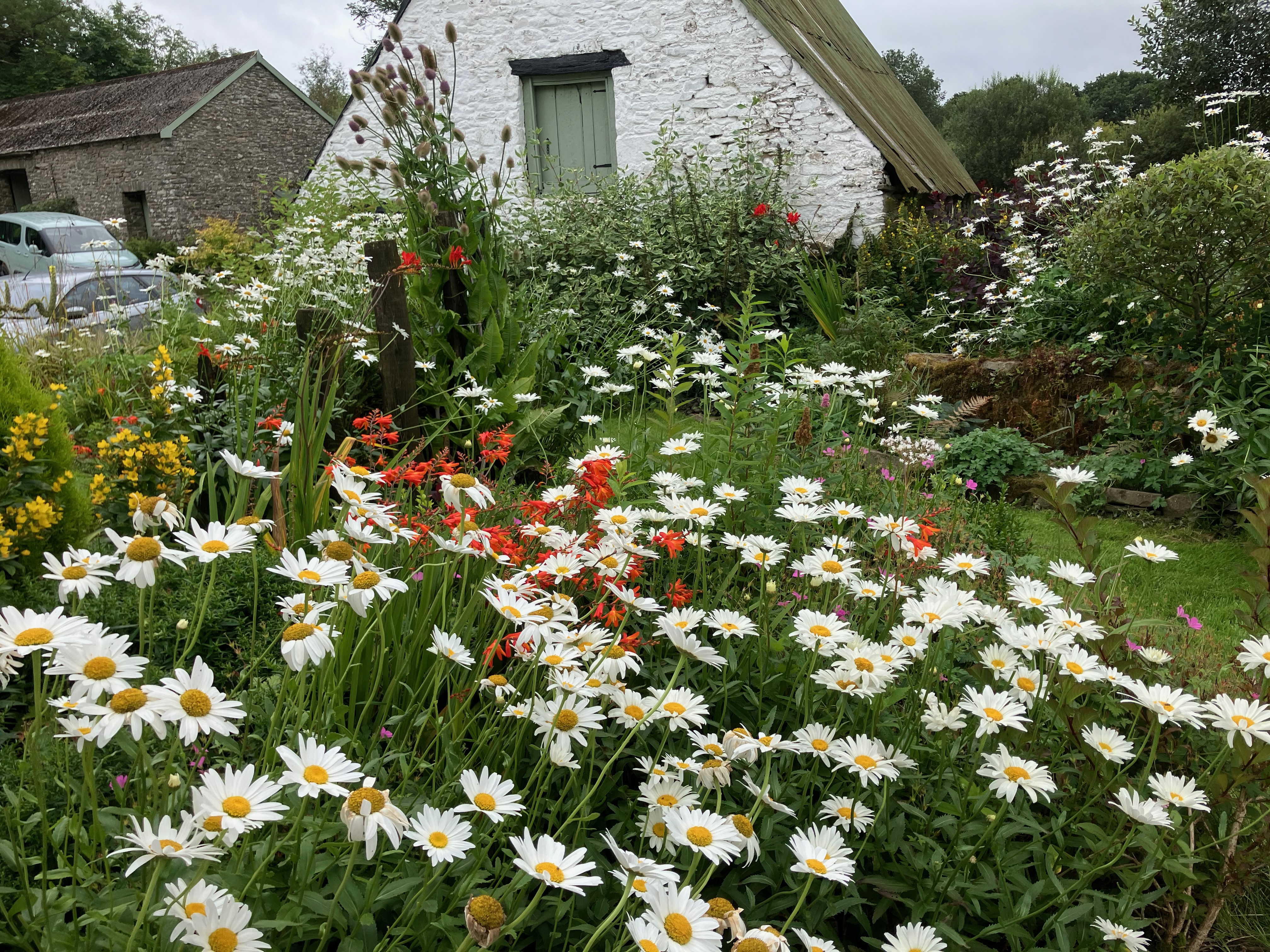
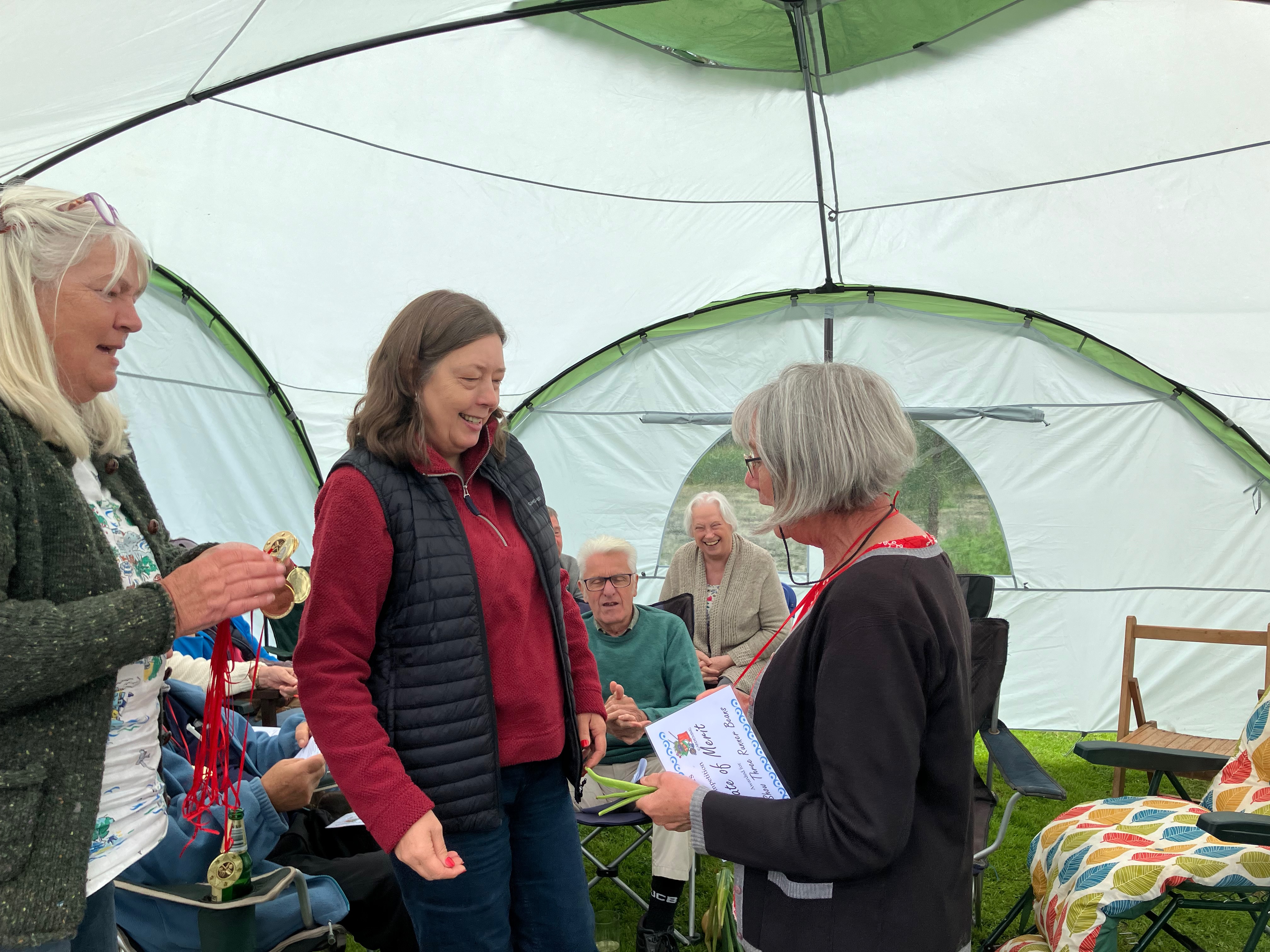
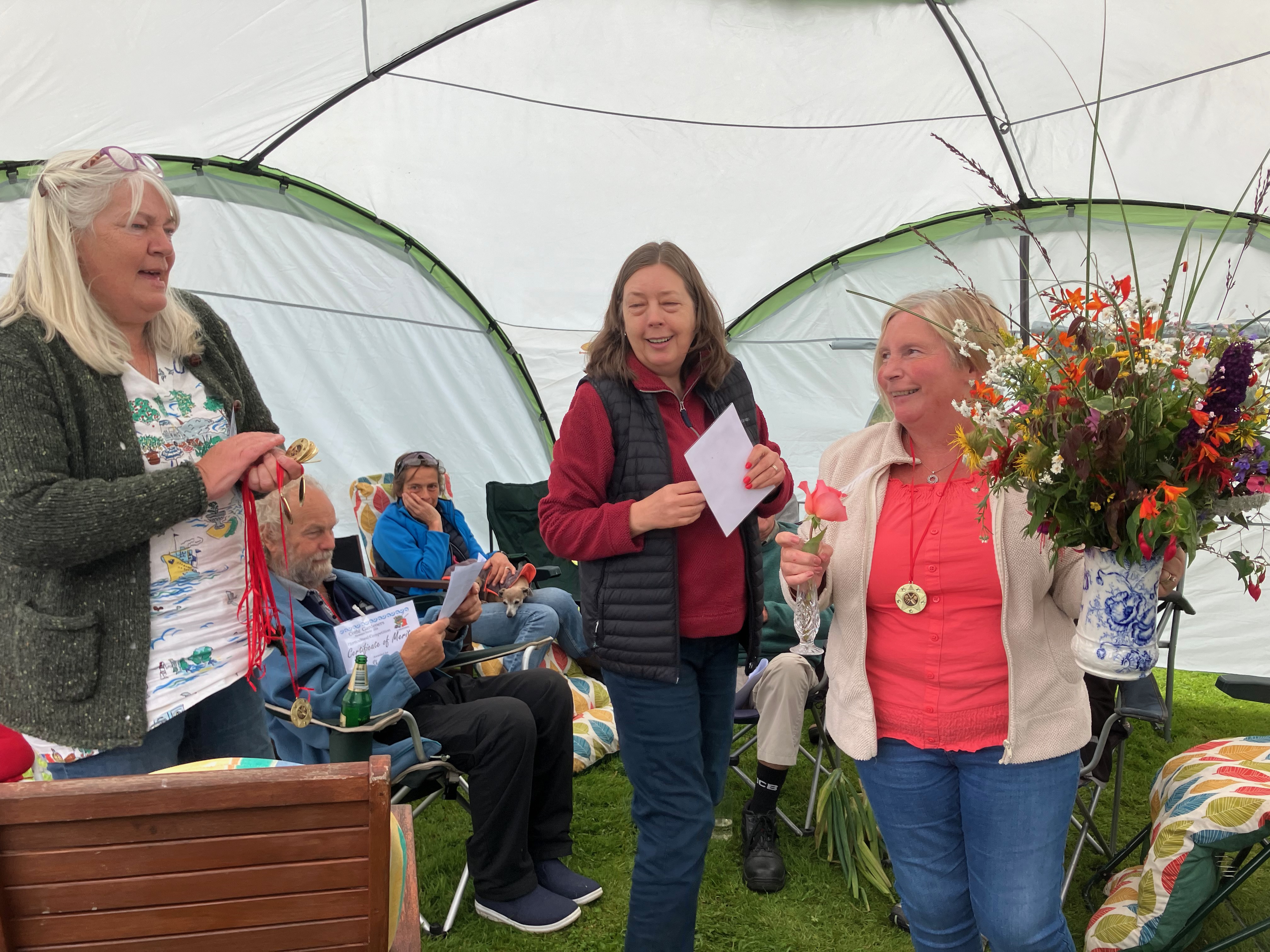
The Cothi Gardeners annual social, hosted by our Chair Dawn, was held on an overcast, but fortunately not rainy (at least not until the end, when the remains of Storm Ernesto arrived!) day, allowing us all to make the most of the wonderful garden in Ffarmers, and the activities arranged. Plenty of members brought along produce or flowers for the various competitions, and the table was laden with savoury delights and delicious cakes for us all to tuck into.
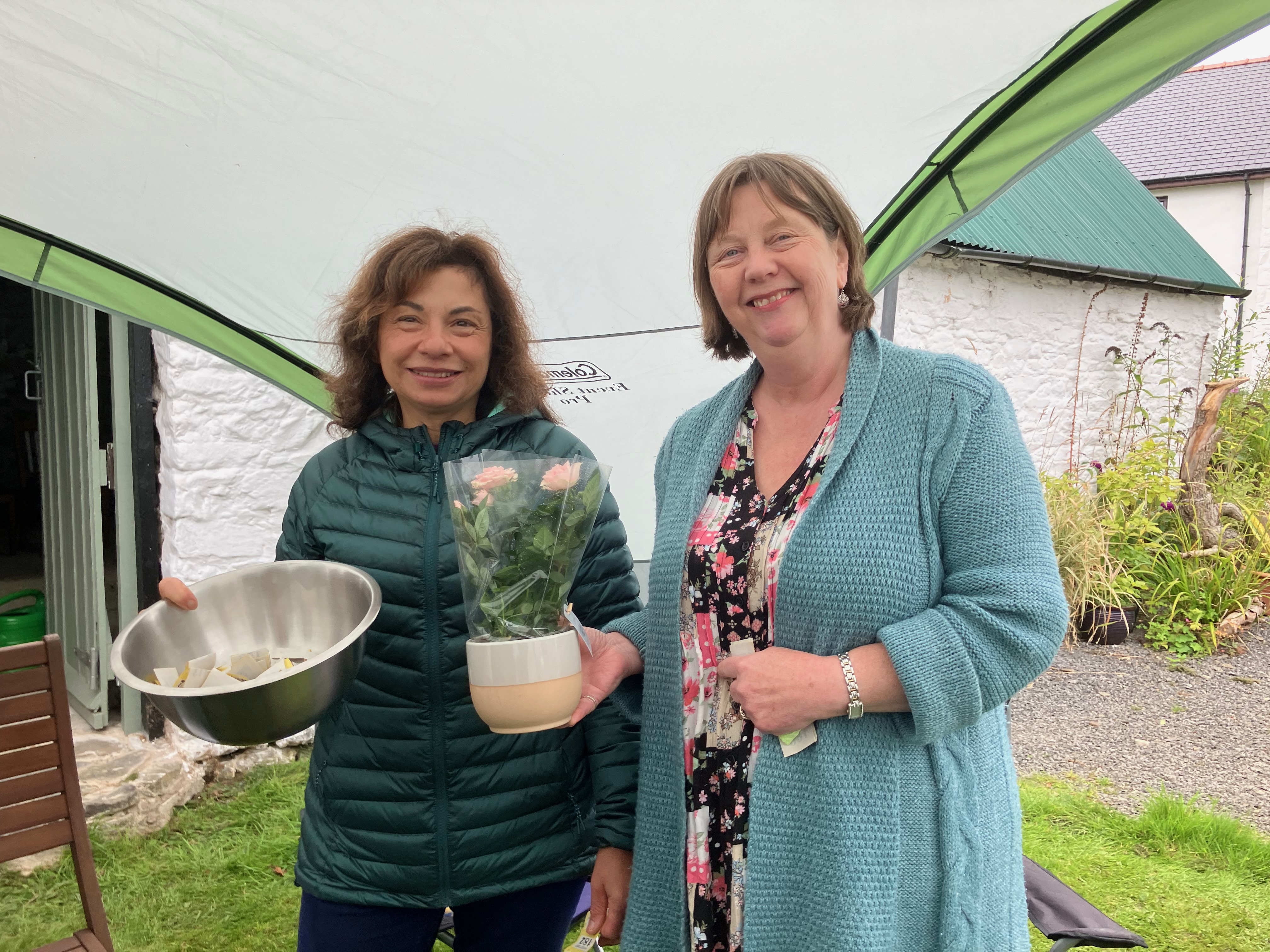
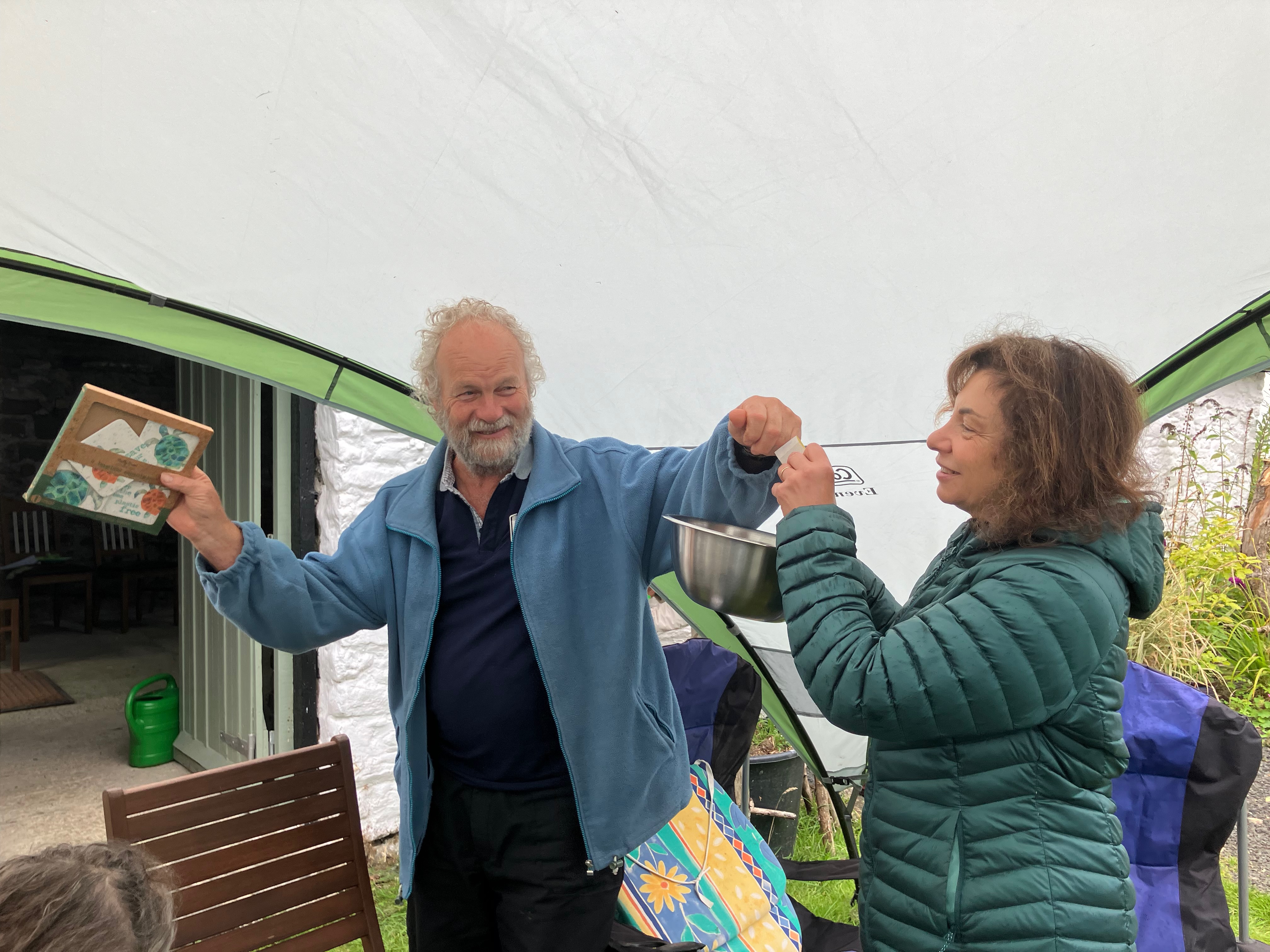
After much conversation over the food, the results of the raffle and the competition prizewinners were announced. There were a total of six prizes for the raffle, which also benefitted the Club’s funds.
Certificates and medals were awarded for the best exhibit in each category, ably judged by guests Angela and Martin. Rob won the prize for the largest weed (by definition of being a plant in the wrong place, not an undesirable plant). Jenny claimed the prize for the best three runner beans, and Honour for the best flower arrangement and also single rose. Amanda won for best single dahlia, and the best potatoes.
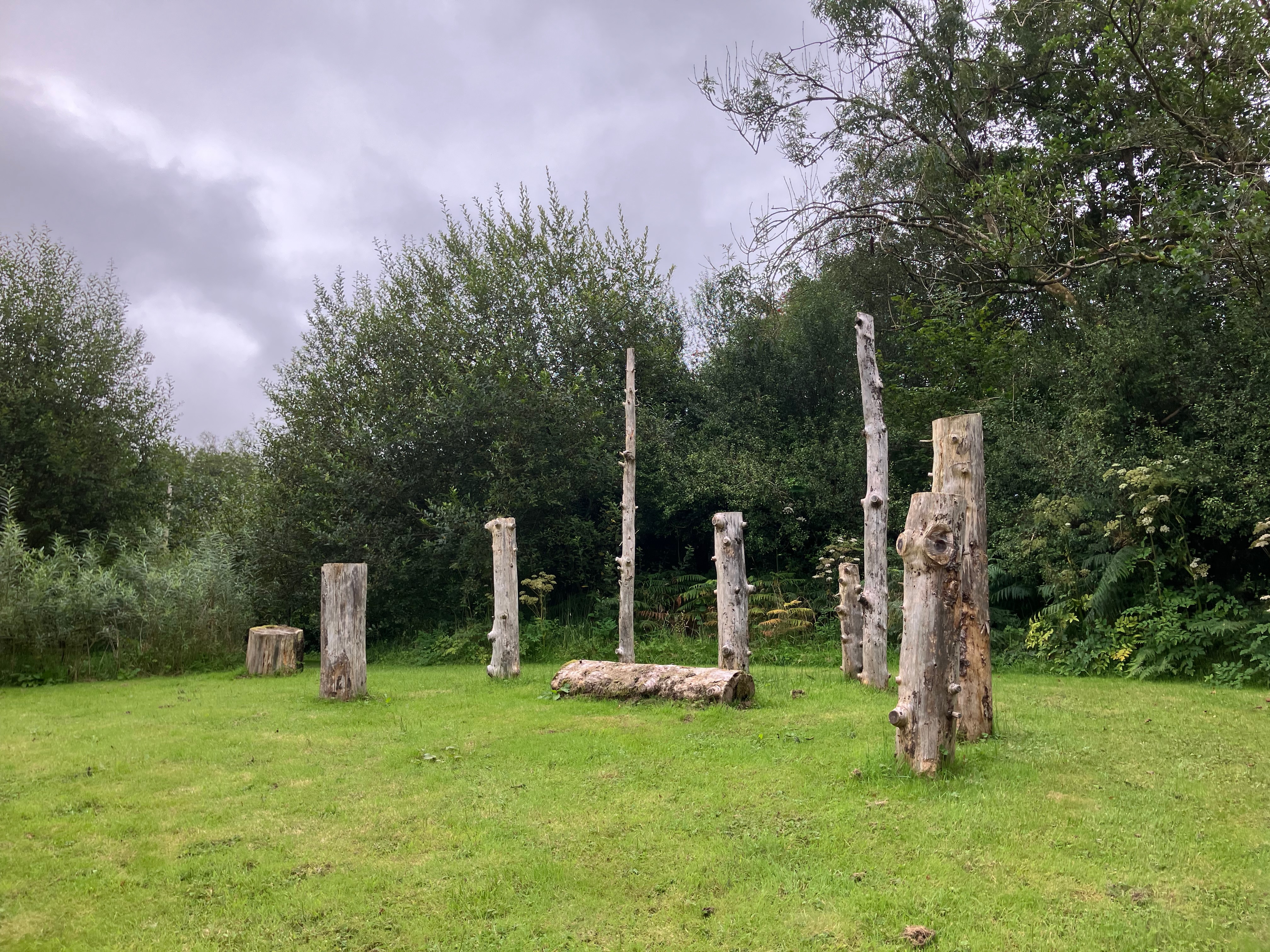
After that Dawn gave us a tour of their garden and land bordering the River Twrch and encompassing SSSI areas including swathes of Devil’s Bit Scabious, the food plant of the Marsh Fritillary butterfly, in perfect flower when we visited. I think that everyone was impressed with the natural beauty of the site and what Dawn and Nick had achieved in removing the overgrown brambles from much of the land, as well as creating a lovely more formal garden around the house and barns.
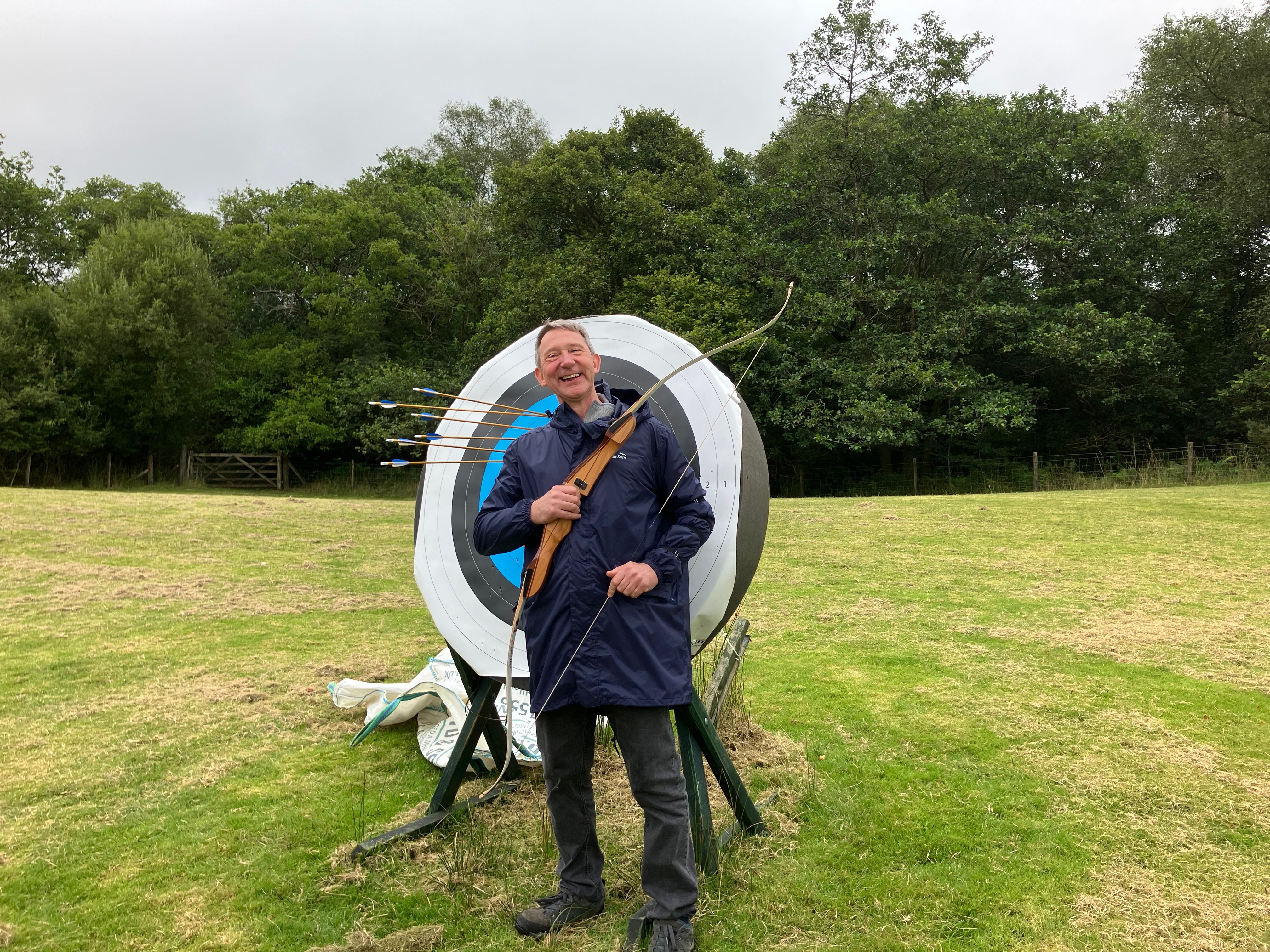
There was also an opportunity to try our hand at archery, with Nick a very friendly and able instructor. Let’s say that some of us were better than others, but everyone thoroughly enjoyed the experience.
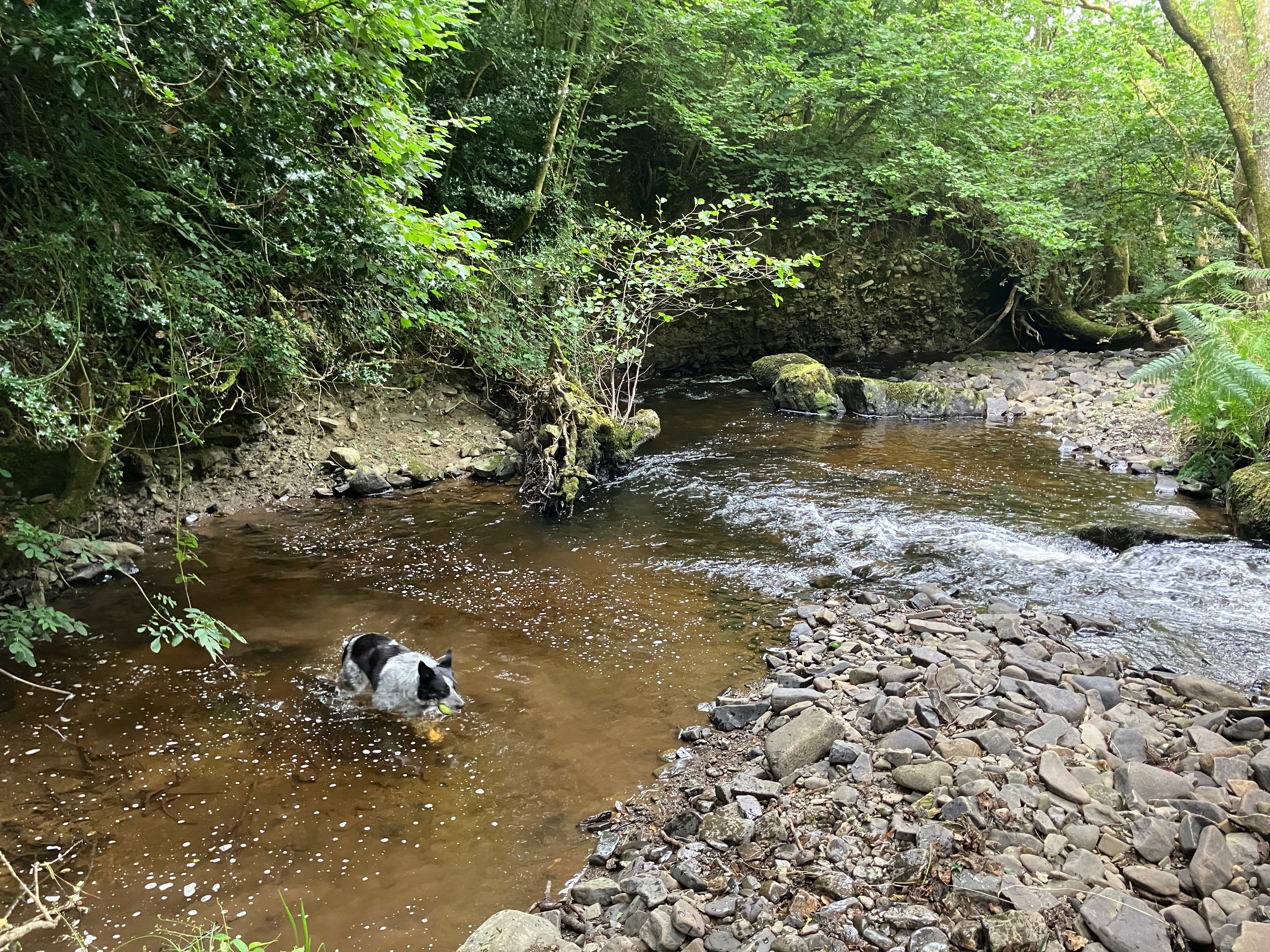
We all enjoyed meeting Dawn and Nick’s lovely dogs, who played a full part in the proceedings and many balls were thrown during our walk. All in all it was a fabulous day out, and the raffle and plant sale (thank you Rhoslwyn Plants) raised welcome funds for the club.
It was a pleasure to welcome back Kari to talk to Cothi Gardeners again, this time about plants and their history. Knowing the history of the plants in your garden encourages you to spend more time in your garden, enhancing the experience.
A good place to start is Alex Pankhurst’s ‘Who Does Your Garden Grow?’ published in 1992. In Kari’s own garden, she discovered that the tall, double Delphinium ‘Alice Artindale’ was named by John Artindale from Sheffield for his wife, and that Campanula lactiflora ‘Prichard’s Variety’ was bred by James Prichard from Christchurch, now Dorset but then in Hampshire.
The first record of British gardens as places of pleasure is from 1260, but only for the nobility. It is not until the 16th century that garden flowers can be found along with vegetables in the grounds of tenant farmers or yeomen – as can be seen at the restored Bayleaf Mediaeval Farmstead in West Sussex dating from 1540. In 1597 John Gerrard published his ‘Herball’ where cottage gardens are referenced.
Paintings are another reference source for finding out what plants were around when. Aquilegia, a native plant, was certainly known in gardens in 1503, when a Flemish painter depicted double aquilegias in a vase among other flowers. Double A. ‘Nora Barlow’ was named after a grandchild of Darwin who studied plant biology and genetics at Cambridge. After leaving Cambridge she carried on her cross-breeding work. She herself didn’t particularly like her namesake, but passed the plant on to the nurseryman Alan Bloom for propagation and distribution.
Gertrude Jekyll, who designed over 400 gardens, not all with Lutyens, said ‘Why do we always have to go after the new?’ In 1904 she published ‘Old West Surrey’ describing traditional rural life where she lived, including illustrations of gardens. Working at the same time, Helen Allingham (1848-1926) was an illustrator and painter. A flower that pops up in her pictures of cottages and their gardens is the hollyhock. But its history in illustration goes back to at least 1486, in Herat, Afghanistan. By the 1600s big double hollyhocks had been bred. In Saffron Walden, Mr Chater (1802-85) was famous for his double hollyhocks of which he had 117 different varieties. Then along came hollyhock rust from South Africa, putting paid to his stock (fortunately he grew other things as well)! Helen Allingham’s painting of Gertrude Jekyll’s garden shows that it also included hollyhocks. The illustration on the cover of the Metro-land guide (Metro-land was the name given to the housing development – about 3,500 houses to the north west of London that took place between the two world wars) showed a large house with hollyhocks in the garden. Hollyhocks were also depicted on a well-known Sanderson fabric design.
Rachel Ruysch (1664-1750) is a Flemish painter famous for her still lifes with flowers, depicting among other things aconites, ranunculus, tulips, hyacinths and carnations. At one point double hyacinths were more expensive than tulips, and there were many more varieties than there are now. In the 1790s a bulb of the variety called ‘gloria mundi’ cost the equivalent of £30 in today’s terms. It was the stripes in tulips, caused by a virus, that led to the excesses of tulip mania. Striped tulips can be seen on Meissen china from the 1740s. William Pegg’s designs for Royal Crown Derby in the early 19th century also included striped tulips. By the early 20th century a Dutch company had bought up Flemish tulip stock, and started breeding solid colours giving predictability – the Darwin tulip. A Darwin variety surviving to this day is ‘Bleu Aimable’.
Florists’ societies had flourished in the 18th century, exclusively male and meeting in pubs, devoted to the growing of a specific flower, eg pinks. Even though the societies gradually died out, flower showing continued, and in 1804 the Royal Horticultural Society was founded. Its first show was in 1827, to which 3,000 people came. The population was growing, and so was the middle class. Greenhouses were no longer the prerogative only of the upper classes, indeed by the end of the century they had moved on to wilder gardening. Pelargoniums, of which Charles Dickens was very fond, required greenhouses, and a particularly fine red called ‘Paul Crampel’ was bred in 1892 which is still widely grown today.
Dahlias were first recorded by Hernandez in 1570 in Mexico. They appeared in Europe when some tubers were sent to the Director of the Madrid Botanic Gardens in 1791. Originally there was confusion about the name – Dahlia or Georgina (which it is still known by in Eastern Europe – ed.) – but Dahlia won, and it is of course a plant widely grown today. Treseder & Son of Cardiff were responsible for breeding the very well-known D. ‘Bishop of Llandaff’ (along with Pelargonium ‘Lord Bute’).
Sweet peas are another flower that is still with us. The original sweet pea was first noted around 1700, of which ‘Painted Lady’ is probably a sport. Henry Eckford (1823-1905) bred 214 of the 264 cultivars known in the 19th century. One of those was ‘Dorothy Eckford’, still grown, white and quite small flowered. The variety ‘Prima Donna’ (pale pink) gave rise to the Spencer sweet peas – bigger, frillier with longer stems for showing, but with less scent.
Although roses are generally associated with France, it was the Dutch who first dealt in roses. R. centifolia, the cabbage or Provence rose, was developed by the Dutch. It is well-known that Josephine Bonaparte had at least 200 different cultivars in her garden. One of the main rose nurserymen then was Descemet, most of whose stock was acquired by Vibert, who greatly increased the number of cultivars available. In the 1800s in the UK Henry Bennett, a cattle farmer from Wiltshire, diversified into rose breeding and moved to Middlesex, being responsible for many of the new hybrid tea rose varieties of the time. Constance Spry started collecting old roses when she saw varieties disappearing – one of her favourites was R . ‘Mme Isaac Pereire’, a rose originally bred by Garçon in France.
In a fast-paced, wide-ranging and much appreciated talk, Kari covered many other plants and their stories including wallflowers, auriculas, lupins, anemones, daffodils and snowdrops. She started and finished by quoting from Plant Heritage, formerly known as the National Council for the Conservation of Plants and Gardens: ‘If garden plants go, a tantalising slice of social, cultural and horticultural history dies with them’.
Kari had brought along a selection of some of her favourite plants, including sweet peas (which scented the hall throughout the evening) and pelargoniums, including P. ‘Paul Crampel’, in the centre.
Kim Stoddart is a gardener, journalist, author and gardening teacher. She writes for The Guardian, specifically regarding gardening in the current climate change environment, and is editor of “Amateur Gardening” magazine. She has co-written the book “The Climate Change Garden” which has recently been updated and has just published “The Climate Change Resilient Vegetable Garden”.
She also runs the very popular Green Rocket courses where she teaches techniques which she has taught for many years, and has a smallholding in the Synod Inn area of 2.3 acres, of which a third of an acre is used for growing produce. She keenly boosts biodiversity there and doesn’t use pesticides or chemicals. In general, apart from growing in containers, she does not use fertilisers but concentrates on improving soil health which brings its own challenges, since the property is 750 ft above sea level and is often subject to quite serious flooding.
At the begining of her talk Kim encouraged us to think about how things worked in the past, how people had to have productive gardening plots which were not costly and could be maintained as easily as possible. Some of the solutions found in the past have been forgotten or discarded in favour of a quick fix, off-the-shelf solution.
She encourages us all to make time to sit and be kind to ourselves, enjoy our surroundings, including the wildlife, and not to feel we have to make everything neat – weeds are not the enemy! Examples of extreme weather have been studied by Kim in order to understand weather unpredictability and how to discourage pests and diseases that come with it, and what we can do to effectively and cheaply negotiate problems.
Recycling and upcycling, inventing ways of making making a cost effective, productive and beautiful garden need to be seriously considered and will give lots of satisfaction. Think creatively when problem solving, it does not need to be stressful! Do not pamper plants, overprune, or spend hours weeding, sometimes it works to make plants work harder to survive and flourish. If you have a gap in the flower garden, stick a vegetable in there, they often look great and you can (hopefully) eat them. The “no dig” method is proven to be effective and works well, or the German Hugelkultur method which in addition pretty much eliminates the necessity for watering. It helps to use mycorrhizal fungi which will encourage root growth and improve health – only effective when growing organically, as the fungi and fertilisers/pesticides tend to fight and restrict plant growth.
Kim had brought copies of her book for sale, and answered questions from the audience. The link for Kim’s courses is www.greenrocketcourses.com. Dawn thanked Kim for her very enjoyable talk.
John and Helen’s Plant Sale for NGS Charities on 12 May
We were reminded about John & Helens’ plant sale at Ty’r Maes, Ffarmers, SA19 8JP on Sunday 12th May from 1 pm. Donations are encouraged as payment – the proceeds are for the National Garden Scheme charities. Plants can be ordered in advance – emails will be sent to club members at the end of April with a list of available plants to order.
Paul and Liz O’Neill have been gardening at Llwyngarreg for 24 years, when they originally turned a field into a garden open to the public for the NGS with a variety of different environments: peat beds, azaleas and rhododendrons, a tropical bed with Tetrapanax and ginger lilies, a fritillary meadow, gravel beds creating a dry garden (see right), to mention just a few.
A soil map of Wales shows that generally the pH is about 6-6.5, so on the acidic side. Some plants are calciphile (lime-lovers), and others are calcifuge (lime-haters), and there are plenty in-between. But even then things are not so simple. Buddleja, honeysuckle, and ash are defined as being calciphile, but generally do well in Wales. This talk focuses on plants that must have or don’t mind a low pH soil, starting with trees and shrubs, and moving on to plants that grow beside or under them.
To start with – Rhododendrons, the plant that first triggered Paul’s interest in gardening. First come the species, considered to have ‘snob value’, compared to the ‘commoner’ hybrids. A lot of species rhododendrons originate from the Himalayas, but also from North America, and Europe, including Portugal (R. ponticum) and the Caucasus.
They generally come true from seed, which is how Paul has grown many of the species that he has, including R. calophytum (left), which over the years has made a huge plant. Species can take up to 20 years to flower if grown from seed – meriting a glass of champagne when one flowers for the first time! R. cinnabarinum is another favourite, this time grown from cuttings.
Hybrid rhododendrons come from crossing different species. They are generally tougher, easier to grow, and flower earlier in life. They are propagated by cuttings or layers. Paul’s favourite is R. ‘Pink Walloper’, while Liz’s is R. ‘Sappho’ (right) , a lovely old hybrid from Waterer’s Nursery in Surrey – the plant’s only fault is that it is a bit straggly.
Both species and hybrid rhododendrons hate having wet feet – so if you garden on clay soil, plant them on a bit of a mound.
Finally there are what we call the Azaleas (although they are of course Rhododendrons). They can be evergreen, such as R. ‘Hinomayo’ which forms a dense bush (so much so it can be pruned to shape with a hedge trimmer). They are also deciduous – R. luteum (left), from the Caucasus, with its scented yellow flowers and gorgeous autumn colour. The latter can tolerate really sticky grey clay, and Paul and Liz plant them on what they call the ‘killing grounds’ where many other plants won’t survive. R. occidentale, again scented, is from America.
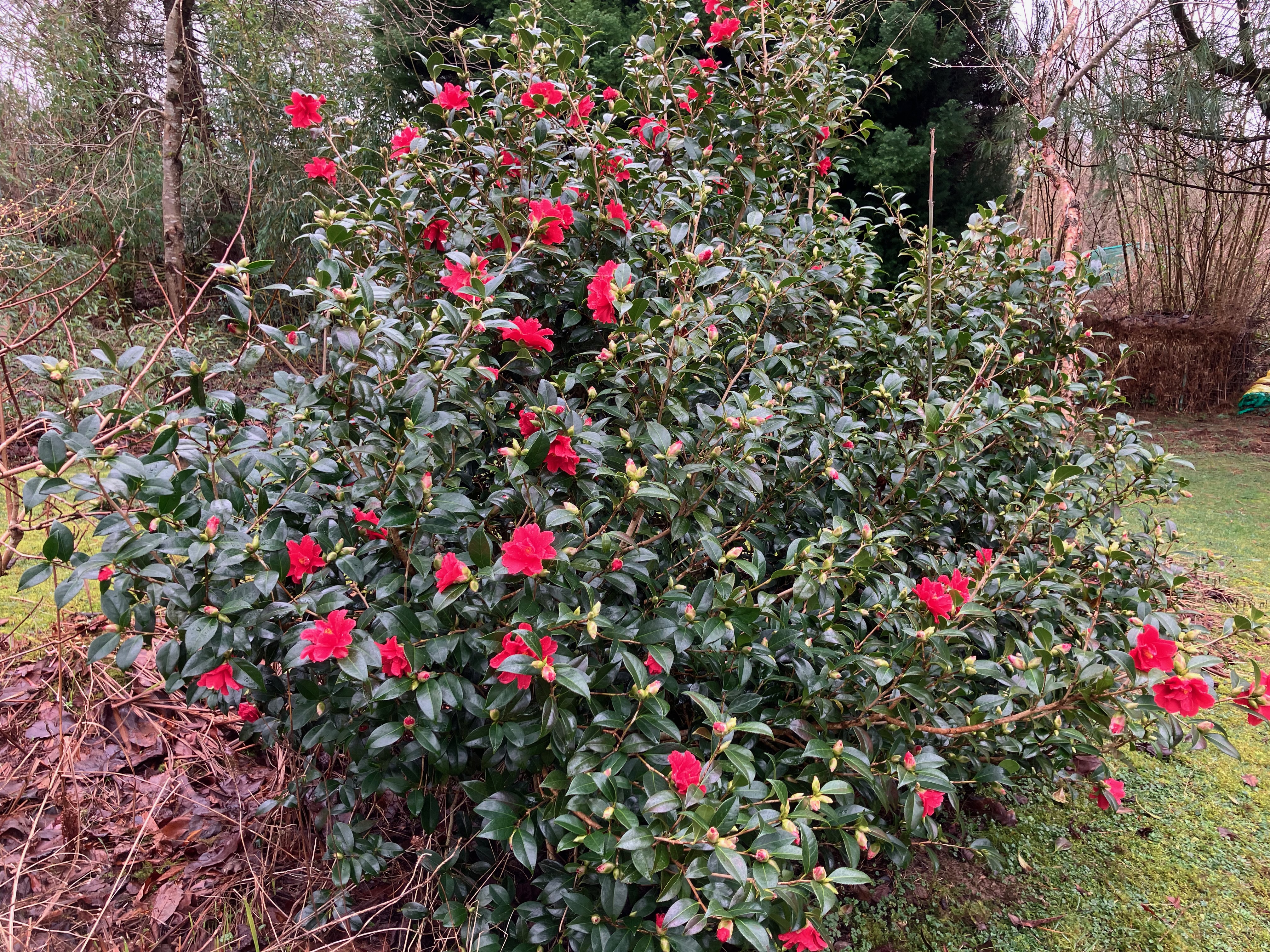
Next come the Camellias. Over time, even in our environment, they can get large (in Cornwall they have been known to take the chainsaw to them!). Some examples Paul gave are C. ‘Donation’, C. ‘Debbie’, and C. ‘Jury’s Yellow’ (right).
Most magnolias want acid conditions – and they vary from huge trees to shrubs such as M. stellata. At Llwyngarreg one of the stars of the show is M. ‘Caerhays Surprise’, a magnificent hybrid bred at Caerhays Garden in Cornwall.
Another is M. ‘Black Tulip’ (left, in bud), a Mark Jury hybrid from New Zealand (which in addition to flowering in the spring can also flower again in September). M. loebneri ‘Merrill’ is pure white with a delicious coconut fragrance in the sun.
Another of the magnolias that Paul and Liz grow is M. ‘Yellow River’ (right), a lovely yellow flower, but as it is late the flowers can sometimes get lost among the emerging foliage. M. ‘Daphne’ is probably the yellowest of the Magnolias, but late, with the flowers coming out with the leaves. Paul recommends the Arboretum Wespelaar in Belgium as a place to see the many species and varieties of Magnolia.
Moving on to other shrubs, a hydrangea that not so many people are aware of is H. aspera subsp sargentiana, with large velvety leaves and lacy flowers which tolerates deep shade underneath beech trees. On the other side of the path from the Hydrangea is a mass of the ginger lily Cauttleya spicata ‘Robusta’, rather surprisingly also enjoying the shade.
Crinodendron hookerianum has magnificent red bells in spring, and like many other acid-loving plants hails from Chile. There are also now other white and pink-flowered varieties, although they have not yet been tried at Llwyngarreg.
Paul and Liz started by planting trees at Llwyngarreg, including Parrotia persica (with tiny red flowers in late winter) and Nyssa sylvatica (the tupelo), both with fiery autumnal foliage.
Eucryphia lucida ‘Ballerina’ is a small evergreen tree with lovely pink flowers in late summer, although here in west Wales we cannot grow the huge eucryphias (trunks like trees!) you see in Northern Ireland. Enkianthus campanulatus has small pink-tinged bells in the spring, with fantastic autumn colour. Jovellana violacea, a sub-shrub, has pale purple bell-shaped flowers with a yellow throat; also from Chile, Desfontainea spinosa has holly-like leaves and tubular red and yellow flowers, a lovely shrub, which in west Scotland can be a tree up to twenty feet tall. The latter is a true acid-lover and will die if it comes anywhere near an alkaline soil.
Jovellana violaceaDesfontainea spinosa
Moving on to climbers – the star of the show is Tropaeolum speciosum, a perennial nasturtium with red flowers and blue berries, renowned for growing very well in Scotland. It is often lost in gardens when first planted, because slugs graze it off.
Amongst perennials, Meconopsis, the Himalayan poppy, are perhaps the ultimate acid-lovers. They are definitely challenging to grow, and need a shady, damp bed with no sun. M. ‘Lingholm’ – the one to grow if you are only going to grow one type – used to seed around in the peat beds, but not so much any more as summers have become hotter and drier.
M. horridula, being monocarpic, takes three years to reach flowering size and then dies after flowering. So too does M. x complexa (it used to be called napaulensis), flowering red or yellow after two to three years.
Primula capitata (right), with its striking blue flowers, is a short-lived peat-lover of moist woodlands. It comes easily from seed if you sow the seed green and don’t cover it.
Another primula for a peat bed is P. flaccida – a lovely lavender blue but it is loved by vine weevil. P. ‘Arduaine’ has ice-blue flowers in January and February. P. poissonii is a candelabra primula which likes wet feet. P. viallii will grow in any soil, but thrives in a peat bed.
Roscoea ‘Harvington Evening Star’ is a dark purple. It comes up late in the year, and slugs don’t like it, always a bonus. It has a tendency to flop over, but it has a long flowering season from mid-Summer to October. Trilliums are invariably expensive to buy, but it is hard to understand why. Trillium luteum, for example, is easy to propagate by chopping it into small pieces, each with an eye, and replanting. Cypripedium, hardy slipper orchids, are gorgeous but difficult to grow, and always expensive.
Cardiocrinum giganteum, known as the giant Himalayan lily, is a truly impressive plant at up to 4m high with gloriously scented flowers (see left, with Liz). Slugs adore them so they can be difficult to grow for that reason. They produce masses of seed after flowering, but it takes seven years from seed to a flowering plant!
Gentians need moist, peaty soil, and also full sun. A good place to buy gentians is Aberconwy Nursery near Bodnant Gardens. G. asclepiadea is a great late summer plant and will tolerate light shade. Corydalis alata (blue flowers), C. flexuosa (blue flowers) and C. solida (purple flowers) are plants that need shade and moisture.
Two favourite plants in the lily family are Nomocharis alata, which requires moist peat, and Lilium mackliniae.
Podophyllum delavayi, P. ‘Spotty Dotty’ and P. ‘Kaleidoscope’ are plants for a moist and shady spot.
Myosotidium hortensia, the Chatham Island forget-me-not, is a challenging plant for acid soil, and unfortunately completely slug-delicious. It must have no sun at all.
At the very low ground level Paul and Liz plant Saxifraga stolonoifera, which makes huge mats of leaves covered in white flowers, and two Chilean plants – Asteranthera ovata, and Philesia magellanica which requires a pure acid soil.
Ginger lilies do surprising well – they prefer an acid soil but don’t have to have it. Hedychium edgeworthii (yellow) and H. ‘Tara’ (orange), produce some of the most exotic-looking flowers you can grow in the UK.
Other plants not requiring acid soilthat grow well at Llwyngarreg include Epimedium, lovely for its new foliage, and Aquilegia. Primula pulverulenta prefers a woodland environment rather than wet feet. Primula bulleyana (orange-yellow) and beesiana also do well. So too do Rodgersia podophyllum, which is easy to propagate, and Matteucia struthiopteris (the Ostrich fern).
At the time of this talk, the second half of March, some of the highlight plants in the garden at Llywngarreg are listed below:
Snakeshead fritillaries, which love wet grassland. Paul and Liz started with ten pots, over the years religiously collected the seed and sowed it – and now they have a whole fritillary meadow; sadly, Mr Badger has developed a taste for the fritillaries.
Ground cover in the form of Eomecon chionantha with poppy like white flowers from China, which can be quite a thug; also Maianthemum racemosum.
Rhododendron arboreum ‘Album’ is now starting to flower properly. So too is R. calophytum, which this year is much pinker in flower than it has been previously.
Magnolia ‘Caerhays Surprise’ (left), M. ‘Merrill’ and a large M. stellata, along with M. ‘Black Tulip’, which is a very reliable flowerer.
The talk concluded with a video of a dramatic burning of the Monocot bed, largely populated with Miscanthus but also Dierama. Paul and Liz have discovered that the simplest way to tidy up the grass beds is to cut down all the old foliage, and then set fire to the bed!!
In response to a question about tropical-looking plants that he would recommend, Paul suggested Tetrapanax papyrifera. It can be a little bit tender, and even though it was cut back by the hard frosts of December 2022, it has come back strongly. You need to be careful when handling it, as it has little brown hairs which make you cough badly. Paul also recommends cannas and hedychiums.
The talk was fast-paced, very informative, and delivered with lots of humour. The web editor, for one, came away with a long list of plants new to her to try in the garden. All those present were very appreciative and made a beeline for the plant sales table afterwards.
Llwyngarreg Garden is open for the NGS (which supports seven main and other guest charities) every day by appointment, but please check the website and ring beforehand.
Plant Sale for NGS Charities 12 May
John and Helen Brooks will be holding a plant sale for NGS Charities on Saturday, 12 May from 1pm at their garden Ty’r Maes, Ffarmers, Carmarthenshire, SA19 8JP. As usual there will be lots of plants for sale, to swap and to order online, all proceeds going to NGS Charities.
The Annual General Meeting of the Cothi Gardeners Club was held on 21 February 2024. Elena Gilliatt, the outgoing Chair, gave her final Chair’s report on a year packed not just with great talks (organised by Fiona and ably managed by Amanda and Carol) but also garden visits:
In June we had a wonderful Mad Hatters Tea Party at Gelli Uchaf, Fiona and Julian’s amazing NGS garden. What a lovely afternoon; fab hosts, loads of mad hats and we raised £80 for club funds!
In July we visited Paul and Liz O’Neill at their wonderful garden in Whitland, coming away laden with plants, gardening tips and planting ideas.
In August, our summer social had us touring 3 member’s gardens. Thanks to Jane, Jenny & Gordon and Dawn for making us so welcome and sharing their lovely, and very different, gardens.
At our October meeting we were treated to 3 mini talks by members Sheena, Sally and Elena. The response was great, so hopefully other members will share their gardens with us in the future!
At the beginning of December, 36 of us visited Ystrad Garden Centre for a demo and tea. Thanks to Amanda and Carol for organising such an enjoyable afternoon. A great way to round off our gardening year.
Mad Hatters Tea PartyLlwyngarregSummer Social
Thanks were extended to all outgoing Committee members for their contributions, and in particular to Elena for chairing the Club so enthusiastically and steering it through the difficult Covid years.
After the AGM came a delicious buffet of savoury dishes and cakes contributed by those attending, followed by an extremely challenging quiz on varied topics, not just gardening, compiled and organised by Carol Clarke.
Website Update
The Cothi Gardeners website has now been updated to include the new programme for 2024, upcoming events will be listed as and when we are advised of them, and their are additions to the Members’ Gardens and Surplus to Requirements sections. Please take the time to peruse the new content by following the links above, and if you have any ideas for new content or would like to contribute a piece about your own garden, please contact cothigardeners@gmail.com.