Julian Wormald, one of our members, returned as a speaker in March to talk to us about bulbs, corms and tubers to lift our spirits from October to March – something much needed given our recent experience of the dullest February on record in Wales. Over 30-odd years, Julian and Fiona have created a renowned garden at Gelli Uchaf which incorporates many of the geophytes featured in Julian’s talk.

Putting together the slides for the talk from photographs of the garden taken over many years brought home to Julian a number of things: how essential winter bulbs are to boosting one’s mood and to getting us out into the garden during what are often dreary months; bulb populations aren’t static, and while some survive for ages others can fade away over time; winter bulbs rarely get the attention they deserve in the media, but in our generally temperate part of the world, we’re lucky that gardens can really be full of flowers and colour interest for most months. If we include bulbs, we can cram many plants into the same area to have a succession of interest over many months.
To give some context to the garden, Gelli Uchaf is 250 metres above sea level and 20 miles from the Irish Sea; this usually mitigates really low winter temperatures – which are occasionally, but rarely, below minus 10 degrees C. There is high annual rainfall concentrated in the autumn/winter months (now typically over 2 metres annually), at least 50 % over the average for Wales, and not an awful lot of sunshine. But it is quite a steep sloping hillside site, which means that for most of the garden, even heavy rain will drain away quickly. This is a huge advantage for many winter/spring bulbs.
A common theme in the talk would be the interaction between pollinators (generally honey bees) and the geophyte flowers, resulting in the production of seed which is a good way of increasing drifts of flower, as well as providing nectar and pollen for the bees.
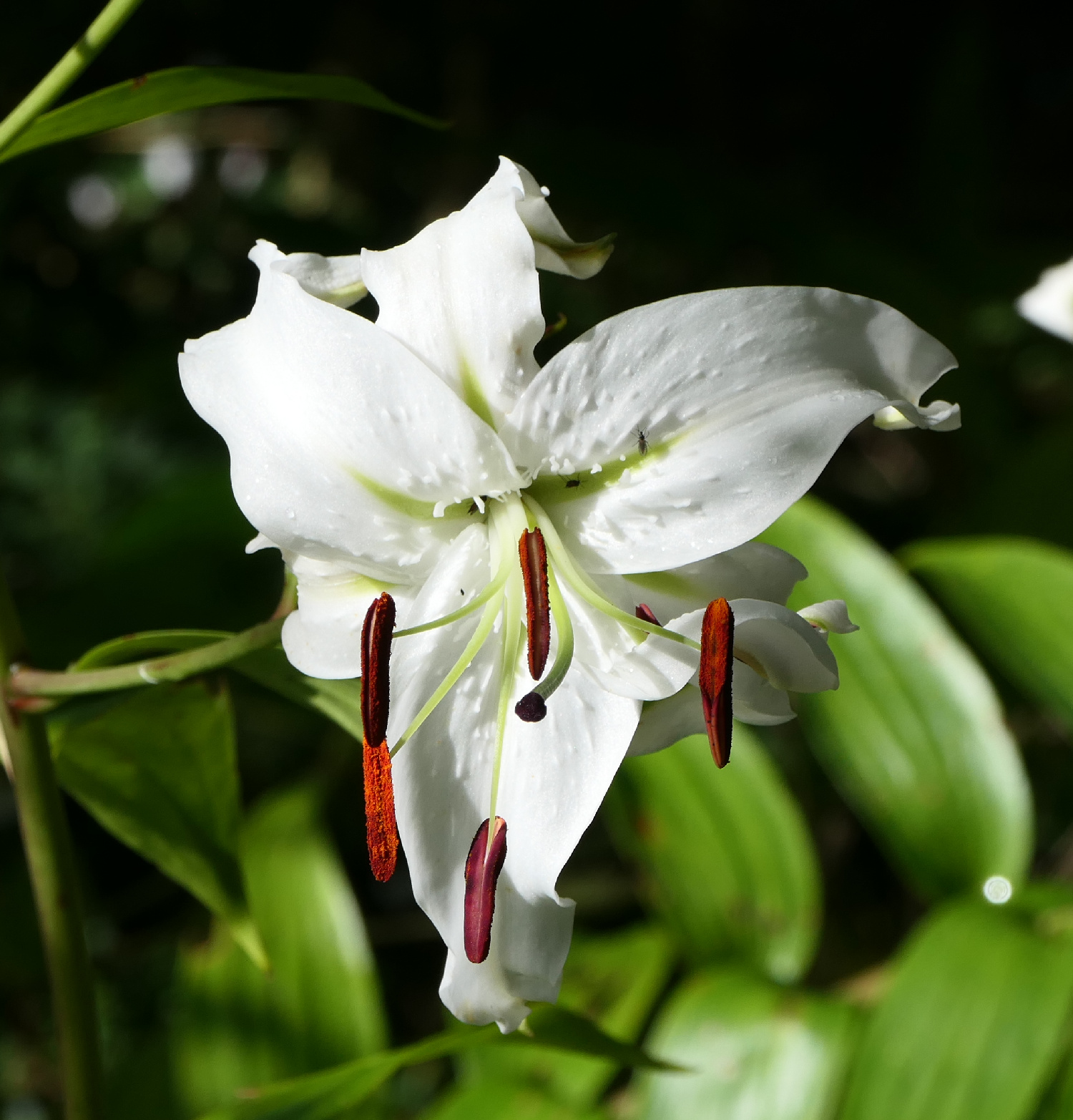
Julian began with Lilium speciosum album – an introduction from Japan – which starts flowering before October but goes into October and November. The white flowers go well with autumn leaf colour; it is planted with other members of the understory such as tulips, crocus and bluebells providing a succession of colour.
Julian and Fiona bought about 20 bulbs in 2013 after seeing it in flower in Aberglasney Gardens; since then, however, they have been unable to obtain any more. This can be a problem with bulbs – particular varieties can drift in and out of fashion and disappear from bulb catalogues. The moral of the story is that if you like a particular variety, get your skates on and order more quickly!
Next up – Cyclamen hederifolium. It is one of the most reliably long-lived of any flowering plant in the garden at Gelli Uchaf – tubers can survive for over 100 years, becoming larger over time. Several of the original plants were brought to Wales from Julian and Fiona’s previous garden in Bristol and are still thriving and growing in size.
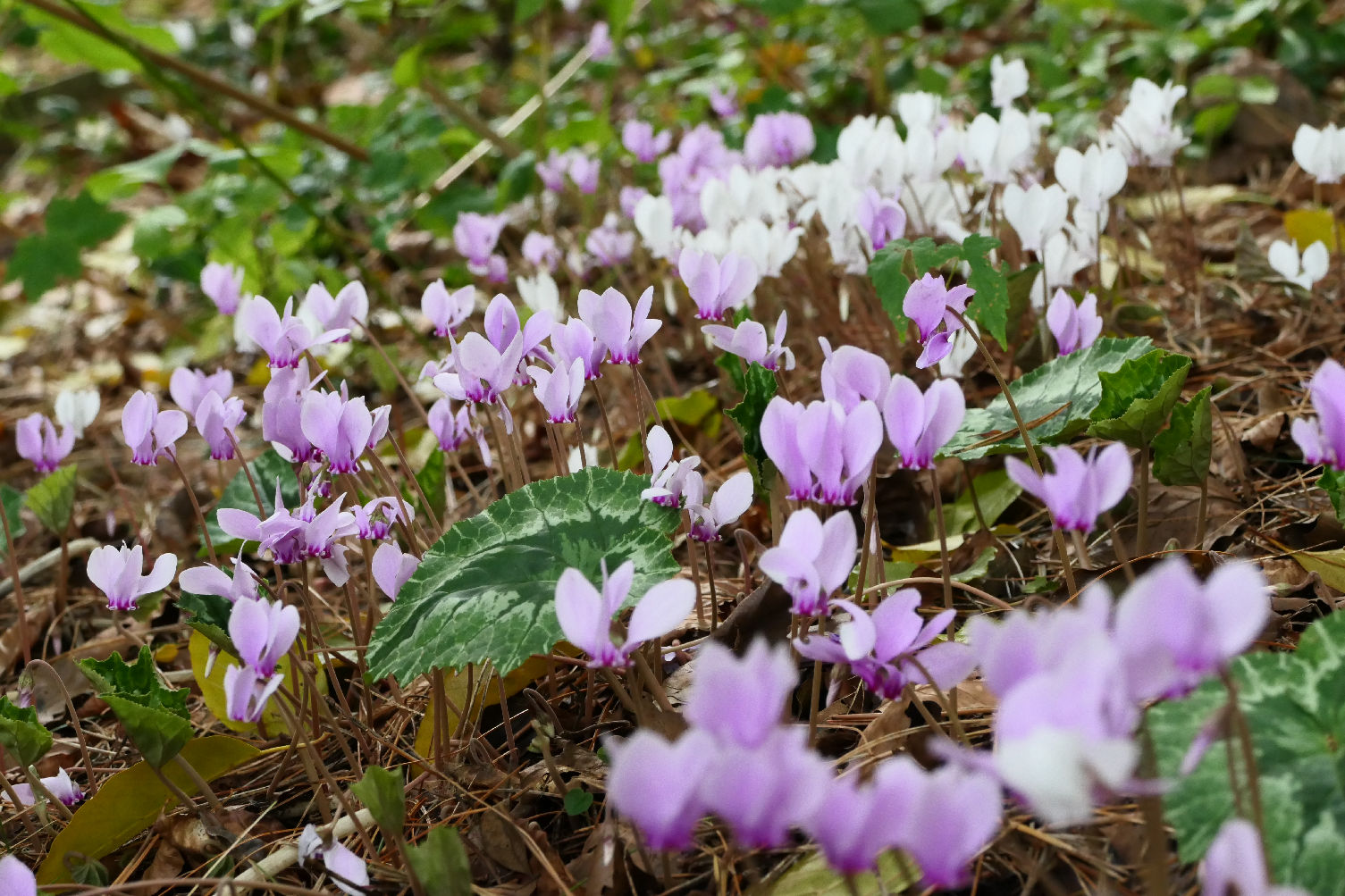
It’s the best plant for planting beneath deciduous shrubs/trees or even evergreens, doing what many geophytes do – becoming dormant in early spring, as these areas become drier and shadier, and then pushing up their wonderful shuttlecock flowers in early August, continuing into late October in most years. The fact that the flowers hang down mean that they’re always open, leaving the critical parts of the flower always available for pollination in any brief weather window moments when pollinators can reach them. The marbled leaves make excellent ground cover.
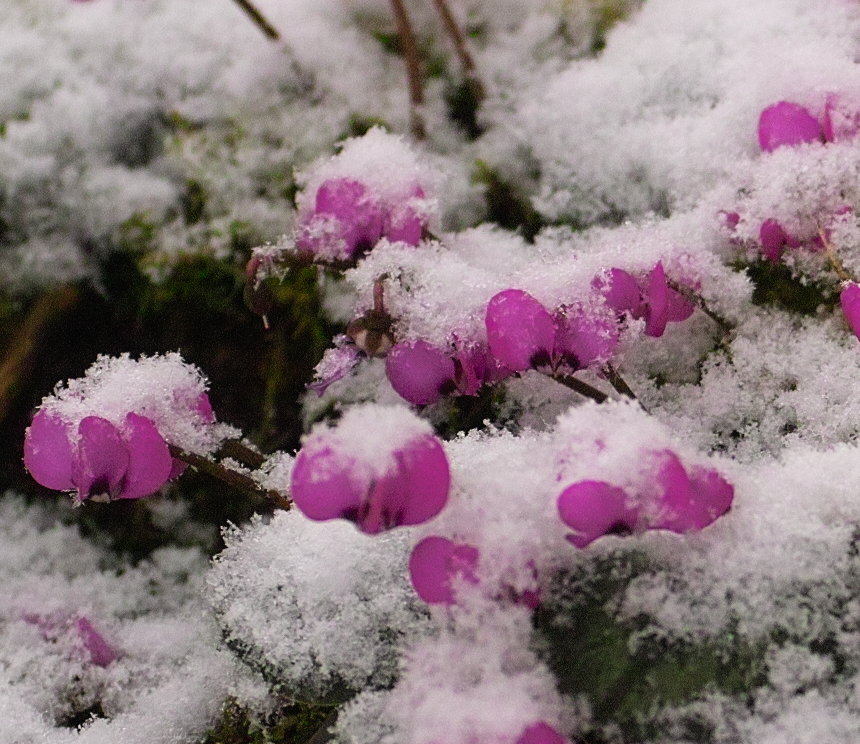
C. hederifolium is succeeded by C. coum in November. It is frost hardy and copes with snow, but it may need more light than C. hederifolium. The tubers and leaves (more rounded than heart-shaped) are smaller than C. hederifolium. Both varieties with suitable pollinators will make seed, and once the population reaches a certain size they will freely spread themselves around. Both cyclamens are slug- and disease-free and make excellent woodland plants.
Moving into January, sometimes even in late December, we head into the Crocus season. Crocus, however, have a major flaw, which most gardeners hoping for long-term success will be aware of: the corms are loved by squirrels and rodents.
The least favoured are C. tommasinianus forms. This is wonderful, because tommasinianus forms are also the most appealing flowers to honey bees and early emerged bumblebee queens, and so set masses of seed in a good year when our wet weather has some respite, and flowers can open for long enough to be pollinated. They should be planted where they will catch the sun for best pollination results.
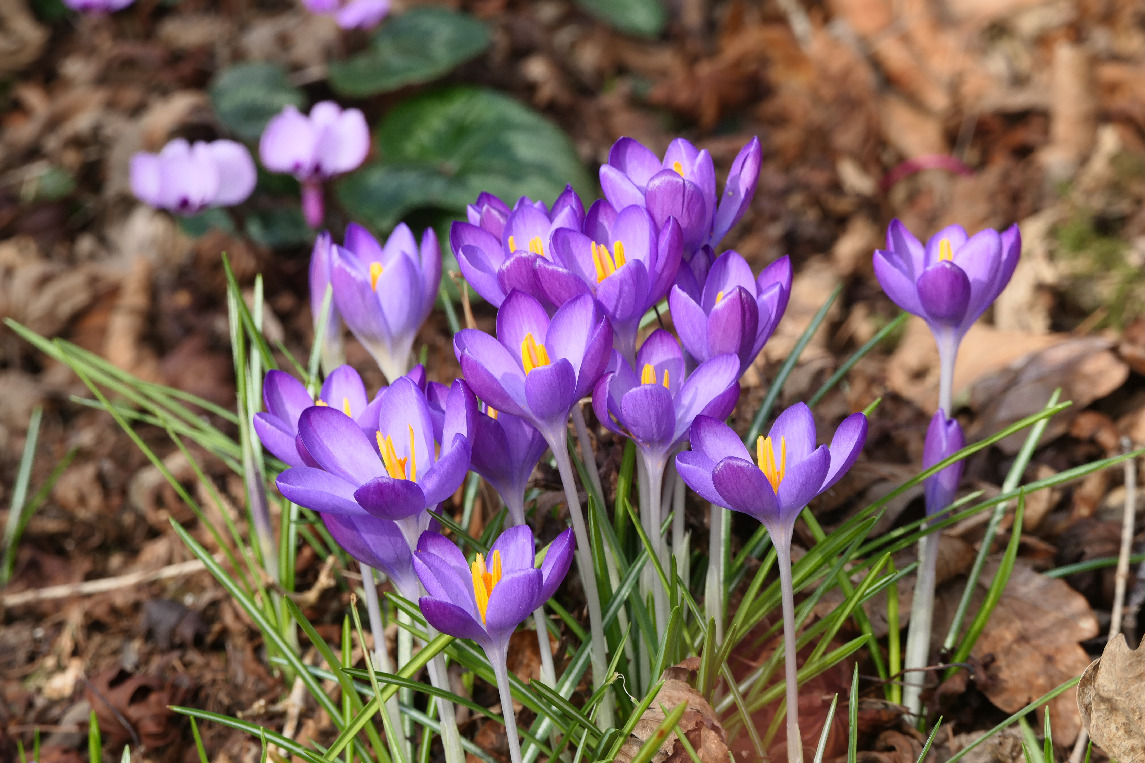
Scattering the seed is a great way of multiplying C. tommasinianus. At Gelli Uchaf there are now Crocus in many areas of the garden, and Julian is even trying to establish them in the wildflower meadow. Crocus sieberi ‘Firefly’ is also not so tasty to rodents – it is early and hardy, although Julian is not sure it sets seed.
Moving on to snowdrops – these were the first flowers planted in the garden at Gelli Uchaf over 30 years ago. It started with a few clumps of Galanthus nivalis, dug from Julian and Fiona’s garden in Bristol. In turn, they’d come from Fiona’s parents’ garden in Shropshire. They, in turn, had collected them from a much older farmhouse on the banks of the River Severn where they were ‘naturalised’. This is what happens with snowdrops, across Europe – people love them so much as symbols of hope in the depth of winter, so will plant a few, and then lift and divide them and give them to friends.
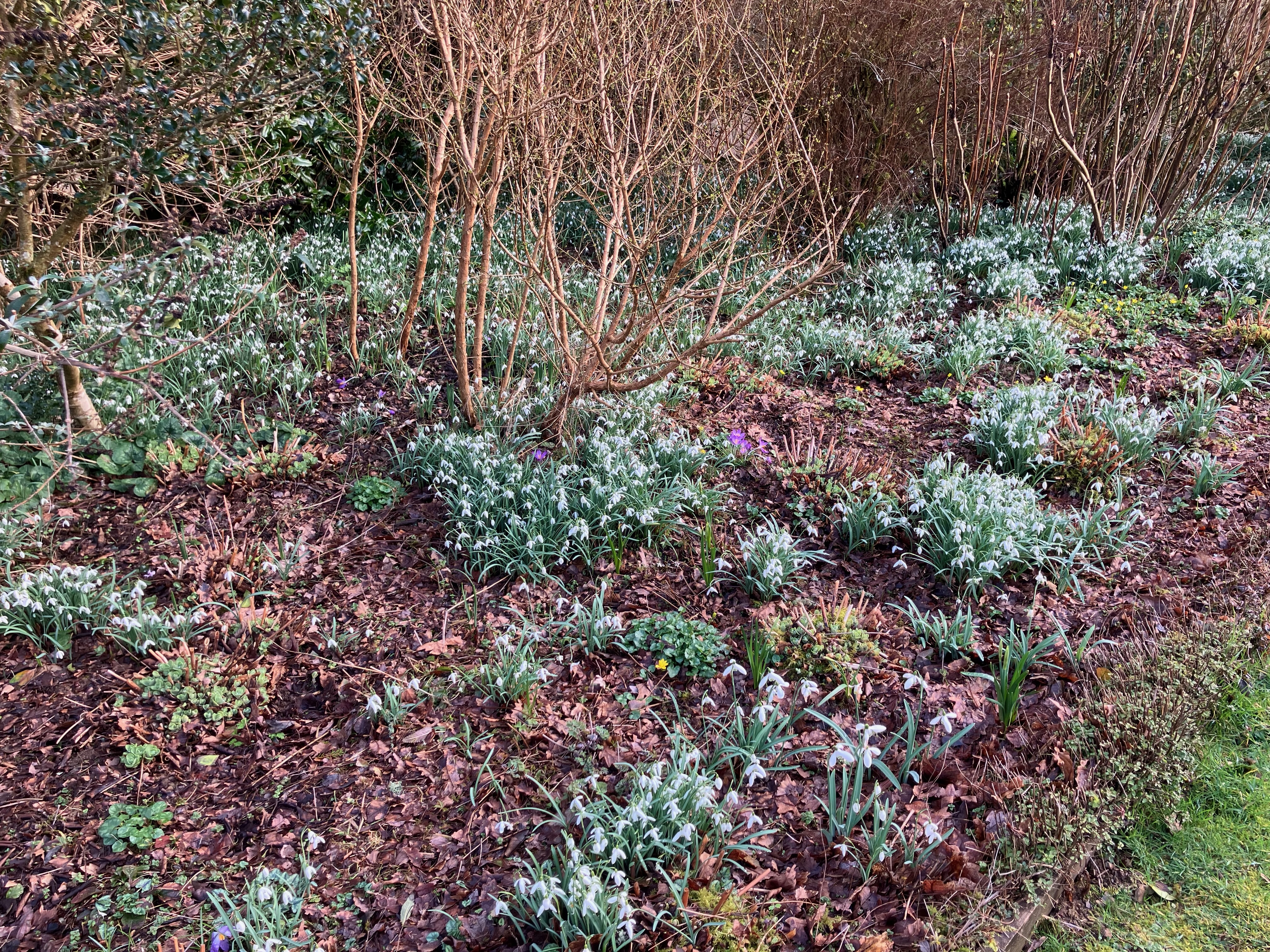
Over time, a few more snowdrop varieties were acquired, coinciding with Julian’s interest in honey bees and the realisation that growing snowdrops (and crocus!) close to honey bee colonies could benefit both.
And so began the Welsh Historic Snowdrop Hunt! This project involved Julian visiting locations associated with pre-1850 properties, where snowdrops are naturalized, and where there is a written or word-of-mouth history associated with the site. Most ‘naturalised’ populations of snowdrops are quite localized into island communities, and many have significant variations in flowering season as well as what they looked like. Some of these different snowdrop types now grow in Gelli Uchaf!
In addition, Julian has added to the collection with various named snowdrop forms, to try to establish which do well in our West Wales climate.
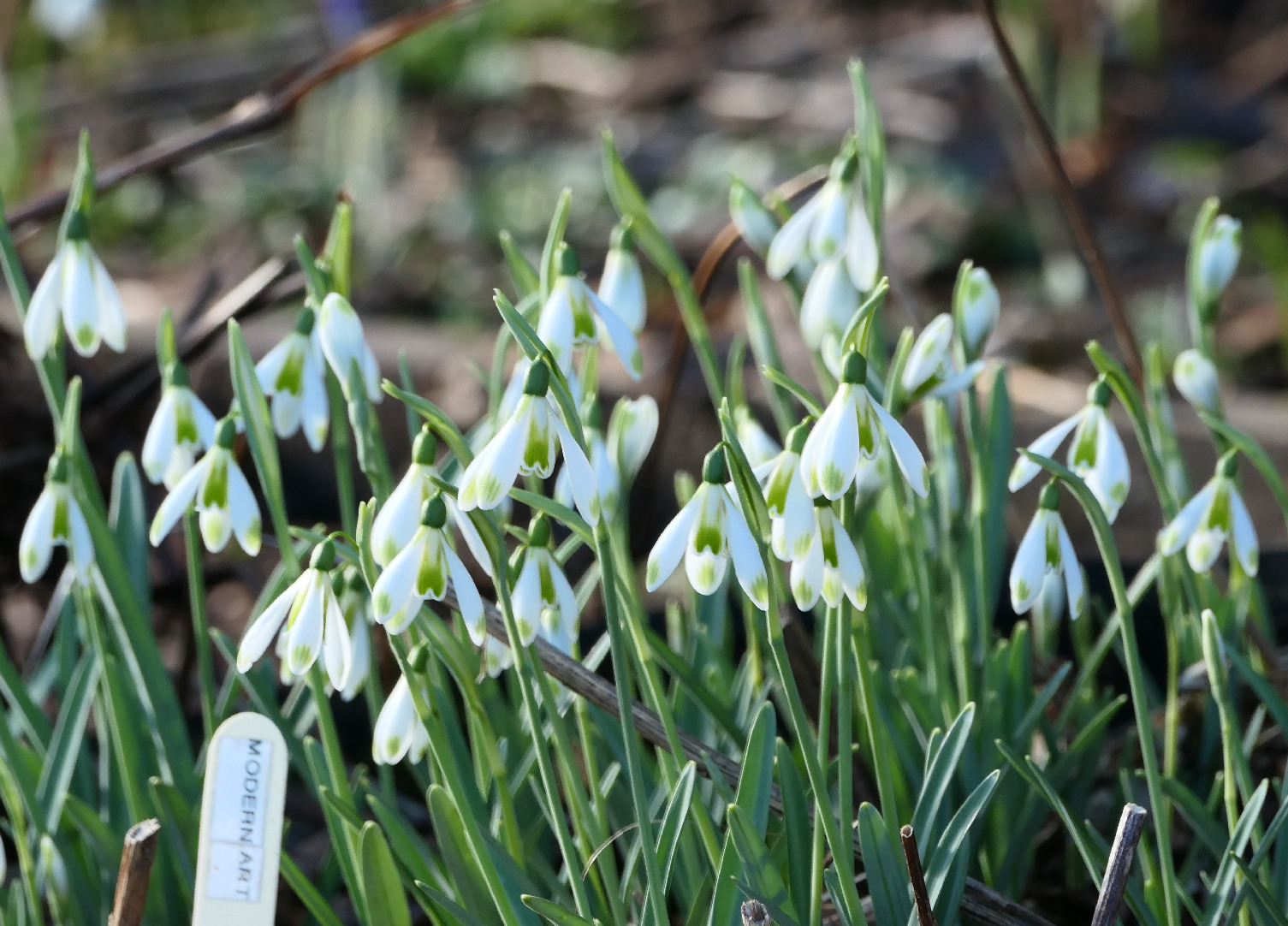
They now grow in most parts of the garden – from woodland areas, with semi/deep summer shade, to near full sun, or even in grass beneath deciduous trees. Good forms will survive in most of these locations. But they undoubtedly seem to do best where associated with deciduous trees or shrubs, in semi or deep shade, which is damp but not waterlogged over winter, and which dries out more during the spring/summer.
Julian had plenty of tips for those wanting to establish drifts of snowdrops at home:
- Start planting them when you’re young if you can, but remember it’s never too late!
- Avoid the very expensive or new cultivars – if they’re cheaper, or have been around for decades, it’s much more likely that they are vigorous and reliable, and best to plant them in the green. Start with any that have, or come recommended by a local snowdrop fan.
- Plant them in optimum conditions beneath deciduous trees and shrubs, where there will be plenty of leaf litter to encourage fungal interactions with the bulb’s root system.
- Be prepared to lift, split and move growing clumps, replanting them in two’s, three’s or more into new locations. This will give quicker and better results than planting singly. Do this any time from when the bulb shoots first emerge, to when the foliage is dying back, if the weather and soil are damp.
Plants that associate well with snowdrops (along with Crocus and Cyclamen coum) include: Scilla mischtschenkoana, Scilla bithynica, Chionodoxa forbesii, ‘Pink Giant’, Leucojum vernum.
In the same family as Galanthus/snowdrops/ – the Amaryllidaceae – are Narcissi/daffodils. The latter have a number of unique features. They are the only flower with a corona/trumpet; they have a unique way of preventing self-pollination; and they have a unique stem structure to help them support the comparatively large flower.
Daffodils were popular between the 1500s and the mid 1600s – in a book published in 1629 daffodils accounted for 100 out of the 1000 plants listed. They then fell out of favour for the next 200 years; however, now there are about 32,000 named daffodils (as opposed to 3,000 named tulips).
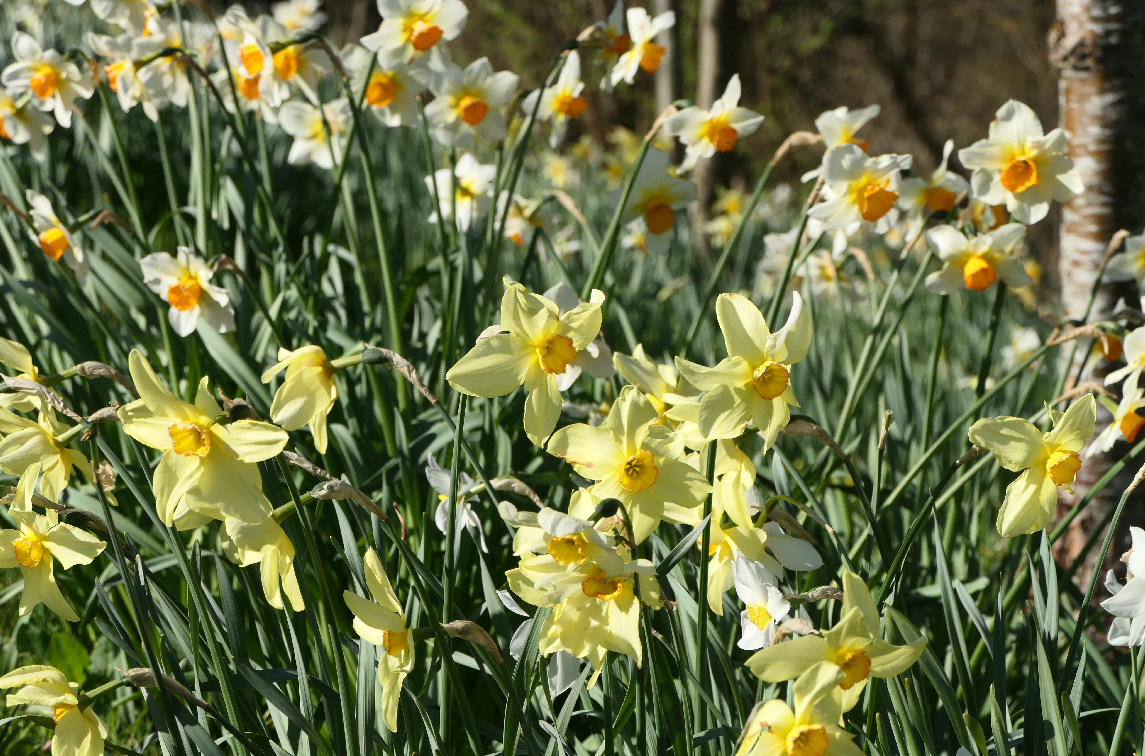
Daffodils are, of course, the national flower of Wales and can be relied upon (mostly but not always) to be in flower for St David’s Day on 1 March. The earliest daffodil in bloom is always ‘Rijnveldt’s Early Sensation’, and ‘February Gold’, as its name implies, is also early. Another early daffodil is the Tenby daffodil – Narcissus pseudonarcissus obvallaris – and the only one native to Wales. It is a bright yellow and very vigorous, although it can sometimes flower poorly. The other daffodil native to the UK , the Lenten Lily, is Narcissus pseudonarcissus lobularis.
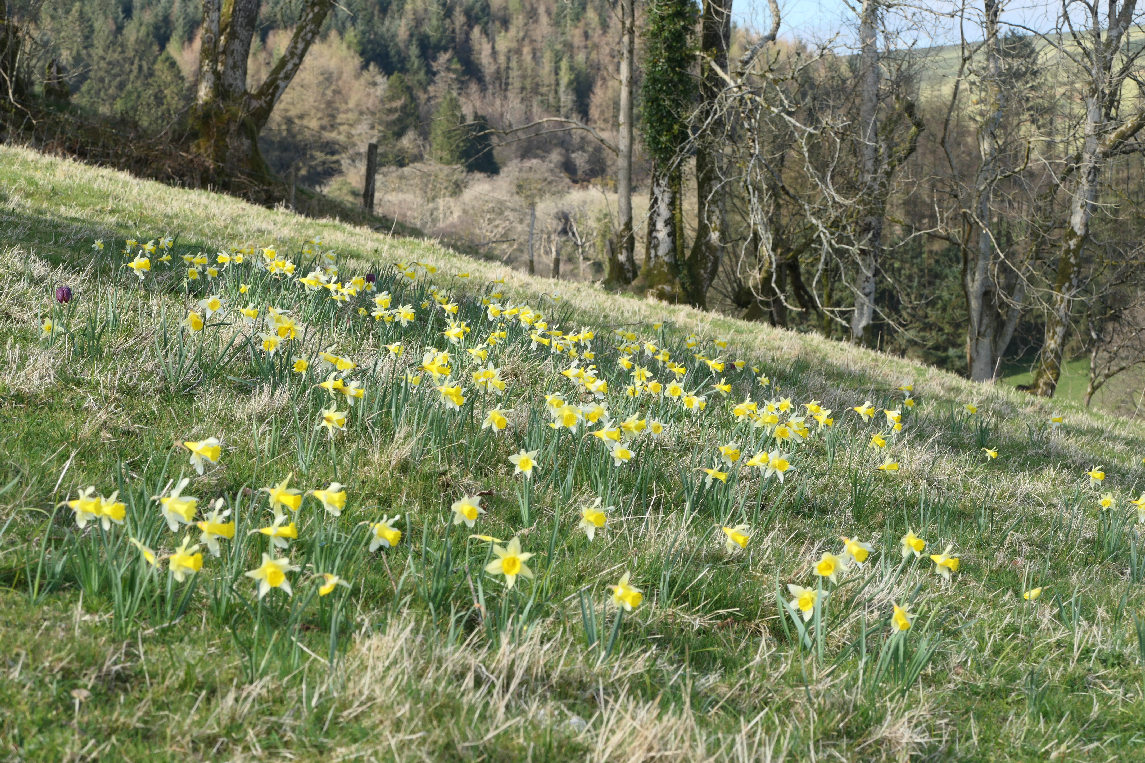
This latter daffodil is a good producer of seed, unlike most daffodils (Julian reckons that less than 5% of the daffodil varieties at Gelli Uchaf ever set any seed). It takes about 5 years from seed to flowering, and has been a successful, if slow, method of multiplying this variety, including on the sloping wild-flower meadow.
With careful selection of cultivars, you can have daffodils in flower in the garden from before March until early May – the last to flower are usually the poeticus varieties (which need a moth to pollinate them). The early variety ‘Brunswick’ is a very good ‘do-er’; the cyclamineus hybrids (eg ‘Jetfire’) do well in wetter conditions. Julian also mentioned ‘Damson’ and primrose-yellow ‘Helford Dawn’ as varieties that he likes.
Like snowdrops, daffodils can be transplanted in the green – although as the bulbs are bigger and deeper, it is harder work – a tub space is very useful for this.
Cotehele Garden in Cornwall is a very good place to see a superb display of daffodils in flower, with many heritage varieties among them. There are two main suppliers of old daffodils – Scamps Daffodils and Croft 16 – but you need to place your orders in spring!
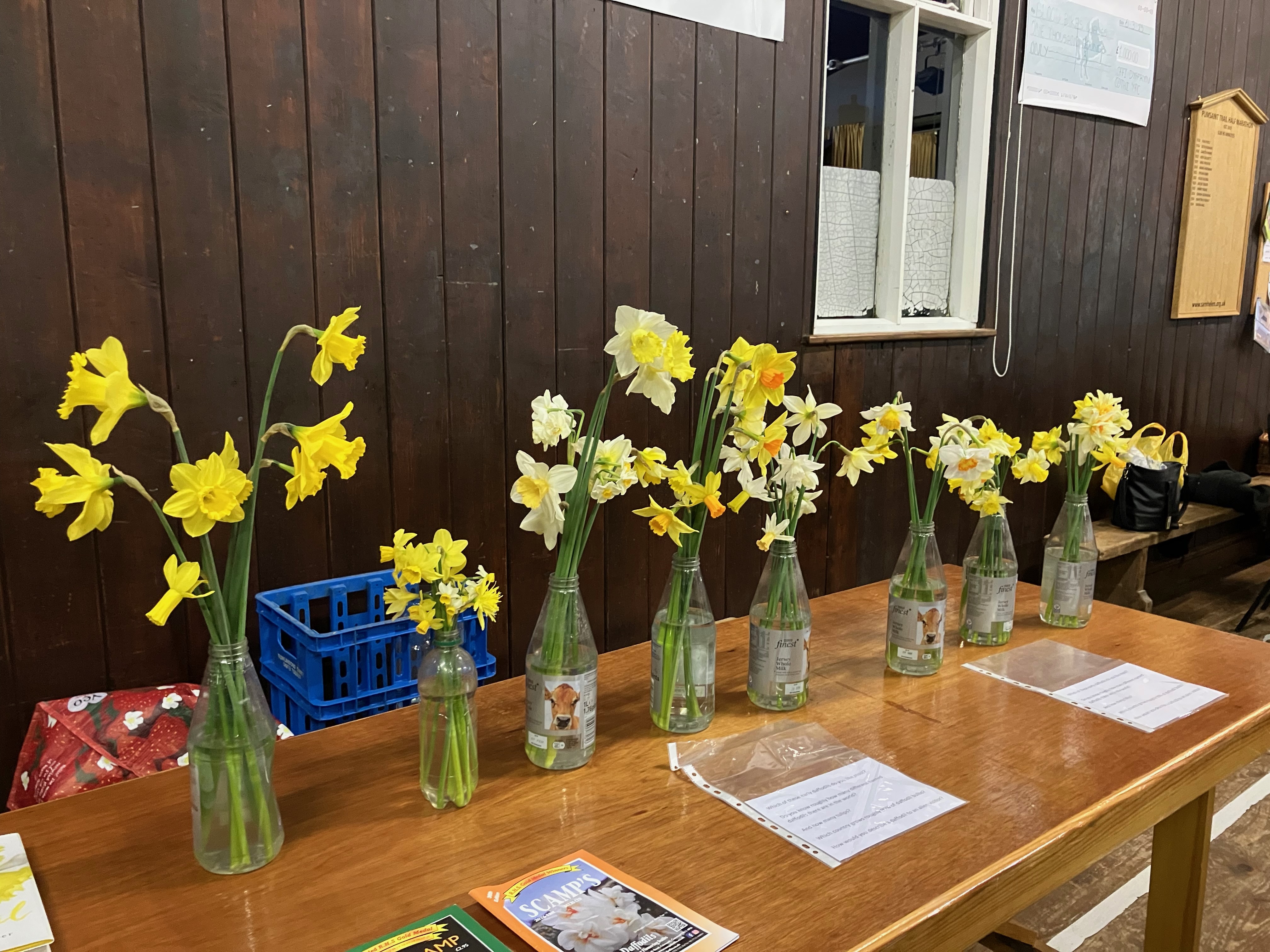
Julian concluded by inviting us to remember the ‘Underclass’ and to enjoy the journey. He had created a display of lots of different varieties of daffodils for us to view, and also brought for sale a range of snowdrops and other plants.
Fiona and Julian’s garden will be open for one weekend each in April, May and June. Details of opening with more information about the garden, and specific guides to snowdrops and daffodils which do well in our part of the world are on the Garden Impressionists website.
Bibliography
Smithers, Peter. Adventures of a Gardener.
Ruksans, Janis. Crocuses A Complete Guide to the Genus.
Kilpatrick, Jane and Harmer, Jennifer. The Galanthophiles – 160 Years of Snowdrop Devotees.
Parkinson, Anna. Nature’s Alchemist. John Parkinson, Herbalist to Charles I.
Parkinson, John. Paradisi in Sole Paradisus Terrestris.
Kingsbury, Noel. Daffodil.
O’Neill, Helen. Daffodil – The Biography of a Flower.
 Cothi Gardeners