Sex, Lies and Putrefaction – a talk by Timothy Walker; October Plant Swap and Sale; December Festive Tea

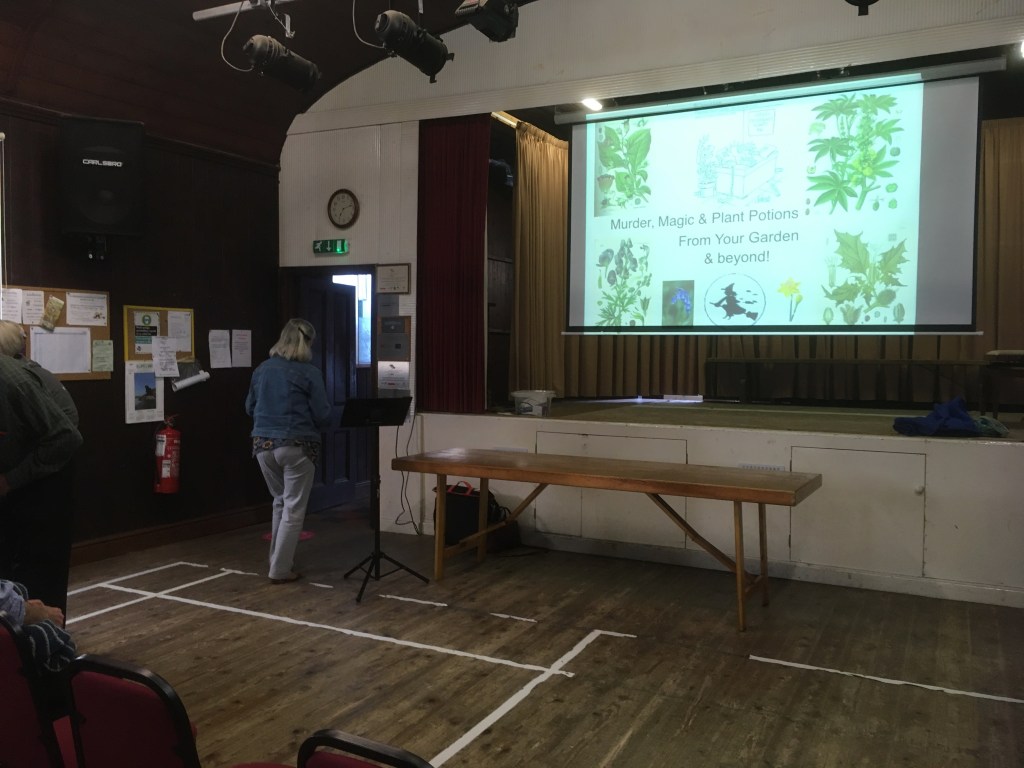
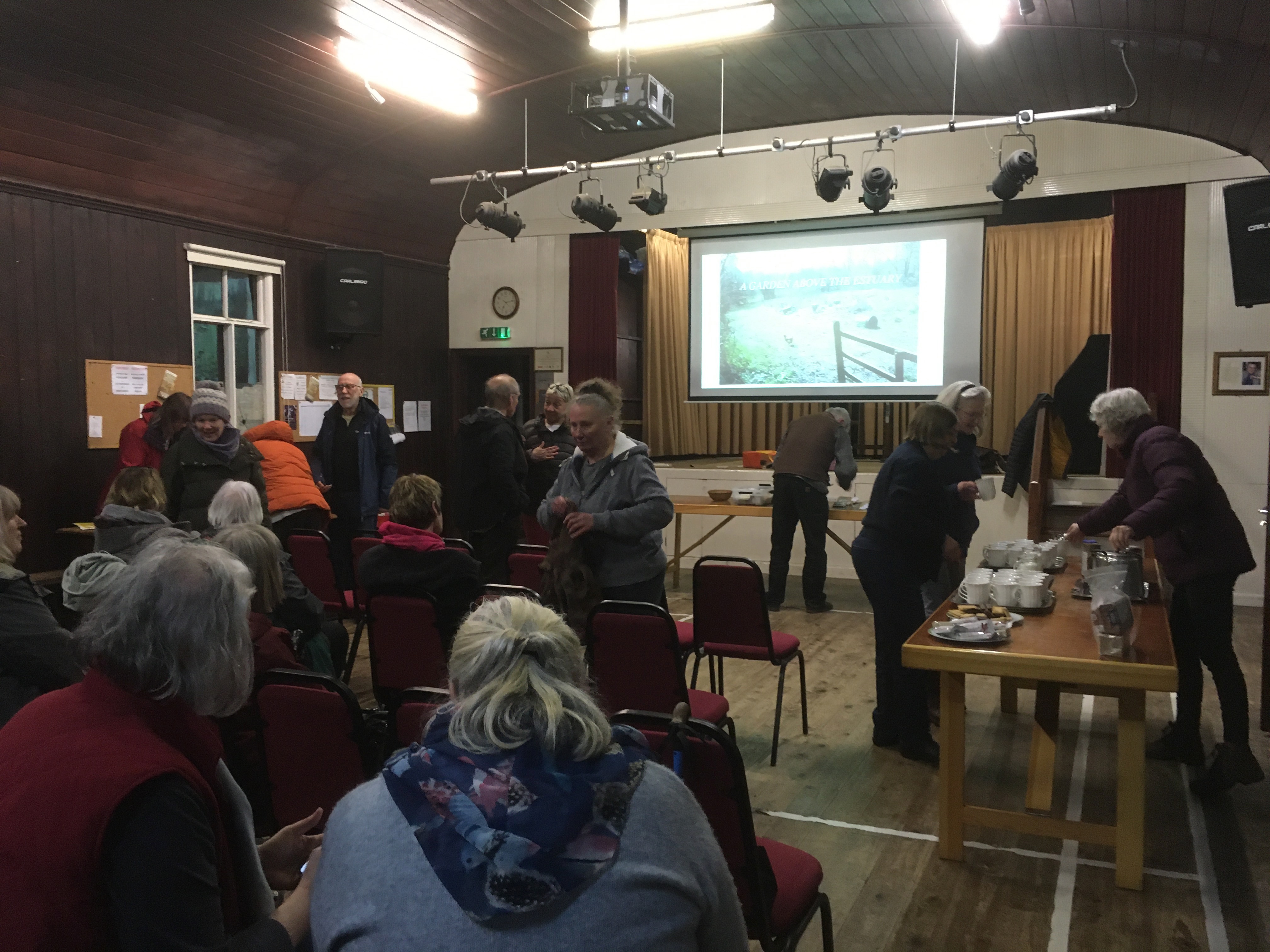
During the Covid-19 lockdowns of 2020-21, the Zoom talks organised by Fiona Wormald in lieu of our in-person meetings were a beacon of light which helped to lift the gloom of the general isolation. This repeated Zoom talk at our November meeting was shown in our meeting hall so that we could all enjoy for a second time what was a fascinating talk with the added benefit of social interaction, tea and biscuits!

Timothy Walker is a highly respected British botanist who was the Director of The Oxford Botanic Garden and Harcourt Aboretum from 1988 – 2014. He is passionate about plants, particularly regarding conservation and pollination, and is the author of several books on these subjects.

The talk began with with a quote from Charles Darwin in his ‘Origin of Species’ where he identified the relationship between the flower and the bee, and how they were perfectly adapted to each other, describing “pollination biology”. One of the many ways in which this was demonstrated was with the orchid, where a visiting hawk moth was able to reach over 12 inches into the flower in order to obtain the nectar. So, it was pointed out, not only did the moth end up with food, it also helped with pollination by dusting itself with pollen as it left which was then transferred to the next orchid it visited.

Pollen grains are different on each variety of plant, and fertilisation will generally only work when pollen of one variety is transferred from the anthers (male) to the stigma (female) of another plant of the same variety. Moving the pollen from one plant to another occurs via animals, insects, wind and (rarely) water. Even slugs can be pollinators (!), but not often. Plants have different ways of attracting pollinators, such as colour and scent, (though some use both, plus pattern); some, such as a number of trees, produce catkins where the pollen is then blown away to hopefully land on another catkin. The birch tree cleverly has a flap on the flower which protects the catkin and opens on landing, thus preventing random spillage of the seed. There are plants which actually inject pollen into the atmosphere. Grasses are almost always blown on the wind with only very few, such as the Canadian Pondweed, using water as a vehicle. Around 87% of water plant pollination is done by animal life, the majority being bees and wasps.

Night-flowering plants (such as nicotiana and night-scented stock) are hard wired to attract (mostly) moths via scent. Again, a short proboscis is catered for with a short pollen tube (or it could be the other way round!). The same theory applies to butterflies.

Birds obviously help with pollination and they particularly favour red flowers, although they also see UV colours; bats help as well, although they are quite clumsy and throw stuff around a bit.

Pollen is a highly nutritious substance and the whole organisation of fertilisation runs on a reward or bribe system benefitting both parties. The fig is a clever example of pollination where the fig flower is hidden inside what is effectively a brood chamber and a female wasp enters through a hole. She lays eggs; the male wasps hatch first and fertilise the unborn female wasps, create exit tunnels for those female wasps to move on to the next fig, and then die. Thus, if humans eat the fig they also eat the poor dead male wasps – not a reward for them but probably extra protein for the human!

Victoria amazonica is a South American water lily, which attracts a beetle of the Scarabaeidae family; it crawls into the flower, eats so much pollen that it gets drunk & is then too confused to remember its way home, eventually leaving the flower only to stagger on to the next one. Hopefully the wife (or husband) doesn’t possess a rolling pin otherwise there will be trouble!

There are, however, flowers that don’t smell good at all (to humans anyway), such as Dracunculus vulgaris, which smells like rotting meat and Helicadiceros muscivorus (or Dead horse Arum, which is probably a clue). These plants are largely pollinated by flies.

This really interesting Zoom talk by Timothy was just as entertaining the second time around, very well put together and certainly educational.


John and Helen’s October Plant Swap and Sale

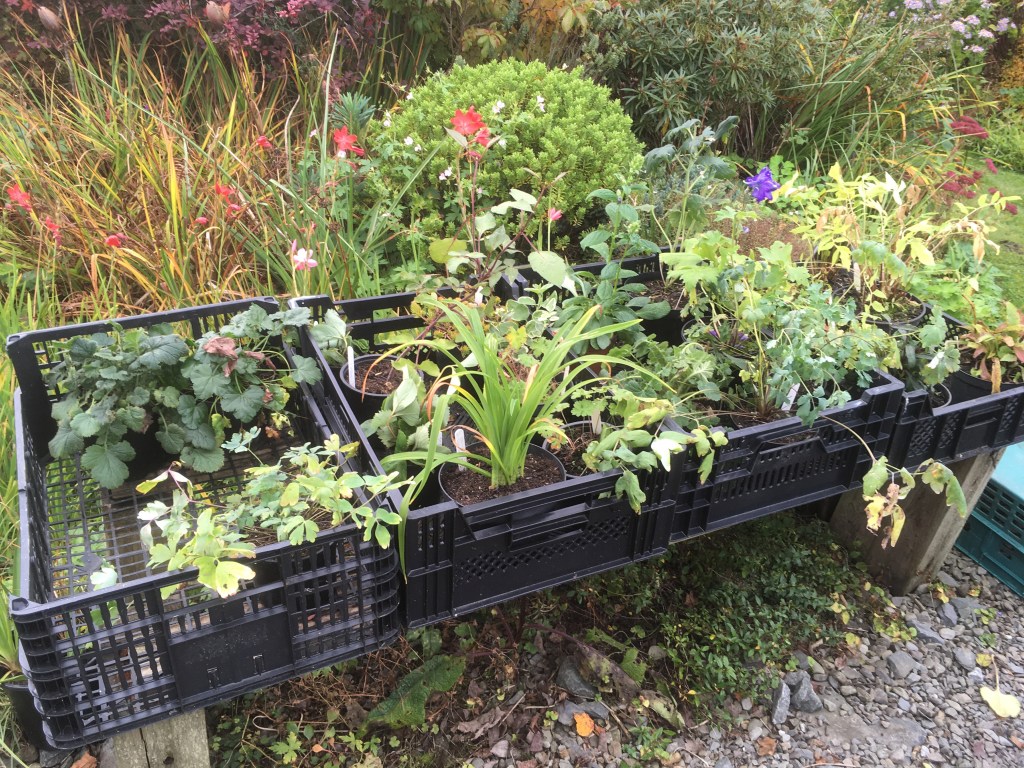
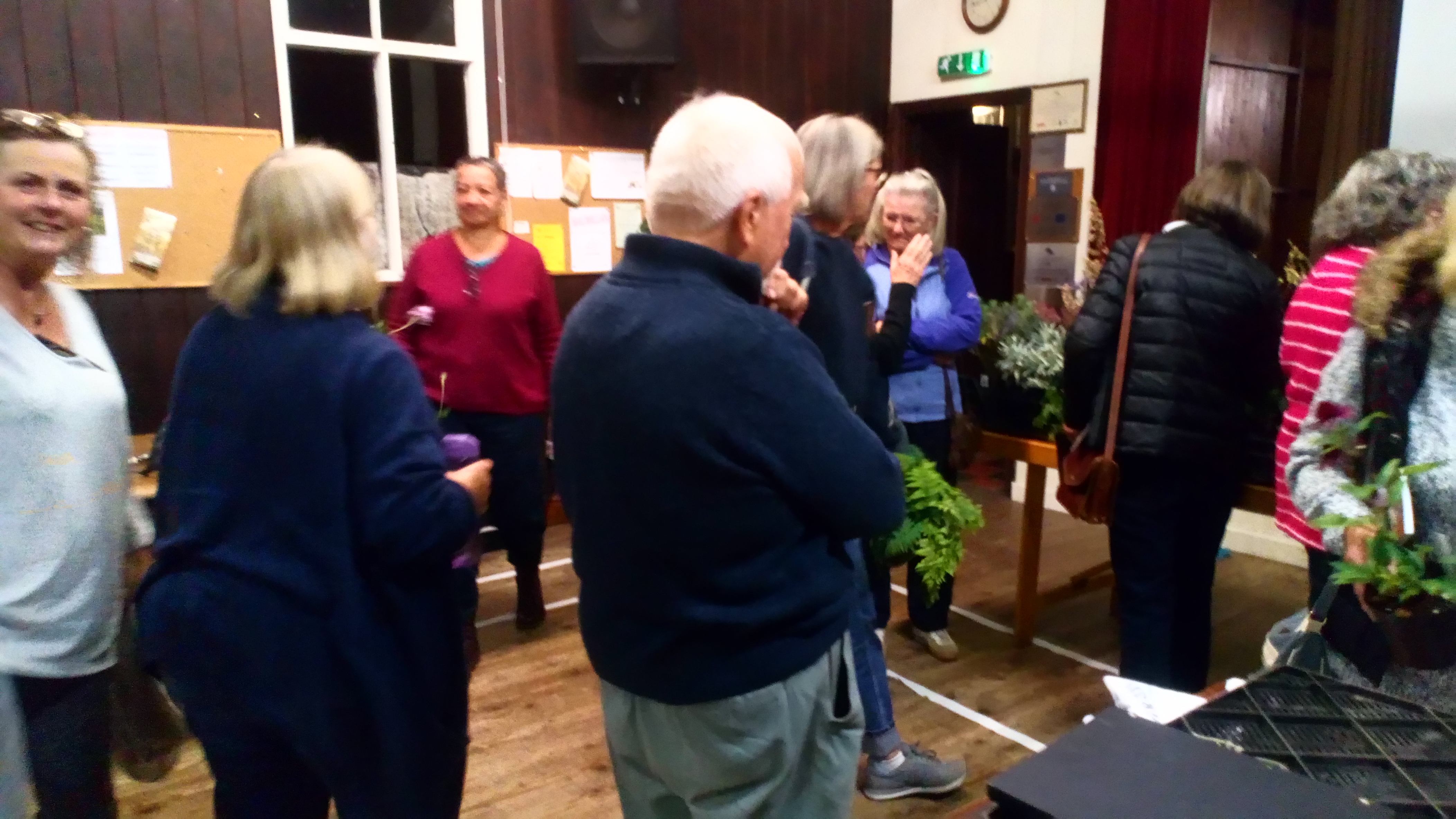
John and Helen Brooks held a plant sale at their garden Ty’r Maes on a Sunday afternoon in October to raise funds for the National Garden Scheme charities. It was very well attended, with visitors coming from as far away as North Pembrokeshire.

There was a great variety of plants on sale, provided by members of the Cothi Gardeners, and mostly of course by John and Helen themselves. The plants on offer ranged from trees, such as Paulownia tomentosa (the Foxglove tree) through to a great variety of perennials, including asters, geums, crocosmia, geraniums, hesperantha, persicaria, primula, rudbeckia, salvia, and many others. A great bonus of the afternoon was the enormous quantity of delicious cake provided by volunteers along with teas, and the opportunity to chat with other gardeners.

In total the amount raised for the NGS charities was a fantastic £900! This is a reflection of the tremendous generosity of the plant providers, Cothi Gardeners members and other visitors, and we should never forget the hard work that goes into organising such an event, including the refreshments.


Festive Christmas Tea on 14 December

This year the Cothi Gardeners are celebrating Christmas by holding a festive tea at Granny’s Kitchen in Lampeter at 3.30pm on 14 December. Twenty-two of us are attending, and it’s bound to be a jolly (and delicious) event, bringing to an end a year when we have finally been able to hold in-person meetings and celebratory gatherings again. Long may it continue!


Autumn into Winter with Richard Bramley of Farmyard Nurseries

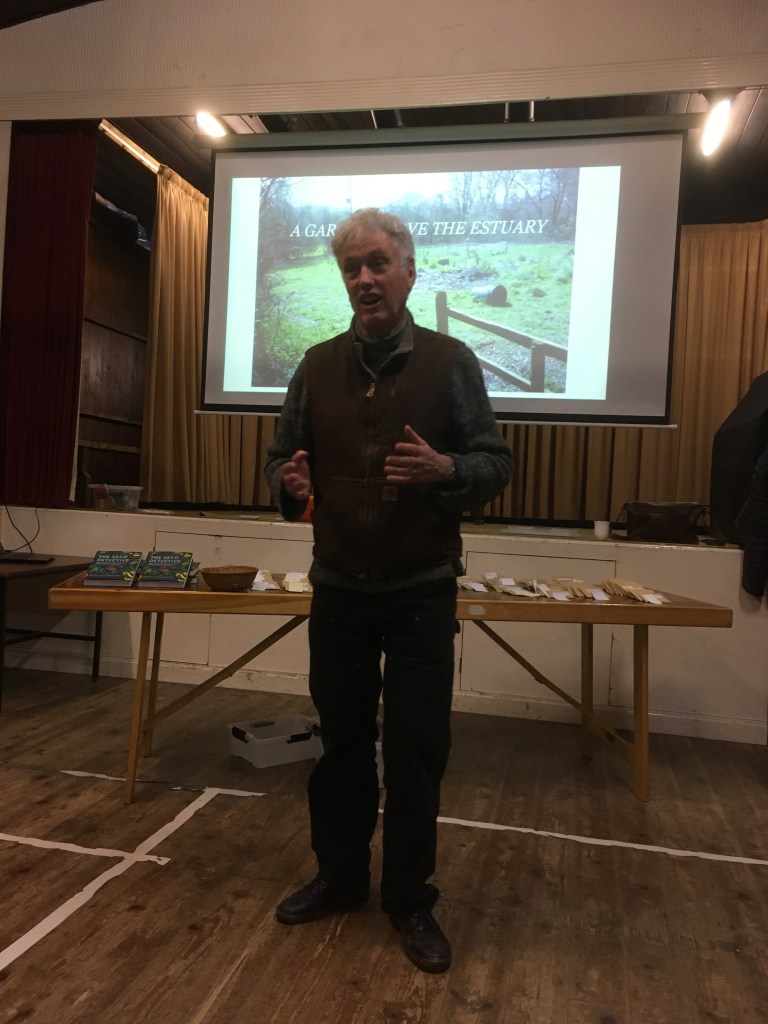
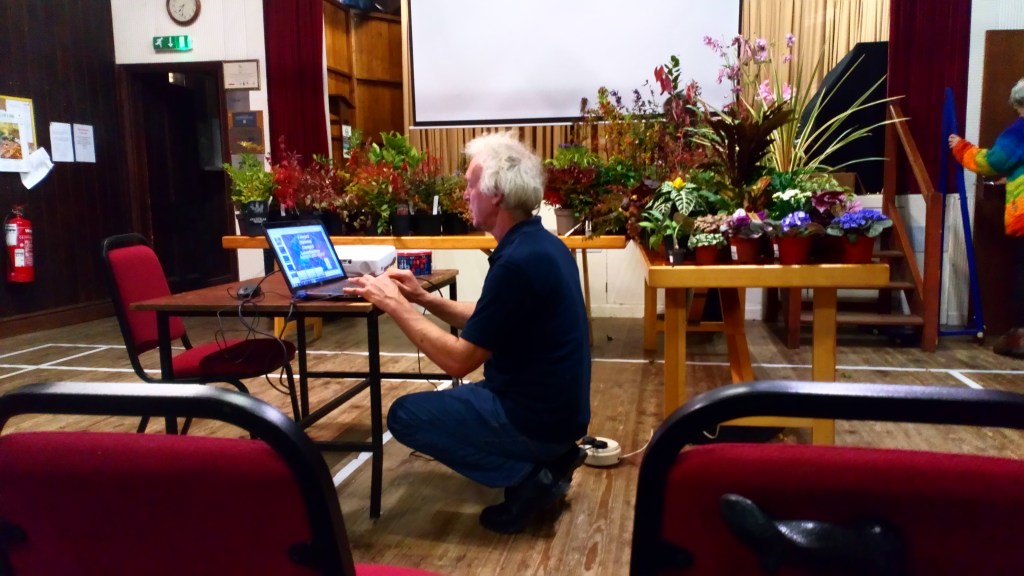
Richard Bramley, here preparing to give his talk, is from Farmyard Nurseries with 3 acres of land and 50 polytunnels near Llandysul, where 90% of the stock for sale is grown outside which helps to produce hardy plants of many varieties.

He is very keen to encourage people to think more about the colour and interest of plants – trees and shrubs can be grown in autumn and into winter.   Starting with Acers, which are not as difficult to grow as is often thought (though they don’t like wind), he showed many of the different colours, shapes and textures that can be provided by planting them. Liquidambar styraciflua, or Sweetgum, is more tolerant of wind though it doesn’t come into leaf until later in the season. Berberis thunbergii, although it is a bit prickly, is particularly worth having because it is so colourful and produces berries and flowers in addition. Also they can be kept at a smaller size if required by hard pruning, without any detriment to the look of the plant.

Winter stems, such as the many different varieties of Cornus, provide different upright shapes with a wide variety of colours and are very hardy. C. alba ‘Baton Rouge’ is one of the very bright red varieties during the winter and again Cornus produce flowers and berries.

There was a lot of discussion about Hydrangeas! The mopheads were described as ‘blocky’, whereas the Lacecap varieties of Hydrangea macrophylla are to be encouraged. Hydrangeas are (generally) enthusiastic growers and do provide colour in the flowering gap, while the H. paniculata varieties can reach up to 18 – 20 ft. Climbing Hydrangeas need to be treated differently at pruning time as they flower from the previous year’s growth but they will tolerate some shade during the flowering season which makes them very useful.

Fuchsia will grow happily into autumn and, although they will tolerate wet,  they do need plenty of light. Chrysanthemum (if cut down in spring) will last into autumn. Lavender, Nepeta, Astrantia and Campanula plus many of the daisy family, if cut down after previous flowering, can do surprisingly well. There are nearly 200 varieties of Aster now which can continue through autumn and the hybrids don’t get mildew, plus they will tolerate some shade.

Rudbeckia ‘Goldsturmwill also last, as will Leucanthemum, Helenium, Persicaria, Autumn Salvia, Kaffir Lillies, Solidago (Golden Rod), Heliopsis and many more varieties of flowers and shrubs, given some care, will reward the grower in spades (see what I did there).

Grasses will give lots of interest in the winter and there are some quite remarkable ones to try. Imperata cylindrica (Japanese Bloodgrass) when planted in a drift looks as if it’s on fire. Panicum virgatum varieties are very varied and do well when established. Grasses are deciduous and demand very little in the way of care, can be easily split, can be grown from seed and some of them flower.  There are endless varieties of grass to choose from now that will provide an addition to the garden in the cooler months.

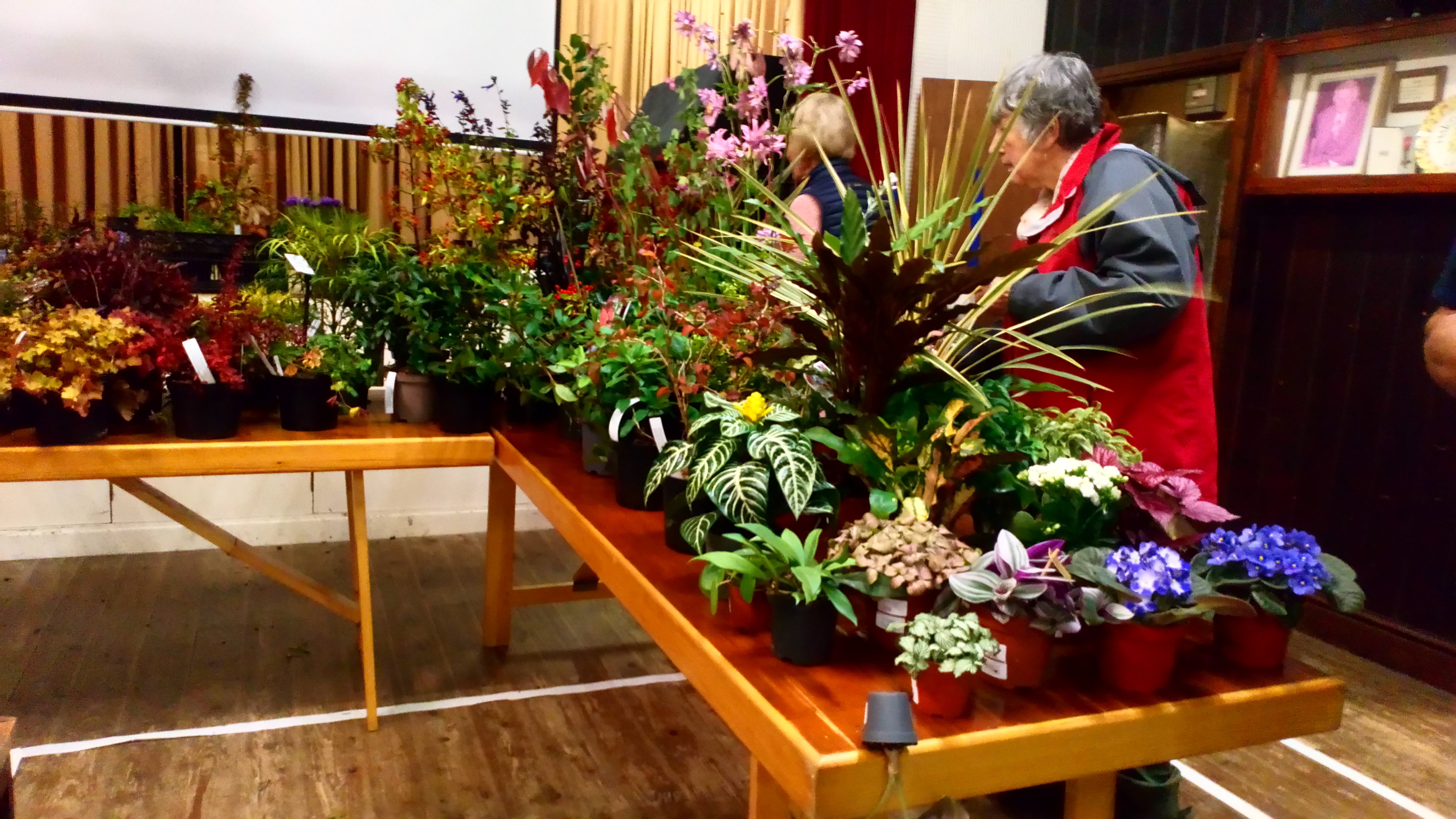
We thanked Richard and his support act Mabel (his dog) for his informative and entertaining presentation and took full advantage of the beautiful plants which he had brought for sale from the nursery.

Native Plants as Garden Flowers; Invitation to Local Gardening Clubs; Plant Swap and Sale

Native Plants as Garden Flowers – Talk by Bob Brown of Cotswold Garden Flowers

We were lucky to once again hear an entertaining talk from Bob Brown, founder of the Cotswold Garden Flowers nursery. He started by encouraging us to put the right plant in the right place – something we all know but need constantly reminding of! 

The initial list of headings was to outline the bullet points of his talk i.e. Acclimatised & Easy, Invasive, Garden Worthy etc. Bob went on to describe the different types of plants within the headings and started with the Welsh poppy (hurrah!) and we had conversations about the habits of the plant. He continued to describe many different types of plants which come into the native plant varieties including Achillea, seakale, viper’s bugloss, Mullein, Veronica spicata and many more.

Woodland plants were described next and include Aquilegia vulgaris, Allium sphaerocephalon, wood anemone amongst many others. 

Woodland Edge plants  & bulbs came next, such as the lawn daisies, hen & chicks, single Campanula, Colchicum autumnale, Pulmonaria, celandine varieties etc.

Grasses were the next category, including woodland grasses and Bob is keen on using plants needing structural support being grown within grasses, using the grasses as the support. Dogwoods, which look good with grasses, (Cornus sanguinea ‘Midwinter Fire’ in particular) are a favourite – he advises to cut them right down in winter.

Ferns of different types were next and his particular favourite, Polypodium vulgare, because it is evergreen in the winter but has died down by June and so makes way for other plants.

Iris types and the different areas in which they flourish came next and we discussed the very smelly Iris foetedissima (roast beef plant) & had a chat then about what the smell actually is like!

Primula varieties, which have been grown here since Eizabethan times, are a good bombproof plant for many areas. 

Roses, particularly varieties of the small Rosa pimpinellifolia ,were discussed, and then many more of the different native plants including the shrubs Salix purpurea (purple willow) and the different varieties of Sambucus nigra (elder), both of which are fast growing and invasive.

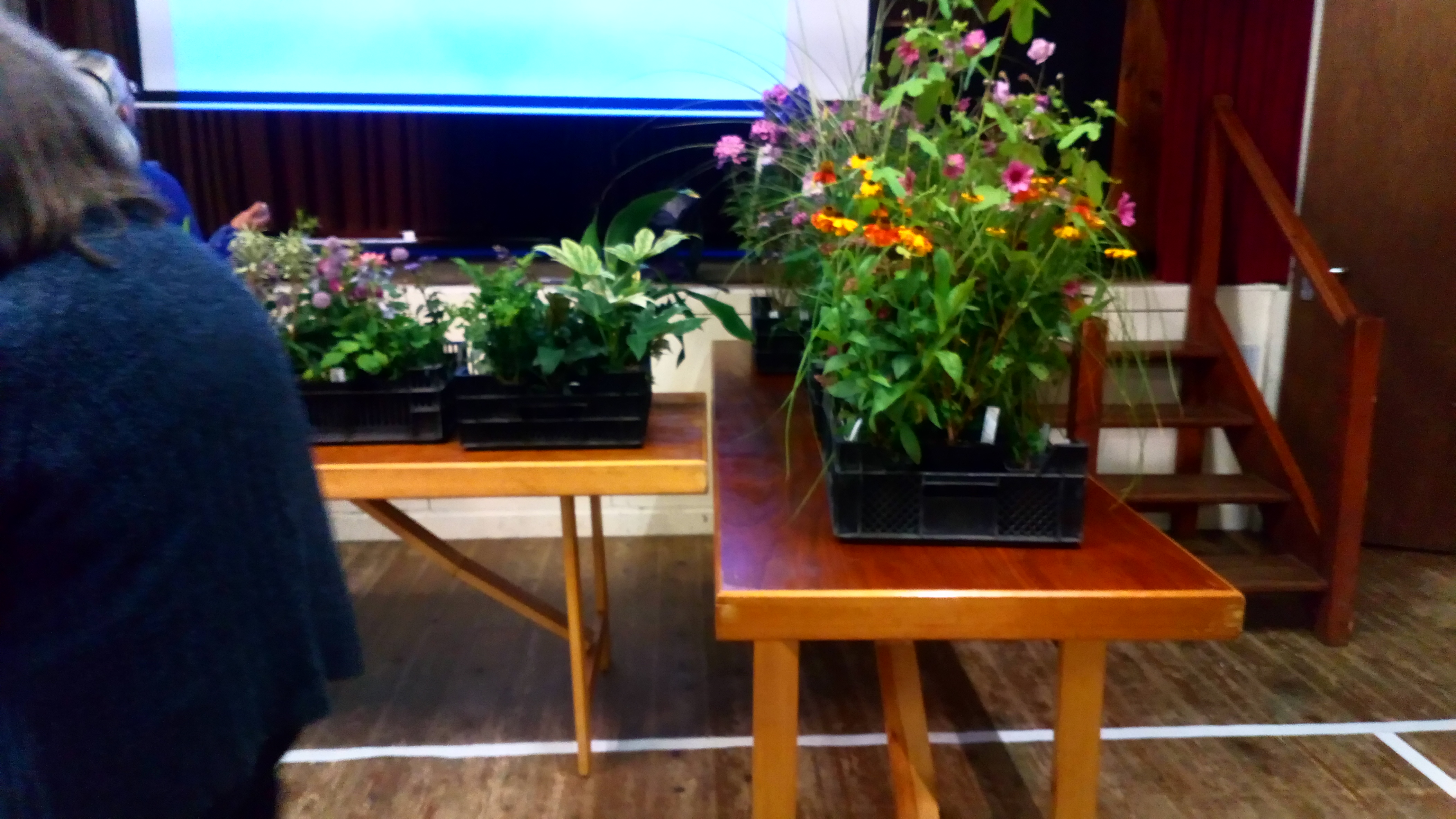
We thanked Bob for his informative and entertaining presentation and took full advantage of the beautiful plants which he had brought for sale from the nursery.


Invitation to Local Gardening Clubs

Drefach Felindre Gardening Club and Llechryd and District Gardening Club have each kindly invited all Cothi Gardeners to attend any of their meetings, which are listed below. We hope that their members will also choose to attend our meetings this year and beyond.

Drefach Felindre Gardening Club

All meetings are held at 7.30 pm in the Red Dragon Hall.  Guests simply pay £2 per meeting which includes refreshments.

Open evening October 5th

The speaker is Stuart Akkermans, ‘Cae Hir’: A Welsh Garden with a Dutch History. Light refreshments to follow. This event is free to Cothi Gardeners Club members.

Wednesday, 2nd November 2022 ‘The Gardens at Winchester Cathedral’, Emma Sharpe

Wednesday, 30th November 2022 ‘Biodynamic Gardening’, Louise Cartwright

Llechryd and District Gardening Club

Meetings are held in Boncath Hall, SA37 0JL

Wednesday 12 October at 7.30pm
‘The Treasures of Tadjikistan and Uzbekistan’ with Bob & Rannveig Wallis
Bob and Rannveig Wallis were plant hunting in Central Asia before the pandemic and this illustrated talk starts on the border with Afghanistan and goes via Samarkand and Tashkent to the Chatkai Range. This is the centre of Tulip and bulbous Iris development and also features Fritillaria and Corydalis. Superb photographs and an excellent speaker. Last club plant table of 2022.

Wednesday 9 November at 7.30pm
‘Costa Rica’ with Julian Cremona
Julian Cremona’s brilliant photography brings this small country’s amazing wildlife and flora to life. Dense broadleaf evergreen forest, palm trees, mangroves, mosses, orchids and tropical plants as well as monkeys, sloths, anteaters, snakes and iguanas. Annual Club Seed Swap. 


Plant Swap and Sale for the NGS 9 October 2022

John and Helen of Cothi Gardeners are holding their annual plant swap and sale to raise funds for the NGS on 9 October at 1pm at Ty’r Maes, Ffarmers SA19 8JP.

There will be loads of plants for sale, a lot more than last year, when just about everything went!
There will also be a table of plants that are available for a small donation. These are generally perfectly garden worthy plants that for presentational reasons are not quite up to selling standard.

People are encouraged to bring in plants to swap. Last year some wonderful plants arrived and were seized on immediately.

Tea, coffee, biscuits and cakes will be provided. If you bring extra cakes, that would be great too.
There is no charge for refreshments, but as funds are being raised for NGS charities – donations are always welcome.

A word about parking. We will be using our bottom field, opposite the turn to Ffarmers, for parking and there will be NGS signs up.
The area in front of the house will be available for loading and unloading plants.


August Social; Telegraph Garden and Indoor Plant Centre

August – time for the Cothi Gardeners’ annual social event! This year it was held at the Telegraph Garden and Indoor Plants Centre and adjacent Blossoms Cafe in Llangadog. 

Much anticipated by members, the event proved immensely popular and was extremely well attended. Following a talk by Carol from the Garden Centre, and a chance to wander through the Garden Centre and buy plants, members were able to choose from a very varied menu of savoury dishes, as well as the all-important cake, at the Blossoms Cafe. It was a coolish evening after the heat of the previous week, so the cafe felt warm and welcoming, and it was soon filled with voices and laughter as we all caught up with each other and what we had been doing. The general consensus seemed to be that the food was delicious (I can vouch for my Greek Salad), and the cakes looked mouthwatering!

The social was also an opportunity to celebrate belatedly the tenth anniversary (which was actually in 2021) of the Cothi Gardeners Club, and say thank you to Yvonne who started the club back in 2011, providing us with the pleasure of regular talks on the subject close to our hearts and the opportunity of socialising with like minds. Long-term member Donna would shortly be moving away from the area, so on the occasion of her last meeting we all wished her well for the future and settling in to her new home.

Members of Cothi Gardeners listening to Carol’s talk at the August Social

Telegraph Garden and Indoor Plant Centre

Carol has always enjoyed gardening and been passionate about plants.  Whilst working for the National Trust in Wales as their Grants Manager, she used to break the journey up and down Wales by stopping at different Garden Centres en route.  Sadly the experience tended to be the same at every one, giving a groundhog day feeling.  When Carol retired after working for 31 years for the National Trust, she set up a small Garden Centre on space rented from the Works Antiques Centre in Llandeilo.  However, illness and parking/space problems forced the closure of this Centre.  When Carol and her husband Steve moved to the Telegraph Inn at Llangadog, her daughter Lara saw the opportunity of converting the damp and overgrown area behind the building into a garden centre and The Telegraph Garden and Indoor Plants Centre was born. Although in retirement, Carol enjoys helping out and, in total, the Garden Centre in Llangadog now has 4 members of staff.

Running a garden centre can be more complicated than you might think. One of the skills you need is anticipation – for example, you need to be able to anticipate which plants Monty Don might talk about on Gardeners’ World!  Carol gave the example of Lunaria, or Honesty. Carol had plenty in stock, and they had sat happily on their table without a great deal of interest being shown until Monty Don showed some Honesty in his garden one Friday evening, and all the stock went almost instantly. You need to anticipate what plants people will want when, which means being able to second guess the weather, fashions, television gardening programmes, etc. Obviously the ideal would be for people to want to buy plants year round, and the Garden Centre encourages that, but the winter months can be quite difficult in that respect.

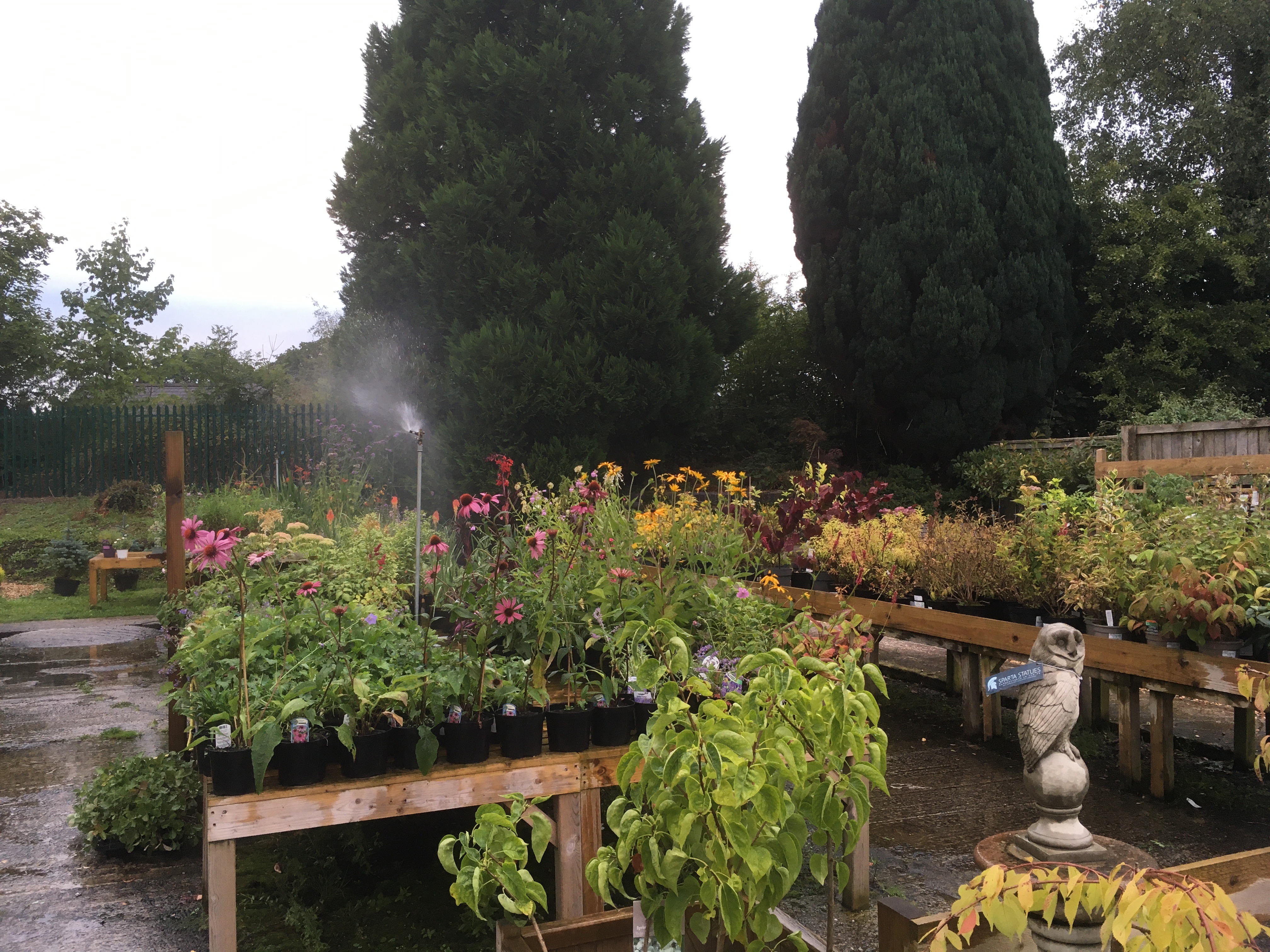
When creating the Telegraph Garden Centre, Carol’s daughter Lara designed the area to look like a garden. The wish was for people to enjoy looking round and to relax there, even if they did not buy anything. Certainly the displays of massed perennials for sale in pots look very much like well-composed garden beds.

At the Garden Centre they are very careful about the sourcing of plants and keen to support other local producers where possible. All the trees, decorative and fruit, are raised in Worcestershire. The bedding plants are sourced in Powys, and all the herbs are grown organically in Ceredigion.

If it is not possible to source some perennials, these are grown from cuttings or seed, and in fact many of the plants in the garden centre are raised there. For example, Nepeta ‘Blue Dragon’ was almost impossible to get hold of, but one plant was sourced and there are now young plants of Blue Dragon available to buy. Here Carol holds one of her favourite plants, Calamintha nepeta, which she grew from seed.

The Indoor Plant Centre is also a great success, with a wide variety of indoor plants always available.  This has proved enormously popular, particularly with the younger generation who really enjoy this form of gardening.

At the Garden Centre, they try to be as environmentally friendly as possible, with peat-free and reduced- peat compost always available.  Pots are recycled at the Centre on behalf of customers and charities for onward use. During the course of the year, as appropriate, plants are  divided, repotted, cut back and tidied up and the whole process started again ready for sale the following year. Customers can have their hanging baskets refilled with no charge for labour, only for the plants and compost used.

One of the downsides of running a garden centre is the paperwork, which is substantial. To counter that, there is the pride in supplying quality plants to customers, and there is the joy of propagating,  creating and nurturing new plants..

Carol finished by giving us all some of her tips. When she’s taking cuttings, she dips them first into liquid seaweed fertiliser and then into rooting powder. Cuttings should always be placed around the edge of the pot, and you need to keep them damper than you would think. Vitax Q4 is really good for plants that are looking a little tired and need perking up. Finally, when dividing plants it helps to take some root off; it might look a little brutal, but it encourages the plant to make more.

On that final note, Carol encouraged the Club members to explore the garden centre and the range of plants available, and we all made the most of the opportunity!