August Social

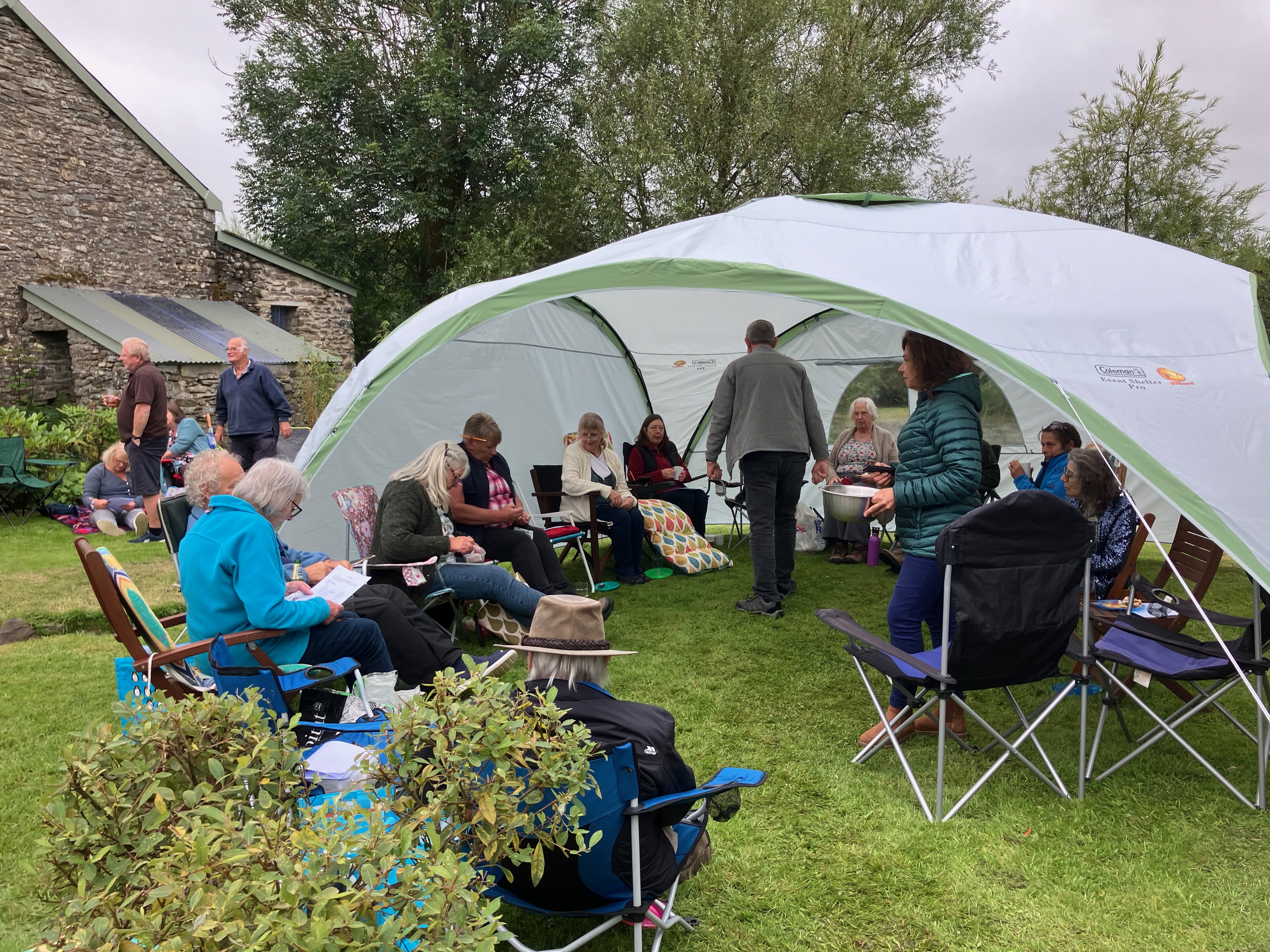
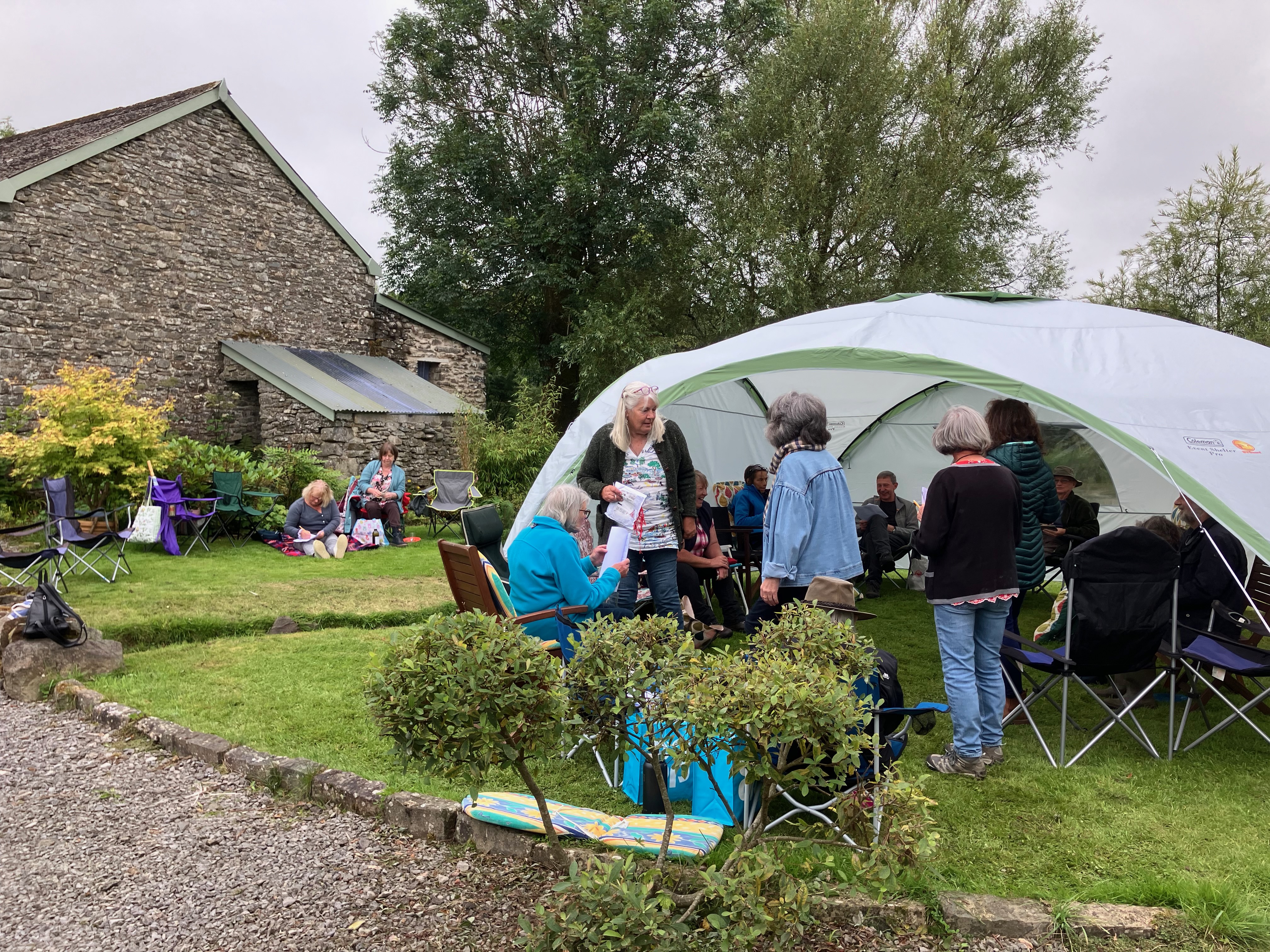
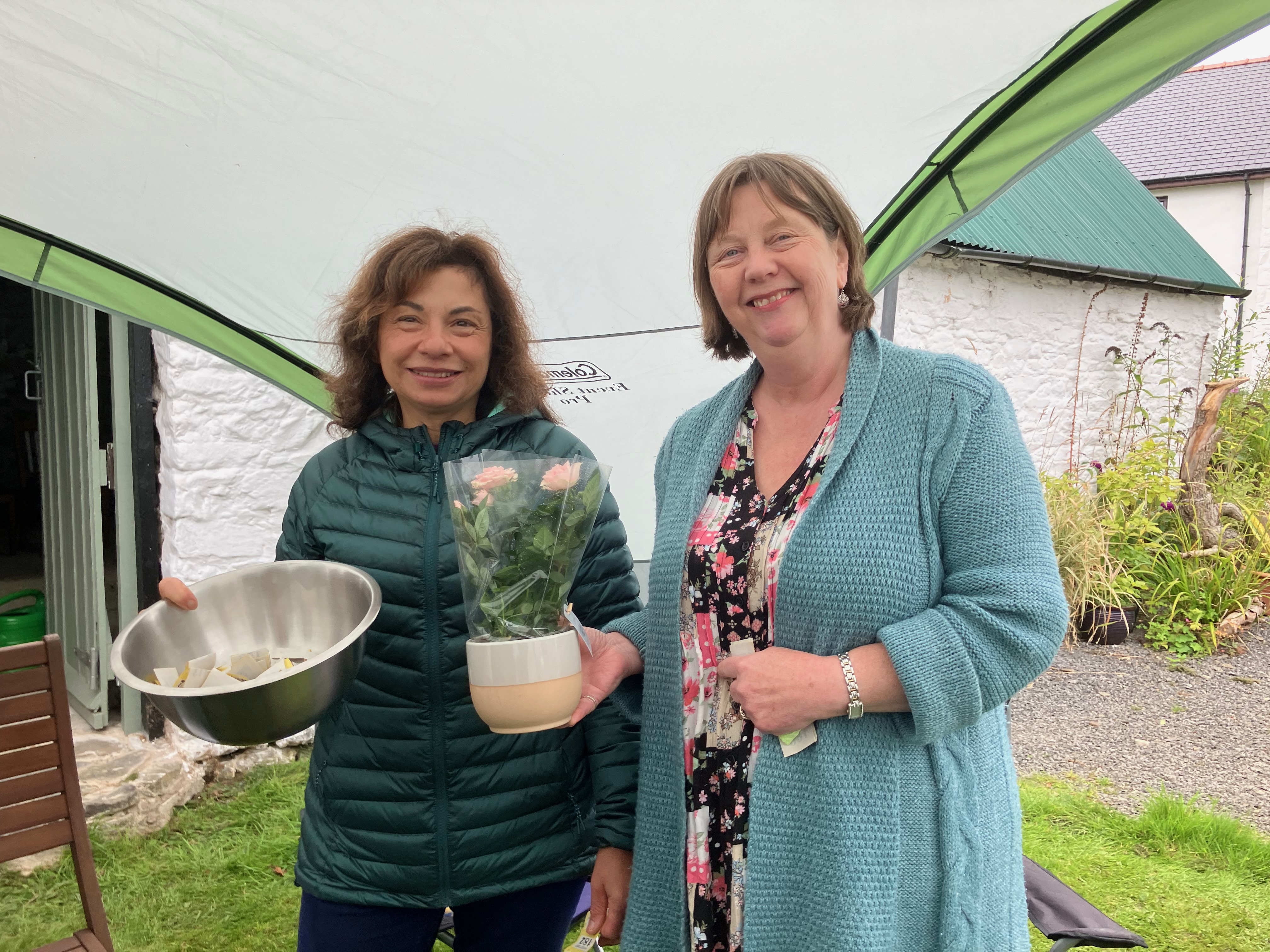
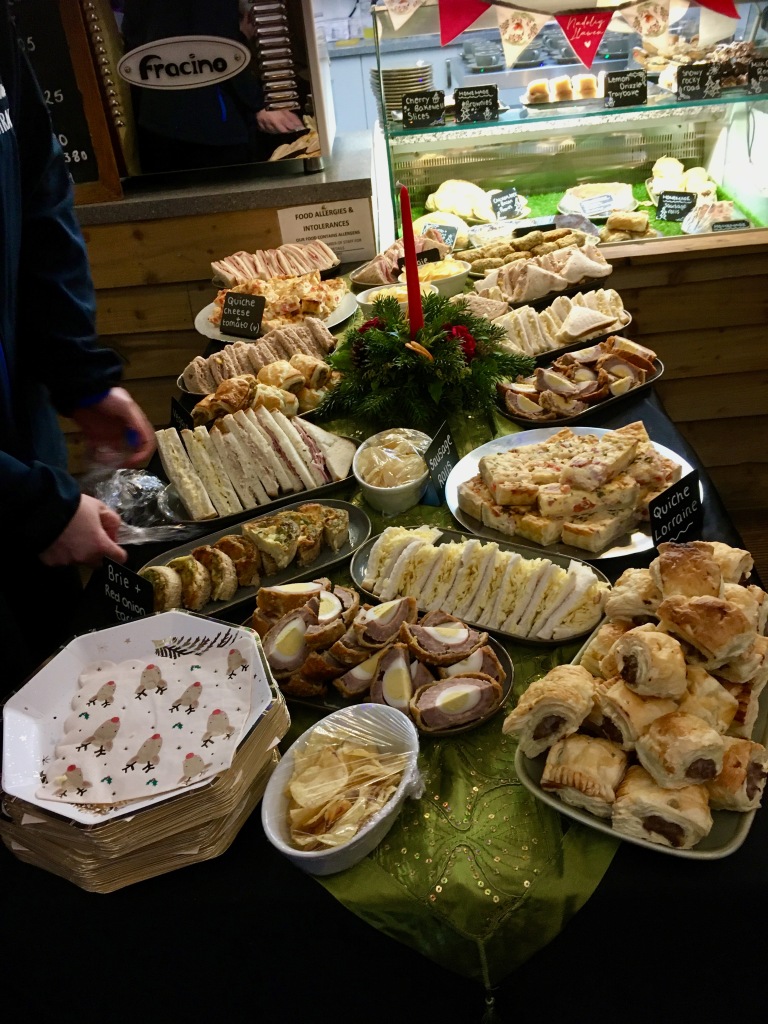
The Cothi Gardeners annual social, hosted by our Chair Dawn, was held on an overcast, but fortunately not rainy (at least not until the end, when the remains of Storm Ernesto arrived!) day, allowing us all to make the most of the wonderful garden in Ffarmers, and the activities arranged. Plenty of members brought along produce or flowers for the various competitions, and the table was laden with savoury delights and delicious cakes for us all to tuck into.


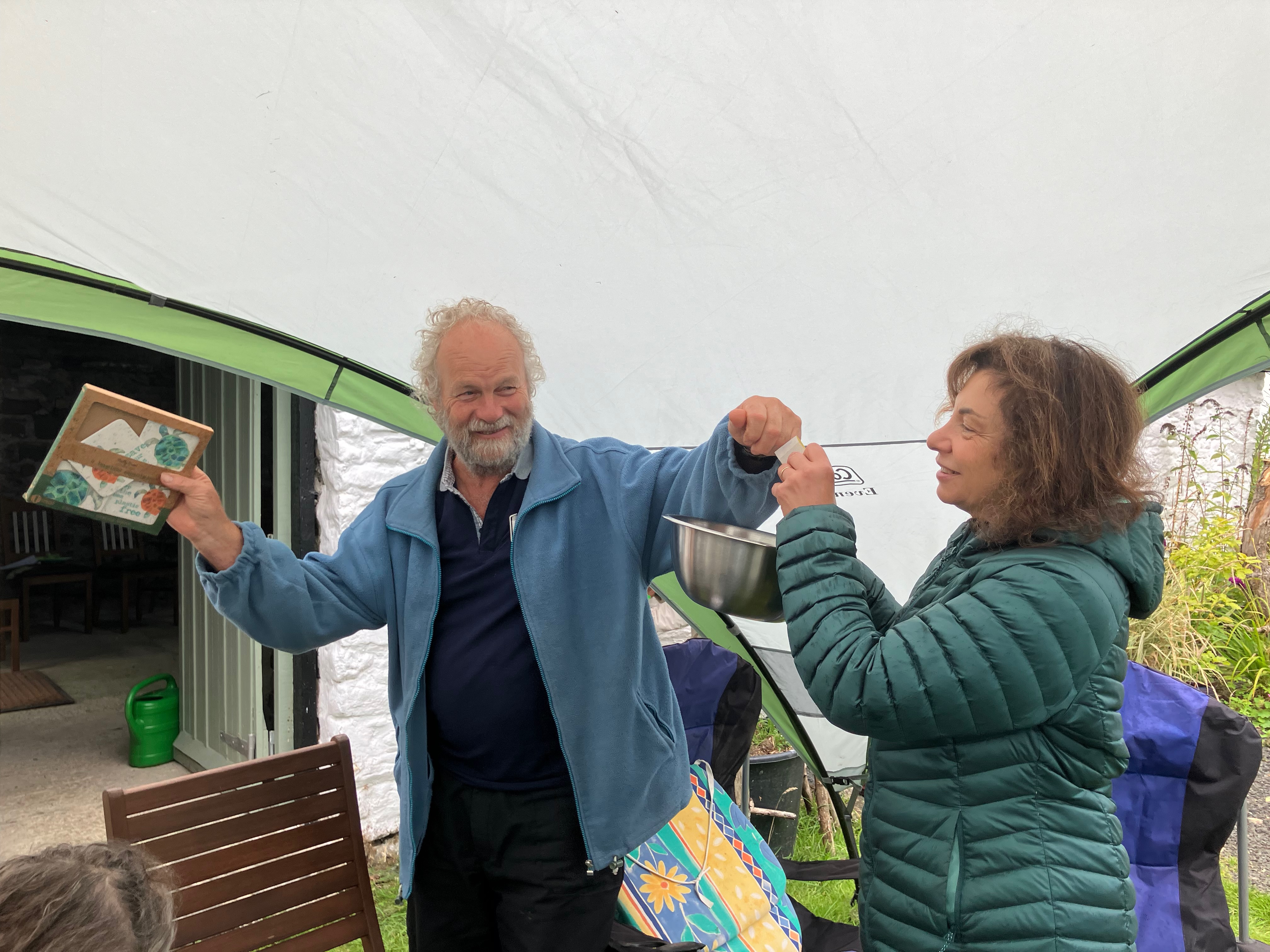
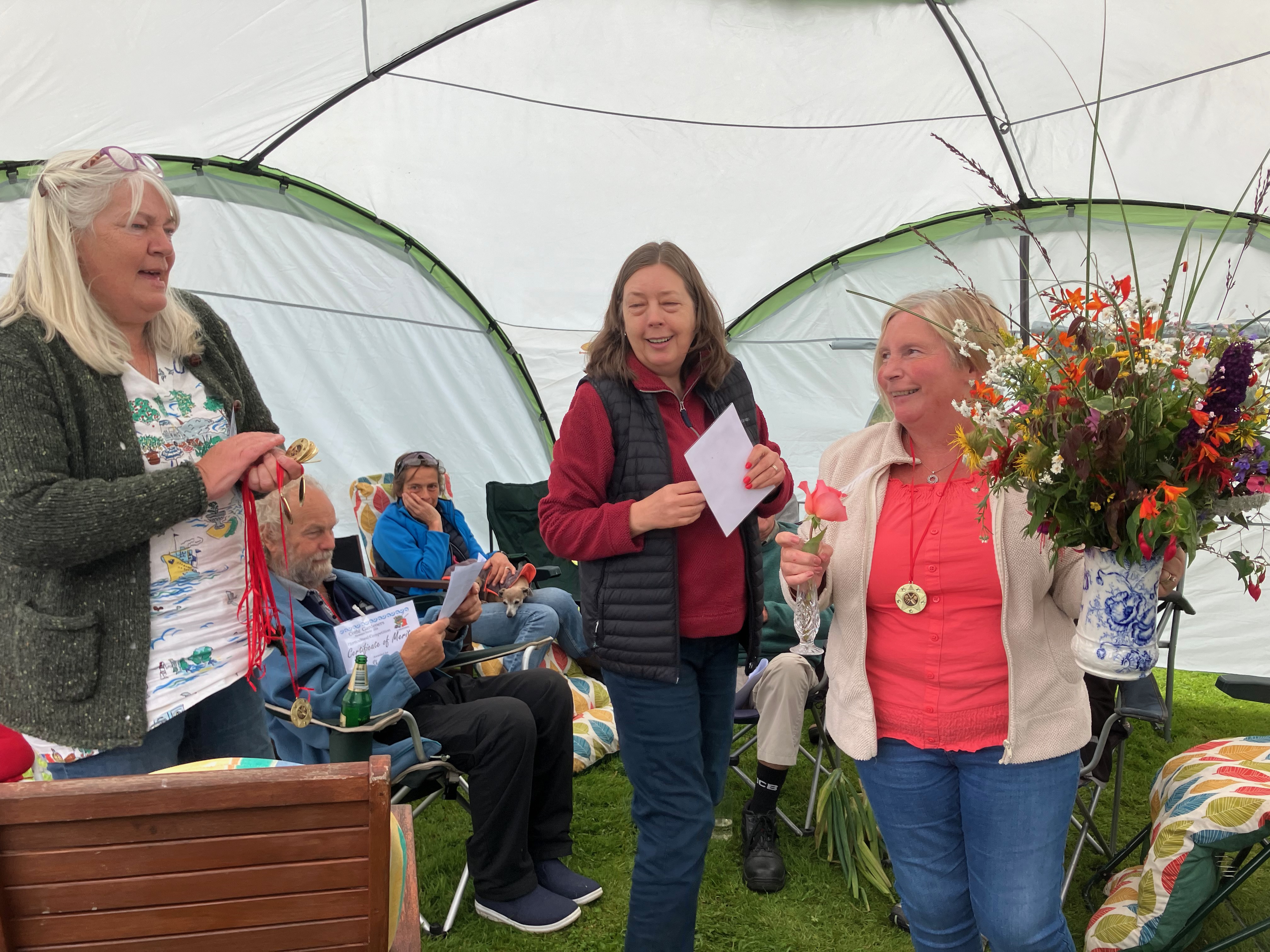
After much conversation over the food, the results of the raffle and the competition prizewinners were announced. There were a total of six prizes for the raffle, which also benefitted the Club’s funds.


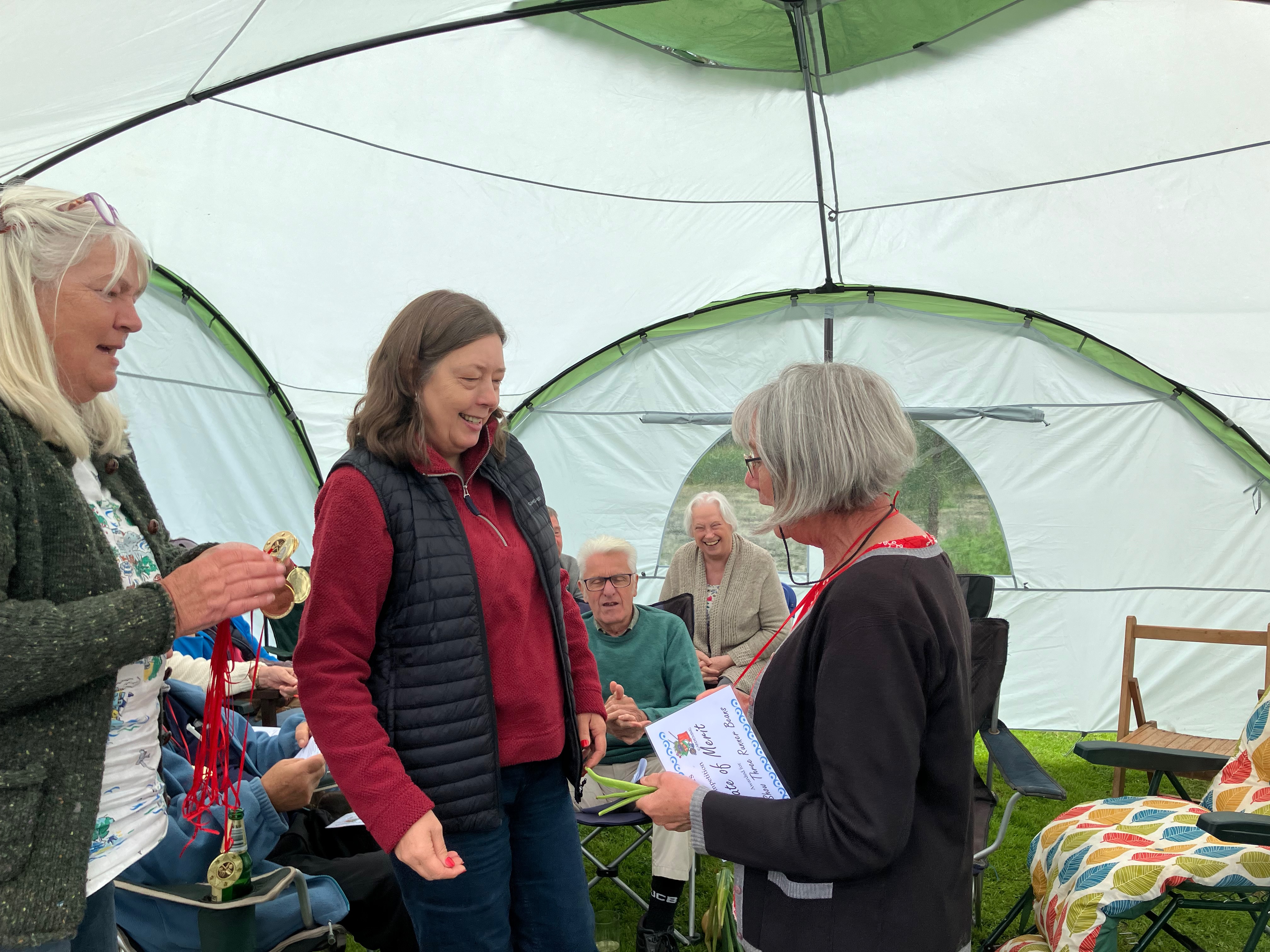
Certificates and medals were awarded for the best exhibit in each category, ably judged by guests Angela and Martin. Rob won the prize for the largest weed (by definition of being a plant in the wrong place, not an undesirable plant). Jenny claimed the prize for the best three runner beans, and Honour for the best flower arrangement and also single rose. Amanda won for best single dahlia, and the best potatoes. 


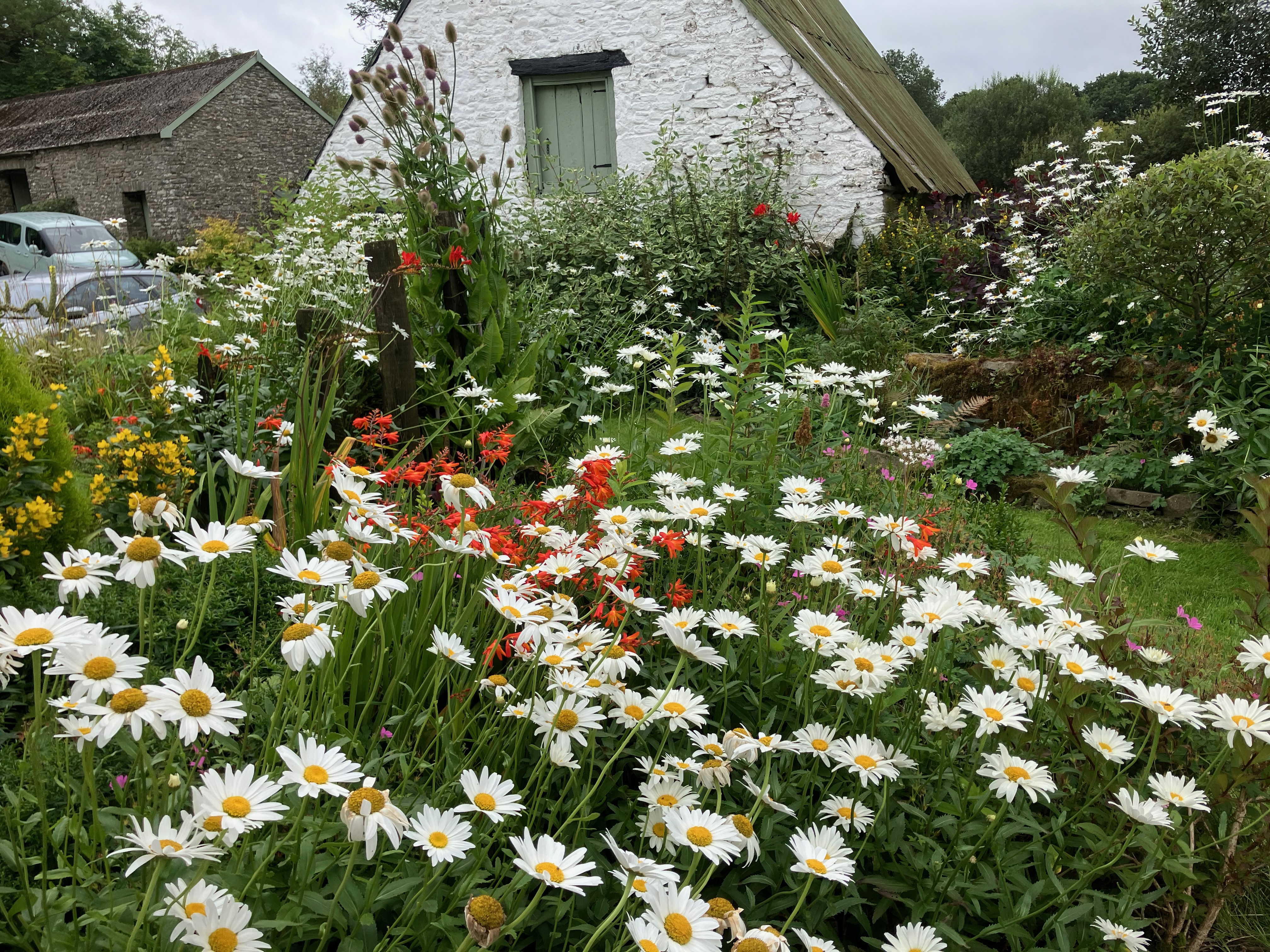
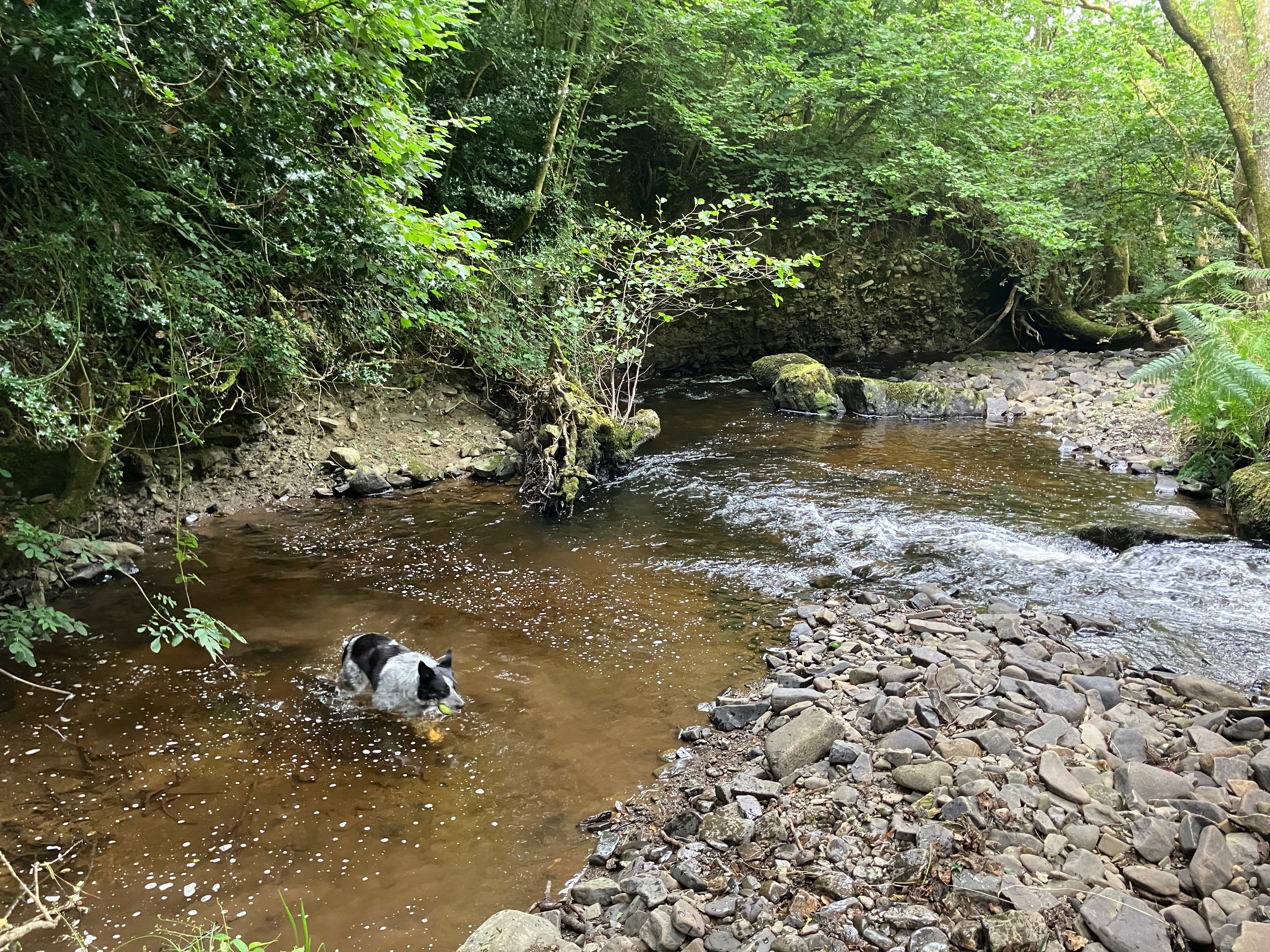
After that Dawn gave us a tour of their garden and land bordering the River Twrch and encompassing SSSI areas including swathes of Devil’s Bit Scabious, the food plant of the Marsh Fritillary butterfly, in perfect flower when we visited. I think that everyone was impressed with the natural beauty of the site and what Dawn and Nick had achieved in removing the overgrown brambles from much of the land, as well as creating a lovely more formal garden around the house and barns.

There was also an opportunity to try our hand at archery, with Nick a very friendly and able instructor. Let’s say that some of us were better than others, but everyone thoroughly enjoyed the experience. 

We all enjoyed meeting Dawn and Nick’s lovely dogs, who played a full part in the proceedings and many balls were thrown during our walk. All in all it was a fabulous day out, and the raffle and plant sale (thank you Rhoslwyn Plants) raised welcome funds for the club. 


‘Plants with a Past’ – a few stories about plants, people and places – by Kari-Astri Davies


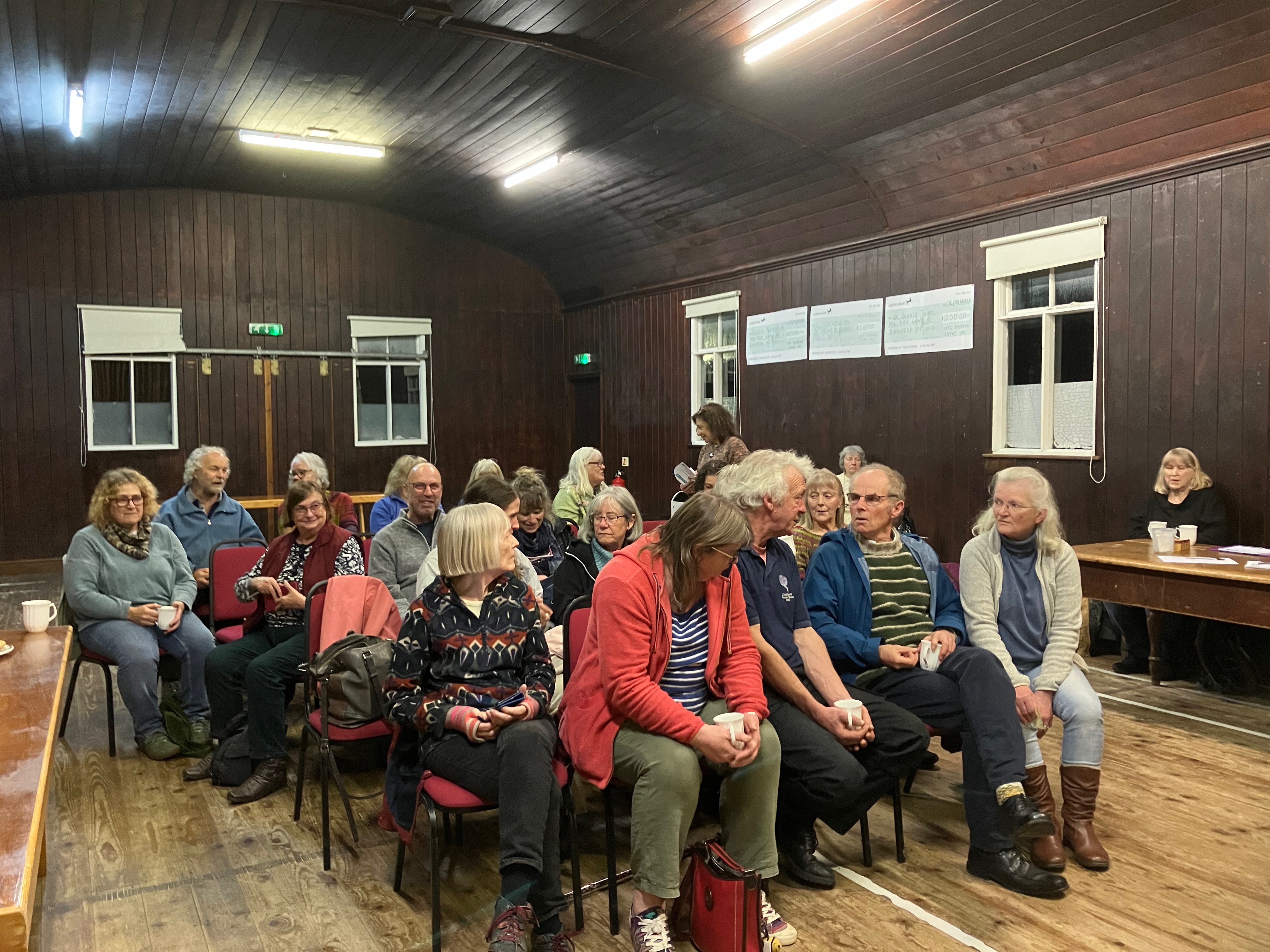
It was a pleasure to welcome back Kari to talk to Cothi Gardeners again, this time about plants and their history. Knowing the history of the plants in your garden encourages you to spend more time in your garden, enhancing the experience.

A good place to start is Alex Pankhurst’s ‘Who Does Your Garden Grow?’ published in 1992. In Kari’s own garden, she discovered that the tall, double Delphinium ‘Alice Artindale’ was named by John Artindale from Sheffield for his wife, and that Campanula lactiflora ‘Prichard’s Variety’ was bred by James Prichard from Christchurch, now Dorset but then in Hampshire.

The first record of British gardens as places of pleasure is from 1260, but only for the nobility. It is not until the 16th century that garden flowers can be found along with vegetables in the grounds of tenant farmers or yeomen – as can be seen at the restored Bayleaf Mediaeval Farmstead in West Sussex dating from 1540. In 1597 John Gerrard published his ‘Herball’ where cottage gardens are referenced.

Paintings are another reference source for finding out what plants were around when. Aquilegia, a native plant, was certainly known in gardens in 1503, when a Flemish painter depicted double aquilegias in a vase among other flowers. Double A. ‘Nora Barlow’ was named after a grandchild of Darwin who studied plant biology and genetics at Cambridge. After leaving Cambridge she carried on her cross-breeding work. She herself didn’t particularly like her namesake, but passed the plant on to the nurseryman Alan Bloom for propagation and distribution.

Gertrude Jekyll, who designed over 400 gardens, not all with Lutyens, said ‘Why do we always have to go after the new?’ In 1904 she published ‘Old West Surrey’ describing traditional rural life where she lived, including illustrations of gardens. Working at the same time, Helen Allingham (1848-1926) was an illustrator and painter. A flower that pops up in her pictures of cottages and their gardens is the hollyhock. But its history in illustration goes back to at least 1486, in Herat, Afghanistan. By the 1600s big double hollyhocks had been bred. In Saffron Walden, Mr Chater (1802-85) was famous for his double hollyhocks of which he had 117 different varieties. Then along came hollyhock rust from South Africa, putting paid to his stock (fortunately he grew other things as well)! Helen Allingham’s painting of Gertrude Jekyll’s garden shows that it also included hollyhocks. The illustration on the cover of the Metro-land guide (Metro-land was the name given to the housing development – about 3,500 houses to the north west of London that took place between the two world wars) showed a large house with hollyhocks in the garden. Hollyhocks were also depicted on a well-known Sanderson fabric design.

Rachel Ruysch (1664-1750) is a Flemish painter famous for her still lifes with flowers, depicting among other things aconites, ranunculus, tulips, hyacinths and carnations. At one point double hyacinths were more expensive than tulips, and there were many more varieties than there are now. In the 1790s a bulb of the variety called ‘gloria mundi’ cost the equivalent of £30 in today’s terms. It was the stripes in tulips, caused by a virus, that led to the excesses of tulip mania. Striped tulips can be seen on Meissen china from the 1740s. William Pegg’s designs for Royal Crown Derby in the early 19th century also included striped tulips. By the early 20th century a Dutch company had bought up Flemish tulip stock, and started breeding solid colours giving predictability – the Darwin tulip. A Darwin variety surviving to this day is ‘Bleu Aimable’.

Florists’ societies had flourished in the 18th century, exclusively male and meeting in pubs, devoted to the growing of a specific flower, eg pinks. Even though the societies gradually died out, flower showing continued, and in 1804 the Royal Horticultural Society was founded. Its first show was in 1827, to which 3,000 people came. The population was growing, and so was the middle class. Greenhouses were no longer the prerogative only of the upper classes, indeed by the end of the century they had moved on to wilder gardening. Pelargoniums, of which Charles Dickens was very fond,  required greenhouses, and a particularly fine red called ‘Paul Crampel’ was bred in 1892 which is still widely grown today. 

Dahlias were first recorded by Hernandez in 1570 in Mexico. They appeared in Europe when some  tubers were sent to the Director of the Madrid Botanic Gardens in 1791. Originally there was confusion about the name – Dahlia or Georgina (which it is still known by in Eastern Europe – ed.)  – but Dahlia won, and it is of course a plant widely grown today. Treseder & Son of Cardiff were responsible for breeding the very well-known D. ‘Bishop of Llandaff’ (along with Pelargonium ‘Lord Bute’). 
Sweet peas are another flower that is still with us. The original sweet pea was first noted around 1700, of which ‘Painted Lady’ is probably a sport. Henry Eckford (1823-1905) bred 214 of the 264 cultivars known in the 19th century. One of those was ‘Dorothy Eckford’, still grown, white and quite small flowered. The variety ‘Prima Donna’ (pale pink) gave rise to the Spencer sweet peas – bigger, frillier with longer stems for showing, but with less scent.

Although roses are generally associated with France, it was the Dutch who first dealt in roses. R. centifolia, the cabbage or Provence rose, was developed by the Dutch. It is well-known that Josephine Bonaparte had at least 200 different cultivars in her garden. One of the main rose nurserymen then was Descemet, most of whose stock was acquired by Vibert, who greatly increased the number of cultivars available. In the 1800s in the UK Henry Bennett, a cattle farmer from Wiltshire, diversified into rose breeding and moved to Middlesex, being responsible for many of the new hybrid tea rose varieties of the time. Constance Spry started collecting old roses when she saw varieties disappearing – one of her favourites was R . ‘Mme Isaac Pereire’, a rose originally bred by Garçon in France.

In a fast-paced, wide-ranging and much appreciated talk, Kari covered many other plants and their stories including wallflowers, auriculas, lupins, anemones, daffodils and snowdrops. She started and finished by quoting from Plant Heritage, formerly known as the National Council for the Conservation of Plants and Gardens: ‘If garden plants go, a tantalising slice of social, cultural and horticultural history dies with them’.

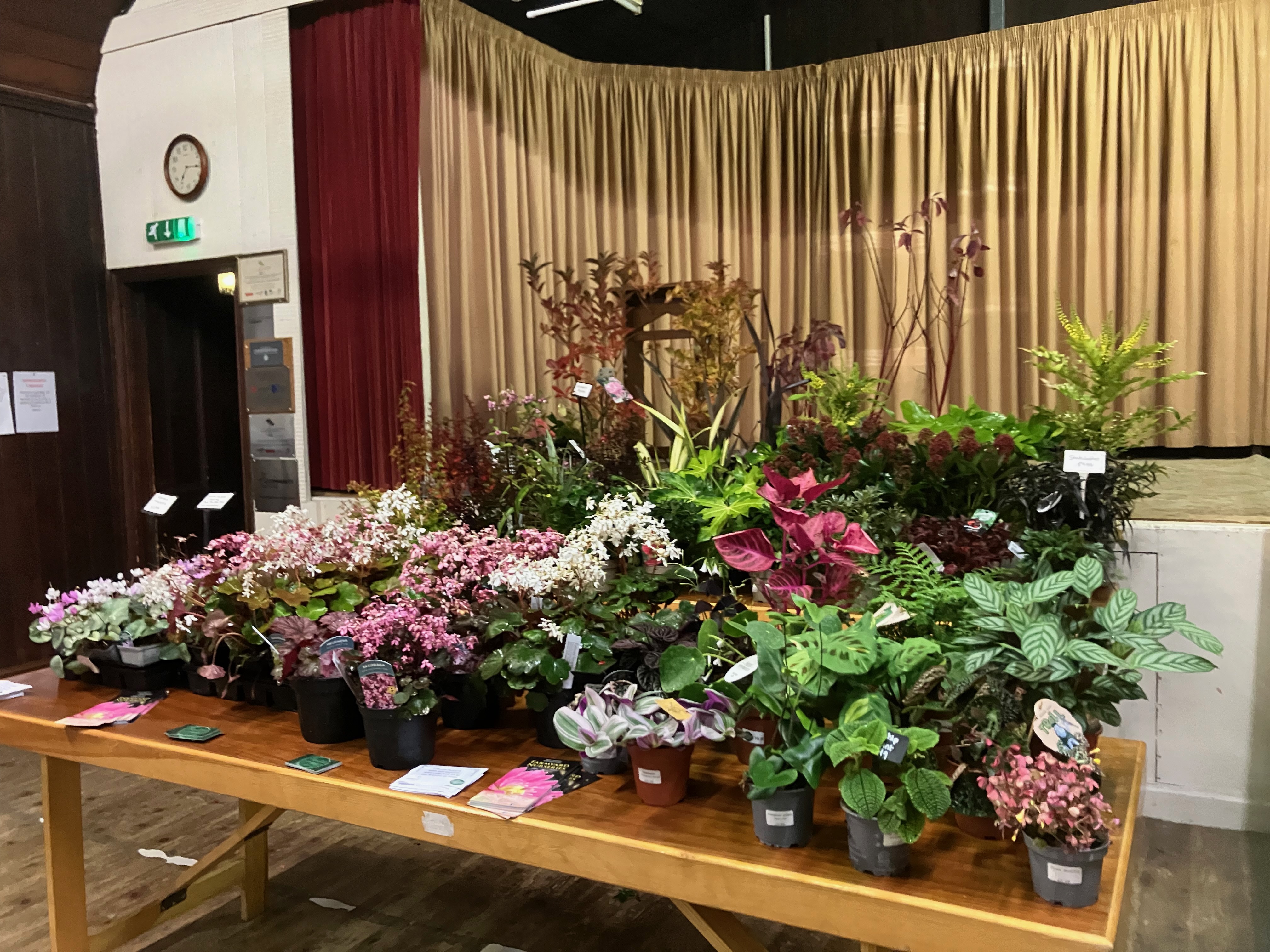
Kari had brought along a selection of some of her favourite plants, including sweet peas (which scented the hall throughout the evening) and pelargoniums, including P. ‘Paul Crampel’, in the centre.


The Flower Garden by Sara Redman; Upcoming Club Events

Sara grew up on a farm and worked for the council for 30 years but had always been a keen gardener with an award winning allotment, and then she bought her smallholding, where she now lives, in 2015. The house needed renovating, and she spent 2 years preparing the ground for the Flower Meadow, which opened as a business in 2017 when she joined all the local markets to start selling flowers.

There are now 2 polytunnels (with another to come), and a greenhouse (with another on the way). The smallholding is totally organic, with ducks for slug control and she makes all her own compost. She only does any serious weeding twice yearly, uses no plastics and sticks to a permaculture system. She only attempts to grow flowers that are happy in the smallholding and feels it’s a waste of time trying to bring on unhappy plants. She joined the “Flowers from the Farm” organisation in 2018 which is a group of (nationally) like-minded flower growers which you can find near you on their website .

The flowers from Sara are not posted, and can only be bought either from the farm (from £15 per bouquet) or from events she attends; she has done demonstrations at the Royal Welsh show, and the RHS show in Cardiff although there are sadly no more RHS shows in Wales now. She did the Chelsea Flower Show once, but says never again!

There are flower workshops at the smallholding and the premises are also used for other types of craft sessions. Supplies for weddings are a big part of the business (and weddings can be held on the smallholding) but with a caveat that the flowers are returned to the farm afterwards thus reducing waste. When arranging flowers, foam is completely avoided and chicken wire is used. Sometimes she makes whole flower installations for weddings.

There are Christmas wreath making sessions and some sessions for children. There is a wild flower meadow at the farm which is just cut down by hand once yearly, otherwise it needs no attention. She keeps bees (they must think they are in heaven!) and donkeys.

Lots of types of dahlias are grown and planted twice as deep as normal and are unusually generally left in the ground in the winter, although in the last wet winter, about half of them were lost. Dahlia plants are surrounded by sheep’s wool which deters the slugs. Although the farm is on a hill, it does get quite wet.

She uses the greenhouse for growing plants from seed and recommends only using fresh compost for this as it loses its nutrients. She starts growing sweet peas (her favourite flower) in the greenhouse in September but only grows them on in the polytunnel as the site is windy which they can’t handle. She also uses thee flowers from shrubs which are useful for greenery in arrangements – Eucalyptus is really handy and is easy to grow from seed.

Making compost is never-ending and she uses a concrete mixer to combine ingredients with alpaca poo which is brilliant because it can be used straight from the point of delivery.

Dawn thanked Sara for an entertaining and useful talk and encouraged us to make a note of the Open Day at the Flower Meadow which happens on 10th August 2024.


Upcoming Club Events

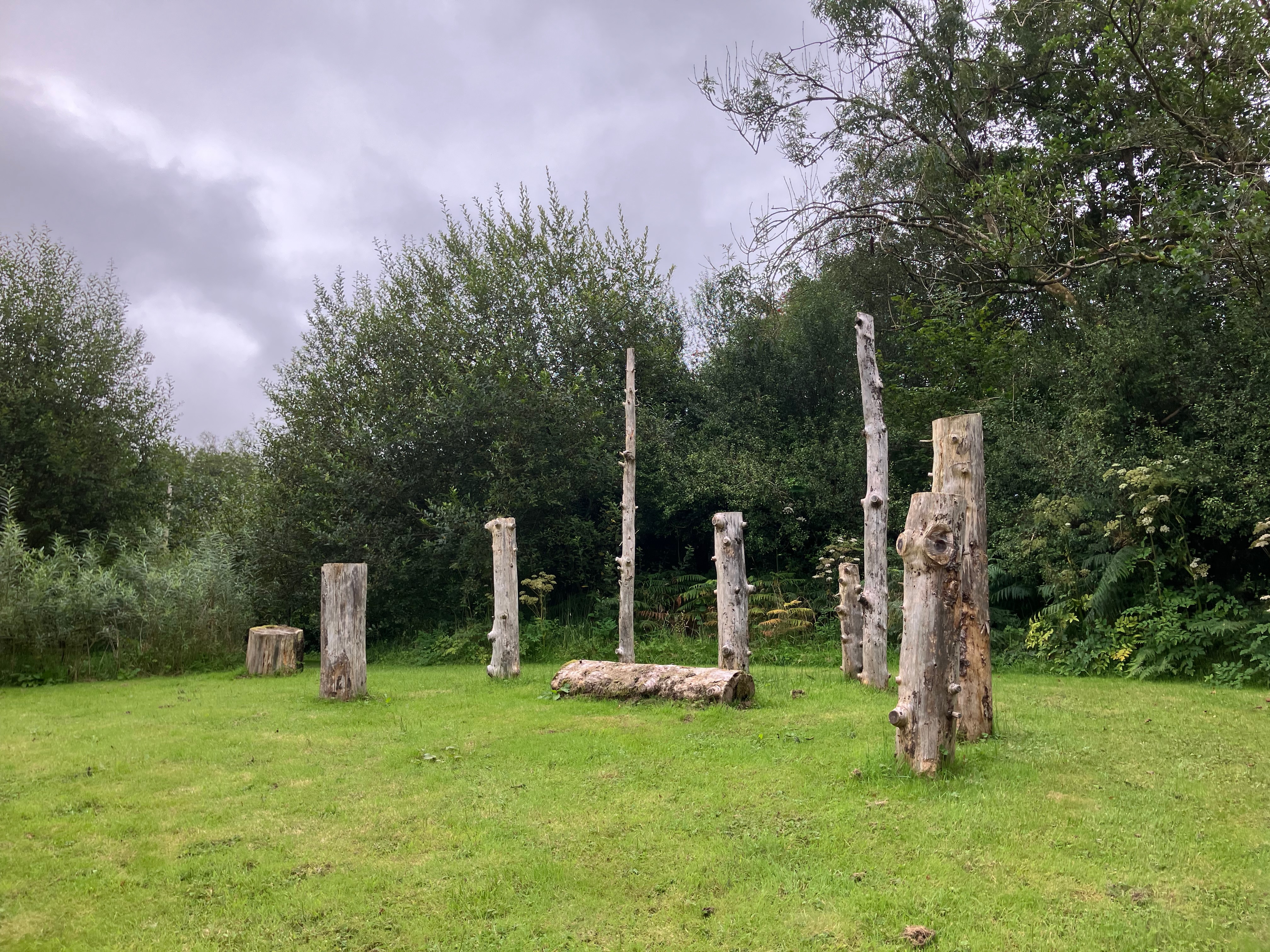
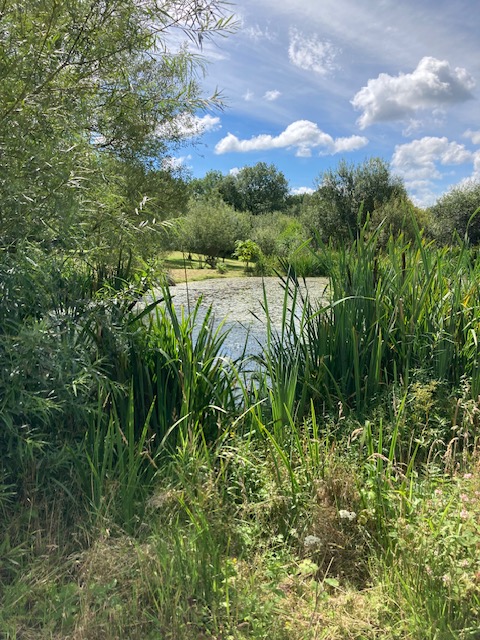
Members are reminded that our club summer social will be on Wednesday 21st August, probably (by general consensus!) at Dawn’s house – Cae Caradog, Ffarmers SA19 8NQ – see pictures below. Please think of any activities we could do outside and remember to bring food to share.

Our October meeting, on 16th, will be hosted by Richard Bramley of Farmyard Nurseries and he will take questions, following the format of the radio programme “Gardeners’ Question Time”. So please make a note in advance of any problems (garden related!) that you would like a solution for.


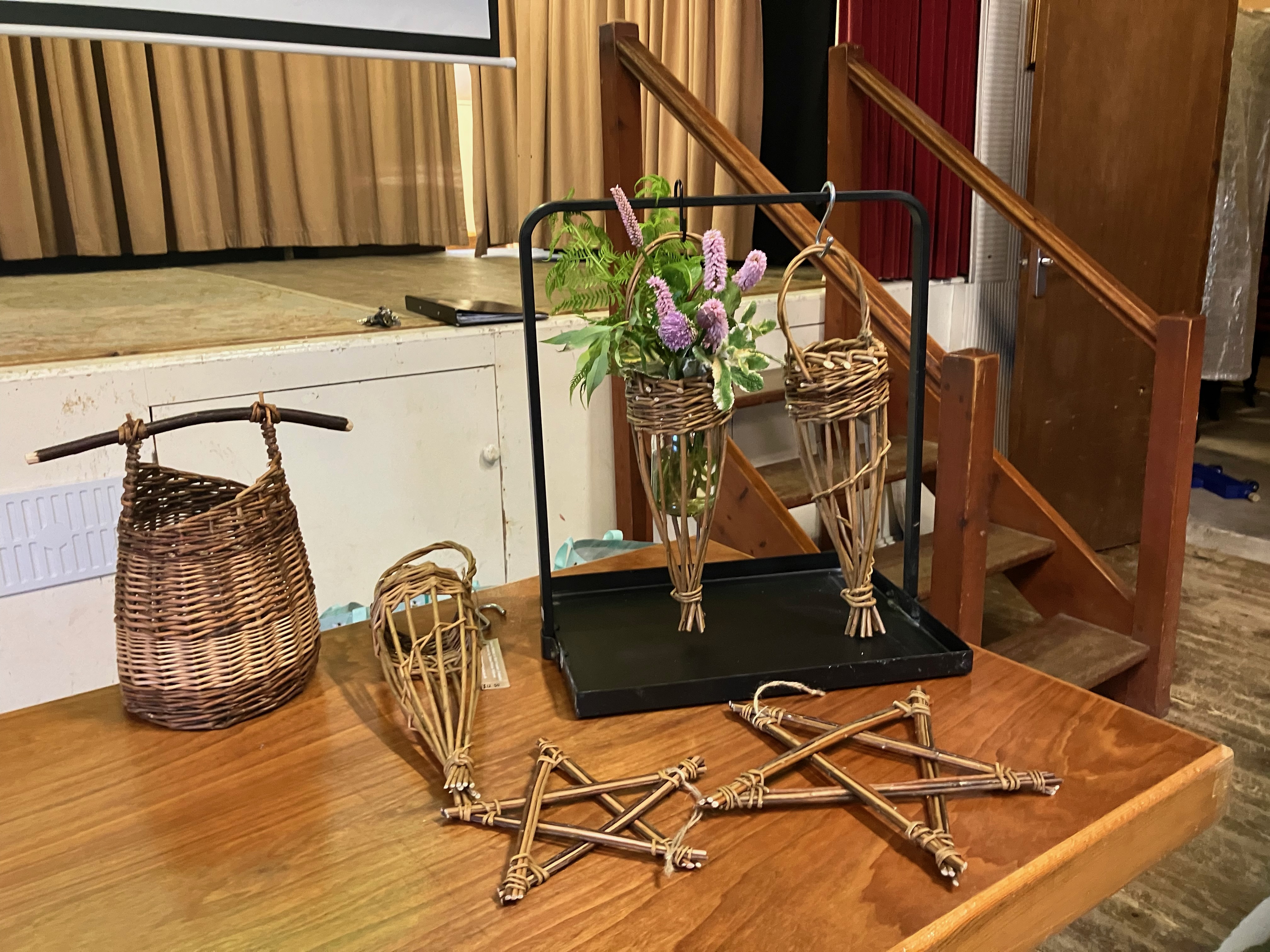
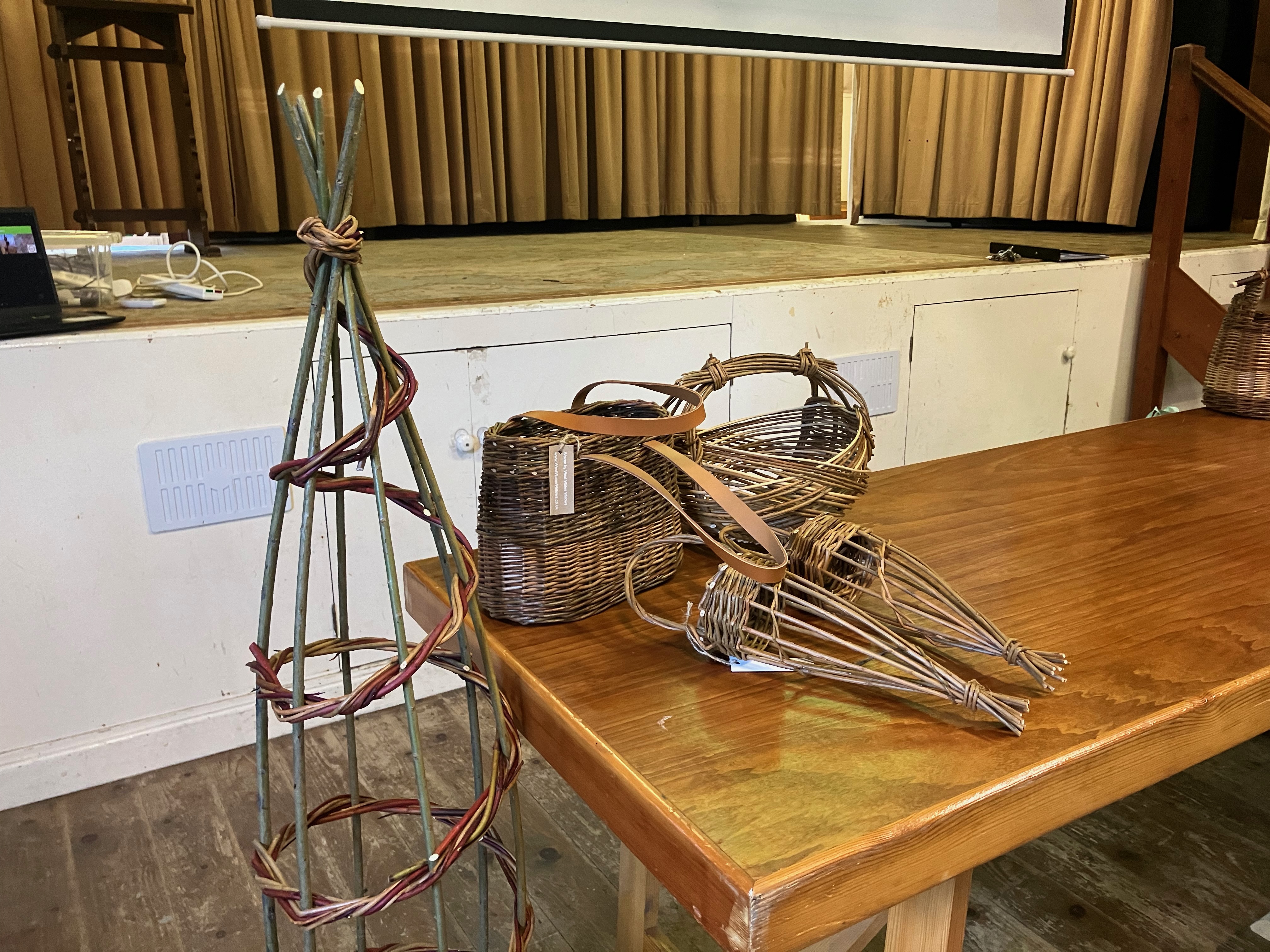
Ten Ways to Use Willow in the Garden (and Beyond) by Justine Burgess


Justine began working with willows as a basket weaver ten years ago; she had always been interested in gardening and then eight years ago she and her husband Alan founded West Wales Willows on ten acres of land in Gwernogle (two acres of which are devoted to willow). They hold the National Collection of Salix for Plant Heritage, currently the only one in the country. The nursery was visited by Frances Tophill for  one of the Gardener’s World Winter Special programmes at the end of 2023, and has also featured on ITV’s Coast and Country series.

The nursery will be open for the NGS on 22 June from 10am to 4pm, and will be open as part of the Tywi Valley Open Studios from 27 July to 4 August, running taster willow weaving workshops on 29 July. An Open Weekend 4-6 October, when the winter colours are already starting to show through, will focus on growing willow.

On to the ten ways to use willow:

No. 1 – Plant Willow for Pollinators. Willow is very early flowering, some varieties as early as late January and early February in a ‘normal’ year (this winter it was considerably earlier). Five years ago, the National Botanic Garden of Wales analysed the pollen content of spring honey, and found that it was made up of 80-85% willow pollen, showing just how important it is for bees. This would probably mostly have been the wild growing willow such as the goat willow – Salix caprea – and the crack willow – S. fragilis. Of the more decorative varieties, S. udensis ‘Sekka’ is a magnet for all sorts of insects including bees, wasps and even bluebottles! S. gracilistyla ‘Melanostachys’ has black catkins, and makes a very good-shaped shrub in the garden, reaching only 7ft after a number of years. S. gracilistyla ‘Mount Aso’ has bright pink catkins, and is also not huge.

No. 2 – Plant for Winter Colour. The winter colour of willow stems ranges from pale white through yellow and orange, green and brown, to purple and black. The purple-barked willow is Salix daphnoides, the black-barked willow is S. nigricans, and the orange-barked willow is often a form of S. alba ‘Britzensis’. It is also worth remembering that there are alpine willows, growing no more than 2 ft tall. Frost intensifies the stem colour of all willows.

No. 3 – Plant a Fedge. What’s a fedge? It’s a cross between a fence and a hedge. It is a decorative barrier, rather than a stock-proof one, created by planting willow stems in the shape of a lattice. To keep the fedge at a reasonable size, it is best to cut off all the current year’s growth once the leaves have fallen. S. nigricans, the black-barked willow, is stunning when planted in this way. 

No. 4 – Plant Something Bigger. This could be something like a willow dome, or a willow tunnel. To create stability, you need to plant the willow rods 12 inches into the ground. Willow doesn’t like competition, so in order to get it to grow strongly you need to use membrane; Justine has recently been experimenting with cardboard and wood chip to see how they will perform in place of membrane. Some people have used willow to create mini-domes to provide shelter from the sun in summer for chickens and for dogs. In Germany a willow cathedral has even been created. 

No. 5 – Use Willow Baskets. Willow stems , of course, are perfect for weaving baskets – and what could be better than collecting your own fruit and vegetables in baskets and trugs woven from your own willow!

No. 6 – Incorporate Willow Garden Structures. In the vegetable garden you can use willow to create supports for runner beans and sweet peas as well as mini-pumpkins. Willow also makes a great base for a wedding arch decorated with flowers and greenery. The only thing is that willow structures don’t last forever – four seasons is about the limit.

No. 7 – Make Willow Water. The bark of willow is packed full of growth hormones at the base of the stem when in growth. Take one-year-old willow stems, cut them into 1.5-inch chunks and cover them with water. Use about one-third willow to two-thirds water. The water will only last for one to two weeks before you have to make another batch, but it can be used as a replacement for hormone rooting powder. 

No. 8 – Chop and Drop (Ramial Woodchip). One- or two-year old willow wood, chipped, which breaks down really fast, is amazing for feeding fruit trees. It is also brilliant for making hot beds. You can use wild willow for this. The wood should be cut no later than May, because after that you won’t get much regrowth. The leaves from the wood can be dried, chopped, and then go into the compost bin.

No. 9 – Build a Dead Hedge. Dead hedges are great homes for insects and can serve as good temporary fences.

No. 10 – Make Something Fun! Willow is great for making sculptures – for example, a stag, a hare, even just a big ball.

Justine then took questions from the audience. She recommended Salix nigricans and S. triandra ‘Blacktop’ as the best black-stemmed willows. She confirmed that willows need quite a lot of sun – about 6 to 8 hours in the summer, so you shouldn’t plant them on the north side of a hedge. They also don’t like being next to established trees. They need a lot of water, although they don’t have to be in wet ground. They don’t like chalky ground, and love clay or clay on shale. Willow stems should be cut during the dormant season. As they dry, they lose one-third of their width. They should be allowed to dry for three to four months, then rehydrated. A bundle of 5-foot long willow lengths should be submersed under water for 5 days to fully rehydrate for weaving.

West Wales Willows run a variety of different courses, at Gwernogle, at Myddfai Community Hall, at Abergwili and at Denmark Farm Conservation Centre


Remember to browse the rest of the Cothi Gardeners’ website for other upcoming events, the Surplus to Requirements section and updates to Members’ Gardens. If you have any ideas for new content or would like to contribute a piece about your own garden, please contact cothigardeners@gmail.com.


The Climate Change Resilient Garden by Kim Stoddart; John and Helen’s Plant Sale for NGS Charities on 12 May

Kim Stoddart is a gardener, journalist, author and gardening teacher. She writes for The Guardian, specifically regarding gardening in the current climate change environment, and is editor of “Amateur Gardening” magazine. She has co-written the book “The Climate Change Garden” which has recently been updated and has just published “The Climate Change Resilient Vegetable Garden”.

She also runs the very popular Green Rocket courses where she teaches techniques which she has taught for many years, and has a smallholding in the Synod Inn area of 2.3 acres, of which a third of an acre is used for growing produce. She keenly boosts biodiversity there and doesn’t use pesticides or chemicals. In general, apart from growing in containers, she does not use fertilisers but concentrates on improving soil health which brings its own challenges, since the property is 750 ft above sea level and is often subject to quite serious flooding.

At the begining of her talk Kim encouraged us to think about how things worked in the past, how people had to have productive gardening plots which were not costly and could be maintained as easily as possible. Some of the solutions found in the past have been forgotten or discarded in favour of a quick fix, off-the-shelf solution.

She encourages us all to make time to sit and be kind to ourselves, enjoy our surroundings, including the wildlife, and not to feel we have to make everything neat – weeds are not the enemy! Examples of extreme weather have been studied by Kim in order to understand weather unpredictability and how to discourage pests and diseases that come with it, and what we can do to effectively and cheaply negotiate problems.

Recycling and upcycling, inventing ways of making making a cost effective, productive and beautiful garden need to be seriously considered and will give lots of satisfaction. Think creatively when problem solving, it does not need to be stressful! Do not pamper plants, overprune, or spend hours weeding, sometimes it works to make plants work harder to survive and flourish. If you have a gap in the flower garden, stick a vegetable in there, they often look great and you can (hopefully) eat them. The “no dig” method is proven to be effective and works well, or the German Hugelkultur method which in addition pretty much eliminates the necessity for watering. It helps to use mycorrhizal fungi which will encourage root growth and improve health – only effective when growing organically, as the fungi and fertilisers/pesticides tend to fight and restrict plant growth.

Kim had brought copies of her book for sale, and answered questions from the audience. The link for Kim’s courses is www.greenrocketcourses.com. Dawn thanked Kim for her very enjoyable talk.


John and Helen’s Plant Sale for NGS Charities on 12 May

We were reminded about John & Helens’ plant sale at Ty’r Maes, Ffarmers, SA19 8JP on Sunday 12th May from 1 pm. Donations are encouraged as payment – the proceeds are for the National Garden Scheme charities. Plants can be ordered in advance – emails will be sent to club members at the end of April with a list of available plants to order.


Remember to browse the website for other upcoming events, the Surplus to Requirements section and updates to Members’ Gardens. If you have any ideas for new content or would like to contribute a piece about your own garden, please contact cothigardeners@gmail.com.

An Acid Trip to Llwyngarreg; John and Helen’s Plant Sale for NGS Charities in May


Paul and Liz O’Neill have been gardening at Llwyngarreg for 24 years, when they originally turned a field into a garden open to the public for the NGS with a variety of different environments: peat beds, azaleas and rhododendrons, a tropical bed with Tetrapanax and ginger lilies, a fritillary meadow, gravel beds creating a dry garden (see right), to mention just a few.

A soil map of Wales shows that generally the pH is about 6-6.5, so on the acidic side. Some plants are calciphile (lime-lovers), and others are calcifuge (lime-haters), and there are plenty in-between. But even then things are not so simple. Buddleja, honeysuckle, and ash are defined as being calciphile, but generally do well in Wales. This talk focuses on plants that must have or don’t mind a low pH soil, starting with trees and shrubs, and moving on to plants that grow beside or under them.

To start with – Rhododendrons, the plant that first triggered Paul’s interest in gardening. First come the species, considered to have ‘snob value’, compared to the ‘commoner’ hybrids. A lot of species rhododendrons originate from the Himalayas, but also from North America, and Europe, including Portugal (R. ponticum) and the Caucasus.

They generally come true from seed, which is how Paul has grown many of the species that he has, including R. calophytum (left), which over the years has made a huge plant. Species can take up to 20 years to flower if grown from seed – meriting a glass of champagne when one flowers for the first time! R. cinnabarinum is another favourite, this time grown from cuttings.

Hybrid rhododendrons come from crossing different species. They are generally tougher, easier to grow, and flower earlier in life. They are propagated by cuttings or layers. Paul’s favourite is R. ‘Pink Walloper’, while Liz’s is R. ‘Sappho’ (right) , a lovely old hybrid from Waterer’s Nursery in Surrey – the plant’s only fault is that it is a bit straggly.

Both species and hybrid rhododendrons hate having wet feet – so if you garden on clay soil, plant them on a bit of a mound.

Finally there are what we call the Azaleas (although they are of course Rhododendrons). They can be evergreen, such as R. ‘Hinomayo’ which forms a dense bush (so much so it can be pruned to shape with a hedge trimmer). They are also deciduous – R. luteum (left), from the Caucasus, with its scented yellow flowers and gorgeous autumn colour. The latter can tolerate really sticky grey clay, and Paul and Liz plant them on what they call the ‘killing grounds’ where many other plants won’t survive. R. occidentale, again scented, is from America.

Next come the Camellias. Over time, even in our environment, they can get large (in Cornwall they have been known to take the chainsaw to them!). Some examples Paul gave are C. ‘Donation’, C. ‘Debbie’, and C. ‘Jury’s Yellow’ (right).

Most magnolias want acid conditions – and they vary from huge trees to shrubs such as M. stellata. At Llwyngarreg one of the stars of the show is M. ‘Caerhays Surprise’, a magnificent hybrid bred at Caerhays Garden in Cornwall.

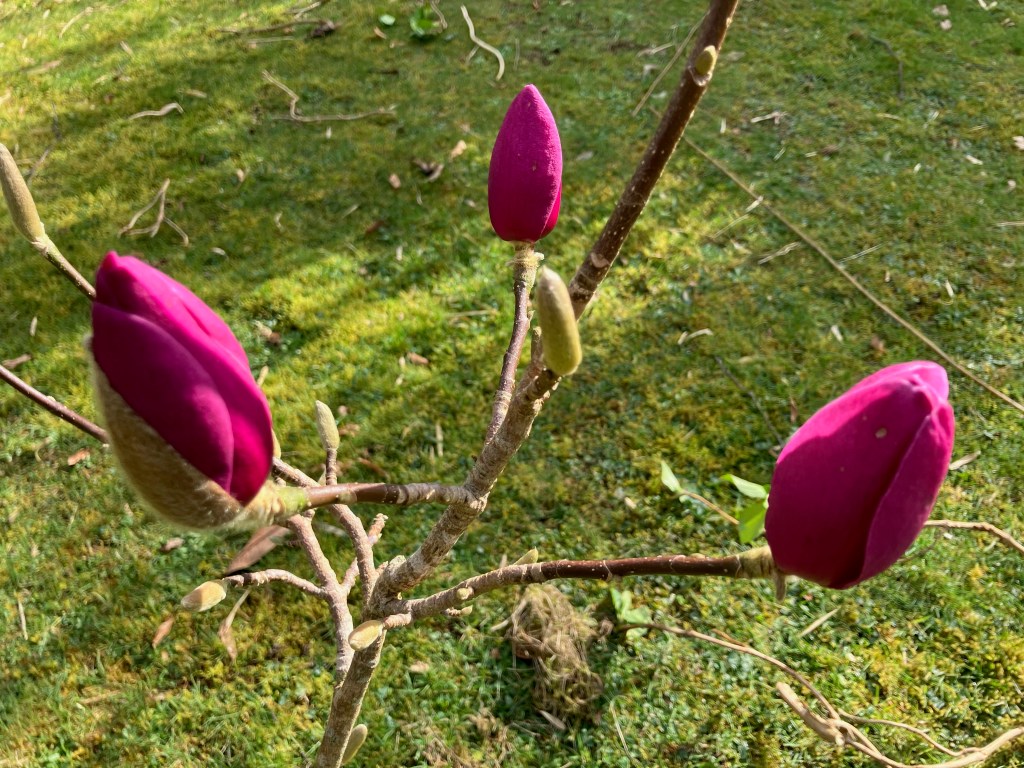
Another is M. ‘Black Tulip’ (left, in bud), a Mark Jury hybrid from New Zealand (which in addition to flowering in the spring can also flower again in September). M. loebneri ‘Merrill’ is pure white with a delicious coconut fragrance in the sun.

Another of the magnolias that Paul and Liz grow is M. ‘Yellow River’ (right), a lovely yellow flower, but as it is late the flowers can sometimes get lost among the emerging foliage. M. ‘Daphne’ is probably the yellowest of the Magnolias, but late, with the flowers coming out with the leaves. Paul recommends the Arboretum Wespelaar in Belgium as a place to see the many species and varieties of Magnolia.

Moving on to other shrubs, a hydrangea that not so many people are aware of is H. aspera subsp sargentiana, with large velvety leaves and lacy flowers which tolerates deep shade underneath beech trees. On the other side of the path from the Hydrangea is a mass of the ginger lily Cauttleya spicata ‘Robusta’, rather surprisingly also enjoying the shade.

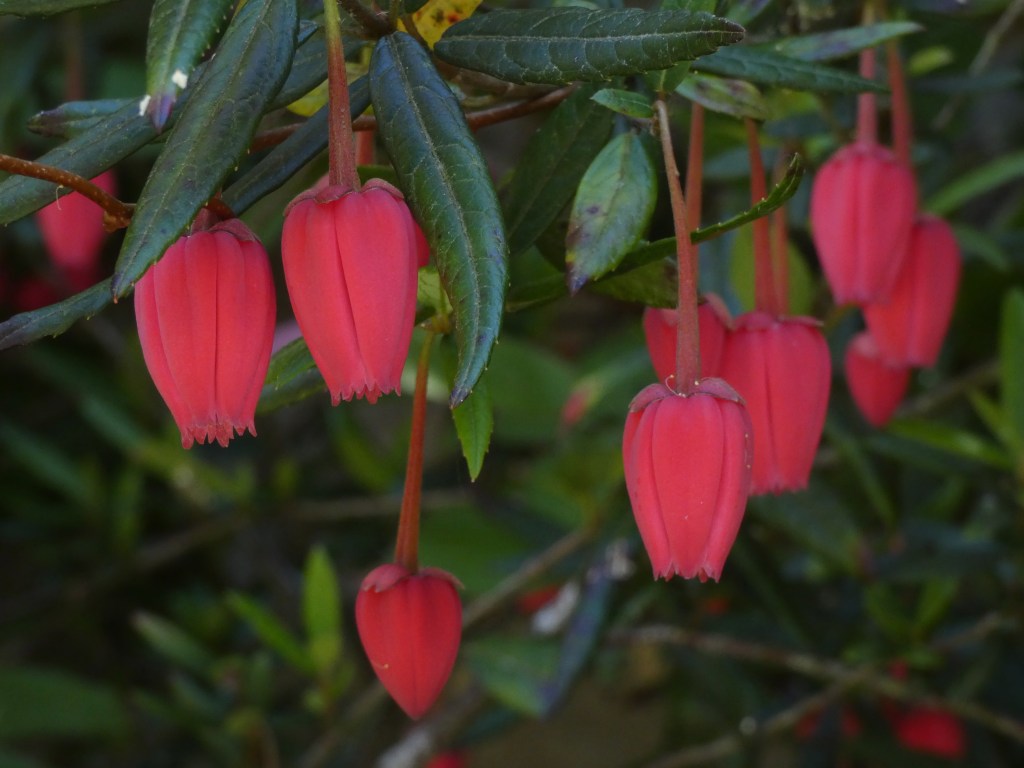
Crinodendron hookerianum has magnificent red bells in spring, and like many other acid-loving plants hails from Chile. There are also now other white and pink-flowered varieties, although they have not yet been tried at Llwyngarreg.

Paul and Liz started by planting trees at Llwyngarreg, including Parrotia persica (with tiny red flowers in late winter) and Nyssa sylvatica (the tupelo), both with fiery autumnal foliage.

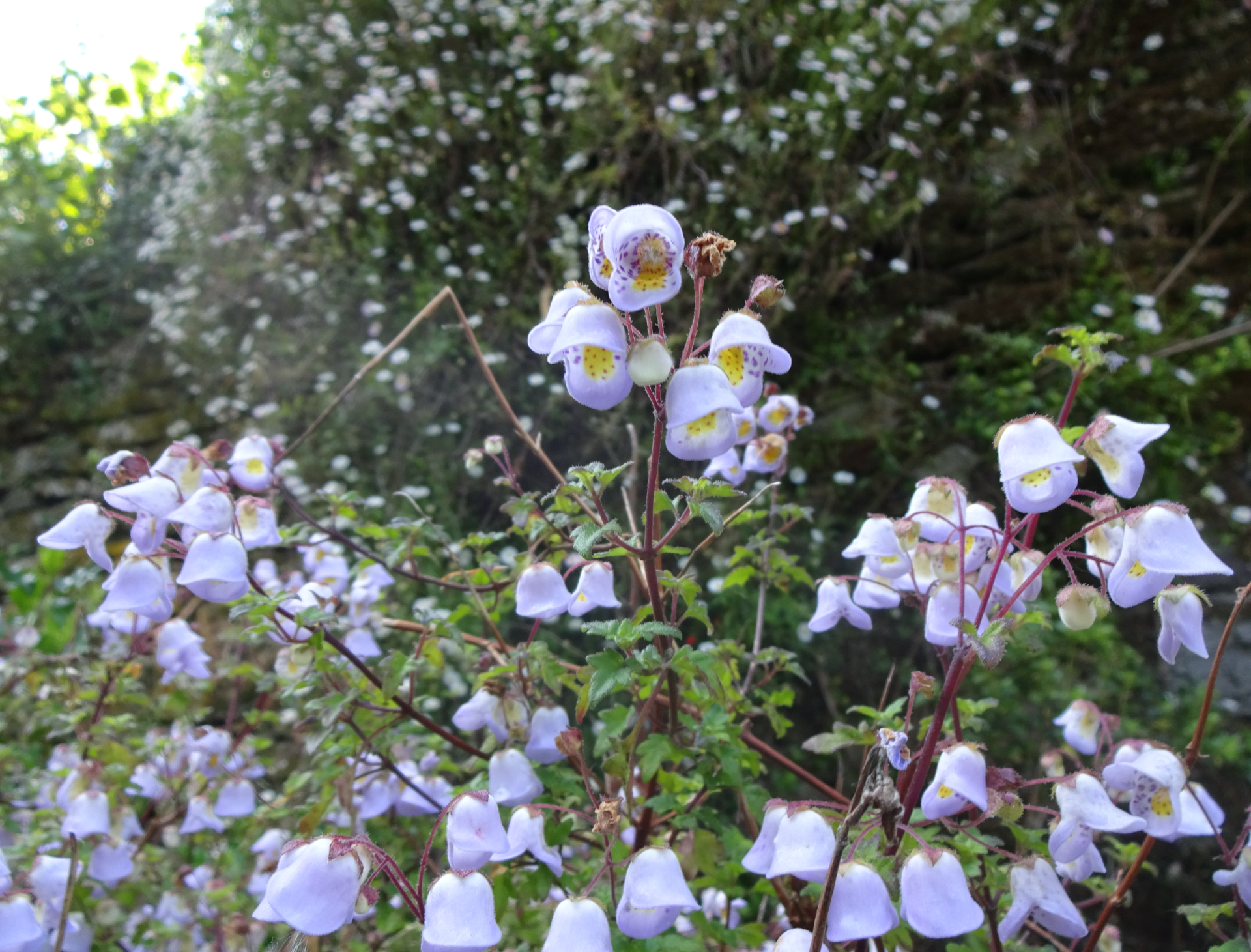
Eucryphia lucida ‘Ballerina’ is a small evergreen tree with lovely pink flowers in late summer, although here in west Wales we cannot grow the huge eucryphias (trunks like trees!) you see in Northern Ireland. Enkianthus campanulatus has small pink-tinged bells in the spring, with fantastic autumn colour. Jovellana violacea, a sub-shrub, has pale purple bell-shaped flowers with a yellow throat; also from Chile, Desfontainea spinosa has holly-like leaves and tubular red and yellow flowers, a lovely shrub, which in west Scotland can be a tree up to twenty feet tall. The latter is a true acid-lover and will die if it comes anywhere near an alkaline soil.

Moving on to climbers – the star of the show is Tropaeolum speciosum, a perennial nasturtium with red flowers and blue berries, renowned for growing very well in Scotland. It is often lost in gardens when first planted, because slugs graze it off. 

Amongst perennials, Meconopsis, the Himalayan poppy, are perhaps the ultimate acid-lovers. They are definitely challenging to grow, and need a shady, damp bed with no sun. M. ‘Lingholm’ – the one to grow if you are only going to grow one type – used to seed around in the peat beds, but not so much any more as summers have become hotter and drier.

M. horridula, being monocarpic, takes three years to reach flowering size and then dies after flowering. So too does M. x complexa (it used to be called napaulensis), flowering red or yellow after two to three years.

Primula capitata (right), with its striking blue flowers, is a short-lived peat-lover of moist woodlands. It comes easily from seed if you sow the seed green and don’t cover it.

Another primula for a peat bed is P. flaccida – a lovely lavender blue but it is loved by vine weevil. P. ‘Arduaine’ has ice-blue flowers in January and February. P. poissonii is a candelabra primula which likes wet feet. P. viallii will grow in any soil, but thrives in a peat bed.

Roscoea ‘Harvington Evening Star’ is a dark purple. It comes up late in the year, and slugs don’t like it, always a bonus. It has a tendency to flop over, but it has a long flowering season from mid-Summer to October. Trilliums are invariably expensive to buy, but it is hard to understand why. Trillium luteum, for example, is easy to propagate by chopping it into small pieces, each with an eye, and replanting. Cypripedium, hardy slipper orchids, are gorgeous but difficult to grow, and always expensive.

Cardiocrinum giganteum, known as the giant Himalayan lily, is a truly impressive plant at up to 4m high with gloriously scented flowers (see left, with Liz). Slugs adore them so they can be difficult to grow for that reason. They produce masses of seed after flowering, but it takes seven years from seed to a flowering plant!

Gentians need moist, peaty soil, and also full sun. A good place to buy gentians is Aberconwy Nursery near Bodnant Gardens. G. asclepiadea is a great late summer plant and will tolerate light shade. Corydalis alata (blue flowers), C. flexuosa (blue flowers) and  C. solida (purple flowers) are plants that need shade and moisture.

Two favourite plants in the lily family are Nomocharis alata, which requires moist peat, and Lilium mackliniae

Podophyllum delavayi, P. ‘Spotty Dotty’ and P. ‘Kaleidoscope’ are plants for a moist and shady spot.

Myosotidium hortensia, the Chatham Island forget-me-not, is a challenging plant for acid soil, and unfortunately completely slug-delicious. It must have no sun at all.

At the very low ground level Paul and Liz plant Saxifraga stolonoifera, which makes huge mats of leaves covered in white flowers, and two Chilean plants – Asteranthera ovata, and Philesia magellanica which requires a pure acid soil. 

Ginger lilies do surprising well – they prefer an acid soil but don’t have to have it. Hedychium edgeworthii (yellow) and H. ‘Tara’ (orange), produce some of the most exotic-looking flowers you can grow in the UK. 

Other plants not requiring acid soilthat grow well at Llwyngarreg include Epimedium, lovely for its new foliage, and Aquilegia. Primula pulverulenta prefers a woodland environment rather than wet feet. Primula bulleyana (orange-yellow) and beesiana also do well. So too do Rodgersia podophyllum, which is easy to propagate, and Matteucia struthiopteris (the Ostrich fern).

At the time of this talk, the second half of March, some of the highlight plants in the garden at Llywngarreg are listed below: 

Snakeshead fritillaries, which love wet grassland. Paul and Liz started with ten pots, over the years religiously collected the seed and sowed it – and now they have a whole fritillary meadow; sadly, Mr Badger has developed a taste for the fritillaries.

Ground cover in the form of Eomecon chionantha with poppy like white flowers from China, which can be quite a thug; also Maianthemum racemosum.

Rhododendron arboreum ‘Album’ is now starting to flower properly. So too is R. calophytum, which this year is much pinker in flower than it has been previously.

Magnolia ‘Caerhays Surprise’ (left), M. ‘Merrill’ and a large M. stellata, along with M. ‘Black Tulip’, which is a very reliable flowerer.

The talk concluded with a video of a dramatic burning of the Monocot bed, largely populated with Miscanthus but also Dierama. Paul and Liz have discovered that the simplest way to tidy up the grass beds is to cut down all the old foliage, and then set fire to the bed!!

In response to a question about tropical-looking plants that he would recommend, Paul suggested Tetrapanax papyrifera. It can be a little bit tender, and even though it was cut back by the hard frosts of December 2022, it has come back strongly. You need to be careful when handling it, as it has little brown hairs which make you cough badly. Paul also recommends cannas and hedychiums.

The talk was fast-paced, very informative, and delivered with lots of humour. The web editor, for one, came away with a long list of plants new to her to try in the garden. All those present were very appreciative and made a beeline for the plant sales table afterwards.

Llwyngarreg Garden is open for the NGS (which supports seven main and other guest charities) every day by appointment, but please check the website and ring beforehand.


Plant Sale for NGS Charities 12 May

John and Helen Brooks will be holding a plant sale for NGS Charities on Saturday, 12 May from 1pm at their garden Ty’r Maes, Ffarmers, Carmarthenshire, SA19 8JP. As usual there will be lots of plants for sale, to swap and to order online, all proceeds going to NGS Charities.

Remember to browse the website for other upcoming events, the Surplus to Requirements section and updates to Members’ Gardens. If you have any ideas for new content or would like to contribute a piece about your own garden, please contact cothigardeners@gmail.com.


AGM; Website Update

The Annual General Meeting of the Cothi Gardeners Club was held on 21 February 2024. Elena Gilliatt, the outgoing Chair, gave her final Chair’s report on a year packed not just with great talks (organised by Fiona and ably managed by Amanda and Carol) but also garden visits:

  • In June we had a wonderful Mad Hatters Tea Party at Gelli Uchaf, Fiona and Julian’s amazing NGS garden. What a lovely afternoon; fab hosts, loads of mad hats and we raised £80 for club funds!
  • In July we visited Paul and Liz O’Neill at their wonderful garden in Whitland, coming away laden with plants, gardening tips and planting ideas.
  • In August, our summer social had us touring 3 member’s gardens. Thanks to Jane, Jenny & Gordon and Dawn for making us so welcome and sharing their lovely, and very different, gardens.
  • At our October meeting we were treated to 3 mini talks by members Sheena, Sally and Elena. The response was great, so hopefully other members will share their gardens with us in the future!
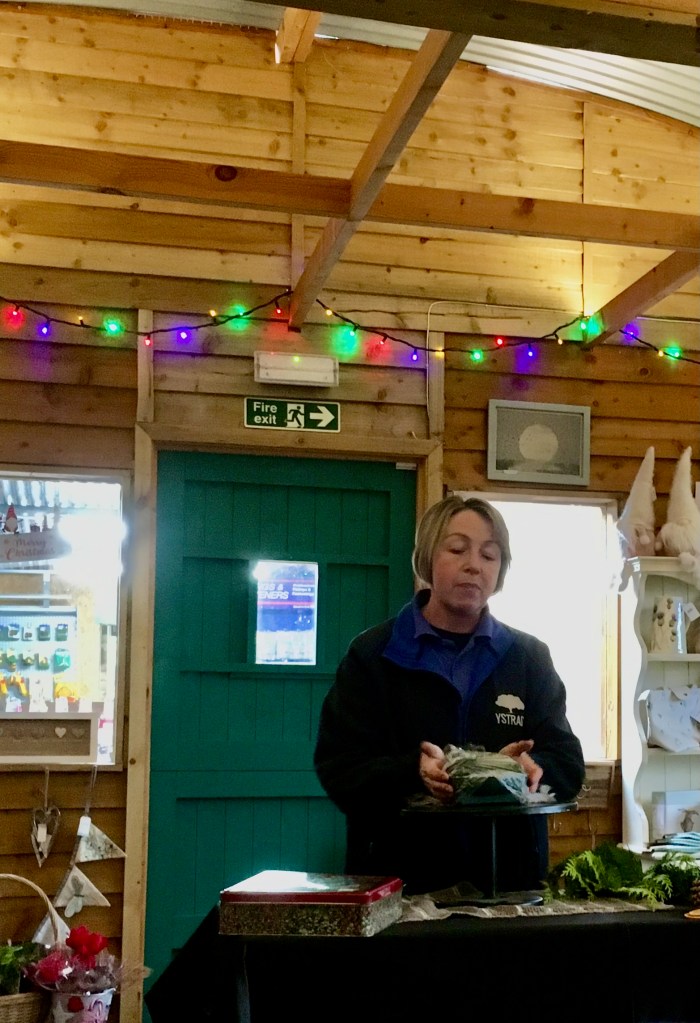
  • At the beginning of December, 36 of us visited Ystrad Garden Centre for a demo and tea. Thanks to Amanda and Carol for organising such an enjoyable afternoon. A great way to round off our gardening year.

Thanks were extended to all outgoing Committee members for their contributions, and in particular to Elena for chairing the Club so enthusiastically and steering it through the difficult Covid years.

After the AGM came a delicious buffet of savoury dishes and cakes contributed by those attending, followed by an extremely challenging quiz on varied topics, not just gardening, compiled and organised by Carol Clarke.


Website Update

The Cothi Gardeners website has now been updated to include the new programme for 2024, upcoming events will be listed as and when we are advised of them, and their are additions to the Members’ Gardens and Surplus to Requirements sections. Please take the time to peruse the new content by following the links above, and if you have any ideas for new content or would like to contribute a piece about your own garden, please contact cothigardeners@gmail.com.


Christmas Social; NGS Donations for 2023

This year’s Cothi Gardeners Christmas Social was held at Ystrad Nurseries near Llandovery. It was, for a change, a sunny afternoon, the alpacas greeting us as our cars pulled in. We all arrived in time to have a good browse around the nursery before the demonstration 

Julie began the demonstration by telling us a bit about the history of the nursery and timber yard, particularly since 2016, when John and Laura Morgan bought Ystrad, having seen the potential to bring together her background in running a nursery and John’s expertise in the timber business. Since then they have grown the business significantly, and from an original staff of three at Ystrad in 2016, there are now over 30. Ystrad Nurseries itself now also has florist Sian on site, and has embarked on phased improvements, beginning with the car park and entrance. Julie herself has worked here since 2020, having previously been a primary school teacher.

First we saw how to build up an arrangement that could be adapted either for the table, or for placing on graves, using a square block of oasis in a circular base,  Starting at the bottom, it is best to avoid prickly holly and to create a base layer with fronds from spruce or cypress. The holly can go in as the next layer. Julie recommends pieris for the centre of the arrangement, which at this time of year has flower buds. To add berries and ensure they show up well, take off any surrounding leaves. When adding skimmia do the same and strip the leaves to highlight the purple flower. For a table arrangement, you can then place a candle-holder with candle in the centre.

Julie then explained how to wire items onto an arrangement, such as dried orange slices, and also demonstrated bow-making.

After that, we turned to wreaths. Nowadays moss is less favoured, and people are choosing straw-based rings for the base as a more sustainable option. The straw rings, once purchased, can be re-used the following year if allowed to dry out and stored safely. The greenery can be fixed in place with either wire or twine, using small clusters of foliage as you go, again starting with spruce, but incorporating a range of foliage such as osmanthus, choisya, skimmia, leucothoe and pieris. From this you can then adapt the decoration depending on whether the wreath is for a grave, a door or table arrangement.

After thanking Julie for her interesting and informative presentation, everyone had an appetite for the delicious and plentiful tea that Ystrad Nurseries had provided. We weren’t going to need supper after that, and a grand time was had by all!


NGS Donations in 2023

Cothi Gardeners Club are fortunate to have among our members John and Helen from Ty’r Maes and Julian and Fiona from Gelli Uchaf who open their gardens for the National Garden Scheme in Carmarthenshire and Pembrokeshire. Across the two counties as a whole there were 3,514 visitors, of which 2,130 were from Open Days and 1,384 from By Appointment visits. That is a return to the visitor numbers seen in 2019 and previously. In 2023 the total raised for charity was £26,638 (up from £20,300 in 2022) – a fantastic increase! 

In total the National Garden Scheme has been able to donate £3,403,960 to beneficiaries in 2023. This record amount is testament to the hard work and dedication of all those who open their gardens to the public and all the volunteers who contribute.


‘Delightful, De-lovely, Deranged – Aren’t Plants Wonderful’ – A Talk by Nancy Stevens

This was a recording of the talk that Nancy originally gave to Cothi Gardeners over Zoom during one of the Covid lockdowns , describing a cornucopia of amazing plants from almost every continent.

Nancy started with Wistaria sinensis, and in case you’re wondering, that is not a ‘typo’. The species was originally named by Thomas Nuttall after Dr Caspar Wistar; but when the name was being transcribed it was spelt as Wisteria, and so it has remained ever since. The particular specimen depicted is Wisteria sinensis ‘Lavender Rain’ in Sierra Madre in California – covering one acre, it is the largest flowering plant in the world. It was planted 100 years ago by a young couple at the time of their wedding, and it grew so large that it actually destroyed their home, and threatened that of their neighbour. Wisteria japonica is not so vigorous, the largest known specimen has covered half an acre over 150 years. Looking down at the plant, W. japonica climbs clockwise, and W. chinensis twines anticlockwise. W. japonica is considered the choicer plant, more delicate, with very scented blooms and strong autumn colour; it requires full sun. W. sinensis is now designated in the US as an invasive species, and people are being encouraged to grow the American W. frutescens instead.

No talk about plants would be complete without a rose – and Nancy chose R. damascena for its magnificent scent. It is the source of Attar of Roses so widely used in perfumery. A lesser known use for it is in the space industry as a greasing agent because of its resistance to temperature change. The Valley of the Roses in Bulgaria has been famous for its rose harvest since the 17th century when it was part of the Ottoman Empire. The peak period of flowering, and thus harvesting, is from mid-May to mid-June. The petals are harvested between 5am and noon every day. It takes 3.5 tonnes of petals to produce 1 kilogram of rose oil, which is worth more than the price of gold. As a consequence for use in the perfume industry it is very heavily diluted.

From here to Japan, for the Japanese Iris – I. laevigata, I. ensata and I. sibirica. These forms of Iris are highly prized in Japan, where they are frequently depicted in works of art. They like their feet to be wet,  and one of the best places in the world to see them is the Suigo Itako Aquatic Botanic Garden where there are at least a million iris plants. You can view the iris from boardwalks built around the canal network, but you can also view them at eye level from a boat cruise. People apply from all over the world to get married by boat at flowering time. There are festivals around Japan to celebrate the flowering of the iris, but one of the best is at Itako.

A very different aquatic plant is the Cahaba lily, or aquatic spider lily, hailing from the Cahaba River in Alabama. It flowers in the late afternoon and evening to attract its pollinator, the Trumpet Vine Sphinx Hawkmoth. 

It is a member of the Amaryllidaceae, as is another spider lily – Lycoris radiata, the red spider lily, native to East Asia but now naturalised in some southern US states. It is a very poisonous plant and is grown around rice paddies and houses to keep vermin away. It requires heat and rainfall. In Japan where a festival is held in its honour attracting 10,000 visitors a day. It blooms in late summer/early autumn and also goes by the name of the equinox flower.

From the southern USA and tropical South America comes the most dangerous tree in the world, the Manchineel Tree, Hippomane mancinella. Its fruit are known as ‘little apples of death’ or ‘little apples that make horses mad’. It is a member of the Euphorbia family and causes acute allergic dermatitis. People are warned not to stand under the tree when it rains, and the smoke from its burning can cause blindness. On the positive side (!) the roots sterilise soil, and the timber when dry is excellent for furniture. Because of its toxicity, it has become an endangered species in Florida.

Ceroxylon quindiuense is the wax palm from Colombia. It is extremely tall and thin, and its usefulness has been its downfall. The leaves were used as fodder for pigs and cattle, and the stems were stripped for wax. It was on the very verge of extinction when in 1985 it was declared the national tree of Colombia and afforded full protection; its population has since recovered.

Next we turn to the Cook pine, Araucaria columnaris, from New Caledonia. At home they can reach 200ft in height. However, the species missed out on plants’ normal ability to detect gravity, and they lean towards the equator – the further from the equator, the more they lean!

Returning to aquatic plants, the water hyacinth, Eichhornia crassipes, is from tropical and semi-tropical parts of the world. It is one of the fastest growing plants on the planet, spreading by both runners and seeds which remain viable for 28 years. It was originally introduced into the US by a Japanese businessman. Because of its rapid spread and ability to choke waterways, it is banned in Europe and the UK. In the nineteenth century three unlikely men formed the New Food Supply Company with a plan to introduce hippos to eat the plants, and people would then be able to eat the hippos (there was then a meat shortage in the USA). A law was debated in the House of Representatives to allow this, and it fell by just one vote. In Louisiana many millions are spent annually just to control it. However, in the Philippines there is a cottage industry which makes eco-friendly charcoal from the plants. The roots are able to absorb dangerous toxins, including Strontium 90. It is eaten in Thailand; in Malaysia it is being investigated as a potential biochemical control against Mimosa pigra (there an invasive semi-aquatic species)

The Red Lotus Sea is a shallow lake in Thailand renowned for the red water lilies that flower there en masse. Flowering time of day has come up before in this talk, but here you have to go early – the flowers start to close at 10am and by noon there is nothing to see!

Now to plants resembling birds or animals. Harbenaria radiata is the White Egret orchid, a very elegant plant getting its name from its appearance of a white egret in flight. Two plants from SE and southern Asia get their names from their resemblance to bats – Tacca chantrieri, the Bat Flower, and Tacca integrifolia, the Bat Lily, the latter used in Malaysia to create a paste to treat insect bites and minor burns, and to lower blood pressure.

The Flying Duck Orchid from Australia, so named because of its obvious resemblance, has a unique symbiotic relationship with a fungus in the soil in its native habitat, whose destruction, along with a consequent lack of pollinators, has caused it to become endangered. 

Kudzu is the Japanese arrowroot, also known as the ‘flower that ate the south’ in the United States. In Japan the plant dies back in the winter, but in the warmth of the southern US it grows up to a foot a day. It was introduced at the Philadelphia Centennial Exhibition in 1876. As a member of the pea family, it fixes nitrogen in the soil. It was seen as a weapon against dust storms, and farmers were paid $8 an acre to plant it – 17 million plants were grown. However, a plant that was seen as a saviour is now a nightmare. Power companies spend $1.5 million per year just on repairing power lines. Goats have been some help in controlling it, and kudzu bugs are now infesting and killing the vines. However, the bug has also developed a taste for the soya bean, a crop which is very valuable to the economy of  southern USA. 

Superblooms are an extraordinary and beautiful phenomenon. They occur rarely in the Atacama Desert (where some parts have never recorded rain). However, when it is an El Niño year and the right conditions are met (a rainstorm producing half-an-inch or more of rain, and then intermittent rain through the winter and spring), a superbloom does occur. It happens more regularly in the Namaqua National Park in South Africa from mid August to the end of September. Here it is condensing fog that creates the right conditions. There are 8,500 fynbos species here, 5,000 of which are endemic, including Restios and Proteas.

Finally, back to Japan, which has the greatest species diversity of hydrangeas and where their flowering heralds the start of the rainy season. In Okinawa the Yohena Hydrangea Garden attracts 20,000 visitors per year. It was created by Mrs Uto Yohena, who lived to be 100, and planted the garden on the site of a tangerine field. 

The talk was a most enjoyable whistlestop tour around the world, taking in a great variety of plants notable in very different ways, and there was a lively discussion afterwards.


Three Local Gardens; John’s Plant Sale

For our October meeting, three members of the Club volunteered to give short talks about their gardens ranging from borderline hardy shrubs and perennials to ponds.

Sheena’s Borderline Hardy Trees and Shrubs

Sheena’s garden is situated at 700’ with a northwest aspect; it has evolved over the years from a field to a garden where shrubs and trees are the main focus. There have been successes and failures with plants that might be considered to be borderline hardy in this area. The soil in the garden is acidic, and most of the plants featured, with the exception of the first, are ericaceous; they are all more-or-less evergreen. 

Borinda papyrifera is one of the bamboos from Yunnan that has survived (just!). Borinda lushuianensis (originally known as Yunnan 4, much simpler to pronounce) did not survive any quite mild winters here, but B. papyrifera has proved to be tougher.

Said to be hardy to -14°C to -16°C, as a small plant it did not come through the very hard winter of 2010-11. We decided to give it one more chance, and by 2020 (above) it had made an impressive specimen in the garden.

December 2022 saw some fairly low temperatures in our area, certainly into double figures below freezing. It became clear that B. papyrifera had suffered badly, and initially Sheena wasn’t sure it would survive – but it has, and developed a number of new shoots this year, although it may be a few years before it recovers to the size that it was. The young canes are a powdery blue-grey initially,  maturing to olive green, with large silvery-buff sheaths, and develop up to a height of 7m. If you have the space, it is definitely a ‘statement’ plant.

Of the large-leaved rhododendrons, R. falconeri has proved to be the hardiest (it has not suffered in even the coldest temperatures while others, such as R. sinogrande,  have). It is a striking plant, with leathery dark green leaves, fawn indumentum when the leaves emerge, deepening to a rusty colour on the underside of the leaves, peeling pinky-brown stems and pale yellow flowers with a maroon blotch. It has not been extremely floriferous here, but the young leaves make up for that as they emerge.

The west wall of the house is the only place where Crinodendron hookerianum has proved happy, and it is now a very large plant. It has elongated dark green leaves and lantern-shaped crimson flowers are suspended from its branches in May, giving the shrub its name of the lantern tree. In our part of the country, it definitely requires a sheltered position.

Another red-flowered plant, this time with bright scarlet flowers, is Embothrium coccineum, which takes over from the Crinodendron flowering in late May and June. It is an evergreen or semi-evergreen small tree with clusters of bright scarlet tubular flowers (hence its name of the Chilean firebush). It has not proved to be very long-lived in the garden (Sheena thinks that late frosts in May were the culprit).

A replacement, a sucker from her parents’ garden, even though still quite small, came through last winter unscathed, even though it is said to be hardy to -5°C to -10°C.

Finally, Eucryphia x intermedia ‘Rostrevor’ is a hybrid between E. glutinosa  and E. lucida, which originated in Co. Down. It forms a columnar, evergreen small tree which bearing masses of scented white flowers abuzz with insects; its flowering period of late summer makes it particularly valuable in the garden, and this variety has proved to be very hardy.


Sally’s New Garden with Hardy Perennials and Grasses

After studying painting Sally at college, Sally practised as an artist for 10 years.  She was influenced by medieval depictions of the flowery mead in her later work. Gardening became Sally’s main interest after moving to a house with a big garden in Oxfordshire. For ten years she ran a specialist plant nursery, with most of the plants grown from cuttings or seeds, selling out at Rare Plant Fairs, Specialist Plant Fairs and Yellow Book Gardens among others. A few years ago she moved to the Cothi Gardeners area and began to develop her new garden from scratch, focussing on hardy perennials. She has a greenhouse where she propagates perennials from seed and cuttings. To the south of the house is a border 15m long and 5m deep. Huge stumps of C. leylandii had to be removed by a tree surgeon to be able to make best use of this space. The soil is deep and rich, quite a contrast to the heavy clay in Oxfordshire.

The garden to the rear is north-facing and exposed, backing onto set-aside land with plenty of wild flowers. In this area in 2021 Sally decided to try a no-dig flowerbed which she planted up exclusively from seeds and cuttings she had raised herself.

The no-dig bed was created by laying down cardboard, adding compost and cut material on top. It has been a great success and
become a varied tapestry of perennials.

In her gardening style, Sally has been very inspired by Piet Oudolf and his use of perennials and grasses, and plants particularly to attract pollinators. She gardens exclusively organically, and uses only peat-free compost. She doesn’t water  plants after two weeks have passed since planting, unless a plant dehydrates completely.

 Sally showed us many pictures from her garden of beautiful combinations of hardy perennials and grasses.  A group of plants Sally uses widely are the hardy geraniums – including G. ‘Patricia’, G. pratense, G renardii, G. ‘Rozanne’ (which flowers from May to October), and G. ‘Cloud Nine’ raised by Helen Warrington of local Ty Cwm Nursery. The latter is extremely floriferous over a long period, and the bees have an unusual trick to get at the pollen, by making  a hole on the underside of the first petal layer.

G. ‘Cloud Nine’ with G. ‘Patricia’ and Astrantia ‘Buckland’

 Among the grasses are Miscanthus ‘Morning Light’, which as the name suggests catches the light beautifully, and Miscanthus malepartum, which is extremely tough. Molinia caerulea ‘Transparent’ is another favourite, as it stays small in the border until mid-summer, but then shoots up with stems as much as 8 feet tall, making a real statement without taking up too much space.

Deschampsia cespitosa with Geranium ‘Rozanne’

 Sally has particular praise for Dianthus carthusianorum, with its single pink flowers held on tall stems above narrow, grassy, grey-green leaves; it flowers all summer long. 

Other perennials that Sally uses include Salvia ‘Purple Rain’, Papaver ‘Royal Chocolate Distinction’, Asphodeline luteum, Phlox ‘Hesperis’ (with violet flowers that become almost luminous at night), Salvia uliginosa, Salvia turkestanica, Knautia macedonica, Morina longifolia (hailing from Tibet), Centaurea ‘Pulchra Major’ and Selenium wallichianum.

A beautiful grouping of plants from Sally’s garden

Elena’s Tropical Pond in Wales

Twelve years ago Elena moved from Trinidad to the Cothi Gardeners area – where the climate and vegetation couldn’t be more different! There was an unused patch of grass in her garden, with just 4 daffodils and half-a-dozen bluebells, which she had been considering turning into a ‘tropical pond’. The site is exposed to the north and the east, and on top of a rubble heap – not promising! Then along came lockdown in 2020, creating an opportunity, and providing a much-needed focus for activity. 

The first step was to lay the outline of the pond with twigs on the grass. Then Elena dug up from her garden and divided any plants with tropical-looking foliage. She also scavenged what she could from friends.

 But, in lockdown, where to get the materials? James, Elena’s next-door neighbour, came to the rescue. He supplied both the butyl liner, and the soft cushioning layer. He also borrowed a mini-digger to dig the pond.

Even with the mini-digger, the spoil heap proved to be a tough proposition – the pond became shallower, and shallower… Elena collected the stones for the pond, to hide the butyl liner, from the small stream which runs along the boundary of the garden. More of the butyl liner was used to create a bog garden to one side of the pond. Lifting the canopy on the sycamore trees has been effective, giving the stems a tropical appearance.

Then Elena spent hours placing pots in and around the pond, and the next thing the pond needed was a waterfall. Lockdown again turned out to be the provider, as Farmyard Nurseries had been clearing out their sheds and discovered a water fountain – just what was needed!

What of the plants? They include a Banana (which stays out all year, wrapped in the winter), Gunnera, Persicaria (which was gifted as a bunch and distributed about under the stones), watercress (also from a friend), Macleaya and even a carnivorous plant (which also overwinters!). Gingers (Hedychium) also are surprising and beautiful plants in this environment. Houseplants are brought out for a summer holiday, including Hibiscus and Bougainvillea.

 Gravel has been put down around the pond, joining to the existing path, which has been lined with trellis screens bought online. At the base are ferns, which have proved to be very hardy. Hostas have been hung in pots from the tree adjoining the path, and stumps have filled with thyme and evergreen ferns.

 It is just a tiny pond, but it attracted so much wildlife, almost immediately: birds, snails, dragon- and damsel-flies, frogs, toads, newts and lots of hedgehogs. The frogs come in huge numbers, as Elena and her grandchildren discovered in the spring when they went down to the pond at night to explore! 

Around the pond the hedges have really thickened up, and the planting has become lusher and lusher. Many plants have died, but lots have survived. Making the pond has been an enjoyable journey; the tropical feel of the pond reminds Elena of Trinidad and the plants of gardening friends old and new. 


John’s October Plant Sale

John and Helen held a very well-attended plant sale for NGS charities in early October, which has so far raised a sum of over £1000 for the charities. This figure will rise as there are plants still to be delivered and collected. John and Helen would like to thank all those who contributed plants, bought plants and helped out on the day. The autumn plant sale has been so successful they may well hold another sale in the spring of next year – so watch this space…