The September meeting was chaired by our Treasurer, Rob, who greeted everyone and started the conversations by saying that his gardening year had resulted in good and bad results – rust on his garlic, mildew on his onions but a bumper apple crop!

Apple diseases were discussed and some people had experienced scab on their apple trees, for which there is no cure. The leaves need to be removed and disposed of by burning or binning them but definitely not putting them in the compost as it is a fungal disease. Jo pointed out that if, for instance, a tree is transplanted, all the leaves can be removed and it will not affect the tree greatly as the roots will continue to flourish.
We discussed the pruning of apple trees and, as Rob said, if the tree is doing well and producing decent fruit, there is no need to get too excited about pruning – if it ain’t broke,don’t fix it – and don’t prune for the sake of it! Happy news in a way, as some people admitted to being nervous about doing it. If we do prune, there is a need to keep open the middle of the tree (try throwing a hat through it) and taking off water shoots which will drain energy from the tree. Rob pointed out that pruning really needs to be learnt in a practical way, i.e. when we’re in front of an actual tree with a person who has the know-how. Learning on a youngish (8 – 15 years old) tree would work best.
Pressing apples is a way to use excess; juice can be bottled and the bottles then pasteurised, or it can be heated in a large pan and then bottled. This way, it will last for months. There are apple pressing days in the grounds of Lampeter University on 27th September, at Watson & Pratts Lampeter on 28th September, or at Aberglasney Gardens on 5th October. Take your apples and containers for the juice.
We also discussed pear trees; it’s best to pick the pears before they are fully ripe, then ripen them indoors so that they don’t go mushy. The difficulty of netting cherry trees was discussed, but no-one had a real answer on that one.
Sandy told us that she successfully picks redcurrants before they are ripe and then ripens them indoors, and it seems to work. Blueberries seem to flourish in the ground mostly and are happy even in flooded areas as they like their feet being wet, as do cranberries. Tracey wanted to know if anyone has picked Leycesteria (Himalayan Honeysuckle) berries and it seems it might not be worth it, though they do make good jam.
We talked about blossom end rot in courgettes, tomatoes, peppers etc; the cause may be erratic watering. We had general chats about preserving heat in a greenhouse or polytunnel, Rob advises that, although a through-draught is necessary during the day, closing everything up at night (especially when you have in there a water container which will have warmed up during the day) is usually best.
We discussed the use of the formula called Dipel for the eradication of caterpillars on brassicas. Dipel is a natural bacterium which affects the digestive system of the caterpillars and causes them to die. It cannot be purchased in the garden centre or a shop but it is available online. It is a question as to whether the dead caterpillars might be eaten by birds and kill them.
Radish pods (produced when the radish have gone to seed) are delicious and apparently the “Rat’s tail” variety sold by a company called Real Seeds are the very best if you want to eat the pods. In a similar vein, there has apparently been a trial of parsley-style leaves grown on pea shoots which produce good yields.
General information on seeds – Woolmans have now bought up Johnsons Seeds and they also supply seeds to Sarah Raven. Since the prospect of a discount for seeds from Woolmans is possible, this might be worth organising.
Carol asked about obtaining some Yellow Rattle seeds; these can probably be obtained locally from Fiona and Julian Wormald in July or August when they cut their hay.
Tracey pointed out that the posters which had been organised to advertise the club, and hopefully entice more members, need to be distributed and any help with that would be appreciated.
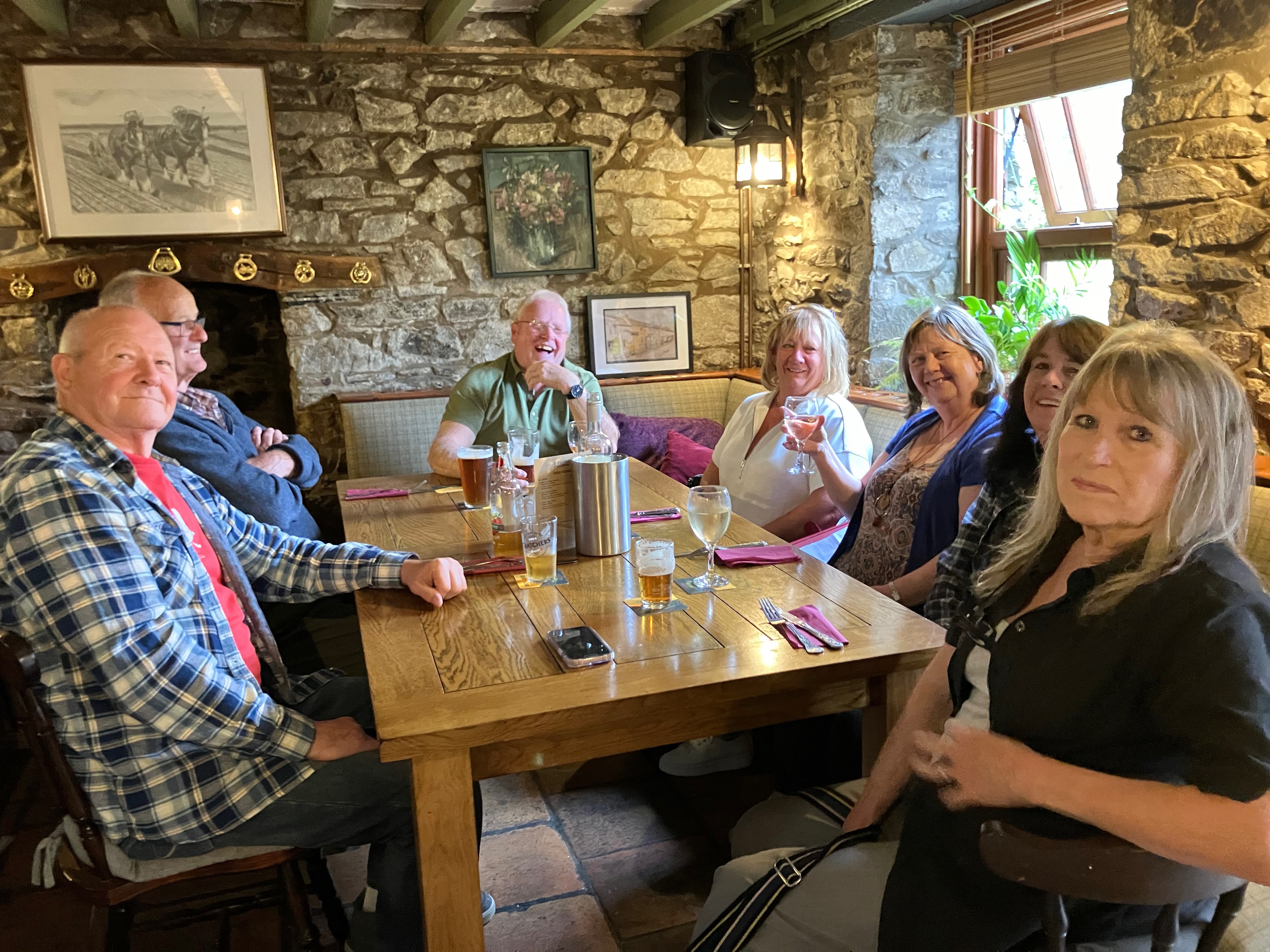
We were all then quite keen to have some of the delicious food on display, which had been brought to share by those present at the meeting.
October Meeting
‘Fritillaries on Four Continents’ with Robert Wallis will be the talk at our next meeting on October 15th. Bob and Rannveig Wallis are well known for their amazing collection of bulbs and their garden, Llwyn Ifan, in Carmarthenshire.. They are seasoned travellers and plant hunters and successful exhibitors for the Alpine Society Shows.




 Cothi Gardeners