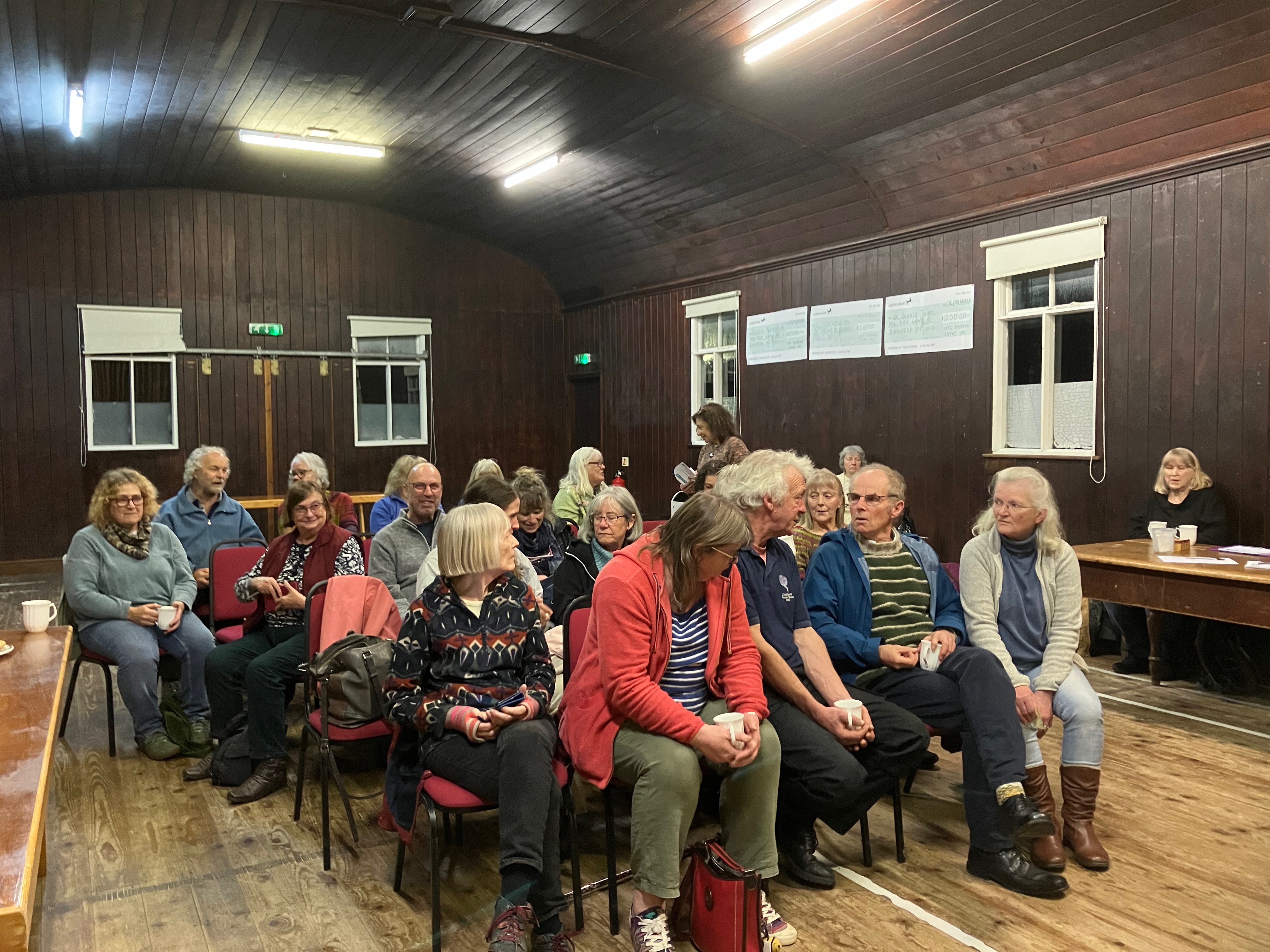
Richard was well-known to many of us from previous entertaining talks at our meetings and from visits to his fabulous nursery in Llandysul. So after words of welcome to members and visitors from Dawn, our Chair, without further ado the audience launched into their questions.

First up was Sandy, who asked how the changing climate was affecting Farmyard Nurseries, and how his business can help gardeners in that respect. Farmyard Nurseries is moving to peat-free compost, which is challenging. So far they are using peat-reduced compost (30% peat), although one of the issues is lack of government guidance. As much as possible is recycled, and bonfires are now banned. Generally, it would appear that the trend in the UK is for milder winters and wetter summers. Having said that, we all remember the fortnight-long cold spell in December 2022 when the temperatures dipped to -15! Richard lost many plants he wasn’t expecting to lose, including daffodils, snowdrops and Spiraeas. In the end he decided he couldn’t safeguard the Sarracenias, they would have to take their chances, and of all things they survived! So they are monitoring and adapting as they go. Richard is worried about water though. The nursery’s borehole is small; they have recently expanded to four water storage tanks, but that is really a drop in the ocean of what they need.
Talking of Sarracenias, Dawn had recently heard Richard speak on ‘On Your Farm’ on Radio 4 where he had mentioned a special feed for his pitcher plants when there are not enough flies about. Richard noted that there had been fewer flies about this summer than usual. A Sarracenia needs only about 3 flies to be viable but under normal circumstances they can consume many. One thing that some people do is to drop a fish food pellet into the pitchers. Richard uses a Floranid grass fertiliser which is very mild (2 teaspoons diluted in water in a washing-up liquid bottle) and a squirt into each pitcher.
Fiona brought up the subject of ground cover as a means of minimising bare soil and reducing weeding. What would Richard recommend? He agreed that bare soil just encourages weeds. Persicaria is a genus which has many good ground cover varieties. A less well-known form with small leaves is Persicaria vaccinifolium with a mass of pale-pink flower which goes on for months (and is also very effective in pots). For shade Chrysosplenium and also Pachysandra are very useful. Verbena corymbosa ‘Gravetye’ is good in sunny spots. There is also the tiny-leaved Gunnera magellanica for sun or light shade and damp soil. Ground-cover shrubs there are a-plenty: Potentilla, dwarf Hebes, Cotoneasters, Hydrangeas… There are over 200 Hydrangeas in the woodland garden at Farmyard Nurseries, which have really come into their own this year. You can also, depending on your soil, consider alpines as well as herbs (marjoram and oregano varieties are excellent). Richard uses mint in his wildflower meadow, as it competes with the grasses and the flowers are loved by bees.
Another question related to the depth at which new shrubs should be planted. The general advice is to plant them at the level they were at in the pot. But what about roses? We were all agreed that we no longer knew what the advice is about roses, as it seems to have changed. It always used to be that the graft point or union should be above the ground – now you sometimes see advice to plant it 4” deep. Good advice can generally be found from reputable rose growers such as David Austin and Peter Beales. Received wisdom does change over the years – delicate and very accurate rose pruning is now often replaced by using hedge cutters. A tip from Richard is never to prune your roses hard before March (before that your hard-pruned roses may be affected by winter die-back).
Ruth had grown some Echinacea plants from seed which were now a good size, and she was wondering whether to plant them out now or wait until spring. Richard warned her that generally Echinacea don’t like it in this part of the world, although you can sometimes get away with the standard E. purpurea or alba (which happily Ruth’s are). The essential thing is keep Echinacea dry through the winter as it doesn’t like the combination of wet and cold.
On the subject of seeds – there was a question about hollyhocks and whether the stems should be collected and hung up to dry inside, or whether to leave them on the plants in the garden. On clarifying that the seed was green, and therefore not yet ripe, he recommended both courses of action. It seemed to be generally agreed that for some plants such as hollyhocks and also grasses that it works to cut the stems with the seedpods still attached and lay them down directly on pots or on planting trays/guttering with perlite.
Julian asked Richard to share his two greatest successes and his worst failure during the life of the nursery. Richard replied that the very best thing to have happened was his daughter Ruth, and the worst thing that had happened was the long Covid that Ruth had suffered from, destroying her future as a potential Olympic athlete. The silver lining was that Ruth had turned turned to plants during that difficult time, in particular house plants, and now she runs that part of the nursery. The second best thing to have happened was getting to Chelsea on the first attempt! If he is honest, there had been lots of highs and Richard would do it all over again. One of his favourite things is to wander around the garden and nursery of an evening when everyone has gone home, and to see what has been achieved. Richard’s staff are a loyal and dedicated team, and he recognises that he owes them so much.
Next, a question about a damson – it’s a shrub variety, about 6’ high, from the Midlands. In six years, it has not produced a single damson! Richard said that stone fruits can be slow to get going. He asked whether it flowered well (it doesn’t), and flowers late, after the apples. Richard’s suggestion was to make the damson think that it’s dying, by chopping a circle around its roots. The other alternative is to to ring bark it, the ring being half-an-inch wide. A follow-on question involved two saplings, a wild plum and a sunset cherry, which had been given to a member in pots. Where should they be planted? Somewhere with plenty of sun and not too windy. Still on the subject of damsons, a questioner had a damson which bears very little fruit, but two seedlings have arisen nearby – would they be likely to fruit? Over seedlings you have no control, so theoretically they might. The closer to the species they are, the more reliably they are likely to fruit.
Sheena mentioned her trouble getting Japanese anemones to establish in her garden. Richard replied that it seems to be pot luck with Japanese anemones – they either like you (when they can grow very strongly) or they don’t. Erigeron karvinskianus is another.
Gordon asked about a 1’-high Eucalyptus with a single stem that he had bought for £3 – how could you resist?! The problem with Eucalyptus, particularly on a single stem, is that they have a tendency to blow over. To keep the juvenile foliage, you should cut it back hard every year, making it less likely to blow over. When cut back like that, Eucalyptus can make a great evergreen screen. Plants that generally do well in the damp soil in Wales, and can be good screens, are willows, Cornus, birch and poplar.
Carol had a question about her young ‘Bardsey Island’ apple tree, on which the lower leaves are developing brown and blotchy patches. She also has another Welsh apple, ‘Pig aderyn’, which is smaller but is doing better. The ‘Bardsey Island’ is planted close to a soakaway, and Carol wondered whether that might be affecting it. Richard thought not, unless the soakaway was making the soil very damp. He noted that smaller trees will often establish better. ‘Bardsey Island’ is a superb apple though. He added that he had quite a number of them, and they hardly fruited. The damp climate of Wales very often led to canker in apple trees. There was some debate about whether you can, or cannot, grow apples in Wales. The Club’s previous speaker in September had definitely been of the view that you can; Richard’s view is that you can’t – but sometimes you can!
Sandy asked about tall plants for a lined pond which she has recently made deeper. Options suggested were Iris, Typha minima (a miniature bulrush), plants in the Scirpus family, Pontaderia cordata, and even Equisetum. Apparently dayliles and Schisostylus also do will in water.
The final question came from Ruth, who asked about some young rhododendrons she had planted in a bed where Verbena bonariensis were becoming quite prolific. Richard was of the view that the rhododendrons wouldn’t suffer, as the Verbena are light and airy, and rhododendrons like shade, but that Ruth should just keep an eye on them. He did note that V. bonariensis will seed everywhere. Also, the young rhododendrons may well have come from Holland where they would have been forced into bud, so they may naturally pause flowering for a year or two. In fact, it would be a good thing to debud them next year, to ensure that they grow into good, strong bushes.
Farmyard Nurseries organise a Gardening Weekend every winter in Llandysul. In 2025 it will be organised for the days around 16 February. It’s a fabulous event that certainly brightens up a dreary time of year with talks, a central display and plants for sale. A date for everyone’s diary!
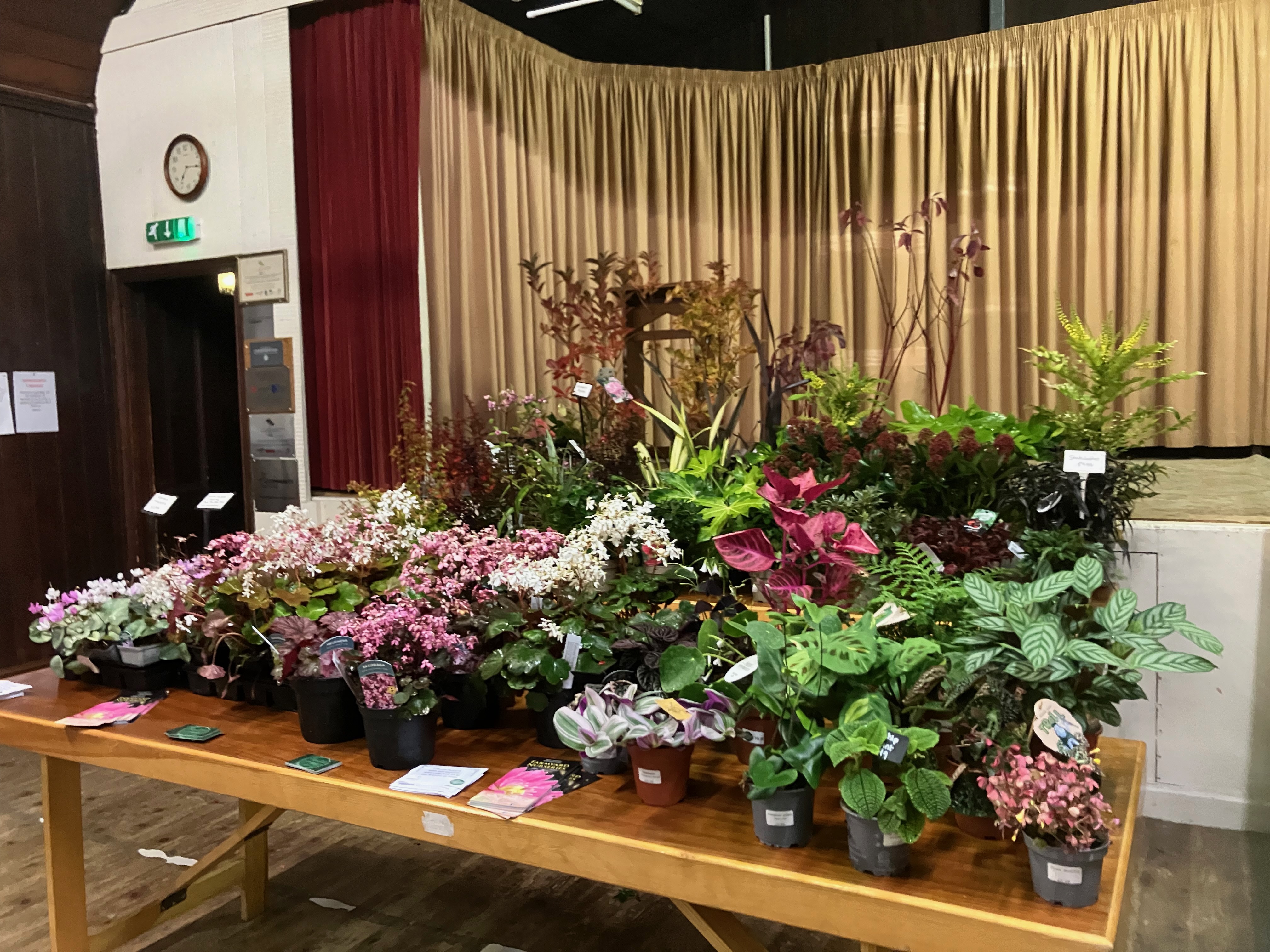
That brought to an end a very entertaining and informative hour, during which Mabel had befriended anyone in the audience she suspected of harbouring food about their person! Richard was thanked by Dawn and by an enthusiastic round of applause from the audience, and everyone made a beeline for the many beautiful plants for sale that Richard had brought to the meeting and arranged in a mouthwatering display.
 Cothi Gardeners