The talk at the July meeting was given by El James, Horticulturalist at the National Botanic Garden of Wales. For background El told us that the National Botanic Garden had opened in 2000, meaning that at 23 years old it is very young for a botanic garden. The advantage of this youth is that there is a freedom to experiment, which is sometimes absent when traditions have to be adhered to. The Garden houses the largest single-span greenhouse in the world (this still remains true 23 years on), housing the Garden’s Mediterranean plant collection. The total acreage is 560, with the ornamental gardens making up 180-200 of those acres; the rest of the space includes recently restored parkland with lakes, cascades and waterfalls and the Waun Las Nature Reserve. The Garden also houses the national seedbank and herbarium.
El explained that she started work as an apprentice at the National Botanic Garden four years ago (the scheme has been running for 10 years). For the last year she has been looking after the nurseries and Welsh plants section. There is a Welsh Native Compound in the Garden, although it is rather out-of-the -way, and there are hopes to redevelop that and bring Welsh native plants into more prominence within the Garden.
Within the Welsh Native Compound they aim to mimic the habitat found in four specific wildlife areas within Wales: the Breidden Hills in Powys, Cwm Idwal in the North, Kenfig near Bridgend, and the Great Orme near Llandudno. By having an area where these native plants can be seen, it is hoped to encourage more people to grow native wild flowers in their gardens. With native plants, it is not just about those with attractive flowers ( the ‘lookers’) – so many of them are associated with great stories from history and mythology.
The Botanical Society of Britain and Ireland recently released the Plant Atlas 2020, providing an overview of the distribution of plants in Britain and Ireland, and showing just how threatened many plants are. There are now more non-native than native plants in the UK! At the Millennium Seed Bank at Wakehurst Place they have banked 98% of UK flora from at least one population of each plant. However, as of 2019, 75% of Welsh plant populations had not been banked, and this is the rationale behind the Welsh seed bank at the National Botanic Garden. It is important to have seed from different populations, as plants growing in different parts of the country may have difference characteristics and require different conditions. El has recently been propagating Rumex rupestris, the shore dock, which is one of the most threatened vascular plants in Europe. She needs to grow on 150 plants from seed collected in south Wales, and currently has 20! It is important to have seed saved from this Welsh population, in addition to seed previously saved from the population in south-west England.
Dr Kevin McGinn is in charge of developing the National Seedbank of Wales and the Herbarium at the National Botanic Garden. The aim is to collect seed from all red-listed plants (50% of the seed to be stored at the Millennium Seed Bank and 50% at the National Seedbank of Wales), focussing on species that do not yet have Welsh-origin collections at the Millennium Seed Bank. At the Science Labs at the National Botanic Garden, the seeds are stored in freezers. In some cases this works well as the freezing process acts as stratification, but it can also cause some seed to go into deep dormancy, so different strategies for germination are required.
The team only collect seed from areas where they have the permission of the landlord, and when they visit a site it is to collect seed specifically from one or more species. There are strict rules and regulations which govern seed-collecting; only up to 20% of seed is ever collected, and depending on populations or circumstances it can be 10% or less. One of El’s favourite sites is at Baglan near Port Talbot, an old industrial site where wildlife has regenerated. On her first visit there she was fortunate to locate Clinopodium acinos, wild basil-thyme, almost immediately, growing in rubble and out of old brickwork. In terms of scenery, a visit to heathland in Anglesey to look for seed of Viola lactea, the pale dog violet, was a great contrast. Anglesey has also been visited to source seed of Hottonia palustris, the water violet. Close to Anglesey is the Treborth Botanic Garden, part of Bangor University, which is well-worth a visit. Another seed-collecting visit in partnership with the Millennium Seed Bank was to Pembrokeshire to collect seed of Populus tremula, the poplar tree.
Once seed has been collected, along with a herbarium specimen, details are entered on the IRIS database. In time, it is hoped to digitise the herbarium collection. The Garden Explorer database can be accessed online to see details of any plant in the National Botanic Garden, including photographs and location(s).
Another major activity in the summer is the harvesting of green hay from the Waun Las National Nature Reserve. The hay meadows are managed specifically for wild flowers, and include many different varieties. of orchid. In partnership with the National Trust, green hay is being laid around Paxton’s Tower to encourage a greater diversity of wild flowers in that area. It is quite a labour-intensive process to dry the seed laid out on tarpaulin and then sieve it. The seed is usually sold in bulk, but some years it is available in small quantities from the shop at the Garden.
El gave us a fascinating and very informative talk, brimming over with her enthusiasm for her subject and chosen career. The audience had plenty of questions and comments, and thanked her for such an interesting evening.
Mad Hatter’s Tea Party
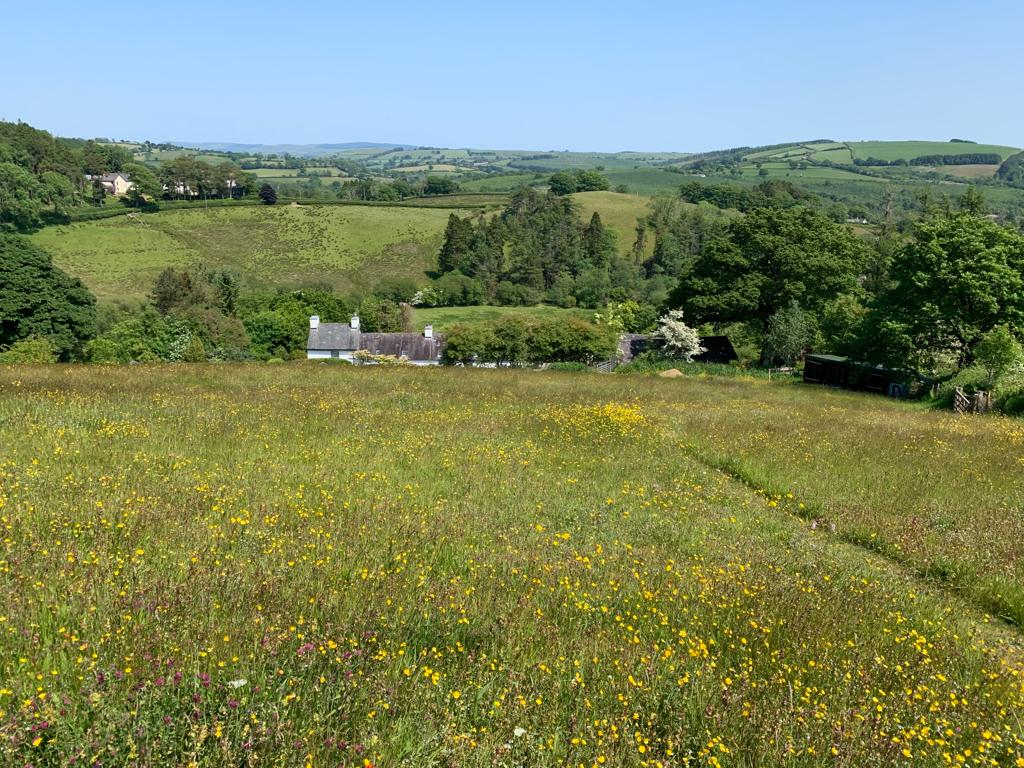
In early June, to take advantage of the amazing weather at that time, a Mad Hatter’s Tea Party was held for members at the wonderful Gelli Uchaf garden for the purpose of viewing the garden, particularly the wild flower meadows, sporting a mad hat and consuming a delicious tea.
The wild flower meadow was at its peak, everybody had brought quantities of amazing sandwiches, scones, cake and seasonal berries, and the hats were inventive, inspiring and humorous. The sun duly shone, and laughter and good conversation abounded.




Visit to Llwyngarreg Garden
Following a fascinating talk from Paul O’Neill at the June meeting of the Club, our Chair arranged a visit for members to Paul and Liz’s garden, Llwyngarreg, on the border of Carmarthenshire and Pembrokeshire, for mid-July. It had been very wet, but the rain managed to hold off for the entire afternoon! And what a privilege to be shown around the garden by Liz and Paul, in the sun, to hear its history and how it’s changed, and to be the beneficiaries of all their insights into the plants that they grow.
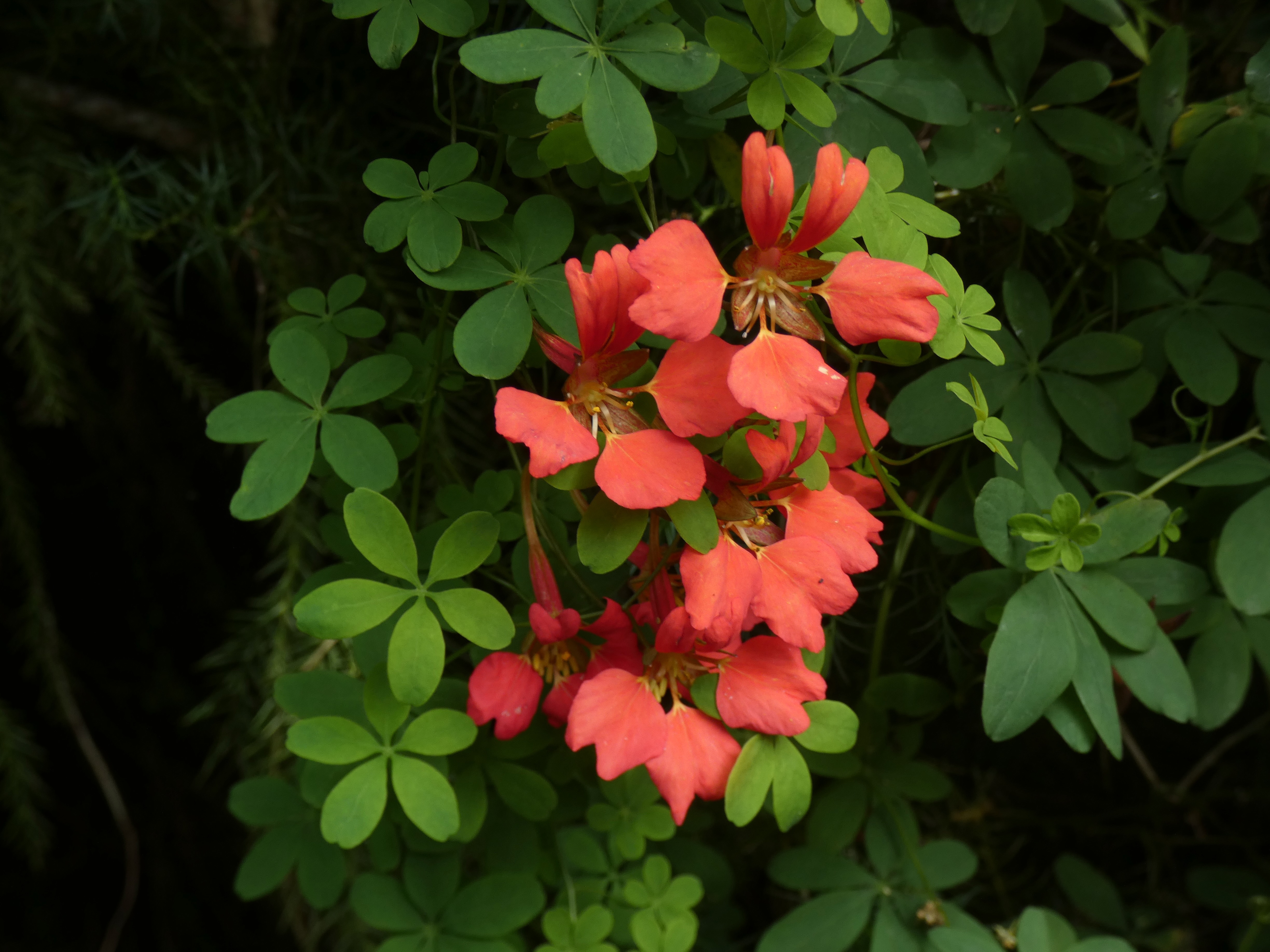
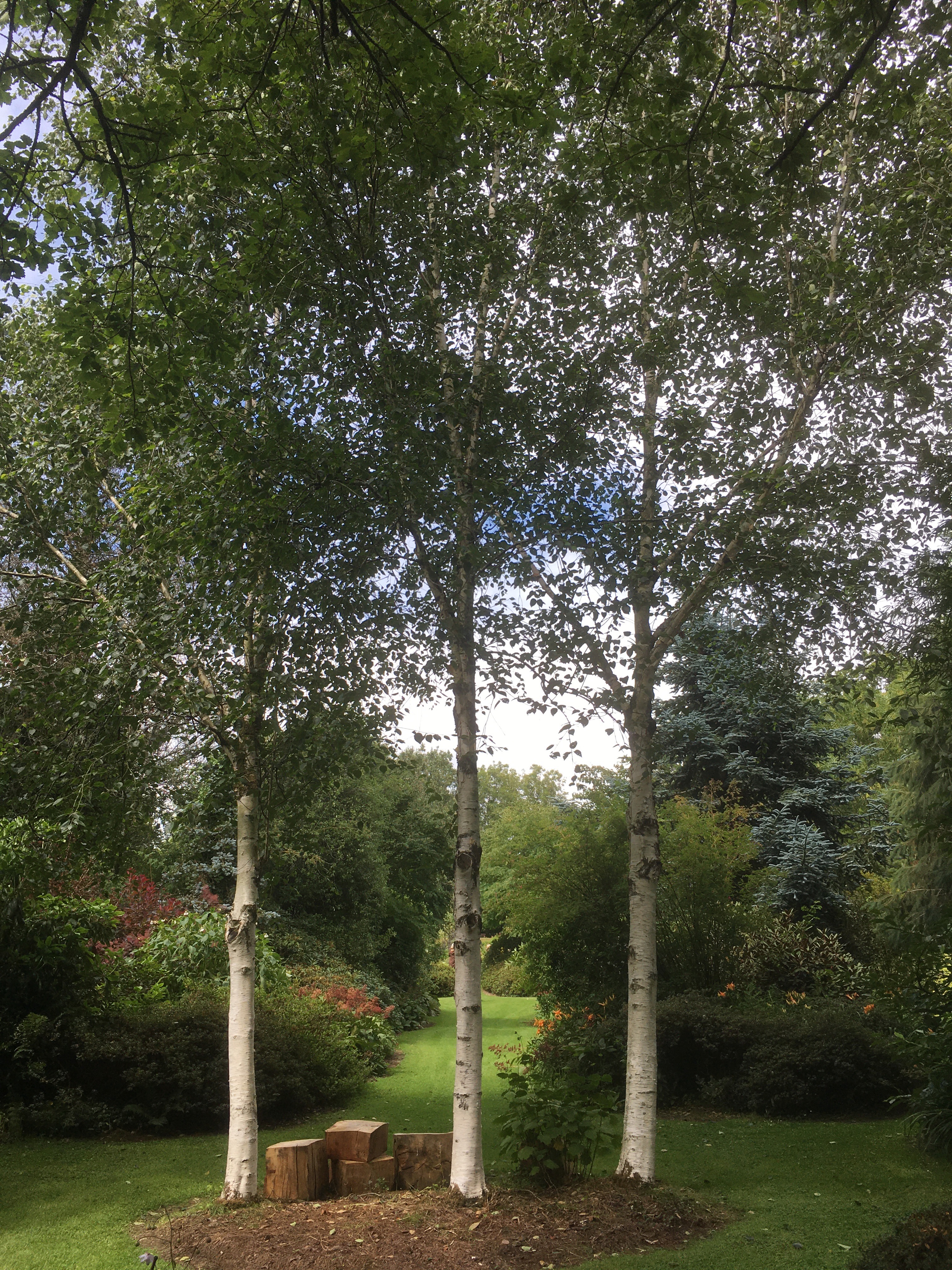
Appropriately, given Paul’s love of bamboos, the garden visit starts with a walk through a bamboo tunnel. This illustrates Liz and Paul’s readiness to adapt with changing climate conditions – it was previously a willow arch, but with time proved too dry for the willows, so they were replaced with bamboo. Willows still play a big role in the garden with various inventive seats and structures made from them. Bamboos are a major feature, with many unusual varieties including Borinda macclureana (a Keith Rushforth collected seedling, now many metres high). There is a real focus on trees (the acers are all grown from seed) and shrubs, particularly rhododendrons, including a number of the large-leaved varieties – many of which also are grown from seed. In mid-July we saw the beautiful and scented Rhododendron auriculatum, the latest flowering species rhododendron. in flower at just 7 years from seed! It was the first time that I have seen the gorgeous scarlet climber Tropaeolum speciosum growing through shrubbery outside Northern Ireland or Scotland.


We all exclaimed at the profusion of Agapanthus (campanulatus hybrids) growing in the soil in the garden. Paul explained that everyone is surprised – they grow here both in 2.5 metres of wet peat, and also 2.5 inches of gravelly soil over rock – two completely different environments. They looked spectacular with orange crocosmia in peat, and with dierama in the gravel beds.


There is so much variety in the garden: after exploring the trees, shrubs and bamboos, we emerged onto lawns with lovely perennial borders and a Japanese-style bridge.

After tea and cake (of course!), and arguing amicably over plants in the sales area (of course!), we made our way home. But not before Paul showed the bamboo aficionados two very unusual specimens – the walking stick bamboo with its swollen nodes (invasive), and Himalayacalamus falconeri ‘Damarapa’ with its colourful striped canes (too tender, I fear, for mid-Wales).
 Cothi Gardeners