The Dreaded Gardener; Members Social; Garden Safari; Drought Busters; Gardener’s World; Other Events

Malcolm Berry – The Dreaded Gardener:  ‘Weaving the Web:Towards a Natural Garden’

Malcolm’s talk about how he tries to garden in a way to create ‘dynamic stability’ where flora and fauna exist in harmony struck a chord with many of us. The State of Nature reports indicate that in Wales 1 in 14 species are heading for extinction, in a large part due to loss of habitat. To try and offset this even those with small gardens can help. Biodiversity was at the root of his message: diversity creates diversity, the greater the diversity in flora the greater the diversity in fauna.


Ideas he has implemented in his own garden:

  • Varied habitats such as a pond, mini meadow, deciduous and evergreen hedges, mature trees and shrubs, dry stone walls, log piles, stone piles.

Mini Meadow © Malcolm Berry

  • Flower counts throughout the year to assess where/when there is a lack. Self seeding annuals to increase flower numbers
  • Polyculture rather than monoculture: mixing veg in with shrubs and perennials. More naturalistic and gives better protection against pests and disease.
  • Clear areas for veg planting in Spring, weed through growing season, stopping in August. By winter the mix of weeds and crops cover and protect the soil which is better for both soil and habitats. Weeds are also a good winter flower source.
  • No power machinery, he uses only hand tools

© Malcolm Berry

  • Compost: use comfrey in layers when turning compost as it is a good activator
  • Seed saving: from most veg. Some such as parsnips, runner beans and leeks require a minimum of 16 plants to save seed from in order to retain diversity. Only save seed from the best plants/fruit. Store seeds in an air-tight tub in fridge with silicon gel packets as this significantly reduces conditions required for germination.
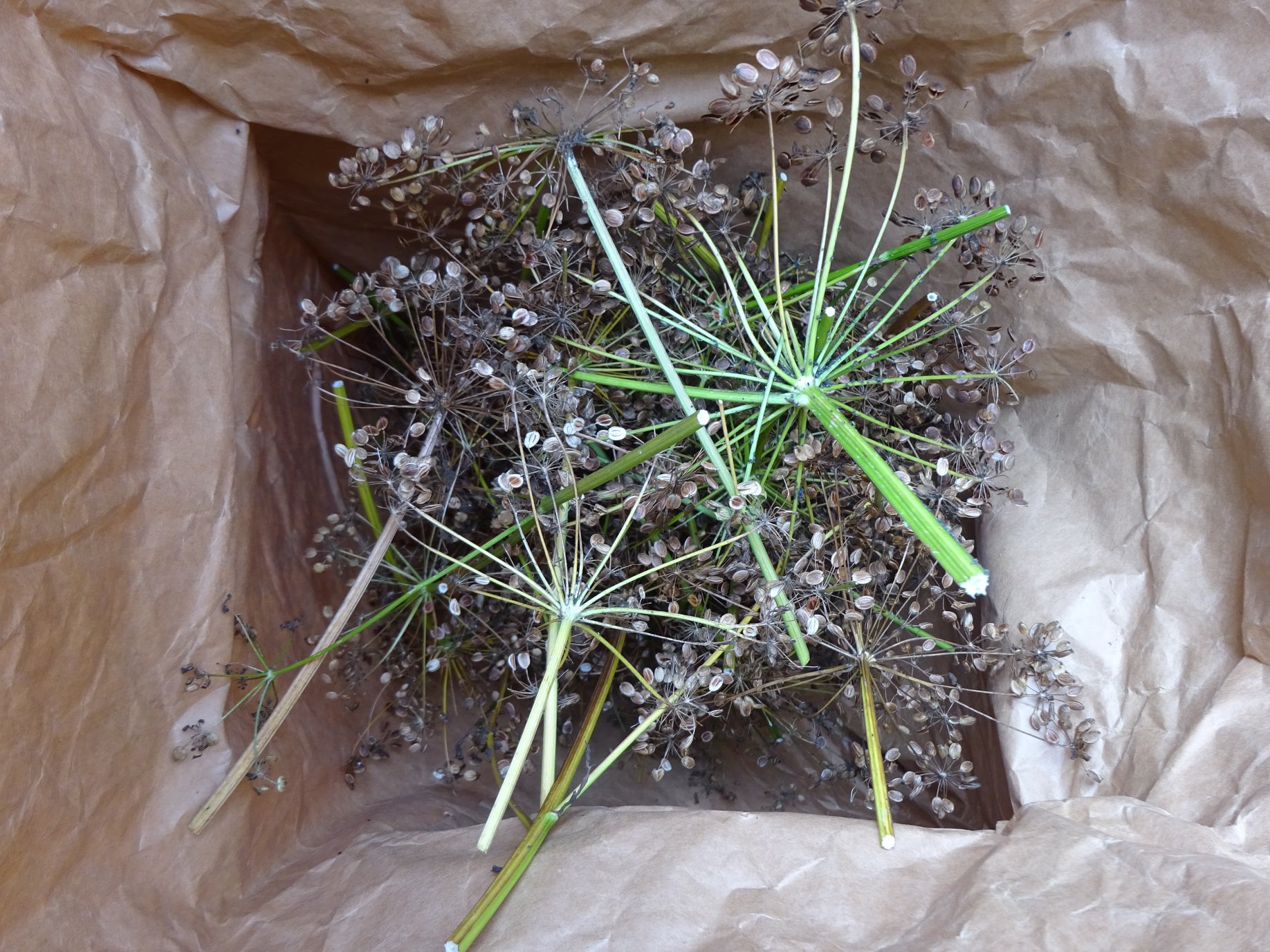
Parsnip seed saving © Malcolm Berry

  • The Moon: He uses the Maria Thun Biodynamic Calendar which shows the optimum days for sowing, pruning and harvesting various plants and crops.
  • Non-interventionist approach, no pesticides or herbicides, nature will balance things out. He grows sacrificial plants to avoid significant predation on veg.
  • Minimum tillage, he does not turn the soil, practices good crop rotation and uses green manures to maintain condition and fertility.

It was a very interesting talk and generated many questions from the audience.


Members Social and Growing Challenge 7.30pm Coronation Hall, Pumsaint

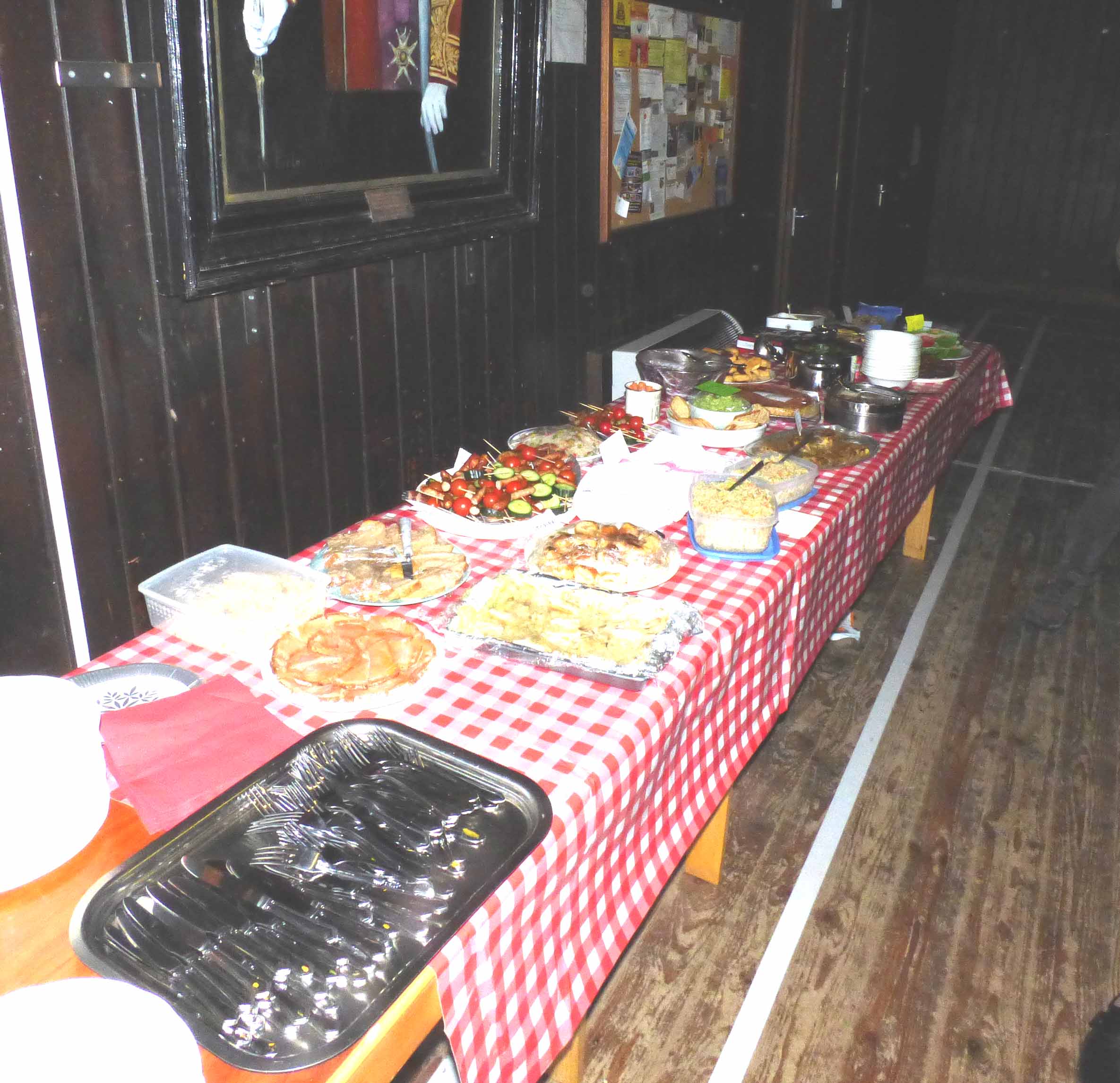
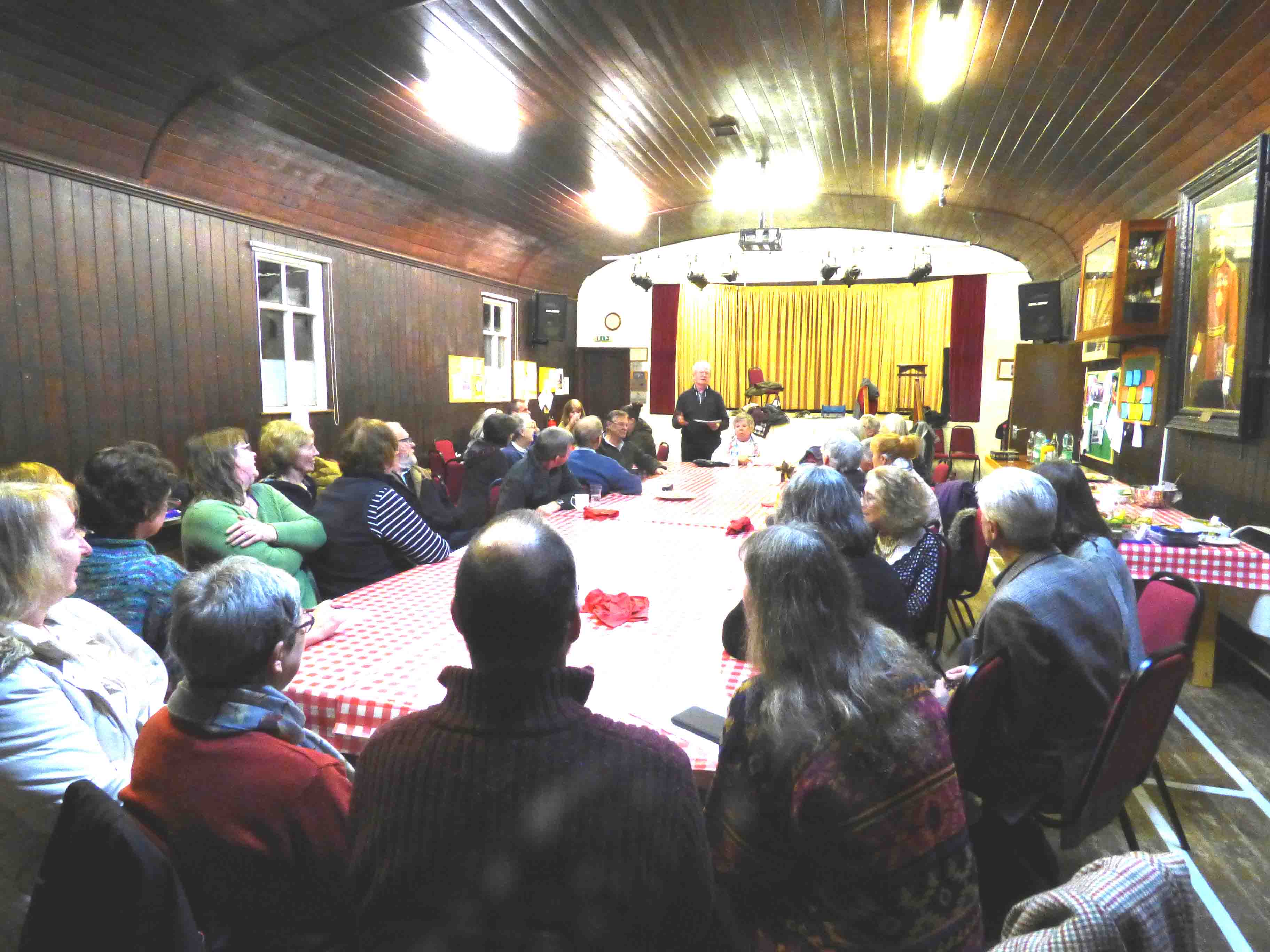
Our August meeting is our members’ social evening when we meet for a relaxed get together bringing a plate of food to share. This year due to our increasing numbers, it is being held in the hall rather than a member’s home.

Pots planted for pollinators – with varying degrees of success!

The evening is also when we share the results of this year’s growing challenge. We were asked to plant up a pot with plants for pollinators. Do bring along your pots even if they haven’t turned out quite as expected – it has been a very challenging year weather-wise, but we can all learn from our successes and failures! If you can’t manage to bring the pot itself do try and get some photos of it and bring them along instead.


The evening will also be when we will be handing over our donation from the proceeds from the plant fair, a cheque for £500,  to Wales Air Ambulance.


Garden Safari

The garden safari is a club event in which we get to visit the gardens of those club members who wish to participate. The number of gardens taking part varies year to year, this year there will be just 2, Yvonne’s and Tina’s. The date on which it will take place is Friday September 7th. More details will be given at the summer social.


Drought Busters

A tip from Elena for watering…

  1. Place a large tub in a wheelbarrow.
  2. Fill with old washing up water – You can also add feed to the tub
  3. Dunk hanging baskets in the tub holding underwater till all the bubbles stop
  4. Lift out and rest on the rim of the tub to drain, some will also drop into barrow and can be re-used!
  5. Rehang you well-watered basket. Works well with small pots too

And from Julian: we’re now having to use my huge number of water filled polycarbonate drinks bottles as a valuable water resource with our spring running low, but I also found that if you drill a tiny hole in the top of the bottle cap, upend it, and ram it into the soil beside squash, courgettes or tomatoes, it’ll deliver variable, but fairly slow water release over a few days – good if you have to go away for a weekend in hot weather.

From the white board: water Camellias and other Spring flowering shrubs now to encourage flowers next Spring.

Some plants which seem to be coping well with the lack of rain, and don’t need watering:

Jenny says….

  • Rudbeckia, Antirrhinum, Sweet William and Californian poppy.
  • Yellow Loosestrife, hostas and several unknown varieties of alliums have all flowered really well with minimal watering.

Sandy says…..

  • her 3 foot high unknown Phlox are doing well, and her Gunnera! She does live by a river which might help explain it.

Plants John and Helen have found are drought resistant are:

  • Erodium manescavii, Platycodon grandiflora and Scutellaria albida

Erodium manescavii with Geranium sanguinium

Julian and Fiona have found

  • Sea campion, Knapweed and Bird’sfoot Trefoil are all tough native plants to try, plus roses and clematis all seem to be thriving.

Ty’r Maes NGS Open Day

John and Helen had their NGS open day on Sunday. All John’s hard work watering to try and keep the garden looking good along with a little bit of help from the storms of the previous week certainly paid off. The garden was looking beautiful. The sun shone and the visitors flocked in – John said it was their best day for several years.  As always, thanks from them to all their helpers and cake bakers and to John and Helen for their donation to Cothi Gardeners funds.


Upcoming Events

Gardener’s World: Keith Brown whom many of us know for his lovely garden and talks he has given to Cothi Gardeners in the past, has been filmed for Gardener’s World. The piece is due to be aired THIS FRIDAY 10th August at 9pm

Llandeilo Permaculture Group: Llandeilo Permaculture Group have scored a coup, booking Permaculture designer Geoff Lawton for a talk in the Civic Hall on August 24th, 7pm. He’s done TED talks and lots more. This is his only date in Wales. Tickets are £10, includes a light buffet.

September Meeting

Paul Green from Green’s Leaves Nursery will be paying us another visit after his very enjoyable talk last year….. and he will be bringing plants again! Put the date in your diaries: Wednesday September 19th at 7.30pm

 

Programme changes; Film Entertainment; Glorious Primulas; Mad Hats & Tea at Aberglasney

The Quiet American Gardener and Terry Walton

Following the last minute cancellation of Terry Walton’s talk to us last month due to family circumstances, we brought forward the film which was to be our November entertainment. The good news is that we won’t miss out on Terry’s talk as he has now confirmed that he will be able to come in November instead.

Hidcote Manor Garden

The film we watched, ‘The Quiet American Gardener’, was about the history and development of Hidcote Manor Garden by Major Lawrence Johnston. He was born into a wealthy American family of stockbrokers, which gave him the necessary funds to create this now revered English garden, once his mother had bought the Cotswold estate in the early twentieth century. It was passed to the National Trust in 1948 on his retirement to his estate, Serre de la Madone, on the French Riviera.

The film was a fascinating insight into how the garden evolved and the influences that played a part: Italian garden design, architectural perspectives and their manipulation to create a particular effect are some that come to mind. The love of the place was apparent in the way the more recent gardeners talked about it and how they were trying to restore the garden to how Lawrence Johnston envisaged it. Click here for a trailer and transcript of the film.


Richard Bramley talking about Primulas – Wednesday May 16th at 7.30pm.

Primula sieboldii at Farmyard Nurseries

Another speaker cancellation occurred for May. Fortunately Richard Bramley, a popular and entertaining regular for Cothi Gardeners, was able to step into the breach and will give us a talk on Primulas. Richard has developed a fabulous collection of Primula sieboldii for which he is in the process of applying for National Collection status, and will no doubt tell us much about these beautiful Spring plants along with others in the primula family. He will of course be bringing plants for sale. More info on his website for Farmyard Nurseries (click here).

Primula sieboldii at Farmyard Nurseries

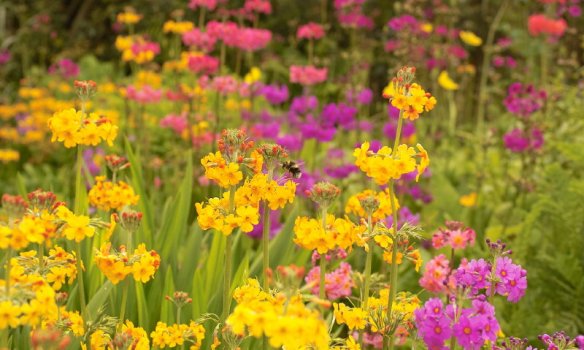
Candelabra primula in a garden setting


Mad Hatter’s Tea Party at Aberglasney

There is a club outing to Aberglasney on Wednesday 6th June. Entry to the garden is at a reduced rate of £7.25 (free to members of Aberglasney) and the special afternoon tea (£12 per person) has been booked for 3.30pm.  Come early and enjoy this fabulous garden before sitting down to a  ‘proper tea’ with sandwiches, cakes and pretty china on the terrace overlooking the pool garden. Mad Hats to be worn (but not obligatory) to add to the entertainment! If you would like to join us but haven’t put your name down yet, there will be a list at the next meeting, or let Julian know directly. We need to give Aberglasney names  so that those attending can get the discounted rate.


Club Plant Stall

Now that we have had a welcome change in the weather (at last!) things have started to recover from the dreadful winter and spring. Do try and bring any surplus plants you may have to the next meeting for the club plant stall. The proceeds from the stall give a significant boost to club finances and all help both with supplying the plants and buying them is much appreciated.


Hardy Geraniums with Richard Cain; Media Allotmenteering with Terry Walton; Spring socialising with Cothi Gardeners…….

Richard Cain – Hardy Geraniums

Our March meeting was, sadly, the last one at which we will hear Richard Cain from Penlan Perennials as he is retiring in September. Richard has given us several entertaining and informative talks over the years on a variety of subjects and this one on Hardy Geraniums was no exception.

Erodium manescavii and Geranium sanguineum var. striatum

The Geranium genus includes

  1. Pelargoniums – not hardy annuals
  2. Erodiums – soft velvety foliage which doesn’t like wet conditions
  3. Geraniums – generally fully hardy to -25 Deg. C, although there are a few non-hardy types.


  • Appearance: they all have a crown of leaves at the centre but then can vary considerably from straggly stems to compact mounds. Leaves can be dissected, blotched and some are scented.
  • Smaller Geraniums can be vulnerable to winter wet when the crown can rot.
  • Species Geraniums only flower for 3 – 4 weeks as they attract pollinators and once pollinated, the flowers fade.
  • Hybrids have a longer flowering season as they are usually sterile.
  • There is a Geranium species for almost any site or situation! Eg Ground cover – G. macrorrizum; G. riversleaianum ‘Mavis Simpson’ (also flowers for 4 months). Shade – G. monacense, G. nodosum, G. phaeum, G. sylvaticum, G. versicolor & G. wlassovianum.

G. macrorrhizum

  • Most are pest and disease free and rabbit and deer resistant. However they are susceptible to vine weevil.
  • Thug like Geraniums such as G. oxonianum can be effectively controlled by cutting hard back before flowering has finished – this has the added benefit of encouraging a second flush later.
  • Many x hybrids are sterile but flowers are often larger and last longer eg  G. ‘Eureka Blue’, G.wallichianum ‘Crystal Lake’ and G. ‘Alan Mayes’ (like Magnificum but flowers for months).
  • Good plants for pollinators: usually have reflexed petals. G. sylvaticum, G. ‘Cloud Nine’. Hybrids and alpine varieties are not so good.

G. phaeum


Propagation:

  • Seed: collect when ripe – they usually go black. Hold seed head between fingers and put in a bag or the capsule will ‘explode’ scattering the seeds everywhere. Sow when fresh in vermiculite or coir (water before sowing) and cover with a very thin layer of vermiculite. Seeds can be kept in a bag in the fridge until ready to sow.
  • Division: do when dormant in spring. Pull off surplus compost, twist and pull crown apart. Tap off and replant.
  • Root cuttings: use this technique for sterile types and those with tap (carroty type)roots. Only take root cuttings when plant is dormant as if the sap is rising the cuttings won’t take. Use a root with fine roots on it. Note which way is up (cut lower end on an angle and top end flat). Take 1 ½ to 2” cuttings approx. the thickness of a pencil or more. It takes a year to get a small plant, success rate approx. 70 – 80 %.
  • Cuttings from rhizomes – take newish shoots from around the edge of the plant and gently tease apart. Balance top leafy growth and bottom root structure, removing leaves as necessary.
  • Stem cuttings: take these from the straggly stemmed Geraniums. Cuttings should be approx. 3-4” long. Peel basal leaves off. Cut square across under a leaf node, they should then produce roots at the node. Push into soil round the edge of a small pot.

We will miss being able to access Richard’s immense knowledge for future talks and wish him well for the next exciting phase of his life. Click here for his website


April Meeting

It’s hard enough getting those fiddly seeds into compost or trimming just the right side-shoots without holding your mobile phone to your ear and providing a running commentary to thousands of Radio 2 listeners at the same time.

If you haven’t already guessed, our speaker in April will be Terry Walton. “The Life of a Media Allotmenteer” promises to give us a look behind the scenes as Terry tells us about life on his allotment in the Rhondda and how he has given growing advice on the radio each month for over twelve years.

A gardener of over 40 years’ experience, Terry has worked plots on the same site since he was a boy, learning from his father and other allotment gardeners. Many of you will be familiar with his enthusiastic style, so do come along on April 18th to meet Terry. Mobile phones not necessary! Click here for his facebook page.

Guests and visitors welcome, £3, to include refreshments. The talk begins at 7.30pm.


Spring Social

We now have a date for a spring social – which will be very kindly hosted by Elena, for a lunch gathering at her home Glanranell Barns on Wednesday May 9th. 

Please bring a plate of food to share, and to ease parking issues, it would be good to car share if possible.


Plant Fair

Another reminder to put your names down for helping out with the plant fair – sheets for signing are on the meet and greet table at our meetings


NGS Garden Opening

Gelli Uchaf Garden

This year’s final opening weekend for Julian and Fiona’s garden, Gelli Uchaf is 21st and 22nd April. There are still some spaces left for the Saturday afternoon (2.30pm) and Sunday morning (10.30am). Contact them to book in : 01558  685119


TOPICAL TIPS

It’s probably still OK to cut back any Viticella, or later flowering Clematis, if you didn’t manage to do it in February, since there’s been so little growth so far this year.

Also Fiona’s tip is it’s not too late to take willow wands for making green sculptures or plant supports.


Finally if you’ve got any nectarines or apricots flowering under cover, don’t forget that there are very few pollinators around, or certainly not many that will make it into a greenhouse or polytunnel, unless you have a very nearby honeybee hive, so it’s worth hand pollinating the flowers – Julian uses a feather rammed into the end of a cane, to reach those high up flowers.


AGM; SNOWDROP AUCTION & QUIZ; INAUGURAL PLANT FAIR; BUMBLEBEES & PYO WILLOW

AGM

The club AGM was held on January 17th and was very well attended with an excellent turnout of current members plus some new ones joining on the night. The chairman and treasurer’s reports indicated that the club is thriving but the point was made that we shouldn’t rest on our laurels but should actively encourage others to join. Thanks were given to retiring committee members, Avril and Jenny, for their hard work over the last 3 years.


Snowdrop Auction and Quiz

Once the business part of the meeting was finished Julian took up his meat tenderizer, sorry, ‘Gavel’,  to conduct an auction of snowdrops. This proved to be a highly amusing event and raised over £60 for club funds. Grateful thanks to Julian and Fiona for donating the snowdrops.


Food was next on our minds and we all enjoyed the varied offerings brought for our sharing supper.

With appetites satisfied we girded our loins and attempted to get our brains in gear for Derek’s quiz. He assured us it was easy this year with all answers some kind of plant. We were deceived! Plants ? Certainly. Easy ? ?? Nonetheless it was great fun and enjoyed by all.


Stumped?


Cothi Gardeners Plant Fair Sunday, July 8th 2018

The planning for our inaugural plant fair is progressing well. The date is confirmed, excellent nurseries, growers and other participants are booked. Detailed organisation for the day itself will need the active participation of all members to make it run smoothly and successfully so PLEASE PUT IT IN YOUR DIARIES NOW and be prepared to be involved! More on what this will entail at our next meeting in February.


“The Plight of the Bumble Bee” , Wednesday, February 21st.

“The Plight of the Bumble Bee” will be presented by Clare Flynn from the Bumble Bee Conservation Trust. This is a charity doing excellent work and research across Britain. Click here for more info.


Cut-your-own willow – January 2018 – available for approx. 6 weeks.

Donna has basket makers’ willow ready for cutting. Varieties include:  Fantail, Continental Purple and Golden. No charge, but I’d happily swap for a small basket! Please phone Donna, 01558 685717

Fantail: A vigorous ornamental willow known for its curiously flattened, recurved stems used in floral arrangements.  Click here for more info.

Continental Purple: Tall, with dark purple to mahogany stems, and a beautiful but very delicate pale purple bloom on the bark. Click here for more info.

Golden: A spreading medium-sized deciduous tree with bright deep yellow shoots bearing narrowly-lanceolate mid-green leaves and insignificant, slender yellowish catkins in early spring. Click here for more info.


Frank Cabot – Les Quatre Vents; Christmas Buffet; Sad News

Les Quatre Vents – slideshow illustrated DVD lecture by Frank Cabot

At our November meeting rather than having a speaker we opted to show a film by Frank Cabot of his garden, ‘Les Quatre Vents’, near Quebec in Canada. In spite of quite a number of members being away or ill, we had a very good turnout.

Julian gave a brief introduction explaining Frank Cabot’s relevance to Carmarthenshire and his background ……

He was actually an American, born into a wealthy family, and made enough money in financial services to retire early at 48 and devote himself to gardens and horticulture.

Like Bob Brown, he was awarded the Veitch medal by our Royal Horticultural Society, and he also established the Garden Conservancy charity in America to help save and preserve significant gardens mainly in the USA and a few around the world.  Through contacts made by Carmarthenshire based William Wilkins, he was persuaded to become involved with the Aberglasney Restoration Trust, he and his wife donating over £1 million to the restoration of Aberglasney in its very early days. A man of great charm and enthusiasm, he produced in his latter years not just a wonderful book on the creation of his major family garden at Les Quatre Vents, The Greater Perfection) but also a slideshow illustrated DVD lecture which is what we showed to Cothigardeners. This selects 5 of the 32 design elements of his garden and discusses how they came into being. Many took decades to reach fruition, from the initial idea and planning to the final execution or maturity of plantings.

Although  the film showed gardening on a grand scale we were able to appreciate themes it highlighted which are pertinent to all gardeners……..

  • patience – the long term  nature of designing/planting a garden
  • ruthlessness – if a plant doesn’t perform, move it to a better location or get rid of it altogether – all plants should earn their place.
  • continual appraisal, reassessment and editing. Walk round your garden regularly throughout the year making notes of things that work and those that don’t and be prepared to change them where necessary.

Click here for both a 4 minute video clip from the film, and a detailed biography  of Frank Cabot on the site of The Garden Conservancy.


Christmas Buffet

A reminder to those who have booked their place for the Christmas buffet ………………….

Wednesday December 13th at the Dolaucothi Arms, meeting at  6.30 pm for a 6.45 to 7 pm start.

The Dolaucothi Arms – Cothigardeners Christmas Buffet 2017

£15 per person

Hot

Dinefwr Venison sausages with red onion, apples and sage

Mushroom, chestnut & red wine bourguignon (gf, ve)

Buttery mashed potato (v)

Root vegetables roasted with thyme (gf, ve)

Cold

Home cooked glazed ham with cranberry and orange stuffing (gf)

Raised rainbow vegetable pie

Spiced red cabbage slaw ~ Chicory, celery & walnut salad ~ winter salad

(all gf, v)

Sweet (all v)

Mince pies with brandy butter

Orange, almond & polenta cake (gf)

Mulled pear and gingerbread trifle


Sad News

Many of us in Cothigardeners knew John Smith and had enjoyed his and his wife Liz’s company and beautiful garden at  Llwyn Cyll near Trapp on several occasions, as well as his highly entertaining talk on the development of the garden. Sadly news came this week that he died of cancer in Glangwili hospital on Saturday night.

John’s funeral/memorial service is to be held at Llanelli Crematorium at 12.00 on Monday 27th, with ‘tea’ at Llyshendy (Jane and Ivor Stokes home near Llandeilo) thereafter.  Liz has asked that if folk are coming, bright colours please and black only if you have to!


Brilliant Bob Brown; Quatre Vents – Gardening on a Grand Scale; Christmas Buffet

Bob Brown –  “Too many plants, too little space”


Preceded by another successful Pie Night at the Dolaucothi Arms, our October meeting saw us entertained by our ‘big name’ speaker for this year, Bob Brown from Cotswold Garden Flowers. The hall was packed with 40 visitors swelling our club numbers to over 80. There were some excellent raffle prizes to be won and members did us proud with their cake baking for the refreshments


Bob lived up to his reputation and gave us a highly informative and amusing talk on the subject ‘Too many plants, too little space’. Below is a brief summary of the main points he made.

“Too many plants, too little space”

  • Cut down size of garden
  • Make every plant earn it’s keep, opt for plants with multi-seasonal interest.
  • Multi-layer planting to extend growing season – as one plant goes over another is coming up to take it’s place – in the same space.
  • Throw out non optimal performers – be ruthless!
  • Go for AGM varieties as these are proven to be garden worthy.
  • Avoid ‘rare’ and difficult to get hold of plants – they are so described for a reason!

Bob also brought some of his lovely plants to sell, many of which were mentioned in the talk.


Many thanks to all those involved with the smooth running of the evening, and especially our programme organisers, Brenda and Yvonne, whose brainchild it was.


Quatre Vents – Wednesday November 15th

November’s meeting will be a quieter affair but non-the-less very interesting. We are showing the film made and narrated by Frank Cabot about the development of his family’s garden ‘Quatre Vents’ near Quebec in Canada.  Frank and Anne Cabot were the primary benefactors of the Aberglasney Restoration Trust. He set up the Garden Conservancy in the States to help save and restore special gardens around the world. Click here to read more. Sadly Frank died in 2011 aged 86.

The following is a quote about Frank Cabot from Alexander Reford, director of the renowned family-owned Jardins du Métis, also in Quebec.

“He was a formidable character and an inspiration to gardeners, both amateur and professional who work to emulate his horticultural prowess. His wit and wisdom were a welcome addition to our lives, his erudition encouraged many to take up gardening seriously, and his irony made sure that we did not do so excessively. He inherited the land, but he made the garden; it was his from start to finish. Whenever I saw him he was in jeans, his rubber boots, knee pads, dirt under his fingernails. He had an encyclopedic knowledge of plants.”

Even though the property has been open to the general public for only four days each summer, the gardens are world renowned. Hilary Weston and Nicole Eaton featured them in their book In a Canadian Garden, and Reader’s Digest once referred to them as “Canada’s best kept secret.”

In the year 2000 Frank Cabot was awarded the Veitch medal by the Royal Horticultural Society. He also received the Garden Club of America’s 2006 Achievement Award for “the greatest horticultural accomplishment in America in the last half-century” and numerous other awards.

“His book, The Greater Perfection, received the Council of Botanical and Horticultural Libraries’ 2003 Literature Award, and was described as “one of the best books ever written about the making of a garden by its creator”

Perhaps Gardens Illustrated described him best:  “part eccentric, part scholar; a thinker, a gatherer of ideas, a plantsman, and a patron… above all, as is essential to all great gardeners, he is a visionary.”

The film shows gardening on a grand scale, but is still very stimulating, and you may well not get a chance to see it anywhere else, so it’s well worth coming along.


Christmas Buffet

Our Christmas meal this year is a buffet and will be held on the evening of Wednesday December 13th at the Dolaucothi Arms, meeting at about 6.30 pm for a 6.45 to 7 pm start. Final details will be circulated nearer the time but members should be aware that places are limited, so if you do want to come you need to let Julian or Stephen know as soon as possible to secure your place. Payment needs to be made by the November meeting at the latest. The menu is below.

The DOLAUCOTHI Arms – Cothi Gardeners Christmas Buffet 2017

£15 per person

Hot

Dinefwr Venison sausages with red onion, apples and sage

Mushroom, chestnut & red wine bourguignon (gf, ve)

Buttery mashed potato (v)

Root vegetables roasted with thyme (gf, ve)

Cold

Home cooked glazed ham with cranberry and orange stuffing (gf)

Raised rainbow vegetable pie

Spiced red cabbage slaw ~ Chicory, celery & walnut salad ~ winter salad

(all gf, v)

Sweet (all v)

Mince pies with brandy butter

Orange, almond & polenta cake (gf)

Mulled pear and gingerbread trifle


Upcoming Events Not to be Missed!

Two events which are no doubt already in your diaries……….

First off is our big speaker meeting with Bob Brown of Cotswold Garden Flowers  (preceded by Pie Night at the Dolaucothi Arms) ……….

………….. and that is quickly followed John and Helen’s plant sale. This goes from strength to strength this year with Keith Brown selling plants as well as (it is rumoured) his friendsTony and Sylvia Marden, from Shady Plants in Gloucestershire.

Pies; Big Sky Penstemons and Salvias; More Pies and Bob Brown; Christmas Meal

PIE NIGHT

After our successful and hugely enjoyable summer social in August many club members enjoyed another convivial get together for Pie Night at the Dolaucothi Arms before our September meeting. These get-togethers are an excellent way to get to know fellow members in a relaxed setting so make the most of them while you can as after Dave and Esther move on in April they may not exist!


The meeting was again well attended and we had an entertaining and informative talk by Vicki Weston from Big Sky Plants on Penstemons and Salvias.

Vicki told us how she came to be growing these lovely plants at her nursery near Aberystwyth via the Isle of Wight, Yorkshire and Tregaron – a history that was full of many trials and tribulations and made her stamina and determination to succeed all the more impressive.


Pentemons: Why grow them?

  • very long flowering
  • mostly ignored by molluscs
  • don’t need staking
  • very wide colour range
  • huge range – alpine to back of border, over 250 in family
  • easy to propogate
  • good cut flower

Hardiness: this depends on where and how they are planted, although some are more hardy than others and it is advisable to buy from specialists to avoid mistakes. Usually the narrower the leaf the hardier the plant (See list later in post)

Ideal Conditions:

  • well drained – wet winter feet will kill!
  • sunny but will tolerate some shade
  • out of strong, drying winds
  • plant 2′ apart for large ones, the rest 15 – 18″
  • do not cut back in Autumn, wait until Spring
  • dead head through season to keep display going

Propogation: Vicki does hers from cuttings from non flowering stems which she puts in terracotta bowls covered with plastic lids and placed on soil warming cables. She uses a mix of ½ compost and ½ vermiculite. The cuttings need to be kept moist (sprayed twice a day) and can root in 4-5 weeks.

Pests: Eelworm – evidence of eelworm: blotchy leaves, slow growth, yellowing tips. Unfortunately there are no solutions other than burning including the pot!

Sadly due to Eelworm which devastated her collection, Vicki hadn’t been able to bring any Penstemons to show us. She is hoping to restock soon.

Salvias: from the latin salvare = to heal, these are a huge family – over 900+ species and occur all over the world with both hardy and tender varieties. Vicki’s advice for growing salvias:

  • plant in well drained soil
  • sunny position
  • shelter for borderline types
  • pots for tender varieties and then frost free
  • don’t cut down until Spring
  • can be grown from seed eg Scabra and Blue Queen
  • cuttings taken from non flowering shoots
  • good companion plants are Asters, Japanese Anemones, Hesperantha, Chrysanthemums, Zinnias amongst others

Vicki’s final message was to

BUY LOCAL, BUY BRITISH and SUPPORT SMALL NURSERIES

Check out her website and ebay shop for a selection of plants for sale and her cut flowers

The following is a list of varieties Vicki supplied on the night which she descibed as ‘not an exhaustive list but from my own experience’

PENSTEMONS – not an exhaustive list but from my own experience

HARDY: Garnet (large), Just Jayne Evelyn (large), Hidcote, Laura, Catherine de la Mare (sprawler), Arctic Fox, Sour Grapes, Cherry, Penstemon Hirsutus, Appleblossom

LESS HARDY: All very large flowered varieties eg Osprey, Amelia Jane

SALVIAS

HARDY: Hot Lips, Royal Bumble, Nachtvlinder (deep purple), Pink Blush, Cerro Potosi (very tough), Peter Vidgeon (AGM), Joy, Lycoides (hardy to -12), Uliginosa, Nemerosa, Sylvestris, Scabra, Somalensis (1st year so not been through a winter yet), Atrocyanea (also 1st year so not been through a winter yet)

BORDERLINE (can cope down to -4 for short periods): Corrugata, Leucantha, Fulgens

TENDER: Involucrata, Mulberry Jam, Patens, Wendys Wish.


OCTOBER MEETING – BOB BROWN ‘To many plants, too little space’


This is our ‘big speaker’ event so do try and make it if you can. Do let us know, if you haven’t already, so that we have an idea of numbers. We are inviting as many local gardening clubs as possible and we already know that some visitors are coming a considerable distance, so hopefully we will have a good number there.

  • It’s free to members, £5 for visitors.
  • The doors are going to open at 6.45 pm, preceded by an early pie night details of which will be circulated nearer the time.
  • there will be tea/coffee and CAKES/BISCUITS for everyone so please members, put your baking hats on and bring them on the night
  • We’re going to be holding a raffle on the night – there should be some good prizes, so do support this as another way of raising club funds.
  • There won’t be a club plant stall, or topical tips for this meeting.
  • Access will be via the rear door to ease congestion.

CHRISTMAS MEAL

Our December social meeting will be an evening buffet at the Dolaucothi Arms. Menu and cost to follow, but the date will be Wednesday December 13th, probably meeting at about 6.30 pm for a 6.45 to 7 pm start. If you can’t make the Bob Brown meeting, but would like to come to this Christmas meal, do let Julian know so he can add you to the list of numbers to pass onto Dave and Esther.


Vicki Weston of Big Sky Plants; Summer Social and Growing Challenge; Bob Brown; Updates and Forthcoming Events

Vicki Weston of Big Sky Plants talking about ‘Penstemons and Salvias’  – 20th September at 7.30pm

Flower Border – Photo courtesy of Big Sky Plants

Vicki runs a nursery and smallholding  located on the top of a mountain in Ceredigion. (click here for her website) She specialises in perennials, especially Penstemons and shrubby Salvias. She grows most of her plants from seed, division or cuttings so they should all be well adapted to the west Wales climate. Plants will be available for sale.


Summer Social and Growing Challenge

This year our summer social was held at Gelli Uchaf, the home of Julian and Fiona Wormald. Although the weather did not smile – in fact it tipped down – the atmosphere inside was warm, comfortable and friendly and the evening went with a swing.

The growing challenge this year was for members to bring to the social some food they had cooked/ made from something they had grown in their garden. Many rose to the occasion and we were spoilt with a wonderful array of savouries and desserts – home-grown and made sausages, pizzas and salads, peach muffins, cheesecake and rhubarb crumble to name but a few.


Bob Brown Meeting

As most of you will be aware, our October meeting is the ‘big one’ of the year with speaker Bob Brown coming to talk on ‘Too many plants, too little space’. Posters will be available at the September meeting for anyone to take who can find somewhere to put one.

Offers of help for the night will also be gratefully received – tea/coffee serving, putting out chairs, clearing up, etc. More details at the next meeting.


Ty’r Maes NGS Open Day, 6 August 2017

Despite experiencing our first wet Open Day in 9 years, visitor numbers held up very well, and a good time was had by all.  Very many thanks to everyone who made it such a great event and helped us to raise over £700 for the NGS – too many to name individually, but we certainly couldn’t have done it without your help and fantastic cakes.  As usual, a donation goes to Cothi Gardeners with heartfelt thanks to all.  John and Helen.


Forthcoming Events

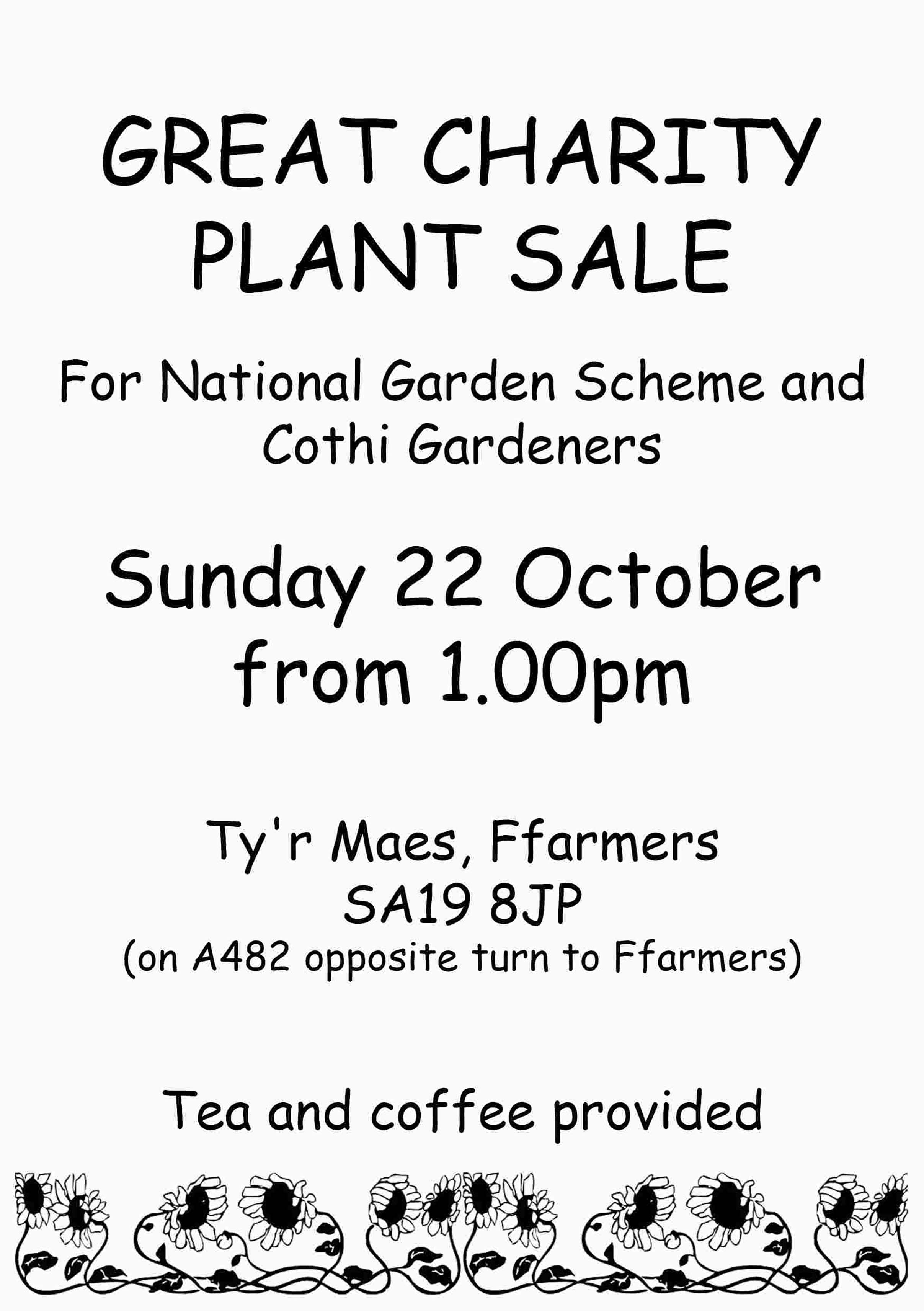
GREAT CHARITY PLANT SALE

For National Garden Scheme and Cothi Gardeners

Sunday 22 October, form 1.00pm

Ty’r Maes, Ffarmers SA19 8JP (on A482 opposite turn to Ffarmers)

Tea and coffee provided


Drefach Felindre Gardening Club (DFGC) Open Meeting 2017

DFGC would like to invite members of Cothi Gardeners to their Open Meeting on Wednesday 4th October at 7.30pm in the Red Dragon Hall.

John Shipton of Shipton Bulbs will give a talk on “Plants of Western China”. Refreshments will be provided at the end of the meeting.


Plants for Problem Places; Garden opening; August Member’s Social; Monthly Tips

Jenny Matthews – Plants for Problem Places


Jenny Matthews from Moorland Cottage Plants gave us a very useful and interesting talk on plants for problem places at our July meeting, illustrating it with actual plants rather than photos.

Her garden has opened for the NGS from 2000 when it was just ½ acre. It has now expanded to encompass 4 acres and in 2016 was selected for the RHS Partner Garden Scheme. Situated just on the treeline at 700’ on the NE slope of the Preseli Hills with very high rainfall, weather conditions subject to extremes, and a heavy clay soil, she described it as ‘gardening on the edge’!

Jenny explained how when she and her husband first moved there, she learnt from bitter experience that the plants she was accustomed to growing in her previous home in a more climatically benevolent part of the UK didn’t survive more than one winter. She quickly adapted and worked out which plants would ‘do’ and which wouldn’t.

All her plants are propagated by herself and as she has only one small greenhouse, they have to stay outside all year, so are genuinely hardy. She doesn’t use pesticides or fungicides (other than Roseclear if there is a bad infestation), no mollusc control and uses nematodes for controlling vine weevils.


Problem places can mean the general area in which a garden is located as well as a variety of conditions within a garden itself.

Problem locations:

Coastal and exposed estuaries – salt is the main killer as it dehydrated plants. Plants that are adapted to this are often small leaved and tussocky. Hydrangeas also survive but are smaller than those in other locations. Quickthorn and Blackthorn are suitable trees for coastal locations with Sorbus and Birch doing better slightly inland. Other examples of plants are black elder and potentillas.

Cold, exposed, windy, inland – the weather can be unpredictable so protective hedges are advisable. Use native, dense and twiggy hedging plants such as Hawthorn and Blackthorn, although the latters suckering habit can be a problem. Fatsias can survive down to -15’ if suitably sheltered. Beech, Hornbeam, Dogwood, Gorse, Physocarpus, hardy Fuchsias and Hydrangeas are all good but make sure to choose the right variety for that location. If it is windy go for shorter plants.

Problem conditions within a garden. Some of the plants listed are the genus names rather than the specific variety, so check which varieties are suited to the relevant conditions:

Dry Shade – plants are generally less luxuriant than those that grow in other areas.

Saxifrage stolonifera – copes with dense shade
Cardamine
Epimediums
Ferns eg Polystichum polyblepharum, and Blechnum penna-marina
Mitella breweri
Variegated Ground Elder
Carex

Damp Shade

Hydrangeas
Astilbes eg Willie Buchanan and Bronze Elegance
Persicaria virginiana (variegated)
Persicaria amplexicaulis
Rogersia podophylla
Carex

Dappled Shade

Hydrangeas – ‘Early Summer Bloom Star’ has red stems if in part shade
‘Oregon Pride’ – black stems
‘Sabrina’ – leaves start v dark green/black before opening
Chelanopsis – long flowering
Mukdenia rosii – spring flowering, autumn colour
Ferns – Japanese Painted
Fuchsias – ‘Genii – small
Magellanica ‘Versicolor’ – tall
Ajuga
Vancouveria – similar to Epimediums

Sunny, no extremes of sun/mosture, ordinary soil

Common Berberis
Physocarpus – ‘Diabolo D’Or’
‘Firebrand’
‘Diabolo’
Crocosmis – ‘Krakatoa’ – dark leaved with apricot flowers
‘Moorland Sunset’
Sidalcea – ‘Elsie Hugh’
Variegated Golden Rod – shorter form
Veronicastrum virginicum ‘Rose Glow’
Polemonium
Loosestrife
Mollinias – ‘moorhexe’
‘Transparent’

Dry Conditions – plants need to reduce moisture loss either from sun or wind so are often low growing, silvery leaved and hairy, and have smaller leaves.

Persicaria vaccinifolia
Sedums – low growing varieties eg ‘Thundercloud’
Potentillas
Sanguisorbas
White Rosebay Willowherb

Boggy Conditions

Lysmachia – ‘Clethroides’
‘Candela’
‘Golden Alexander’
Astilbes – ‘Visions in Red’
‘Visions in White’
‘Maggie Daley’
arendsii ‘Feuer’
‘Beauty of Ernst’
Chelone glabra
Rodgersia – ‘Buckland Beauty’
Pinnata ‘Superba’
Acorus (rush)
Filipendula (Meadow sweet)
Bog Iris – ‘Gerald Derby’
Lobelia syphalitica x cardinalis
Persicaria amplexicaulis ‘Orangefield’

____________________________________________________________________________

Ty’r Maes, Ffarmers, Carmarthenshire, SA19 8JP

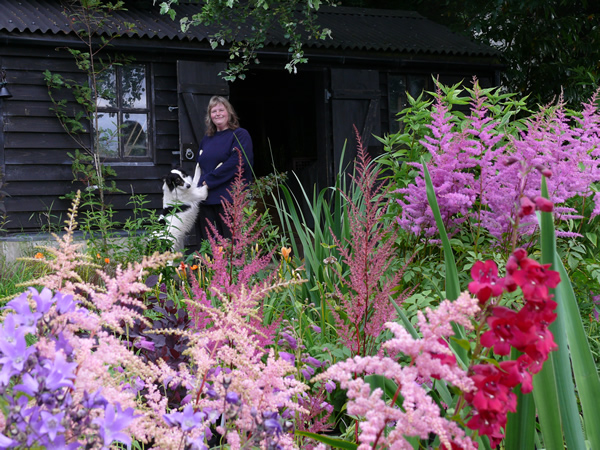
Club members John and Helen have their garden opening for the NGS this Sunday, August 6 th – do come and support them if you can ………….

A 4 acre garden with splendid views. Herbaceous and shrub beds – formal design, exuberantly informal planting, full of cottage garden favourites and many unusual plants. Burgeoning arboretum (200+ types of tree); wildlife and lily ponds, pergola, gazebos, post and rope arcade covered in climbers. Gloriously colourful; spring (rhododendrons, azaleas, azaleas, primulas, 1000’s bulbs); late summer (tapestry of annuals/perennials).
Craft, produce, books and jewellery stalls!

Opening information:
Sunday 6 August (1 – 6pm). Admission £3.50, children free. Home-made teas.
Visitors also welcome by arrangement April to September please request teas when booking.
John & Helen Brooks
01558 650541    johnhelen140@gmail.com

____________________________________________________________________________

August Meeting – Member’s Social

Plans are advancing well for our social evening on August 16th. This is a members only event when we can relax in each other’s company and share dishes made from something we have grown in our gardens this year (our club ‘growing challenge’ for this year). If anyone hasn’t had an email regarding the finer details for the evening then please give Julian a ring on 01558 685119.

It is hoped that we will hold it at Gelli Uchaf unless the weather is unkind and it rains all day, in which case we will contact everyone by lunch time by email, and relocate to the Coronation Hall in Pumsaint. Car shares are being organised and, so far, no-one will need to walk up from the village!

Again please get in touch if you haven’t been contacted about this.

____________________________________________________________________________

Monthly Tips

Caterpillars and Brassicas

Anyone growing brassicas will have their own way of dealing with caterpillars. My preferred way is to try to squish the eggs. It’s worth knowing that the eggs will hatch within 3 to 7 days of being laid, and will only get laid on dry days, when the butterflies can fly. So you need to check leaves quite regularly. The Large White’s eggs are laid in big rafts, underneath leaves, the Small and Green-veined White eggs are laid singly, usually on the underside of leaves. If you miss the eggs, look out for tiny holes appearing on the leaves from the caterpillars, and squish the tiny caterpillars. The Large White’s caterpillars are easy to find, but the Small/Green veined whites are harder to spot, because they usually are green and rest along the veins of the leaf, but often bore into the heart of the plant to feed.  There are usually 2 or 3 generations of adults per year, so you can’t really relax your guard until late September.

Small White Caterpillars at various stages of maturity


Germinating Late Sown Seeds

Another tip from the excellent Hitchmough book, ‘Sowing Beauty’, is the percentage germination rates of different seeds, with once or twice weekly watering. For many plants this is less than 10%. This is really enlightening if anyone’s trying to get late sown seed to germinate well in dry conditions….like fennel for example….you may need to water it very frequently especially in the evening, so that the seed stays damp for a long period…water in the morning on a hot day, and the surface compost and seed may well dry out in just a few hours, and once the germination process has been initiated by moisture, there’s then a chance that the seed will fail, before it ever gets a decent root formed.

____________________________________________________________________________