August
The month brought some slightly better weather, nevertheless interspersed with some fairly wet days. Some of the more colourful butterflies arrived by mid-month, specifically a handful of Red Admirals, a couple of Peackocks, and singles of Comma, Painted Lady and Speckled Wood – very, very low numbers indeed.

Apart from a few days at the beginning of the month, things have also been decidedly on the cool side, so shrubs like the Eucryphia have been late into flower, only half-out even in the third week of August.
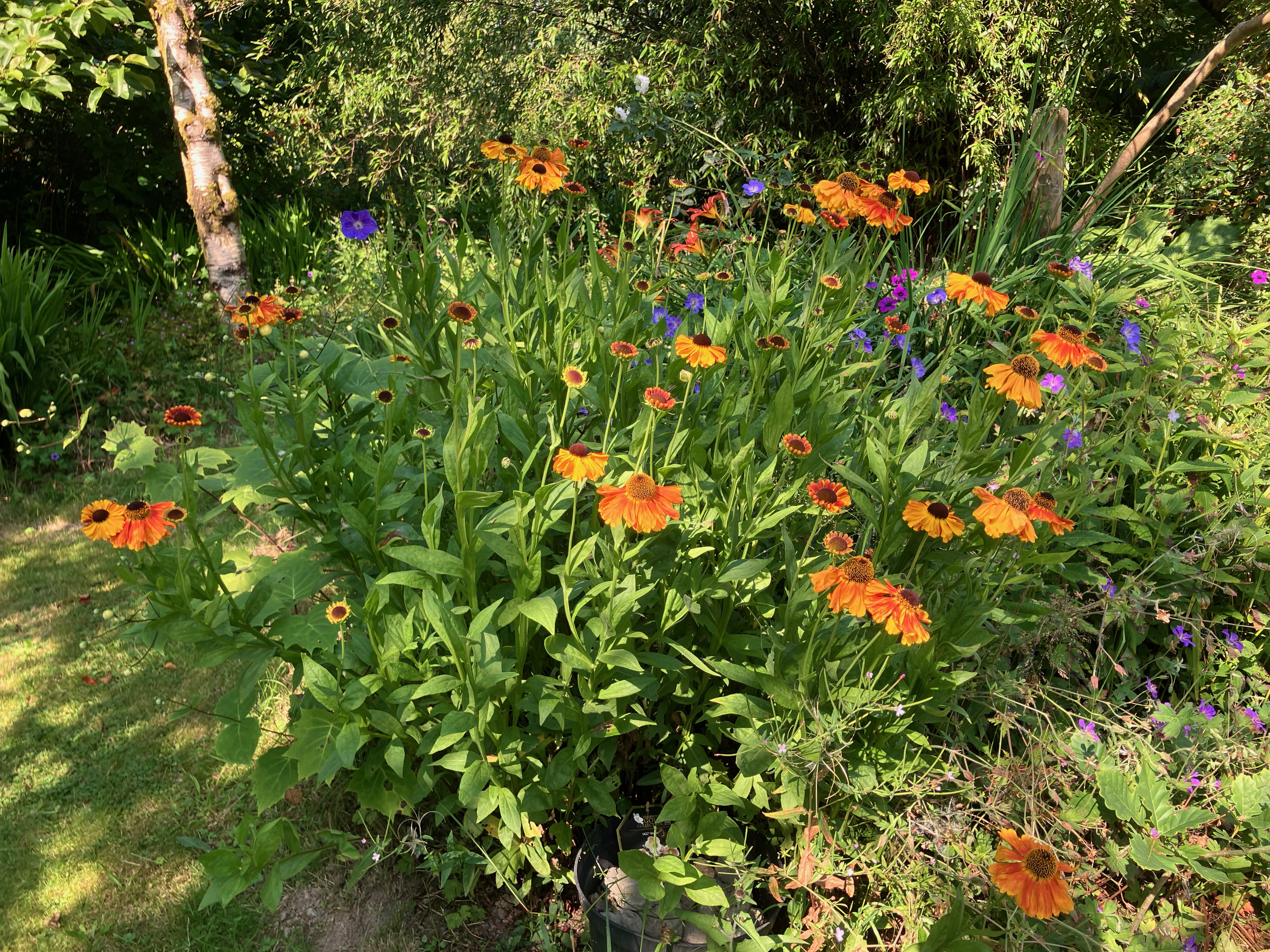
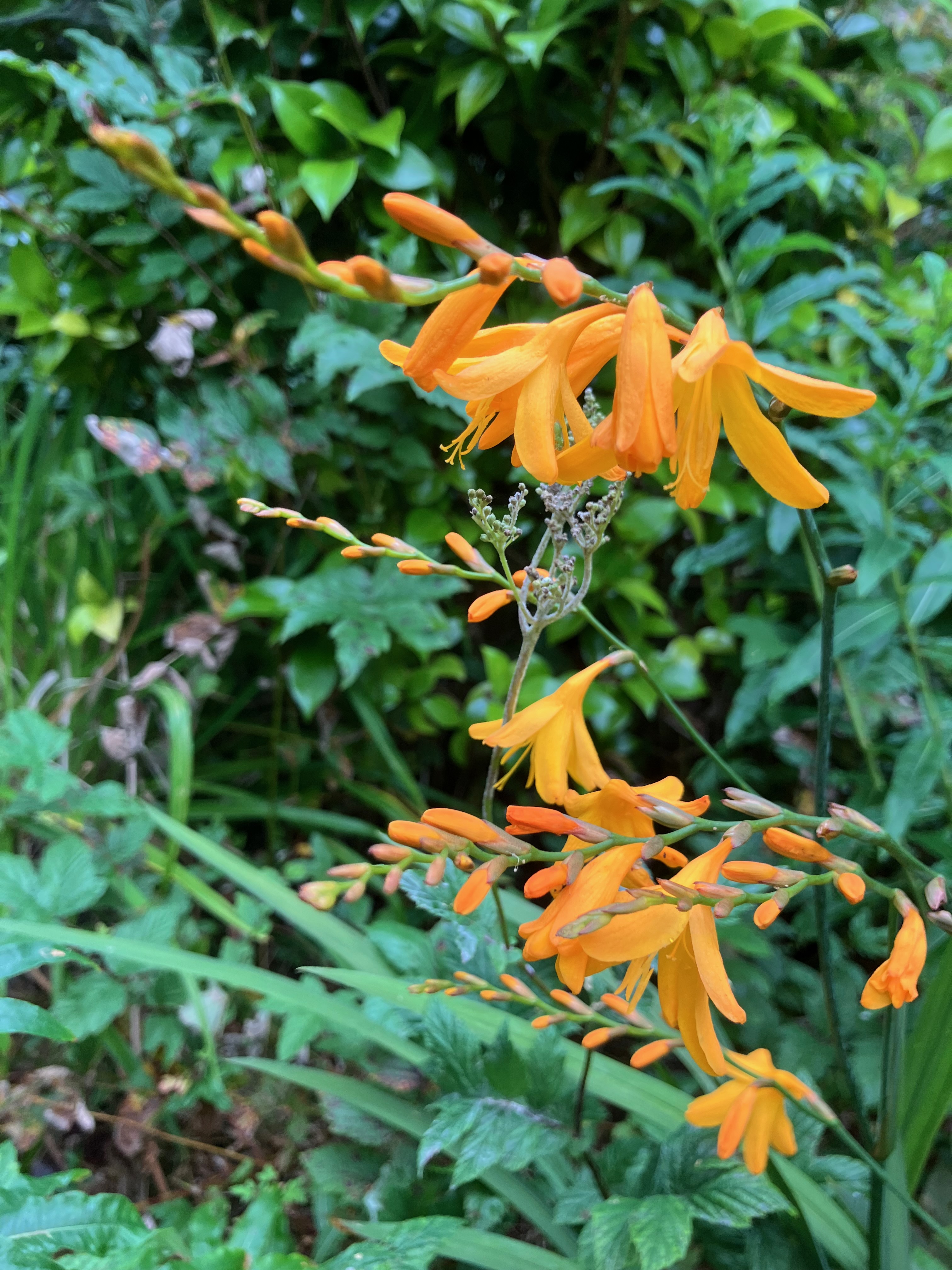
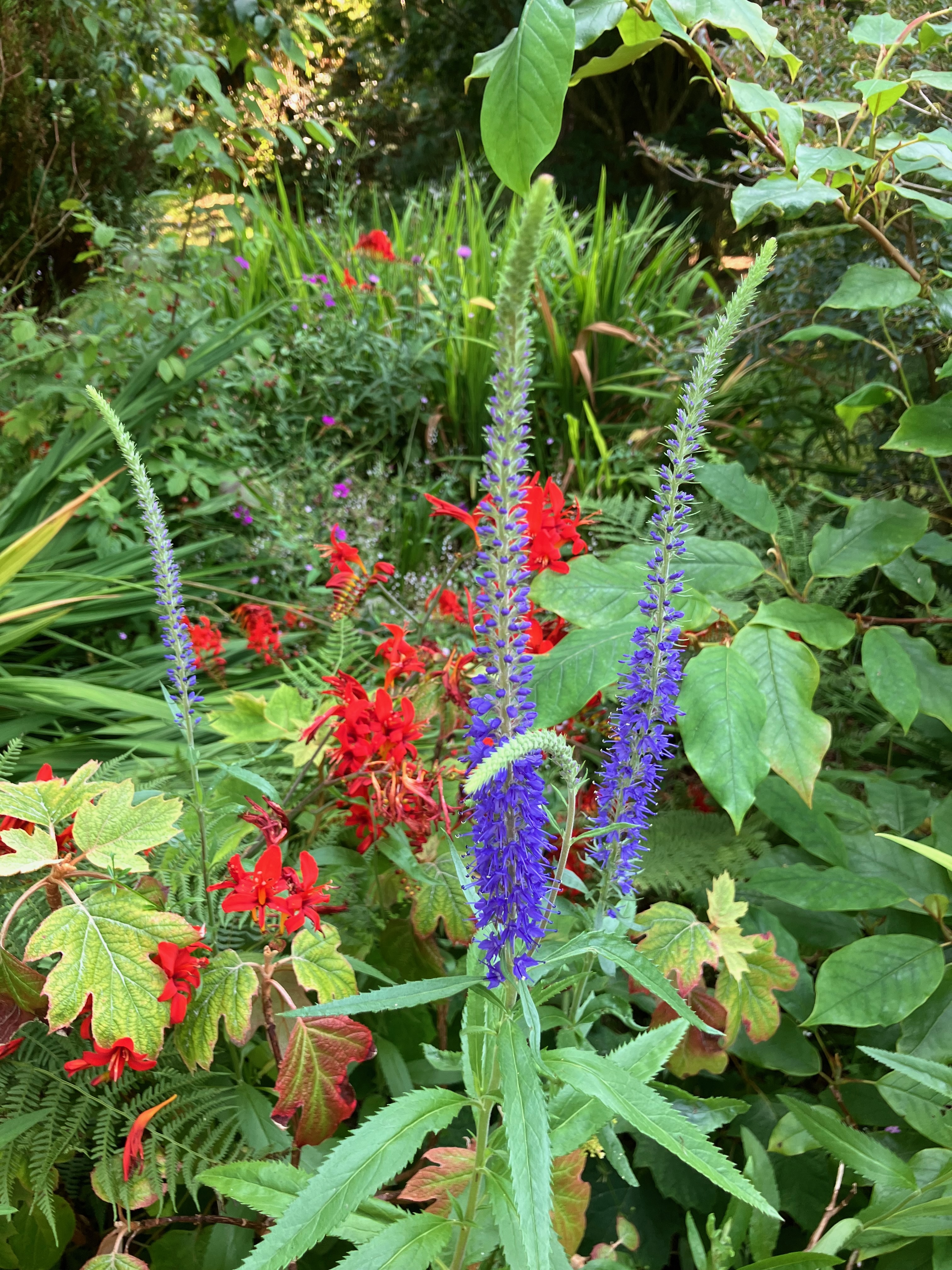
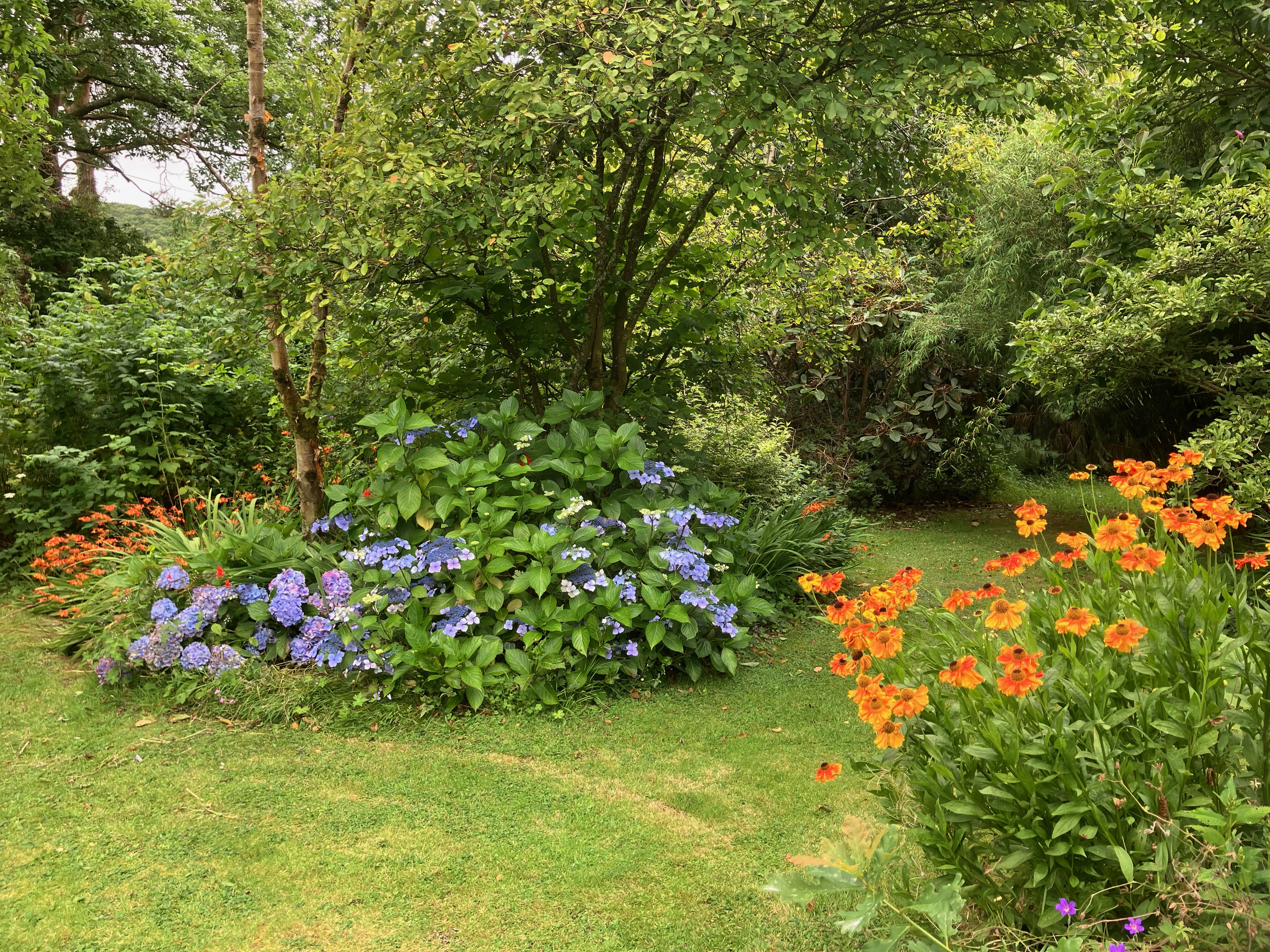
Otherwise, hydrangeas and crocosmias have really been the story of this month, along with heleniums. This year has also been extremely good for high-bush blueberries, which cropped from early July and into September.


June/July
June did not bring any better weather, but the irises in the pond enjoyed the rain. The roses, predictably, less so. Early June often feels a bit strange in the garden, when you have two seasons in one with the later flowering rhododendrons and azaleas being joined by the summer roses.
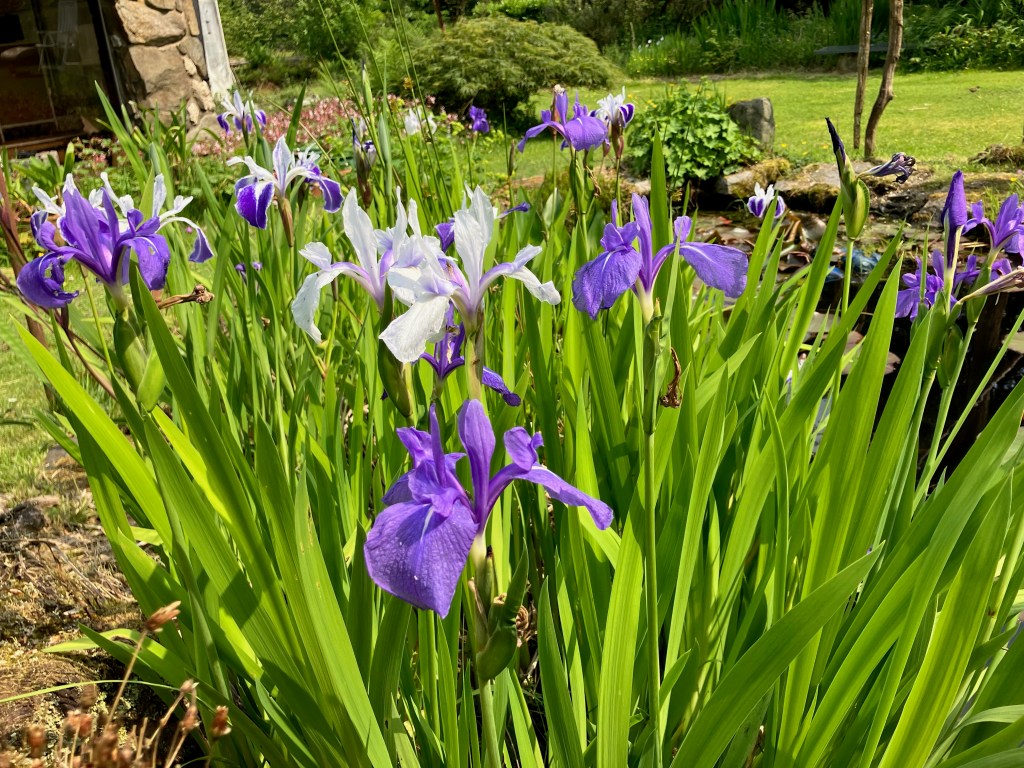


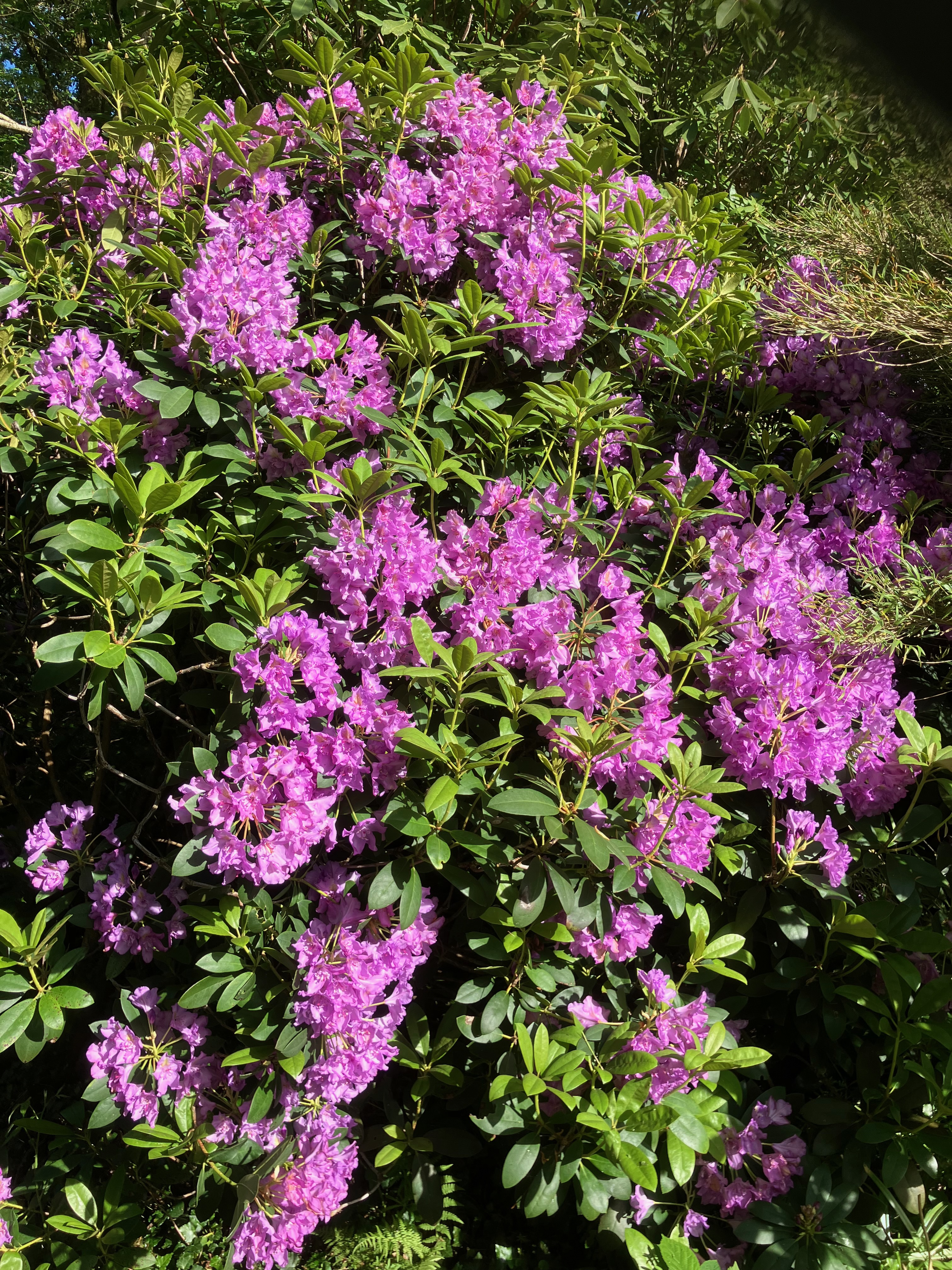
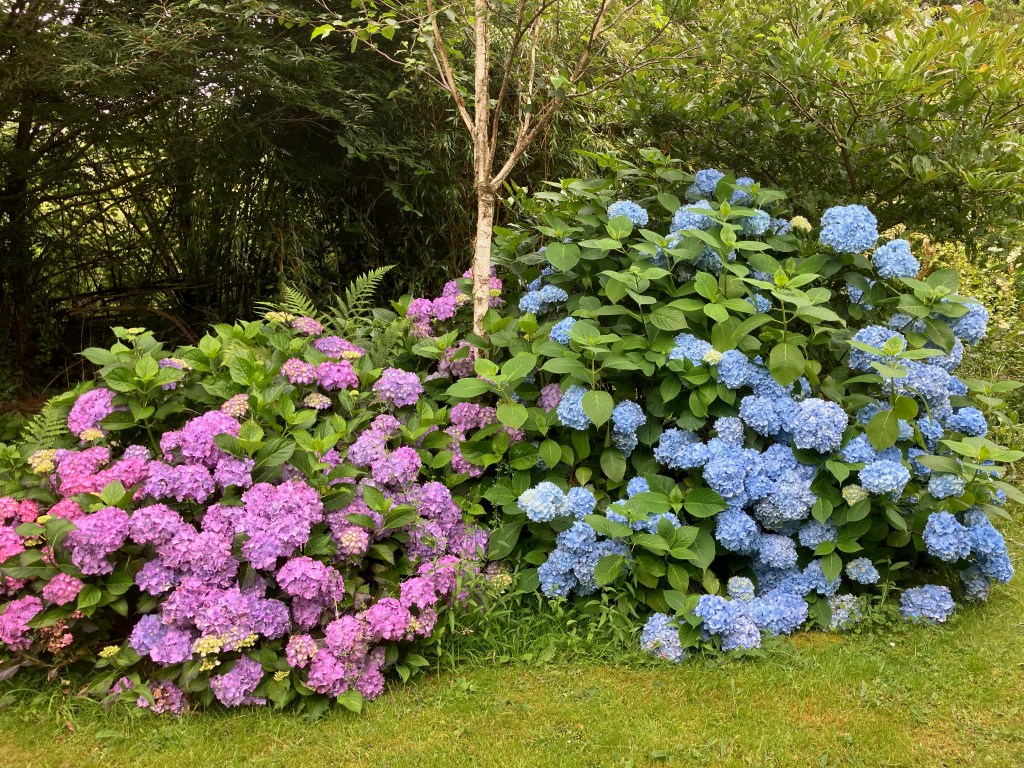
The cool, damp weather continued until the last week of July when things improved for about a week. Too late for most of the roses to put on a good show, but otherwise much appreciated. The hydrangeas have been out for all of July, and were joined mid-month by Crocosmia ‘Lucifer’.
Much has been written about the lack of butterflies this year, and the same is true in this garden. All I have seen in July are Meadow Browns and various whites. I imagine the cool, wet spring and summer are to blame, fingers crossed that some more emerge in August.
The Cornus kousa var. chinensis has been a real delight throughout July, as has the singing of the song thrush – I don’t remember hearing it so loud every day throughout the month until the 20th.

May
Despite the persistent dampness and coolness of the weather, spring continued with the blossoming of the bluebells and more rhododendrons. Even in mid-May, perhaps because of the weather, the later-flowering Magnolias and Camellias still clung on to some of their flowers.

Pleasingly, a first-flowerer this year was Davidia involucrata, the handkerchief tree, after many years. Also, about five years ago, I planted a sucker of Embothrium coccineum from my parent’s garden in Northern Ireland. It has flowered for the first time this year, making me very happy.
The rhododendron season continued, with R. falconeri at its most floriferous ever this year, looking truly magnificent. The Loderi hybrids have also flowered well this year. Now at the end of the month it’s the turn of R. ‘Sappho’, ‘Southern Cross’ and fatsuosum ‘Flore Pleno’, along with the scented deciduous azaleas.


Surprisingly, the Chaenomeles (C. x superba ‘Rowallane’) is in flower this month – it did the same last year, when you would expect it to bloom much earlier in the season.
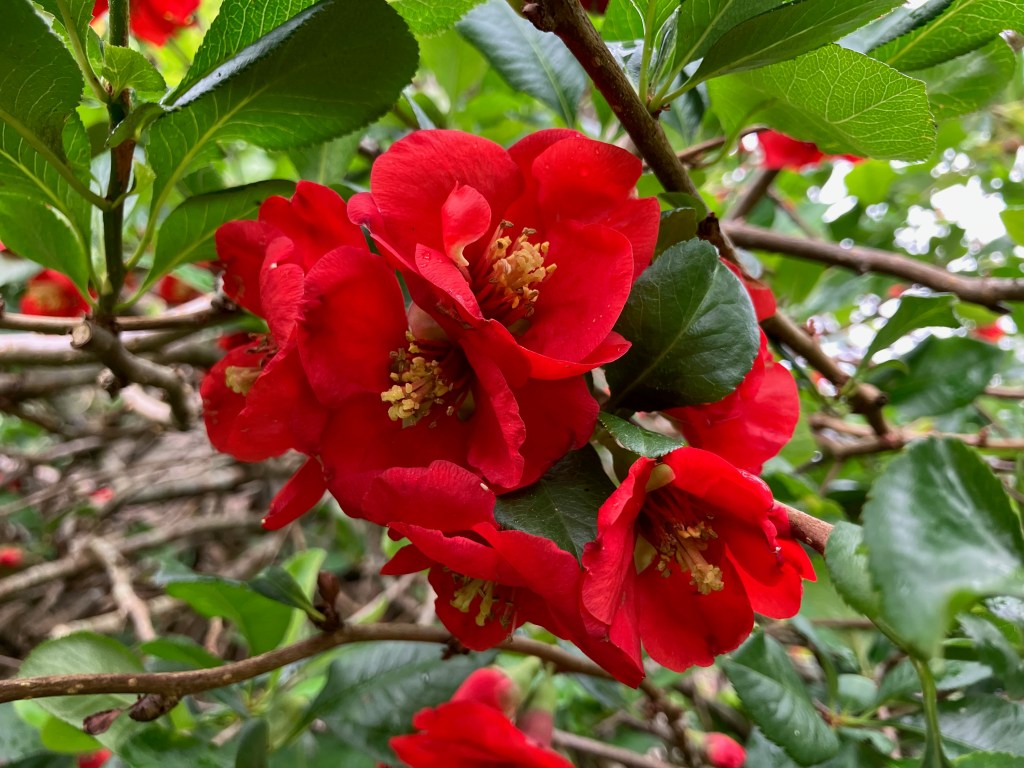
The reason, I fear, is that, in addition to their late winter diet of plum, damson and amelanchier buds in this garden in the winter, the bullfinches have now also turned their attention to the Chaenomeles and Forsythia. It is lovely to have the blossom (I note the forsythia does not recover in this way), but this coming winter protection will be the order of the day.
Against the house, both Wisteria sinensis and Crinodendron hookerianum have bloomed beautifully.


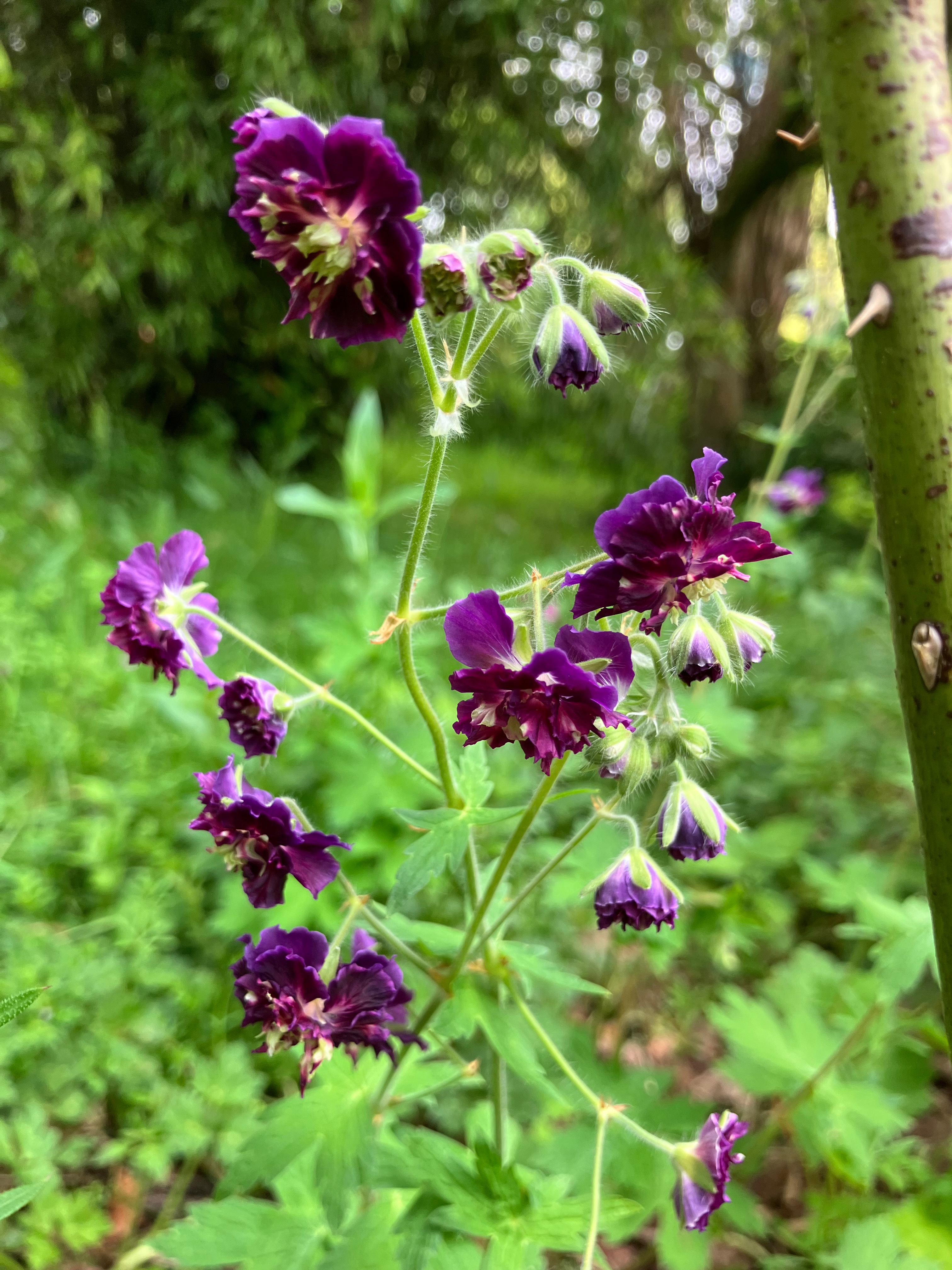
The spring perennials have also been in bloom – Geranium macrorrhizum, G. sylvaticum and G. phaeum – as well as Veronica gentianoides and Geum ‘Cosmopolitan’.

April
The wet theme continued into the first half of April, with Storm Kathleen bringing strong winds and lashing rain towards the end of the first week. Temperatures haven’t risen with the arrival of spring, so the coolness has held back flowering and leafing, and this has been true throughout the month.
Despite that, a first-flowerer for us this year is Magnolia ‘Black Tulip’. Just three flowers, but distinctly tulip-shaped and a vibrant purple, developing slowly after shedding their casings, so a very valuable magnolia in the garden.


Rhododendron ‘Elizabeth’, one of my favourites, has had a magnificent display this year, unusually undamaged by frost.
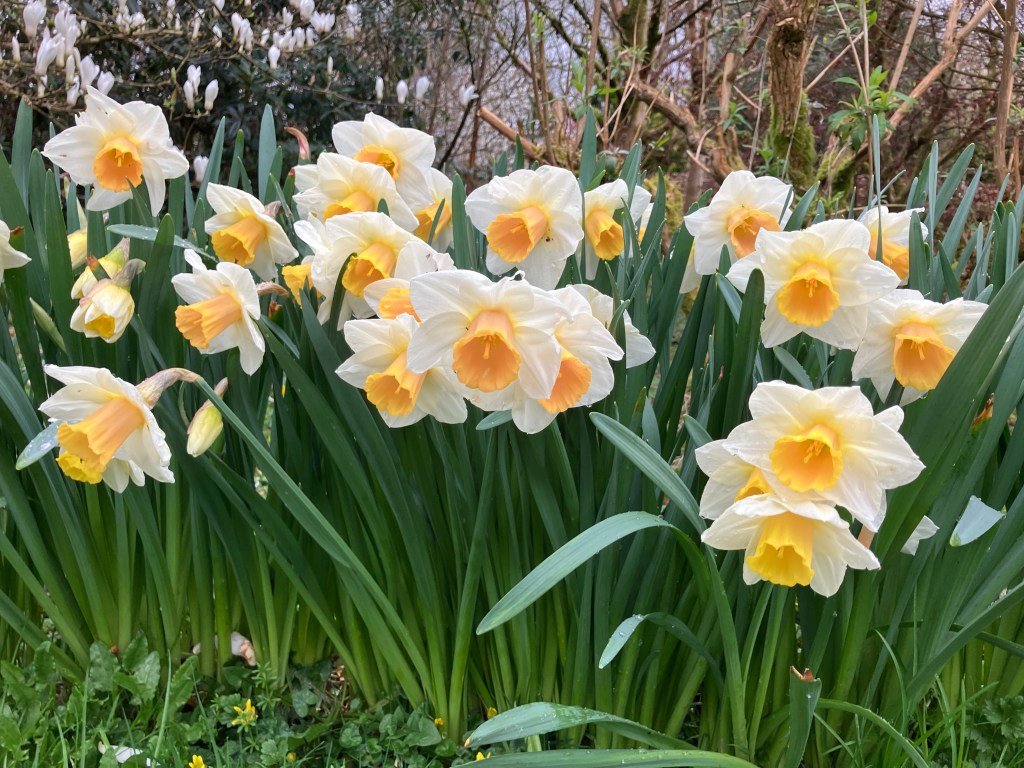
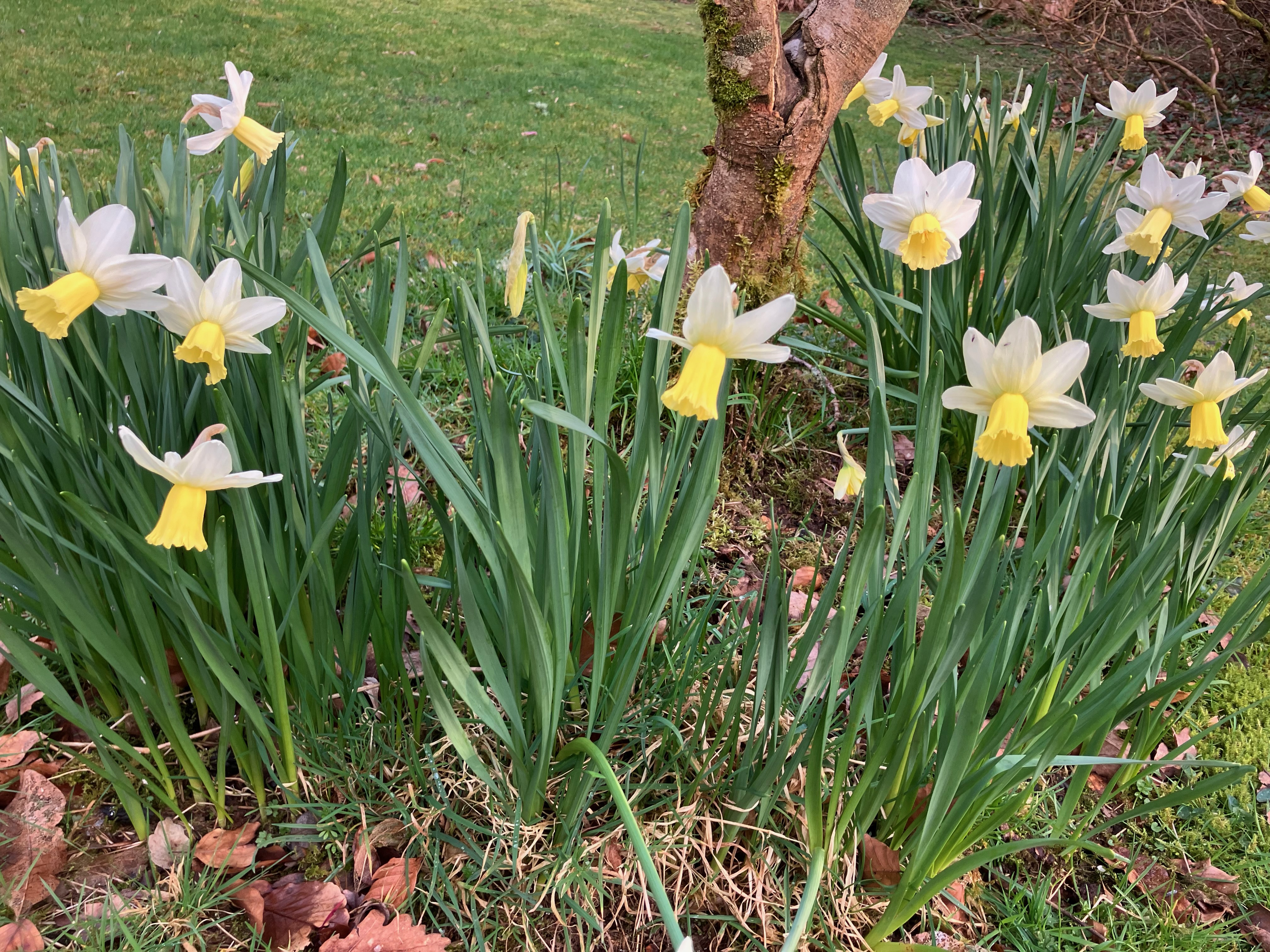
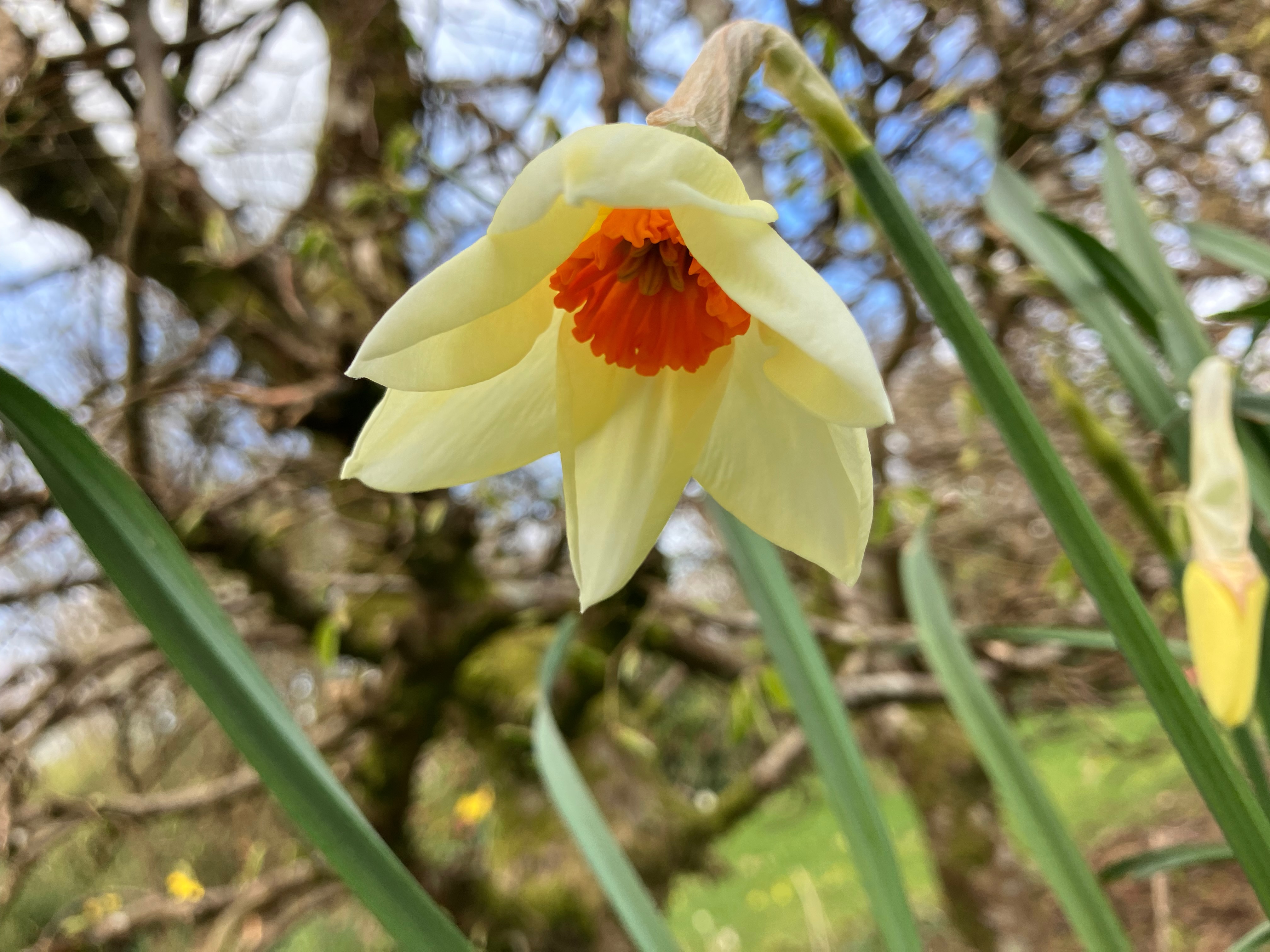
The late daffodils have been good this year, with N. ‘Salome’ a particular favourite for its sturdiness and ability to stand up to fierce wind and rain.
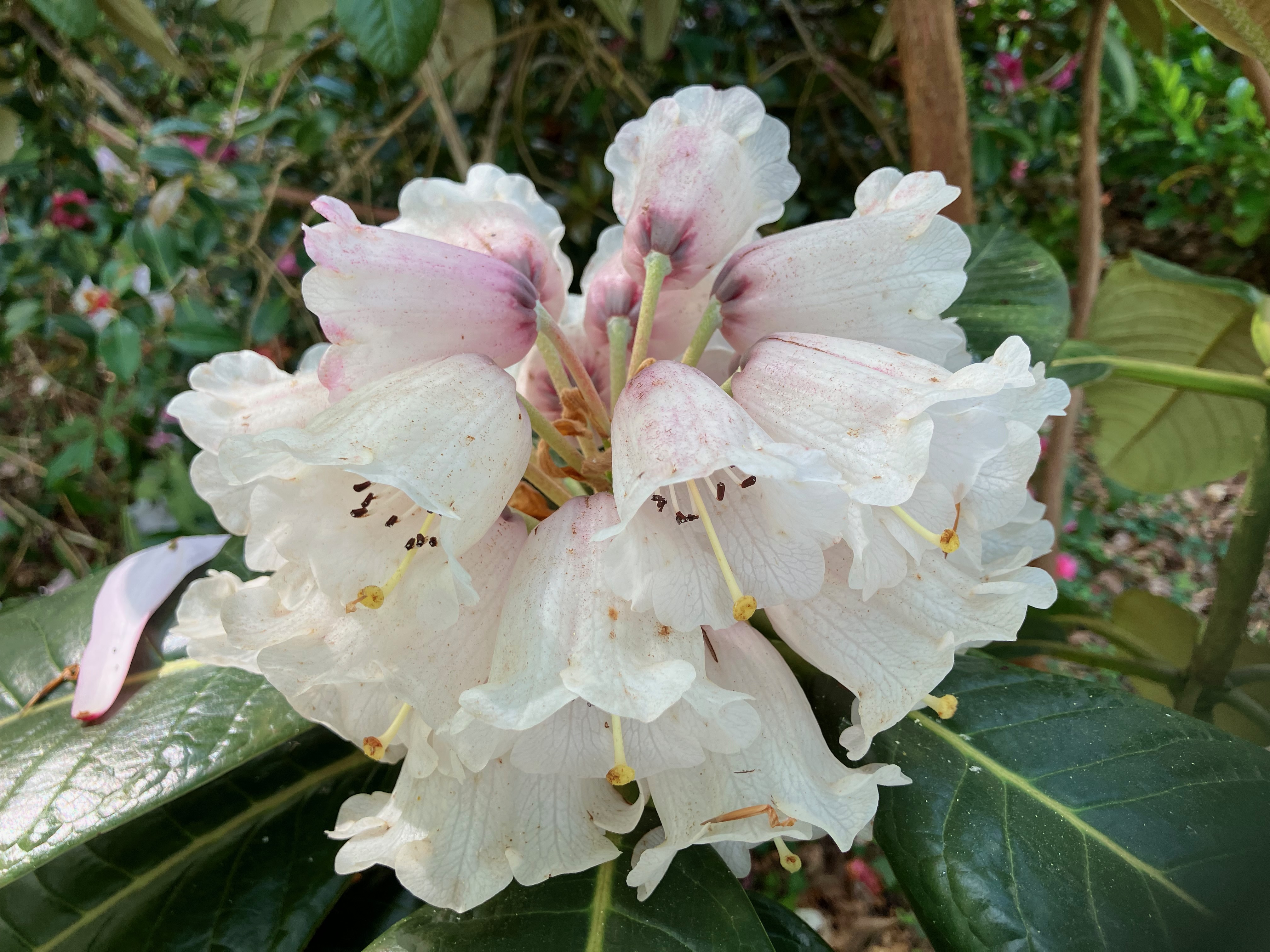
The most magnificent of the first-flowerers, so far, is this rhododendron. It has huge leaves, and these glorious pink flowers, which pale as they age with pink only left at the centre. I bought it many years ago as R. rex.

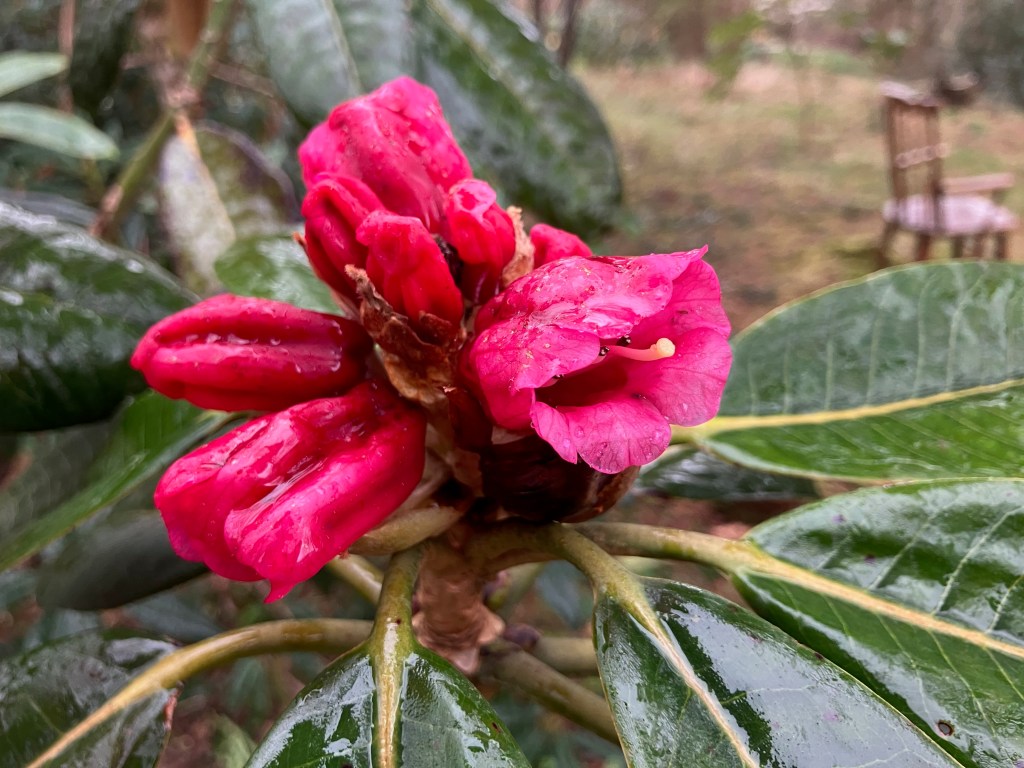
This large-leaved rhododendron is R. kesangiae, named after the Queen of Bhutan. It is the first time it has flowered, and the flowers seemed poorly developed,, so I am hoping it will improve – but the colour is nevertheless stunning.
March
For the first full week of March, the wind turned towards the east, growing in strength throughout the week, meaning cooler temperatures, but dry! By mid-March, the rain had returned and stayed for the rest of the month – with the exception of a day of snow on 27 March. The snow arrived unexpectedly and in quite a thick layer, but melted quickly and didn’t seem to do much damage to all the plants already in flower, thank goodness.
There were plenty of daffodils in flower for St David’s Day this year!
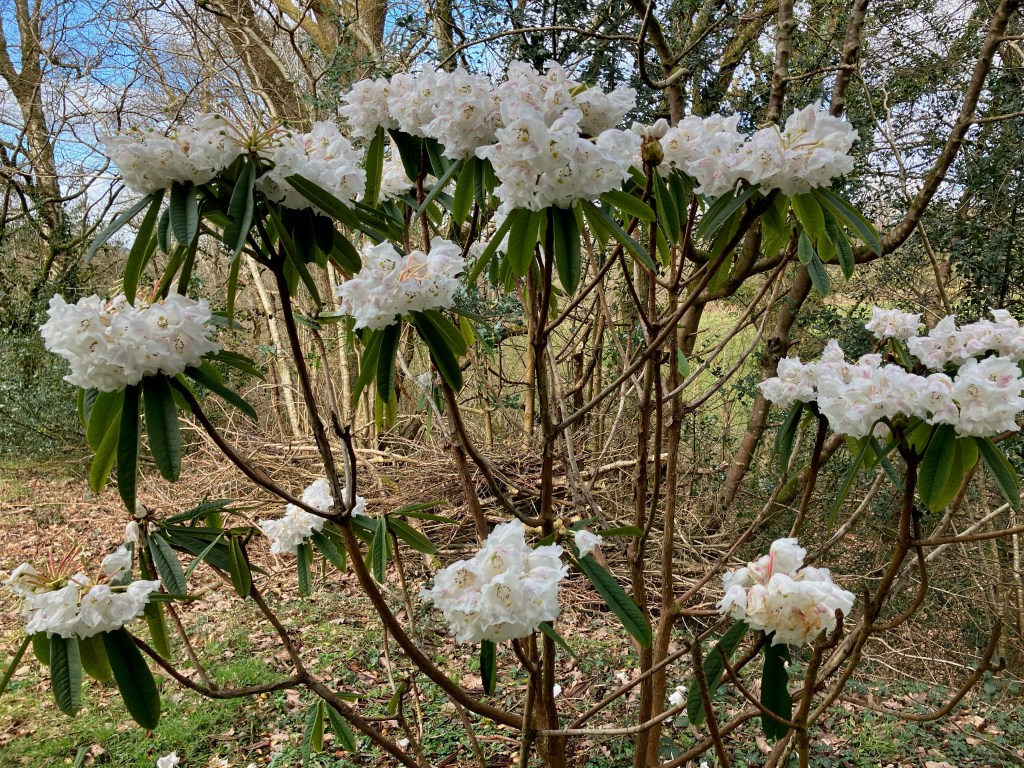
By the end of February, R. ‘Christmas Cheer’ was completely over, and R. calophytum starting. It had a lovely crop of flowers this year.
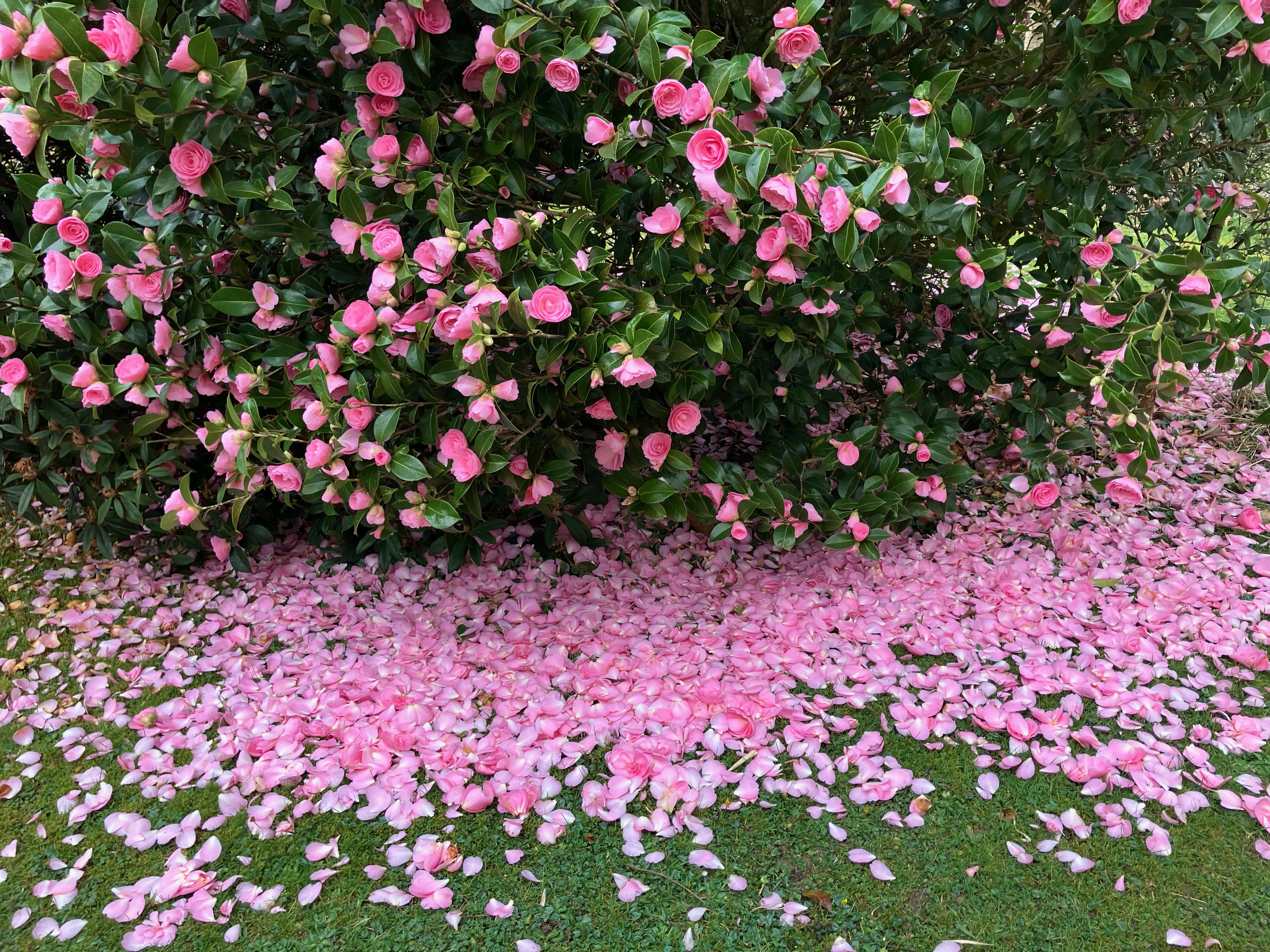
The Camellia season continued with the later varieties. They include C. ‘Jury’s Yellow’, C. ‘Francie L.’, C. ‘Elegant Beauty’, C. ‘Freedom Bell’ and C. ‘E G Waterhouse’, the latter as spectacular as ever. C. ‘Ruby Wedding’, a lovely double red, flowered for the first time this year.

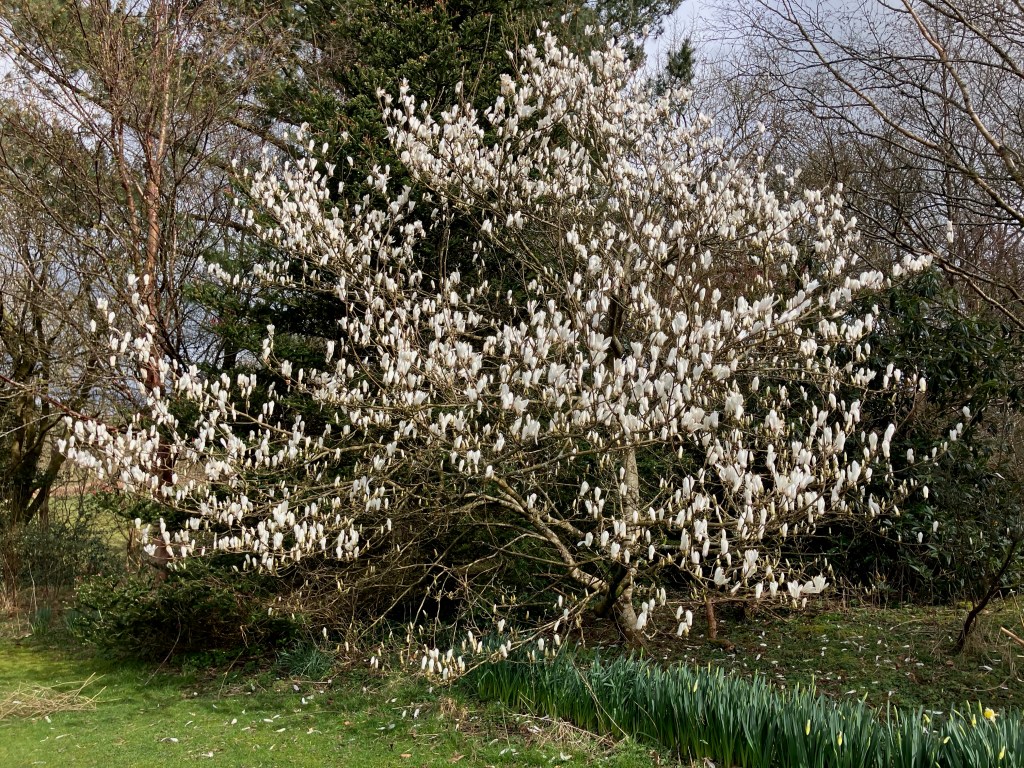
It is the earliest year for Magnolias that I can remember. The unknown Magnolia of sargentiana heritage, always first to flower in this garden, did so on 29 February – a record. By mid-March it was on the verge of going over, but almost all the others were following hard on its heels, indeed by the time of the Equinox most of the magnolias were in flower.
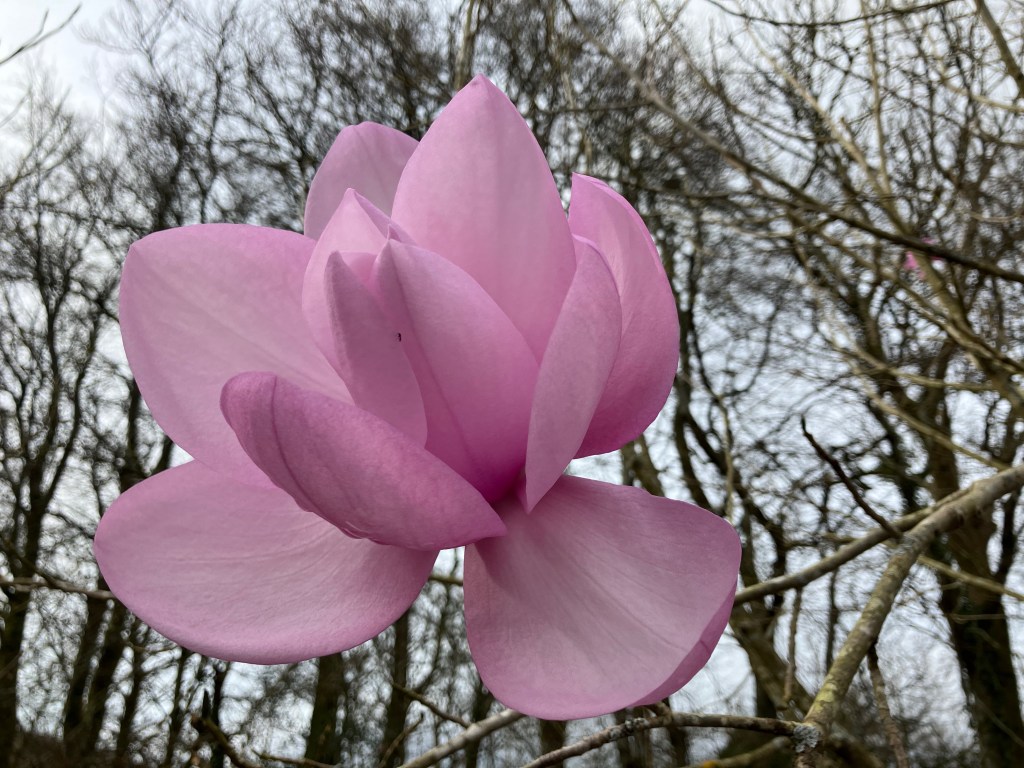
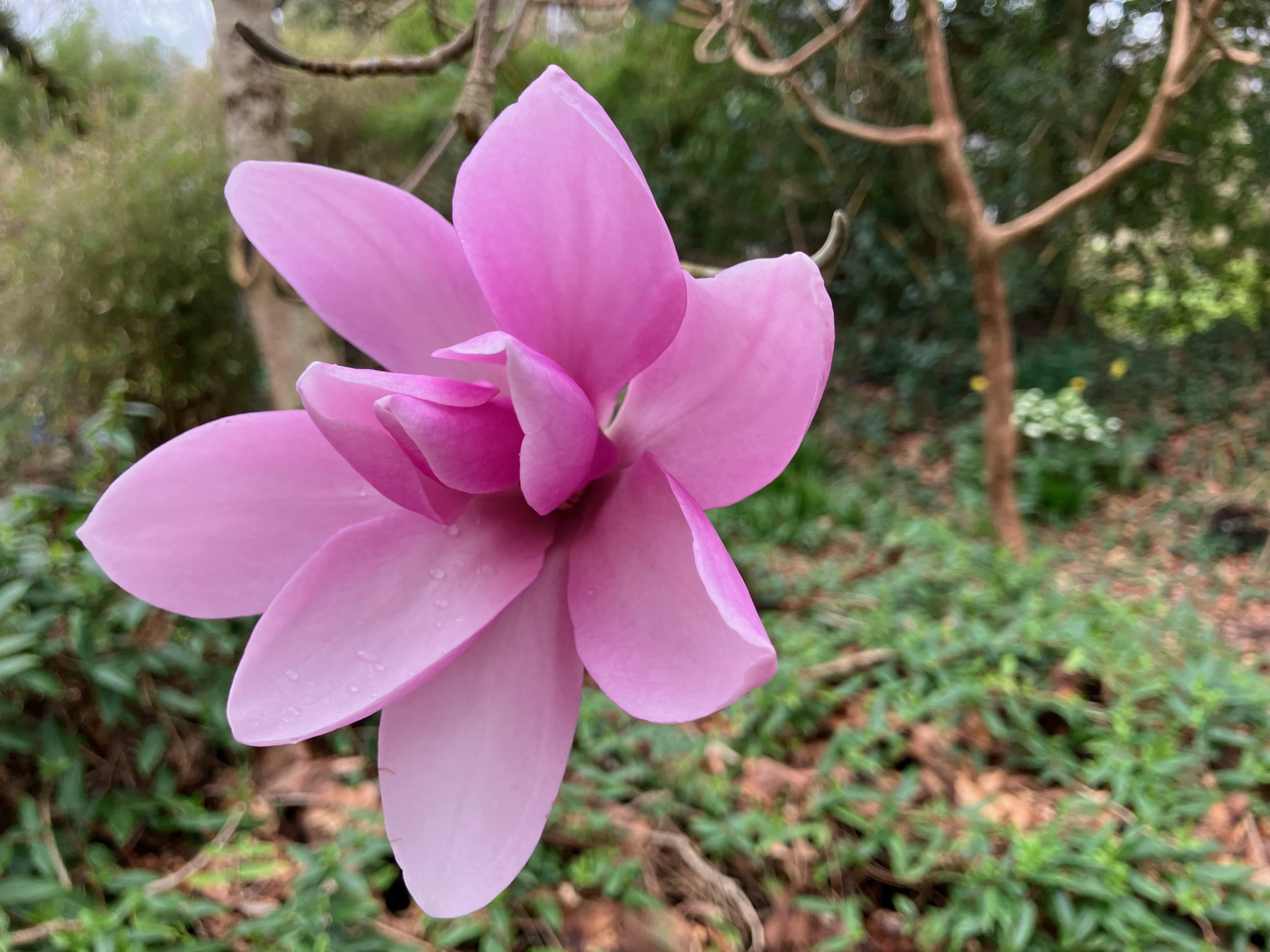
In particular, two magnolias have flowered for the first time (half-a-dozen flowers each). The trees look very similar, although there is a slight difference in the flower, both bought as seedlings getting on for twenty years ago. The flowers are a clear pink, one lighter, one darker, with a light, delicate fragrance. It seems as if this is going to be a year for quite a lot of trees/shrubs to flower for the first time – so watch this space for April…
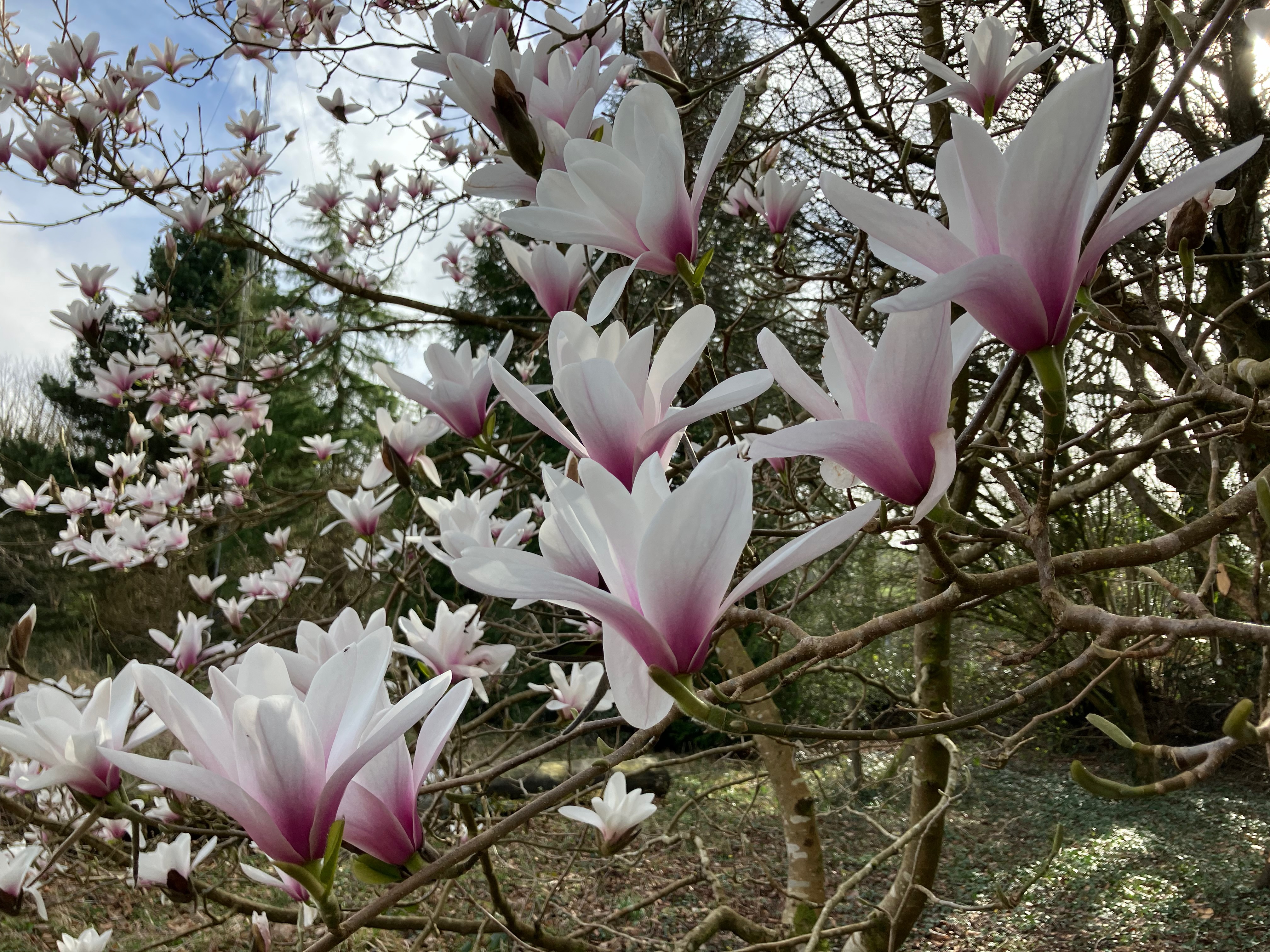
Other Magnolias in flower and looking very fine include M. ‘Star Wars’, M. ‘Pegasus’ (right), M. salicifolia, M. ‘Wada’s Memory’, M. ‘Leonard Messel’ and the stellatas. Only M. denudata and M. ‘Yellow River’ are still in bud.
The warm winter meant that the hydrangeas and buddlejas were putting out leaves earlier than usual, so they were pruned in the middle of the month – I would normally wait until later. Also early was the chiff-chaff – the first arrival put in an appearance on 14 March, a week earlier than last year.
A magnificence of Magnolias (which have really been very fine this year)…

January/February
Apart from a week of crisp, frosty weather in the second week of January, 2024 has continued the soggy theme of the previous few months, in contrast to the previous February. Damp usually means mild, and I think this is the first year that Camellia x williamsii ‘St Ewe’ had its first flowers by Christmas. By early January, it was quite well in flower, along with Parrotia persica ‘Vanessa’ with its tiny spidery red flowers. Perfume was provided by Daphne bholua and Sarcococca confusa, and colour at ground level by snowdrops and the first hellebores.
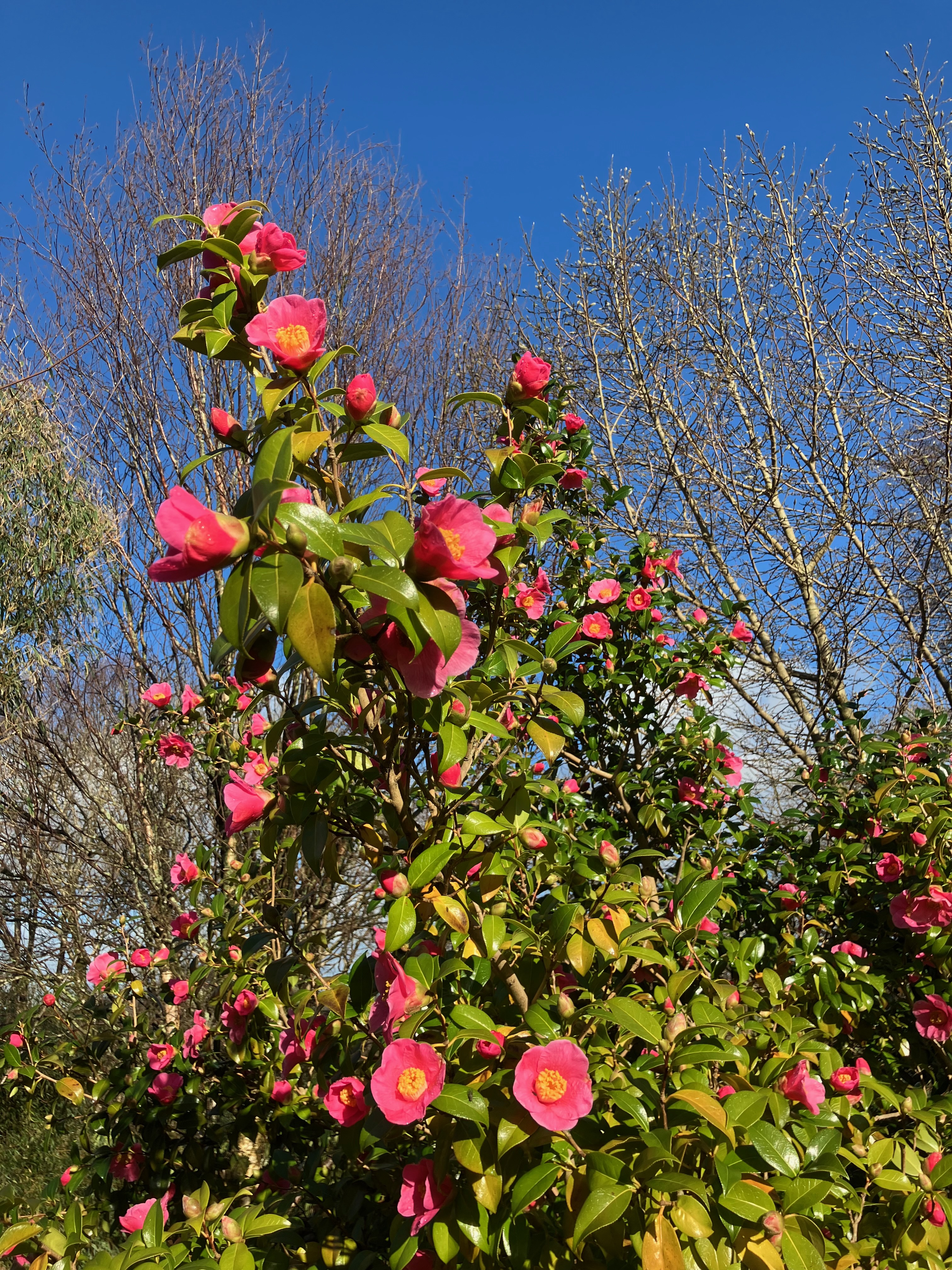
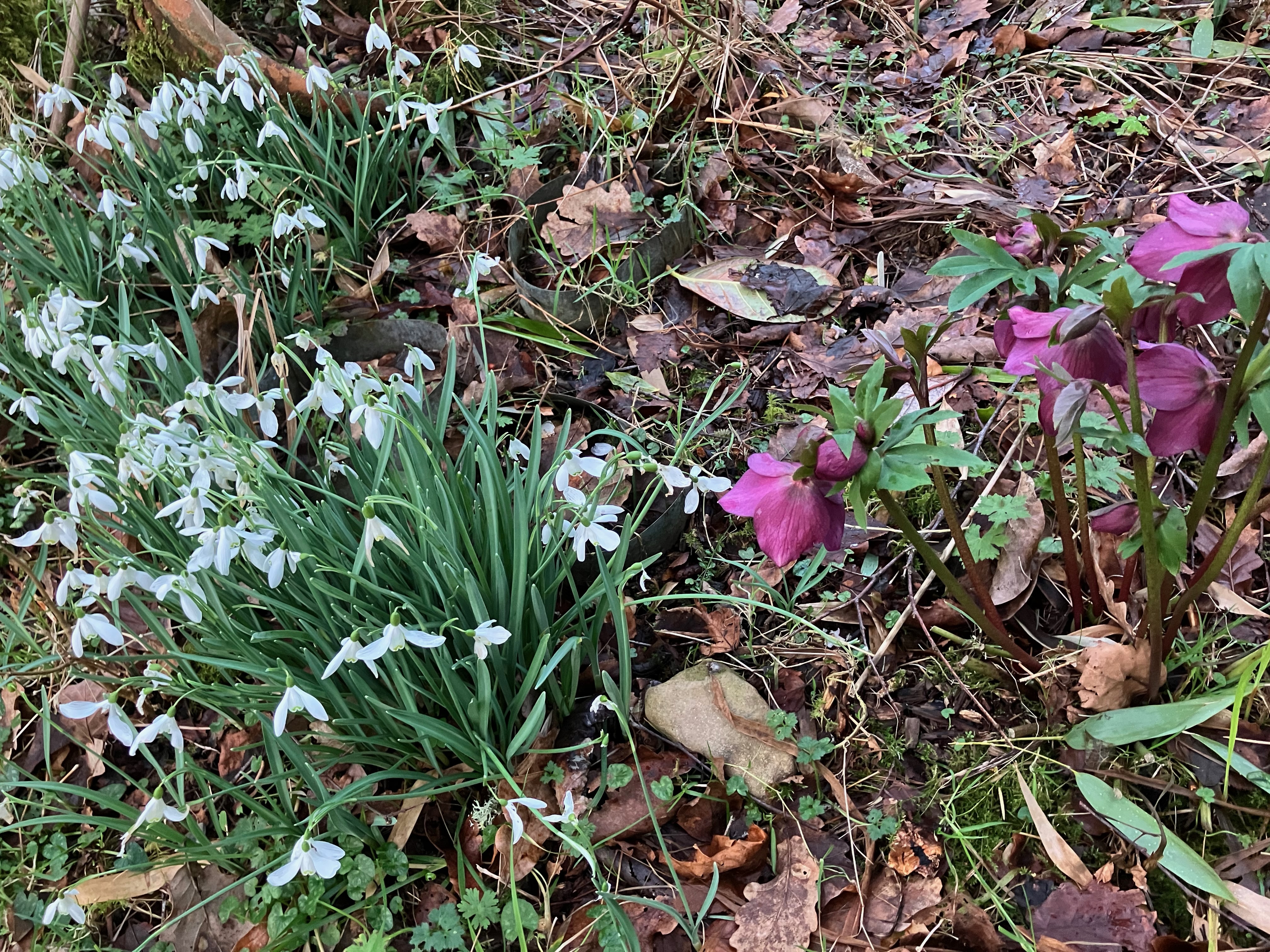
By 12 February, when we returned after a break away, C. ‘St Ewe’ was in full flower, along with Rhododendron ‘Christmas Cheer’. Other Camellias just starting then, and flowering well by the end of the month, include ‘Anticipation’, ‘Debbie’, ‘Donation’, ‘Inspiration’ ‘Paul’s Apollo’ and ‘Roger Hall’.

Generally, there was a lot more colour than I was expecting to see in mid-February, definitely earlier than usual. The frogs though, are a tad later than usual. I have heard them in the pond after dark, but I’ve not seen any frogspawn yet. The early snowdrops have gone over, while others are only just starting to flower. Quite a few daffodils are now out, including N. pseudonarcissus.
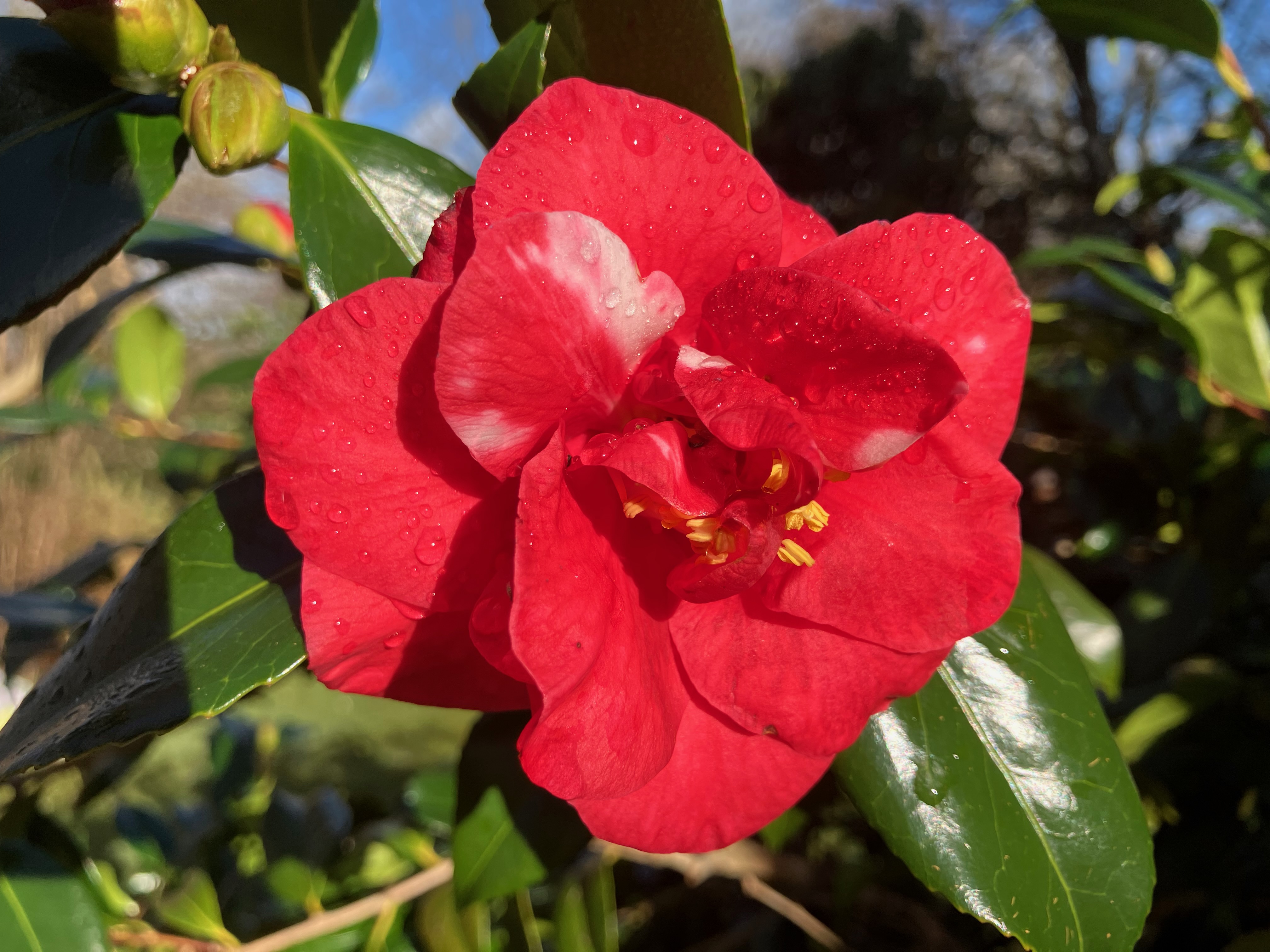
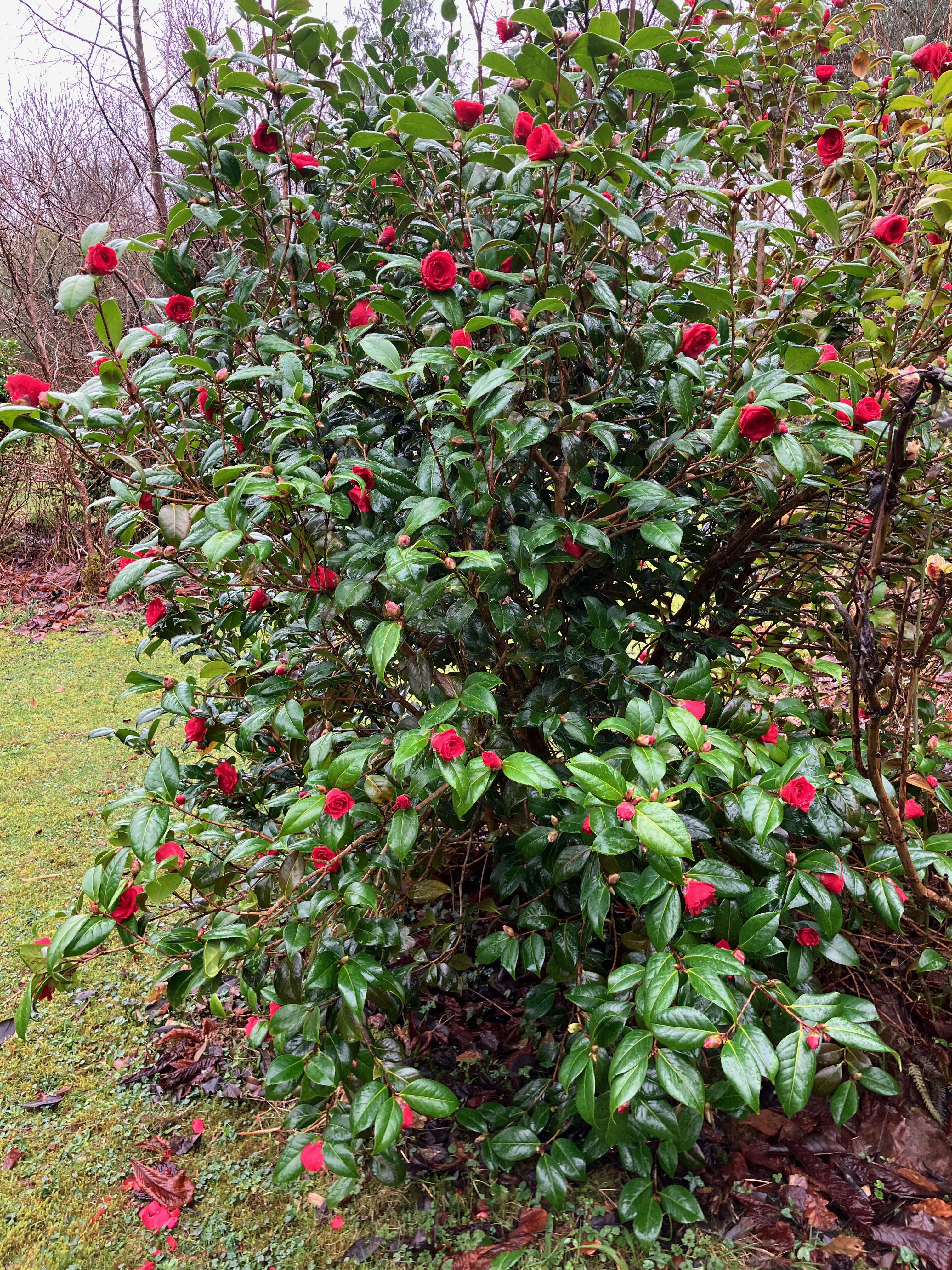
Here is a selection of Camellia photographs – you can see that the flowers are nearly all bedecked with raindrops – an indication of the weather we have been having. One of the advantages of the hybrid Camellias, unlike the japonicas, is that they nearly all drop their flowers when done, rather than hanging on to them as they turn brown; the disadvantage is that wet and windy weather can bring them down early.



 Cothi Gardeners