Saving Pollinators

Any other members measure their rainfall totals?

To quote Melvin Udall addressing a group of depressed psychiatric patients in the film of the same title : “What if this is as good as it gets?” By which I mean the seemingly unending rain – it looks like we’ll have clocked up 6 consecutive months with 200 mm plus by the end of February, which we’ve never managed before, whilst I’ve been measuring rainfall here.

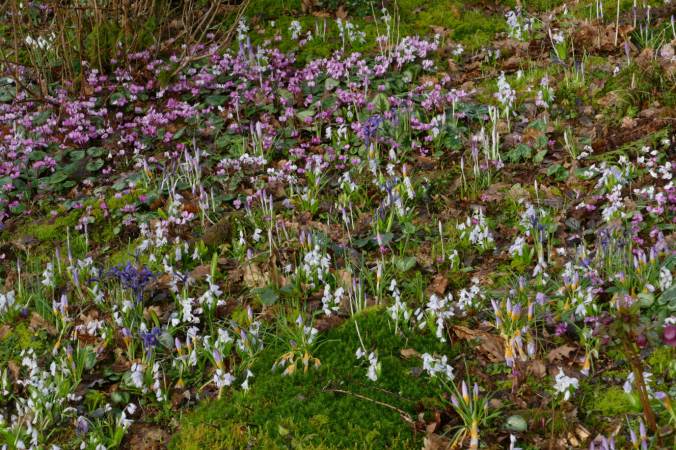
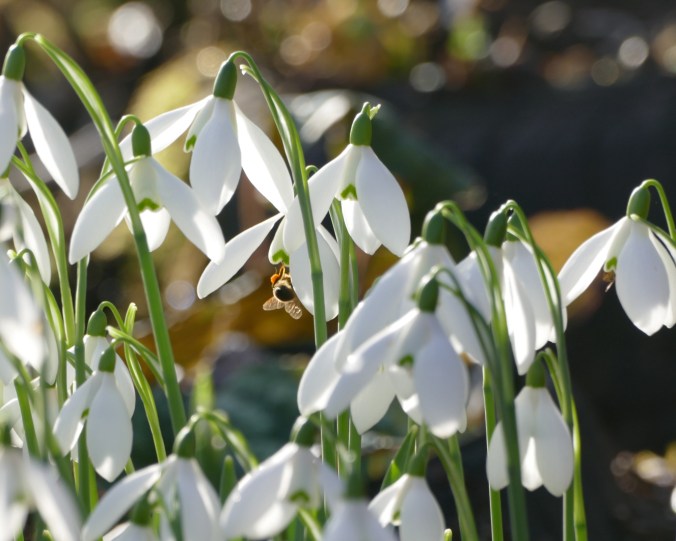
So thank goodness we’re all gardeners and can see the positive side of things – brilliant weather for lifting and splitting snowdrops, or even early daffodils. And thank goodness that many spring bulbs seem to shrug off all this inclement weather and look almost as good after storms Ciara and Dennis have whizzed through.

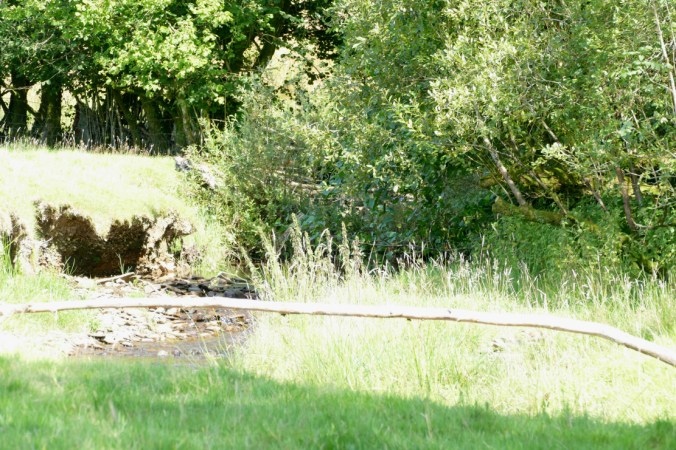
Plus our frogs  clearly aren’t bothered…

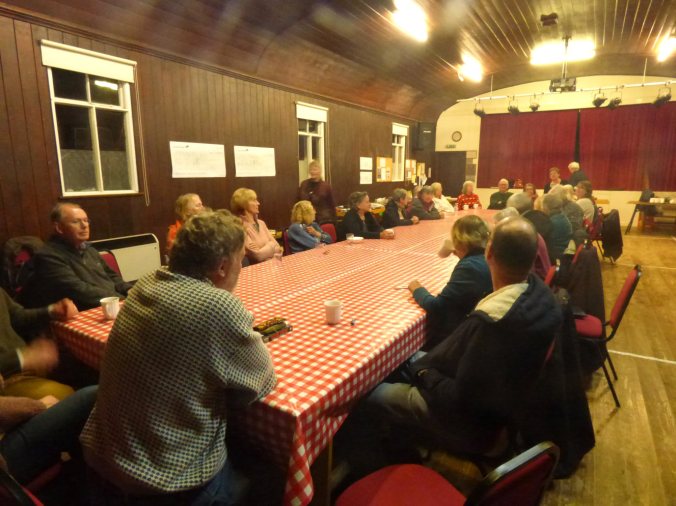
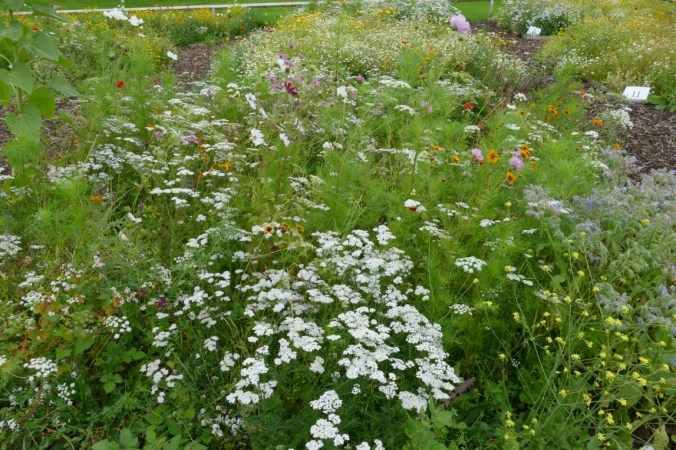
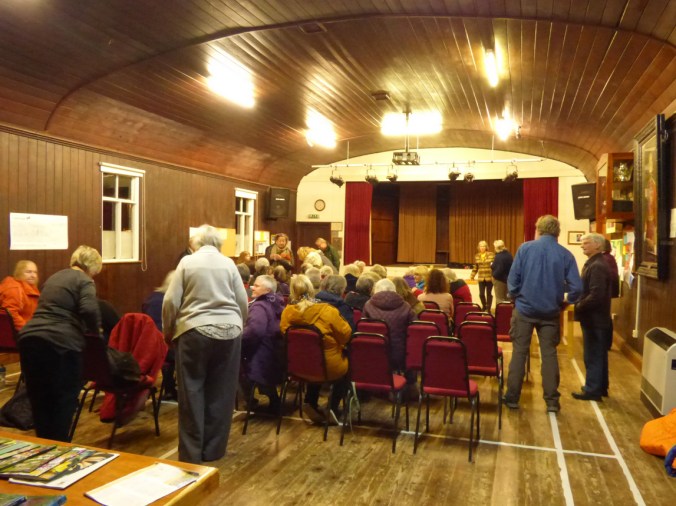
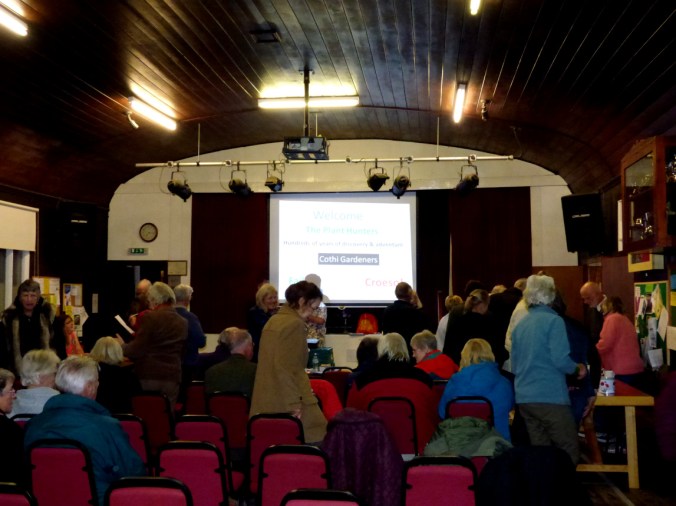
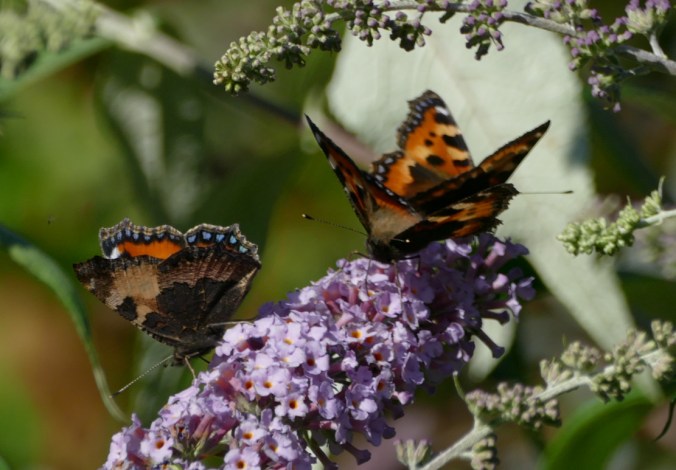
But early pollinators really do struggle with this sort of weather, so a reminder that tomorrow’s talk, Wednesday February 19th,  will be an up to date insight into how our own National Botanic Garden of Wales is at the cutting edge of research into what we can do to help pollinators of all kinds. Both Lucy Witter and Abigail Lowe will be talking about their own studies, so do come along and enjoy the first talk of the year.

7 pm for a 7.30 pm start at the hall in Pumsaint.


Has anyone checked their seeds and cuttings from the trip to Hergest Croft gardens last year?

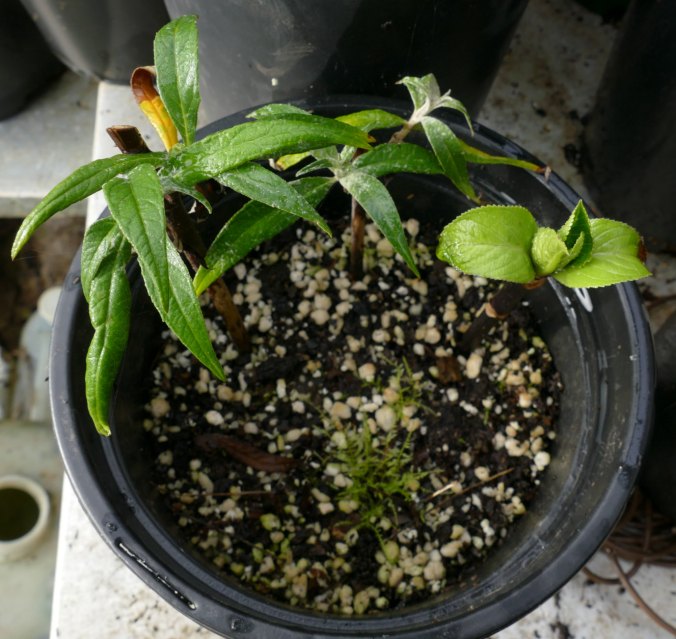
I’m hoping to do a montage of what we’ve managed to propagate, and also forward it onto Steve and Mel for their interest, so if everyone who went on the trip could have a look at any pots they have over the next few weeks, and ideally send me a photo or two, that would be great.

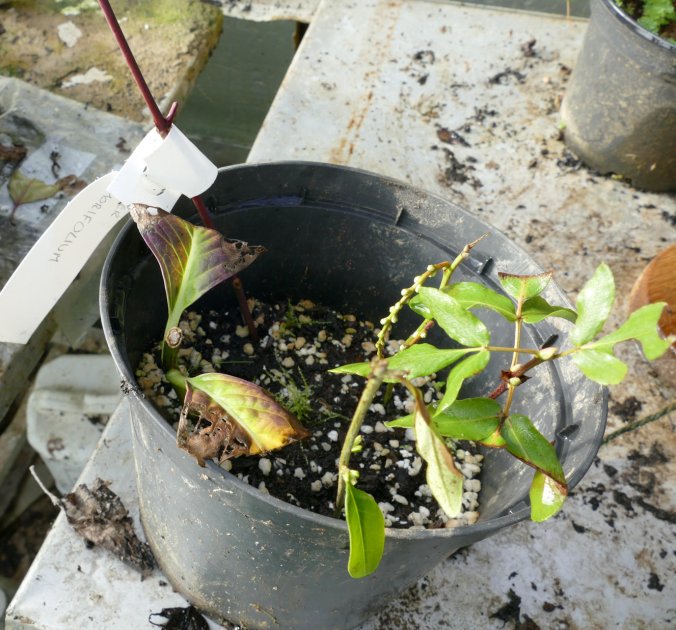
A couple of pictures of some of my cuttings  – Buddleja, Salvia, Hydrangea, Acer all looking good so far…

And one of them even has a label on it!

Sad News

WordPress who host our website have just informed me that it’s apparently five years ago today that Fiona started the Cothigardeners website, but today this brief post is to let fellow members know the very sad news that Dave Bevan passed away peacefully this morning at home just as this wonderful sunrise broke across the valley that Dave and Avril, (and us) look down every morning, towards the distant Black Mountain.

Dave has been a wonderful friend over many years and both Dave and Avril have been loyal and involved members of Cothigardeners since we suggested they might like to come along shortly after we’d joined the club. I’m sure everyone would like to remember Avril and the rest of the family in their thoughts and prayers at this sad time.

Some, but not all, will know that amongst many other talents, Dave was an amazing photographer of wildlife and the natural world, with an encyclopaedic knowledge of all related subjects and many of you will probably have seen some of his photos gracing numerous publications over the years.  But such is the lot of skillful photographers, that you usually have to look very hard to find the credit to the man behind the camera. More of a veg gardener than interested in cultivating flowers, I particularly remember a glorious photo of his, of insect covered fennel flowers which graced the front cover of the RHS The Garden magazine, a few years back. I praised Dave for its quality after I’d spotted his name credited in the small print inside,  yet often he only heard about the use of his images in such prestigious locations months down the line.

More recently Dave threw himself with typical enthusiasm and commitment into capturing video footage, shooting everything in the highest quality and with painstaking care to capture many stunning wildlife scenes worthy of inclusion in a top notch TV wildlife show. Even after his diagnosis just before Christmas, he was meticulously staking out an old stone barn on our neighbour’s farm, hoping to catch some images of a Barn Owl which had taken up residence there. I’ve never looked before, but click here for an idea of the quality and diversity of just a little of Dave’s work over the years.

Fiona had already booked him for November 2020 for Cothigardeners, to show a recently edited film he’d created of some of his locally filmed wildlife footage, before his cruel illness struck.  Having discussed this recently with both Dave and Avril, and with their blessing, we hope to still be able to show this film at the November meeting as a tribute to  Dave, and in his memory.

Very warmest wishes, much love and sympathy to Avril and the family at this very sad time.

AGM, Programme for 2020, Events, and February Meeting


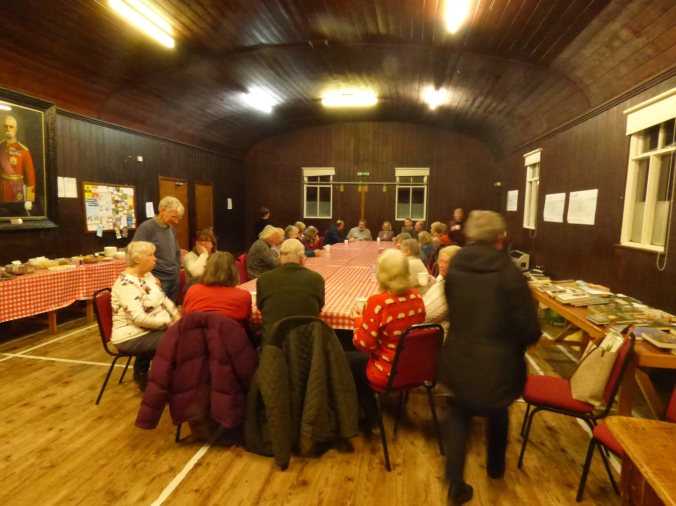
Cothigardeners’ year began in customary style recently with the AGM which was very well attended. Yvonne gave a resume of the busy year the group had enjoyed in 2019, Steven reported on the healthy state of the group financially and in terms of member and visitor numbers over the past year.  Membership for 2020 is £15 per person, which is a slight increase, but still represents excellent value for money given the speakers planned for the years ahead. The club is very fortunate to have had such a hard working chair and treasurer who have both stepped down this year, and everyone will want to thank Yvonne and Steven for their work, and we’re equally pleased that Elena and Andy have come forward to take on these vital roles.

With the AGM finished, a short auction of donated snowdrops, art and craft items was held which raised valuable additional funds to go towards the running of the club, as well as a table of book sales. Many thanks to everyone who donated or indeed bought any of these items.

We then enjoyed a shared plate supper of savoury and dessert food, before the evening finished with another one of Derek’s challenging quizzes. Many thanks to Derek for all his effort in putting this together and indeed to Tina for Marshalling us into entirely non competetive teams (?) It always amazes me the combined knowledge of Cothigardeners reflected in the final team scores, although I’m not sure anyone knew what plant capers come from?

The answer is The Flinders Rose. I’m not sure we’d have escaped with caper bush, its other name…


For all members hanging on excitedly, waiting to find out what the programme for 2020 is, it can now be revealed – both below and on the separate web page for speakers. Many thanks to Fiona and Jenny, the programme organisers,  for working to arrange this for us all. Click below to open the file.

Cothi Gardeners Programme 2020 for website

There’s also a separate page with some local garden related events for the year 2020, which will be added to throughout the year, so do check back in due course. Click here for this page.


Anyone interested in visiting Fiona and Julian’s garden for snowdrops and other spring bulbs can check when they’re opening for the NGS this year, by looking at their website, click here. They’re only opening by short notice “Pop Ups” if/when the weather looks benign (ish)


Later in the year, John and Helen’s wonderful 4 acre garden at Ty’r Maes is opening from April to October by arrangement on pre arranged dates. Click here for more details.


This year’s monthly speaker meetings begin with a joint presentation by Lucy Witter and Abigail Lowe from The National Botanic Garden of Wales who are going to be talking about their ongoing research to help save our pollinators.

This will be really interesting and show how Wales is at the forefront of understanding to risks to our pollinating insects and what we can do to help mitigate this. Something of vital interest to us all. I’m sure everyone will want to come along on Wednesday February 19th at 7 for a 7.30 pm start to find out more.


Happy New Year; AGM Supper, Quiz and Auction.

A very Happy New Year to all Cothi gardeners and readers of this blog.

For any who couldn’t make our Christmas meal at The Forest Arms in December, the photos illustrate how we filled the dining area to capacity, and once again had a brilliant meal and chance to catch up,  thanks to the hard work and attention of George, Louise and their staff. Very many thanks to them all.

So we now dash into 2020, and the gardening challenges of a new decade, beginning with our AGM in about 10 days time on Wednesday January 15th at 7.30 pm, though as always it would be great if everyone can arrive early from 7 pm to help set up tables, etc so that the actual AGM can begin promptly.

Yvonne reminds members that The AGM is a necessary and useful event for a group like ours, it being a chance to socialise more than at our regular speaker meetings. For those who haven’t been before, and dread AGM’s  – firstly it doesn’t take very long, and, secondly there won’t be any arm twisting on the night, though should anyone wish to be considered for a position at this late stage, do let Yvonne know asap, and at least one week before the meeting please. The AGM agenda is as below:

1. Apologies
2. Minutes of 2019 AGM
3. Matters Arising
4. Chairman’s Report
5. Treasurer’s Report
• Membership fee to be increased to £15 per person per year
• Membership year to be changed to 1 February to 31 January. Accounts year to remain unchanged
6. Election of Officers
Chairman
Treasurer
7. AOB


The AGM will be followed by supper (please bring a plate of food to share) and then Derek’s quiz, which in a lighthearted way always checks our brains are still working after the Christmas festivities.

There will also be a short auction of items which are not necessarily garden related, which will help to raise funds to supplement the club’s income. If you have anything you would like to donate, please let Yvonne know as soon as possible.

Donations which have already been pledged are:

Some special snowdrops from Julian
Books from Anne & Philip Large

In previous years we’ve had a really good turnout for this evening, and it’s a great start to the new year so look forward to seeing many of you there.


Hedgehogs; Christmas Meal.

Since the last Cothigardeners blogpost, I guess many of us were clobbered with a short sharp night time snowfall …

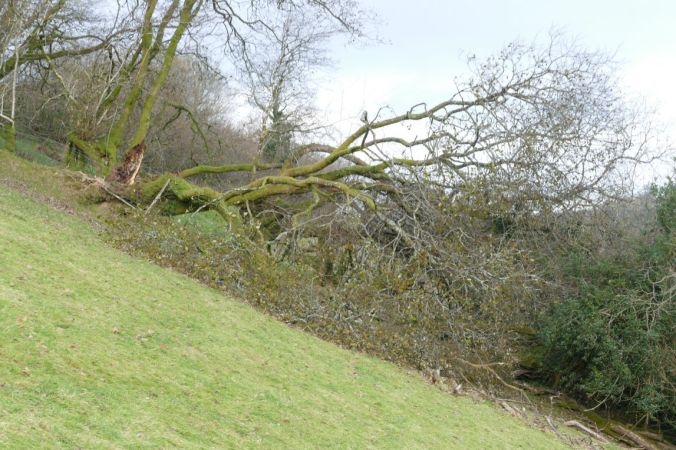
which, coming in mid November, with leaves still on the trees, caused a lot of branch and other damage around the garden, as well as a few mature trees knocked over by sheer weight of snow. For anyone unfamiliar with it, we’ve found a Draper Tree Pruner With Telescopic Handle invaluable for reaching any branches ripped off a long way from the ground, without having to use a ladder, which I’m always wary about. Click here for more details on this bit of kit.

It has both a lopper and a pruning saw which can be worked independently, and although we don’t use it often, it pays for itself after one such episode. However there’s always still some damage which has to be tackled with a chainsaw really…   


Fortunately the snow had all gone by the time Di O’Keefe came to talk to us last month about her wonderful work helping hedgehogs in West Wales. Di began by explaining how she came to set up the West Wales Hedgehog Rescue, and has gradually built up an extensive network of volunteers and helpers, including our very own Jenny, which means that at any one time she can have up to 40 hedgehogs in her temporary care.

Di explained a little about the hedgehog year, mentioning that by November any hedgehog weighing less than 600 g, or easily caught in daytime, is unlikely to be able to hibernate and survive the winter, so would probably benefit from an assessment by Di or one of her team, who can be contacted day or night(!) via her facebook page, click here. 

Di mentioned some of the stresses and diseases, or simply being born later in the year, that can cause hedgehogs to be so light pre hibernation. Di uses rehydration, gentle warming techniques and then supplementary feeding, as well as appropriate medication to revitalise such borderline viable hedgehogs.

Di also explained the normal breeding cycle of the hedgehog which begins after emergence in spring and can typically end up with 6 to 10 hoglets being born, often after several matings with different males. The baby hoglets are born blind and without spines, but these all develop within the first fortnight. Di frequently receives litters of orphan hedgehogs which need feeding every 2.5 hours for the first couple of weeks or so. All being well, they can be moved onto solids shortly afterwards.

Di  stressed that cat food is probably the best food for anyone wanting to feed hedgehogs in the garden, not bread or milk since they are lactose intolerant, and also not meal worms, which are too high in phosphorus.

Their normal diet is mainly invertebrates across quite a wide range – beetles, centipedes, worms, slugs and snails, with occasional bird’s eggs and chicks, and since this diet is similar to badgers, it’s often the case that hedgehogs avoid areas with a significant badger population.

The high turn out for Di’s excellent and comprehensive review of these very special nomadic and solitary small mammals that some of us are fortunate to see in our gardens on an occasional or more regular basis, showed how hedgehogs still hold a very special place in our affections all these years after Mrs. Tiggywinkle was penned.

For more specific information on ways to help hedgehogs in our gardens there’s an excellent summary, “Gardening with Hedgehogs” which you can access here.


Finally a reminder for everyone who’s booked for the Cothi gardener’s Christmas lunch, that it’s on this coming Wednesday, December 11th at the Forest Arms, Brechfa, arriving from 12.00 to 12.30pm. Having decided against having crackers on the table to save waste, anyone who wants to wear festive attire will be most welcome. See you all there, and a very happy Christmas and New Year to all readers.


Hedgehogs; Christmas Lunch; AGM and Auction; Daffodil Competition at the NBGW in 2020.

As winter seems to have begun with a typically wet start to November and a single hard frost here to take out the last autumnal colour, most of our gardens will be a little quieter for the next few months, but we’ve still got lots of things to look forward to at Cothi gardeners, when all the leaves have fallen.

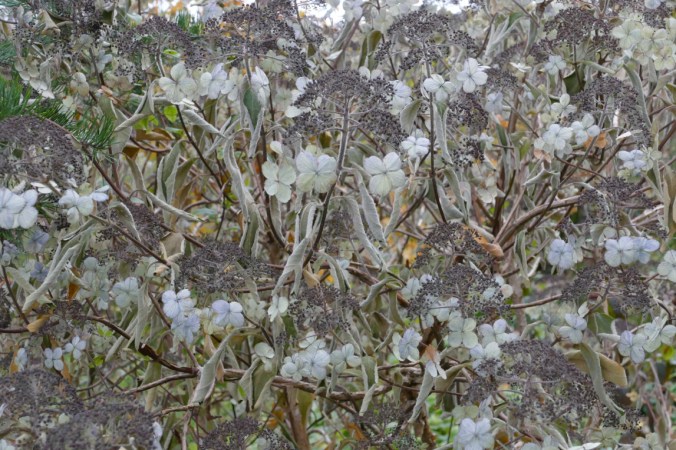
(Hydrangea aspera villosa, for one day only…)


A reminder that the final talk of this year’s programme is on Wednesday November 20th at 7.30 pm, when Di O’Keefe, who was instrumental in setting up the West Wales Hedgehog Rescue Centre at Cwmann will be telling us everything we should know about hedgehogs, and how we can make our gardens more friendly for them.

A reminder to be careful about compost heaps over the autumn and winter months. In late September 2011, I started digging out one of ours, and found  the sleeping hedgehog above, curled up in it. Fortunately I’d just missed it with my fork, so carefully moved it slightly, only to discover 4 youngsters were snuggled up beneath the mother.


A reminder that this month’s meeting next week will be the deadline for booking your place at the Cothi Gardeners’ Christmas lunch at the Forest Arms in Brechfa on Wednesday December 11 th. Plus you’ll need to bring along your payment for the meal, please. Click on the link at the end of this post for the menu choices.


In January, our first meeting of the year begins with the AGM, on Wednesday January 15th, when amongst other things we’ll outline the excellent programme of speakers which has been arranged for 2020 by Fiona and Jenny. The evening will also incorporate a members’ supper, so do bring along a plate of food to share.

(Galanthus reginae-olgae “Tilebarn Jamie”, bought in 2013, and this is its first flower, this week….)

Following on from last year, there’ll be an auction of a few reliable snowdrops, (and it won’t include this feeble fussy species cultivar) provided by Julian, but we’d also like to broaden this a little this year as a way of raising extra funds to help pay for speaker expenses in the years ahead. So if you have any other plants or other suitable books or items which you’d like to be included in the auction – say art or craft work, then do bring it along early on the night to be included.

Items don’t have to be garden related things, just things that others will likely bid for!

The evening will conclude as usual with one of Derek’s challenging quizzes, to keep our brains working well, even in the depths of winter.


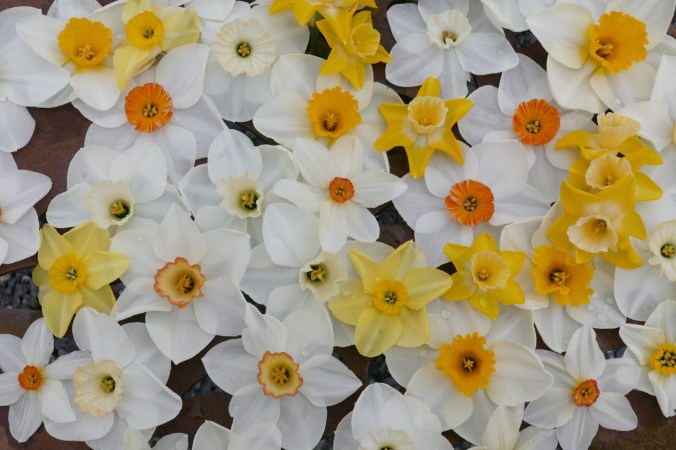
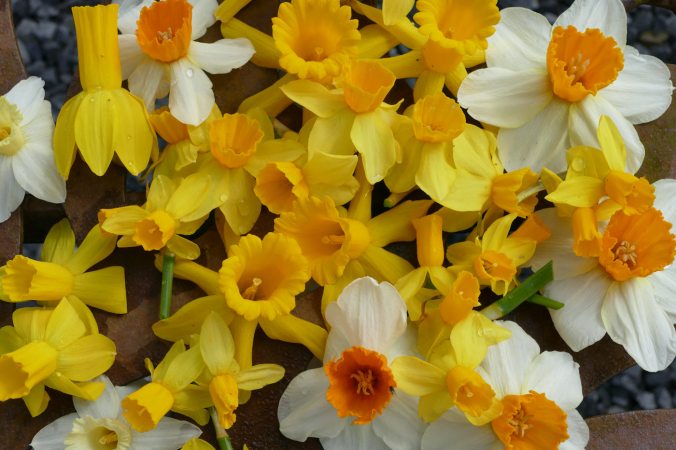
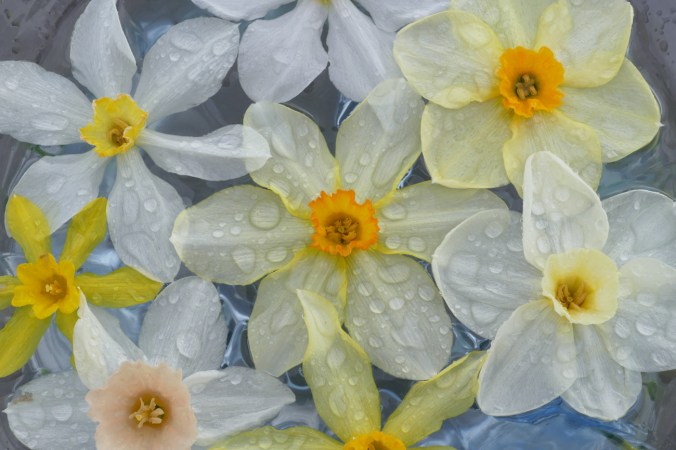
Finally, and a little bit further ahead in 2020, Ben Wilde, Horticultural Trainer for the Growing the Future Project at the National Botanic Garden, (NBGW), invites all Cothi Gardeners members to take part in a fun and casual Daffodil competition/ show at the Garden on the 21st March 2020.

The Competition will be free to enter with an entry ticket to the Garden.

The NBGW want to celebrate all things Daffodil and open this event to as many people, so please tell everyone you know about it! All the information is on the Botanic Gardens website.

The awards in the competition will be:

  • Best single Daffodil (Awards for each class [RHS system], and for best in show)
  • Best display of three Daffodils (Single and Mixed cultivar)
  • Best display of 5 or more Daffodils (single and Mixed cultivar)
  • Best children’s display (under 18/15yrs)
  • Most Imaginative display

Most of these categories are self-explanatory, however you may be asking about the most imaginative display. That is because the NBGW want you to get creative and think outside of the box. Why not make a display out of different materials, a mosaic of different photos, or even a Daffodil shaped cake?

Alongside the show, there will be stalls, walks, and talks by local experts and staff. Please pass this on to anyone you feel would be excited and interested in joining in with this lighthearted show celebrating the most iconic flower in the country, the humble Daffodil!


Click for the menu on XMAS DINNER

Plant Hunters and Explorers; Dahlia merckii seeds; Hedgehogs; Christmas Meal.

There was an excellent turn out at Pumsaint for October’s talk to hear Neil Barry tell us about “Plant Hunters and Explorers”, and it was great to see so many arriving early to help set things up in the hall and enjoy the pre-talk refreshments.

Neil, who’d travelled up from his home in the Gower, gave us a lively talk and slide show beginning with a reminder of how many of the favourite plants we now take for granted in our gardens, (Buddleia, tulips, potatoes) are all introductions from other parts of the world. Along with a few like Japanese Knotweed and Rhododendron ponticum which were introduced and have since turned out to be more of a nuisance!

Neil began with mention of the father and son Tradescants, gardeners to Charles 1 and 2, who travelled to Russia, Africa and later America, introducing amongst other plants the Sumach and Tulip tree to these shores.

Joseph Banks was another significant figure in the late 1700’s/early 1800’s and responsible for establishing Kew gardens as a significant focus for plant collections and as a sponsor of plant collecting trips. Banks himself travelled to Eastern Canada as well as establishing Botany Bay and is remembered with 80 plants named after him including the genus Banksia, which one can find growing in the Great Glasshouse at the National Botanic Garden of Wales.

Archibald Menzies brought back the first Monkey puzzle seeds to the UK, secretly saved from a dinner served in Chile where they featured as a delicacy, whilst David Douglas brought back many seeds of trees native to North America, which subsequently helped to enrich our landscapes and also establish the UK forestry industry, which before his time only had the native Scot’s Pine and Common Juniper as indigenous coniferous species.

For many early plant hunters the development of Wardian cases- essentially mini transportable greenhouses, revolutionised the success of bringing plant samples back to the UK on what were often lengthy sea voyages.

Another significant father and son combination was that of William and Joseph Hooker who for many years were involved in plant hunting as well as being the directors of Kew gardens. Around the mid 1800’s opportunities to explore China and the Far East began to open up following the Opium wars which led to many more novel genera being discovered.

Robert Fortune continued this process introducing Mahonia japonica and Dicentra spectabilis ( as was!) as well as a star performer right now in our garden, Saxifraga fortunei. In addition he was involved in bringing nearly 24,000 young tea plants from China to establish a fledgling tea industry for the British Empire in the Himalayan foothills in India.

Occasionally very specific expeditions were sponsored – “Chinese” Ernest Wilson being sent out to China to find and bring back seeds of the Handkerchief tree Davidia involucrata. Although French explorers beat him to it, and were the first to germinate seedlings in the West, nevertheless the major nursery firm, Veitch’s, who sponsored Wilson’s trip, still reaped the benefits with seed and seedlings of this, the latest novelty in the late 1890’s.

Many of these early plant hunters enjoyed considerable hardships whilst overseas, and some didn’t return – David Douglas  being found at the bottom of a cattle pit in Hawaii. Neil speculated that his death might not have been accidental. Click here for an interesting read about this, and more about Douglas’ collecting life.

Neil concluded with mention that the spirit and adventure of plant hunters lives on in the UK with people like Mary Richards from North Wales who collected thousands of pressed plant specimens in Africa, in the late ’50’s and ’60’s; Tom Hart-Dyke who was held for 9 months in Colombia in 2000 on one of his orchid hunting trips;  and the well known husband and wife team of Bleddyn and Sue Wyn Jones of Crug Farm plants near Caernarfon. They have collected many novel plant species and cultivars from trips to South East Asia. Click here to see how many forms, for example of  Viburnums (above left V. furcatum BSWJ 5939), to choose just one genus they have collected, and how each one is carefully labelled with a BSWJ number to link in with their records of when and where it was located.

So an excellent reminder of how fortunate we are in the UK not just to have the conditions to allow us to grow such a diversity of plants, but also the rich history of those prepared to risk life and limb to bring them back for us.

At the end of the meeting Yvonne was able to hand over a couple of new kettles to the chairman of the hall committee, as a gift from the club from the proceeds from the plant fair. These will replace the very ancient ones which have seen better days and will help making hot drinks easier and quicker not just for future gardening club meetings but also be available for other hall users.


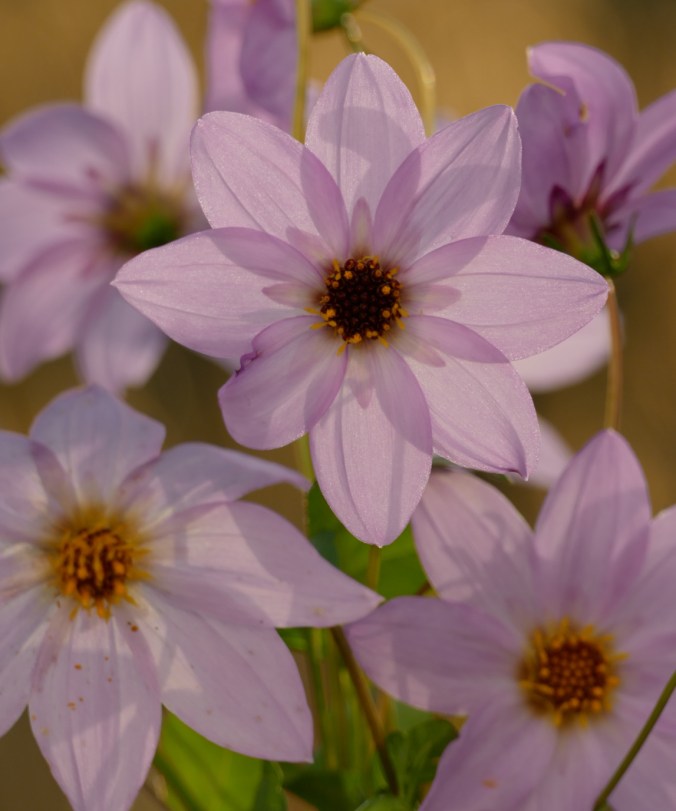
For any disappointed not to be able to grab a packet of Dahlia merckii seed after Neil Barry’s talk, Julian apologises – they all got snapped up very quickly.  But he does have more available which he’ll bring along to next month’s meeting (£1 per packet for club funds). Julian suggests anyone who has the seeds already,  keeps them in the fridge until late February and then sows the longish black seeds, not the remaining chaff, into seed compost kept in a warm place until germination has taken place. Then grow them on and prick out in a frost free place to be planted out in late spring.  Just like tomatoes really, and they should germinate as easily. You do have to watch out for slugs whilst the plants and shoots are young, but then they grow away quickly and you should be rewarded with similar flowers to these next summer, which as Julian mentioned, are a brilliant late season pollen source for honey and bumble bees. Plus the tubers should be hardy enough to survive in the ground over winter, maybe with a little extra mulch.

Should anyone have any seedlings grow with foliage which is more bronze, or dark, than green; or flowers that look different to these then do let Julian know – there’s a chance there might be some interesting hybrid forms with Dahlia “Magenta Star” which he grows nearby.


A reminder that the final talk of this year’s programme is on Wednesday November 20th at 7.30 pm, when Di O’Keefe will be telling us everything we should know about hedgehogs, and how we can make our gardens more friendly for them.


Finally a reminder that next month’s meeting will be the deadline for booking your place at the Cothi Gardeners’ Christmas lunch at the Forest Arms in Brechfa on Wednesday December 11 th    Click on this link for the menu choices :   XMAS DINNER    

“Autumn Into Winter” Talk; Seed Collecting Trip; October Meeting and Christmas Meal Date.

Many thanks to Yvonne for her notes on Richard Bramley’s timely talk  “Autumn into Winter” to Cothigardeners in September which we were sadly unable to make, but which was well attended and enjoyed by all.

Richard covered great plants for good autumn colour including Acers, Berberis, Euonymus and  Cornus racemosa which has black autumn foliage.

Colourful winter stems from Cornus species and Salix (willow) can add to interest.
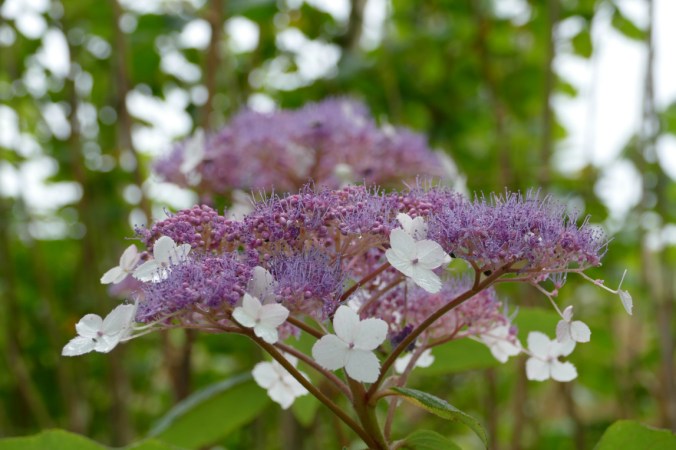
Hydrangea flower heads last well into autumn, even as colours fade. Some forms even flower late like the above form of H. aspera, in bloom in early October. Look out for the Forever series, as they keep on flowering. Cut down Hydrangea Annabelle to the ground in spring as it’s a herbaceous variety so flowers on the current year’s wood, as do H. paniculata varieties.
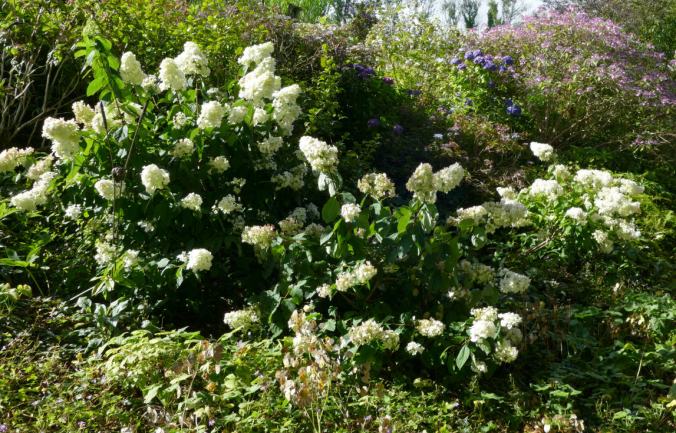
H. macrophylla flowers on last year’s wood, which may get frosted in spring, so killing the flower buds.
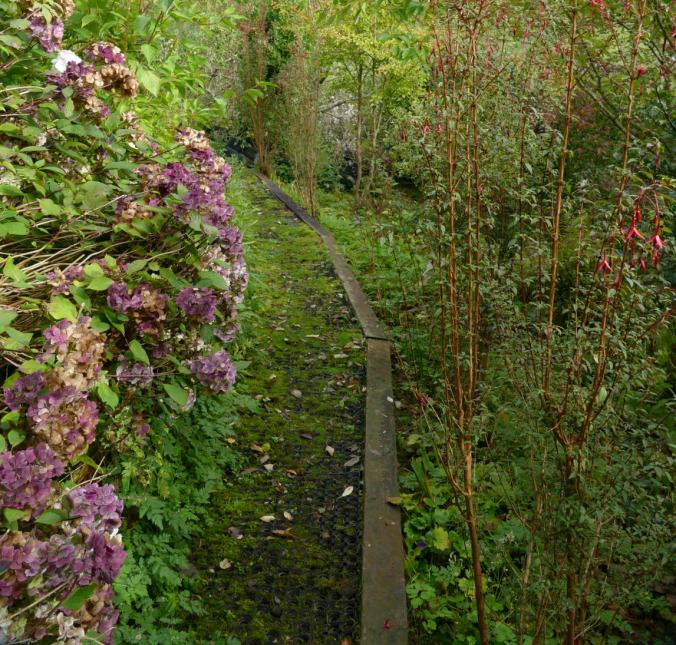
Other good plants for autumn are Lespedezia, Aconitum. Fuchsia magellanica, Astrantia, Campanula – if they are given the Chelsea chop (prune the height by a third in Chelsea Flower Show week), these plants will flower later on shorter stems.

Hardy Chrysanthemums sold in the autumn as domes of flowers, should be treated as bedding. Herbaceous Chrysanthemums should be hardy and are a good addition to the garden.

Some Asters (Michaelmas Daisies) can get mildew due to dry or stress (nova belgii types). Closely allied to Asters are Kalimeris, which are good plants, along with other Asters.

Annual Rudbeckia and perennial Rudbeckia are excellent plants for the autumn, but they can get very tall. Cut them down on the longest day and they will flower a little later on shorter stems. Heliopsis, Leucanthemella will grow in shade. Persicaria amplexicaulis is a pretty thug, and needs to planted somewhere where spread is required.

Viola cornuta, the smaller the flower, the hardier the plant. Salvia species, long flowering but not hardy, can extend flowering up to frosts but take cuttings a.s.a.p. to overwinter ready for the following year. Solidago x aster is another good plant and not at all boring.

Grasses can extend a season of interest right through winter, and can be successfully mixed in with herbaceous plants rather than a bed of grasses. Panicum species have a lovely arching habit. Stipa gigantea, above, is another good grass, and doesn’t self seed. Pennisetum varieties, treat as annuals, though they can be overwintered in a cold greenhouse or polytunnel. Cardoons also have wonderful seed heads in winter. Don’t be too quick to tidy in the autumn, as the frost on grasses, cardoons, etc give a new dimension to the garden. They also protect the roots from frost, and give cover to insects, hedgehogs, etc.


The trip which Fiona had organised with Stephen and Mel Lloyd for Cothi Gardeners to visit the Hergest Croft garden for a combined guided tour and seed/cutting collection was a huge success. We were really fortunate with a benign weather slot in what has been the wettest spell for months, and were thrilled that Steve was so generous with his time and advice, whilst Mel provided us all with bags, and names to record the many seeds, fruit and cuttings we were able to collect in a two and a half hour walk.

Hergest Croft is such a special place with one of the finest collections of trees and shrubs in the British Isles including national collections of hundreds of different Sorbus, Betula and Zelkova, as well as being wonderfully peaceful and beautiful whatever time of year one visits.

Steve demonstrated it’s always worth cutting into a few seeds just to check if they’ve got viable white/green centres. Sometimes a tree will be laden with seeds which look fine, but are in fact empty and will never germinate. Also he pointed out some of the trees where it’s best to save seed from the tree (e.g. Acers and Sorbus) and others (e.g. Magnolias and Davidia) where it’s better to collect from seed or fruit that’s fallen to the floor.

Click here for more about Hergest Croft, and there’s still time to plan a visit for their special autumn plant fair on Sunday October 13 th – Hergest Croft Autumn Fair, Ridgebourne Road, Kington, Herefordshire HR5 3EG with over 40 plant and craft stalls. Open 10-4.30pm. Admission £6.50.

What I didn’t know before Stephen told us, as we walked through the garden’s glades and reached the top of the Sorbus collection, is that the garden rises to over 1,000 feet above sea level, so many of the well labelled trees which are indigenous to China and the Himalayas will be quite comfortable with the conditions here.

Stephen, the Head gardener in a team of 5 who manage the 70 acres, has worked as a gardener at Hergest for 40 years, and has grown many of the now mature and rare trees from seeds sent to Hergest from collectors around the world.So to have him passing on his tips as to how best to choose and propagate material was a rare treat, and all this in a year when many trees were laden with berries and seeds after a bumper year for pollination and fruit production.
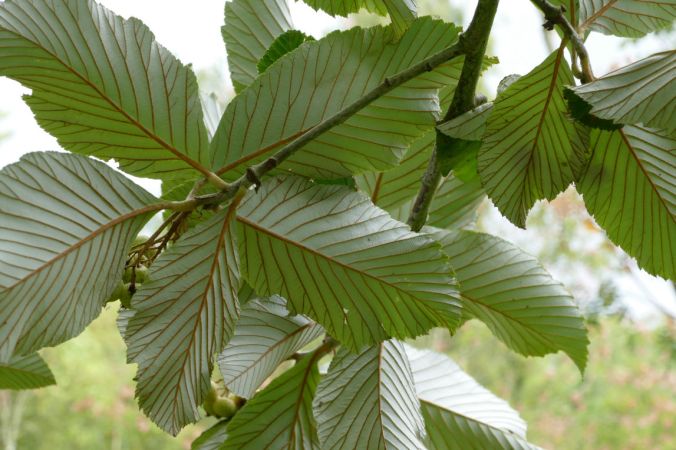
Thanks very much to Stephen and Mel for their very warm welcome and generosity and for making it such a very special day. We look forward to letting them know in due course how well we get on with the propagation, once we get all the material prepared for sowing …


A reminder that this month’s meeting on Wednesday October 16th at 7.30 pm is by Neil Barry on “The Plant Hunters and Explorers”.  Do arrive in good time for refreshments and a catch up before we start.

Neil is originally from County Cork in Ireland and is now living near Swansea.

He trained at the Royal Botanic Gardens, Kew for three years whilst also studying for his horticulture qualifications at Capel Manor College near London and Berkshire College of Agriculture. After completing training at Kew, he moved in to teaching horticulture and completed a Post Graduate Diploma in Education. He has been a lecturer in Horticulture for 8 years, most of which was at Neath Port Talbot College but has also taught at The National Botanic Garden of Wales and elsewhere.


Finally a date for your diaries – our annual Christmas meal will be on Wednesday December 11th lunchtime at the Forest Arms Brechfa, our very successful venue last year. We should have a final menu available soon, and will need names and deposits shortly and hope that many of you will be able to make it for what’s always an enjoyable event.
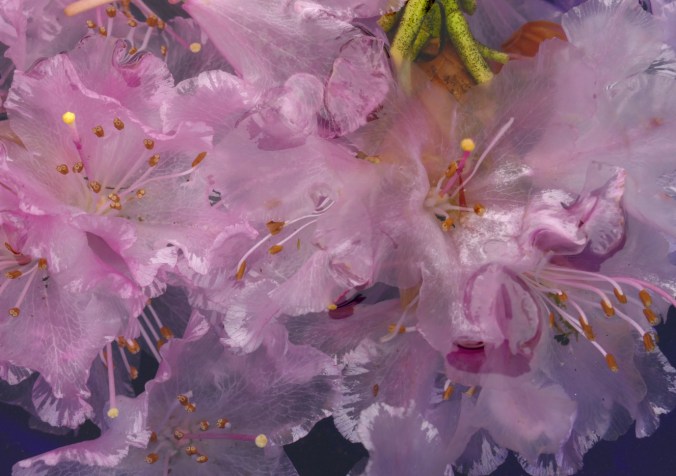
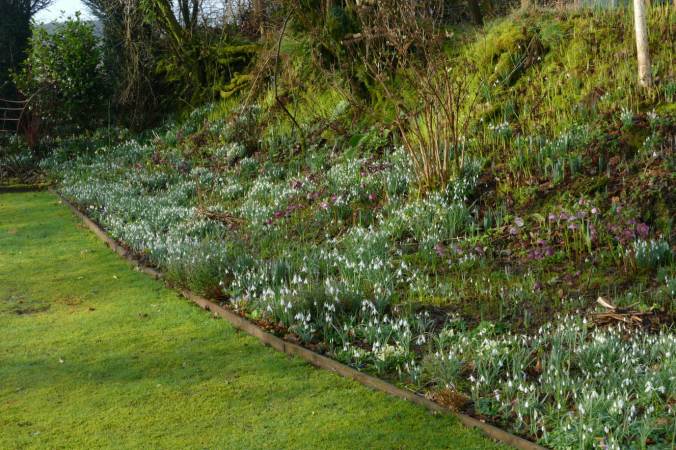
August Meeting – addendum and apology!

I must apologise to all present at our August meeting, and in particular to Colin for omitting to mention in my previous post, the other significant part of the evening.

Apparently with very little notice, Colin put together an amazing montage of video clips of wildlife which he’s photographed around Colin and Yvonne’s garden and stream over the last few years.  And all captured with camera and software equipment which Colin has put together himself. What a clever chap!

Everyone present was thrilled with all the clips we were shown – a diverse range of herons, buzzards and owls taking frogs from their pond; otters, dippers,  sparrowhawks and gooseanders along their stream, and amazing footage of sparrowhawks and bird feeders with a woodpecker snucking behind the feeder as the sparrowhawk approached, and only then flying off fast to safety, as the sparrowhawk passed the feeder.

This was truly inspirational stuff and a fascinating insight into how lucky we are to have all this wildlife visiting our gardens – even if we rarely witness much of the action in person.

I don’t have any of Colin’s images to include, though perhaps I might be able to persuade him to provide links to some of the clips for anyone unable to make the meeting last week?

My sole and rather feeble excuse for this glaring omission is that we’ve had 5 grandchildren and their parents with us over the bank holiday, which rather tired me out and distracted me.

However,  one of the pluses of their visit was more frequent trips down to our stream, and as a result seeing for the first time ever on our stream (as indeed on one of Colin’s memorable video clips) the iridiscent blue flash and blur of a passing kingfisher.

Colin explained that these are likely to be juvenile birds expanding into new territory, and that our type of upland stream probably wouldn’t support birds year round, but still a great thrill to see it, even if my photos of it as I whizzed round give just a brief impressionistic flash of blue. Much later after scanning several times the 6 images I’d taken in 2 bursts on the camera as it flashed away from me, with explosive white droppings left in a trail, I could make out it had actually settled on a perch beneath the willow branches…

Though I’m still perplexed by the other blue in the images amongst the leaves – there are no blue flowers there.  Might these have been other kingfishers??? 

Finally readers may know, but I didn’t until 2 days ago, that the vibrant blue flash and feathers we all associate with kingfisher feathers could be considered to be an optical illusion.  This type of blue is known as a “structural colour”. The feathers contain no actual blue pigment, unlike the orange pigment granules in their breast feathers. The back feathers are actually brown, but are covered in a very thin and intricately arranged transparent layer of tissue which selectively reflects more blue light than any other frequency, so we perceive them as being blue.

Click here to read more if interested, on this quite recently discovered information!

So many thanks indeed again to Colin, for a brilliant bonus to our evening, and any chance of some links to some of the clips, Colin??


September Talk Change; August Meal and Social; Hergest Croft Visit.

In a late change to our programme,  Brinley Watkins is sadly unable to visit us to talk about “Vegetable growing with a twist”. However we’re delighted that Richard Bramley, who’s visited us several times before from local Farmyard Nurseries,  has agreed to come at such short notice and talk to us about  plants to take us through autumn and into winter.  Members will know Richard always gives us a great talk, and he’ll also be bringing along plants for sale. To quote Richard’s words about this talk…
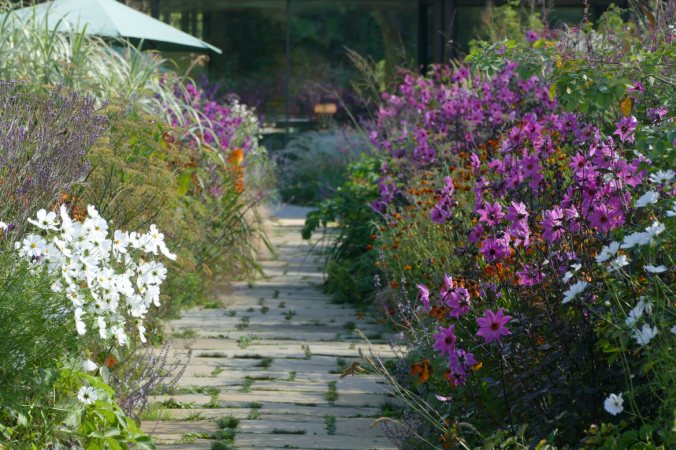
There comes a point in time when, as the gardening year progresses, colour in a lot of gardens begins to wane. Gardens often look lack lustre and many an avid gardener becomes a little despondent and longs for the winter clean up…… Well stop it!! This talk is designed to show us all that the autumn is a season with a plethora of plants that give an absolute riot of colour. As summer flowers fade and the bedding plants pass, the autumn army pushes on with its riots of colour to replace them. There are so many and as sales at the nursery gradually went into the winter recess we massively expanded the autumn contingent to fill this gap. We now stock hundreds of things and this talk will highlight many, but obviously not all, of them.

It is funny how as autumn approaches and the days shorten, with light levels falling, nature steps in and the colour palette of the garden changes, with the fiery yellow, red and orange colours becoming prevalent. Somehow shades that we don’t tolerate in the summer borders become acceptable if not desirable. Subjects covered include Hydrangeas, Asters, Salvias, Schizostylis, Acers and grasses with all sorts of others thrown in! Yet again there may be a mention of our renowned Hellebores.

One of our most popular talks.

Click here for more on Farmyard Nurseries.

September’s talk is on Wednesday September 18th at 7.30 in the Pumsaint hall.


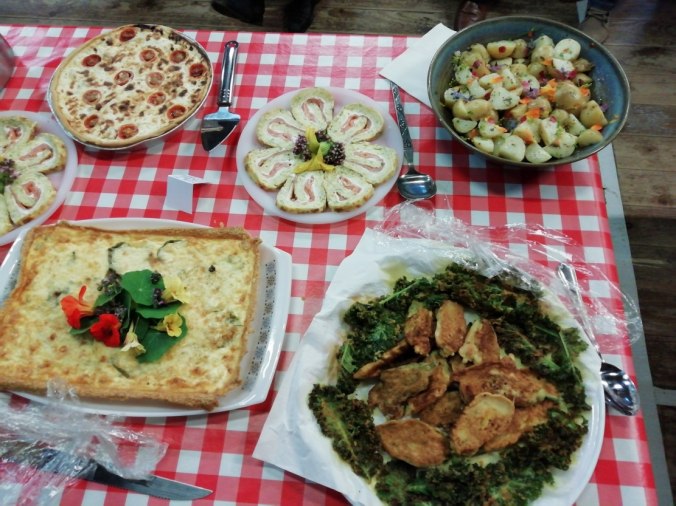
August is often a busy month for many, with holidays and visitors, so the turn out for the August meeting was a little lower than for most meetings. However everyone who came had a great evening and enjoyed a real feast as members rose to the challenge of producing a plate of food to share incorporating leaves and flowers grown in the garden. The pictures give an idea of the imagination and standard of the dishes available, and I’m guessing there will be a fair bit of recipe sharing following on from this.

Finally a reminder that the September meeting will be the last chance to book a space for our trip to Hergest Croft for a visit and guided tour with head gardener Steve Lloyd and his wife Mel, on Thursday September 26 th

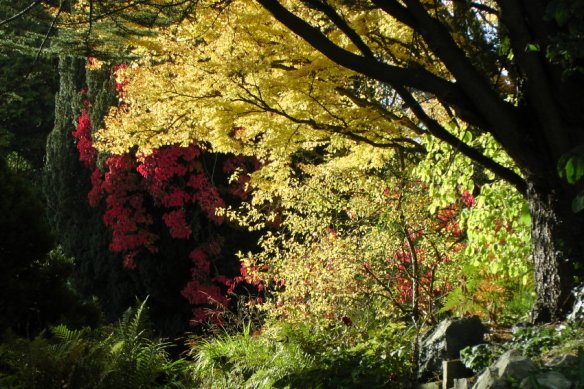
This is a special opportunity as well to collect seeds with Steve’s guidance, from some of Hergest’s fantastic range of shrubs and trees.  After what has been a phenomenal year for tree and shrub flowering and seed formation, this really represents a brilliant opportunity for Cothi Gardeners. We can’t guarantee that the weather or colours will be as gorgeous as in these photos, but it will still be a memorable trip.

Cost is £7.50 for the garden entry and tour, and we’ll be having lunch afterwards in the cafe, and they need an idea of numbers,  so do contact Yvonne, asap, if you haven’t already given us your name. We’ll be car sharing and aim to arrive at Hergest at 10.30 a.m, so will also have the gardens pretty much to ourselves, since they only open to the general public at noon.  Friends of members are also welcome to join us, if pre-arranged.